
Chilean wine palm
Chilean wine palm (Jubaea chilensis)
Jubaea chilensis is the Chilean wine palm — massive thick-trunked feather palm, the most cold-hardy feather palm, extremely slow and long-lived — for north-India and hill grand specimens where humid tropical coasts would be the wrong climate choice.
Spec
At a glance
- Botanical name
- Jubaea chilensis
- Family
- Arecaceae
- Common names
- Chilean wine palm, coquito palm
- Origin
- Central Chile
- Plant type
- Solitary massive feather palm
- Mature height
- Often 12–20 m+; trunk massively thick
- Trunk / form
- Very thick smooth trunk; arching pinnate crown
- Crown spread
- Large
- Growth rate
- Extremely slow
- Light
- Full sun
- Water needs
- Low to moderate; dislikes constant humidity
- India climate suitability
- North-India winters and dry hills; struggles in hot-humid coast long-term
- Cold/heat & salt/wind tolerance
- Most cold-hardy feather palm; dislikes high heat + humidity combo
- Typical supply size
- Heavy caliper trunks [Unverified]
- Lead time (sourcing)
- [Unverified] very large specimens exceptionally rare
- Install considerations
- Crane for mass; drainage; decades patience on caliper
- Maintenance level
- Low to moderate — frond hygiene
- Cautions
- Extremely slow and costly at size; poor in humid tropics; taproot sensitivity
Supply
Latest import activity
- Imported on
- 21 Jun 2026
- Source
- Tall Tree Nursery EU (sample)
- Availability
- Sold
- Lot
- Jubaea chilensis — field-grown wine palm
Gallery
Specimen visual guide
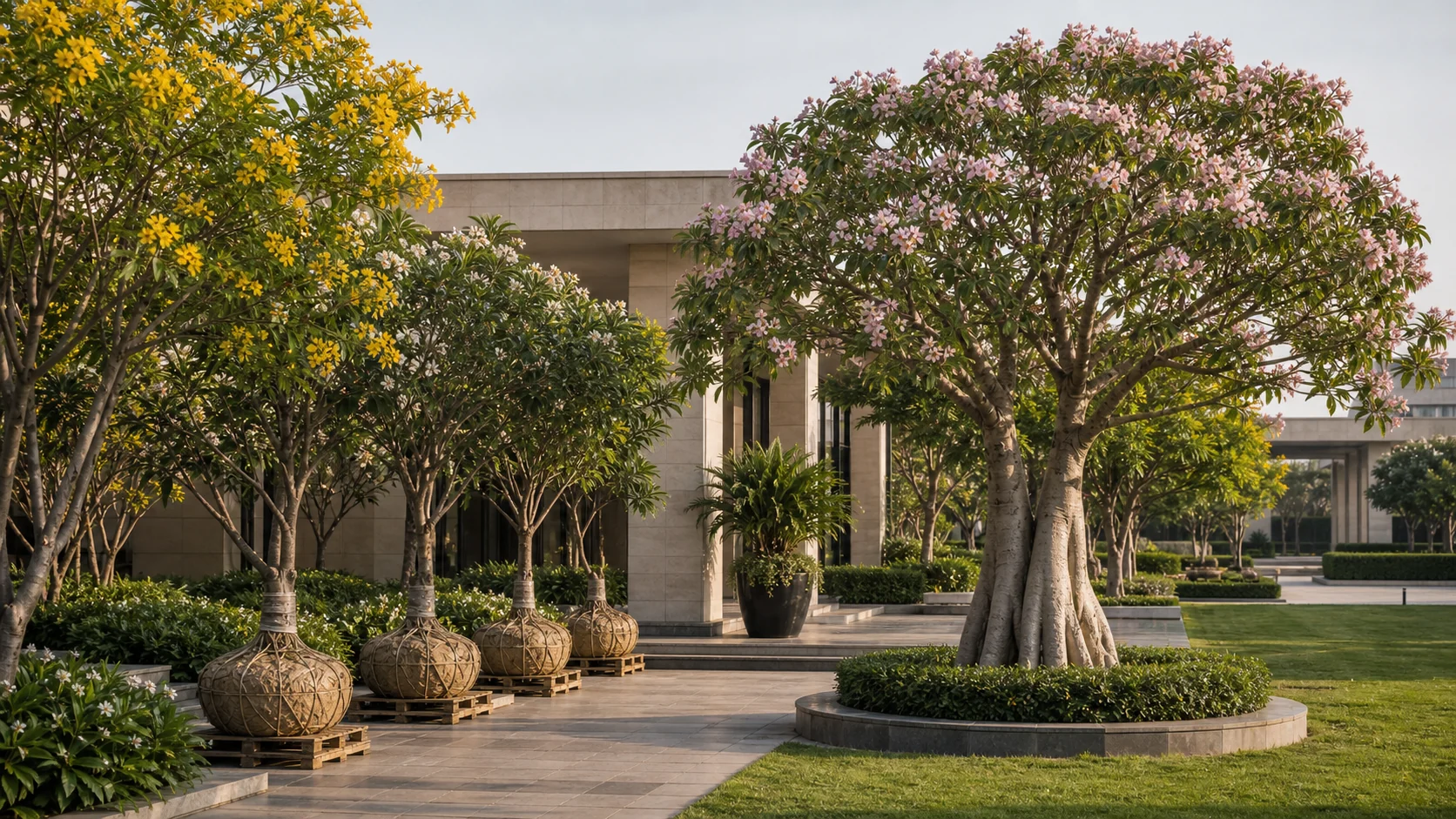
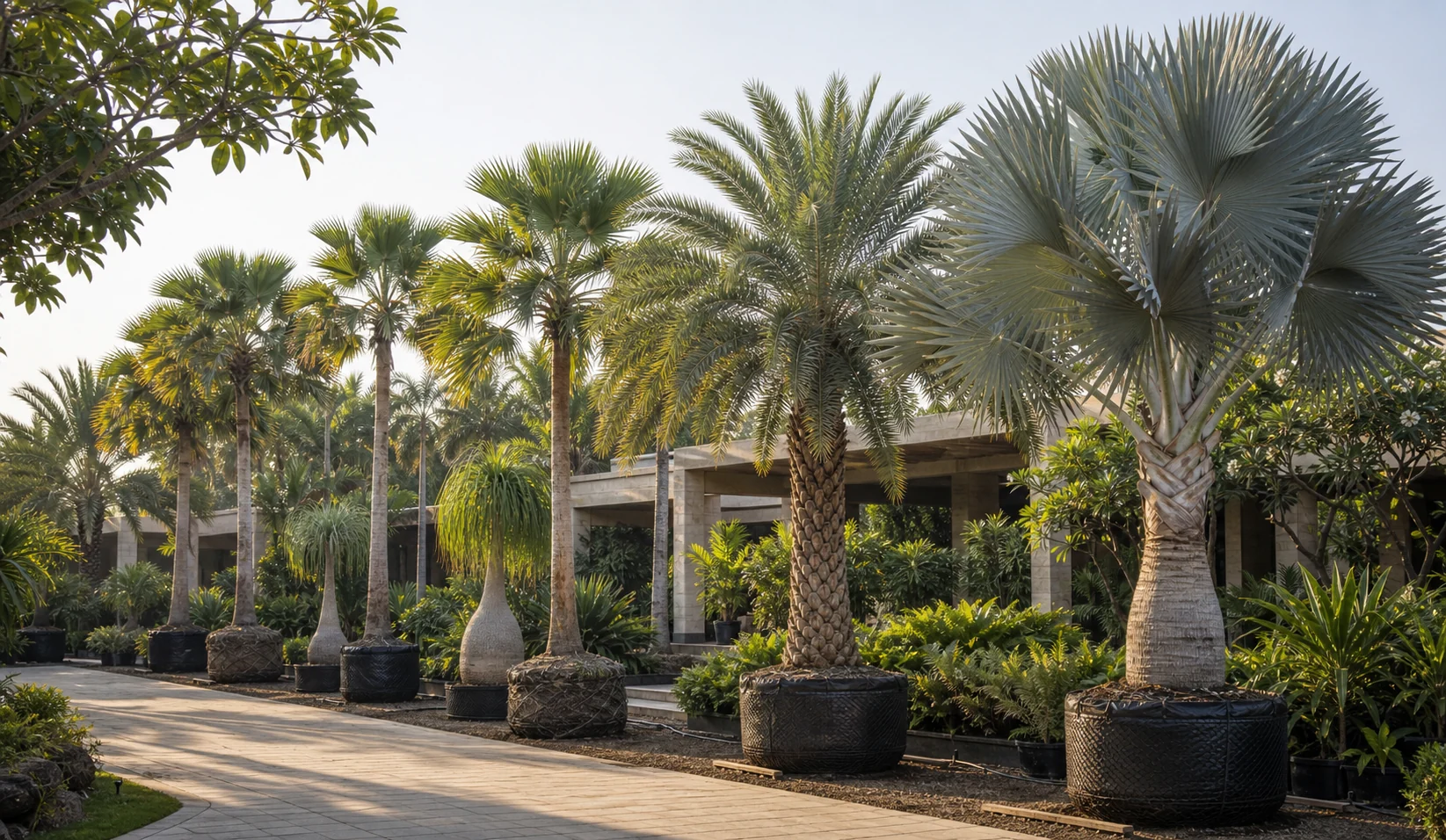
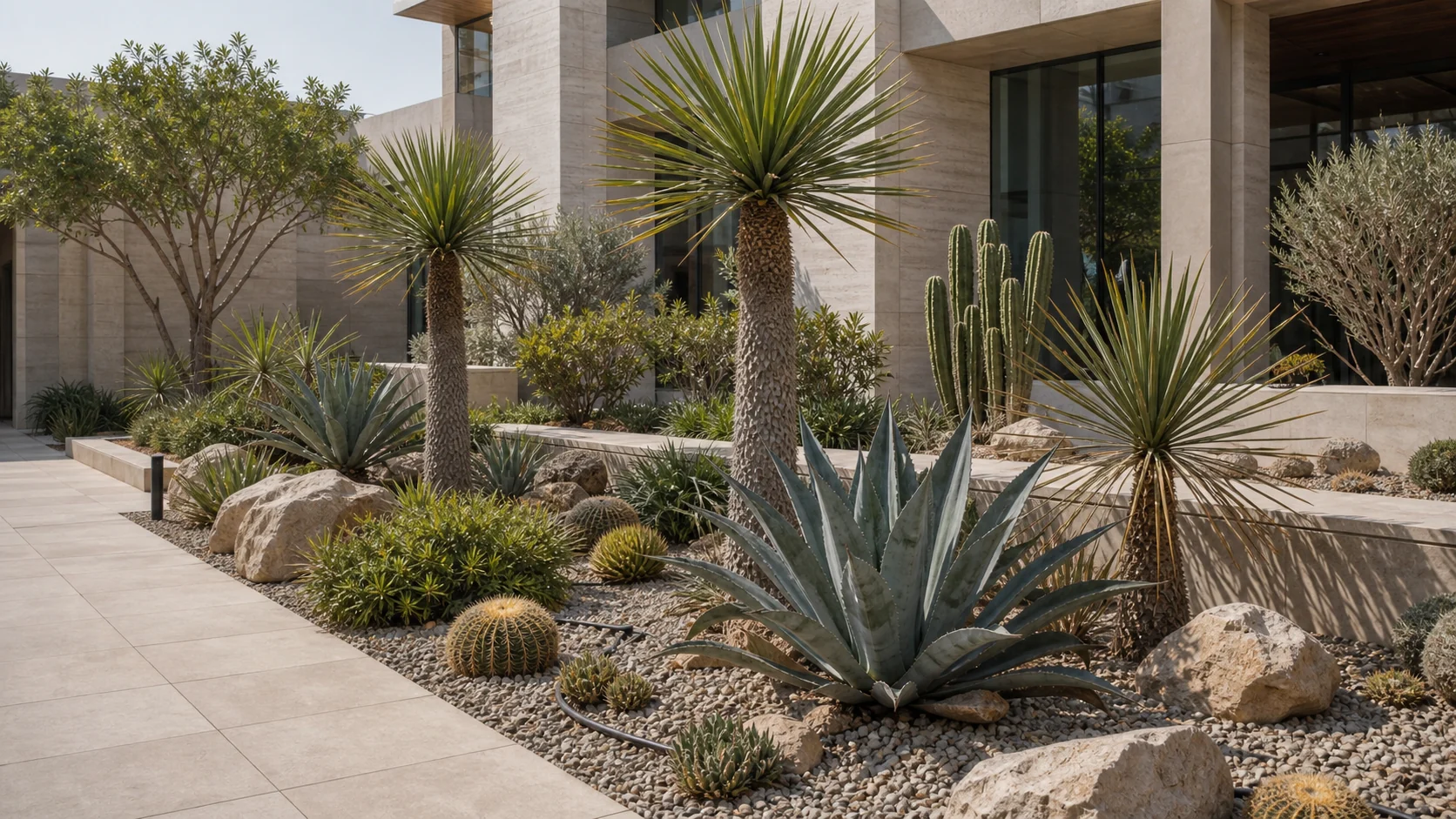
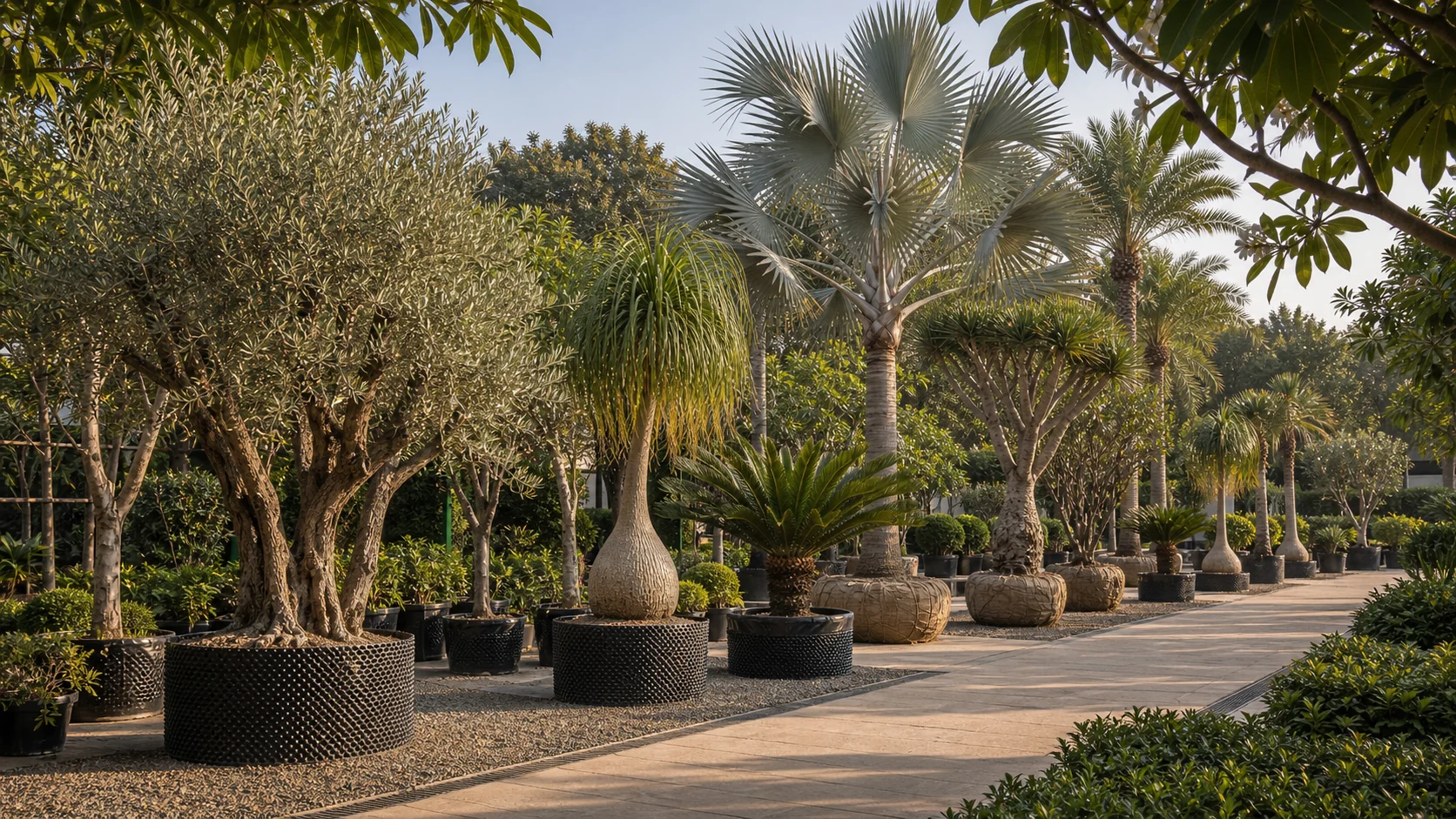
Visual context for placement, scale, handling, and landscape integration.
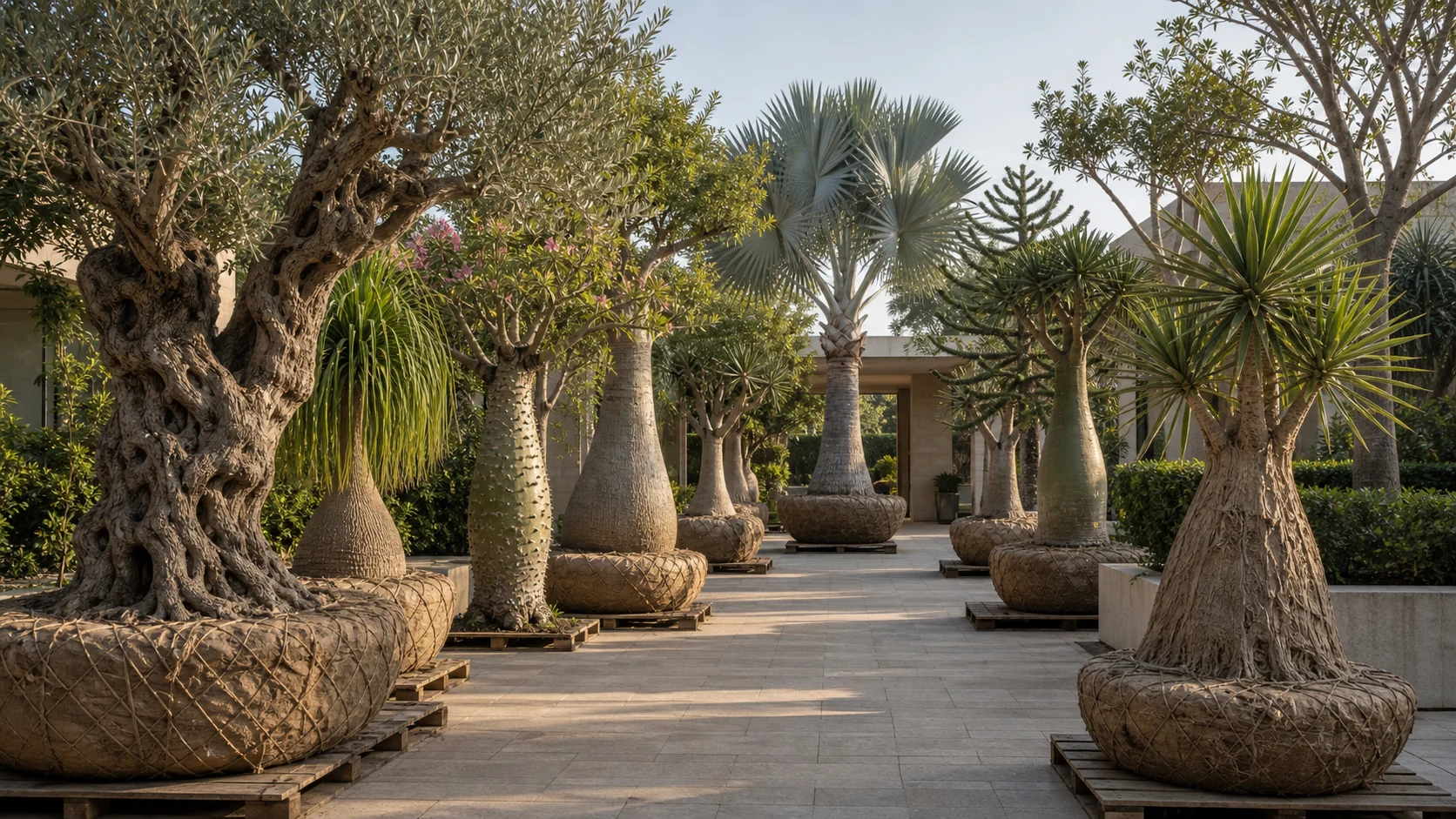
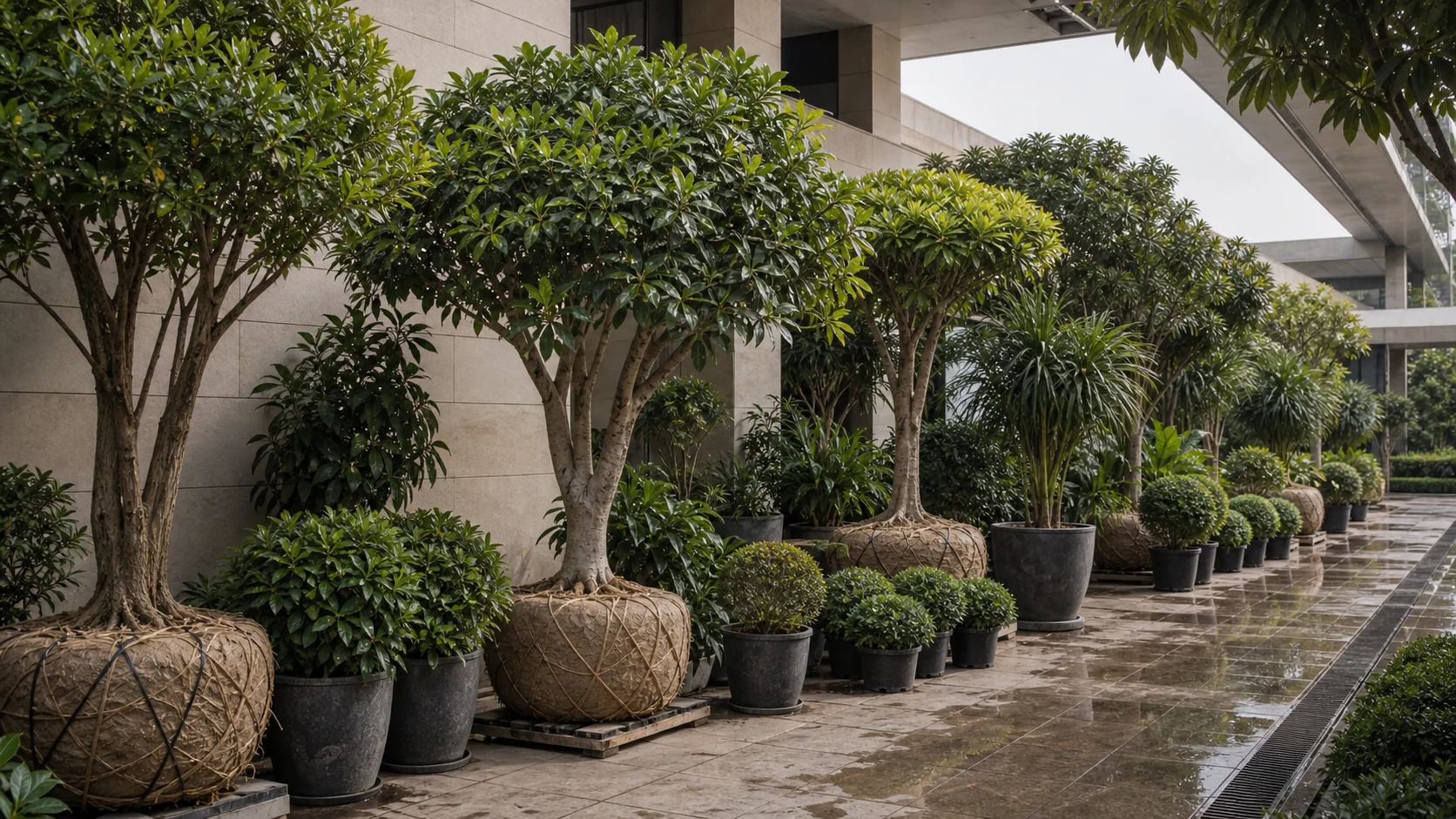
Section
Where it's used in premium projects
Specified as a heritage grand specimen — hill-station clubs, north-India estate drives, and dry Mediterranean campuses where trunk girth reads power without tropical foxtail litter. It is the feather-palm answer to cold winters when Phoenix canariensis scale is too large for the court.
Section
Climate & site suitability in India
Delhi NCR winters, Rajasthan dry heat with drainage, and western hill sites outperform humid Chennai-style coasts long-term — constant humidity and heat stress established plants. Full sun required; shade produces weak crowns on an already slow species.
Section
Sourcing & acclimatisation
Buy caliper and trunk mass at delivery because decades pass before Jubaea delivers new girth on site. [Unverified: India availability for landscape-weight trunks.] Large transplants are crane-heavy and root-sensitive — establishment AMC must be multi-season.
Section
Installation (pit, soil, drainage, bracing)
Massive rootball pits with coarse drainage — Chilean adaptation is dry temperate, not monsoon swamp. Extended bracing on heavy crowns. Do not plant in enclosed humid courtyards expecting fast visual payoff — client briefs need honest horizon timelines.
Section
Establishment & AMC
AMC avoids over-irrigation in humid sites — root health declines when facilities copy tropical palm watering schedules. Frond removal only when dead; living fronds are years of photosynthesis on slow plants. Monitor for lean on windy ridges until stable.
Section
Cost drivers
Explore
Related
Related
Related links
Services, segments, cost, and proof.
- Softscape & horticulture
- Irrigation & water management
- Landscape maintenance (AMC)
- Hotel & resort landscaping
- Luxury resort & spa landscaping
- Mall & retail landscaping
- Corporate campus landscaping
- Projects
- Commercial landscaping cost guide
- Pricing drivers (imported trees)
- Import compliance workflow
- Request a site assessment
- How cold-hardy is Chilean wine palm for north-India?
- It is the most cold-hardy feather palm — often chosen where Ravenea, Veitchia, or Dypsis fail in winter, with drainage still required.
- Why is Jubaea so slow and expensive at size?
- Chilean adaptation prioritises trunk mass over speed — designers buy girth at delivery because on-site caliper gain is measured in decades.
- Does it tolerate humid coastal India?
- Established plants often struggle long-term in hot-humid coasts — prefer dry-winter north and hills; drainage and reduced irrigation matter.
- Can Jubaea replace royal palm on an avenue?
- No — Jubaea is a solitary heritage specimen with extreme slowness; Roystonea is the fast formal avenue palm.
- What lifting considerations apply?
- Trunk mass drives crane class and pit size — BOQ lifting separately from material, especially for field-dug heavy caliper.
- How do we compare BOQs?
- Match trunk caliper, clear-trunk height, crane scope, bracing seasons, and establishment AMC — not per-tree headlines.