
Mediterranean fan palm
Mediterranean fan palm (Chamaerops humilis)
Chamaerops humilis is Europe's only native palm — a clustering fan palm that tolerates cold, drought, and salt — specified for Mediterranean courtyards, coastal setbacks, and large containers where spiny petioles must be set back from guest paths.
Spec
At a glance
- Botanical name
- Chamaerops humilis
- Family
- Arecaceae
- Common names
- Mediterranean fan palm, European fan palm
- Origin
- Western Mediterranean
- Plant type
- Clustering fan palm
- Mature height
- Often 2–4 m (occasionally taller stems)
- Trunk / form
- Multi-stem clump from base; small stiff fan fronds
- Crown spread
- Moderate clump spread over decades
- Growth rate
- Slow
- Light
- Full sun to part sun
- Water needs
- Low to moderate once established
- India climate suitability
- Coastal and dry-winter India; containers; north-India better than tropical specialists
- Cold/heat & salt/wind tolerance
- Very cold-hardy for a palm; drought- and salt-tolerant; spiny petioles
- Typical supply size
- Clumps and containers 0.8–2 m [Unverified]
- Lead time (sourcing)
- [Unverified] clump diameter classes
- Install considerations
- Petiole spine setbacks; container drainage; clump spread planning
- Maintenance level
- Low to moderate — frond tidy; spine-aware pruning
- Cautions
- Spiny petioles near walkways; slow; clump widens over time
Gallery
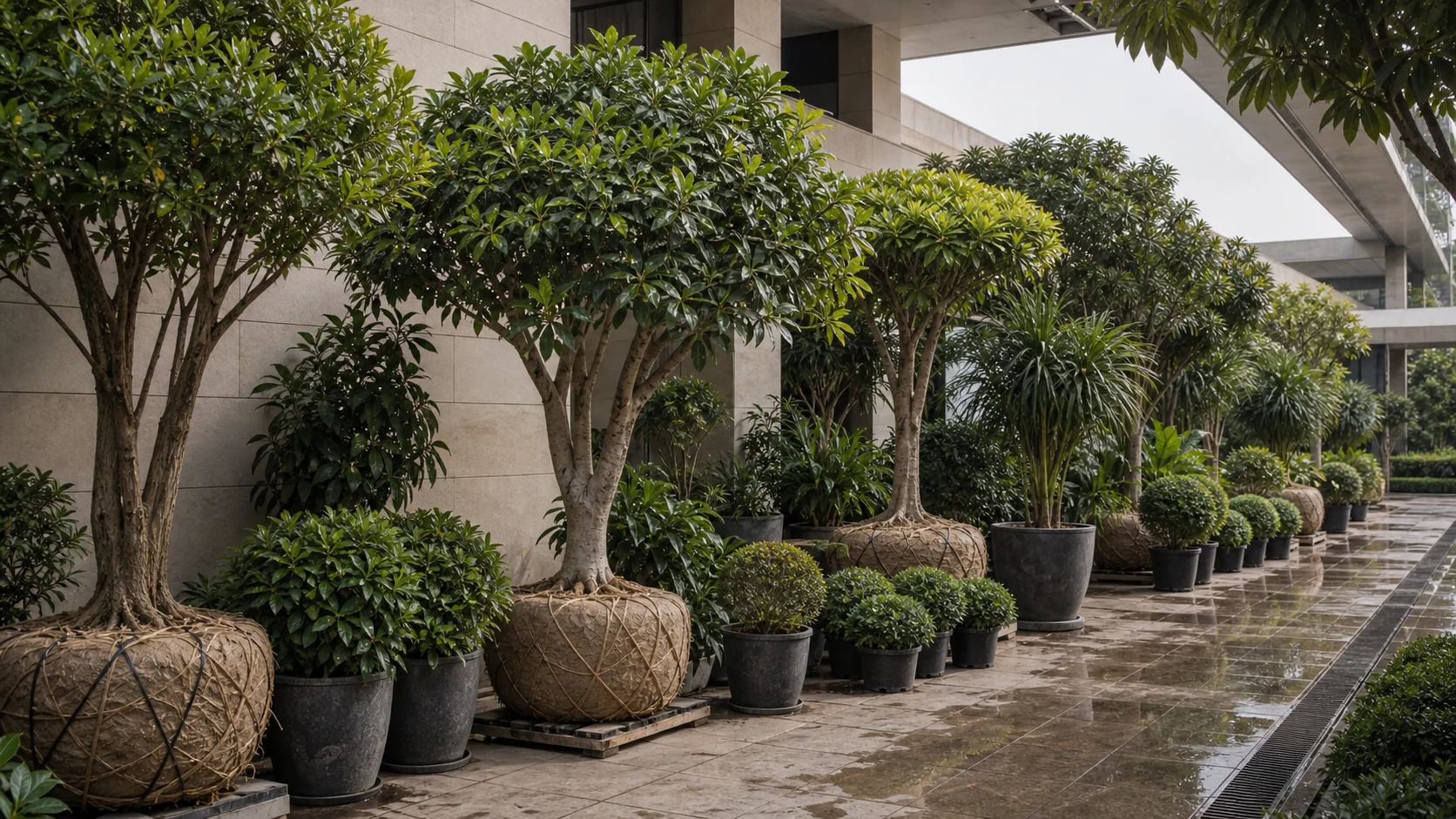
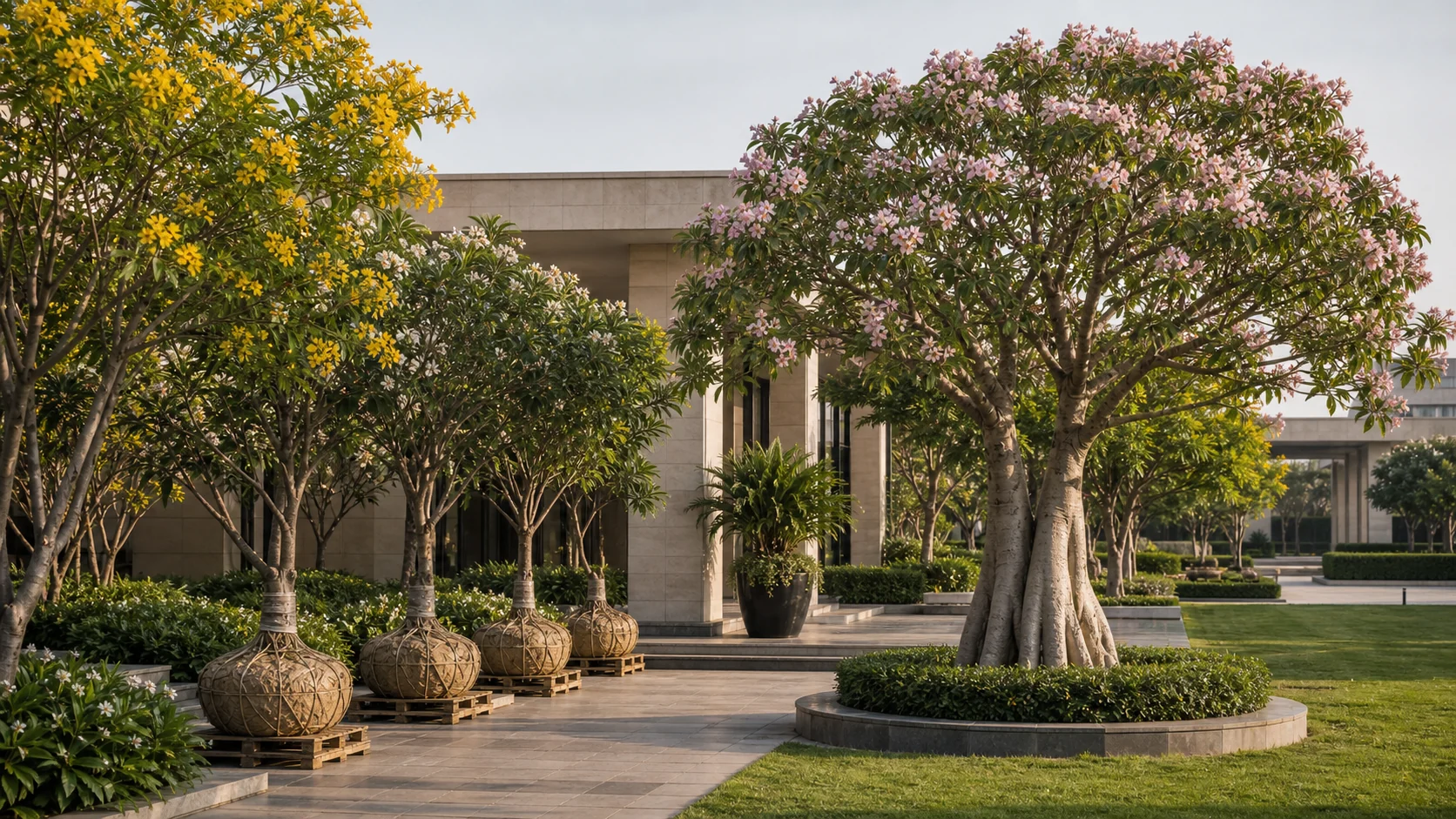
Specimen visual guide
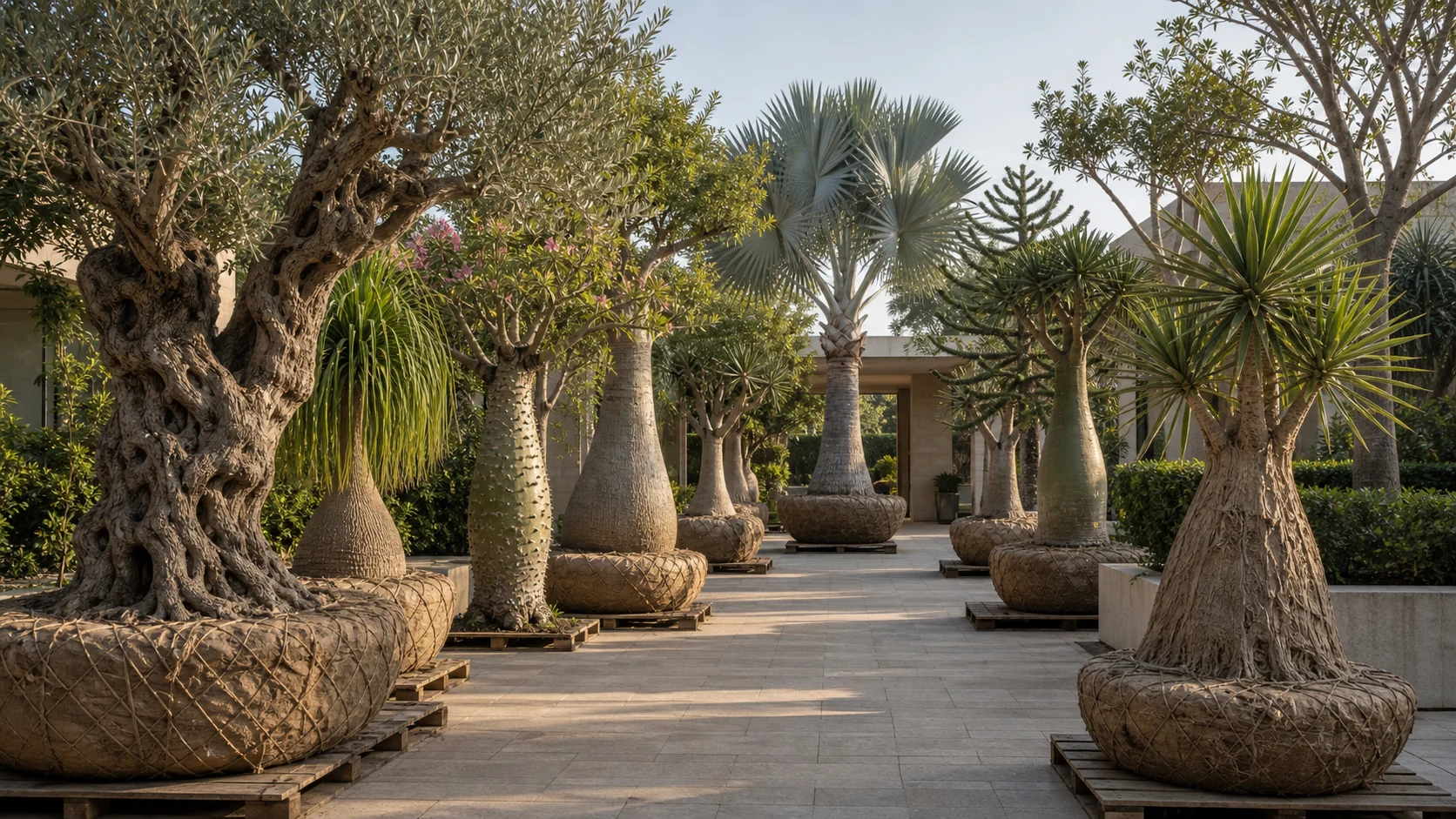
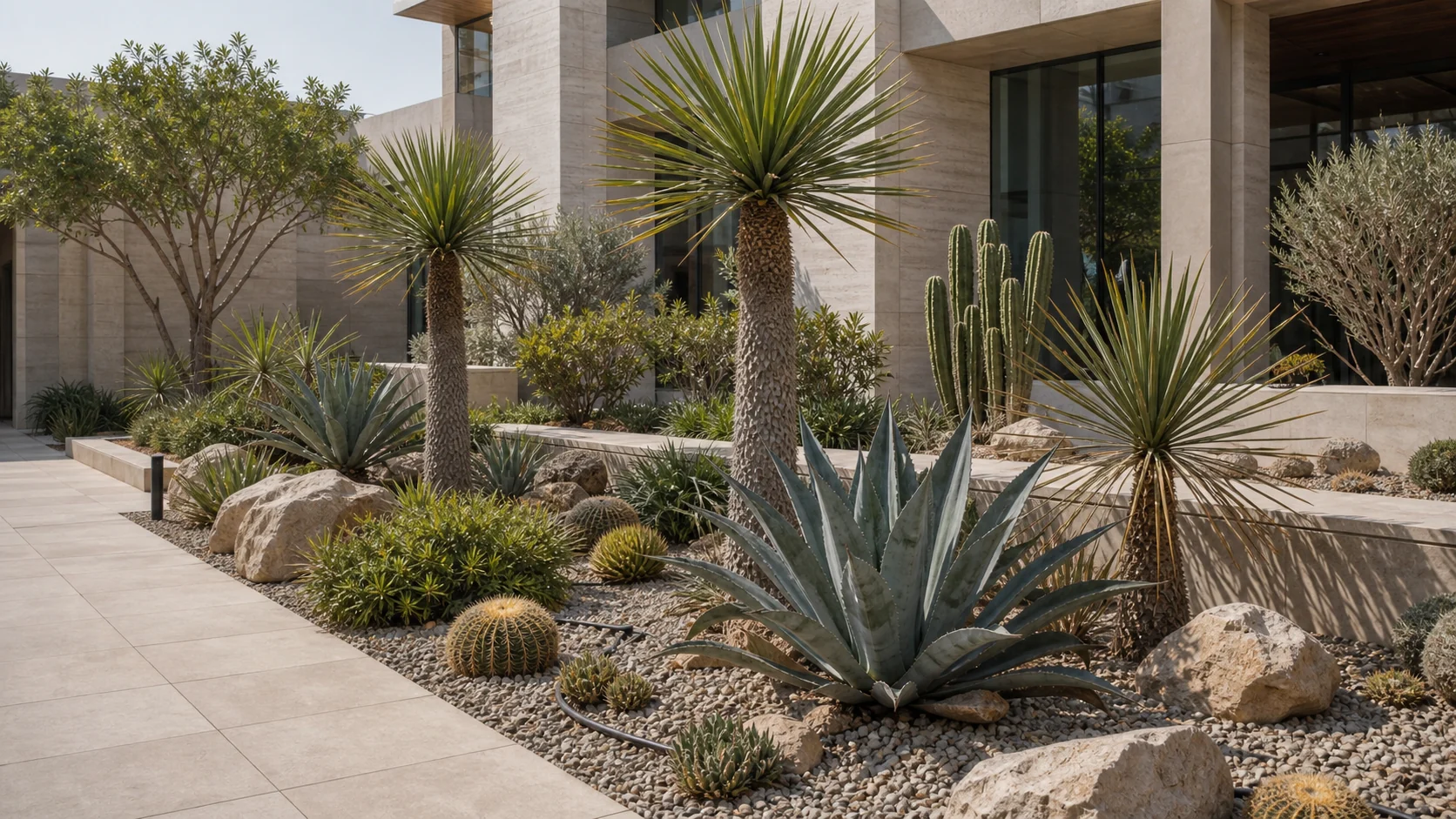
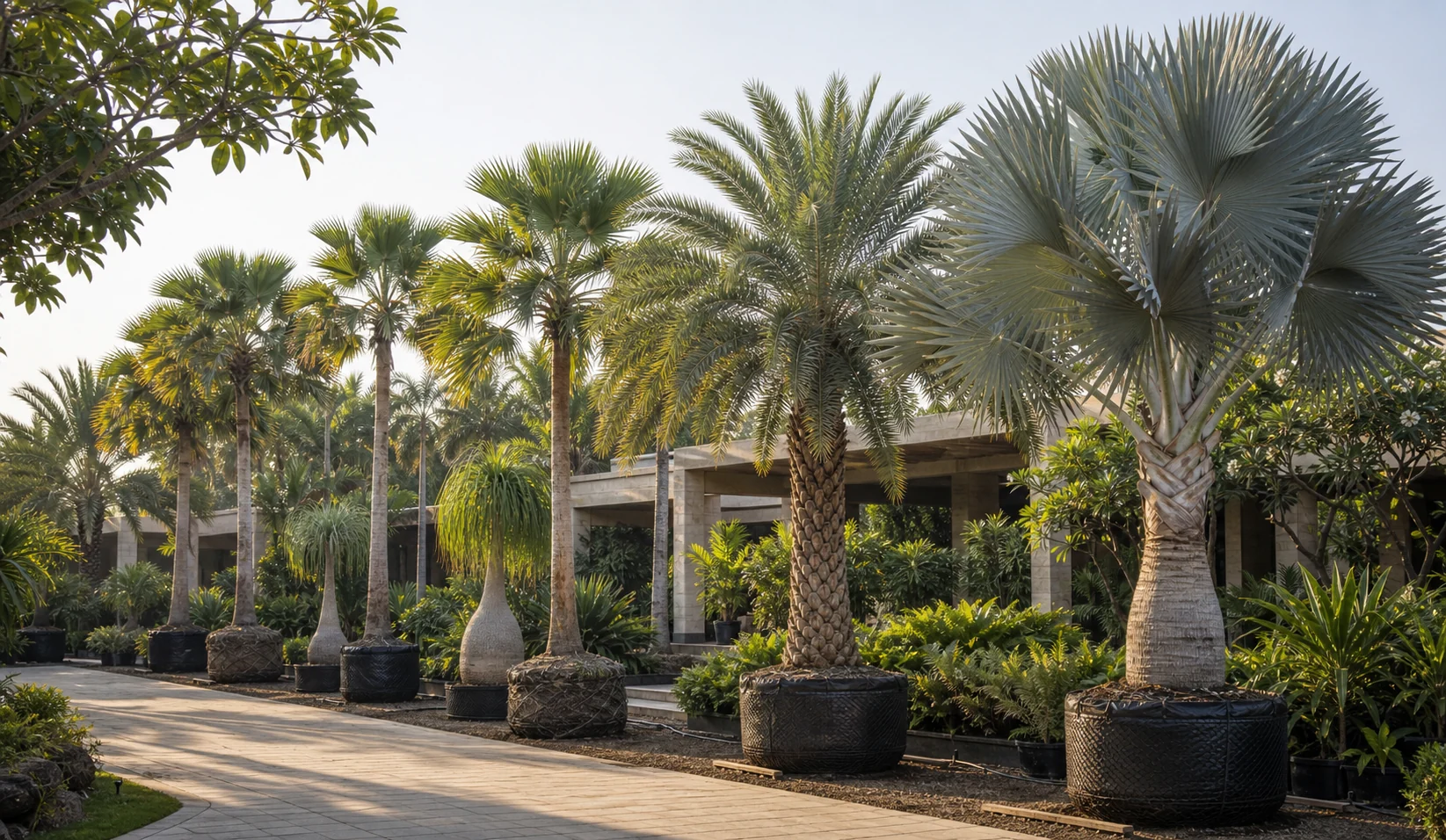
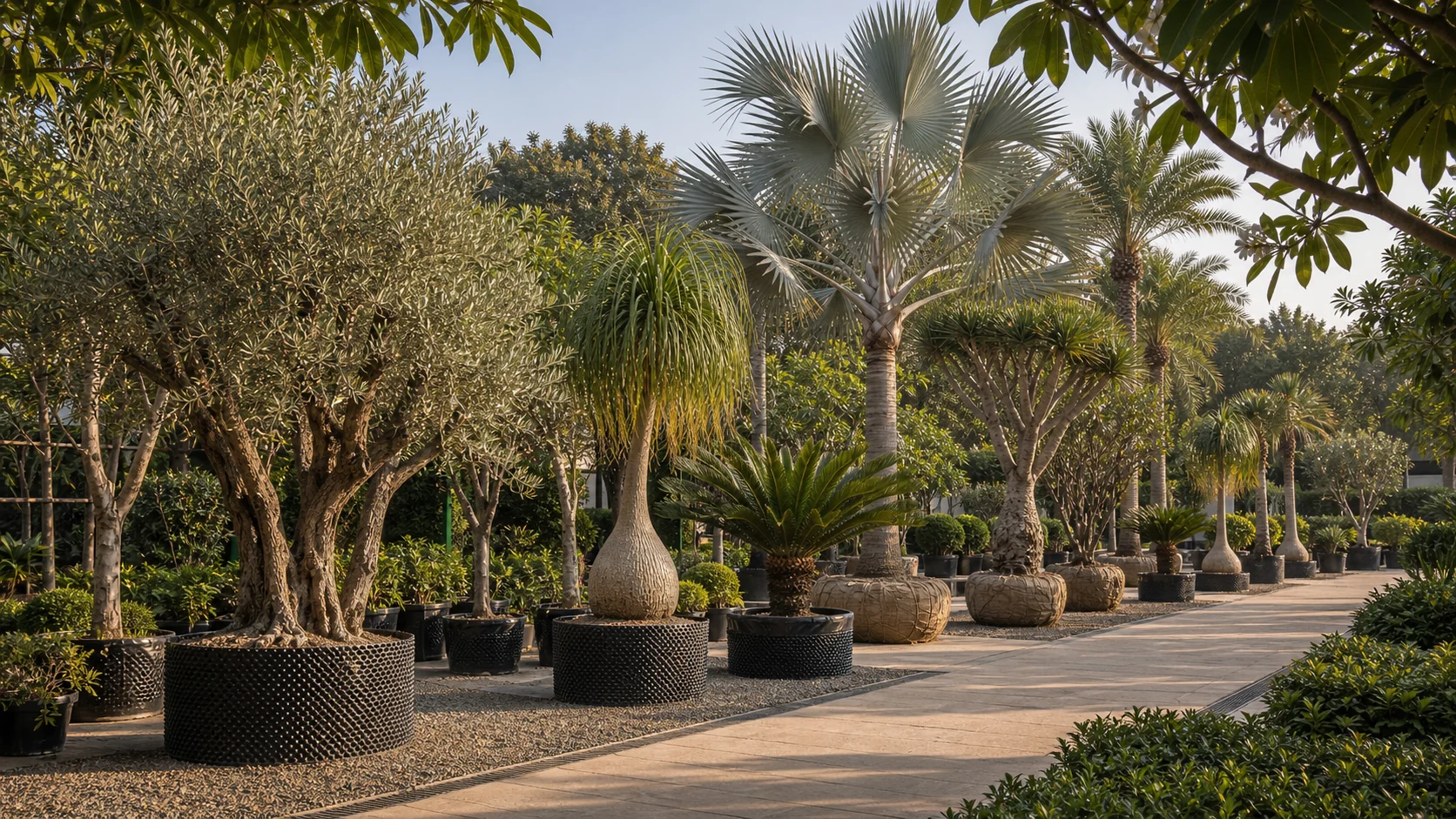
Visual context for placement, scale, handling, and landscape integration.
Section
Where it's used in premium projects
Specified for Mediterranean villa courts, marina terraces, embassy gardens, and large planter entries where a low clustering fan palm beats tall Washingtonia. Designers use it in salt-exposed coastal plazas and Delhi-NCR winter sites where tropical feather palms would fail — always with spine setbacks on narrow paths.
Section
Climate & site suitability in India
Coastal Gujarat, Maharashtra, and dry-winter interiors outperform humid shade courts without sun. Cold tolerance exceeds most imported tropical palms — suitable for hill-station containers with drainage. Clumps widen over decades — tight planter sizes need a future divide or transplant budget.
Section
Sourcing & acclimatisation
Procure on clump diameter, stem count, and frond colour — green form is standard. Container stock should be nursery-hardened to site sun. [Unverified: import share for commercial clump sizes.] Distinguish from blue cerifera form on BOQ — different price and rarity.
Section
Installation (pit, soil, drainage, bracing)
Free-draining pits and containers — Chamaerops tolerates drought but not anaerobic saucers in monsoon. Set planting back from walkway edges so spiny petioles do not intrude into shoulder height. Rarely needs heavy bracing except large container moves on terraces.
Section
Establishment & AMC
AMC removes dead fans and keeps spine zones flagged for facilities staff. Irrigation can taper on mature coastal plantings. Watch for clump encroachment into paving joints — root and stem spread is slow but relentless in small courts.
Section
Cost drivers
Explore
Related
Related
Related links
Services, segments, cost, and proof.
- Softscape & horticulture
- Irrigation & water management
- Landscape maintenance (AMC)
- Hotel & resort landscaping
- Luxury resort & spa landscaping
- Mall & retail landscaping
- Corporate campus landscaping
- Projects
- Commercial landscaping cost guide
- Pricing drivers (imported trees)
- Import compliance workflow
- Request a site assessment
- How cold- and salt-tolerant is Mediterranean fan palm in India?
- Among the hardiest landscape palms — suitable for many coastal and north-India sites where Ravenea or Veitchia fail, provided drainage is sound.
- Are Chamaerops petiole spines a walkway hazard?
- Yes — set clumps back from narrow guest paths and brief facilities on spine-aware pruning PPE; do not plant flush to bench edges.
- How large does a mature clump grow?
- Stems multiply and spread outward over decades — small courtyards need a planned footprint, not just today's nursery pot diameter.
- Can it live in large rooftop containers?
- Yes with drainage, weight engineering, and winter wind policy — a common hardy container palm where tropical giants are impossible.
- How is green Chamaerops different from cerifera?
- Green humilis is the standard hardy clustering fan; cerifera is the silver-blue Moroccan form — rarer, slower, and priced as a collector accent.
- How do we compare BOQs?
- Match clump diameter, stem count, container versus in-ground, and AMC spine-zone management — not per-tree headlines.