
Mexican blue palm
Mexican blue fan palm (Brahea armata)
Brahea armata delivers powder-blue stiff fan fronds and dramatic cream inflorescences from a Baja desert palm — specified for dry gravel and Mediterranean palettes where full sun and excellent monsoon drainage beat humid “tropical palm” pit design.
Spec
At a glance
- Botanical name
- Brahea armata
- Family
- Arecaceae
- Common names
- Mexican blue palm, blue fan palm, hesper palm
- Origin
- Baja California, Mexico
- Plant type
- Solitary fan palm
- Mature height
- Often 10–15 m in landscape
- Trunk / form
- Stout trunk; stiff powder-blue costapalmate fans
- Crown spread
- Wide stiff fan crown; long arching inflorescences
- Growth rate
- Slow
- Light
- Full sun only — colour fades in shade
- Water needs
- Low once established; hates wet feet
- India climate suitability
- Dry-winter India, Mediterranean palettes; risky in humid monsoon without drainage
- Cold/heat & salt/wind tolerance
- Heat- and drought-tolerant; light frost hardy; monsoon rot if waterlogged
- Typical supply size
- Clear-trunk blue specimens 2–4 m+ [Unverified]
- Lead time (sourcing)
- [Unverified] blue form nursery allocation
- Install considerations
- Engineered drainage; no waterlogging; full sun placement
- Maintenance level
- Low to moderate — frond removal; avoid over-irrigation
- Cautions
- Monsoon root rot on flat sites; very slow → costly at size; not a shade palm
Supply
Latest import activity
- Imported on
- 21 Jun 2026
- Source
- Tall Tree Nursery EU (sample)
- Availability
- On request
- Lot
- Brahea armata — Mexican blue palm
Gallery
Specimen visual guide
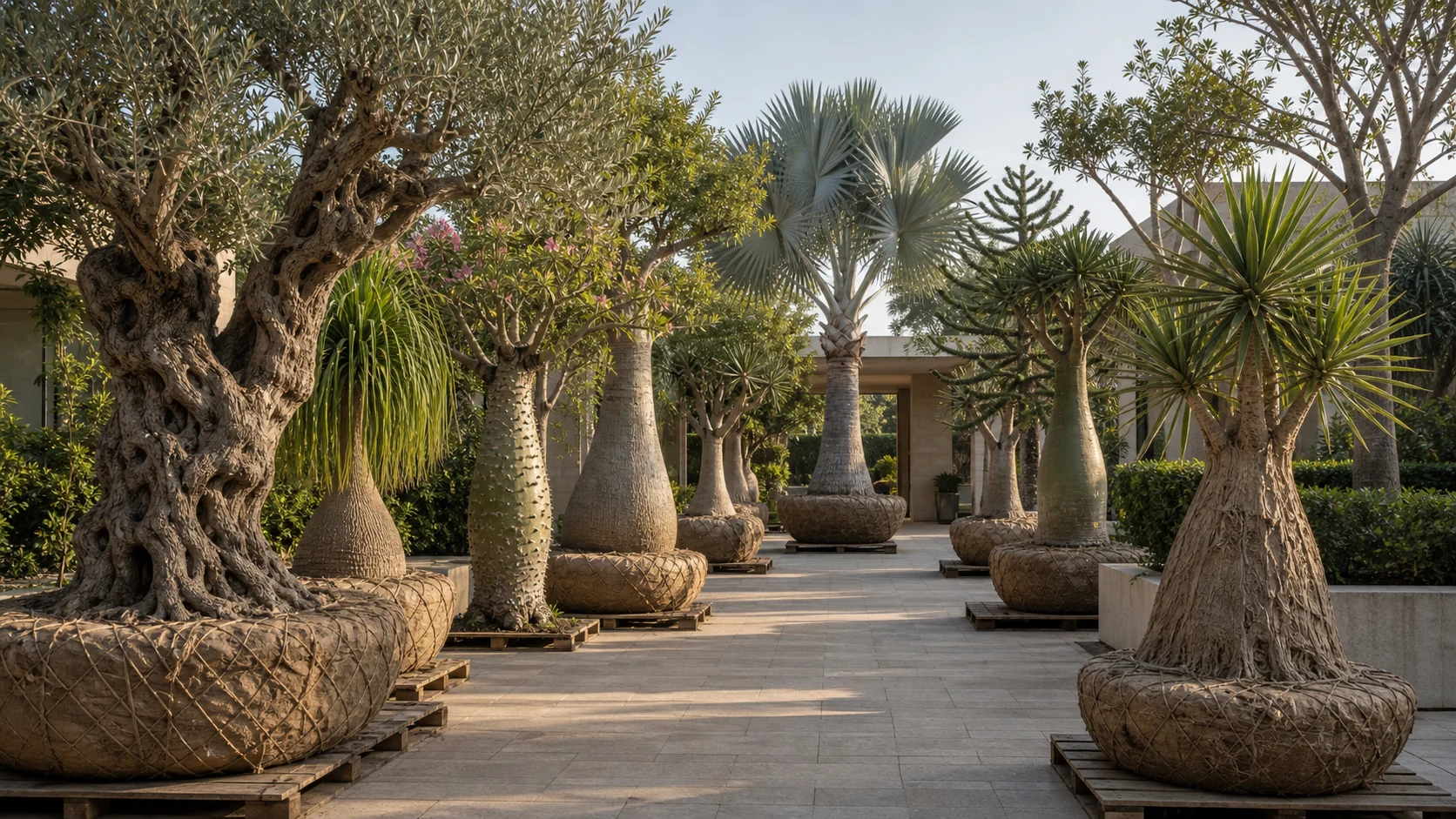
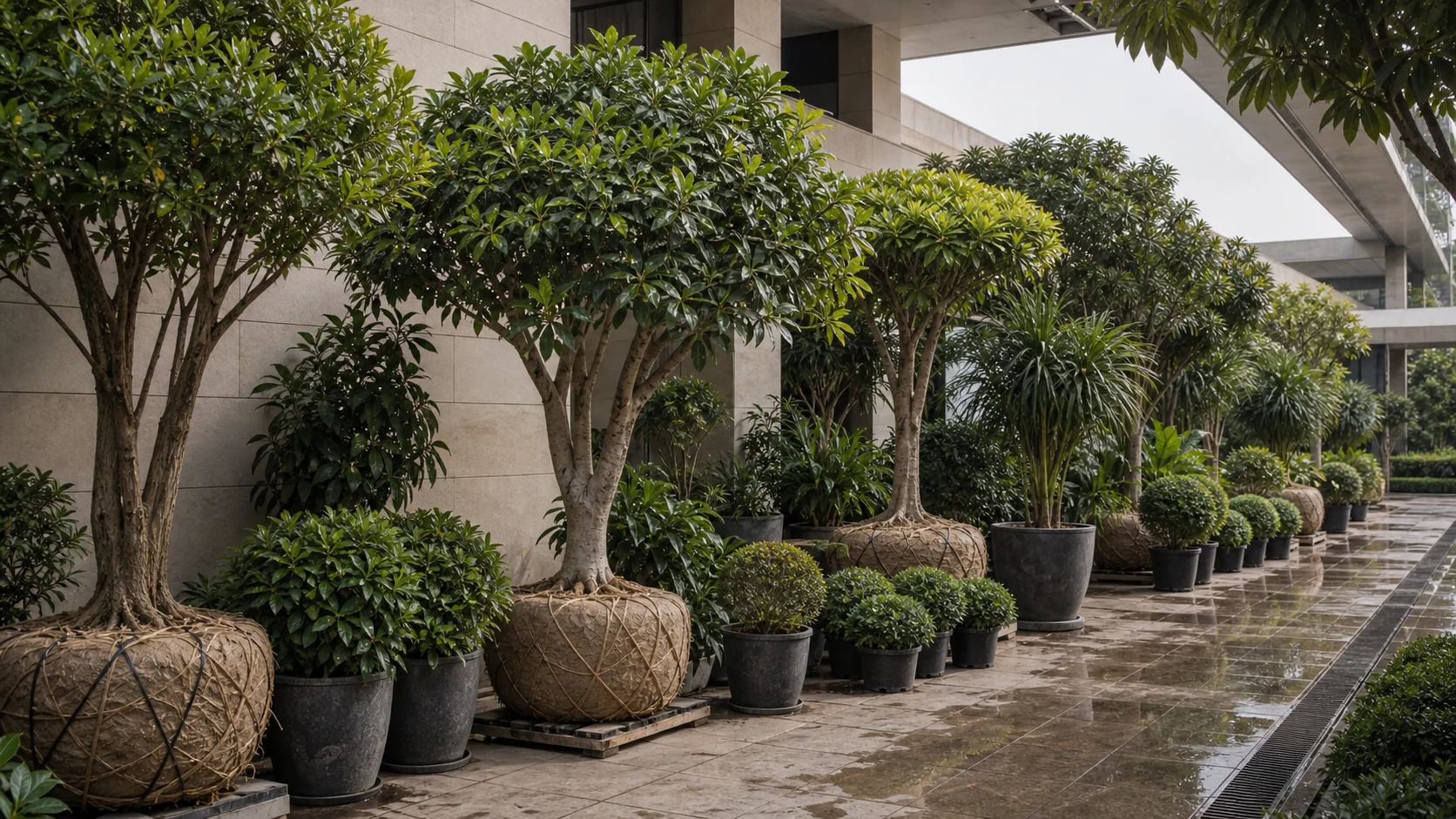
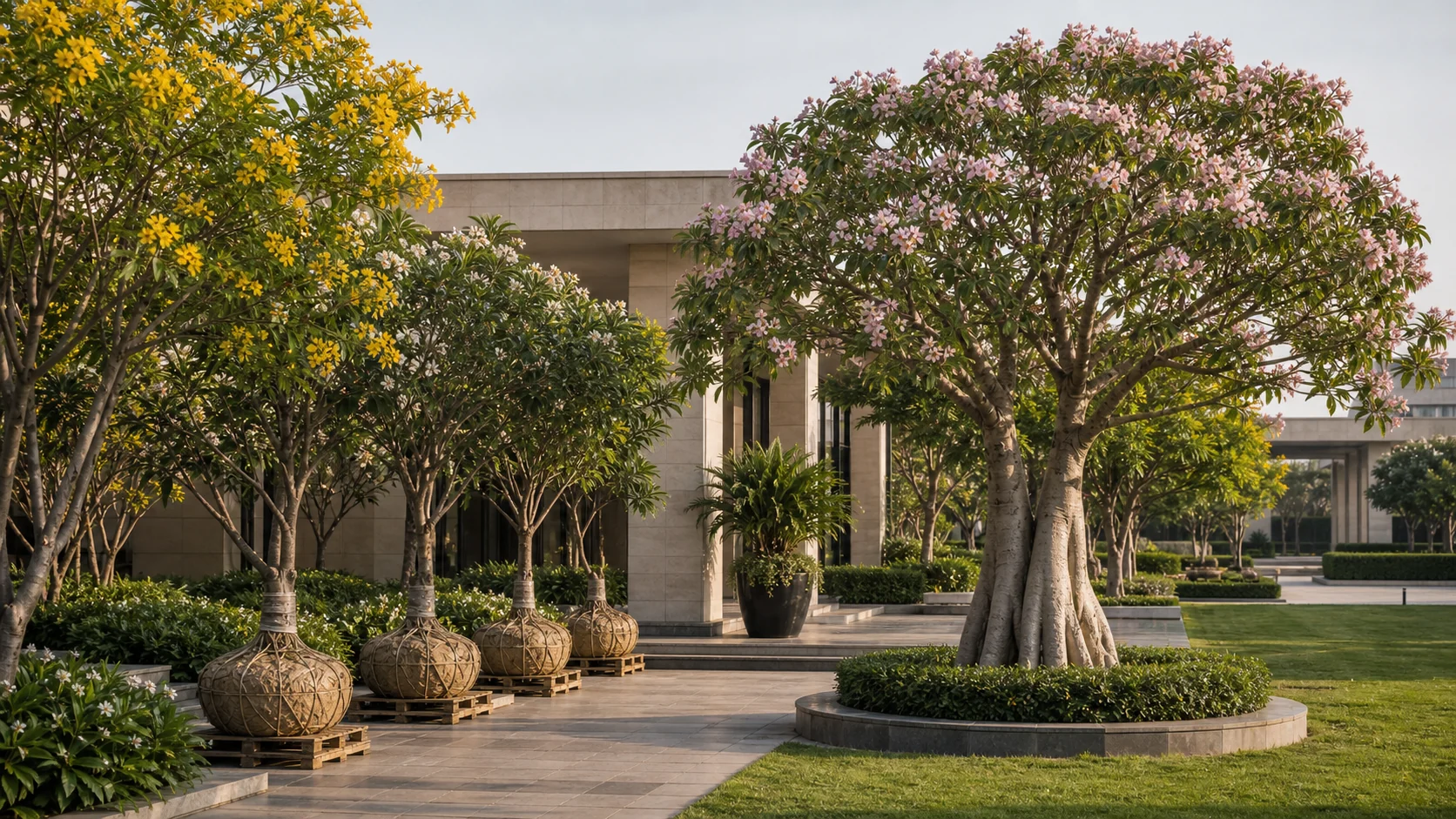
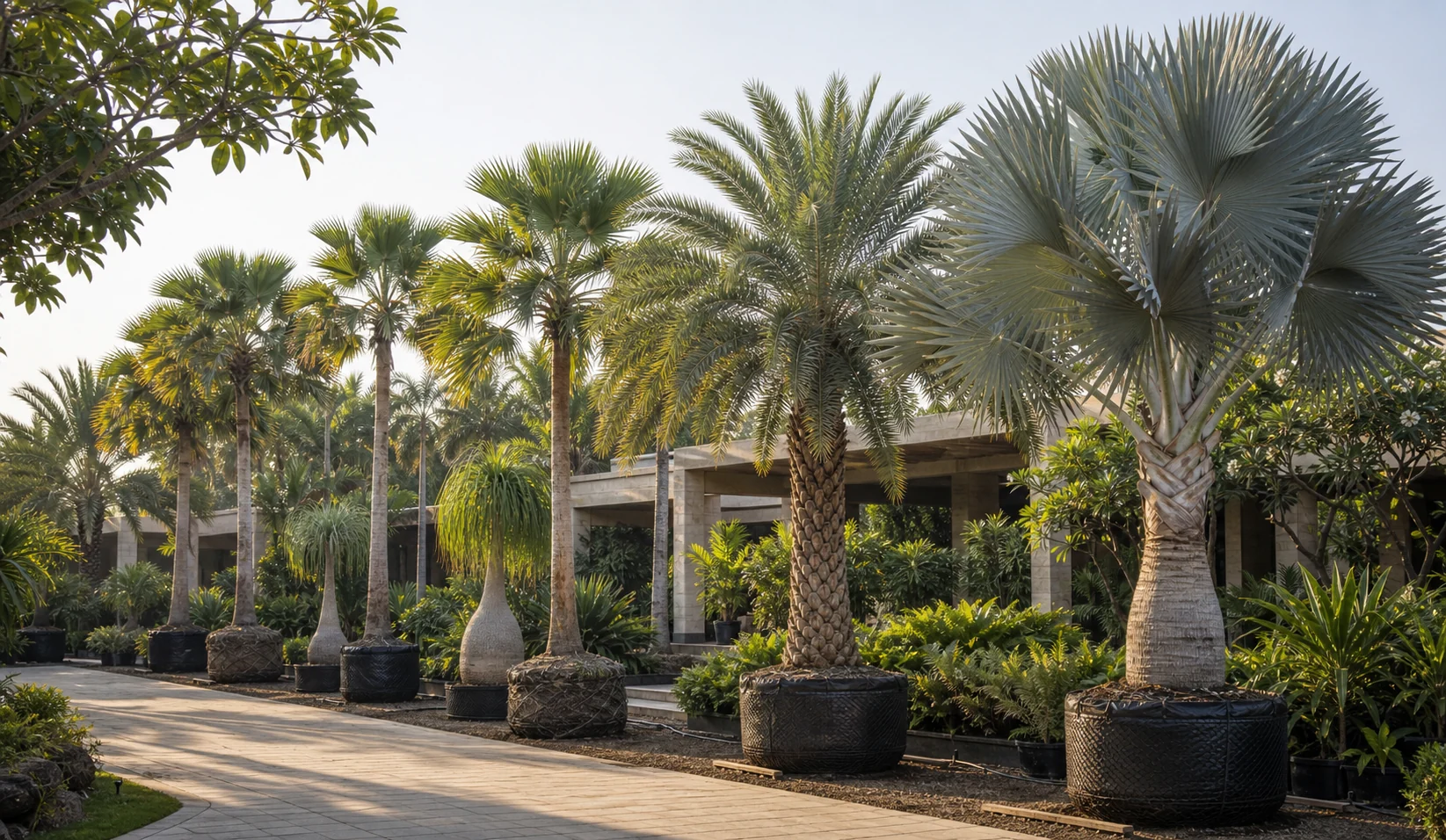
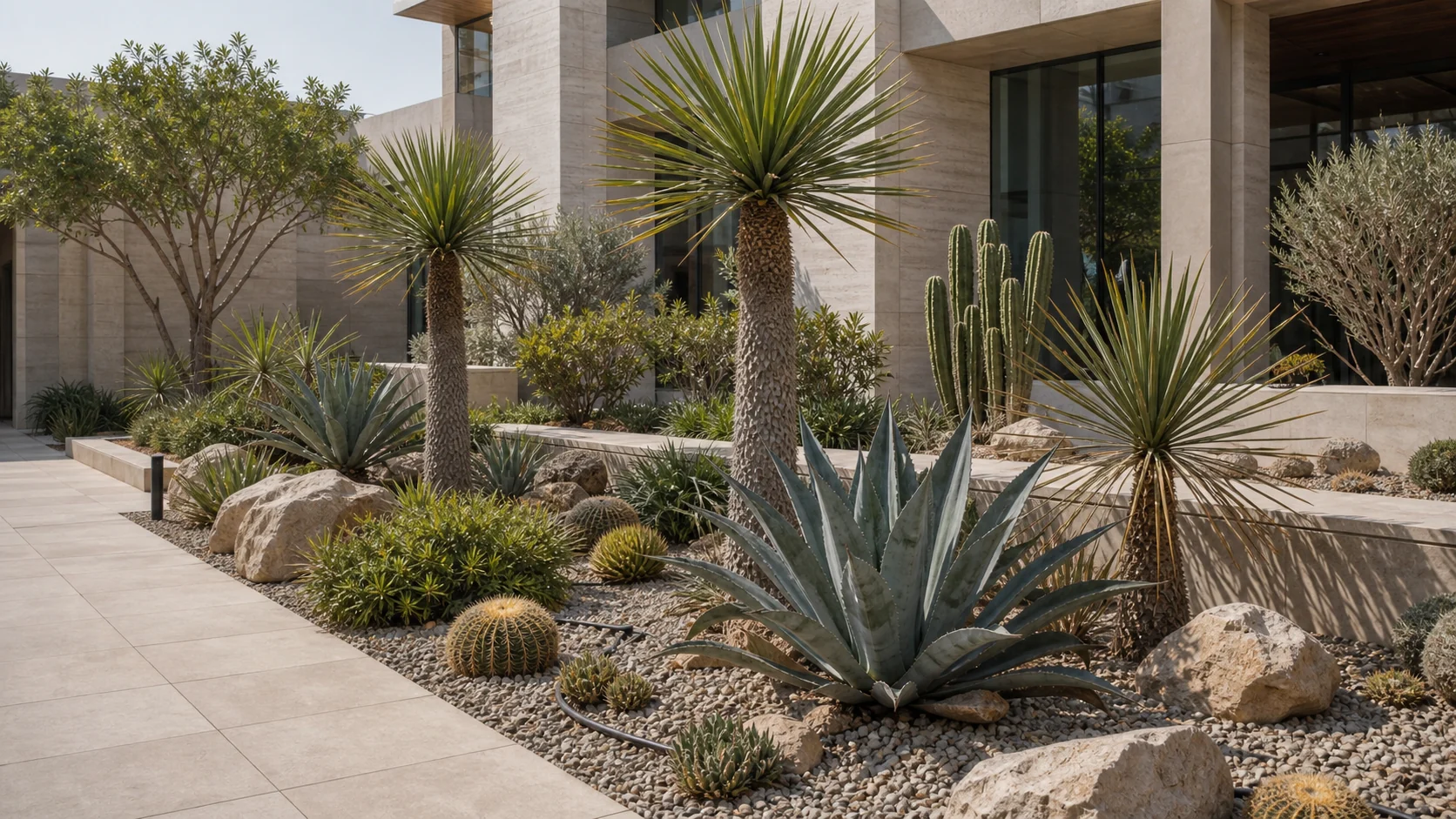
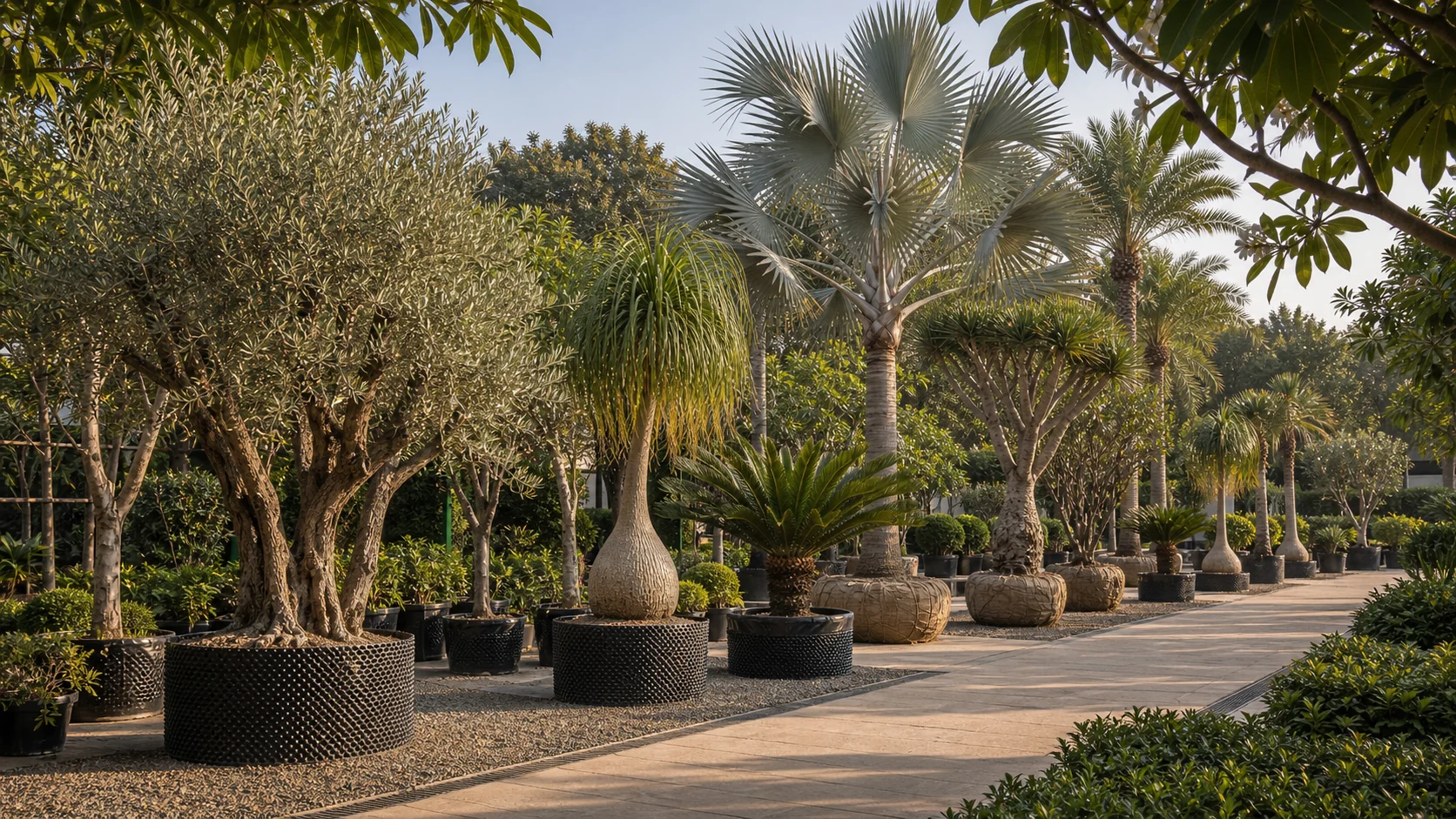
Visual context for placement, scale, handling, and landscape integration.
Section
Where it's used in premium projects
Designers specify Brahea armata for powder-blue accents in dry gravel forecourts, desert-modern villas, and resort zones styled like Baja or Mediterranean xeric planting — often as a solitary counterpoint to green massing. It replaces generic fan palms where colour and drought character matter more than fast height.
Section
Climate & site suitability in India
Western India dry corridors and well-drained plazas outperform humid Kolkata-style courtyards unless pits are engineered like cactus beds. Monsoon waterlogging is the primary failure mode — not heat. Full sun is mandatory; shaded specimens lose blue tone and open weak crowns.
Section
Sourcing & acclimatisation
Blue colour and stiff fan count at delivery are the KPIs — slow growth means designers buy clear-trunk class early. [Unverified: import versus domestic nursery for commercial blue Brahea.] Hold at nursery with restrained irrigation to avoid soft growth before site placement.
Section
Installation (pit, soil, drainage, bracing)
Free-draining pits with coarse layers and no saucer bottoms — treat installation like desert tree work, not swamp palm work. Light bracing on tall transplants in wind corridors. Never plant in low points that pond during monsoon — root rot appears within one season.
Section
Establishment & AMC
AMC should throttle irrigation after establishment — facilities teams accustomed to lush tropical palms often over-water Brahea. Remove only dead fans; living blue fans are the asset. Monitor crown for pink rot symptoms after wet seasons.
Section
Cost drivers
Explore
Related
Related
Related links
Services, segments, cost, and proof.
- Softscape & horticulture
- Irrigation & water management
- Landscape maintenance (AMC)
- Hotel & resort landscaping
- Luxury resort & spa landscaping
- Mall & retail landscaping
- Corporate campus landscaping
- Projects
- Commercial landscaping cost guide
- Pricing drivers (imported trees)
- Import compliance workflow
- Request a site assessment
- Can Brahea armata survive Indian monsoon humidity?
- Yes on free-draining engineered sites — failure is wet feet in saucer pits and low points, not humidity alone; drainage design is the gate.
- Why is Mexican blue palm slow and costly at size?
- Baja-adapted slow growth means buyers purchase clear-trunk impact early — waiting on-site for a statement crown takes many years.
- Brahea armata versus Bismarckia for a blue accent?
- Brahea is desert-blue with stiff fans and better cold tolerance; Bismarckia is a wider silver costapalmate crown for humid tropical plazas — swap them only with drainage and climate redesign.
- Does it tolerate light frost in north-India hills?
- More than most tropical feather palms — still protect young stock in unusual cold snaps; established plants handle light frost better than Ravenea or Veitchia.
- What irrigation mistake kills Brahea on hotel sites?
- Daily overhead irrigation on flat paving saucers — root rot follows; drip at root zone with dry crowns is safer.
- How do we compare supplier BOQs?
- Match clear-trunk height, fan colour at delivery, drainage specification, and establishment irrigation cap — not per-tree headlines.