
Cuban wax palm
Cuban wax palm (Copernicia hospita)
Copernicia hospita is a collector-grade Cuban wax palm — dense rounded crown of stiff waxy blue-green fans on a solitary trunk — for symmetrical formal features where very slow growth and rarity are accepted in the brief.
Spec
At a glance
- Botanical name
- Copernicia hospita
- Family
- Arecaceae
- Common names
- Cuban wax palm, hospita palm
- Origin
- Cuba
- Plant type
- Solitary fan palm
- Mature height
- Often 6–12 m in landscape
- Trunk / form
- Solitary trunk; dense rounded waxy fan crown
- Crown spread
- Moderate dense symmetrical crown
- Growth rate
- Very slow
- Light
- Full sun
- Water needs
- Low to moderate once established
- India climate suitability
- Hot dry-tropical and coastal sun; poor in shade and waterlogged pits
- Cold/heat & salt/wind tolerance
- Heat- and drought-tolerant; moderate salt; not cold-hardy
- Typical supply size
- Collector specimens 2–4 m clear trunk [Unverified]
- Lead time (sourcing)
- [Unverified] rarity extends nursery lead
- Install considerations
- Drainage; symmetrical focal placement; long establishment patience
- Maintenance level
- Low — periodic dead fan removal
- Cautions
- Very slow and costly; rare; do not confuse with Copernicia alba or prunifera
Gallery
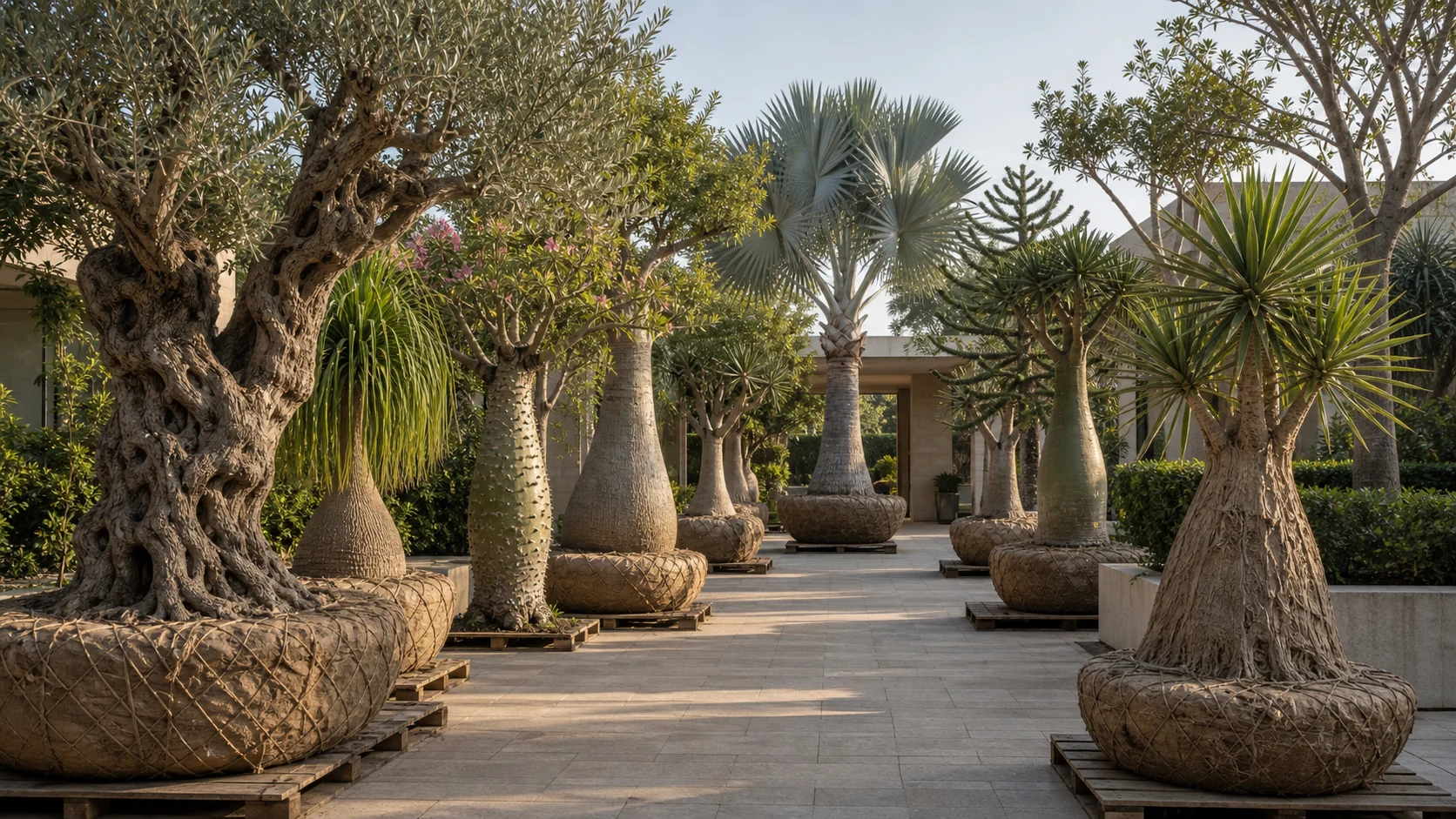
Specimen visual guide
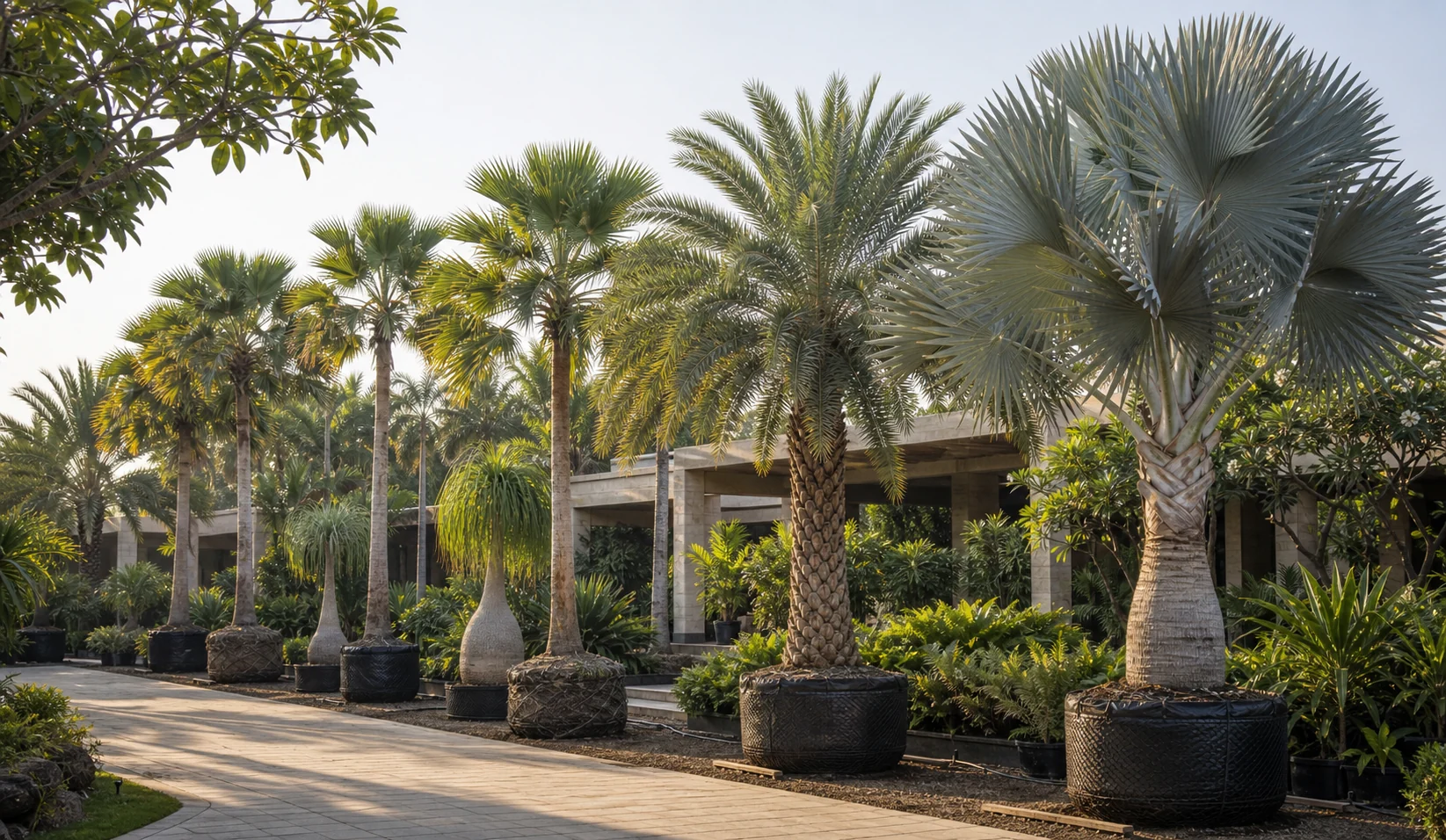
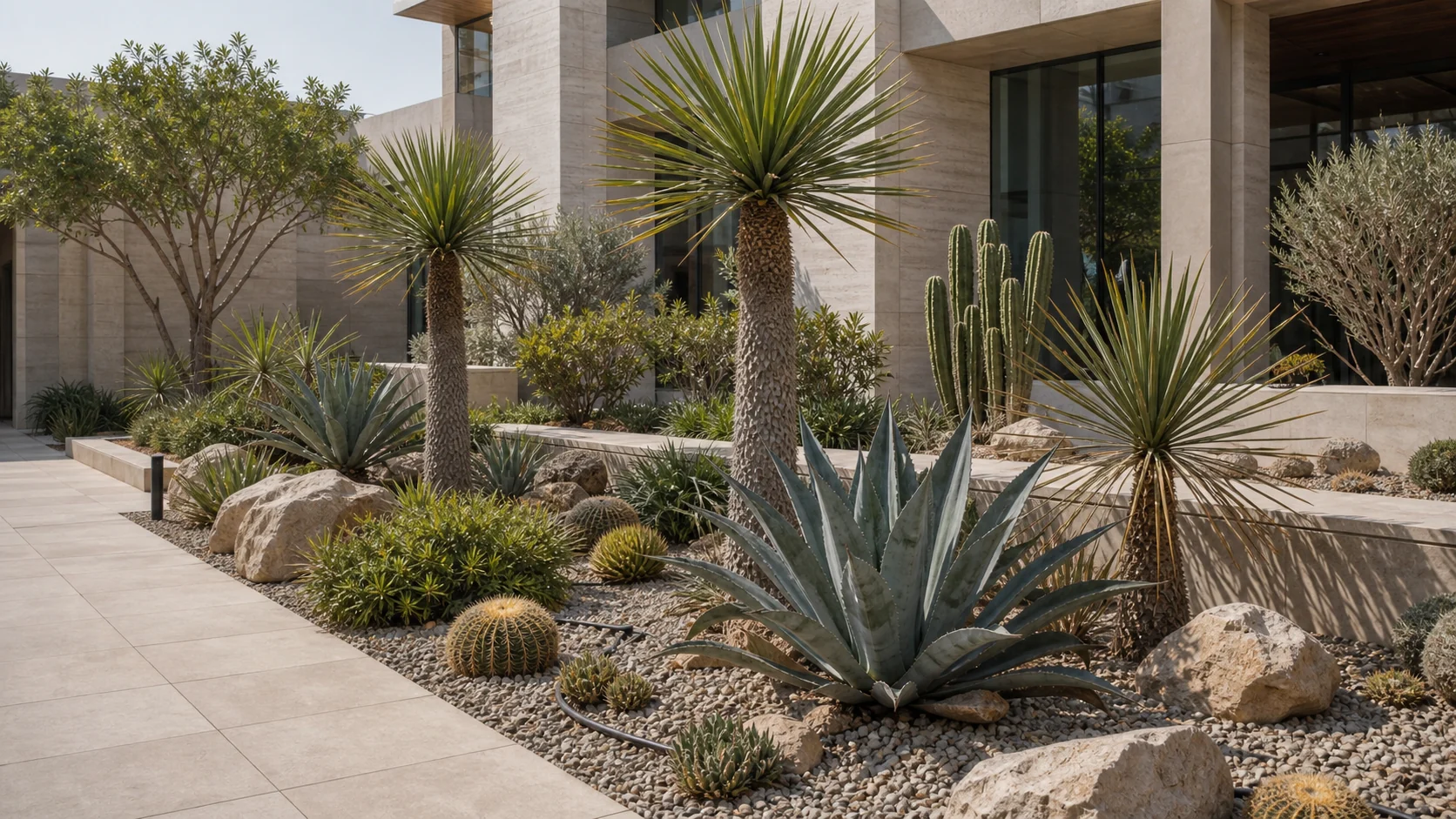
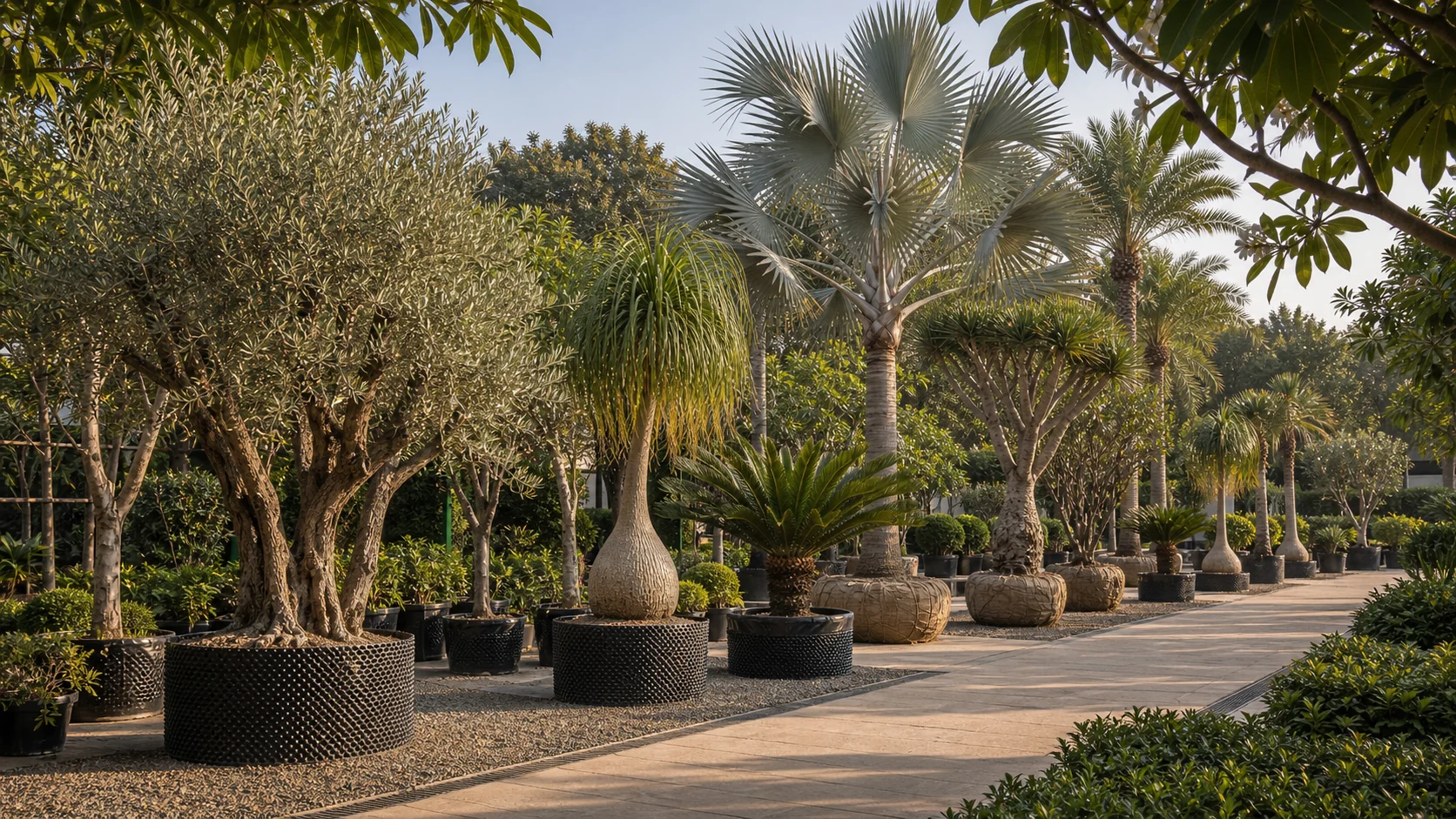
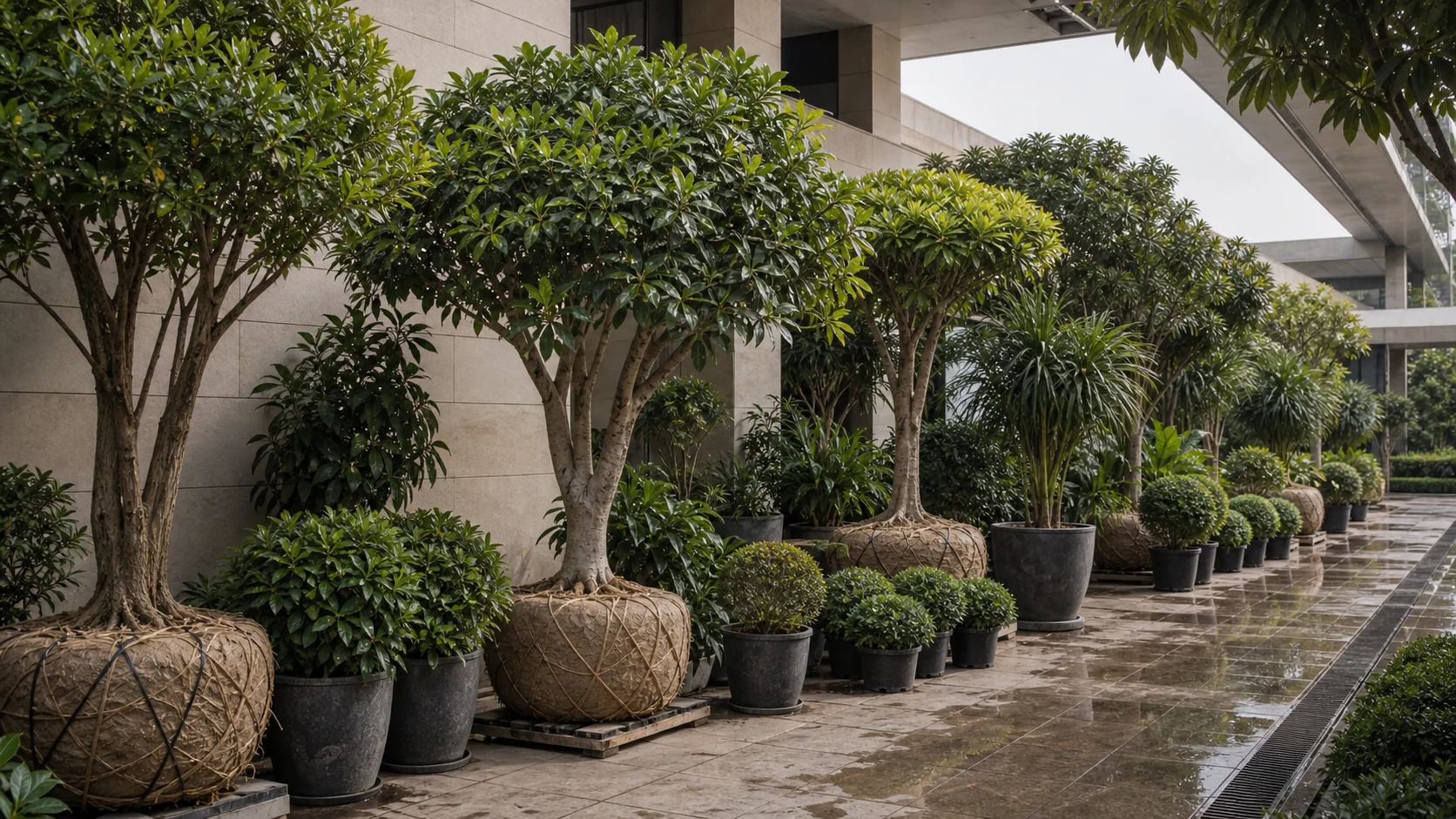
Visual context for placement, scale, handling, and landscape integration.

Section
Where it's used in premium projects
Specified as a symmetrical blue-green fan focal — embassy courts, collector gardens, and formal resort axes where Brahea or Bismarckia are the wrong scale or habit. Designers choose hospita when a dense rounded wax crown matters more than fast vertical impact.
Section
Climate & site suitability in India
Full-sun hot sites with drainage suit it — humid coasts work if pits drain between monsoons. Not for north-India winter without protection when young. Shade produces open, uneven crowns that break the formal brief.
Section
Sourcing & acclimatisation
Very slow growth and rarity mean BOQs must state crown symmetry at delivery, not assumed future density. [Unverified: typical import corridor for Cuban Copernicia stock.] Distinguish from Copernicia alba (flood-drought avenue) and prunifera (carnauba story, moderate size) on nursery labels.
Section
Installation (pit, soil, drainage, bracing)
Desert-style free-draining pits; no monsoon saucers. Focal singles may need light bracing on windy terraces. Crane access for mature waxy crowns — fans are stiff and heavy relative to trunk caliper.
Section
Establishment & AMC
AMC is light — remove dead fans only; over-irrigation is the common kill. Client handover should explain decade-scale crown fill — hospita does not deliver instant avenue closure. Monitor for scale on waxy fans in humid sites.
Section
Cost drivers
Explore
Related
Related
Related links
Services, segments, cost, and proof.
- Softscape & horticulture
- Irrigation & water management
- Landscape maintenance (AMC)
- Hotel & resort landscaping
- Luxury resort & spa landscaping
- Mall & retail landscaping
- Corporate campus landscaping
- Projects
- Commercial landscaping cost guide
- Pricing drivers (imported trees)
- Import compliance workflow
- Request a site assessment
- How does Copernicia hospita compare to other blue fan palms?
- Hospita is a dense rounded waxy Cuban crown; Brahea armata is powder-blue desert arching fans; Bismarckia is a huge silver costapalmate — specify by crown habit, not colour adjective alone.
- Why is Cuban wax palm so slow and expensive?
- Very slow caliper and crown development — buyers pay for symmetrical waxy fans at delivery because years on-site will not close a formal axis quickly.
- What lead time should procurement expect?
- Rarity extends nursery allocation — confirm species identity and holding period on submittals early; [Unverified] commercial lead varies by supplier.
- Can hospita work in humid coastal resorts?
- Yes with drainage-first pits — failure is waterlogging, not salt alone; full sun remains mandatory.
- Is it the same as Caranday Copernicia alba?
- No — alba is Pantanal flood-drought avenue stock; hospita is Cuban dense wax crown collector form — never swap on BOQ.
- How do we benchmark cost?
- Match species verification, clear-trunk class, crown symmetry photos, and establishment weeks — not generic Copernicia pricing.