
Clustered fishtail palm
Clustering fishtail palm (Caryota mitis)
Caryota mitis is the clustering fishtail palm — suckering stems with unmistakable bipinnate fishtail leaflets — used for lush tropical screens, atrium texture, and green walls where part shade and humidity beat dry desert palm protocols.
Spec
At a glance
- Botanical name
- Caryota mitis
- Family
- Arecaceae
- Common names
- Clustering fishtail palm, fishtail palm (clustering)
- Origin
- South-East Asia (including India)
- Plant type
- Clustering suckering palm
- Mature height
- Often 3–8 m per stem; clump spreads wider
- Trunk / form
- Multiple slender dark stems; bipinnate fishtail fronds
- Crown spread
- Moderate per stem; clump aggregate wider
- Growth rate
- Moderate to fast in warm humid sites
- Light
- Sun to part shade — tolerates atrium light
- Water needs
- Moderate to high; consistent moisture
- India climate suitability
- Humid tropical India; atriums with humidity; weak in dry cold winters
- Cold/heat & salt/wind tolerance
- Warmth required; per-stem monocarpic flowering; irritant fruit
- Typical supply size
- Multi-stem clumps 1.5–3 m [Unverified]
- Lead time (sourcing)
- [Unverified] clump size classes at nursery
- Install considerations
- Clump rootball handling; thinning policy after stem flowering
- Maintenance level
- Moderate — stem removal after flowering; fruit safety
- Cautions
- Fruit oxalate irritant; stems die after flowering; needs warmth/humidity
Gallery
Specimen visual guide
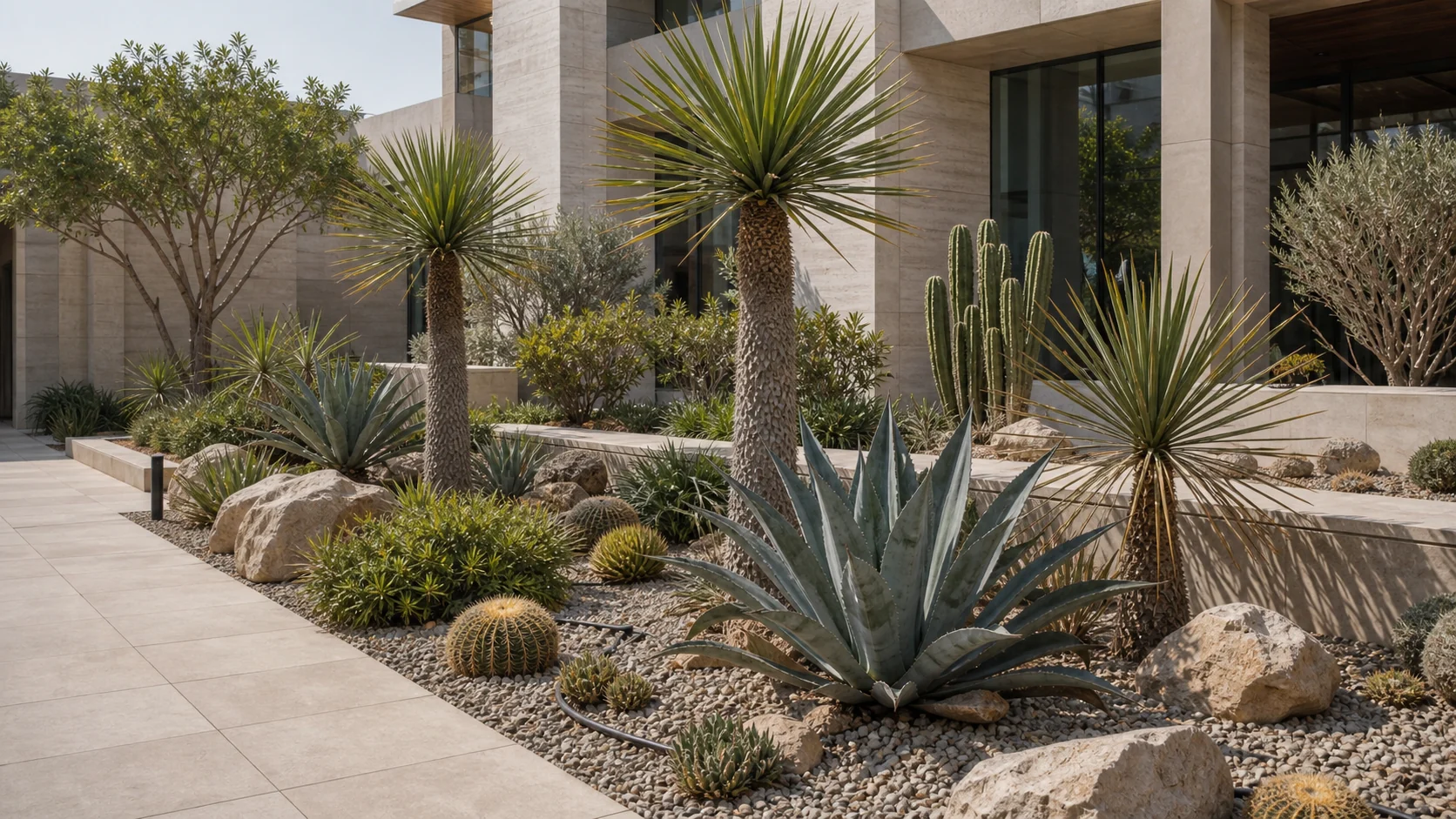
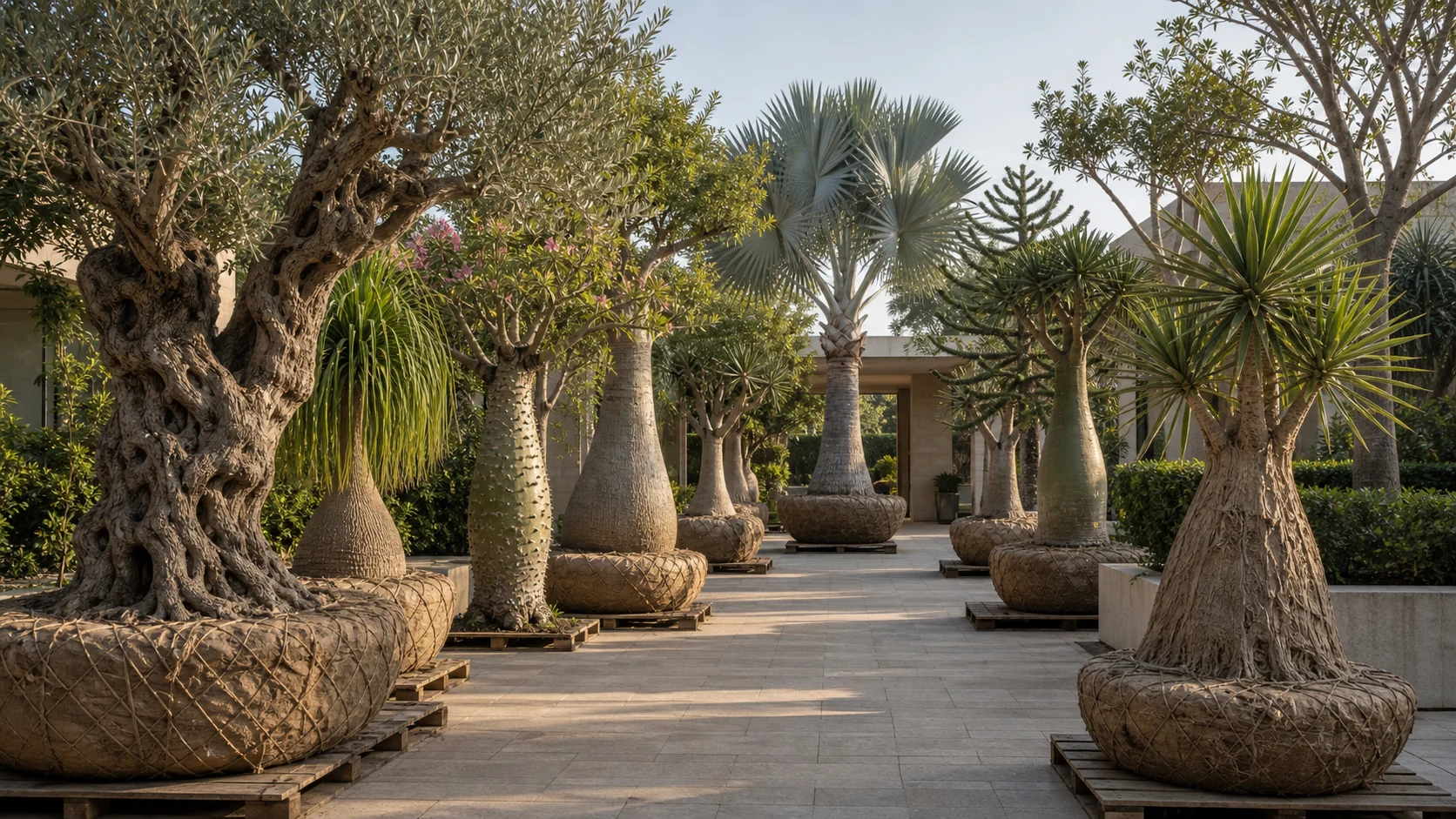
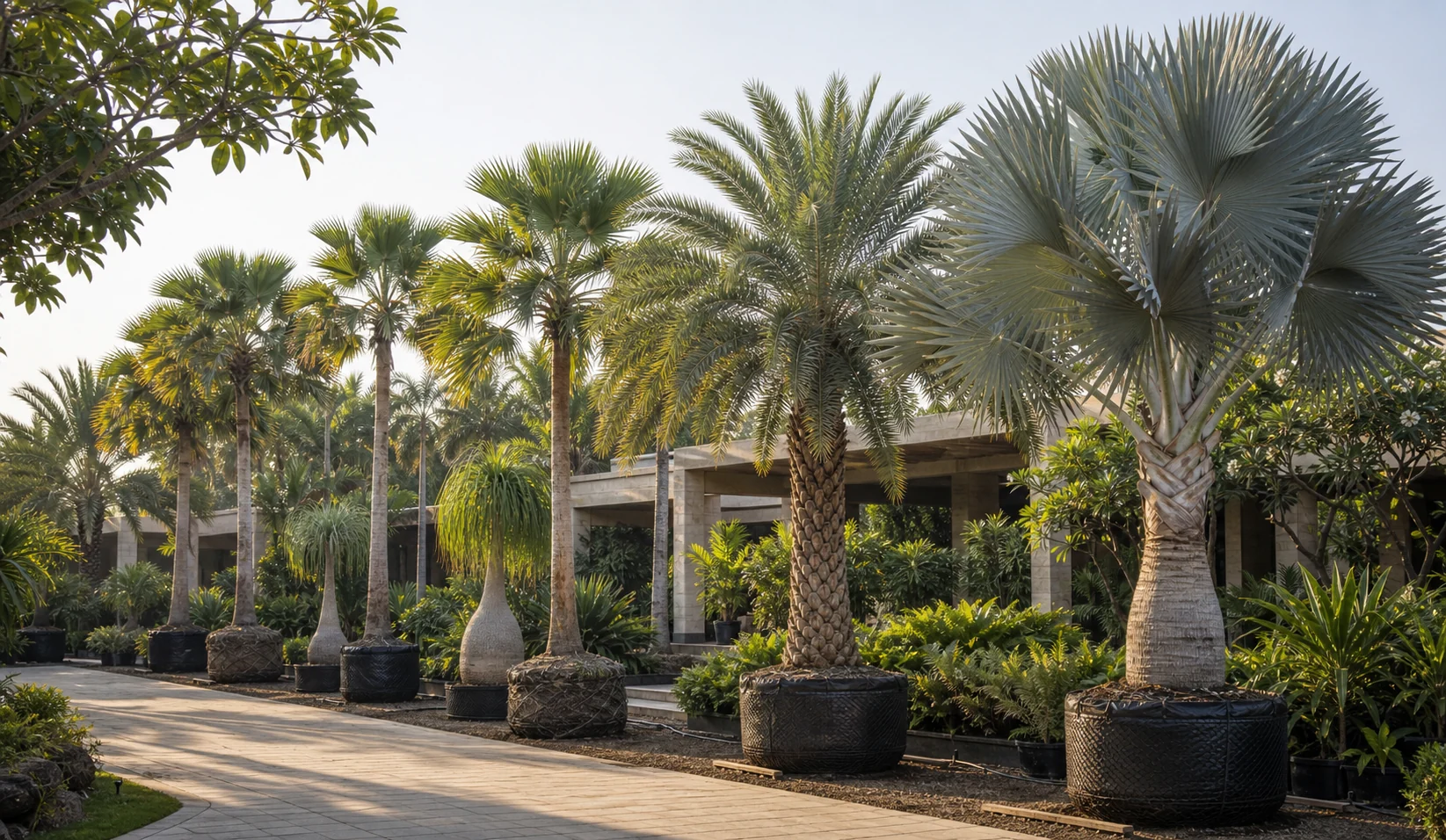
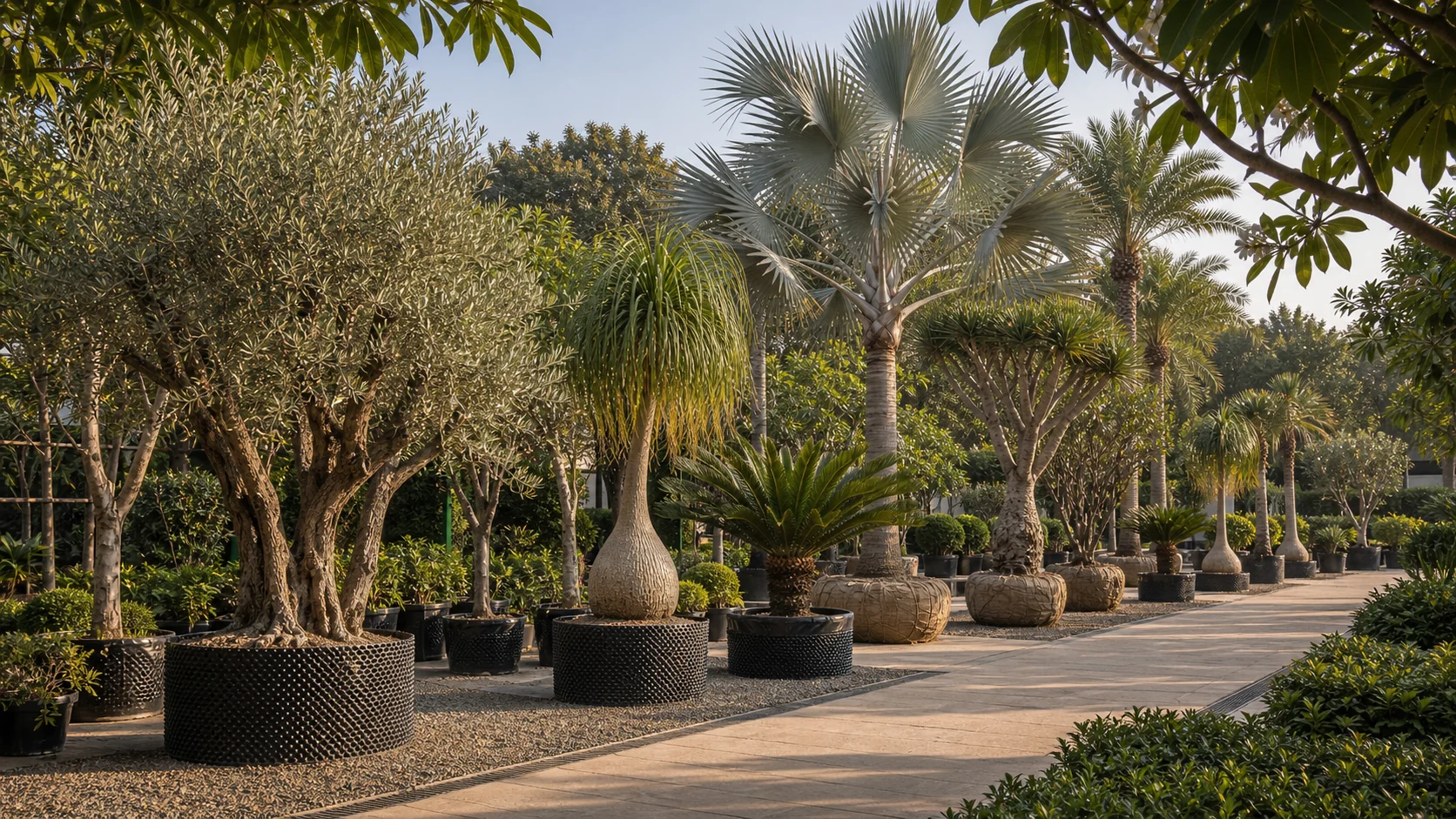
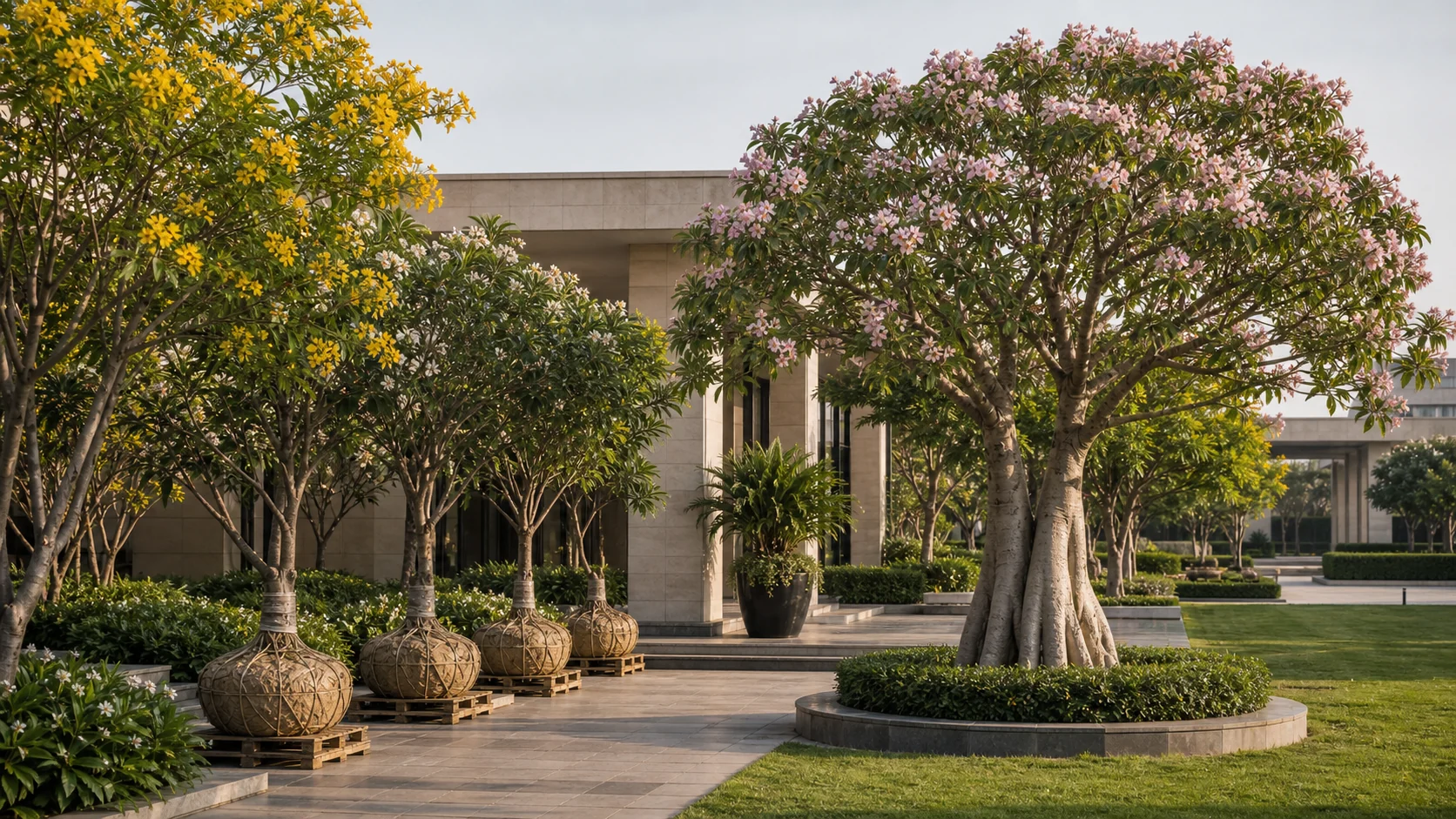
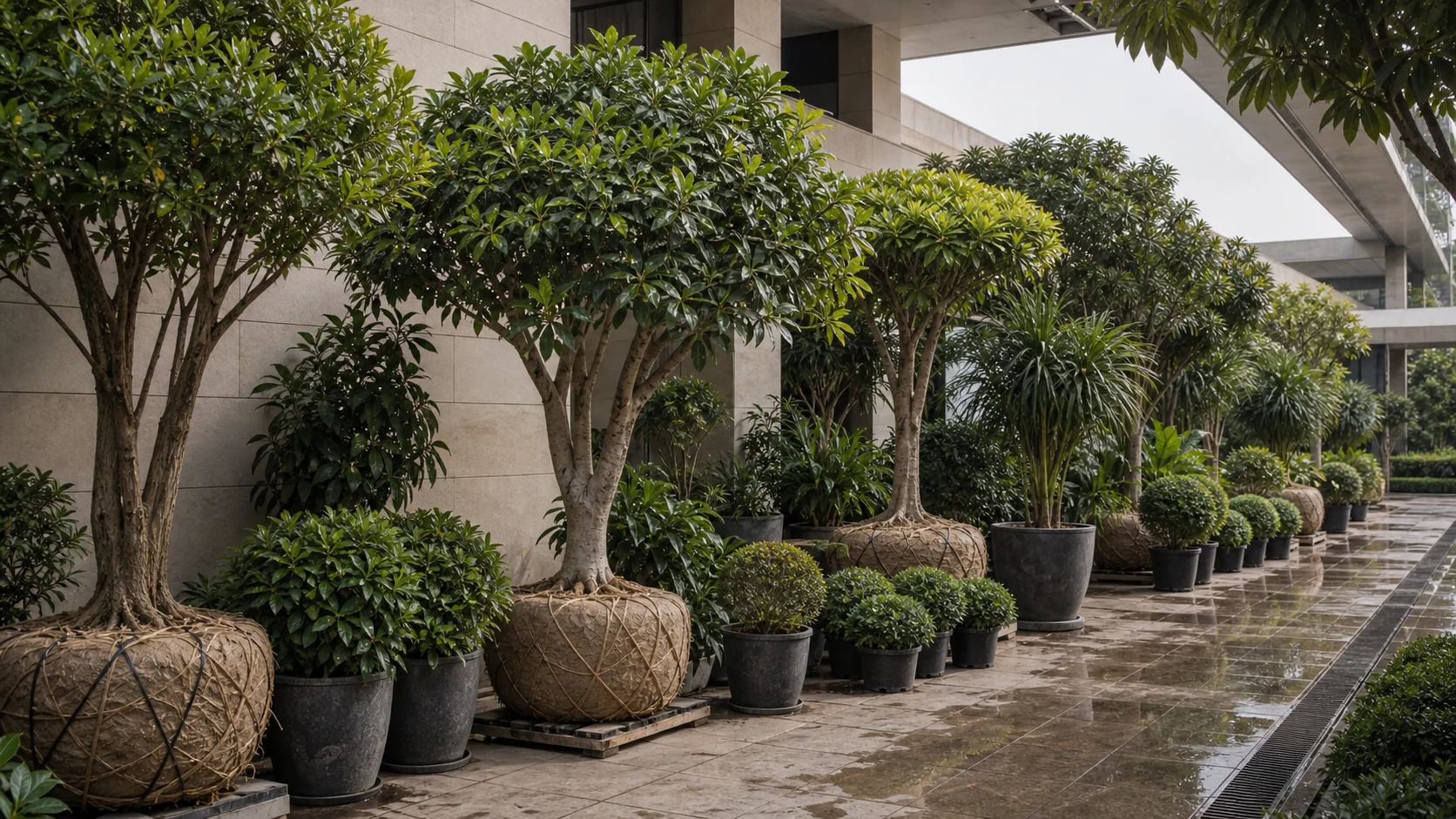
Visual context for placement, scale, handling, and landscape integration.
Section
Where it's used in premium projects
Specified as tropical screening along villa boundaries, resort understorey green walls, and large atriums where fishtail leaflet texture reads instantly — unlike ordinary pinnate palms. Clustering habit fills depth without a single massive trunk, but BOQs must state stems per pit and thinning after flowering stems senesce.
Section
Climate & site suitability in India
Humid coasts, Kerala, Goa, and conditioned Bangalore atriums suit it; dry north-India winters without humidity fail. Part shade tolerance helps interior courts — but not deep dark corners without supplemental light. Per-stem flowering kills individual stems while the clump persists — plan visual gaps.
Section
Sourcing & acclimatisation
Buy clumps on stem count, frond fullness, and even height spread — not single-trunk metrics. Distinguish from giant solitary Caryota obtusa on submittals. [Unverified: domestic nursery share versus imported clumps.] Shade-house hardening before full sun reduces fishtail tip burn.
Section
Installation (pit, soil, drainage, bracing)
Wide pits for multi-stem root masses; shared drip zones with per-stem coverage. Organic moisture-retentive media with drainage — clustering palms still rot in saucers. Light staking on tall thin stems in atrium drafts until roots anchor.
Section
Establishment & AMC
AMC removes flowering stems after fruiting completes — irritant oxalate fruit must not fall in public paths. Maintain humidity in atriums during dry HVAC seasons. Fertilise for fishtail leaflet colour — nitrogen-heavy programmes alone produce lush but weak stems.
Section
Cost drivers
Explore
Related
Related
Related links
Services, segments, cost, and proof.
- Softscape & horticulture
- Irrigation & water management
- Landscape maintenance (AMC)
- Hotel & resort landscaping
- Luxury resort & spa landscaping
- Mall & retail landscaping
- Corporate campus landscaping
- Projects
- Commercial landscaping cost guide
- Pricing drivers (imported trees)
- Import compliance workflow
- Request a site assessment
- What makes Caryota mitis fishtail texture distinctive?
- Bipinnate leaflets with jagged fishtail silhouettes — unlike standard pinnate palms; that texture is the design reason to specify mitis over Dypsis or Veitchia.
- Is fishtail palm fruit safe to handle?
- No — oxalate irritant crystals in fruit require PPE and route planning; keep fruiting stems away from guest circulation and train AMC crews.
- Can clustering fishtail palm grow in atrium part shade?
- Yes with adequate humidity and light — it tolerates more shade than Brahea or Washingtonia, but deep shade still thins fishtail crowns.
- What happens when an individual stem flowers?
- That stem is monocarpic — it fruits then dies; thin it and let suckers fill — the clump continues but needs a planned gap year in the screen line.
- How is Caryota mitis different from Caryota obtusa?
- Mitis clusters with moderate height; obtusa is a solitary giant that dies entirely after one terminal flowering event — never swap them on BOQ.
- How do we compare quotations?
- Match stems per clump, height spread, establishment humidity weeks, and AMC stem-removal policy — not per-tree pricing alone.