
Jelly palm
Pindo / Jelly palm (Butia capitata)
Butia capitata brings strongly recurved blue-green feather fronds, apricot-flavoured edible fruit, and exceptional cold tolerance for a feather palm — specified for north-India winters and Mediterranean courtyards where messy fruit drop must be kept off paving and pools.
Spec
At a glance
- Botanical name
- Butia capitata
- Family
- Arecaceae
- Common names
- Pindo palm, jelly palm
- Origin
- Southern Brazil, Uruguay, Argentina
- Plant type
- Solitary feather palm
- Mature height
- Often 4–7 m in landscape (taller in ideal conditions)
- Trunk / form
- Stout often curved trunk; strongly recurved arching fronds
- Crown spread
- Moderate dense crown
- Growth rate
- Slow
- Light
- Full sun
- Water needs
- Low to moderate; drought-tolerant when established
- India climate suitability
- North-India winters, dry Deccan, Mediterranean palettes; drainage still required
- Cold/heat & salt/wind tolerance
- Very cold-hardy for a feather palm; heat-tolerant; moderate wind
- Typical supply size
- Clear-trunk 1.5–3 m classes [Unverified]
- Lead time (sourcing)
- [Unverified] cultivar and trunk form availability
- Install considerations
- Drainage in monsoon zones; fruit-drop setbacks from paving
- Maintenance level
- Moderate — fruit harvest/removal, occasional feeding
- Cautions
- Slow; staining fruit drop on paving and pools; curved trunk if poorly sited
Gallery
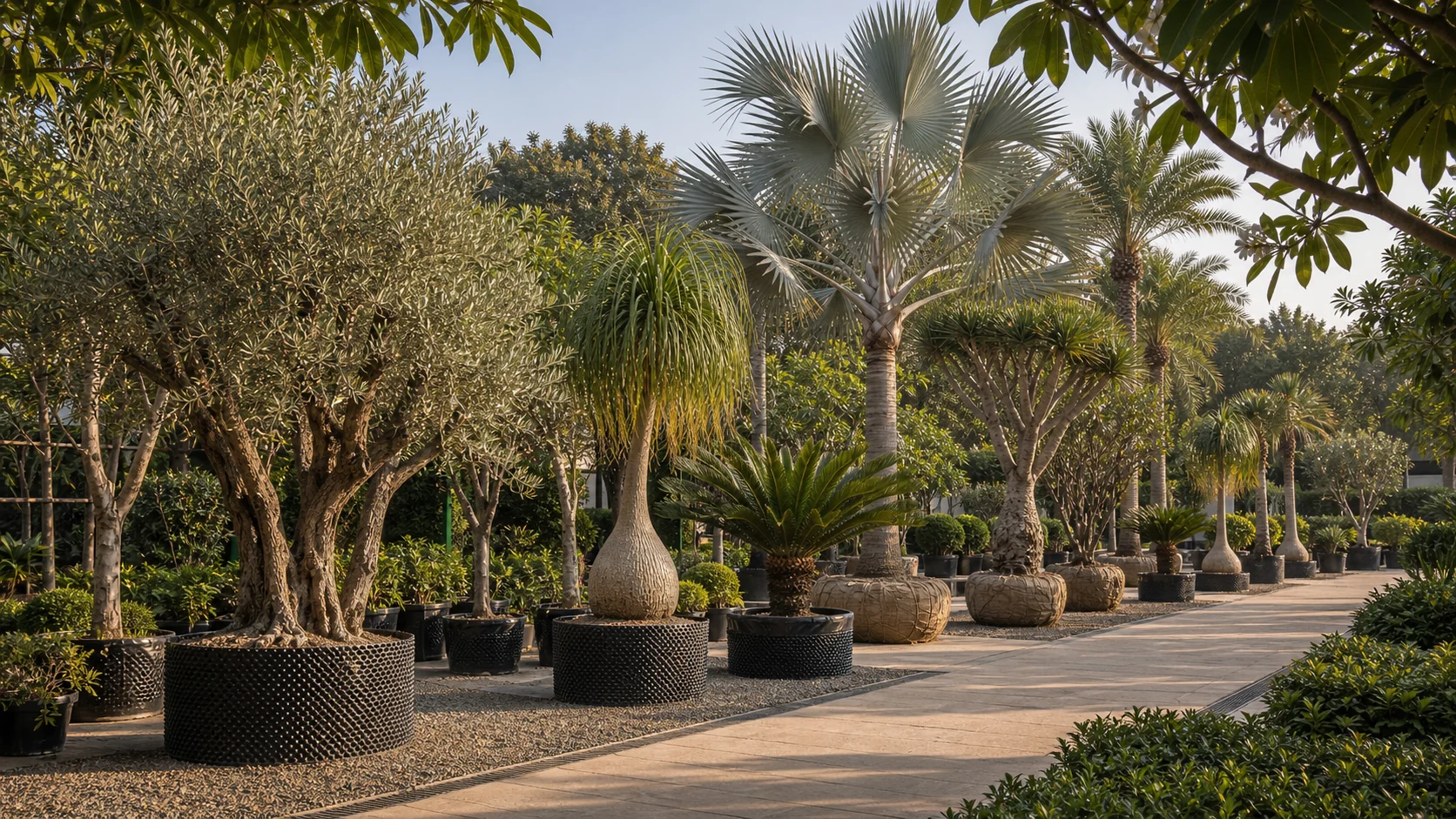
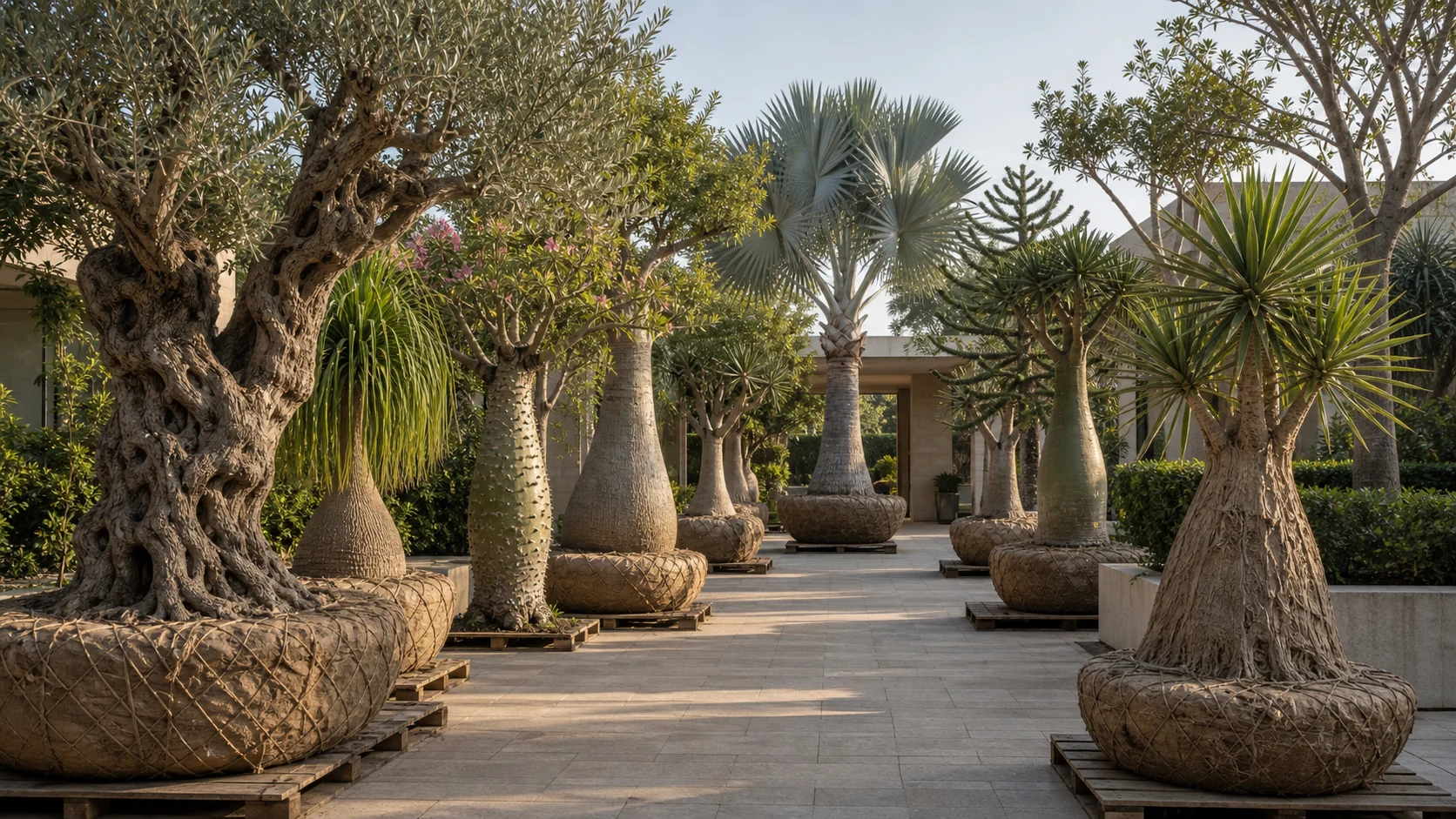
Specimen visual guide
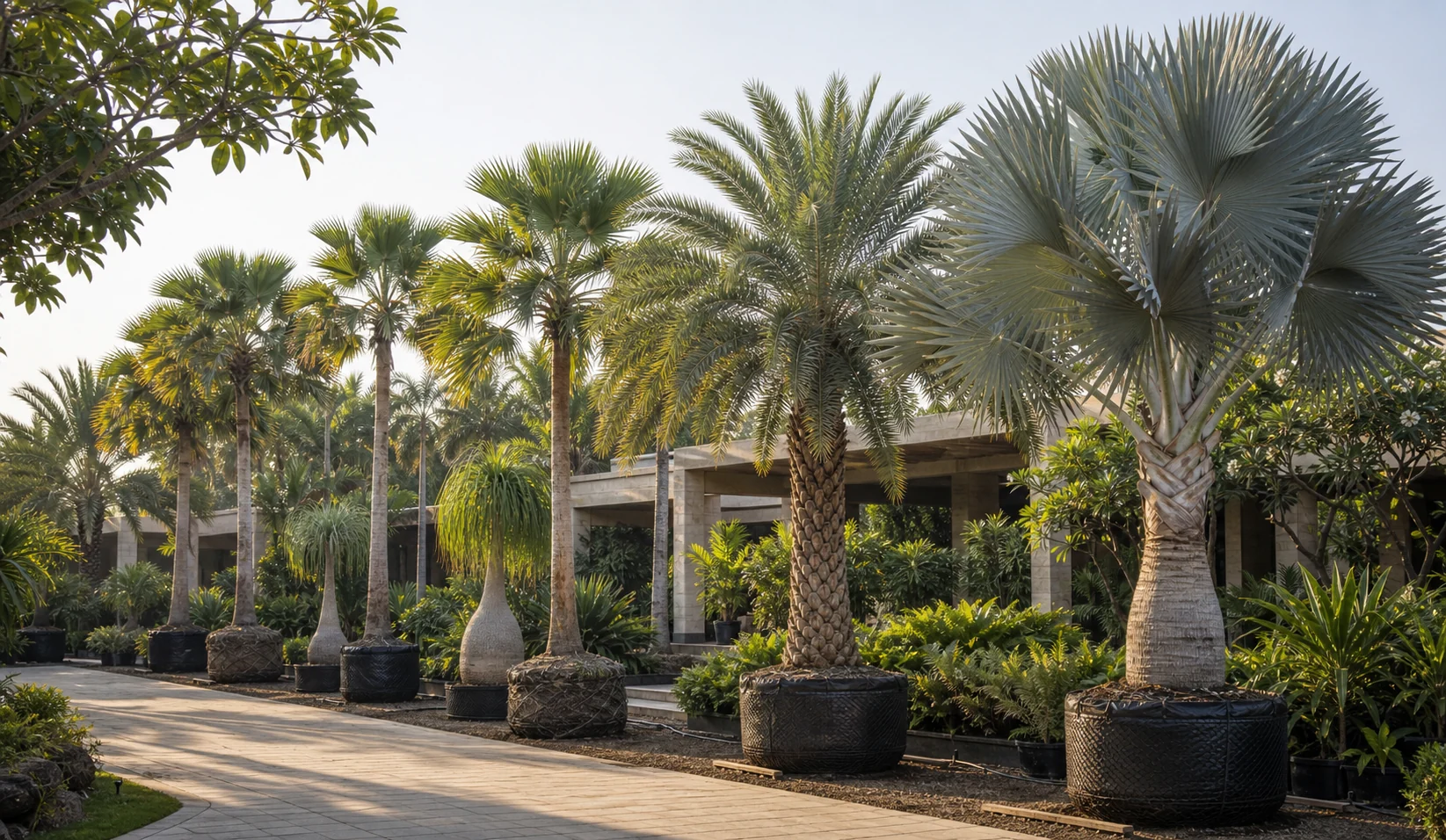
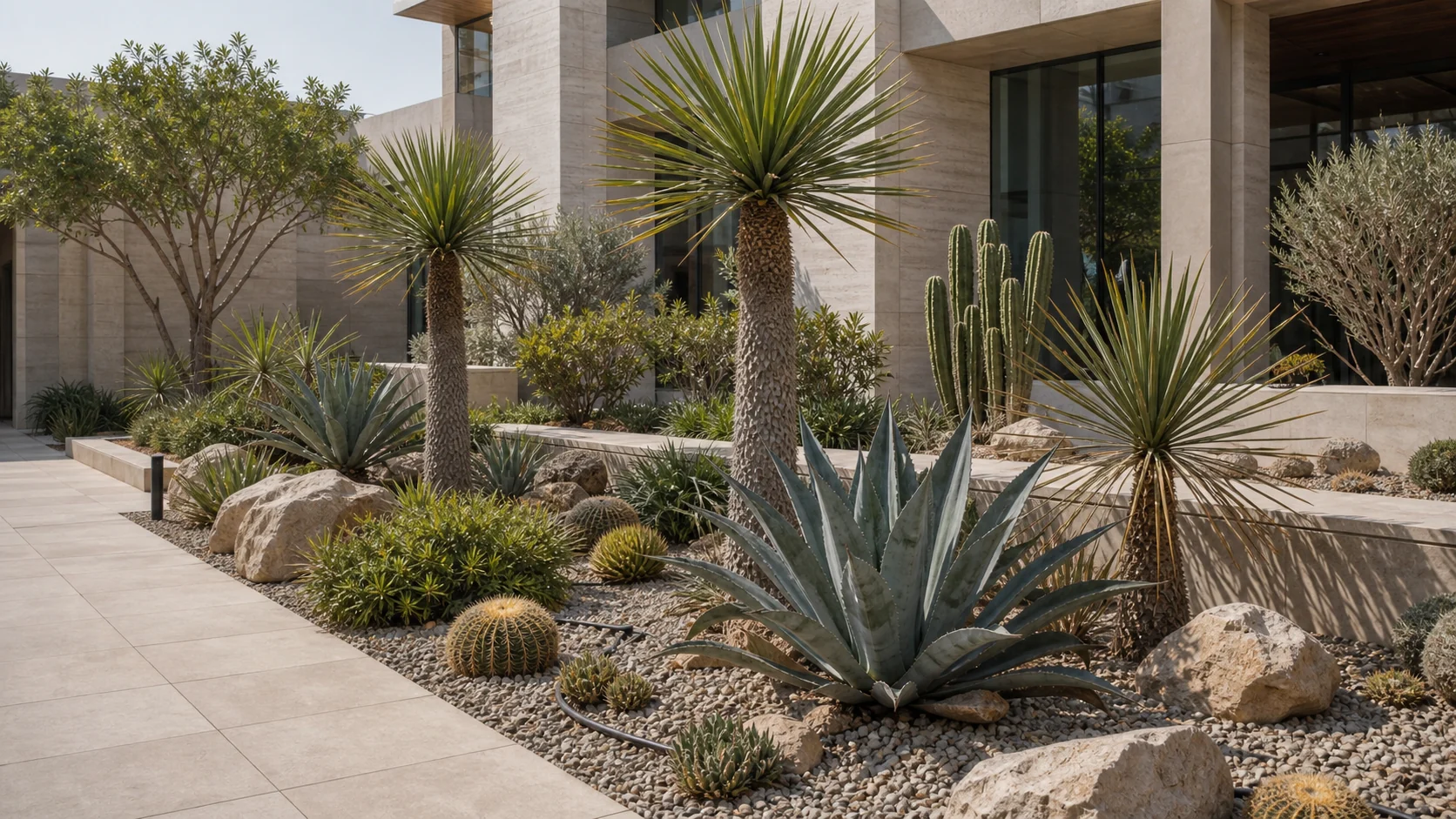
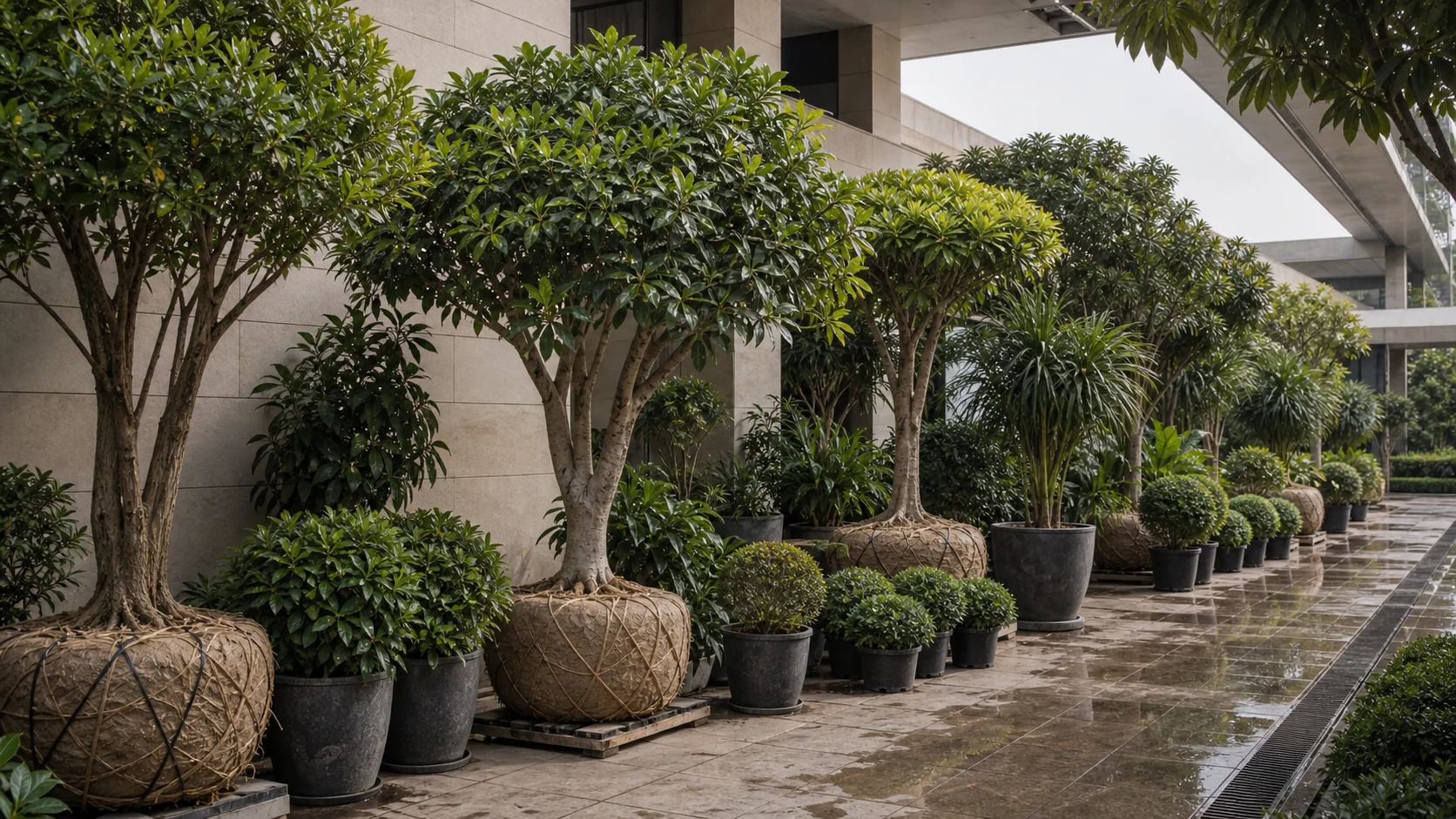
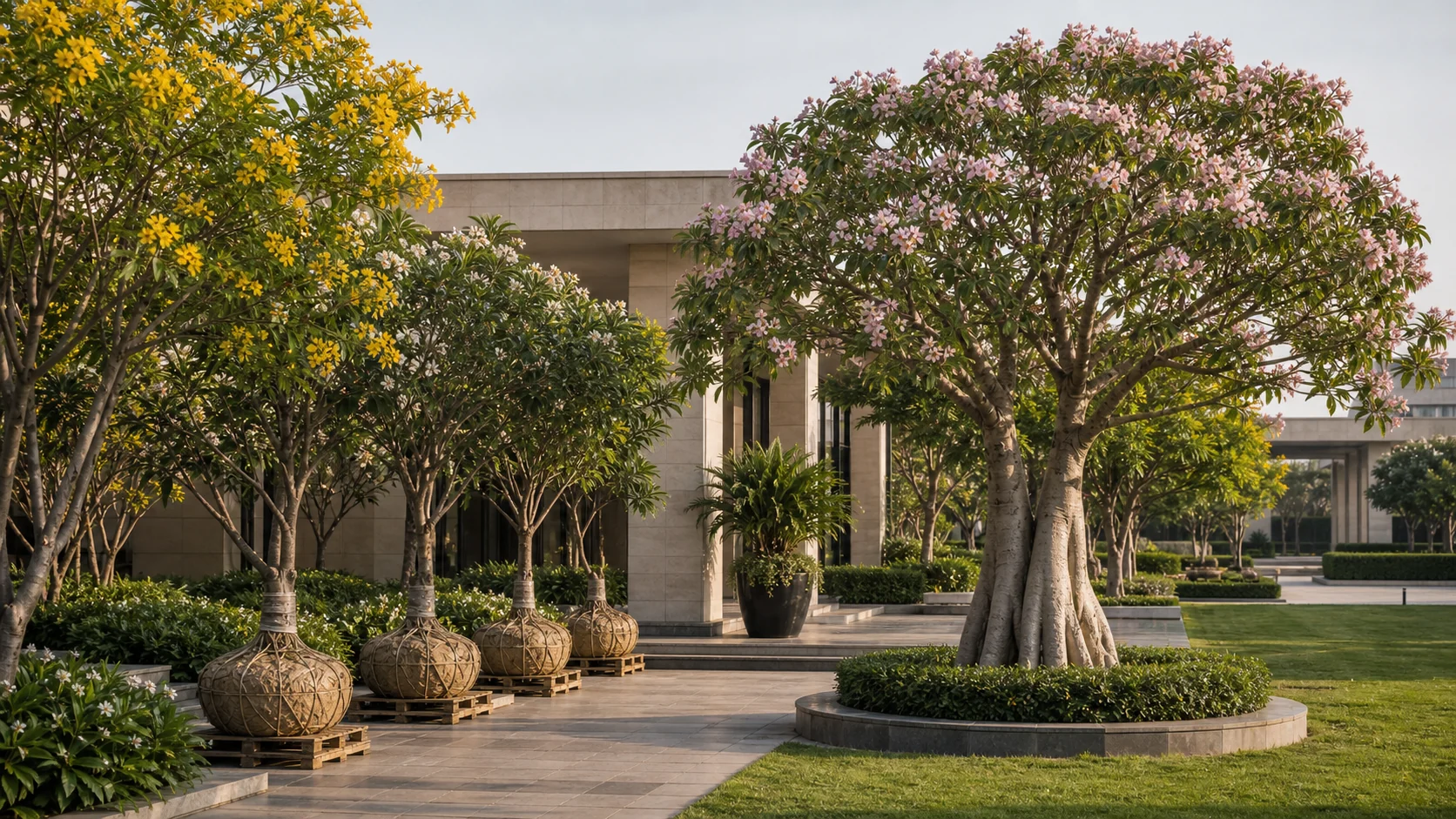
Visual context for placement, scale, handling, and landscape integration.
Section
Where it's used in premium projects
Pindo palm suits Mediterranean villa entries, hill-station club drives, and corporate courts in Delhi NCR where designers want feather-palm texture without tropical cold risk. Fruiting specimens add heritage interest — but only if paving setbacks accept seasonal mess or AMC harvest.
Section
Climate & site suitability in India
It outperforms Ravenea and Veitchia through north-India winters when drainage is sound. Humid coastal sites work with free-draining pits — not waterlogged forecourts. Hot-humid Kolkata-style shade courts are a poor fit without sun and air movement.
Section
Sourcing & acclimatisation
Specify trunk curvature tolerance, clear-trunk height, and whether fruiting is desired. Slow growth pushes buyers toward older field stock for instant character. [Unverified: domestic versus imported field digs for commercial BOQs.] Acclimatise with restrained nitrogen to avoid soft fronds before winter.
Section
Installation (pit, soil, drainage, bracing)
Engineered drainage still applies in monsoon India — drought tolerance is not pond tolerance. Plant full sun with fruit clusters planned away from light limestone and pool decks. Light bracing on tall curved trunks until root plate stable.
Section
Establishment & AMC
AMC should harvest or remove fruit before it ferments on paving — staining is real on cream stone. Irrigation can taper in arid sites after year two. Watch for manganese deficiency yellowing on alkaline engineered soils.
Section
Cost drivers
Explore
Related
Related
Related links
Services, segments, cost, and proof.
- Softscape & horticulture
- Irrigation & water management
- Landscape maintenance (AMC)
- Hotel & resort landscaping
- Luxury resort & spa landscaping
- Mall & retail landscaping
- Corporate campus landscaping
- Projects
- Commercial landscaping cost guide
- Pricing drivers (imported trees)
- Import compliance workflow
- Request a site assessment
- How cold-hardy is Butia capitata for north-India winters?
- Among the most cold-tolerant feather palms — suitable for many north-India sites where true tropical palms fail, though young plants still need protection in severe cold events.
- How messy is pindo fruit on paving and parking?
- Apricot-flavoured fruit ferments and stains — route clusters away from entries and pools or budget seasonal removal in AMC.
- Why is jelly palm slow to reach design height?
- Southern cone adaptation means slow vertical gain — BOQ larger clear-trunk classes or accept years of establishment before the recurved crown reads at arrival.
- Can Butia replace foxtail palm beside a pool?
- Only if fruit drop is managed and the brief accepts a stouter, slower palm — foxtail is self-cleaning with less staining fruit near pools.
- What pit design works in monsoon cities?
- Free-draining engineered media — Butia tolerates dry summers but rots in saucer pits that pond during monsoon.
- How should quotations be compared?
- Match trunk height, curvature class, fruiting policy, drainage spec, and AMC fruit management — not catalogue per-tree rates.