
Talipot palm
Talipot palm (Corypha umbraculifera)
Corypha umbraculifera is the talipot — native Indian giant with the largest palm leaf and inflorescence known — a monocarpic botanical landmark that flowers once in decades then dies, specified only where scale, heritage context, and replacement CAPEX are explicit.
Spec
At a glance
- Botanical name
- Corypha umbraculifera
- Family
- Arecaceae
- Common names
- Talipot palm, talipot, buri palm
- Origin
- India, Sri Lanka, Malabar coast region
- Plant type
- Solitary giant fan palm
- Mature height
- Often 15–25 m+; enormous fans
- Trunk / form
- Massive trunk; terminal hemispherical fan crown
- Crown spread
- Enormous — record-scale leaves
- Growth rate
- Slow until terminal flowering surge
- Light
- Full sun
- Water needs
- Moderate in establishment
- India climate suitability
- Humid tropical and coastal India; strong native authenticity
- Cold/heat & salt/wind tolerance
- Tropical; monocarpic death after flowering; cyclone wind critical
- Typical supply size
- Very large field specimens only [Unverified]
- Lead time (sourcing)
- [Unverified] mature moves extremely rare
- Install considerations
- Crane logistics; decades-scale setbacks; replacement fund
- Maintenance level
- Low until flowering — then whole-palm removal
- Cautions
- Monocarpic; enormous scale; mature transplants exceptionally difficult
Gallery
Specimen visual guide
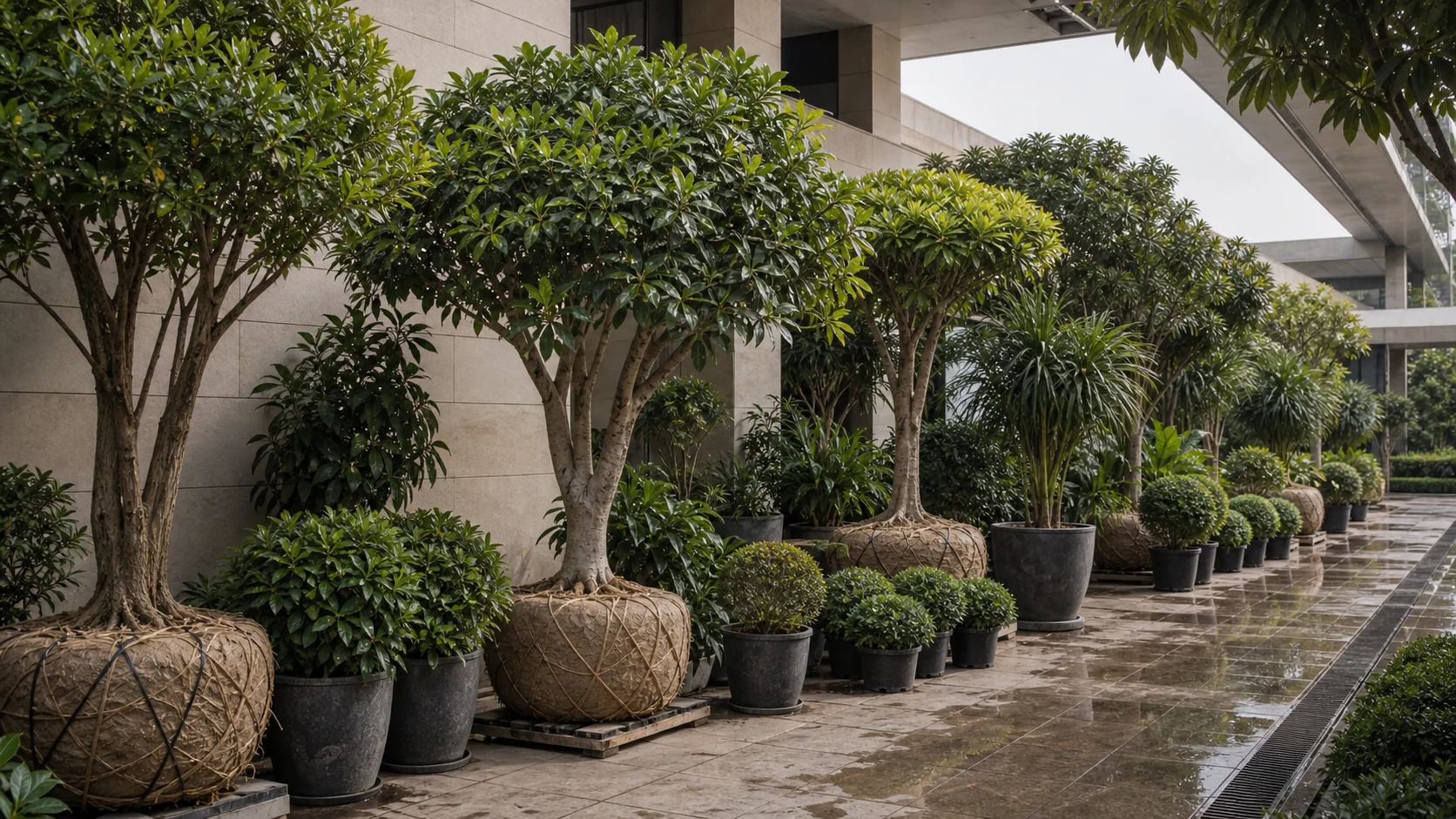
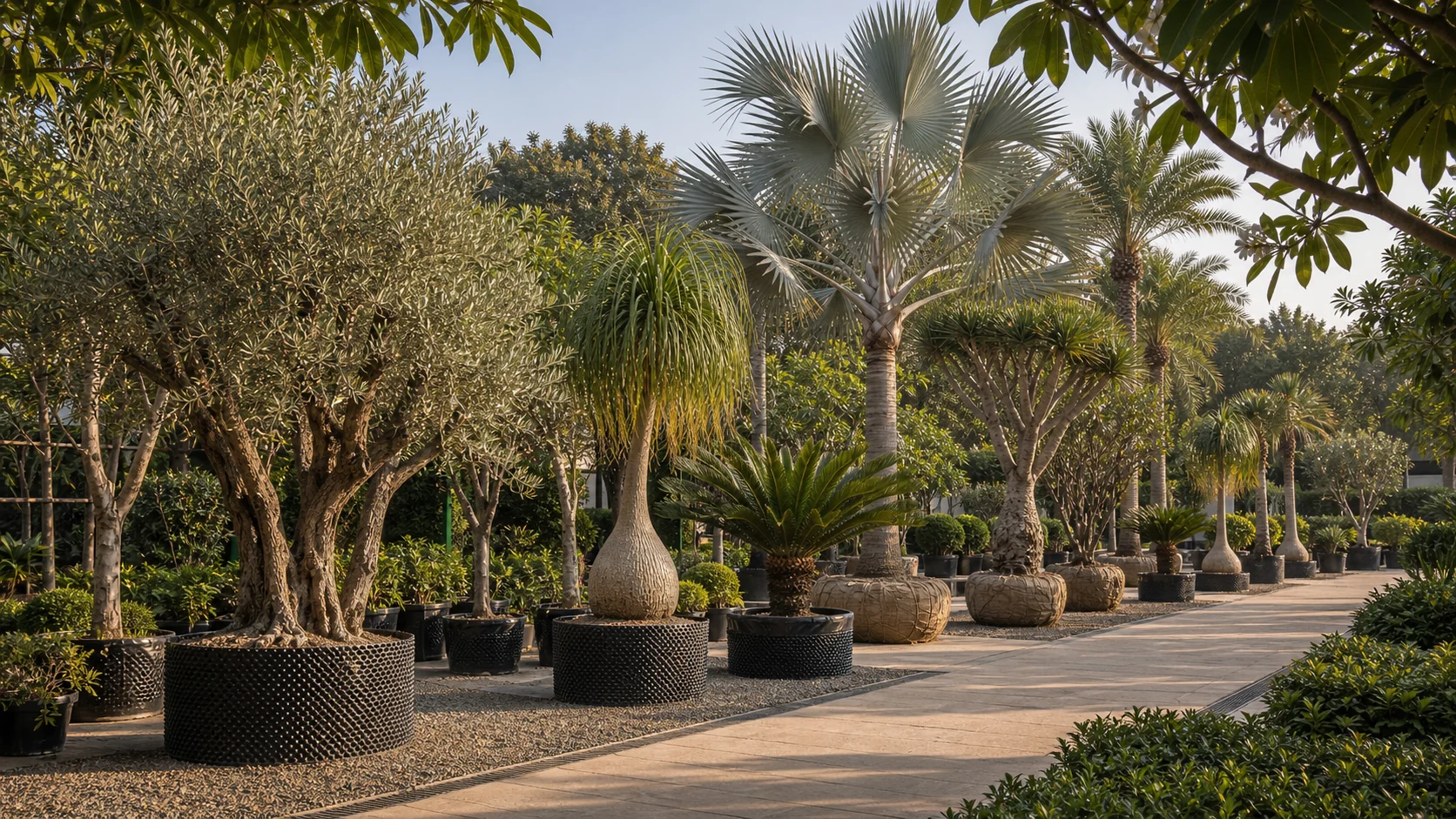
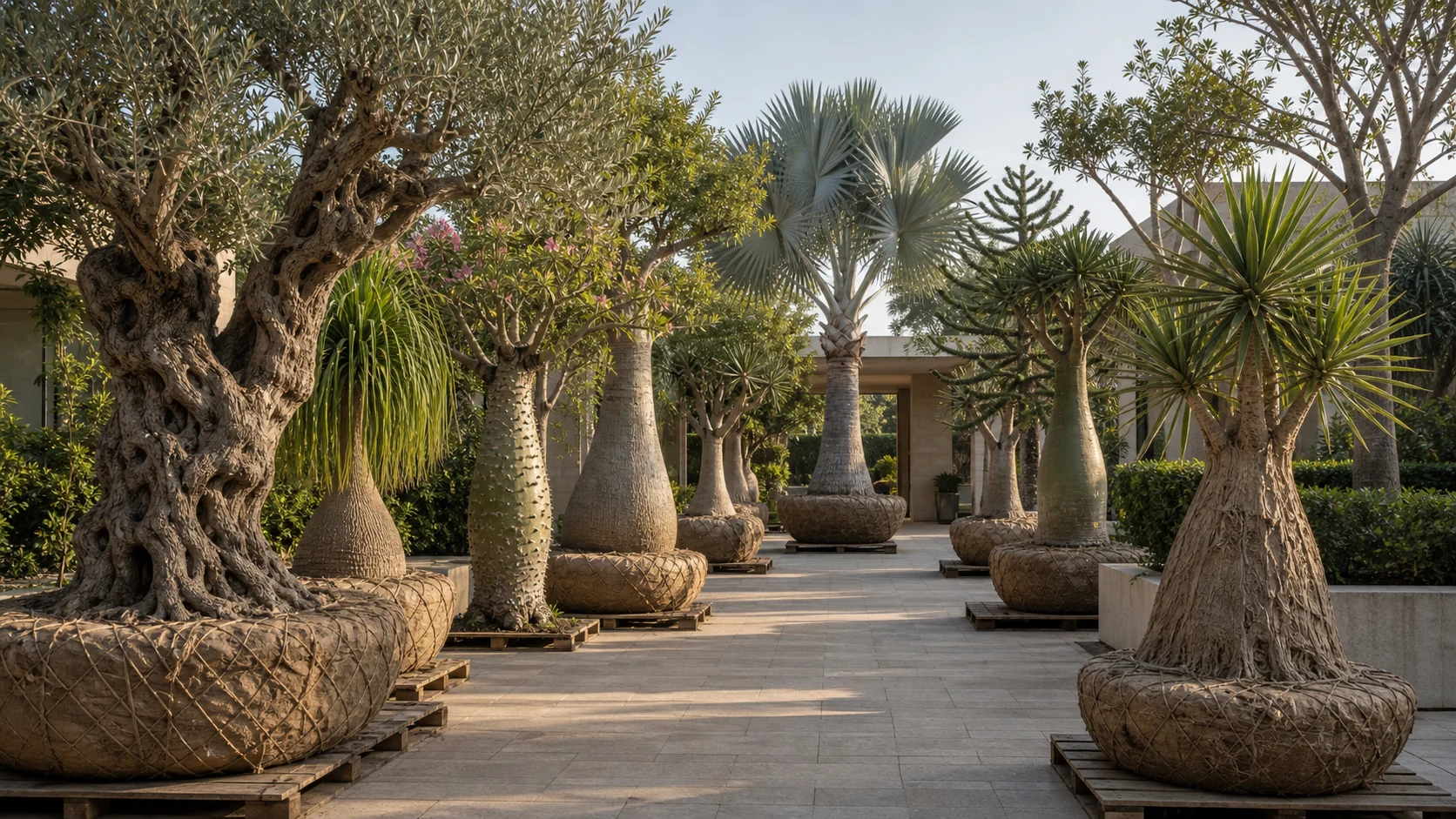
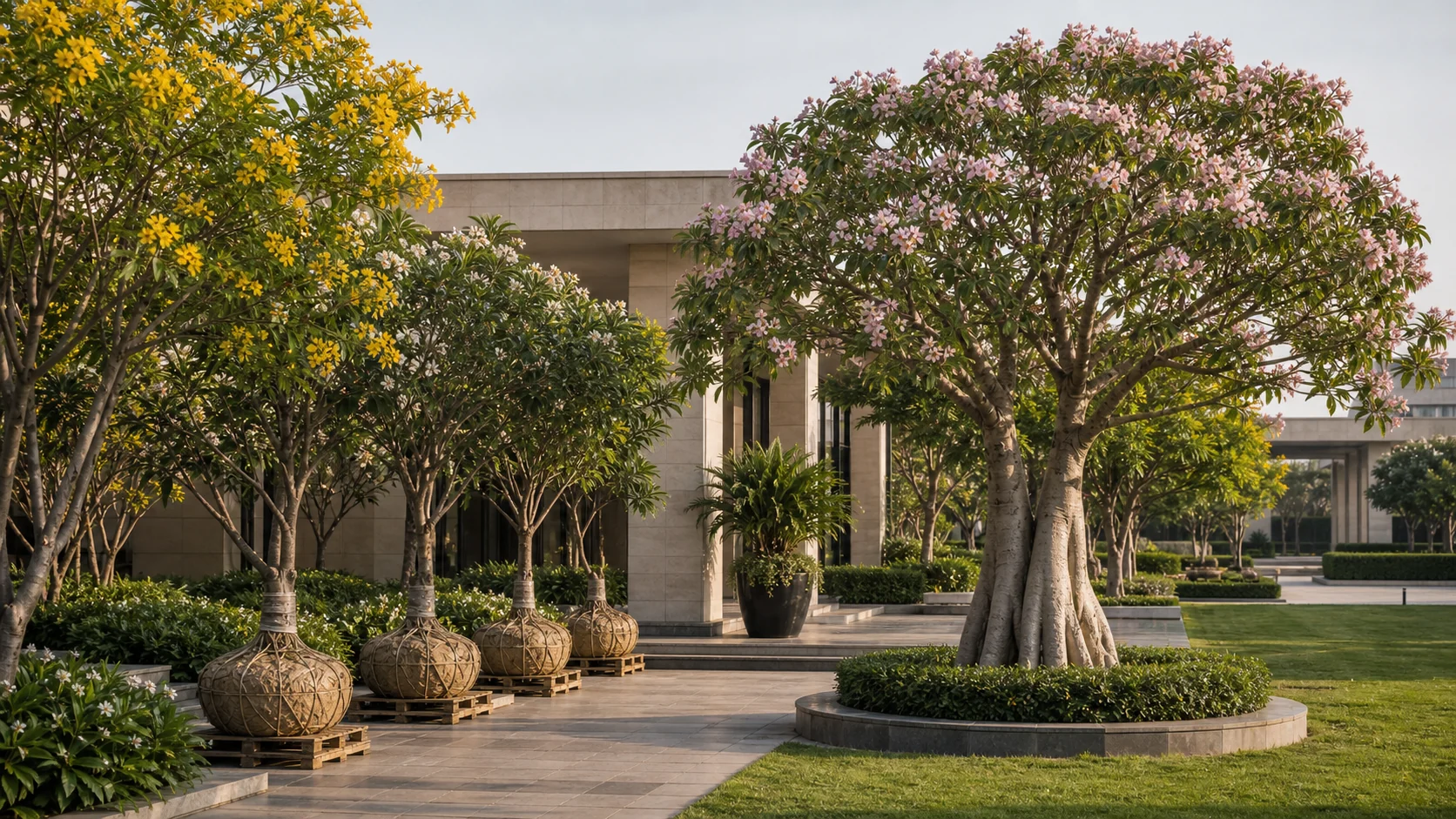
Visual context for placement, scale, handling, and landscape integration.
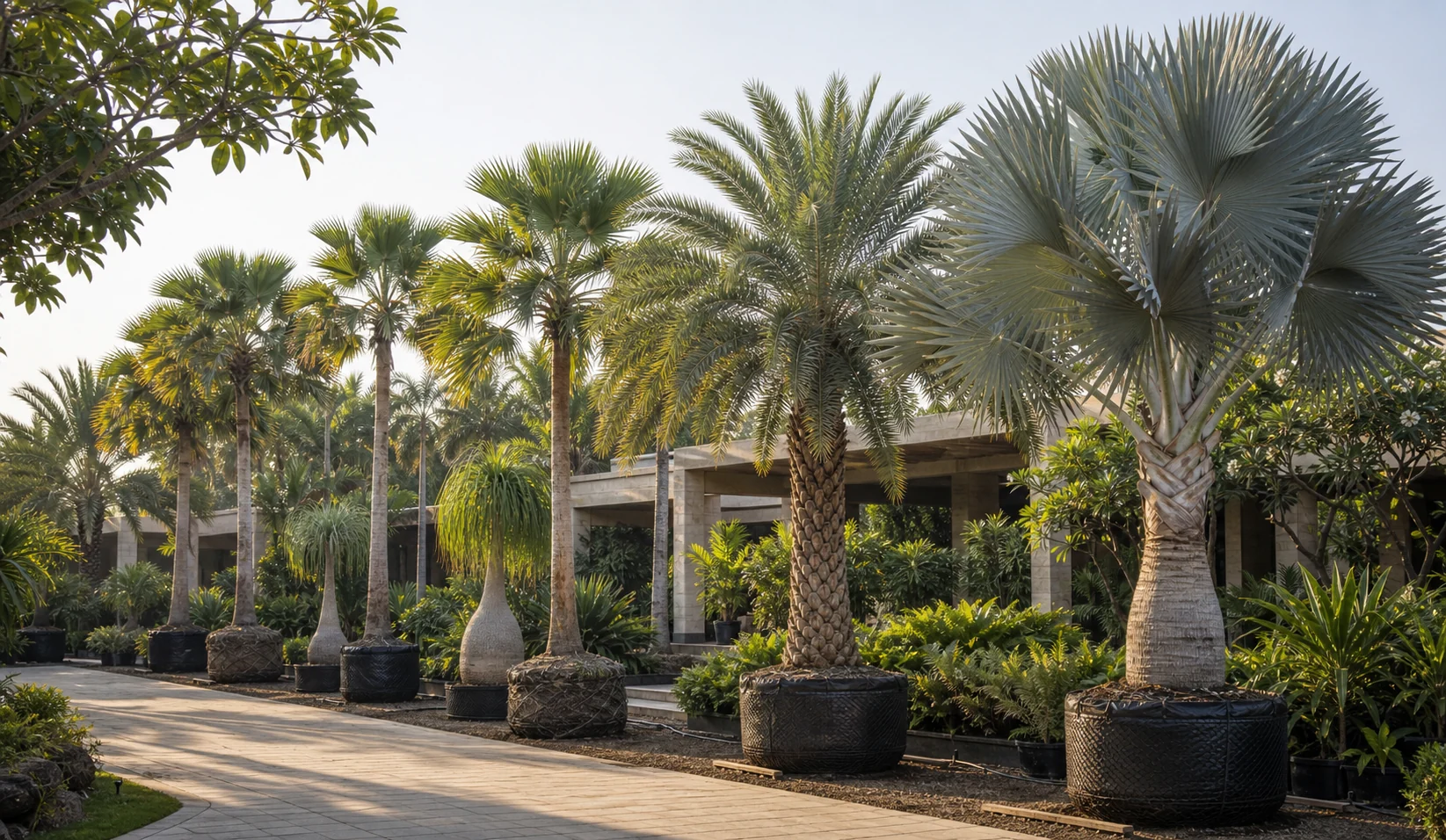
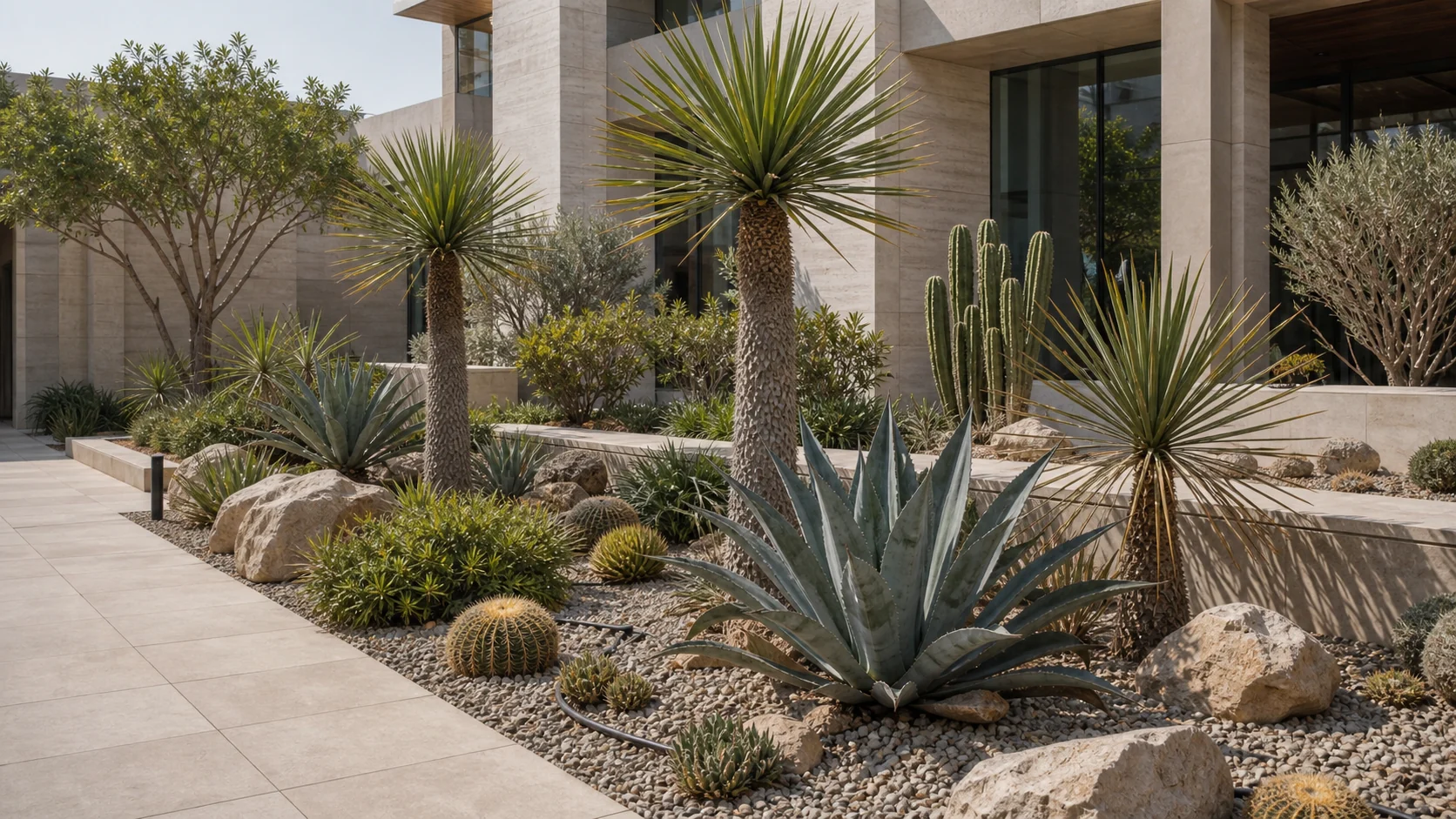
Section
Where it's used in premium projects
Talipot is specified as a botanical landmark — temple and heritage estates, institutional campuses, and resort arboretums where native Indian authenticity and record-scale foliage matter more than fast resort arrival green. It is not a repeat courtyard palm — one specimen per masterplan zone is typical.
Section
Climate & site suitability in India
Malabar, coastal Karnataka, Kerala, and humid tropical estates suit it — native provenance supports regional storytelling. Cyclone coasts need wind policy for record-size fans. Flowering may take decades — facilities must not assume permanent canopy without a funded replacement line after monocarpic death.
Section
Sourcing & acclimatisation
Mature talipot transplants are exceptionally rare — many projects plant younger field stock and accept long horizon scale. [Unverified: commercial lead time for movable mature Corypha.] Document monocarpic lifecycle in client handover — largest inflorescence structure in the plant kingdom is a one-time event, then removal.
Section
Installation (pit, soil, drainage, bracing)
Crane and road reinforcement for record rootballs and fan mass. Setbacks beyond any conventional palm schedule — talipot leaves are the design constraint. Bracing and wind management on exposed ridges; irrigate establishment without creating permanent ponding.
Section
Establishment & AMC
AMC is minimal until inflorescence emergence — then programme whole-palm removal and site reinstatement. Until flowering, protect trunk from mechanical damage; one scar can deform a century-scale specimen. Community education on monocarpic timing reduces unrealistic owner expectations.
Section
Cost drivers
Explore
Related
Related
Related links
Services, segments, cost, and proof.
- Softscape & horticulture
- Irrigation & water management
- Landscape maintenance (AMC)
- Hotel & resort landscaping
- Luxury resort & spa landscaping
- Mall & retail landscaping
- Corporate campus landscaping
- Projects
- Commercial landscaping cost guide
- Pricing drivers (imported trees)
- Import compliance workflow
- Request a site assessment
- What does monocarpic mean for talipot palm?
- It flowers once (often after decades), produces the largest known palm inflorescence, then the entire palm dies — budget removal and replacement, not perpetual shade.
- Why is Corypha umbraculifera famous botanically?
- It holds record palm leaf area and inflorescence size — that story is the specification reason, not fast resort green.
- Is talipot palm native to India?
- Yes — Malabar and related humid tropical regions; use native provenance on heritage and institutional briefs instead of generic imported-palm copy.
- Can we transplant a mature talipot on a tight hotel court?
- Mature moves are exceptionally difficult and often infeasible — programme scale, crane access, and setbacks at concept stage, not after paving is cast.
- How long until flowering?
- Often decades — exact timing varies; owner briefs should cite monocarpic lifecycle without promising a flowering date for opening day photography.
- How should BOQs compare cost?
- Match size class at delivery, crane scope, replacement allowance, and species verification — not per-tree catalogue pricing.