
Carnauba palm
Carnauba wax palm (Copernicia prunifera)
Copernicia prunifera is the carnauba wax palm — drought-tolerant fan palm with a heritage industrial story — for dry-tropical statements where moderate scale and full sun beat humid tropical palm defaults.
Spec
At a glance
- Botanical name
- Copernicia prunifera
- Family
- Arecaceae
- Common names
- Carnauba wax palm, carnaubeira, wax palm
- Origin
- Semi-arid north-east Brazil
- Plant type
- Solitary fan palm
- Mature height
- Often 6–10 m in landscape
- Trunk / form
- Moderate trunk; stiff grey-green fan crown
- Crown spread
- Moderate
- Growth rate
- Slow
- Light
- Full sun
- Water needs
- Low once established
- India climate suitability
- Hot dry interiors and coastal sun; drainage required in monsoon
- Cold/heat & salt/wind tolerance
- Heat- and drought-tolerant; not tropical swamp palm
- Typical supply size
- Clear-trunk specimens 2–4 m [Unverified]
- Lead time (sourcing)
- [Unverified] specimen class availability
- Install considerations
- Free drainage; storytelling signage optional; full sun
- Maintenance level
- Low — dead fan removal
- Cautions
- Slow; do not confuse with alba or hospita; sourcing variable
Gallery
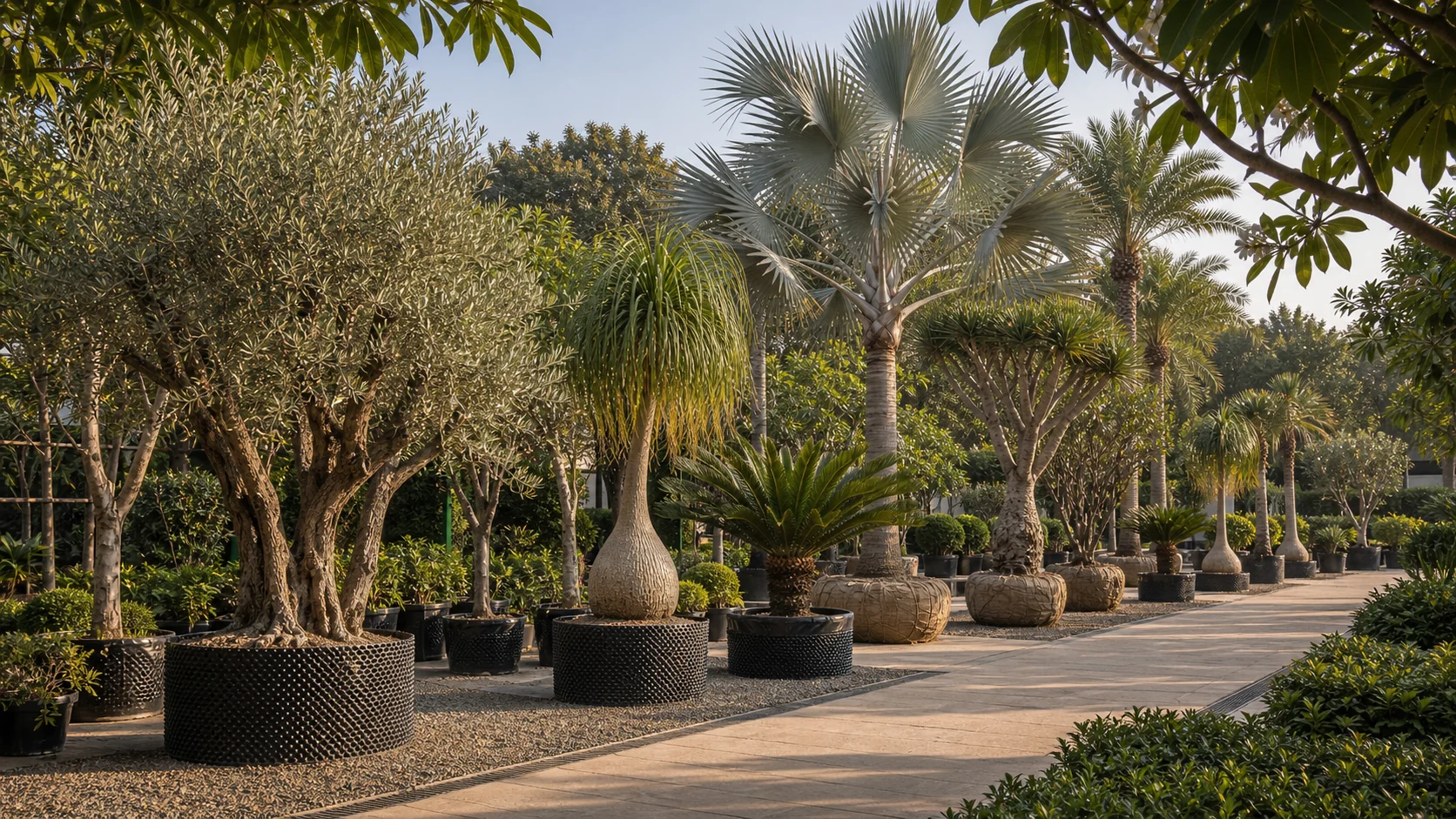
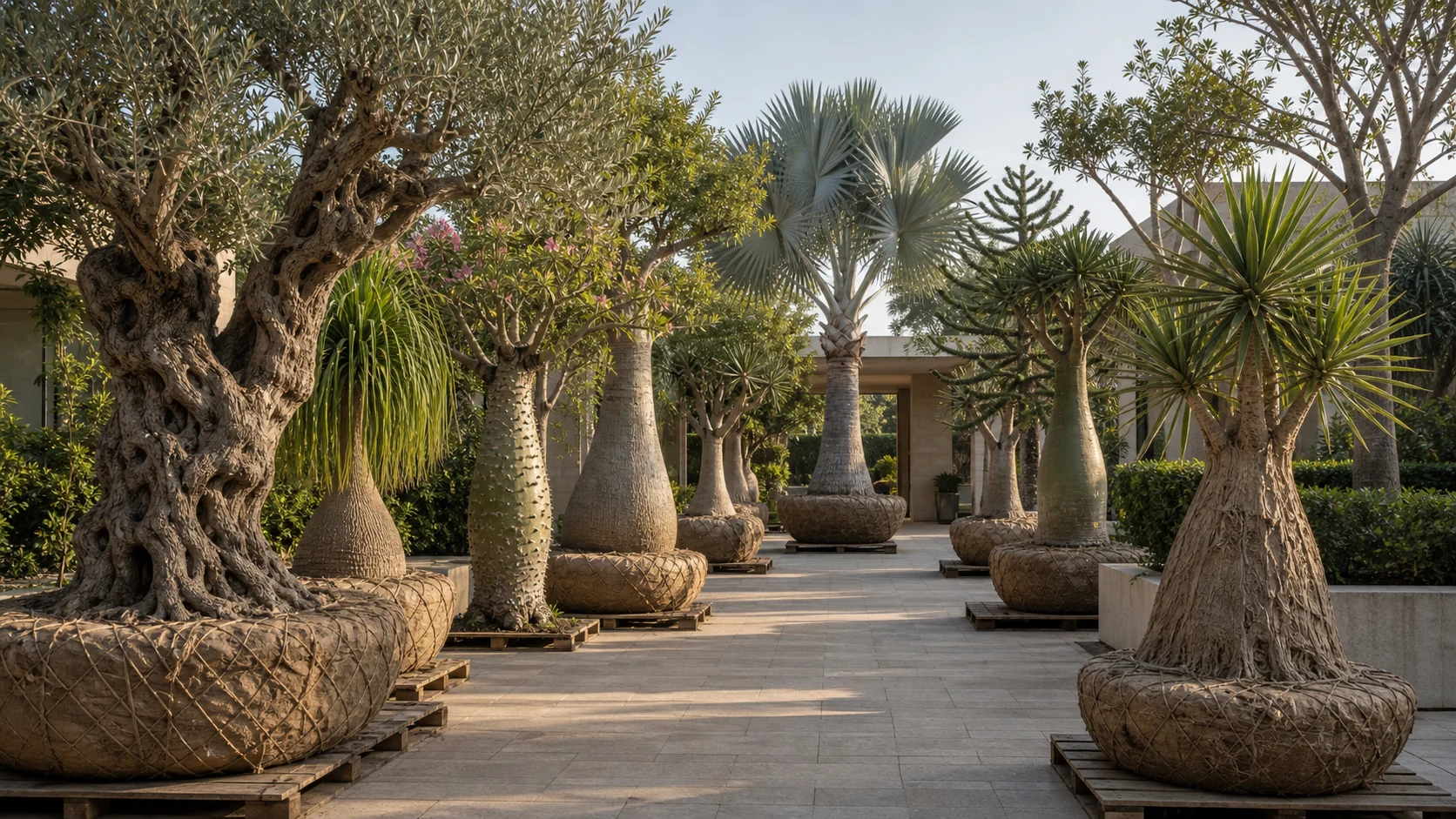
Specimen visual guide
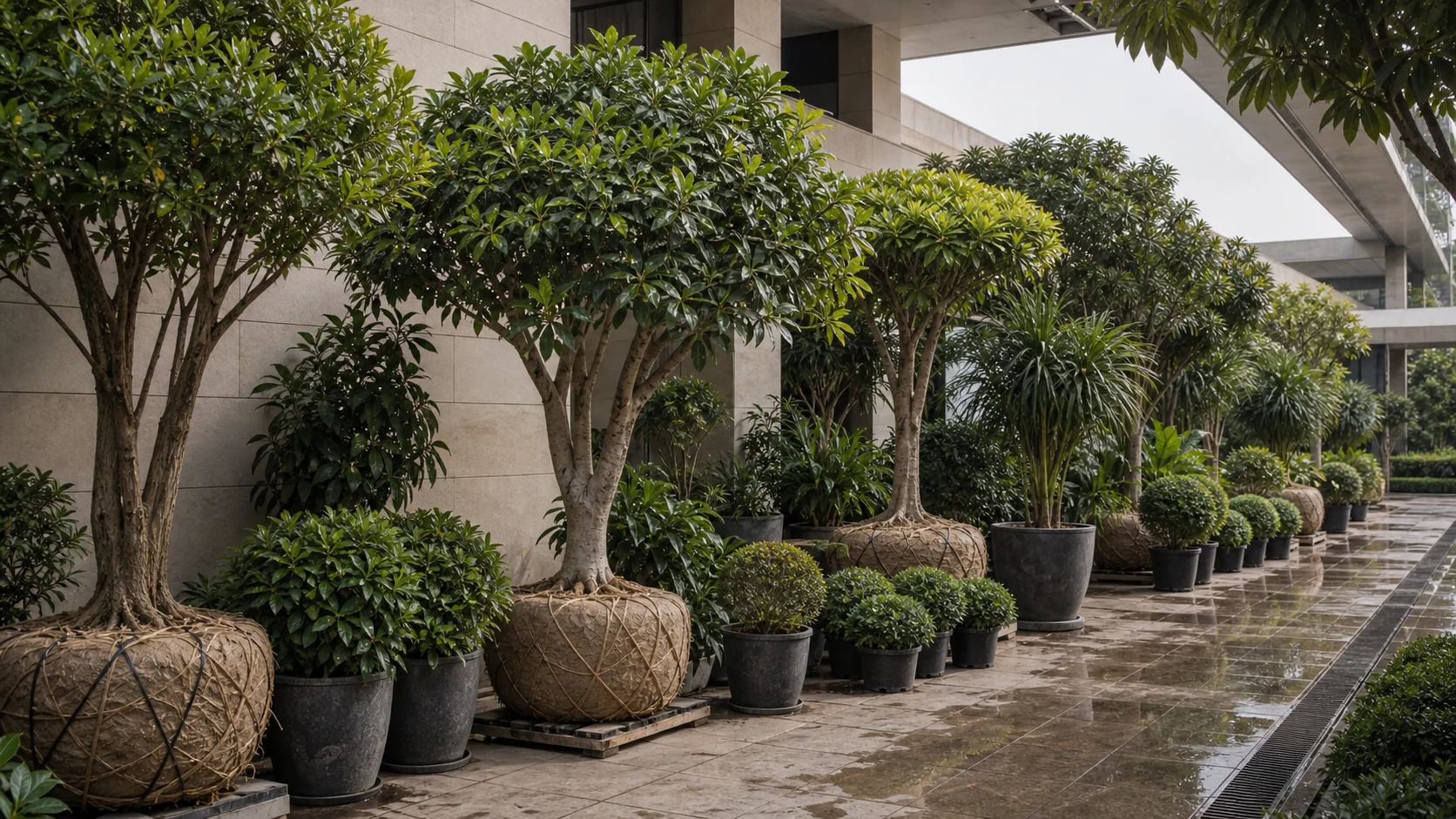
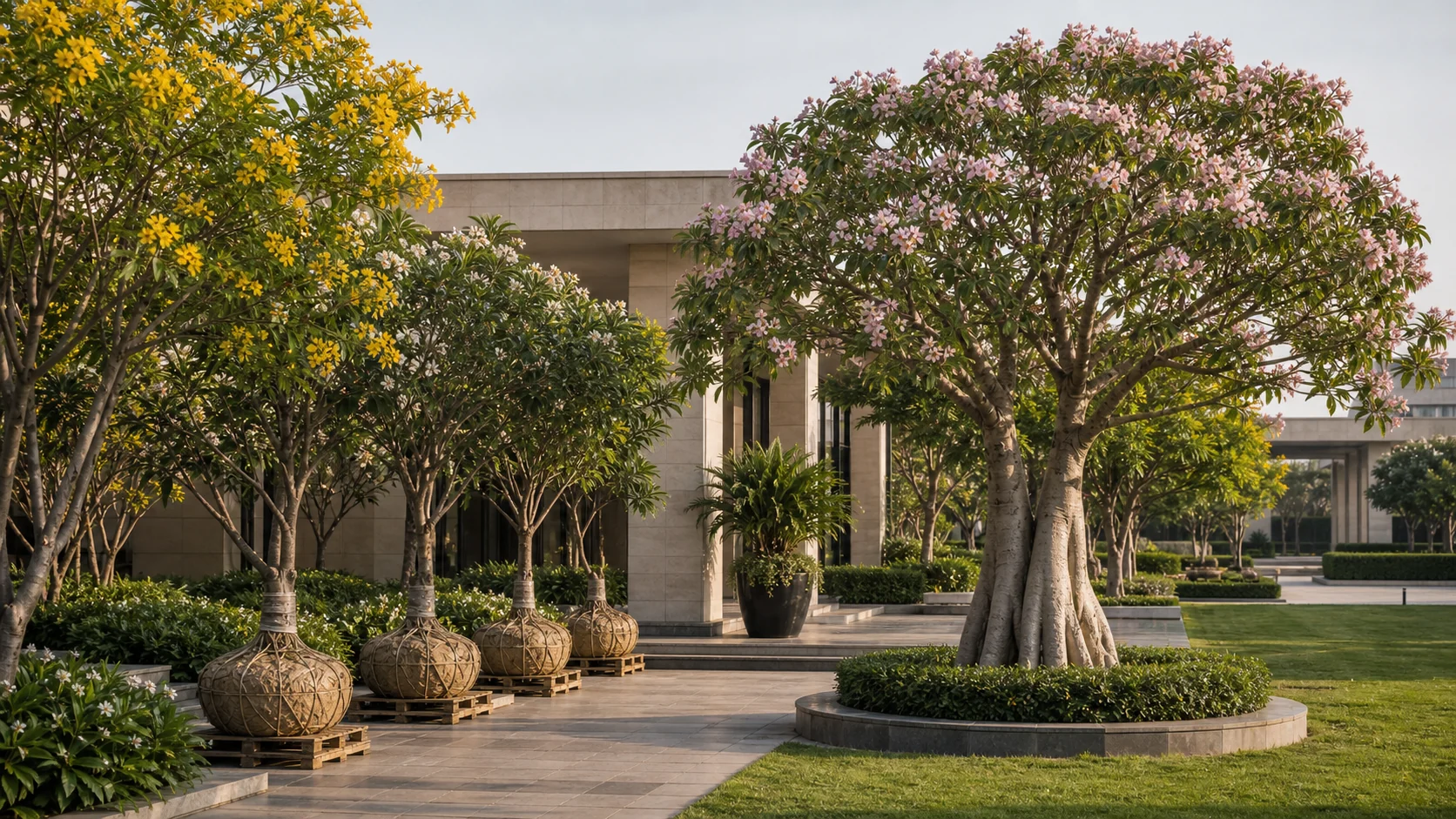
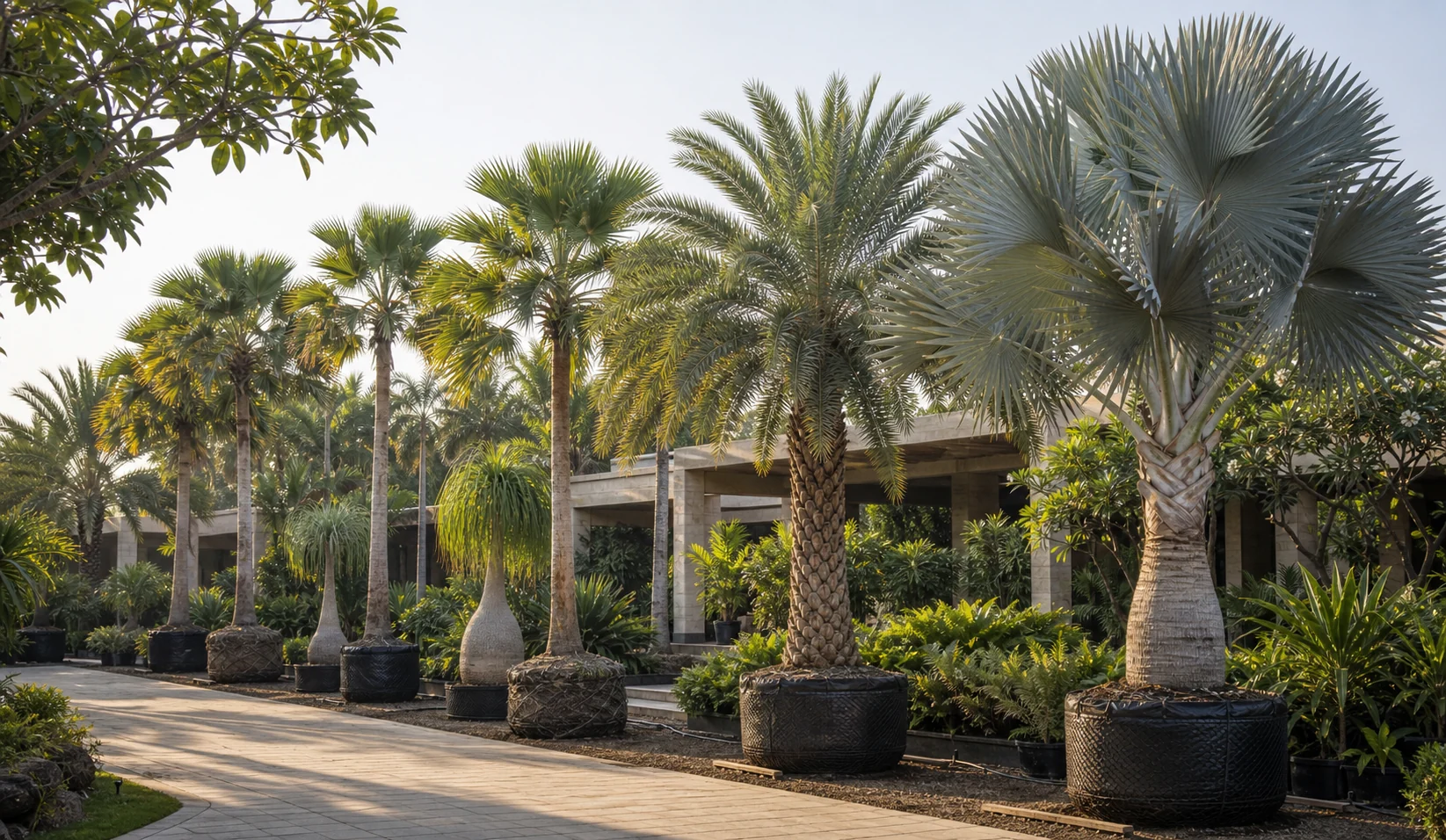
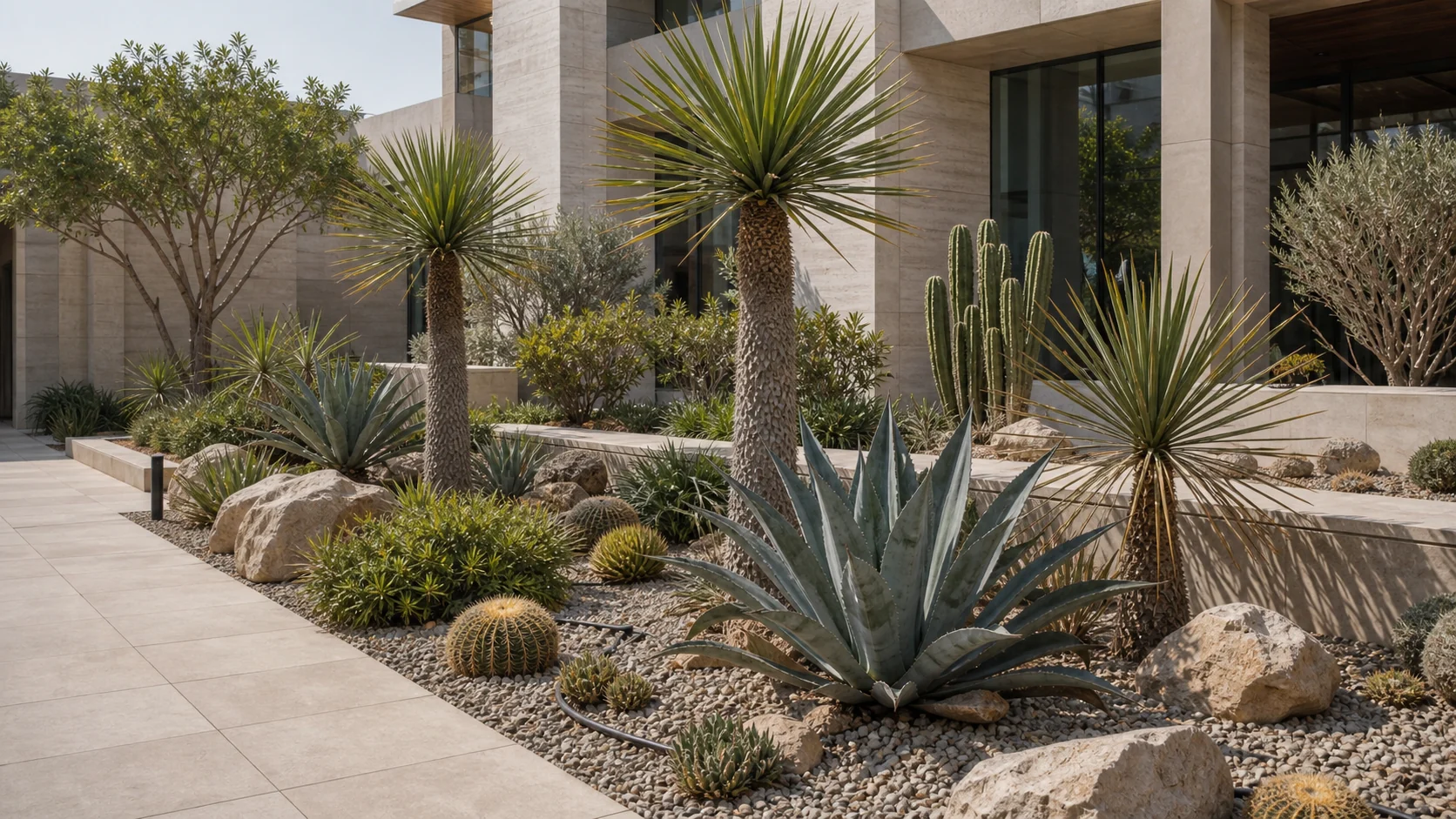
Visual context for placement, scale, handling, and landscape integration.
Section
Where it's used in premium projects
Specified where the carnauba wax story supports brand narrative — dry resort zones, visitor-centre arboretums, and corporate campuses wanting a fan palm with industrial heritage context. Moderate mature scale fits tighter formal courts than Copernicia alba avenue giants.
Section
Climate & site suitability in India
Rajasthan, Gujarat, and rain-shadow sites suit established plants with drainage; humid low points still rot roots. Full sun only — wax production biology assumes high light. Not a replacement for Ravenea water features or Phoenix humid coast boulevards without redesign.
Section
Sourcing & acclimatisation
Verify Copernicia prunifera identity — three Copernicia species are often confused on nursery lists. [Unverified: India commercial availability for landscape clear-trunk classes.] Hold with restrained irrigation to keep stiff fans before hoisting.
Section
Installation (pit, soil, drainage, bracing)
Engineered drainage mandatory on monsoon sites — drought adaptation is not pond tolerance. Moderate crown weight rarely needs extended bracing except tall transplants on terraces. Plant centrelines with sun arc clearance from future building shade.
Section
Establishment & AMC
AMC removes dead fans; avoid habitual overhead irrigation after year two. Educational signage about carnauba wax is optional — do not imply operational wax harvesting on ornamental hotel sites without agronomy scope.
Section
Cost drivers
Explore
Related
Related
Related links
Services, segments, cost, and proof.
- Softscape & horticulture
- Irrigation & water management
- Landscape maintenance (AMC)
- Hotel & resort landscaping
- Luxury resort & spa landscaping
- Mall & retail landscaping
- Corporate campus landscaping
- Projects
- Commercial landscaping cost guide
- Pricing drivers (imported trees)
- Import compliance workflow
- Request a site assessment
- What is the carnauba wax story on landscape sites?
- Copernicia prunifera is the commercial source of carnauba wax — useful narrative for visitor and corporate arboretums; ornamental hotels rarely harvest wax without separate agronomy scope.
- How drought-tolerant is carnauba palm in India?
- Very — suited to hot dry palettes with drainage; still avoid monsoon saucer pits that pond for weeks.
- What mature size should designers programme?
- Often moderate fan-palm scale — smaller than cohune or Canary Phoenix, larger than Chamaerops — verify nursery photos for your BOQ height class.
- How is prunifera different from Copernicia alba and hospita?
- Prunifera is semi-arid Brazilian carnauba with moderate size; alba is Pantanal flood-drought avenue; hospita is Cuban dense waxy collector crown — three distinct BOQs.
- What sourcing should procurement verify?
- True species ID and clear-trunk class on submittals — [Unverified] availability varies; do not assume interchangeable Copernicia stock.
- How do we compare supplier cost?
- Match verified species, trunk metres, drainage engineering, and establishment cap — not generic wax-palm headlines.