
Dwarf Areca palm
Dwarf Areca / Betel-nut palm (Areca catechu)
The dwarf betel-nut palm is a compact ringed-crownshaft feather palm for lush humid tropical massing — Kerala, Goa, and coastal Karnataka resorts — not a substitute for golden-cane Dypsis lutescens and rarely a true “imported exotic” in India.
Spec
At a glance
- Botanical name
- Areca catechu (dwarf selection)
- Family
- Arecaceae
- Common names
- Dwarf areca, betel-nut palm, supari palm
- Origin
- South and South-East Asia (native in parts of India)
- Plant type
- Solitary slender feather palm
- Mature height
- Often 3–6 m in dwarf landscape use (taller in non-dwarf stock)
- Trunk / form
- Slender ringed green crownshaft; fine pinnate fronds
- Crown spread
- Narrow to moderate arching crown
- Growth rate
- Moderate in warm humid sites
- Light
- Bright filtered to full sun in tropics
- Water needs
- High — consistent moisture; not drought-tolerant
- India climate suitability
- Humid tropical coast and NE India; fails in dry winters and north-India cold
- Cold/heat & salt/wind tolerance
- Cold- and drought-sensitive; moderate coastal humidity; wind can shred fine fronds
- Typical supply size
- Container and field clumps 1.5–3 m [Unverified]
- Lead time (sourcing)
- [Unverified] largely domestic nursery stock
- Install considerations
- Shade-house transition; steady irrigation; organic mulch; avoid dry-engineered media
- Maintenance level
- Moderate — irrigation audits, humidity, occasional feeding
- Cautions
- Dry air scorches fronds; sparse look when stressed; weak “imported” story vs local supply
Gallery
Specimen visual guide
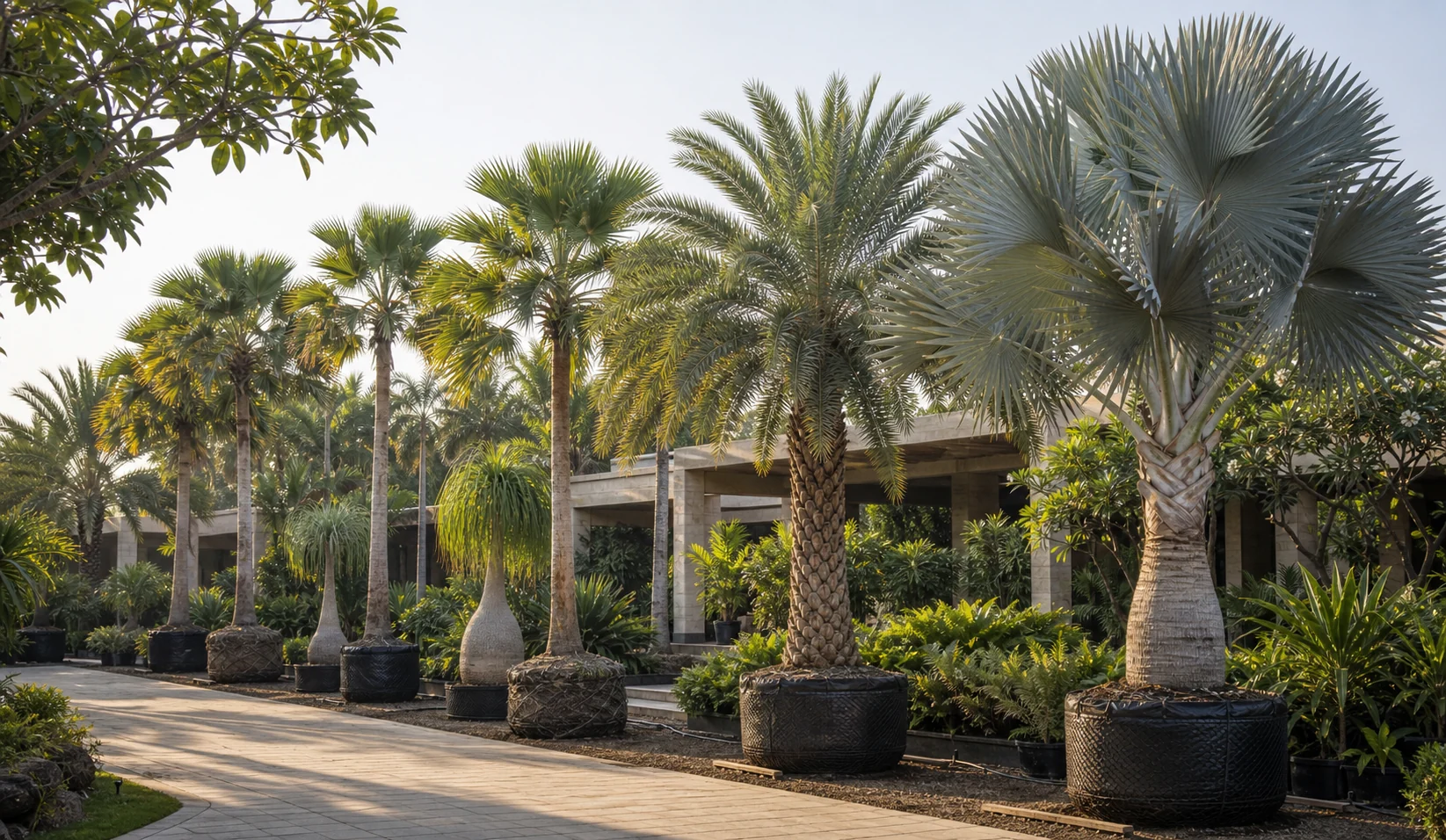
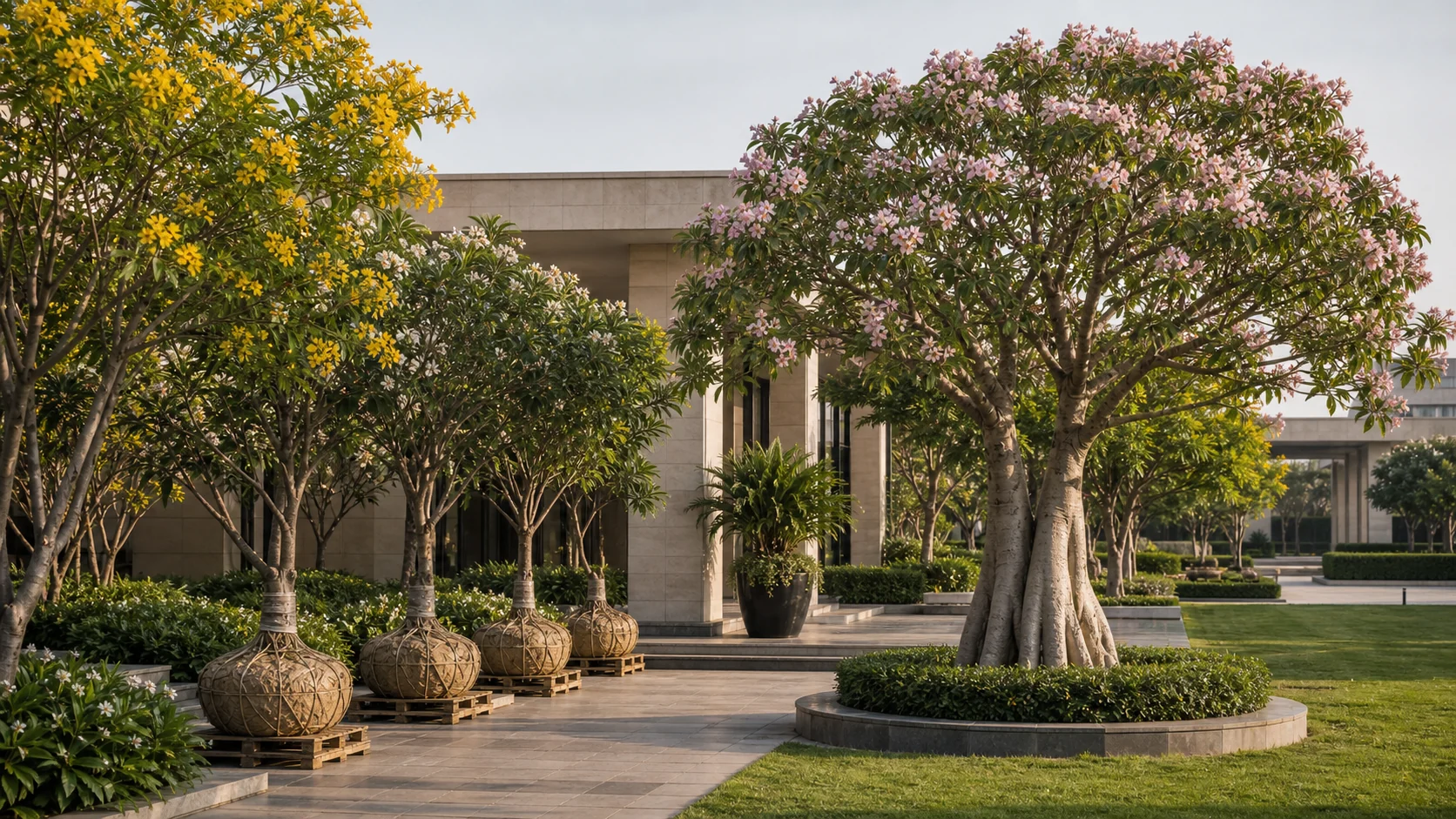
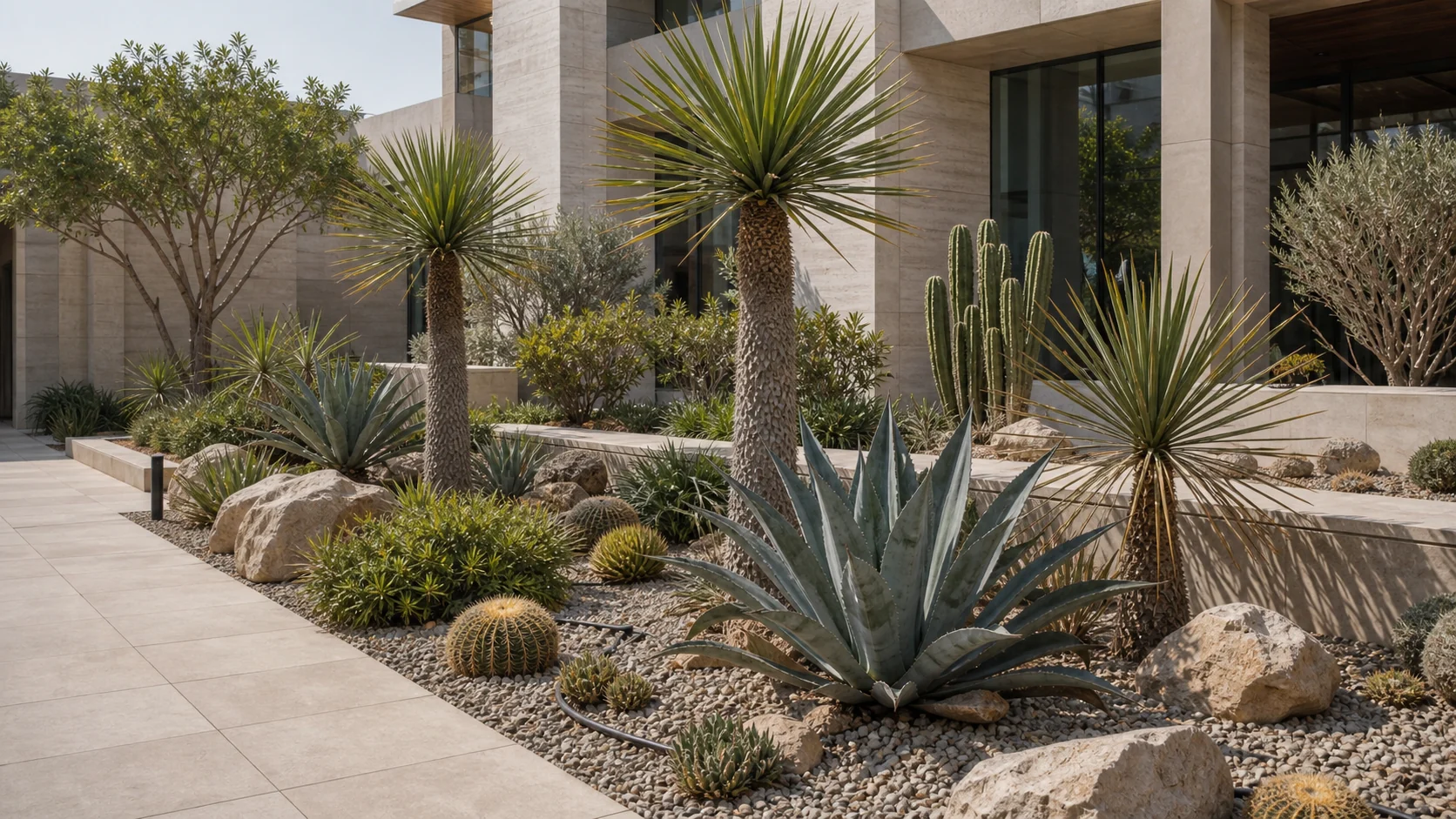
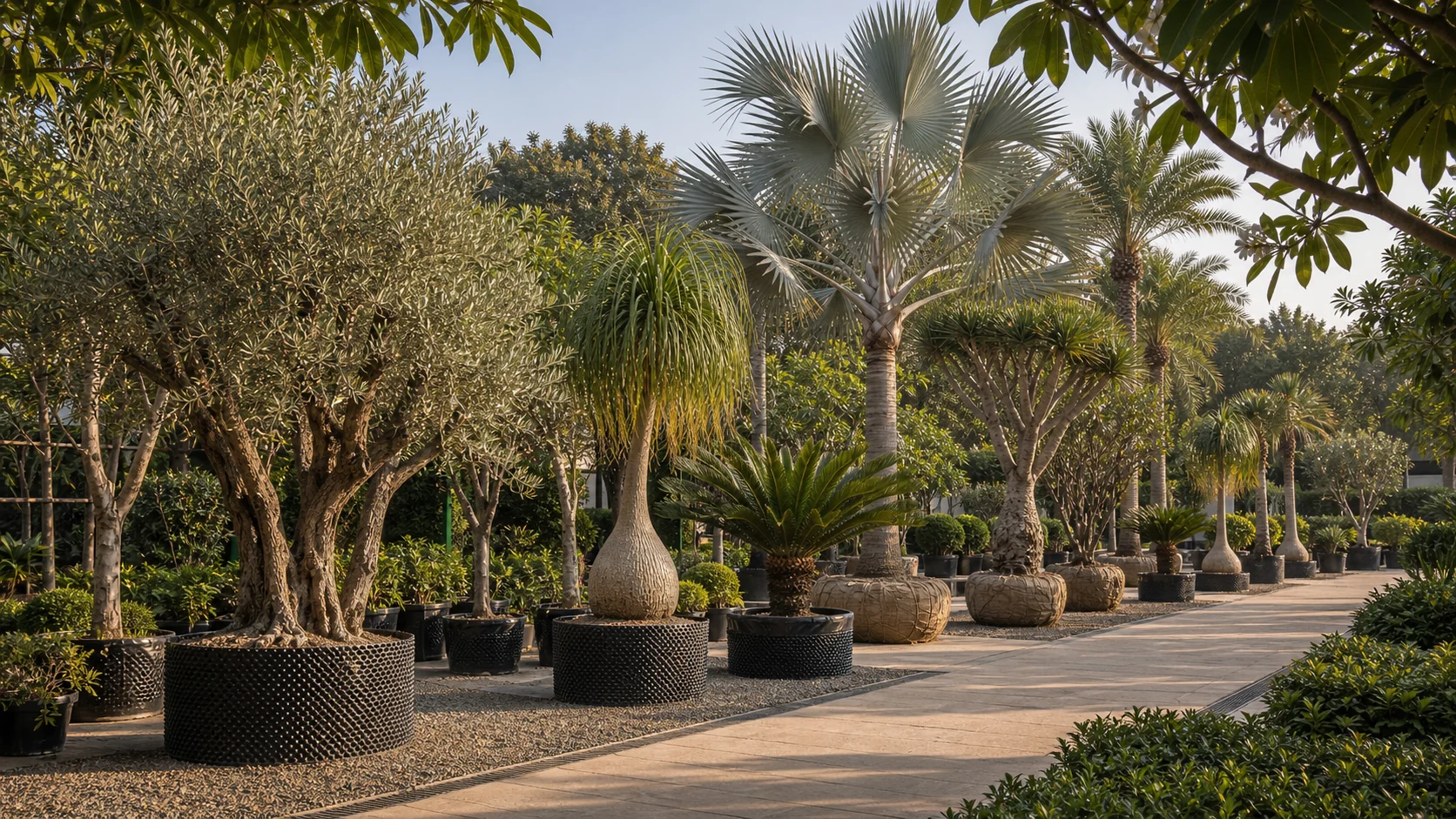
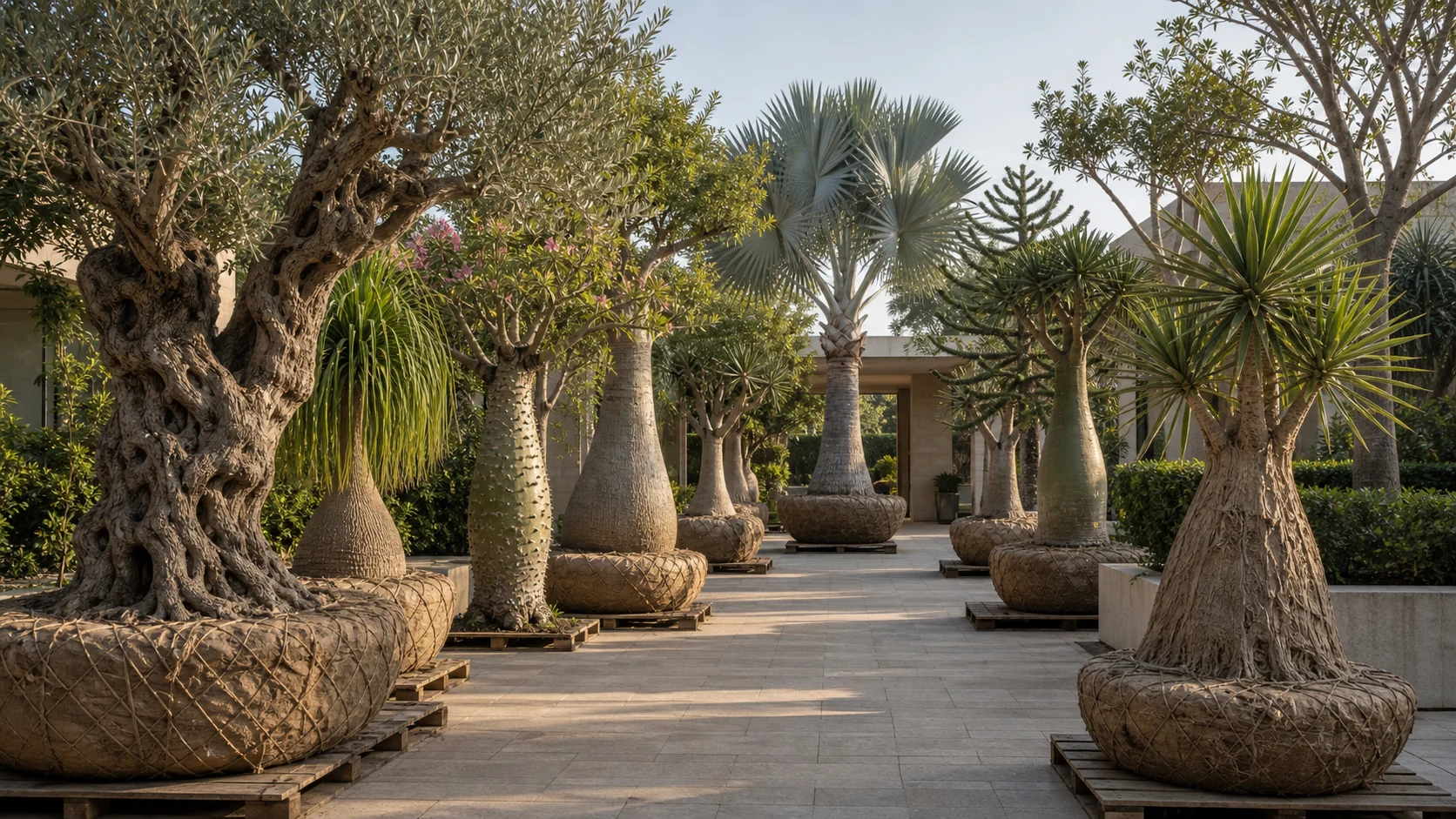
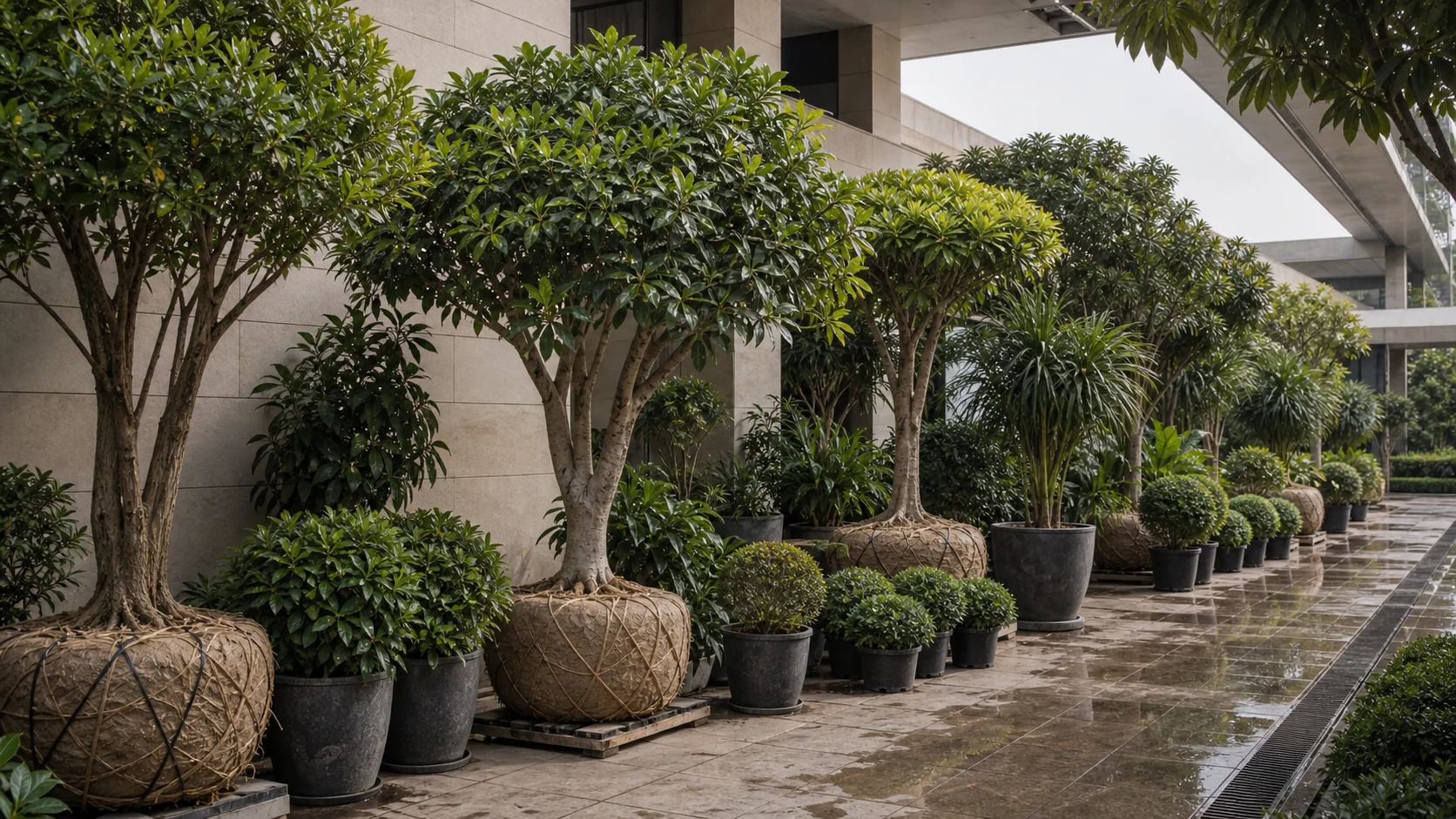
Visual context for placement, scale, handling, and landscape integration.
Section
Where it's used in premium projects
Landscape teams specify dwarf Areca for rhythmic understorey screens, resort arrival green walls, and humid tropical courts where fine pinnate texture reads lush without a massive crown. It suits Kerala houseboats, Goa villa courts, and Bangalore tech-campus atriums only when humidity and irrigation are engineered — not as a dry-city boulevard palm.
Section
Climate & site suitability in India
It needs year-round warmth and steady moisture — coastal Karnataka and Kerala outperform Rajasthan or Delhi NCR without misting and irrigation redesign. Cold nights and HVAC dry air in northern atriums cause tip burn and thinning crowns. Be honest in proposals: much stock is domestically grown, so “imported exotic” positioning is weaker than for Madagascar or Australian palms.
Section
Sourcing & acclimatisation
Procurement should distinguish this species from Dypsis lutescens (golden cane), which buyers often call “areca palm.” Specify crown fullness and trunk count per pit. [Unverified: import share versus South-Indian nursery production.] Acclimatise from shade structures before full coastal sun — sudden exposure bleaches fine leaflets.
Section
Installation (pit, soil, drainage, bracing)
Pits need moisture-retentive but drained media — not desert palm sand mixes. Cluster plantings need shared drip zones with per-rootball emitters. Light staking may help tall slender trunks in wind corridors. Do not plant in reflective heat islands without irrigation — crowns go sparse within one dry season.
Section
Establishment & AMC
AMC should monitor soil moisture daily in the first monsoon, not assume “tropical rain equals no irrigation.” Fertilise lightly on acid-loving palm programmes — alkaline bore water yellows tips. Frond hygiene is lower than date palms, but stressed plants drop fine leaflets on pool decks still.
Section
Cost drivers
Explore
Related
Related
Related links
Services, segments, cost, and proof.
- Softscape & horticulture
- Irrigation & water management
- Landscape maintenance (AMC)
- Hotel & resort landscaping
- Luxury resort & spa landscaping
- Mall & retail landscaping
- Corporate campus landscaping
- Projects
- Commercial landscaping cost guide
- Pricing drivers (imported trees)
- Import compliance workflow
- Request a site assessment
- How is dwarf Areca catechu different from the golden-cane areca palm?
- Golden cane is Dypsis lutescens — a clustering Madagascar palm; dwarf betel-nut is Areca catechu with a solitary ringed crownshaft. Mixing names on BOQs causes wrong irrigation and size expectations.
- What humidity and water regime does it need in India?
- Treat it as a humid tropical plant: consistent soil moisture, avoid prolonged dry spells, and plan supplemental irrigation through dry coastal winters — not a drought-tolerant resort palm.
- Is dwarf areca actually imported for Indian projects?
- Much commercial stock is grown domestically in humid regions — verify nursery origin on submittals rather than assuming overseas shipment for every lot.
- Can it work in a Delhi or Jaipur hotel atrium?
- Only with humidity management and winter warmth — otherwise crowns thin and tips scorch; designers often choose hardier fan palms for those climates.
- What should installation scope include?
- Shade transition, drip irrigation design, organic mulch, and a two-monsoon establishment feed programme — generic palm pits without moisture retention fail this species quickly.
- How do we compare supplier quotations?
- Match trunk height, plants per pit, establishment irrigation weeks, and AMC moisture audits — not headline per-tree rates alone.