
Trithrinax palm
Blue needle / Caranday palm (Trithrinax campestris)
Trithrinax campestris is the blue needle palm — extremely drought- and cold-hardy fan palm with a spine-armed trunk — for xeric and desert-modern palettes where contact placement must be controlled and slow growth is accepted.
Spec
At a glance
- Botanical name
- Trithrinax campestris
- Family
- Arecaceae
- Common names
- Blue needle palm, caranday palm (regional name overlap)
- Origin
- Southern South America (Argentina, Uruguay, Paraguay)
- Plant type
- Slow clustering to solitary fan palm
- Mature height
- Often 2–5 m in landscape clumps
- Trunk / form
- Distinctive spine-armed trunk; stiff silvery fan fronds
- Crown spread
- Compact to moderate
- Growth rate
- Very slow
- Light
- Full sun
- Water needs
- Very low once established
- India climate suitability
- Dry-winter and desert-modern sites; excellent drainage mandatory in monsoon
- Cold/heat & salt/wind tolerance
- Extremely drought- and cold-hardy; sharp trunk spines — safety critical
- Typical supply size
- Armed trunks 0.5–2 m [Unverified]
- Lead time (sourcing)
- [Unverified] collector availability
- Install considerations
- Spine-safe handling; contact setbacks; desert drainage
- Maintenance level
- Low — frond removal; spine zone marking
- Cautions
- Very slow and costly at size; trunk spines injure contact; not tropical lush palm
Gallery
Specimen visual guide
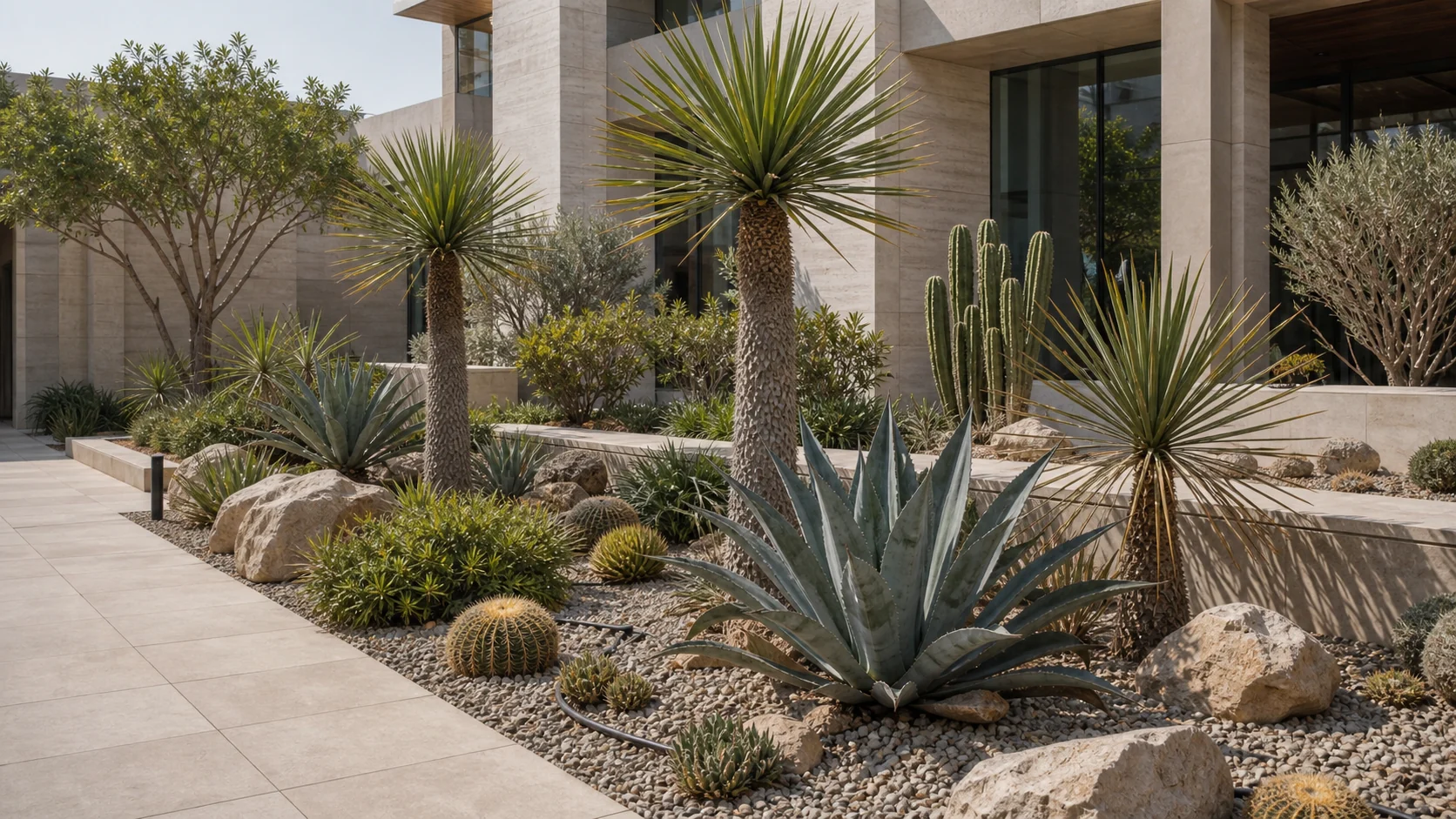
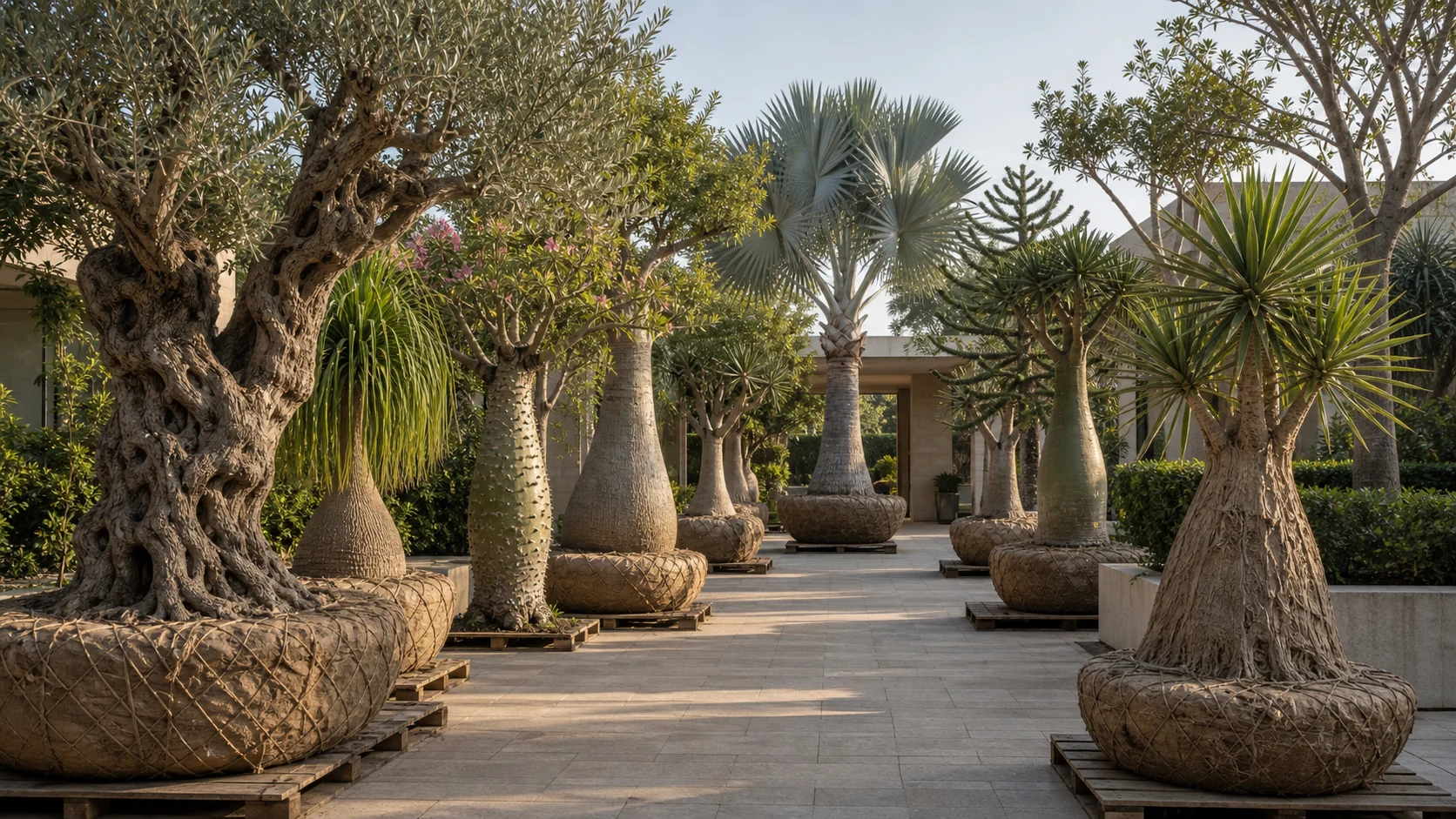
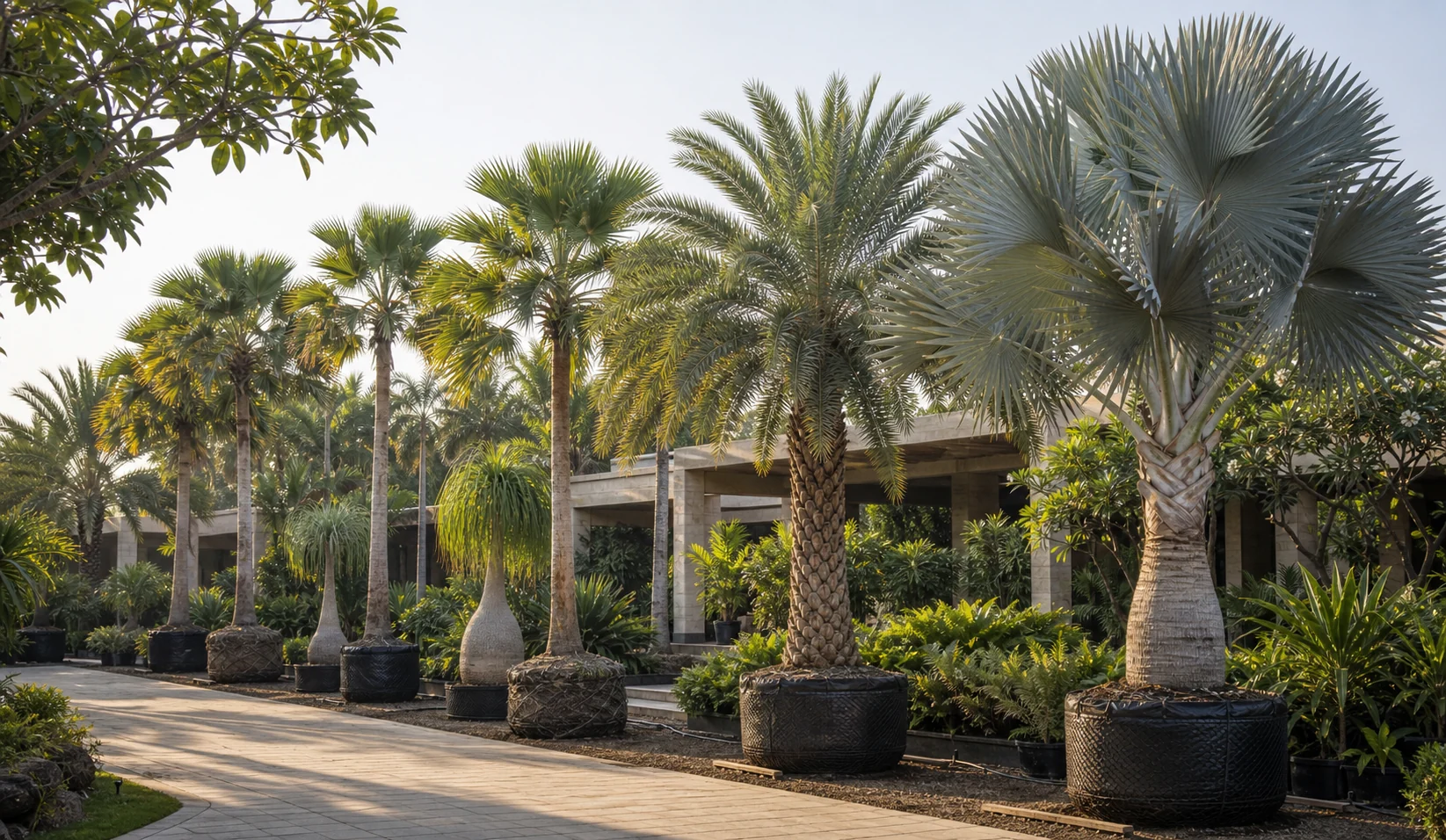
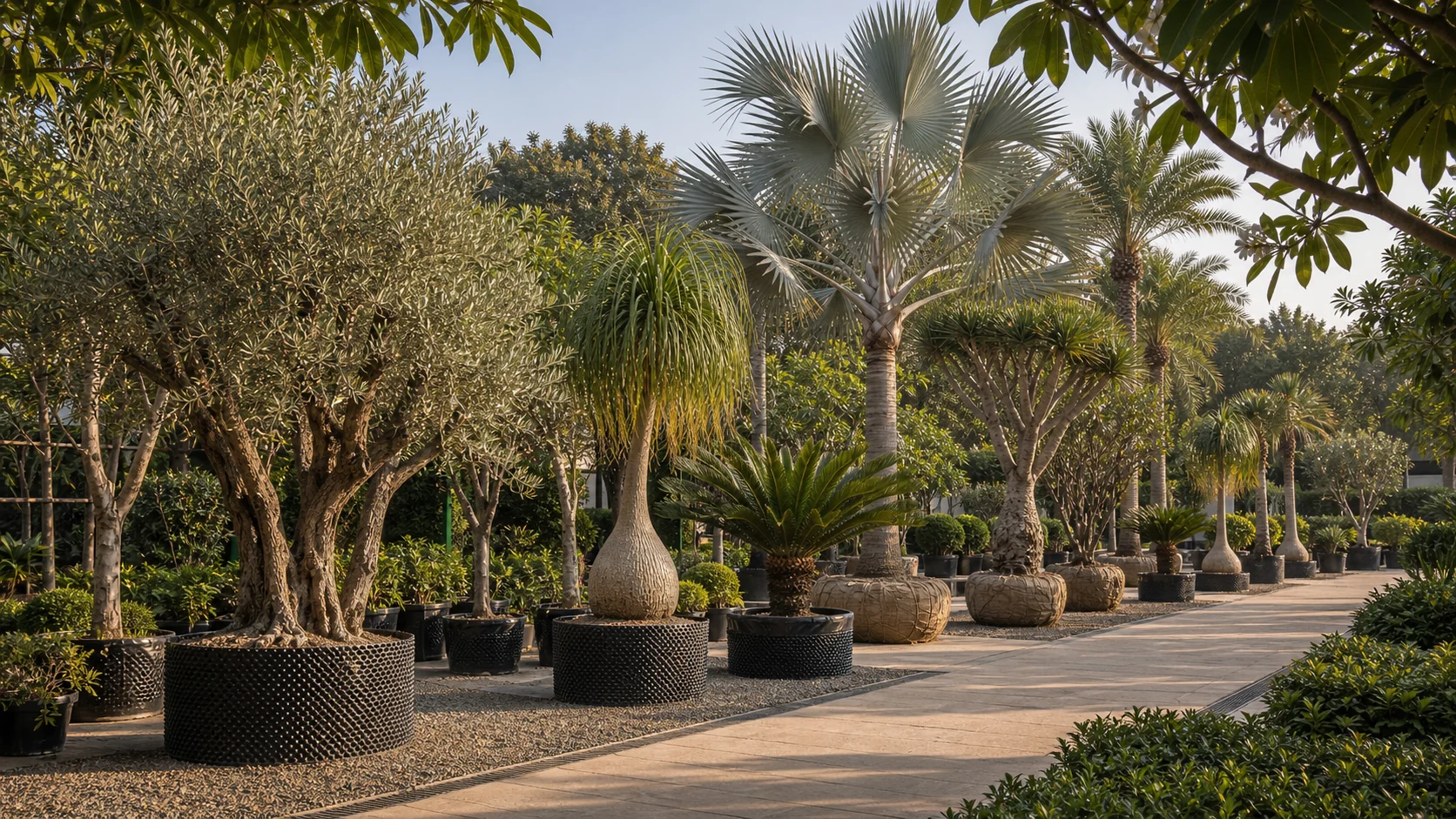
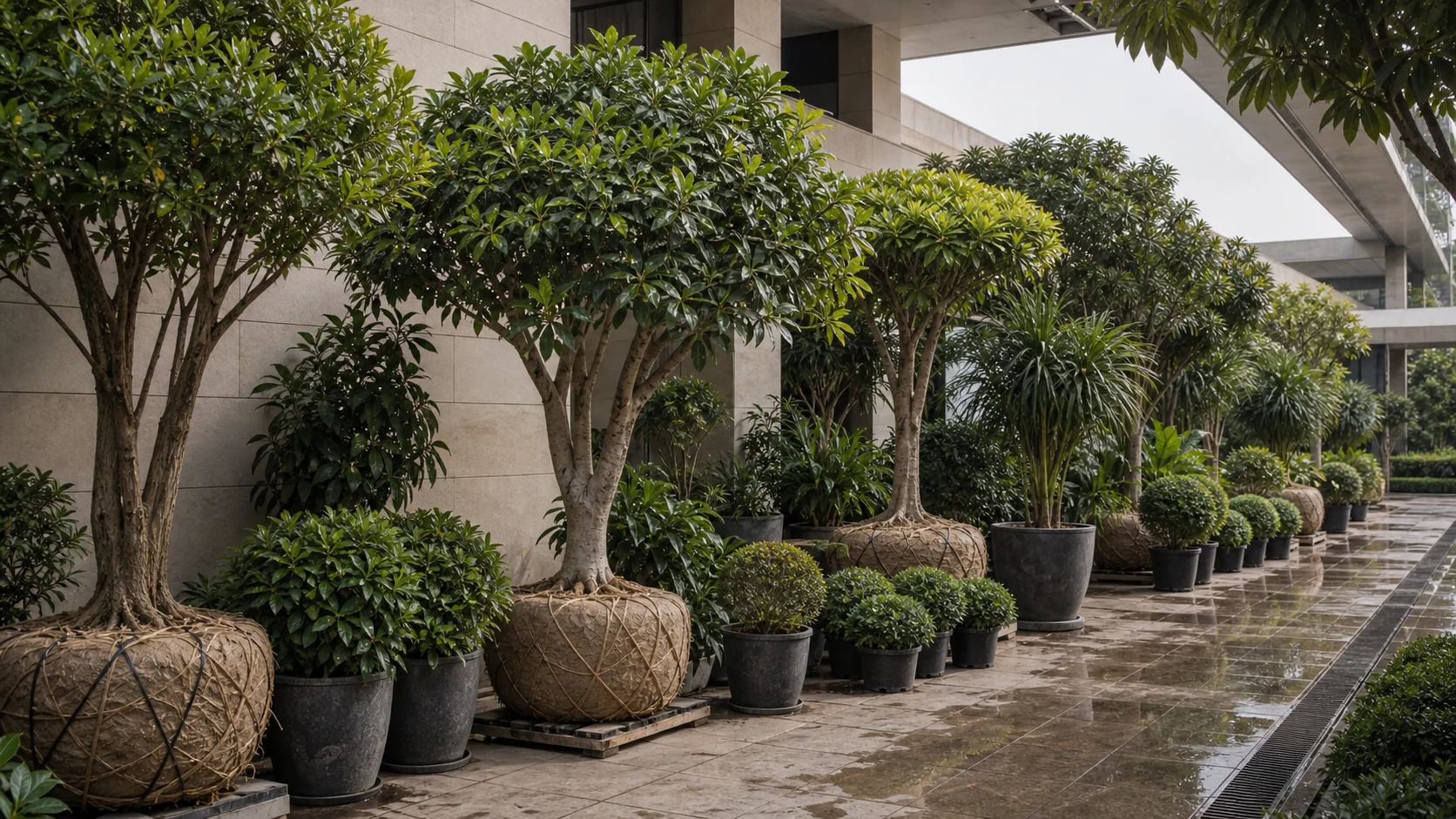
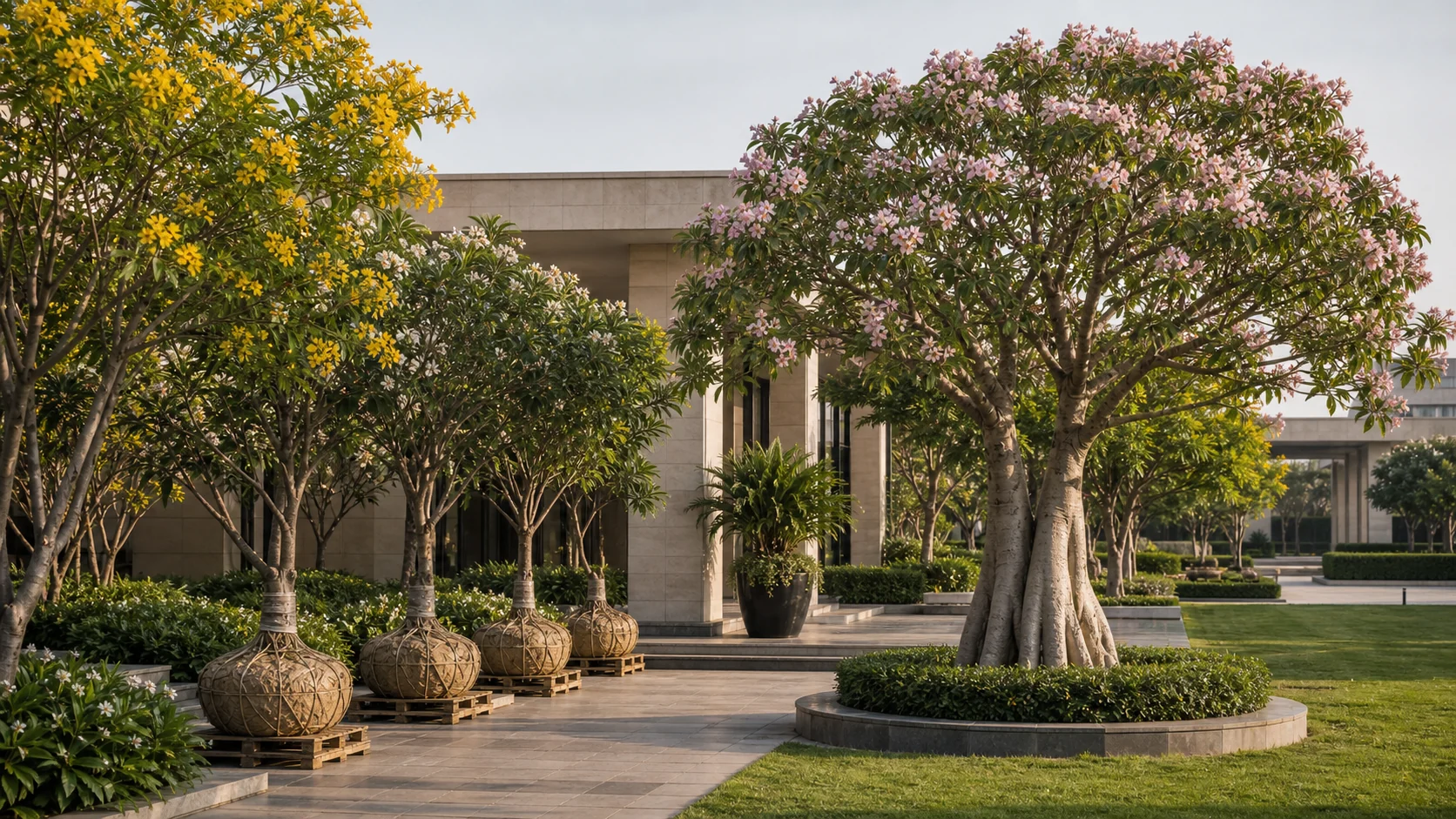
Visual context for placement, scale, handling, and landscape integration.
Section
Where it's used in premium projects
Specified for desert-modern villas, xeric sculpture gardens, and embassy dry courts where the armed trunk is a deliberate textural feature — not mass tropical green. Designers choose Trithrinax when Brahea is too tall and Chamaerops is not spiny or hardy enough for the brief's edge.
Section
Climate & site suitability in India
Rajasthan, Gujarat, and dry plateau sites with drainage outperform humid Kolkata courtyards. Cold hardiness exceeds most fan palms — suitable for north-India winter exposure with sun. Trunk spines demand physical setbacks from benches, play areas, and maintenance paths.
Section
Sourcing & acclimatisation
Slow growth means BOQ buys armed character at delivery — do not assume fast infill. [Unverified: India nursery availability for commercial quantities.] Verify Trithrinax campestris versus Copernicia alba “caranday” name confusion on supplier lists.
Section
Installation (pit, soil, drainage, bracing)
Desert drainage pits — coarse layers, no monsoon saucers. Rigging teams need spine PPE and marked exclusion zones after planting. Rarely needs bracing due to low crown mass unless on windy rooftops in lightweight containers.
Section
Establishment & AMC
AMC marks spine zones on facilities drawings — annual frond removal only. Over-irrigation kills more plants than drought after establishment. Educate security and housekeeping not to lean tools against armed trunks.
Section
Cost drivers
Explore
Related
Related
Related links
Services, segments, cost, and proof.
- Softscape & horticulture
- Irrigation & water management
- Landscape maintenance (AMC)
- Hotel & resort landscaping
- Luxury resort & spa landscaping
- Mall & retail landscaping
- Corporate campus landscaping
- Projects
- Commercial landscaping cost guide
- Pricing drivers (imported trees)
- Import compliance workflow
- Request a site assessment
- How cold- and drought-hardy is Trithrinax campestris?
- Among the toughest fan palms for dry and cool winters — specified where tropical imports fail, with drainage still required during monsoon.
- Why is the trunk called spine-armed?
- Persistent sharp trunk spines — placement must keep guest and staff contact zones clear; PPE is mandatory for maintenance.
- Why is blue needle palm slow and costly?
- Patagonian-steppe adaptation — visual impact is bought at armed trunk size because on-site growth is very slow.
- Is Trithrinax the same as Copernicia alba Caranday?
- No — different genus and ecology; name overlap on nursery lists causes wrong BOQ — verify botanical name on submittals.
- Can it replace foxtail beside a pool?
- No — spines and xeric habit are incompatible with pool circulation; foxtail or Veitchia fit lush pool briefs better.
- How do we compare BOQs?
- Match armed trunk size, spine-safety scope, drainage engineering, and species verification — not generic fan-palm pricing.