
Sugar palm (Arenga)
Sugar palm (Arenga pinnata)
Arenga pinnata is a massive black-trunked feather palm for botanical estates and wide tropical forecourts — bold coarse texture, monocarpic death after fruiting, and irritant fruit pulp that demands placement and safety planning on public sites.
Spec
At a glance
- Botanical name
- Arenga pinnata
- Family
- Arecaceae
- Common names
- Sugar palm, gomuti palm, black-fiber palm
- Origin
- South-East Asia
- Plant type
- Solitary massive feather palm
- Mature height
- Often 12–20 m+ with huge crown
- Trunk / form
- Thick trunk with black fibrous coating; very coarse fronds
- Crown spread
- Very large arching pinnate crown
- Growth rate
- Moderate to moderately fast when young
- Light
- Full sun to bright light
- Water needs
- Moderate to high in establishment
- India climate suitability
- Humid tropical India with space; poor fit for small courtyards
- Cold/heat & salt/wind tolerance
- Tropical warmth required; large crown sensitive to cyclone wind
- Typical supply size
- Large field-grown specimens [Unverified]
- Lead time (sourcing)
- [Unverified] limited nursery lists for estate sizes
- Install considerations
- Huge rootball; crane access; replacement planning in contract
- Maintenance level
- Moderate until flowering — then removal event
- Cautions
- Monocarpic (~15–20 yr); fruit oxalate irritant; enormous footprint
Gallery
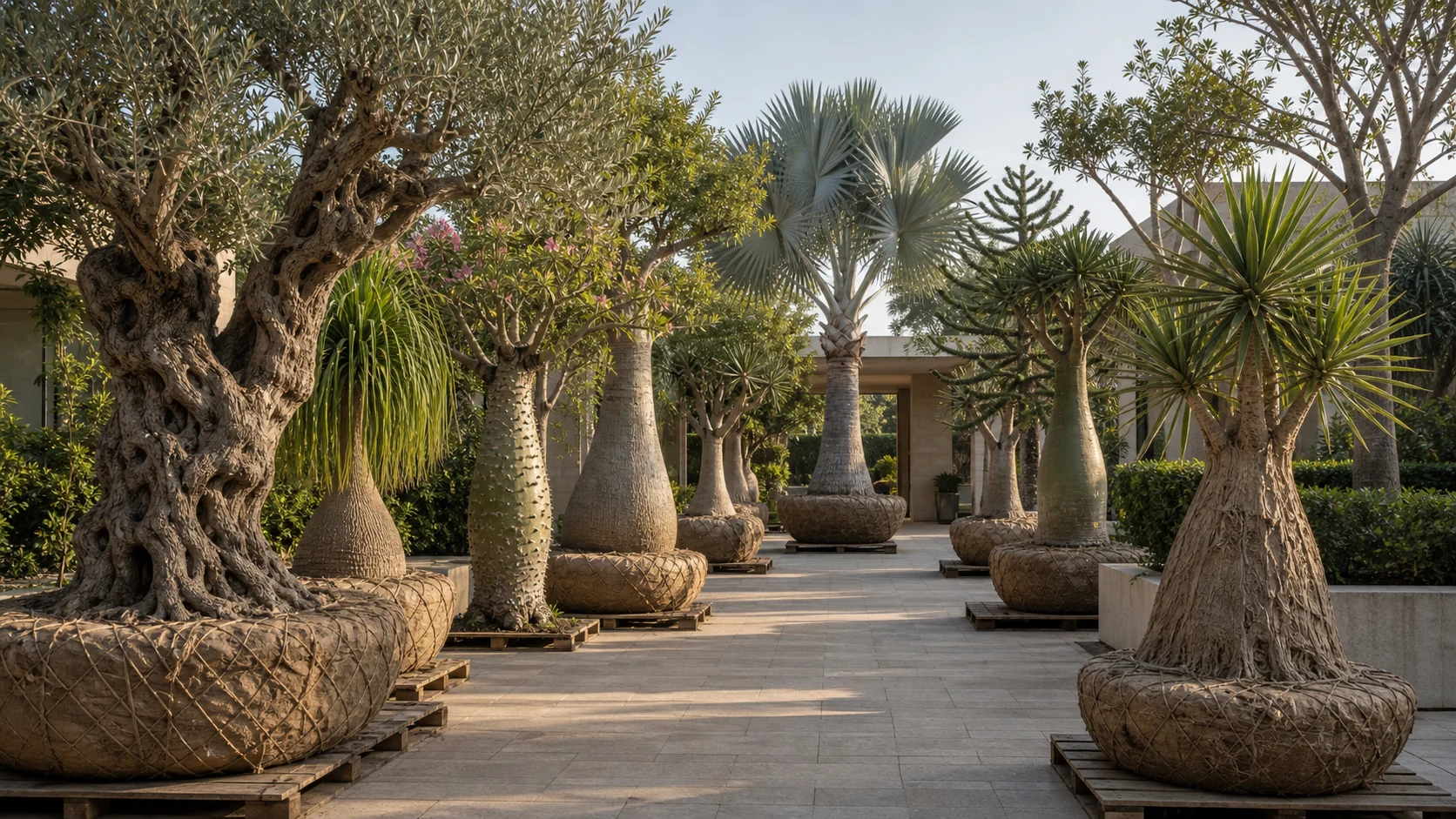
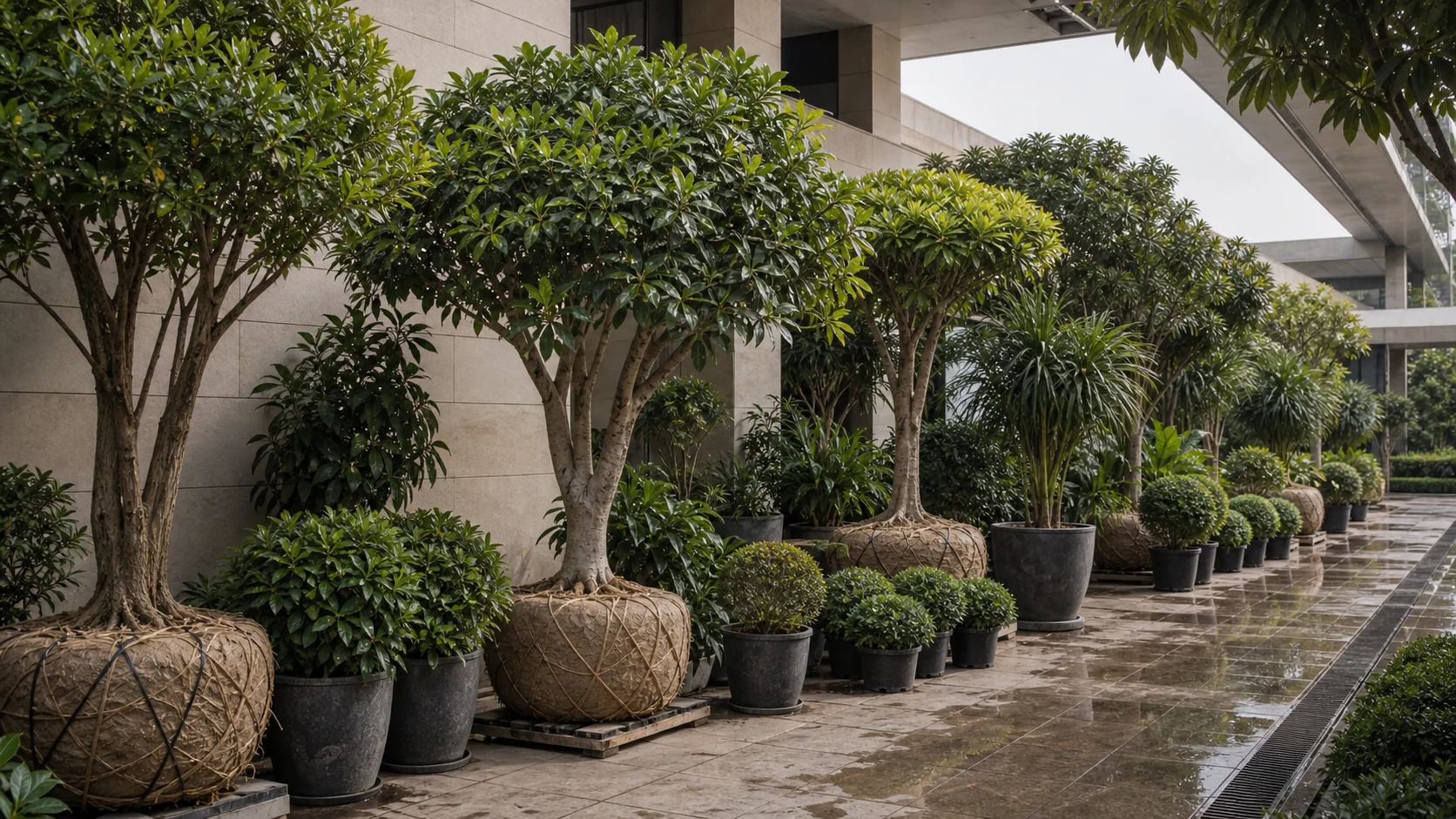
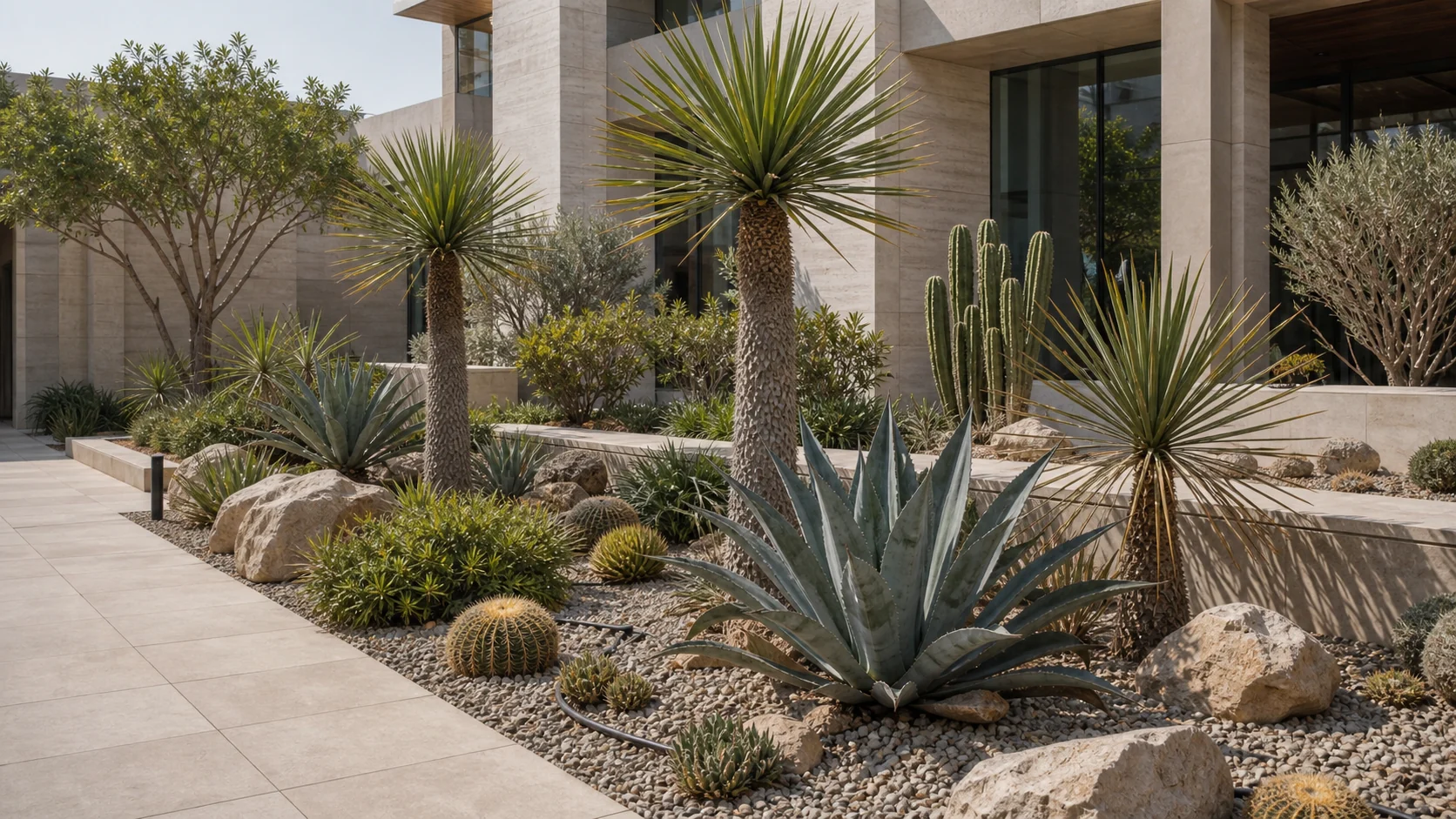
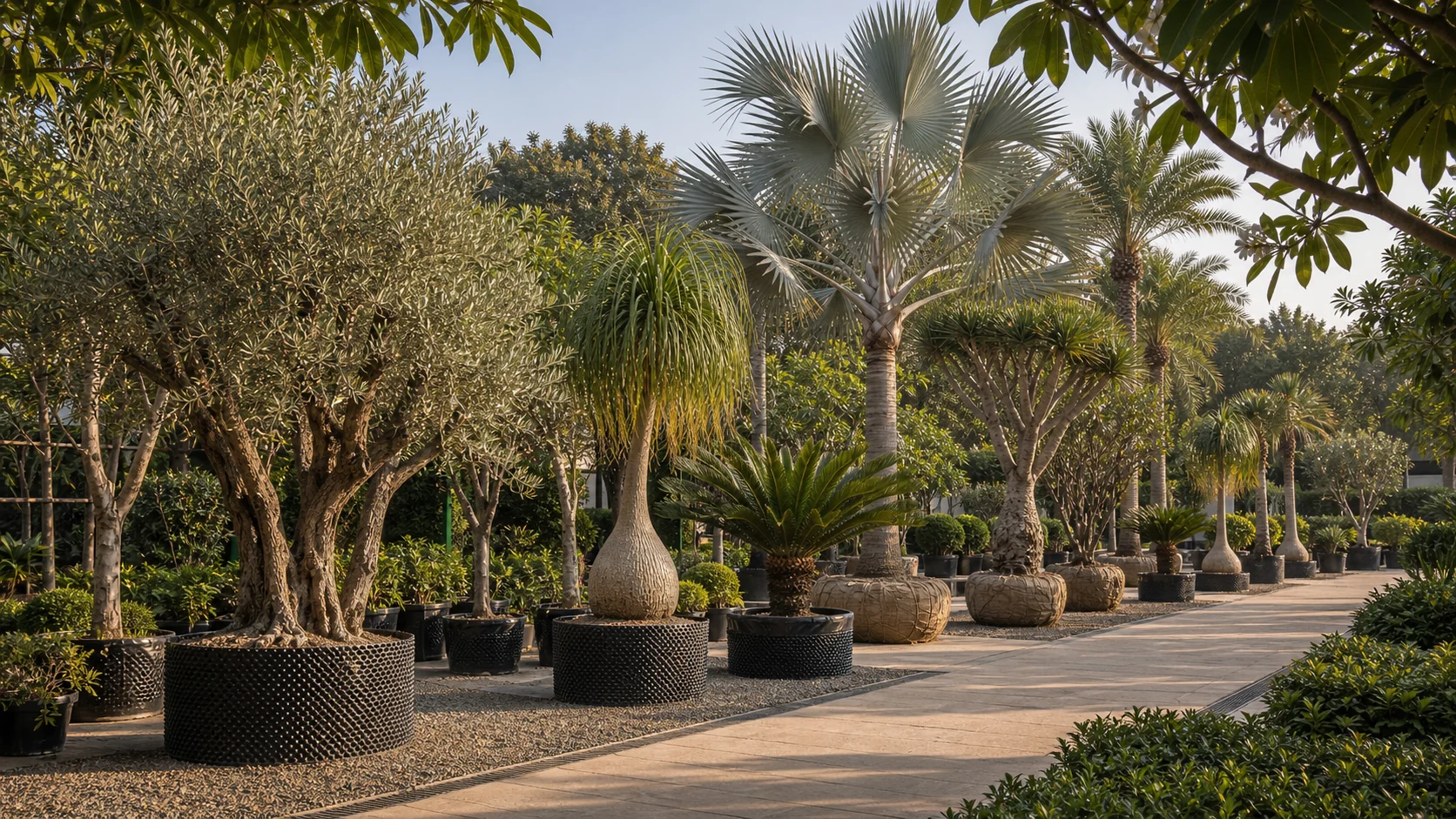
Specimen visual guide
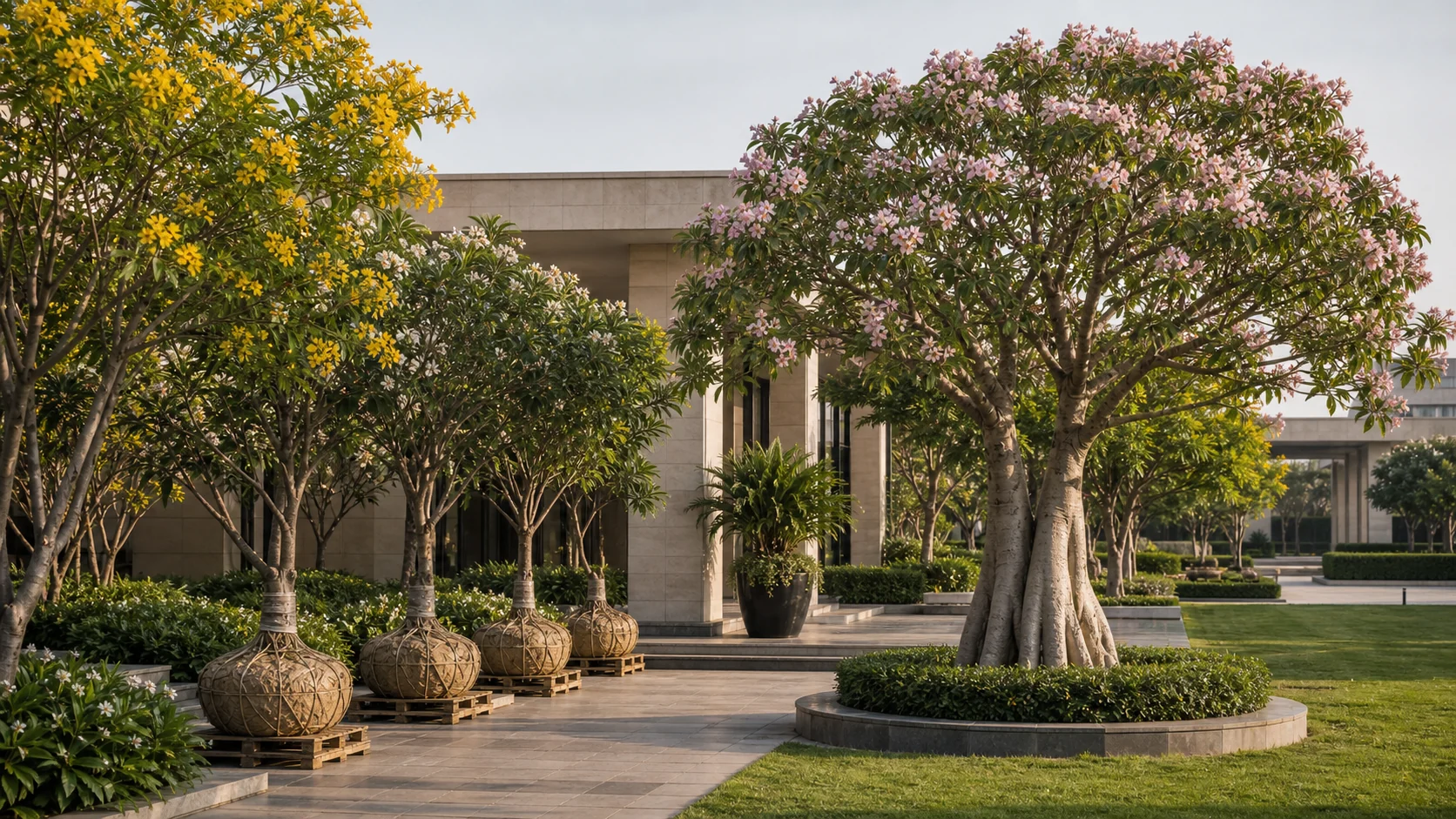
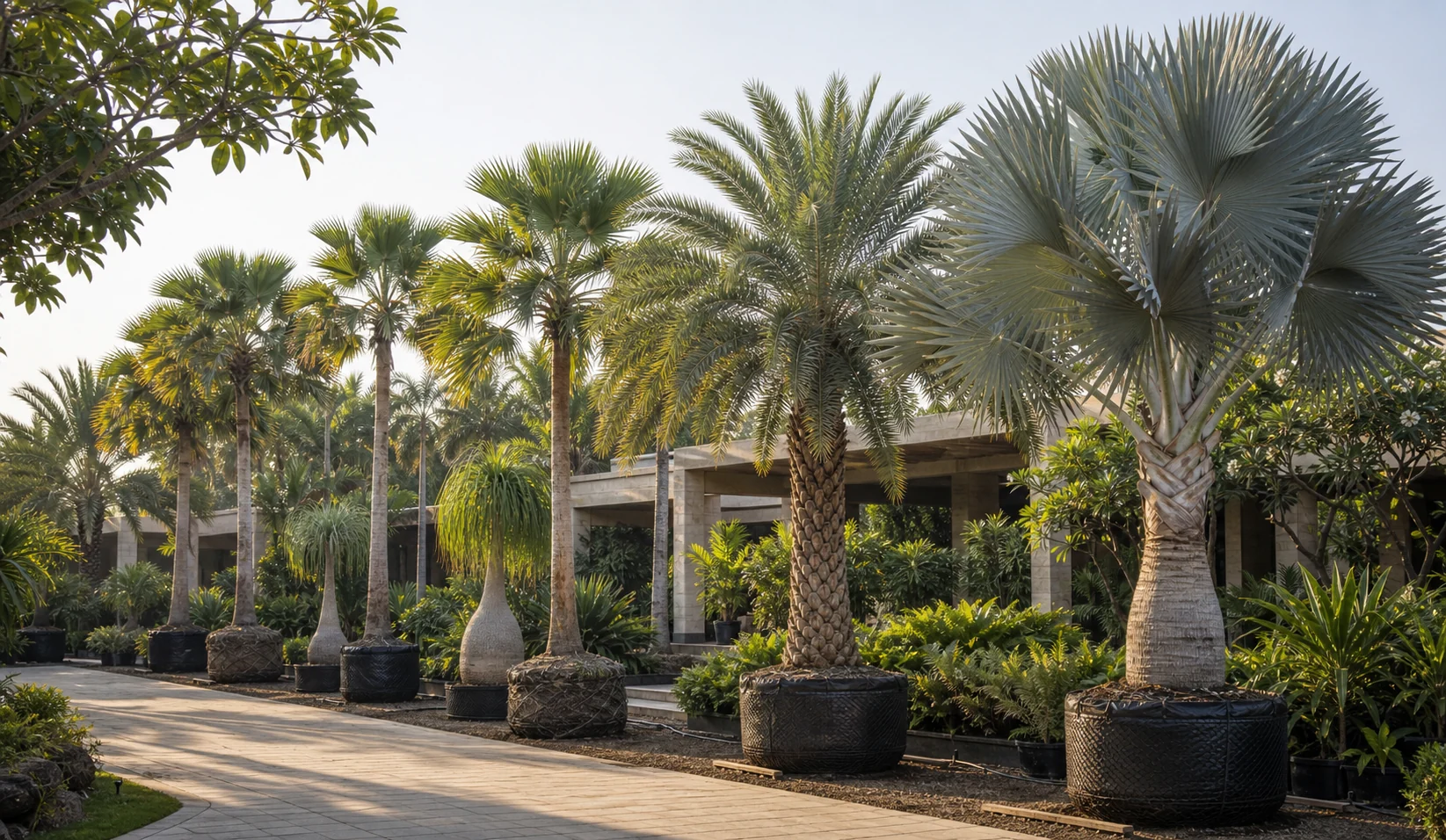
Visual context for placement, scale, handling, and landscape integration.
Section
Where it's used in premium projects
Specified as a single bold tropical monument — botanical gardens, wide estate drives, and resort perimeters where designers want black-trunk drama and coarse texture, not a repeating courtyard palm. It is never a tight allée species; BOQs should assume one or few specimens with decades of crown envelope planning.
Section
Climate & site suitability in India
Humid tropical and warm coastal sites suit it; dry interiors need heavy irrigation establishment and often fail on scale. Cyclone-exposed coasts require wind setbacks — the crown is sail-like. North-India winter cold is unsuitable for young stock without protection.
Section
Sourcing & acclimatisation
Buy big because visual impact at opening matters — slow post-transplant recovery on huge feather palms is common. Document monocarpic lifespan in the client brief so facilities expect a removal event roughly 15–20 years after planting, not “permanent heritage tree” language. [Unverified: typical import corridor versus regional nursery dig.]
Section
Installation (pit, soil, drainage, bracing)
Pits and crane pads must match rootball mass — undersized pits kill large Arenga. Multi-season bracing until stability is proven. Route pedestrian paths outside fruit-drop arcs once inflorescences form; PPE rules for maintenance handling irritant pulp.
Section
Establishment & AMC
AMC covers feeding, frond hygiene, and annual crown inspections as flowering approaches. When the terminal inflorescence appears, plan staged removal and replacement — the whole palm dies after fruiting. Do not position irreplaceable structures under the crown without a funded replacement line in the landscape CAPEX plan.
Section
Cost drivers
Explore
Related
Related
Related links
Services, segments, cost, and proof.
- Softscape & horticulture
- Irrigation & water management
- Landscape maintenance (AMC)
- Hotel & resort landscaping
- Luxury resort & spa landscaping
- Mall & retail landscaping
- Corporate campus landscaping
- Projects
- Commercial landscaping cost guide
- Pricing drivers (imported trees)
- Import compliance workflow
- Request a site assessment
- What does monocarpic mean for Arenga pinnata on site?
- The palm flowers once, fruits, then the entire stem dies — budget removal and a replacement specimen roughly 15–20 years after planting, and do not promise perpetual canopy without that CAPEX line.
- Why is sugar palm fruit a safety issue?
- Pulp contains irritant oxalate crystals — maintenance needs PPE, fruit should not fall over guest circulation, and children must not handle fallen fruit.
- How much space does a mature sugar palm need?
- Plan a very wide crown and tall trunk envelope — treat it like a small building footprint for setbacks, glazing, and crane access, not like a compact Veitchia courtyard palm.
- Can Arenga replace royal palm on an avenue?
- No — it is a solitary statement with monocarpic death and fruit hazards; Roystonea suits symmetrical avenues, Arenga suits wide botanical focal placement.
- What import documentation applies?
- Live palms follow India plant quarantine workflow — align with your compliance checklist before shipment (informational, not legal advice).
- How should BOQs compare cost?
- Match trunk height, crown spread, lifting, bracing weeks, and a stated replacement allowance — not per-tree catalogue pricing alone.