
Cohune palm
Cohune palm (Attalea cohune)
Attalea cohune is a Central American giant — enormous arching plumose fronds from a stout trunk — specified only where estate scale, crane access, and generous setbacks can absorb one of the largest palm crowns in commercial horticulture.
Spec
At a glance
- Botanical name
- Attalea cohune
- Family
- Arecaceae
- Common names
- Cohune palm, cohune oil palm
- Origin
- Central America (Belize, Guatemala, Honduras region)
- Plant type
- Solitary massive feather palm
- Mature height
- Often 15–25 m+ in tropics
- Trunk / form
- Stout trunk; huge arching plumose fronds
- Crown spread
- Enormous — among the widest palm crowns
- Growth rate
- Slow — large specimens scarce and costly
- Light
- Full sun
- Water needs
- Moderate; establishment needs steady moisture
- India climate suitability
- Warm humid tropical estates; not for urban courtyards
- Cold/heat & salt/wind tolerance
- Heat-tolerant; cyclone wind loads critical; cold-sensitive when young
- Typical supply size
- Very large field specimens only [Unverified]
- Lead time (sourcing)
- [Unverified] long lead for estate-grade size
- Install considerations
- Crane pad; nut/frond-drop zones; decade-scale setback planning
- Maintenance level
- Moderate to high — frond and nut management
- Cautions
- Immense spread; heavy frond and nut drop; slow growth → expensive at size
Gallery
Specimen visual guide
Visual context for placement, scale, handling, and landscape integration.
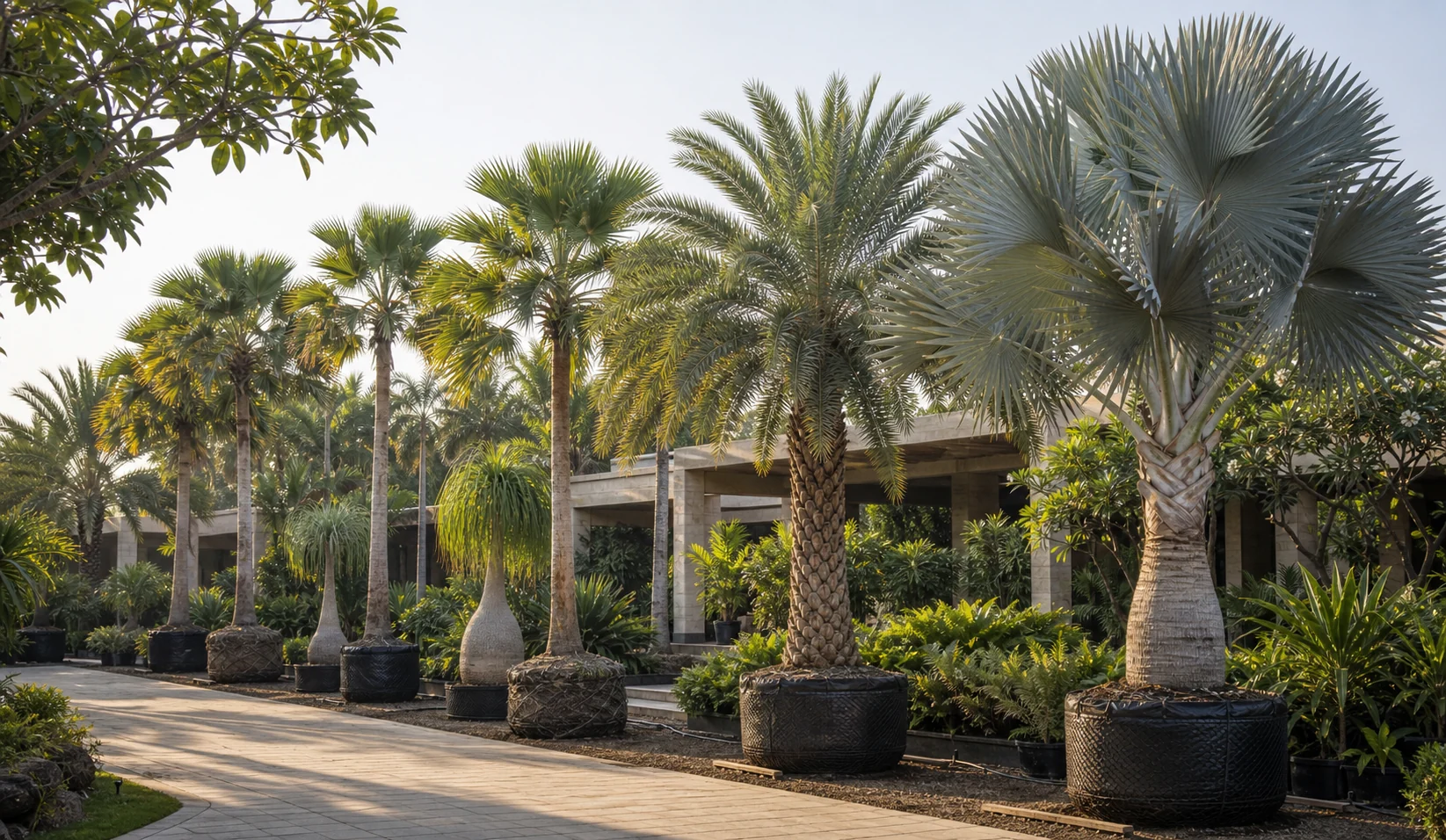
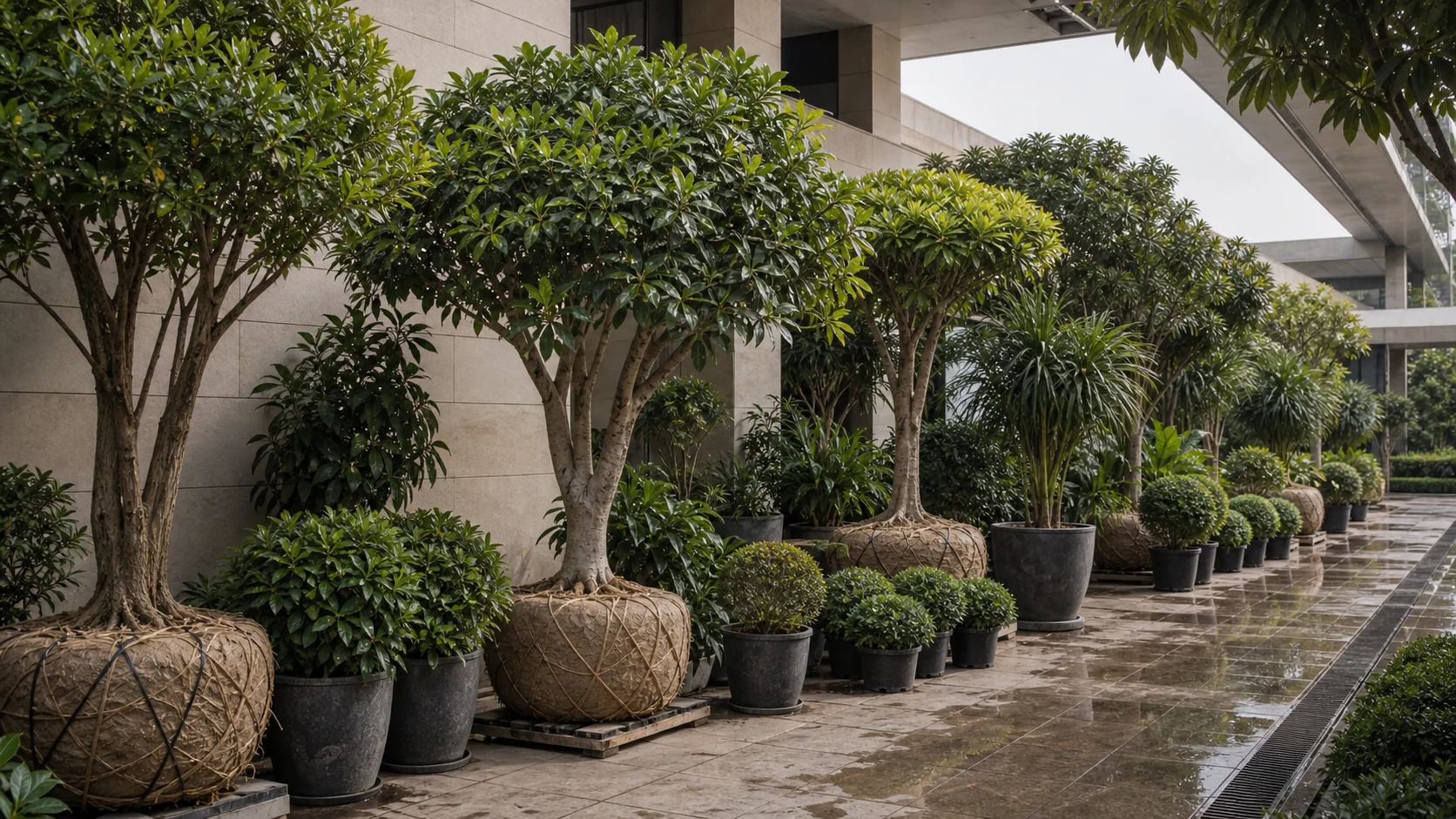
Section
Where it's used in premium projects
Cohune palm appears on grand resort estates, golf-club perimeters, and private arboretums where a single palm must read as geography-scale sculpture. Designers pair it with open lawn and distant architecture — not with six-metre courtyard walls that the crown will cross within a decade.
Section
Climate & site suitability in India
Warm humid tropical India with irrigation establishment suits it better than arid plazas. Cyclone coasts need engineered wind policy — fronds and nuts are projectiles. It will not survive north-India winters outdoors; atrium use is impractical at mature scale.
Section
Sourcing & acclimatisation
Slow growth from seed means buyers import or field-dig large stock at premium — BOQ should state minimum frond count and spread at delivery because waiting on-site is not viable. [Unverified: typical holding period at Indian nursery gate.] Quarantine documentation for live imports is mandatory where applicable.
Section
Installation (pit, soil, drainage, bracing)
Pits and lifting plans must assume exceptional rootball mass and crown radius at crane pick. Survey setbacks for nut fall onto parking and glass — cohune nuts are heavy. Bracing seasons extend until root plate stability is documented on windy sites.
Section
Establishment & AMC
AMC schedules frond lowering before senescent leaves drop over guest routes, and seasonal nut sweep where fruiting occurs. Irrigation should not stop after year one on engineered plazas — crown volume demands water even when labelled “established.”
Section
Cost drivers
Explore
Related
Related
Related links
Services, segments, cost, and proof.
- Softscape & horticulture
- Irrigation & water management
- Landscape maintenance (AMC)
- Hotel & resort landscaping
- Luxury resort & spa landscaping
- Mall & retail landscaping
- Corporate campus landscaping
- Projects
- Commercial landscaping cost guide
- Pricing drivers (imported trees)
- Import compliance workflow
- Request a site assessment
- What setbacks does Attalea cohune need at maturity?
- Plan beyond trunk centreline — mature plumose fronds arch over very wide arcs; glazing, pools, and light poles inside that envelope will need relocation or aggressive frond management.
- How serious is frond and nut drop?
- Heavy — schedule lowering of senescing fronds and nut removal on guest routes; treat nut fall as a facilities safety line, not optional landscaping.
- Why are large cohune palms scarce and expensive?
- Slow growth from seed means landscape-scale impact is bought at size — long nursery lead and crane-heavy installation, not fast juvenile stocking.
- Is cohune palm suitable for a hotel porte-cochère pair?
- Only if the porte-cochère forecourt is estate-scale with decades of crown clearance — most Indian hotel courts are better served by Phoenix, Roystonea, or Veitchia on BOQ size.
- What documentation is needed for imported live palms?
- Phytosanitary certificate and inspection per India plant quarantine framework — see compliance workflow (informational, not legal advice).
- How do we benchmark quotations?
- Match frond spread at delivery, trunk height, crane scope, bracing duration, and AMC frond/nut policy — not headline per-tree pricing.