
Manila palm (Veitchia)
Manila / Christmas palm (Veitchia merrillii)
Veitchia merrillii is the Christmas palm — small neat solitary feather palm with smooth crownshaft and bright red fruit clusters — fast, tropical, and ubiquitous in Indian commercial courtyards where a tidy palm is needed without royal-palm scale.
Spec
At a glance
- Botanical name
- Veitchia merrillii (syn. Adonidia merrillii)
- Family
- Arecaceae
- Common names
- Christmas palm, Manila palm, Adonidia
- Origin
- Philippines
- Plant type
- Solitary feather palm
- Mature height
- Often 5–7 m in landscape — modest scale
- Trunk / form
- Slender smooth ringed trunk; green crownshaft
- Crown spread
- Compact neat crown
- Growth rate
- Moderately fast in warm sites
- Light
- Full sun to bright light
- Water needs
- Moderate
- India climate suitability
- Tropical and warm subtropical India; widespread commercial use
- Cold/heat & salt/wind tolerance
- Cold-sensitive; modest scale; fruit drop near paving
- Typical supply size
- Single and triple-trunk 2–4 m [Unverified]
- Lead time (sourcing)
- [Unverified] high-volume nursery SKU
- Install considerations
- Triple alignment; fruit-drop setbacks; courtyard scale fit
- Maintenance level
- Moderate — fruit removal, feeding
- Cautions
- Not a giant statement palm; cold-sensitive; fruit litter
Gallery
Specimen visual guide
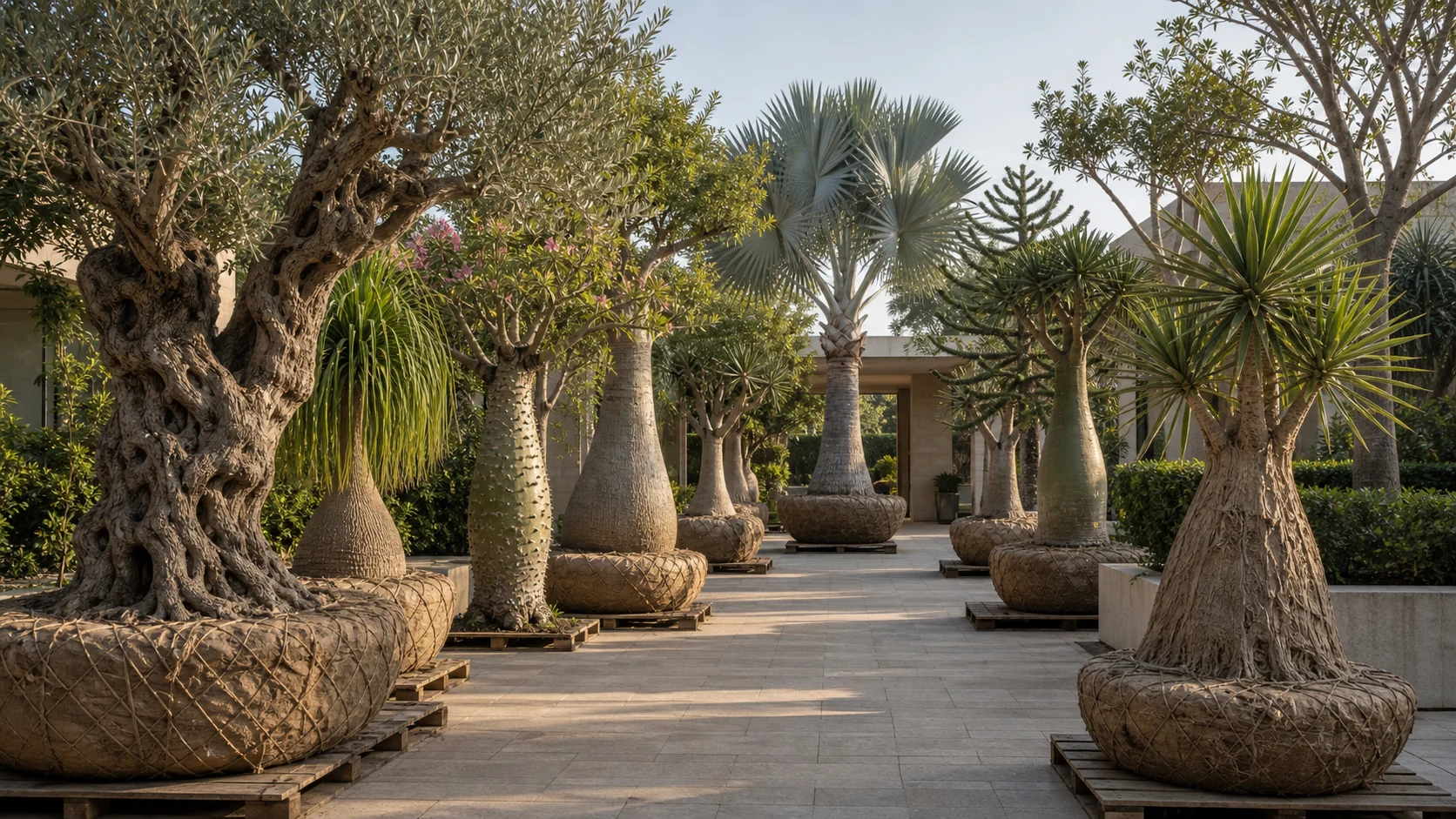
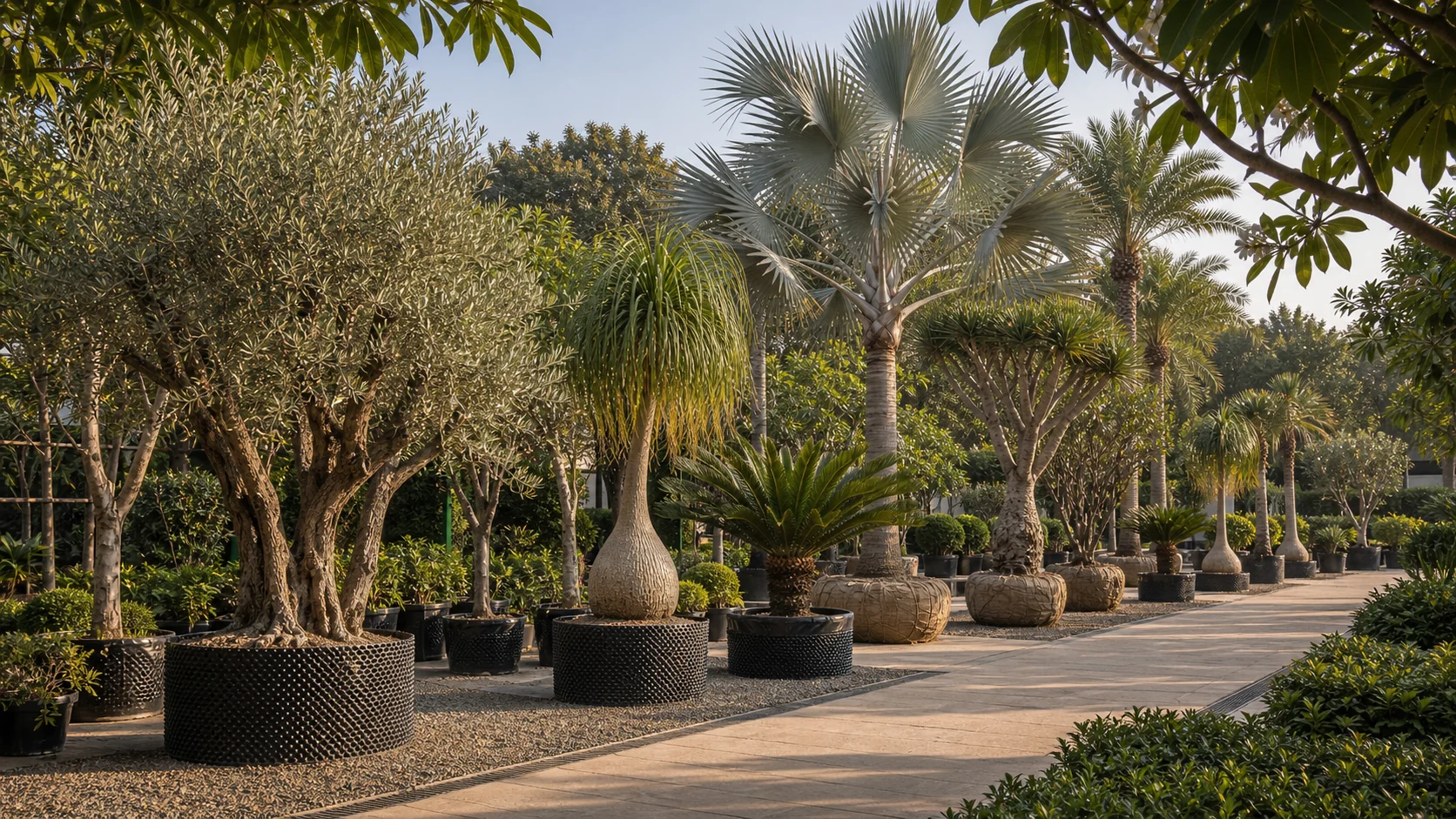
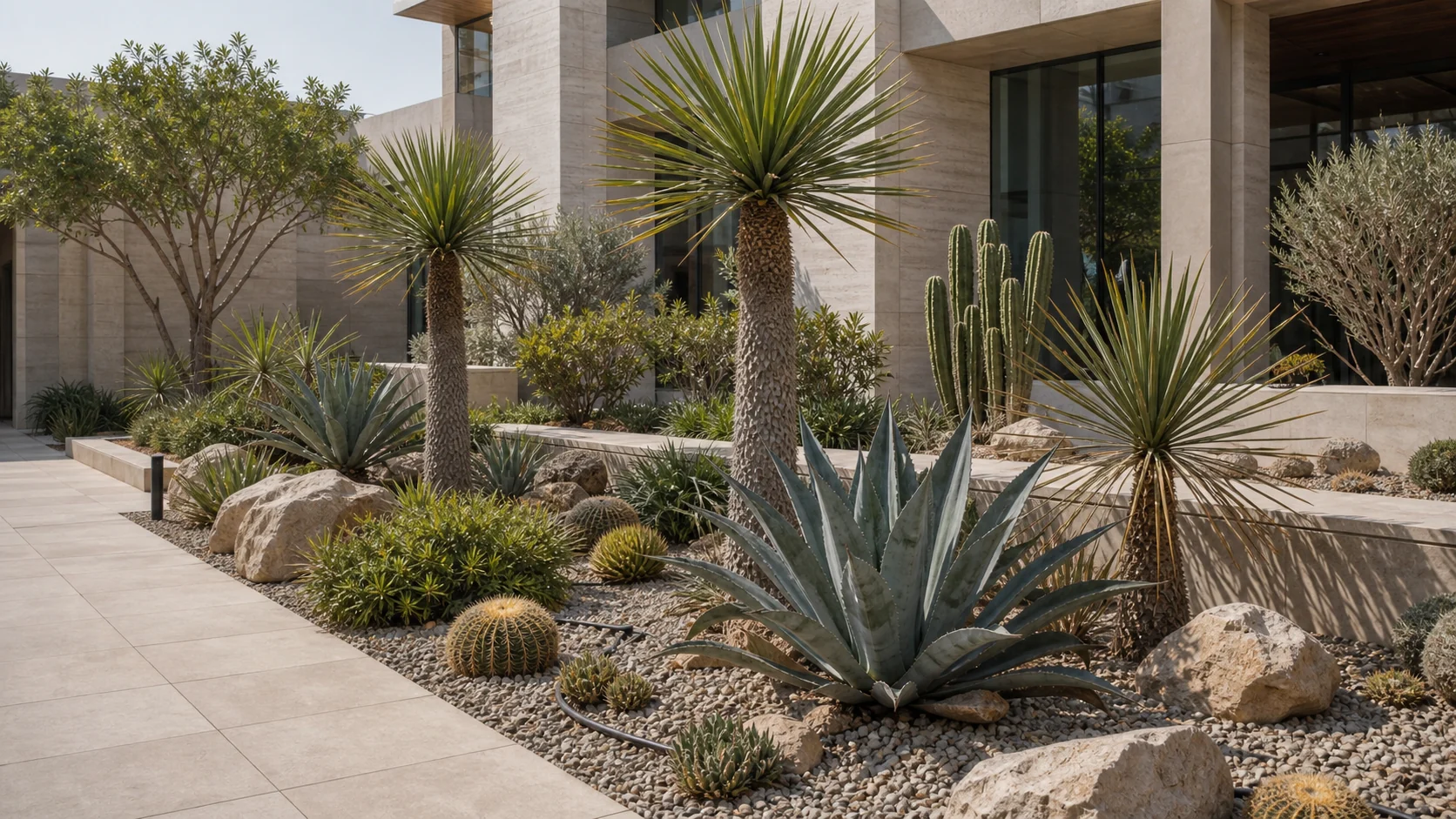
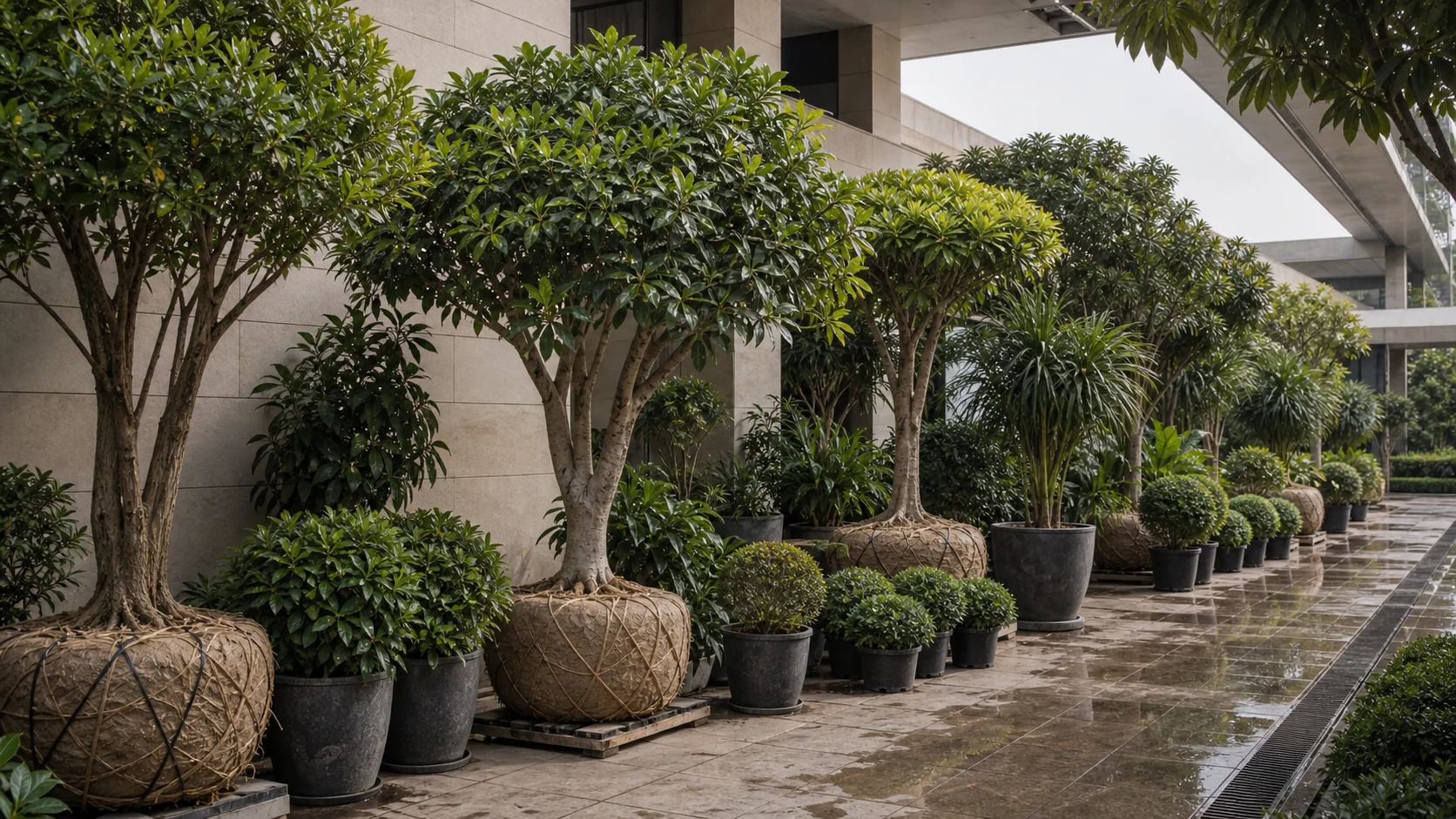
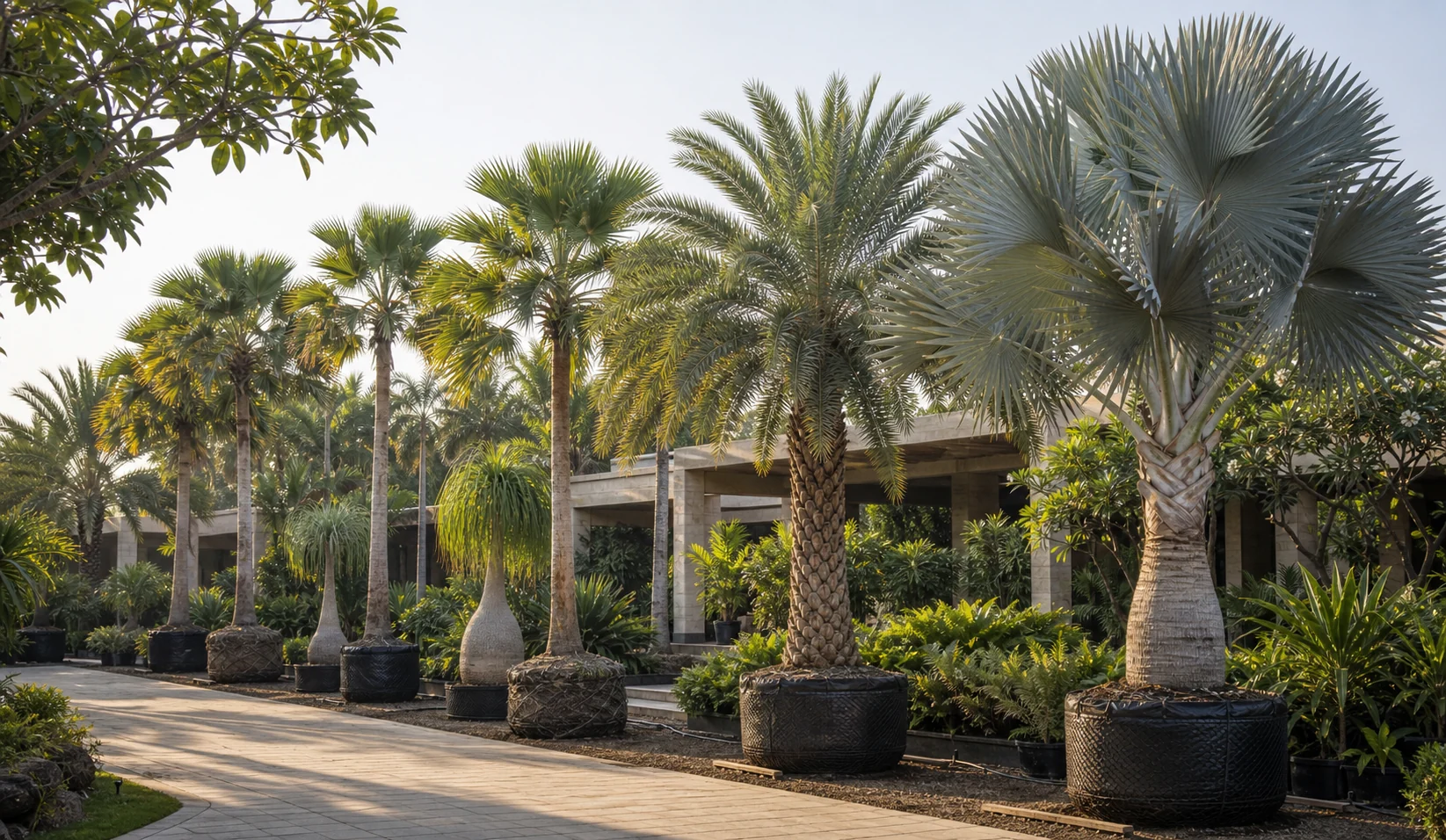
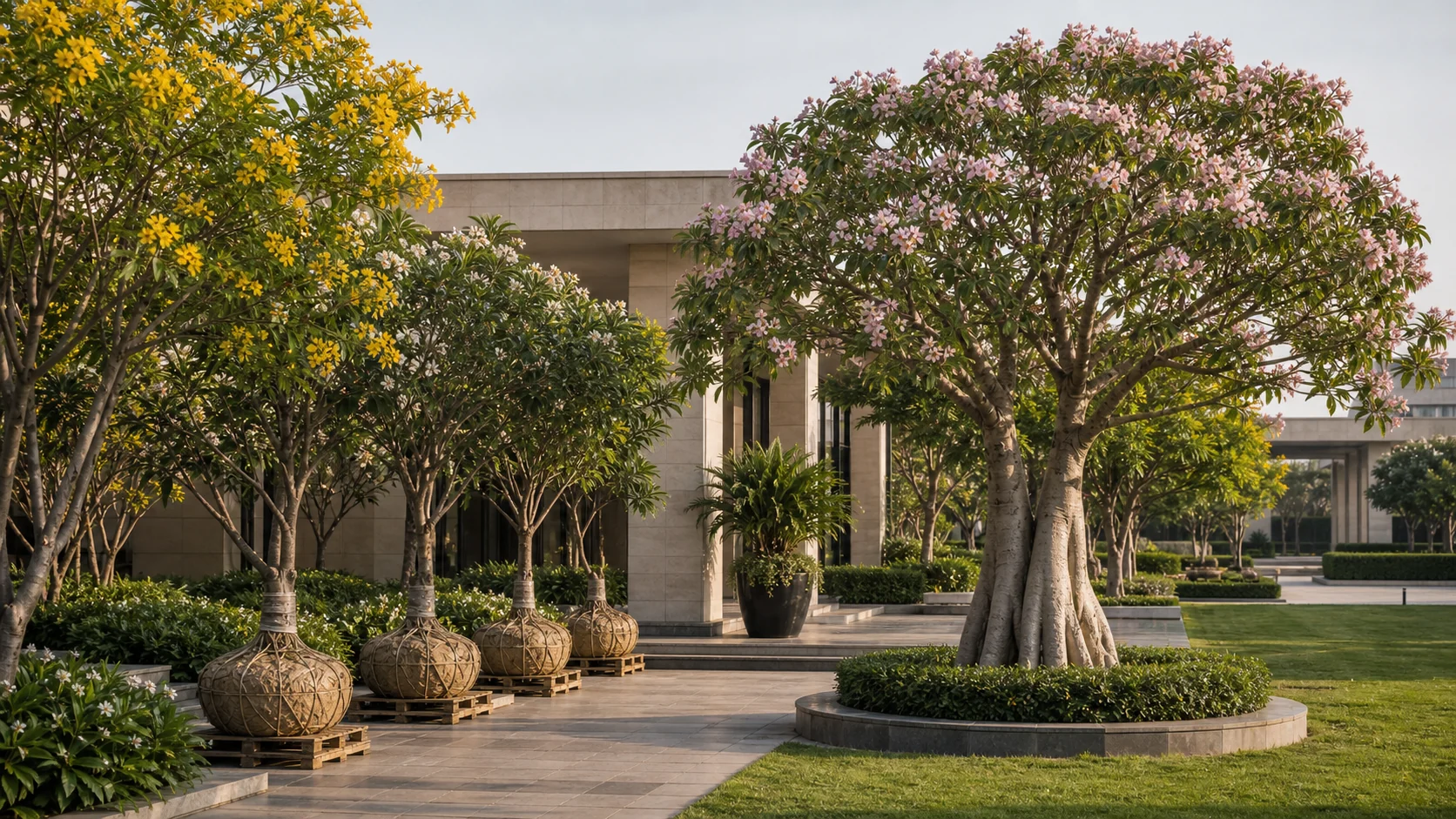
Visual context for placement, scale, handling, and landscape integration.
Section
Where it's used in premium projects
Christmas palm is the default tidy courtyard palm — hotel drop-offs, villa entries, mall plazas, and grouped triples where Roystonea or Phoenix would be absurdly large. Designers specify it when scale, cleanliness, and fast tropical green matter more than monumentality.
Section
Climate & site suitability in India
Warm coastal and inland tropical metros suit it — ubiquitous in Indian commercial planting for a reason. North-India cold snaps damage crowns on young stock. It is not self-cleaning like Wodyetia — fruit clusters stain light paving if ignored.
Section
Sourcing & acclimatisation
Single versus triple-trunk groups should be nursery-grown as a set with even crownshaft height. [Unverified: domestic production versus imported liners for premium triples.] Inspect crown fullness — mass-market lines vary from bushy to sparse.
Section
Installation (pit, soil, drainage, bracing)
Standard drained palm pits; triples share irrigation zones with separate rootballs. Plant away from cream limestone and pool decks if fruit staining matters — or budget AMC removal. Light bracing on tall singles in wind until stable.
Section
Establishment & AMC
AMC removes red fruit clusters before decay on paving — the Christmas colour is an asset only with harvest discipline. Feed regularly on engineered media — yellow crowns often trace to neglect, not disease. Do not expect royal-palm height — brief clients on modest ultimate scale.
Section
Cost drivers
Explore
Related
Related
Related links
Services, segments, cost, and proof.
- Softscape & horticulture
- Irrigation & water management
- Landscape maintenance (AMC)
- Hotel & resort landscaping
- Luxury resort & spa landscaping
- Mall & retail landscaping
- Corporate campus landscaping
- Projects
- Commercial landscaping cost guide
- Pricing drivers (imported trees)
- Import compliance workflow
- Request a site assessment
- Is Christmas palm suitable for small tight courtyards?
- Yes — that is its niche versus Roystonea or Phoenix; specify modest height expectation and fruit-drop management on paving.
- How cold-sensitive is Veitchia merrillii?
- Young stock is damaged in north-India cold events — use in warm metros or protect first winters; not a hill-station palm.
- Single trunk versus triple planting?
- Specify nursery-grown triples with even crownshaft spread — site-grouped singles rarely match designer symmetry at hotel entries.
- Does red fruit stain paving?
- Yes if left to decay — AMC should harvest or remove clusters near light stone and pools while keeping the Christmas display where wanted.
- Can Veitchia replace foxtail beside a pool?
- It fits compact courts but is not self-cleaning like Wodyetia — fruit and frond litter need AMC discipline near pools.
- How do we compare supplier BOQs?
- Match single versus triple, crown fullness, trunk height, and AMC fruit policy — not headline per-tree rates alone.