
Caranday palm
Caranday / Wax palm (Copernicia alba)
Copernicia alba is the Pantanal wax palm — a solitary fan palm that tolerates both seasonal flooding and drought — specified for formal avenues and tough fan-palm briefs on sites with wet-dry swings, in full sun only.
Spec
At a glance
- Botanical name
- Copernicia alba
- Family
- Arecaceae
- Common names
- Caranday palm, wax palm, carandaí
- Origin
- South American Pantanal (Brazil, Bolivia, Paraguay)
- Plant type
- Solitary fan palm
- Mature height
- Often 8–15 m+ in landscape
- Trunk / form
- Slender to moderate trunk; stiff fan crown
- Crown spread
- Moderate fan spread
- Growth rate
- Slow
- Light
- Full sun only
- Water needs
- Low to moderate; tolerates seasonal inundation when drained
- India climate suitability
- Hot sites with engineered wet-dry zones; full sun avenues
- Cold/heat & salt/wind tolerance
- Heat-tolerant; unusual flood + drought combo; moderate wind
- Typical supply size
- Clear-trunk avenue classes [Unverified]
- Lead time (sourcing)
- [Unverified] large specimen availability
- Install considerations
- Seasonal hydrology design; full sun; slow size class planning
- Maintenance level
- Low to moderate — frond removal
- Cautions
- Very slow at size; shade fails; large-specimen sourcing uncertain
Gallery
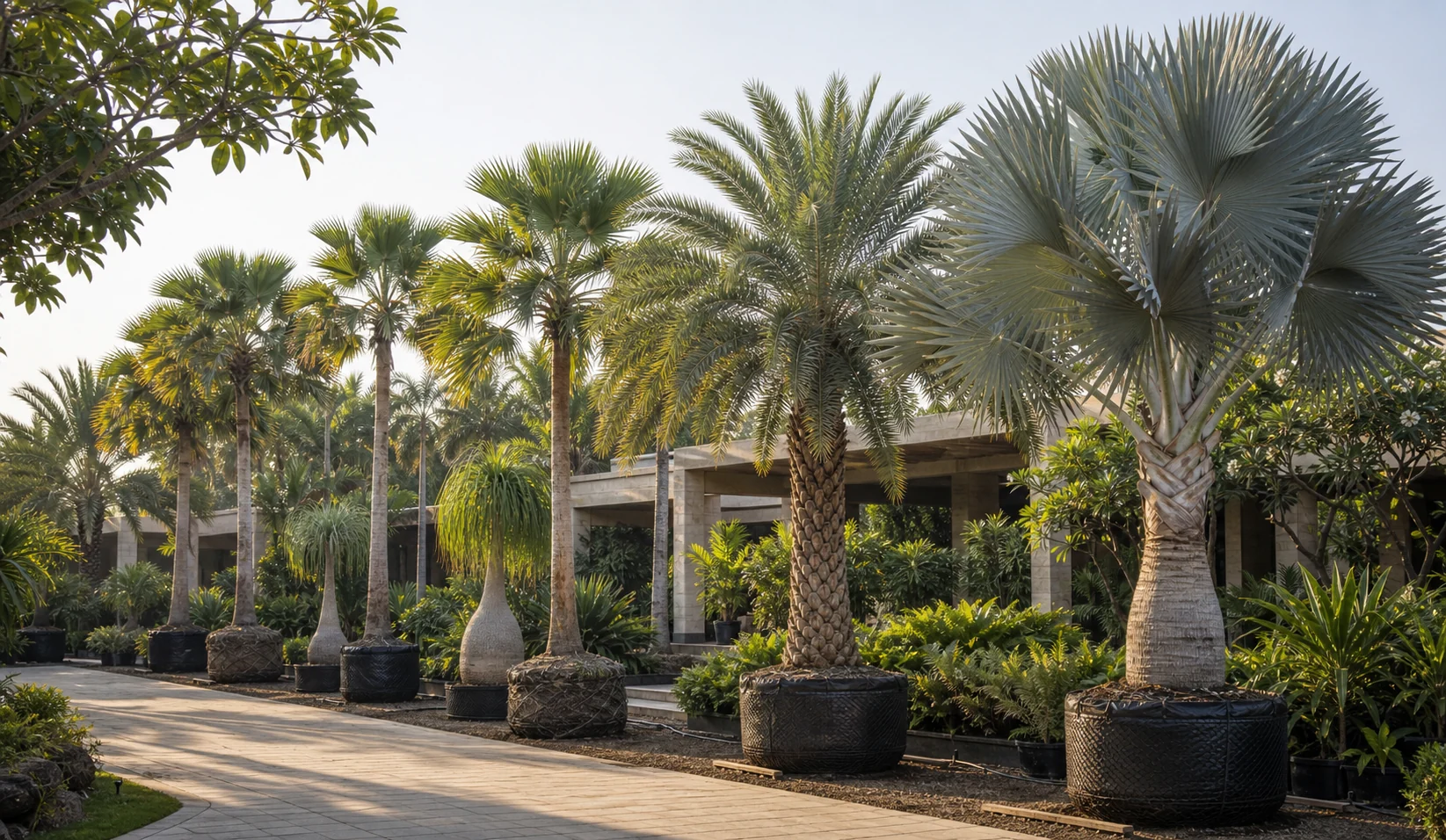
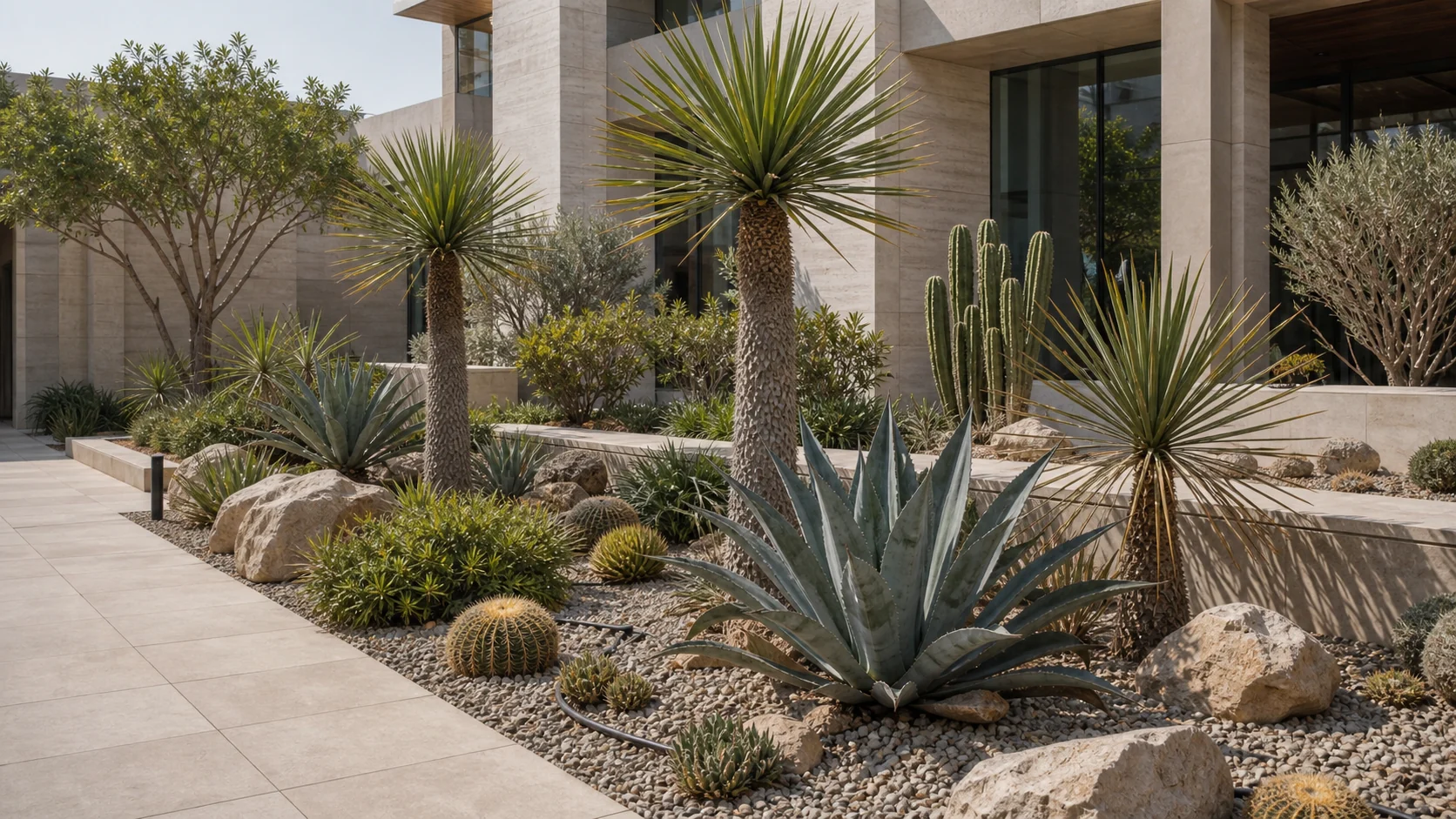
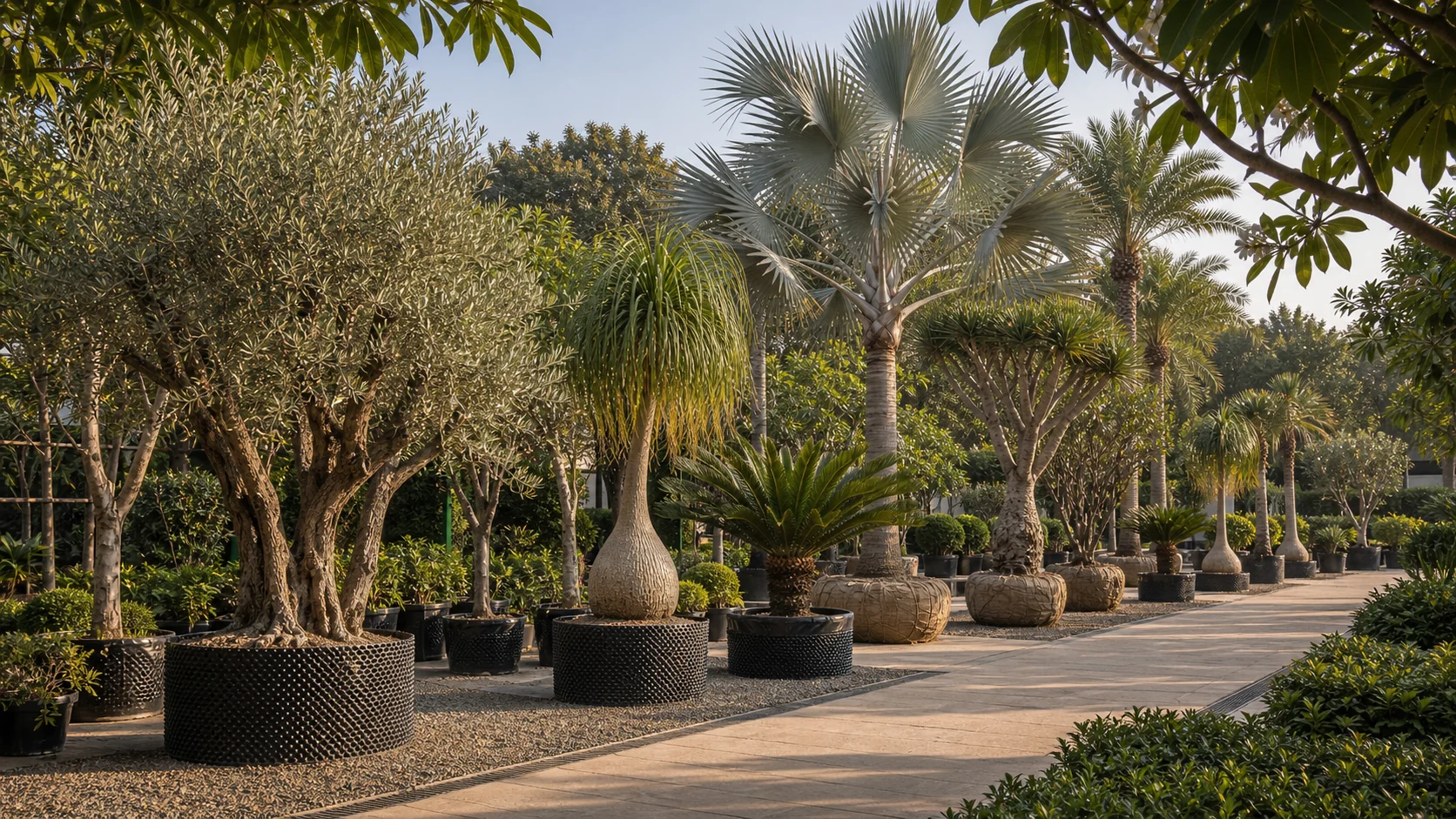
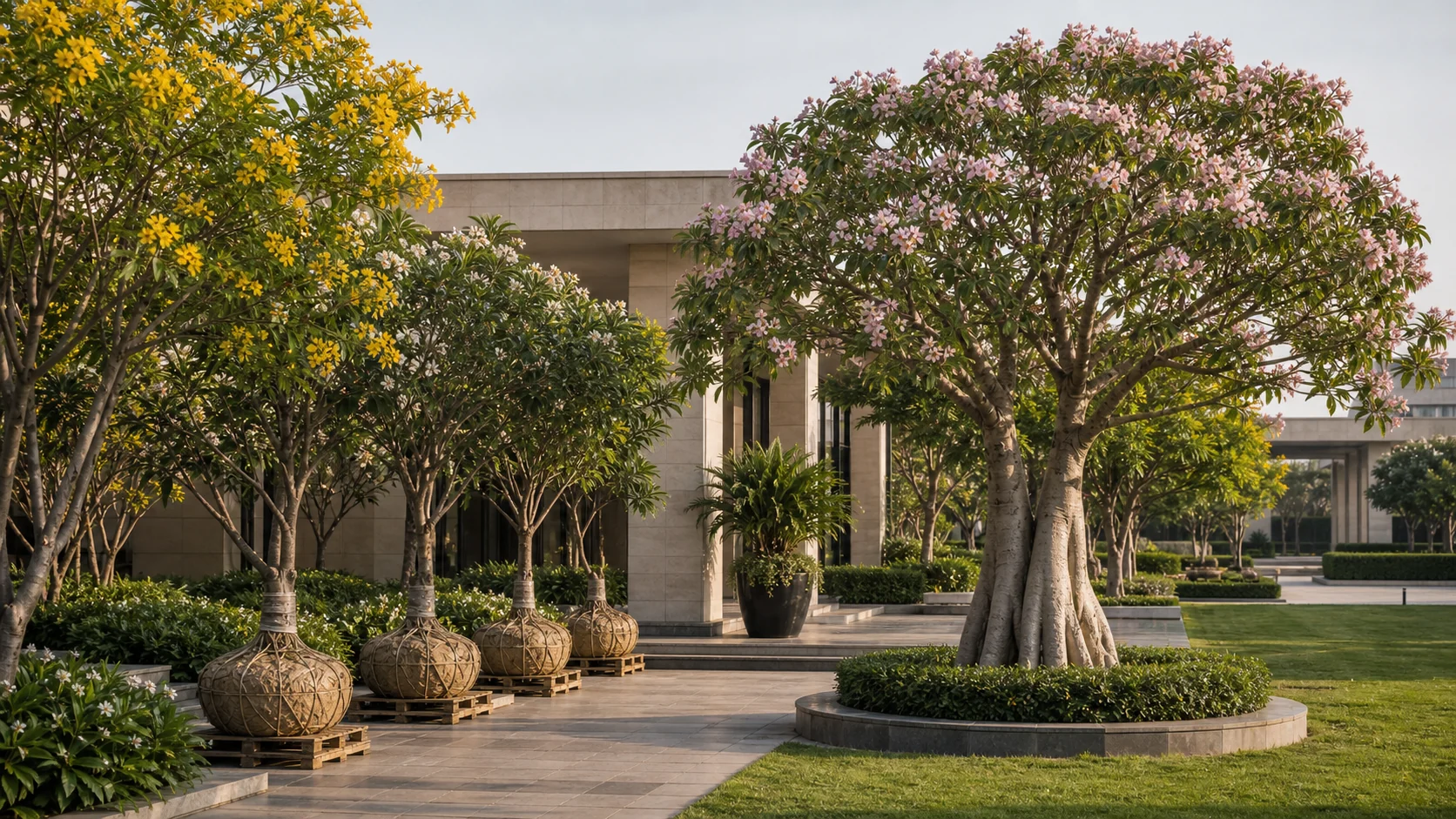
Specimen visual guide
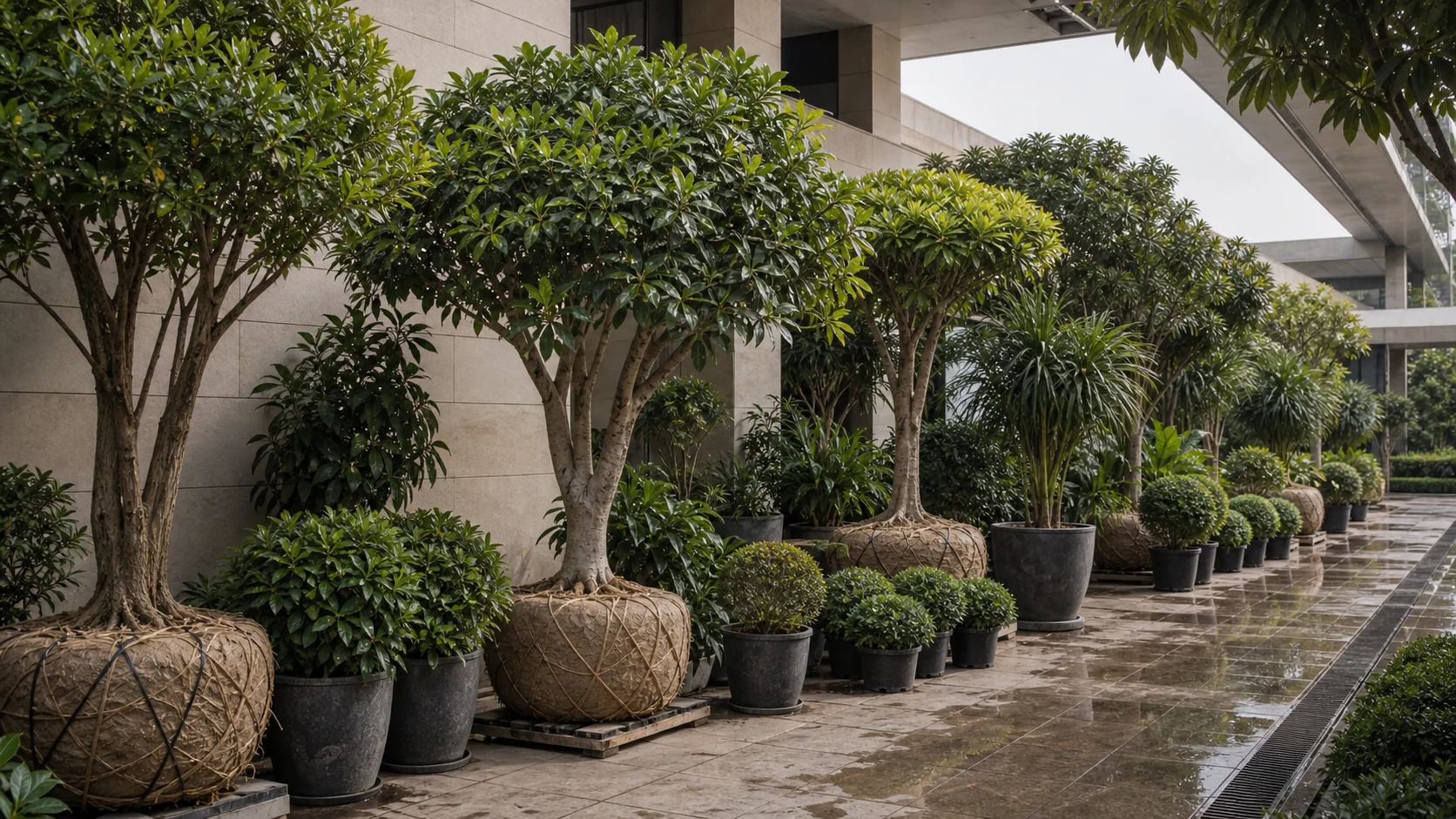
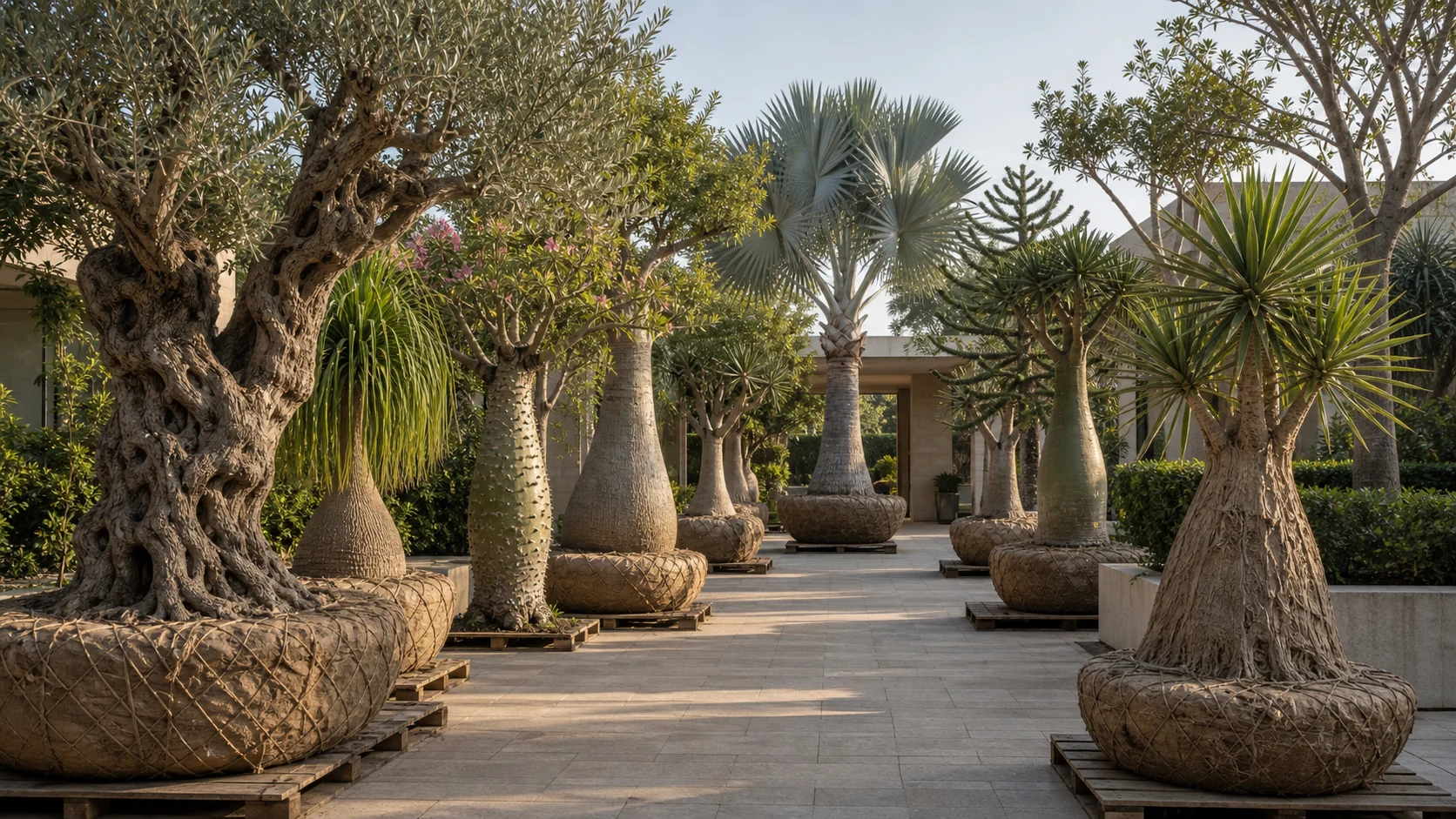
Visual context for placement, scale, handling, and landscape integration.
Section
Where it's used in premium projects
Landscape architects specify Copernicia alba for formal fan-palm avenues and lagoon edges where the brief includes seasonal water level change — a niche other fan palms do not cover. It suits estate drives and campus axes styled like South American savanna wetlands translated to Indian stormwater parks, not shaded courtyards.
Section
Climate & site suitability in India
Full sun across hot India is required — shade specimens fail. Seasonal inundation is acceptable only where soils drain as water recedes; permanent waterlogging still kills roots. Pair hydrology design with the palm, not generic palm pits on flat pavers.
Section
Sourcing & acclimatisation
Slow growth means avenue impact is bought at clear-trunk class — document height years in the client brief. [Unverified: India nursery availability for estate-grade Copernicia alba.] Imported live palms need quarantine workflow; verify fan stiffness and trunk caliper on nursery photos.
Section
Installation (pit, soil, drainage, bracing)
Pits must handle both monsoon saturation and dry season — layered drainage with overflow, not saucer bases. Avenue lines need surveyed spacing for slow widening crowns. Bracing on tall transplants until stable in cyclone-exposed coasts.
Section
Establishment & AMC
AMC is moderate — remove dead fans, avoid over-irrigation in dry season after establishment. Monitor seasonal ponding — facilities sometimes add berms that drown roots unintentionally. Do not plant under tree shade that encroaches as surrounding planting matures.
Section
Cost drivers
Explore
Related
Related
Related links
Services, segments, cost, and proof.
- Softscape & horticulture
- Irrigation & water management
- Landscape maintenance (AMC)
- Hotel & resort landscaping
- Luxury resort & spa landscaping
- Mall & retail landscaping
- Corporate campus landscaping
- Projects
- Commercial landscaping cost guide
- Pricing drivers (imported trees)
- Import compliance workflow
- Request a site assessment
- How can one palm tolerate both flooding and drought?
- Copernicia alba evolved in Pantanal seasonal hydrology — it survives wet seasons when soils drain, and dry seasons when irrigation is restrained; permanent ponding still fails.
- Why is Caranday palm slow and costly at landscape size?
- Slow vertical and caliper growth means designers buy clear-trunk impact early — long lead for avenue-grade specimens.
- What is sourcing reality for Copernicia alba in India?
- Large classes may be scarce — confirm nursery holding and origin on submittals early; [Unverified] typical commercial lead times vary by region.
- Can it replace Washingtonia on a fast-height boulevard?
- No — Washingtonia is for fast vertical skyline; Copernicia is a slow formal fan for hydrology-special sites, not quick height.
- Does shade work under mature trees?
- No — full sun only; encroaching shade thins the crown and defeats the wax-palm avenue intent.
- How do we compare quotations?
- Match clear-trunk metres, hydrology engineering scope, lifting, and AMC — not generic fan-palm per-tree rates.