
Redneck palm
Teddy-bear palm (Dypsis lastelliana)
Dypsis lastelliana is the teddy-bear palm — solitary feather palm prized for its reddish-brown furry crownshaft — a high-end tropical talking point that needs warmth, steady moisture, and honest cold-sensitivity planning in India.
Spec
At a glance
- Botanical name
- Dypsis lastelliana
- Family
- Arecaceae
- Common names
- Teddy-bear palm, redneck palm
- Origin
- Madagascar
- Plant type
- Solitary feather palm
- Mature height
- Often 8–12 m in landscape
- Trunk / form
- Ringed trunk; distinctive fuzzy reddish-brown crownshaft
- Crown spread
- Moderate arching pinnate crown
- Growth rate
- Moderate in warm humid sites
- Light
- Bright light to full sun in tropics
- Water needs
- Moderate to high — steady moisture
- India climate suitability
- Humid tropical resorts; protect from cold; weak in dry north without humidity
- Cold/heat & salt/wind tolerance
- Cold-sensitive; needs humidity; moderate heat
- Typical supply size
- Clear-trunk 2–4 m classes [Unverified]
- Lead time (sourcing)
- [Unverified] rarer than golden cane Dypsis
- Install considerations
- Humidity and irrigation; cold protection young stock; crownshaft handling care
- Maintenance level
- Moderate — moisture and feeding; furry crownshaft inspection
- Cautions
- Cold damage on young plants; rarer than Dypsis lutescens; not drought palm
Supply
Latest import activity
- Imported on
- 14 Jun 2026
- Source
- Specimen Trade List — review pending (sample)
- Availability
- Incoming
- Lot
- Dypsis lastelliana — teddy bear palm
Gallery
Specimen visual guide
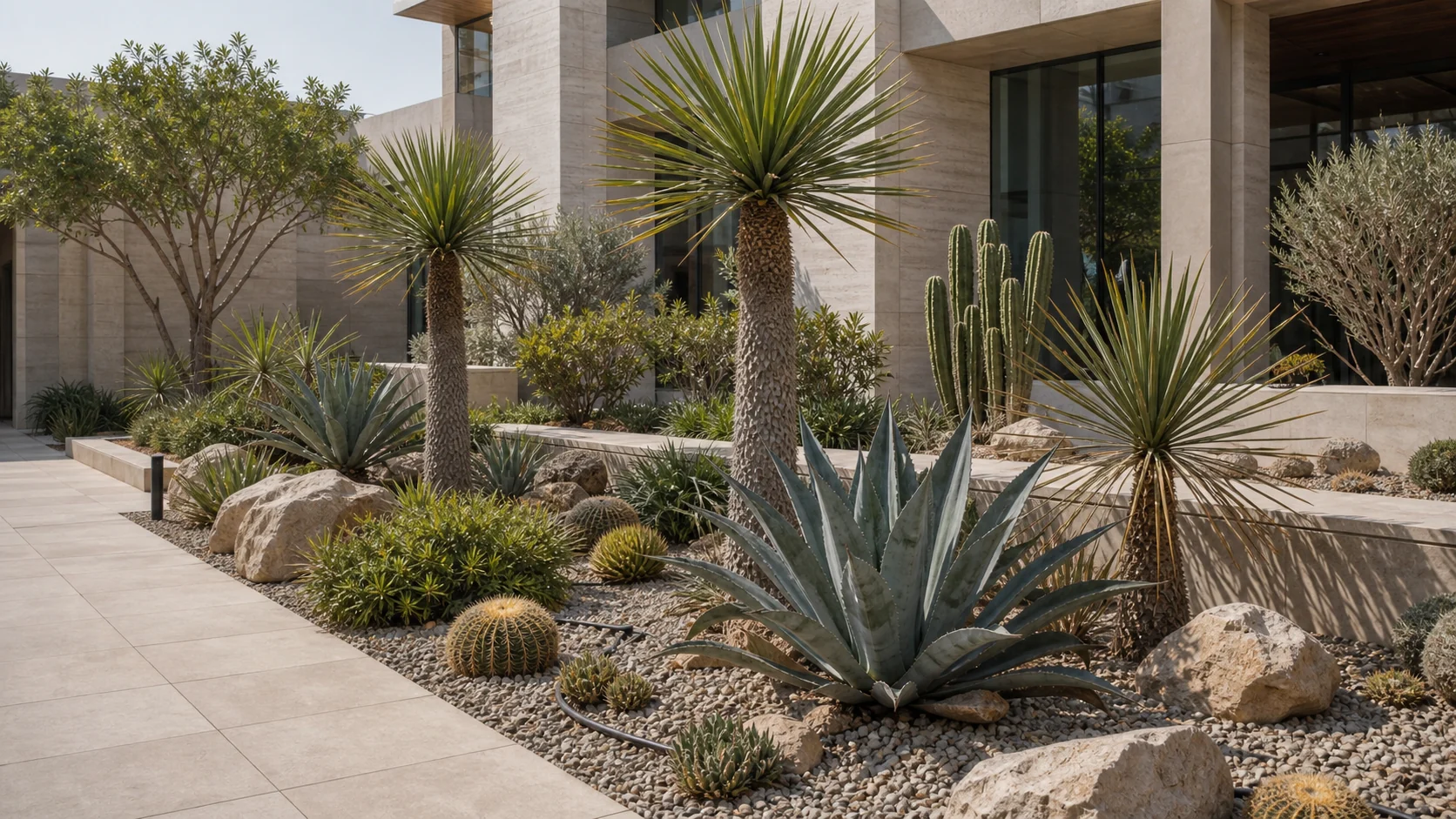
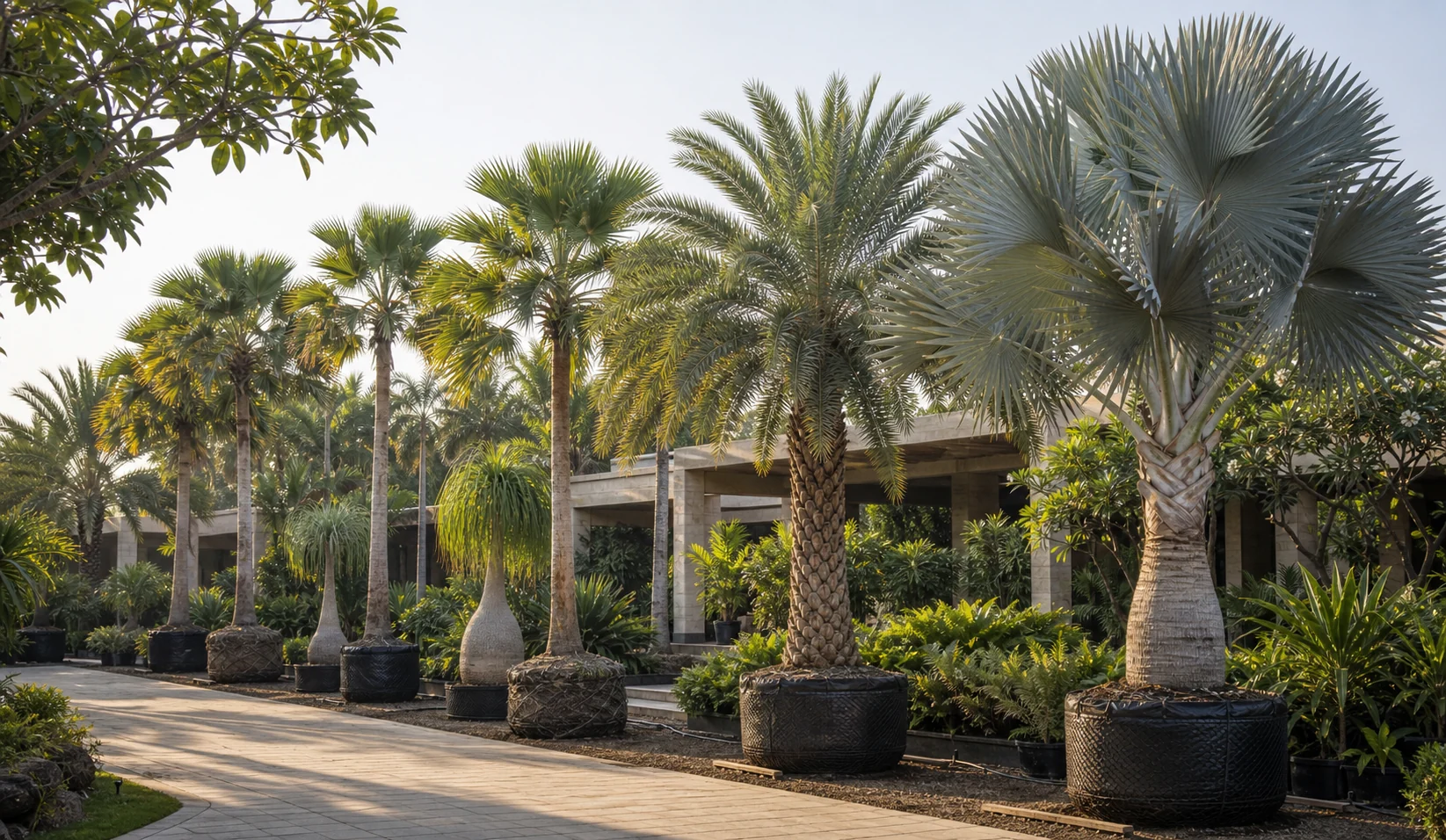
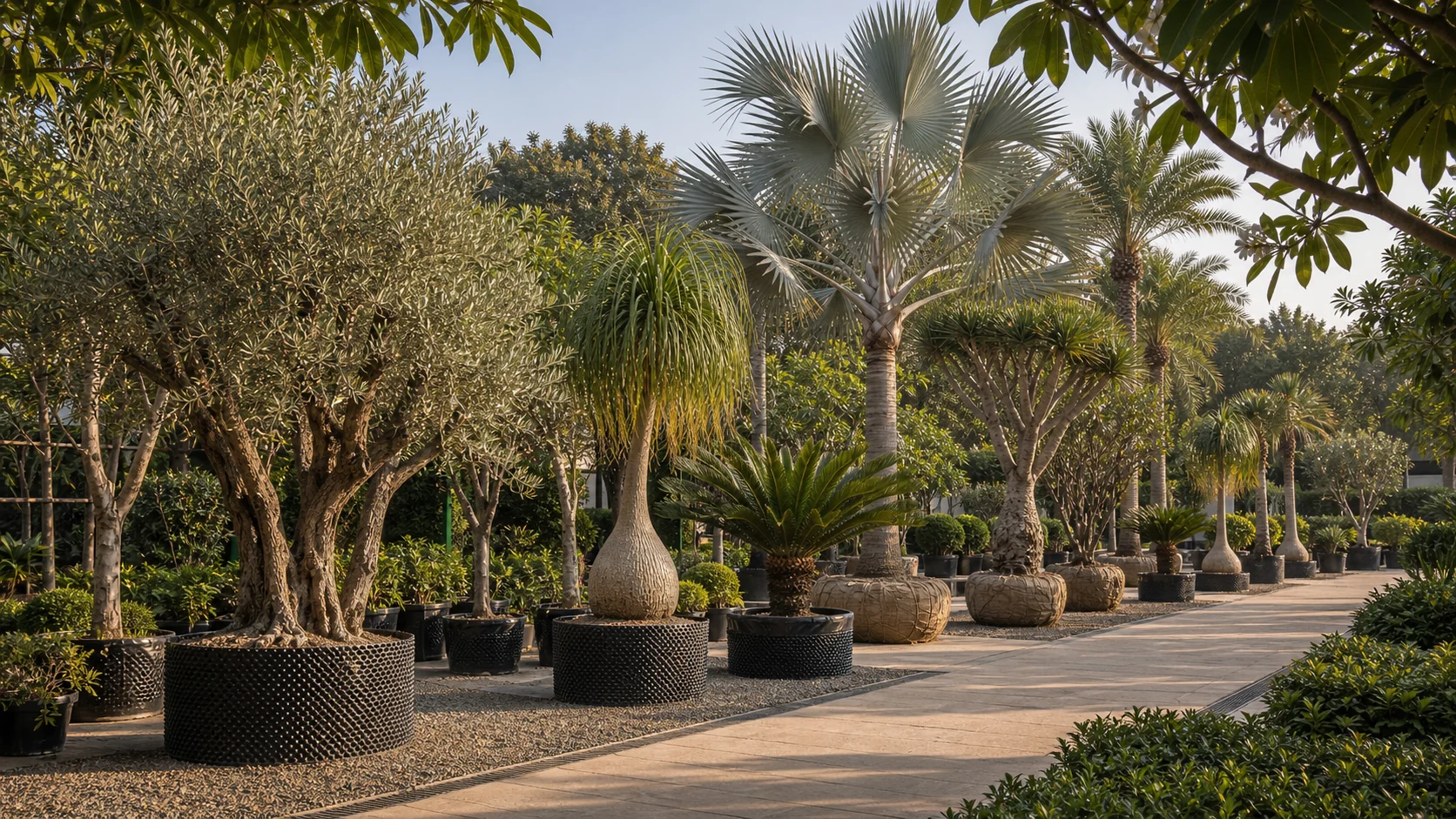
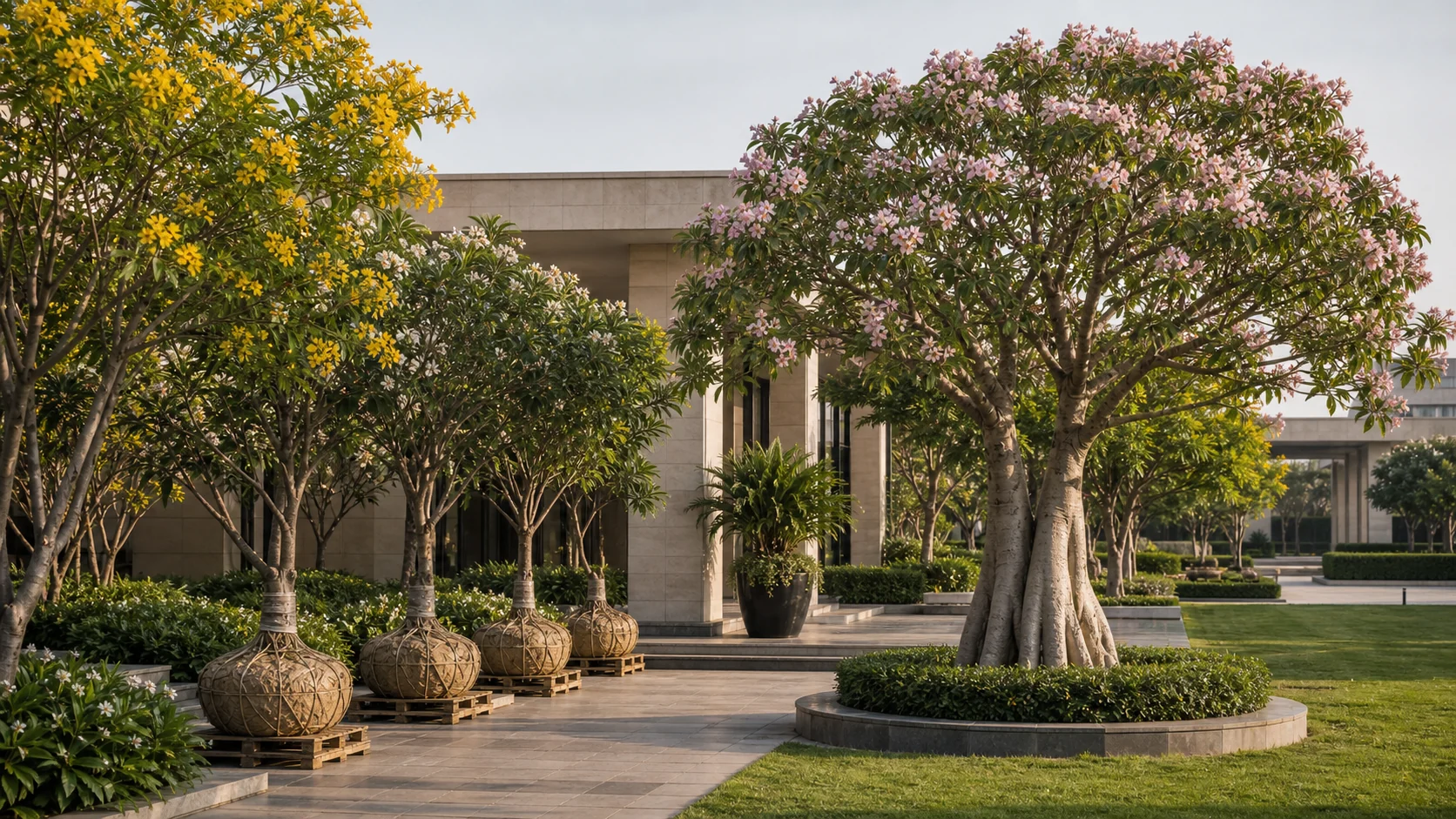
Visual context for placement, scale, handling, and landscape integration.
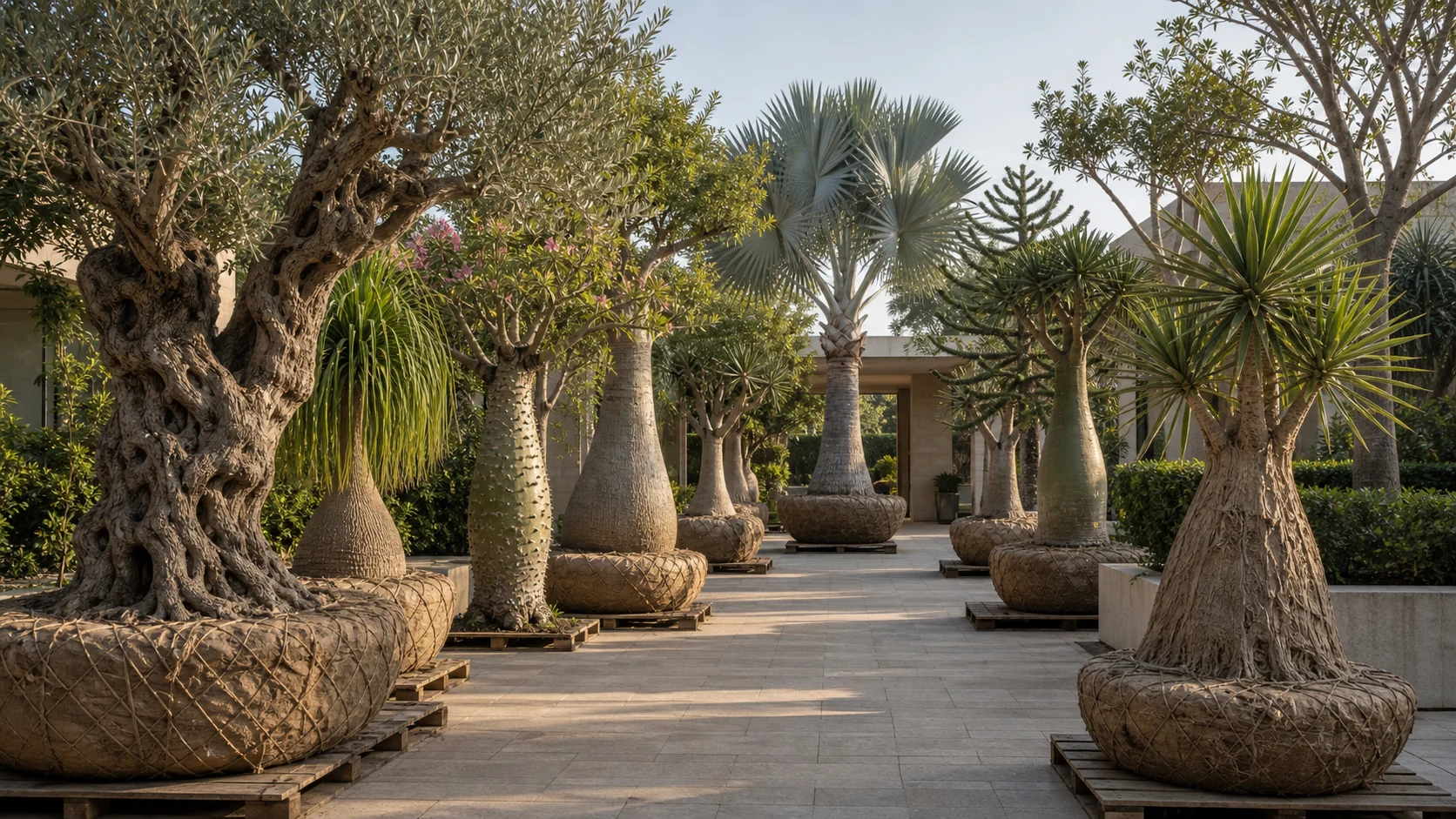
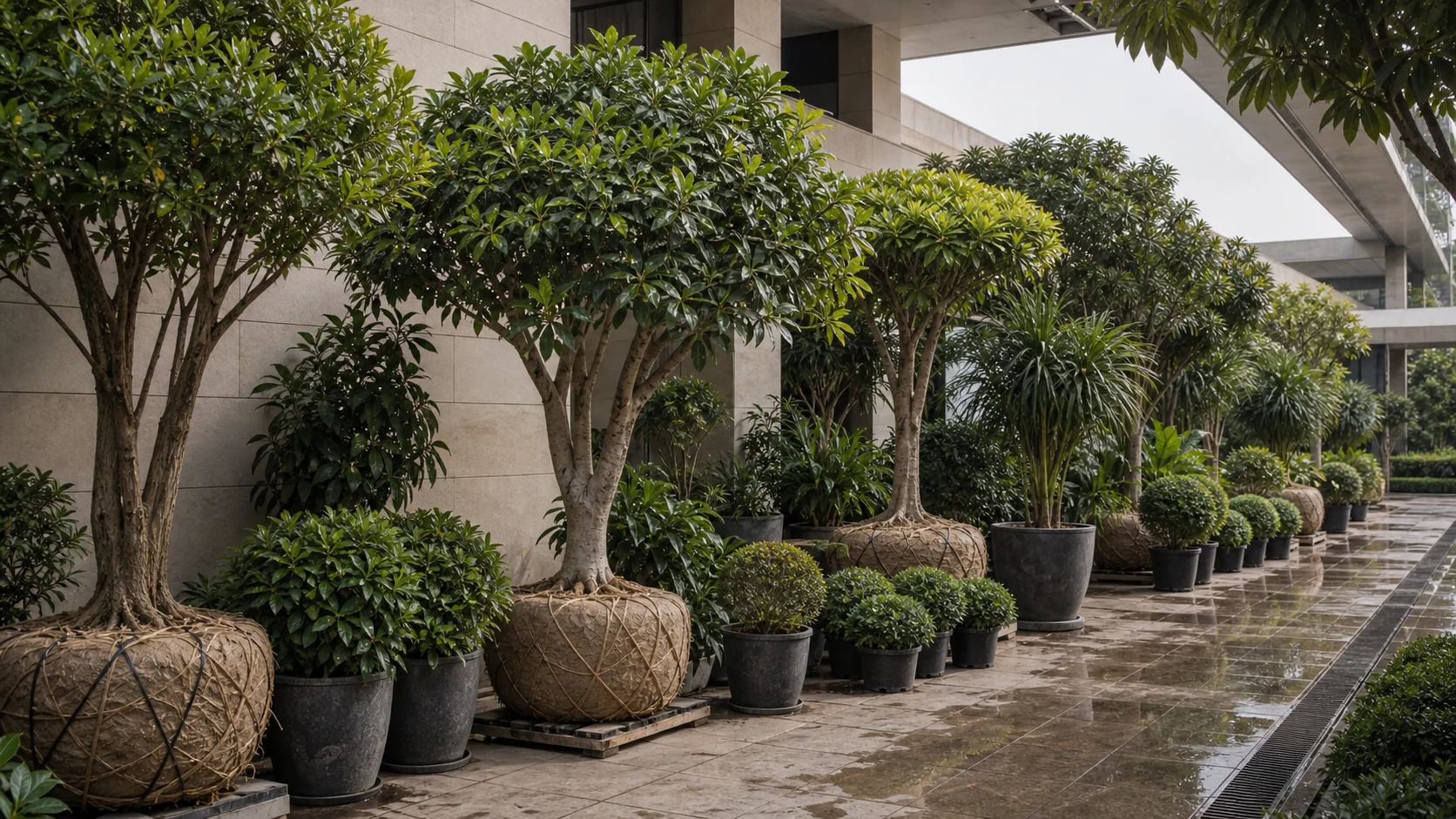
Section
Where it's used in premium projects
Specified as a deliberate tropical feature where the furry crownshaft is visible at arrival — villa drives, resort forecourts, and botanical collections, not mass screening. Designers contrast it against smooth crownshaft palms like Veitchia or Roystonea to create tactile narrative at eye level.
Section
Climate & site suitability in India
Humid coastal and Kerala-style sites outperform Delhi dry winters unless humidity is engineered. Cold snaps brown the fuzzy crownshaft on young stock — hill stations need protection or alternative species. Not interchangeable with Dypsis lutescens clustering screens on the same irrigation zone.
Section
Sourcing & acclimatisation
Verify true Dypsis lastelliana — furry crownshaft must be present at inspection, not assumed on juvenile trunks. [Unverified: import versus nursery-grown Madagascar stock.] Acclimatise with steady moisture; drought stress dulls the signature texture buyers pay for.
Section
Installation (pit, soil, drainage, bracing)
Moisture-retentive drained media — not desert pits. Protect crownshaft from rigging abrasion during hoisting; fibre damage is visible for years. Light bracing on tall singles in coastal wind until roots anchor.
Section
Establishment & AMC
AMC monitors irrigation and humidity — HVAC dry atriums need misting strategy or species swap. Feed on palm programmes with magnesium awareness. Inspect crownshaft after unusual cold — replacement may be cheaper than years of shabby texture.
Section
Cost drivers
Explore
Related
Related
Related links
Services, segments, cost, and proof.
- Softscape & horticulture
- Irrigation & water management
- Landscape maintenance (AMC)
- Hotel & resort landscaping
- Luxury resort & spa landscaping
- Mall & retail landscaping
- Corporate campus landscaping
- Projects
- Commercial landscaping cost guide
- Pricing drivers (imported trees)
- Import compliance workflow
- Request a site assessment
- What is the furry teddy-bear crownshaft?
- Reddish-brown tomentum on the crownshaft — the signature ornamental feature; rigging abrasion or cold burn destroys the value buyers specify for.
- How cold-sensitive is Dypsis lastelliana in India?
- Young plants suffer in north-India cold and dry HVAC — specify only in humid tropical sites or engineered atriums with winter protection.
- How does it differ from Dypsis lutescens golden cane?
- Lastelliana is solitary with furry crownshaft; lutescens clusters as a screen palm without that texture — different irrigation, spacing, and BOQ.
- Can teddy-bear palm live in a dry Delhi atrium?
- Only with humidity and warmth engineering — otherwise specify hardy fan palms; drought stress kills the fuzzy crown aesthetic.
- What lead time should procurement plan?
- Rarer than mass-market Dypsis — confirm nursery allocation early; [Unverified] typical commercial lead by region.
- How do we compare quotations?
- Match crownshaft quality photos, clear-trunk height, humidity establishment scope, and AMC — not golden-cane per-tree pricing.