
Majesty palm
Majesty palm (Ravenea rivularis)
Ravenea rivularis is the majesty palm — soft fine feather fronds, fast growth, and heavy water demand from Madagascar riverine ecology — specified for lush tropical fill, lagoon edges, and young atriums where irrigation is real, not cosmetic.
Spec
At a glance
- Botanical name
- Ravenea rivularis
- Family
- Arecaceae
- Common names
- Majesty palm, majestic palm
- Origin
- Madagascar (riverine habitats)
- Plant type
- Solitary feather palm
- Mature height
- Often 10–15 m+ in ideal tropical conditions
- Trunk / form
- Slender trunk; soft fine pinnate fronds
- Crown spread
- Moderate graceful crown
- Growth rate
- Fast in warm moist sites
- Light
- Sun to part shade — bright atrium light when young
- Water needs
- High — water-loving; heavy feeder
- India climate suitability
- Humid tropical India; lagoon and irrigation-rich sites; poor if under-watered
- Cold/heat & salt/wind tolerance
- Cold-sensitive; yellows when starved or dry; moderate wind
- Typical supply size
- Container to clear-trunk 2–5 m [Unverified]
- Lead time (sourcing)
- [Unverified] mass interiorscape availability
- Install considerations
- Dedicated irrigation and feeding; lagoon hydrology alignment
- Maintenance level
- Moderate to high — water and nutrient monitoring
- Cautions
- Thin yellow crown if under-watered; cold-sensitive; not drought palm
Gallery
Specimen visual guide
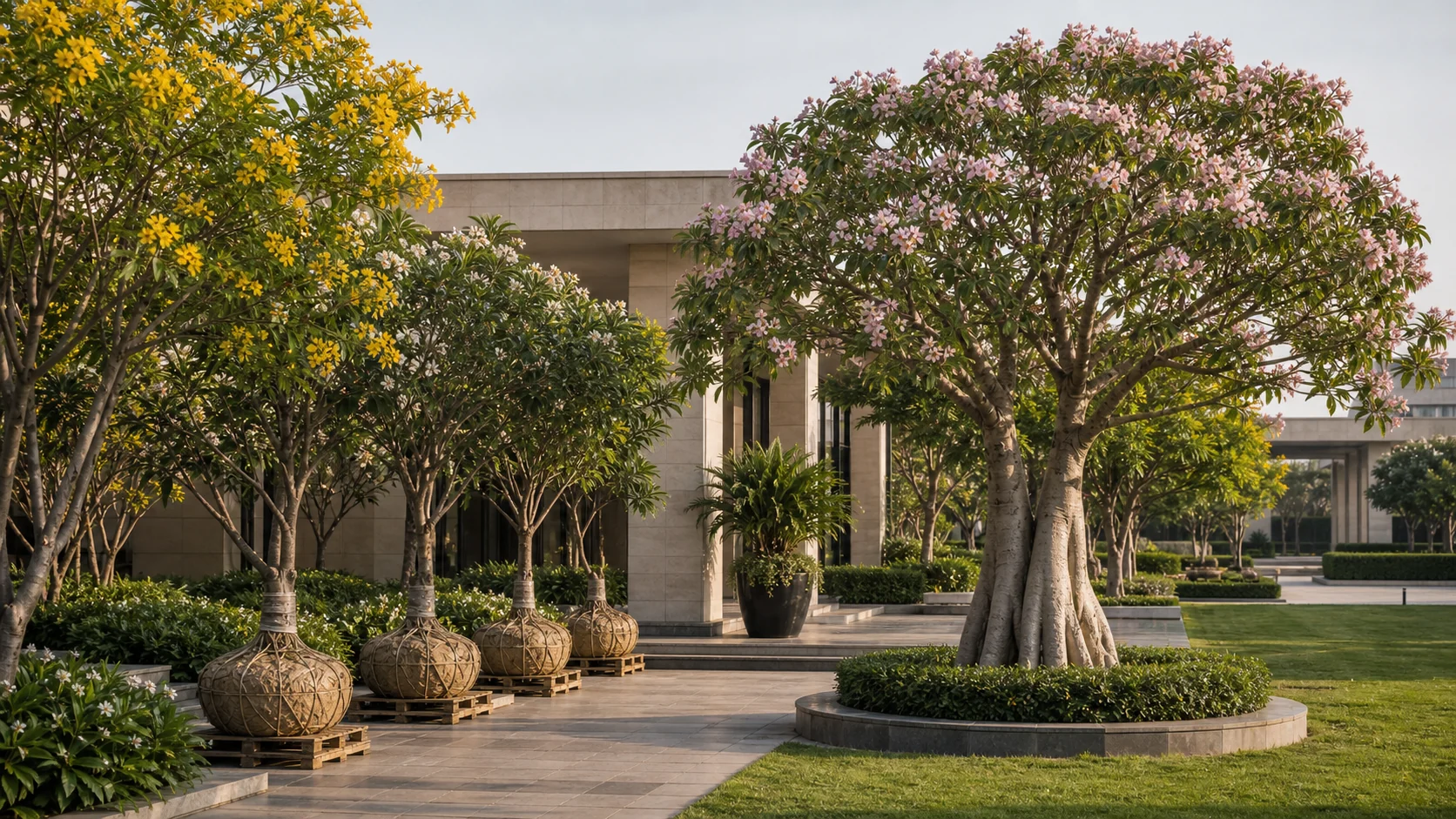
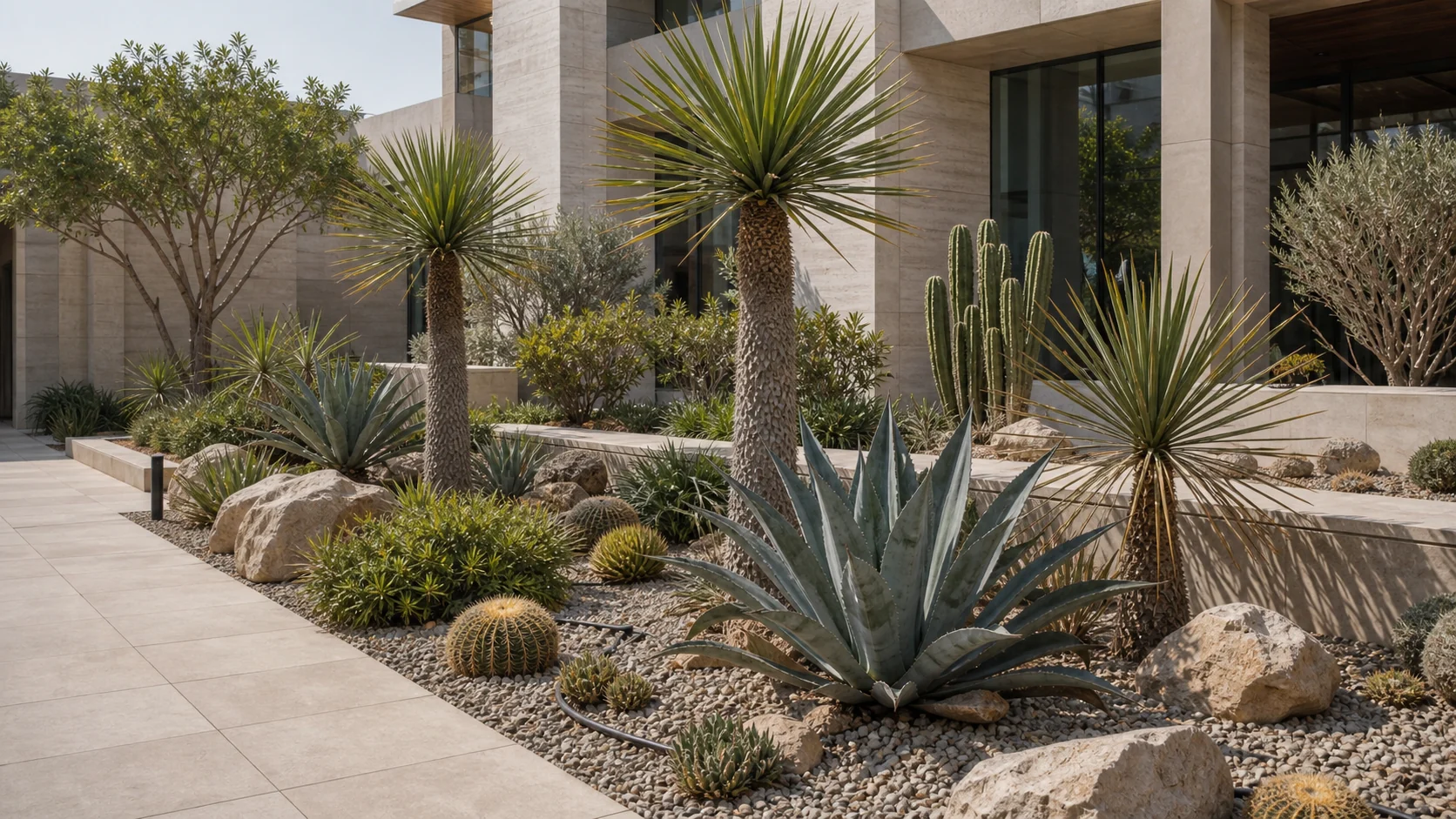
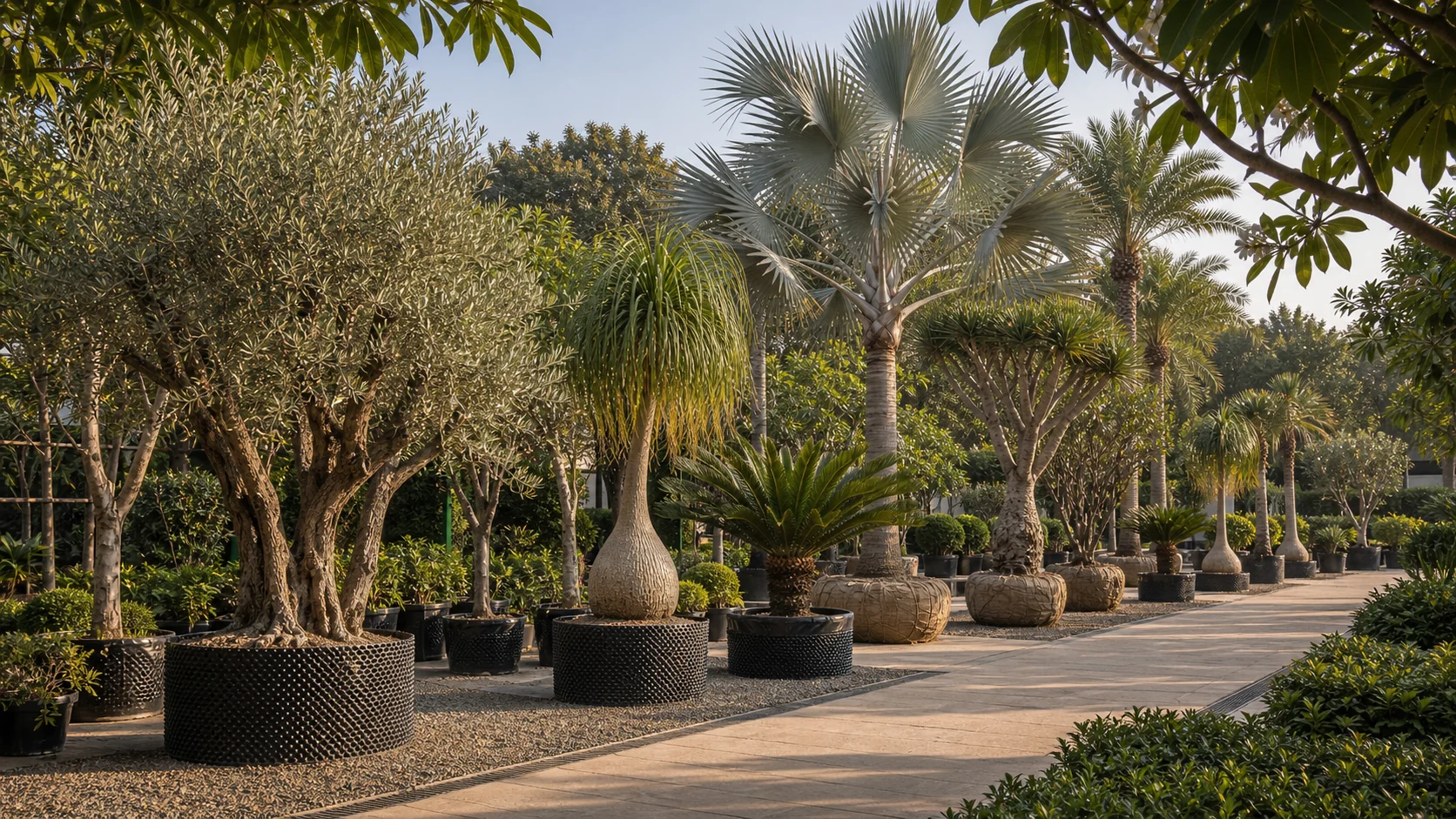
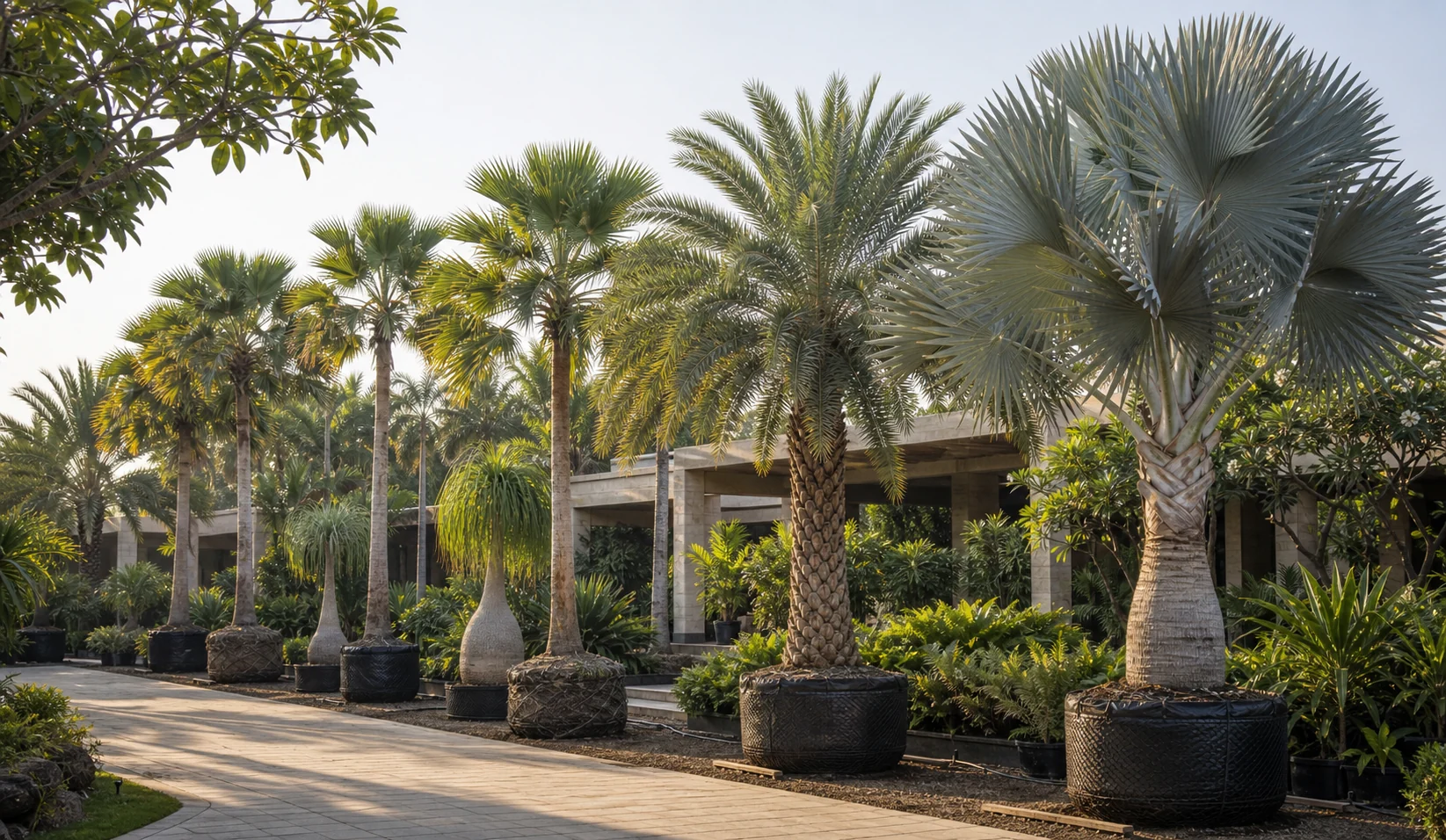
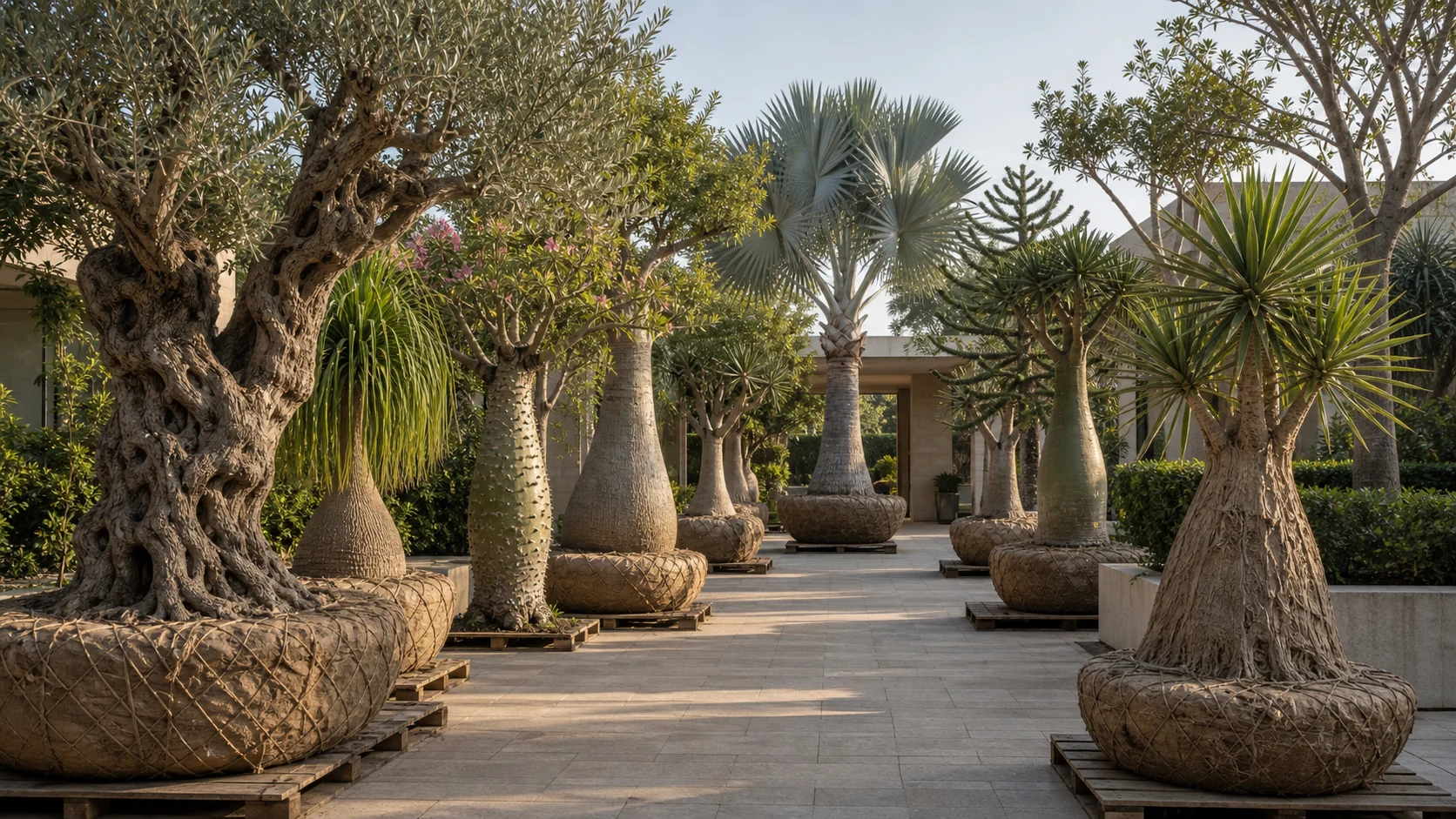
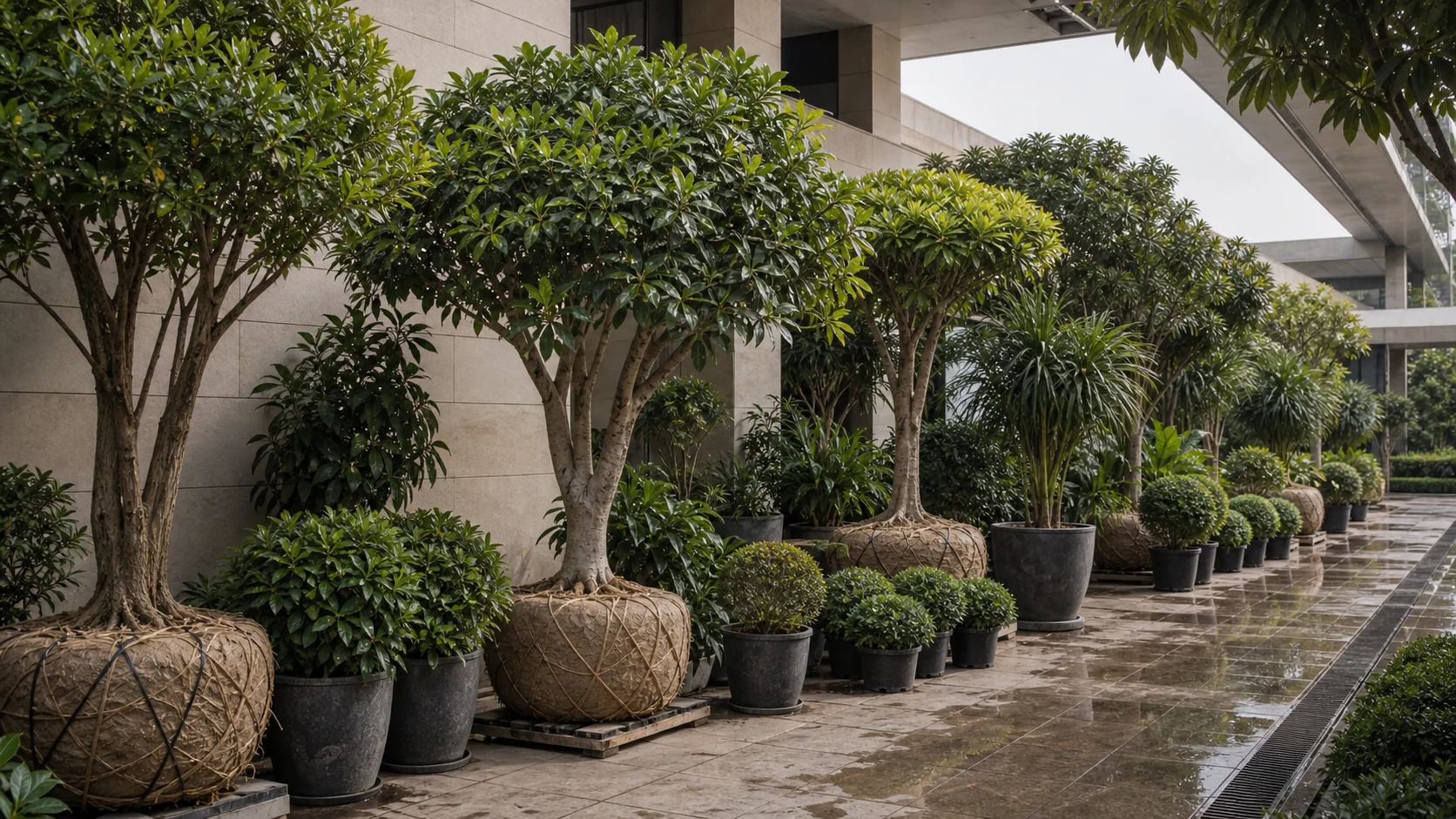
Visual context for placement, scale, handling, and landscape integration.
Section
Where it's used in premium projects
Majesty palm fills lush tropical layers — lagoon banks, resort lake edges, spa courts with misting, and mall atriums where designers want soft feather texture fast. It is an interiorscape staple when irrigation is engineered; it fails on dry medians where facilities copy drought palm schedules.
Section
Climate & site suitability in India
Humid coasts, Kerala, Goa, and irrigated Bangalore campuses suit it; Rajasthan dry plazas without irrigation fail within seasons — crowns go thin and yellow. Part shade works near water; full sun needs higher water. Cold north-India winters damage outdoor youth without protection.
Section
Sourcing & acclimatisation
Mass-market container stock varies wildly in crown density — inspect before BOQ lock. [Unverified: share of seed-grown versus tissue culture for commercial lots.] Acclimatise from interiorscape shade to site sun in stages or fronds scorch.
Section
Installation (pit, soil, drainage, bracing)
Pair with dedicated drip zones and feeder programmes — majesty is a heavy feeder near water features. Pits must drain but stay moist — not Brahea-style dry pits. Light bracing on tall fast-grown container transplants until roots spread.
Section
Establishment & AMC
AMC is irrigation-first — soil moisture probes beat calendar watering. Yellowing often traces to nitrogen or magnesium deficiency combined with drought stress, not mysterious palm disease. Atrium AMC includes periodic leaching on engineered media to avoid salt build-up.
Section
Cost drivers
Explore
Related
Related
Related links
Services, segments, cost, and proof.
- Softscape & horticulture
- Irrigation & water management
- Landscape maintenance (AMC)
- Hotel & resort landscaping
- Luxury resort & spa landscaping
- Mall & retail landscaping
- Corporate campus landscaping
- Projects
- Commercial landscaping cost guide
- Pricing drivers (imported trees)
- Import compliance workflow
- Request a site assessment
- How much water does majesty palm need in India?
- Treat as riverine — steady moisture and feeding; lagoon and irrigation-rich sites succeed; dry medians fail with thin yellow crowns.
- Why plant Ravenea near water features?
- Ecology matches constant moisture — lagoon banks and bio-pools with managed hydrology outperform dry plazas even in humid cities.
- Can majesty palm work in a mall atrium?
- Yes when young with bright light, irrigation, and feeding — programme upsize or relocation as fast growth breaches atrium height.
- How fast does Ravenea rivularis grow?
- Fast in warm moist sites — sightline and atrium height reviews should happen early, not after crown hits skylights.
- Why is my majesty palm yellow and thin?
- Usually under-watering, poor feeding, or root stress on dry engineered media — fix irrigation and nutrition before assuming disease.
- How do we compare quotations?
- Match crown density, height class, irrigation scope, feeding programme, and AMC moisture audits — not per-tree material alone.