
Chinese fan palm
Chinese fan palm (Livistona chinensis)
Livistona chinensis is the adaptable Chinese fan palm — drooping fountain-like segment tips on a solitary trunk — an avenue and courtyard workhorse that can start in atriums when young and hardens into a moderate hardy fan palm outdoors in India.
Spec
At a glance
- Botanical name
- Livistona chinensis
- Family
- Arecaceae
- Common names
- Chinese fan palm, fountain palm
- Origin
- Eastern Asia (China, Taiwan, Ryukyu region)
- Plant type
- Solitary fan palm
- Mature height
- Often 9–15 m in landscape
- Trunk / form
- Slender trunk with age; drooping tipped fan segments
- Crown spread
- Moderate fountain-shaped crown
- Growth rate
- Moderate
- Light
- Full sun to part shade
- Water needs
- Moderate
- India climate suitability
- Wide — coastal to many inland sites; young atrium use possible
- Cold/heat & salt/wind tolerance
- Moderately hardy; spiny petioles when young; moderate salt
- Typical supply size
- Container youth to clear-trunk 2–5 m [Unverified]
- Lead time (sourcing)
- [Unverified] common nursery SKU
- Install considerations
- Spine-aware handling young stock; avenue spacing; atrium upsize plan
- Maintenance level
- Moderate — frond removal; spine care on juveniles
- Cautions
- Spiny petioles on young plants; outgrows small atriums with age
Gallery
Specimen visual guide
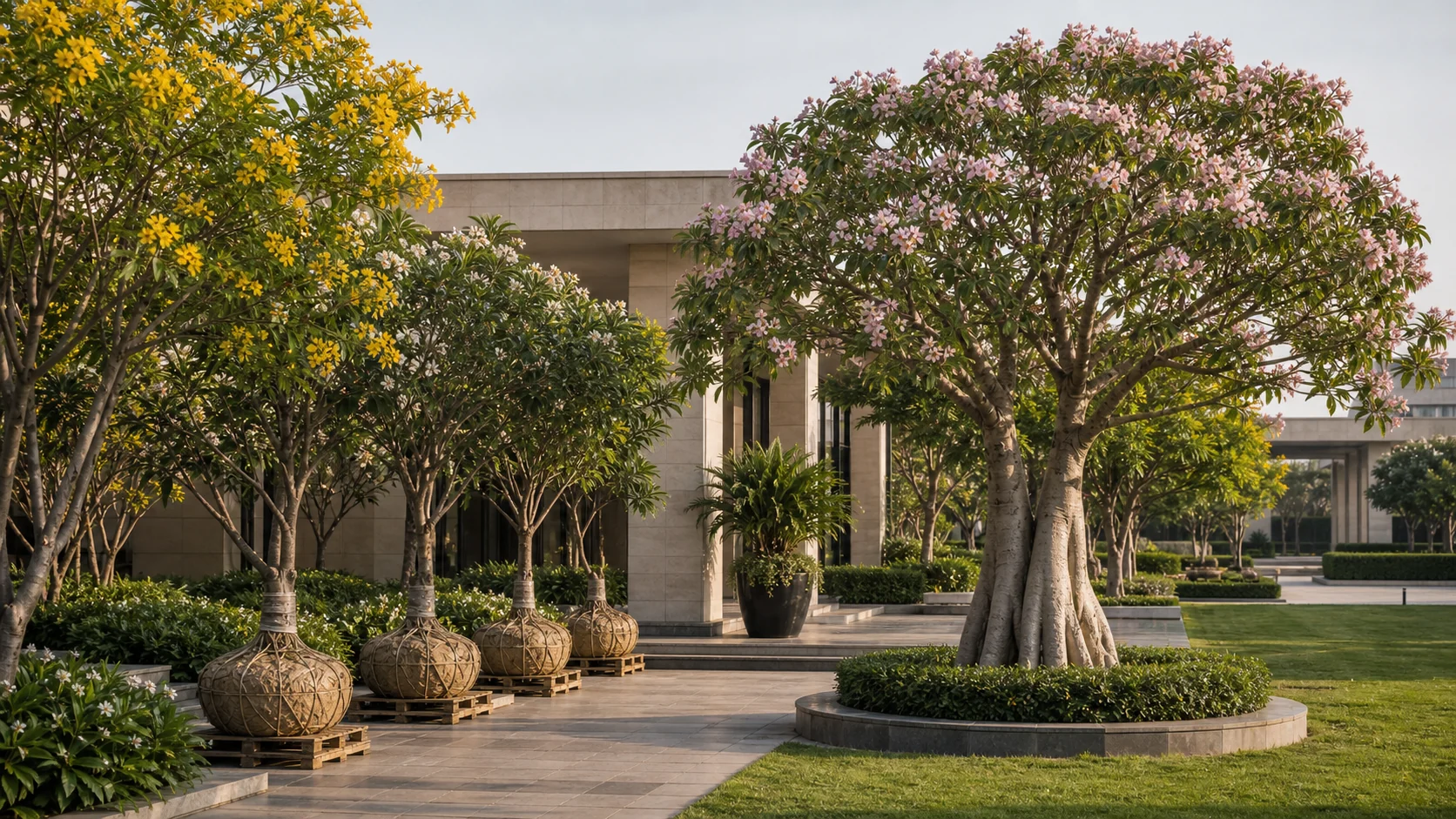
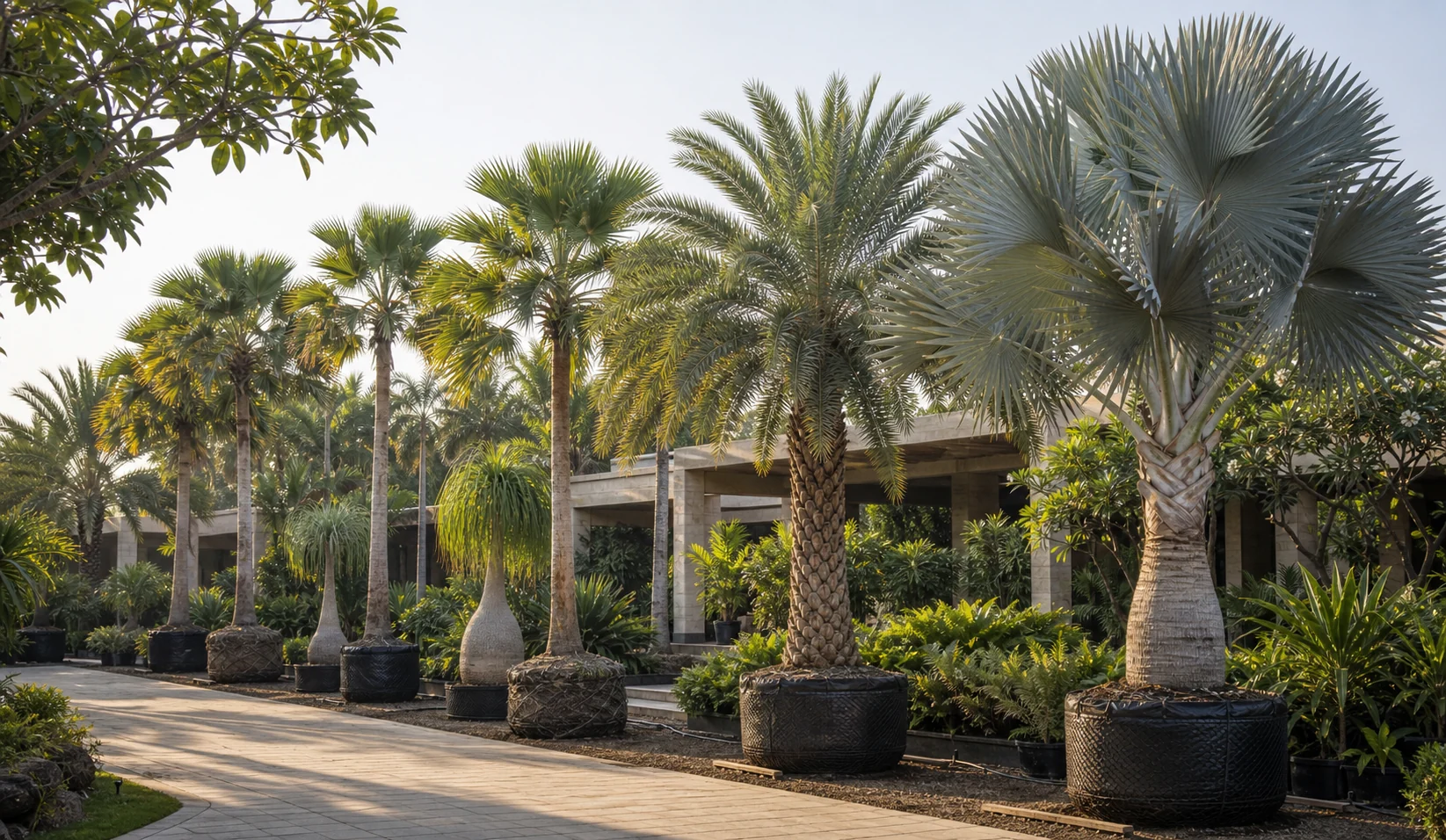
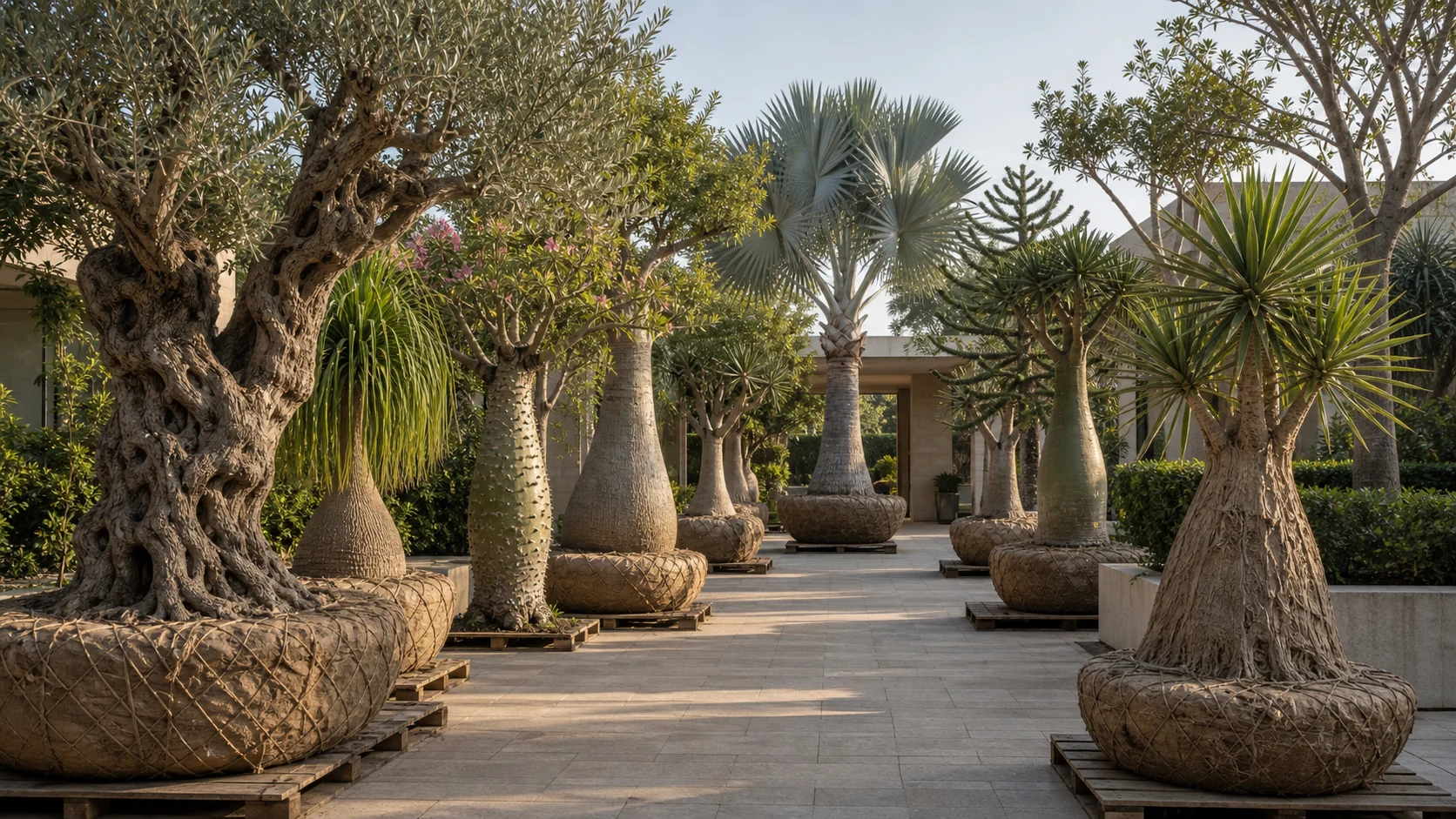
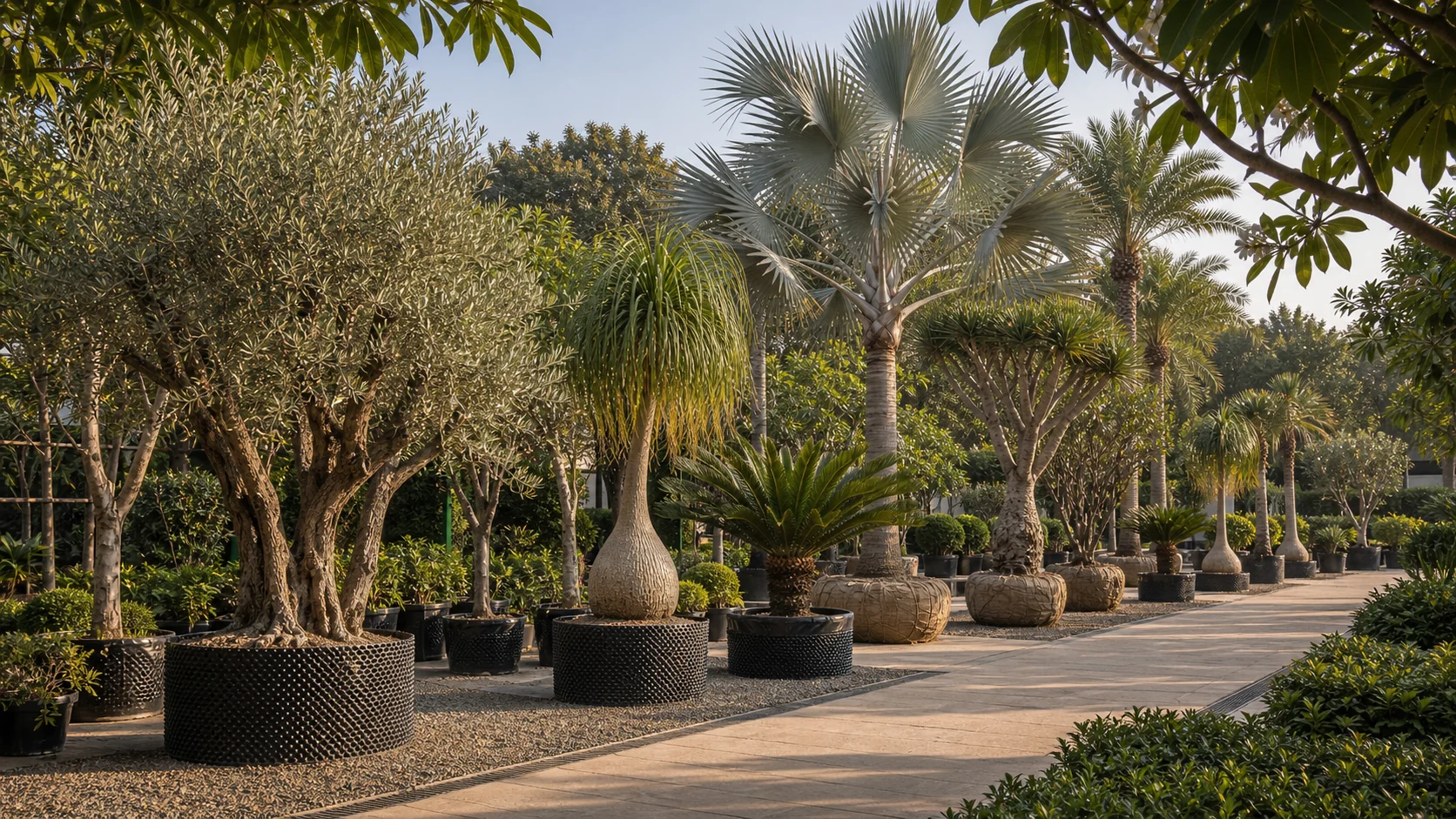
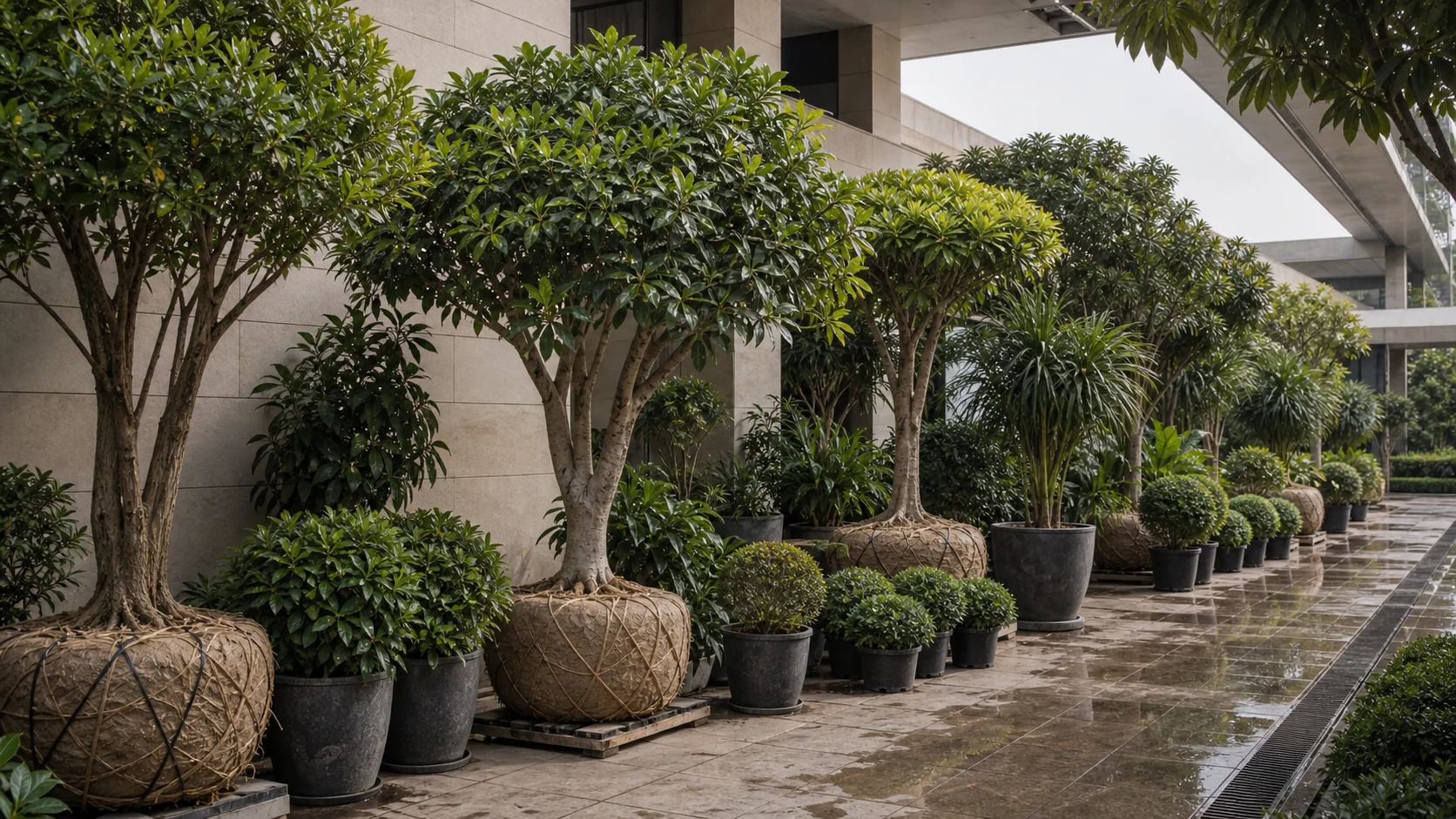
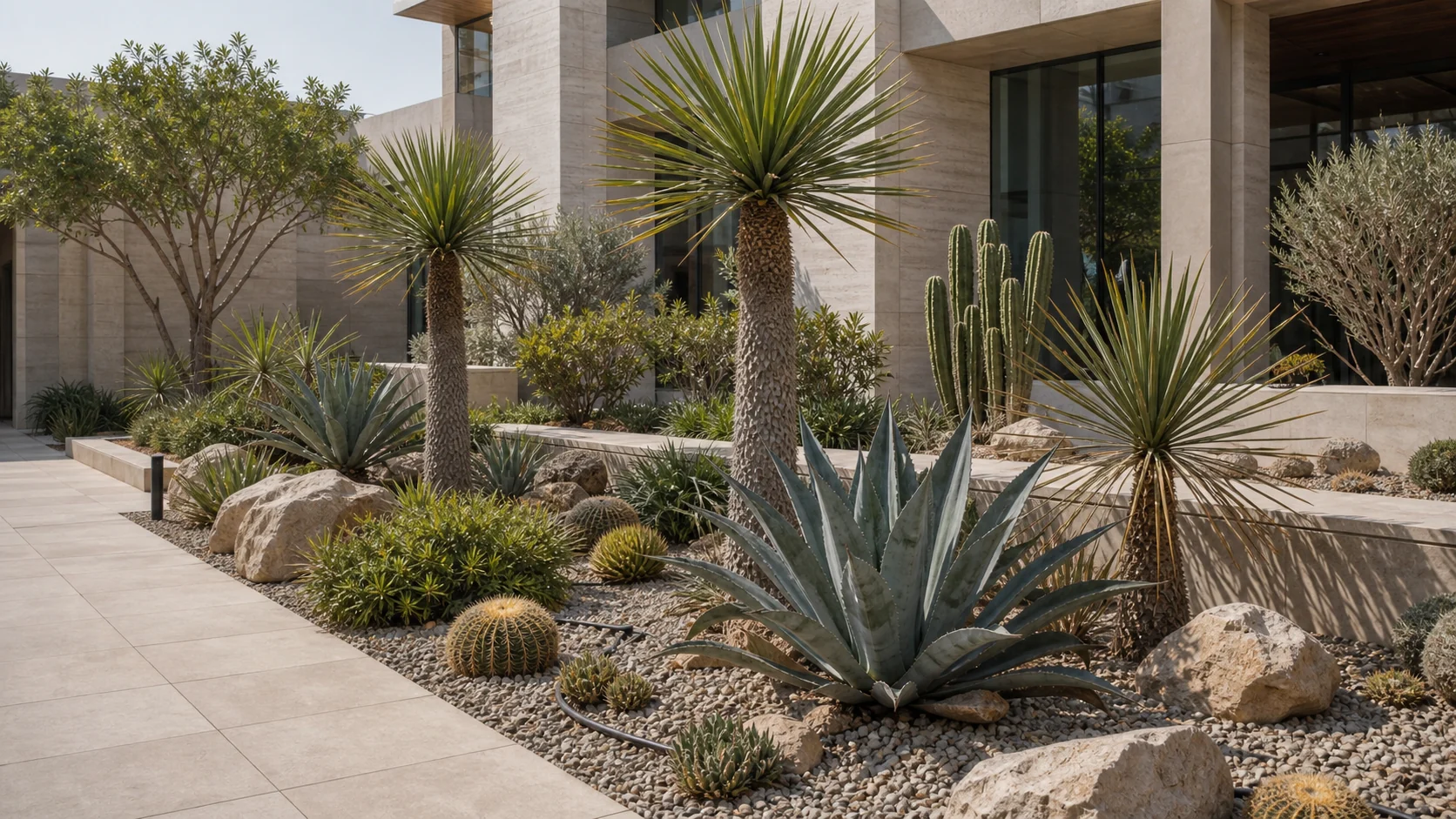
Visual context for placement, scale, handling, and landscape integration.
Section
Where it's used in premium projects
Specified for fan-palm avenues, hotel courtyards, and mall atriums when young — the fountain droop reads softer than stiff Copernicia. Landscape architects use it as the adaptable fan palm between hardy Chamaerops and tropical Livistona rotundifolia when the brief needs sun-to-part-shade flexibility.
Section
Climate & site suitability in India
Performs across many warm Indian metros with irrigation — coastal and inland. Young plants tolerate atrium part shade; mature specimens want sun for dense crowns. Cold tolerance exceeds Veitchia and Ravenea — suitable for more sites than strict tropical imports.
Section
Sourcing & acclimatisation
BOQ should state container youth versus clear-trunk field classes — atrium projects need a planned upsize or transplant when trunk height breaches glazing. [Unverified: domestic nursery share versus imported liners.] Acclimatise container stock gradually to full coastal sun.
Section
Installation (pit, soil, drainage, bracing)
Standard drained palm pits; avenue spacing on crown fountain width, not trunk alone. PPE for spiny juvenile petioles during planting. Light bracing on tall clear-trunk transplants in wind corridors.
Section
Establishment & AMC
AMC removes spent fans and monitors spine zones on younger plantings until petioles lignify. Atrium specimens need a written relocation trigger when height breaches HVAC throw — chinensis develops a tall bare trunk with age unlike rotundifolia's round glossy juvenile look.
Section
Cost drivers
Explore
Related
Related
Related links
Services, segments, cost, and proof.
- Softscape & horticulture
- Irrigation & water management
- Landscape maintenance (AMC)
- Hotel & resort landscaping
- Luxury resort & spa landscaping
- Mall & retail landscaping
- Corporate campus landscaping
- Projects
- Commercial landscaping cost guide
- Pricing drivers (imported trees)
- Import compliance workflow
- Request a site assessment
- Can Chinese fan palm start in an atrium when young?
- Yes — juvenile plants tolerate part shade indoors; programme relocation or accept eventual outscale when the trunk breaches the atrium volume.
- How hardy is Livistona chinensis in India?
- More adaptable than strict tropical imports — many coastal and inland warm sites work with establishment irrigation; it is not a north-India snow palm but beats Ravenea in winter.
- How does chinensis differ from Livistona rotundifolia?
- Chinensis has drooping fountain segment tips and a workhorse avenue habit; rotundifolia has round glossy fans and stronger tropical atrium use when young.
- Are young petioles a safety issue?
- Yes — spines on juvenile material require PPE and setbacks until lignified; brief facilities on spine zones during early AMC.
- What spacing suits a fan-palm avenue?
- Survey fountain crown width at maturity — chinensis spreads wider than the slender trunk suggests at planting day.
- How do we compare BOQs?
- Match container versus clear-trunk class, height metres, avenue quantity, and AMC frond policy — not generic Livistona pricing alone.