
Date palm
True date palm (Phoenix dactylifera)
The true date palm brings extreme heat, drought, salt, and alkalinity tolerance plus heritage garden context — specified for arid Indian cities and Islamic-garden layouts where Phoenix canariensis would be the wrong scale, with the same red palm weevil vigilance as other Phoenix.
Spec
At a glance
- Botanical name
- Phoenix dactylifera
- Family
- Arecaceae
- Common names
- Date palm, true date palm
- Origin
- Middle East and North Africa
- Plant type
- Solitary or clustering feather palm (offshoots)
- Mature height
- Often 15–25 m+; cultivar-dependent
- Trunk / form
- Rougher trunk than P. canariensis; blue-green pinnate fronds
- Crown spread
- Large, upright-arching
- Growth rate
- Moderate
- Light
- Full sun
- Water needs
- Low once established; needs summer irrigation for fruit in dry climates
- India climate suitability
- Hot dry cities (Rajasthan, Gujarat, interior Deccan); coastal with salt; poor in cool humid shade
- Cold/heat & salt/wind tolerance
- Exceptional heat, drought, salt, and alkaline soil tolerance; Phoenix pest suite in India
- Typical supply size
- Field-grown clear-trunk or offshoot plants [Unverified]
- Lead time (sourcing)
- [Unverified] cultivar and offshoot availability
- Install considerations
- Offshoot management; spine-safe handling; drainage in monsoon transition zones
- Maintenance level
- Moderate — fruit cluster removal, sucker control, weevil monitoring
- Cautions
- Red palm weevil; fruit drop staining; offshoot congestion if not managed
Supply
Latest import activity
- Imported on
- 14 Jun 2026
- Source
- Specimen Trade List — review pending (sample)
- Availability
- Available
- Lot
- Phoenix dactylifera — multi-trunk date palm
Gallery
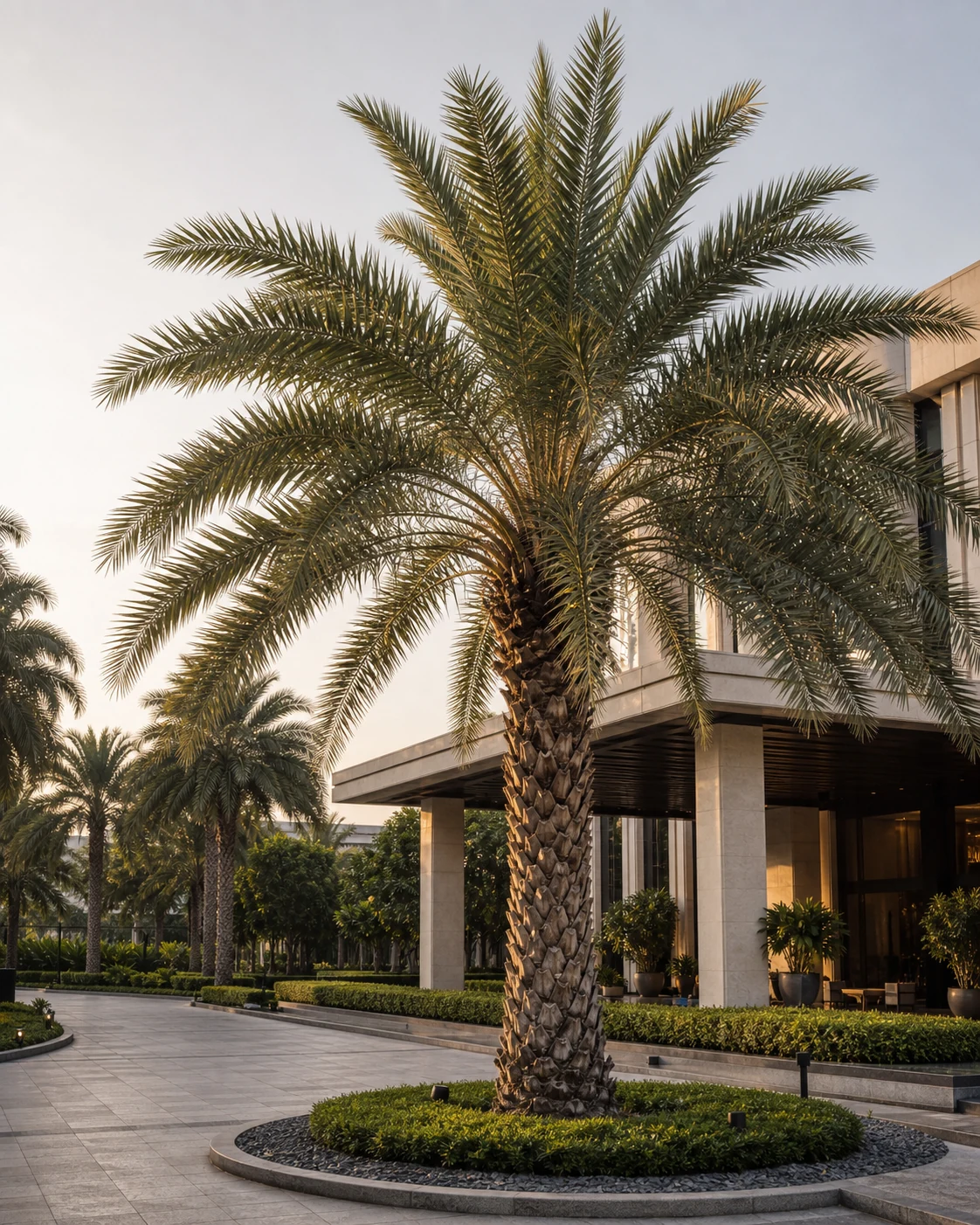
Specimen visual guide
Visual context for placement, scale, handling, and landscape integration.
Section
Where it's used in premium projects
Specified for arid resort landscapes, heritage courtyards, embassy and institutional gardens, and hot-dry city boulevards where designers want authentic date-palm character — including edible-date interest on some cultivars. Offshoot clumps can read as oasis planting; solitary tall trunks suit formal axes.
Section
Climate & site suitability in India
Rajasthan, Gujarat, and rain-shadow interiors outperform humid Kolkata-style climates unless drainage is perfect. Alkaline soils that stress broadleaf trees are often acceptable. Fruiting for table dates is cultivar- and climate-dependent — do not assume Mecca-grade yields without specialist agronomy.
Section
Sourcing & acclimatisation
Procurement should name cultivar intent (ornamental versus fruiting), offshoot versus clear-trunk supply, and spine-safe lifting. Imported mother stock is rare relative to domestic field production in some corridors — still verify pest-free nursery status. [Unverified: lead time for large clear-trunk field digs.]
Section
Installation (pit, soil, drainage, bracing)
In monsoon-heavy regions, engineered drainage still matters — drought tolerance is not monsoon anaerobic tolerance. Offshoot plantings need spatial planning so future suckers do not engulf paving. Disinfected tools when trimming Phoenix material on the same site as canariensis.
Section
Establishment & AMC
AMC includes red palm weevil monitoring identical to P. canariensis, annual removal of spent fruit stalks where staining matters, and sucker thinning policy. Irrigation can be throttled after establishment in arid sites but should not drop to zero during first two summers in new hardscape.
Section
Cost drivers
Explore
Related
Related
Related links
Services, segments, cost, and proof.
- Softscape & horticulture
- Irrigation & water management
- Landscape maintenance (AMC)
- Hotel & resort landscaping
- Luxury resort & spa landscaping
- Mall & retail landscaping
- Corporate campus landscaping
- Projects
- Commercial landscaping cost guide
- Pricing drivers (imported trees)
- Import compliance workflow
- Request a site assessment
- Will Phoenix dactylifera fruit in India?
- Some cultivars fruit in hot dry regions with correct pollination and irrigation; ornamental plantings often never target commercial fruit — specify cultivar intent on the BOQ.
- How do we manage red palm weevil on date palm?
- Treat monitoring as mandatory Phoenix AMC — traps, crown inspections, sterile pruning, and rapid removal if infestation is confirmed; do not reuse infested material on site.
- Is it better than Canary Island date palm for Rajasthan hotels?
- For authentic arid character and alkalinity tolerance, yes — canariensis is the grand coastal boulevard palm; dactylifera fits hot-dry heritage and oasis planting better.
- What about offshoot suckers at paving edges?
- AMC or installation scope should state sucker removal radius — uncontrolled offshoots buckle paving and obscure irrigation emitters within years.
- Does fruit drop affect pool decks?
- Yes on fruiting cultivars — route clusters away from pools and light-coloured stone, or budget seasonal harvest/removal.
- What import paperwork applies to live date palms?
- Follow India plant quarantine requirements for live palms — see compliance workflow (informational, not legal advice).