
Blue Mediterranean fan palm
Blue Mediterranean fan palm (Chamaerops humilis var. cerifera)
The cerifera form adds silver-blue waxy fans and extra cold hardiness to the Mediterranean fan palm — a slow, collector-grade accent for hardy palettes where colour is worth rarity cost and the same spiny petiole rules apply as the green form.
Spec
At a glance
- Botanical name
- Chamaerops humilis var. cerifera
- Family
- Arecaceae
- Common names
- Blue Mediterranean fan palm, silver Chamaerops
- Origin
- Atlas Mountains, Morocco
- Plant type
- Clustering fan palm
- Mature height
- Often 2–4 m clump
- Trunk / form
- Multi-stem clump; stiff silver-blue waxy fans
- Crown spread
- Moderate; expands slowly as clump matures
- Growth rate
- Very slow
- Light
- Full sun for best silver colour
- Water needs
- Low to moderate once established
- India climate suitability
- Same hardy sites as green Chamaerops; prized where blue reads in dry palettes
- Cold/heat & salt/wind tolerance
- Very cold-hardy; drought- and salt-tolerant; spiny petioles
- Typical supply size
- Smaller blue clumps 0.6–1.5 m [Unverified]
- Lead time (sourcing)
- [Unverified] cerifera often longer than green form
- Install considerations
- Full sun for colour; spine setbacks; rarity → plan lead time
- Maintenance level
- Low to moderate — slow frond turnover
- Cautions
- Very slow and costly; spiny petioles; shade dulls blue wax
Gallery
Specimen visual guide
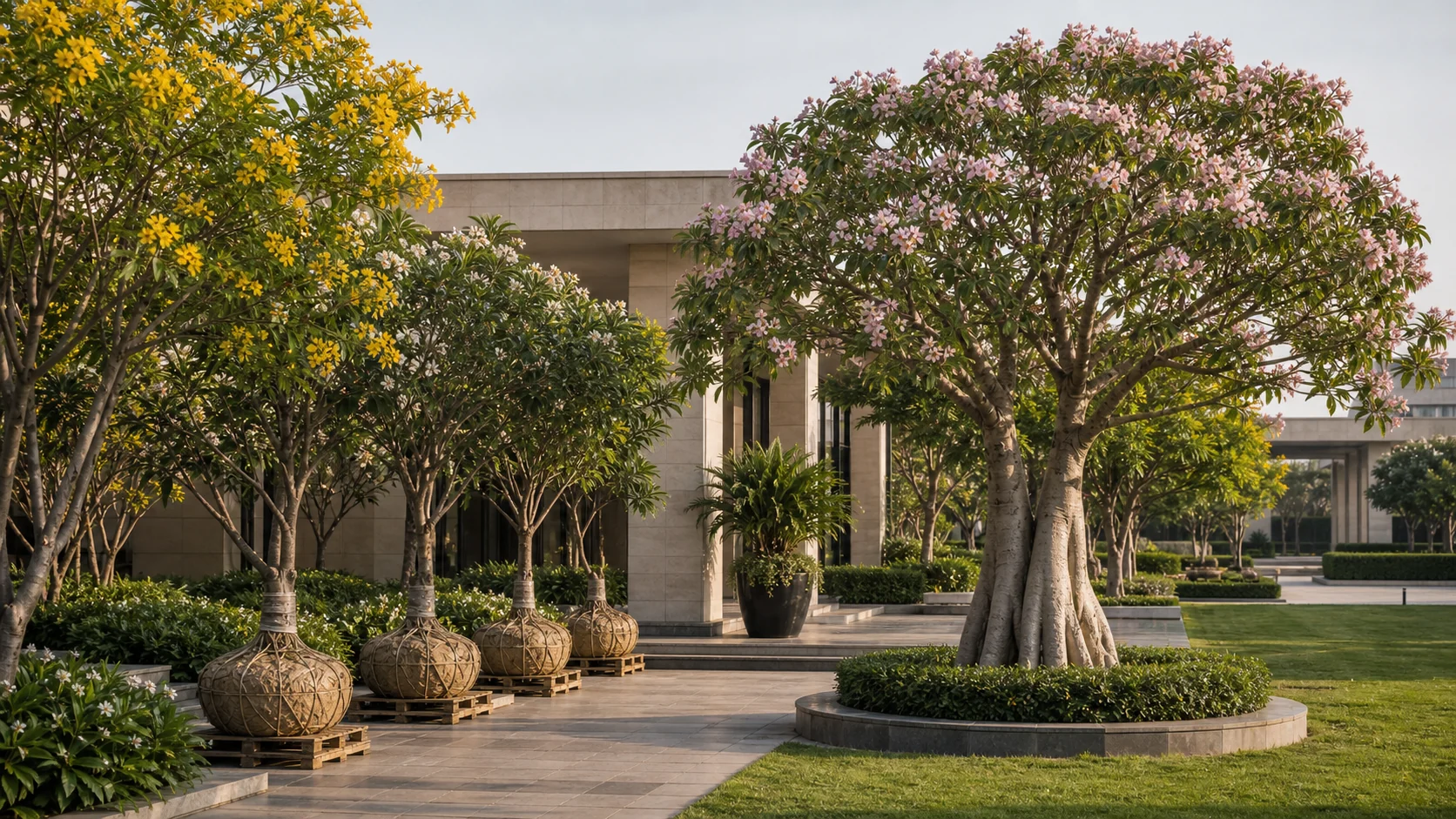
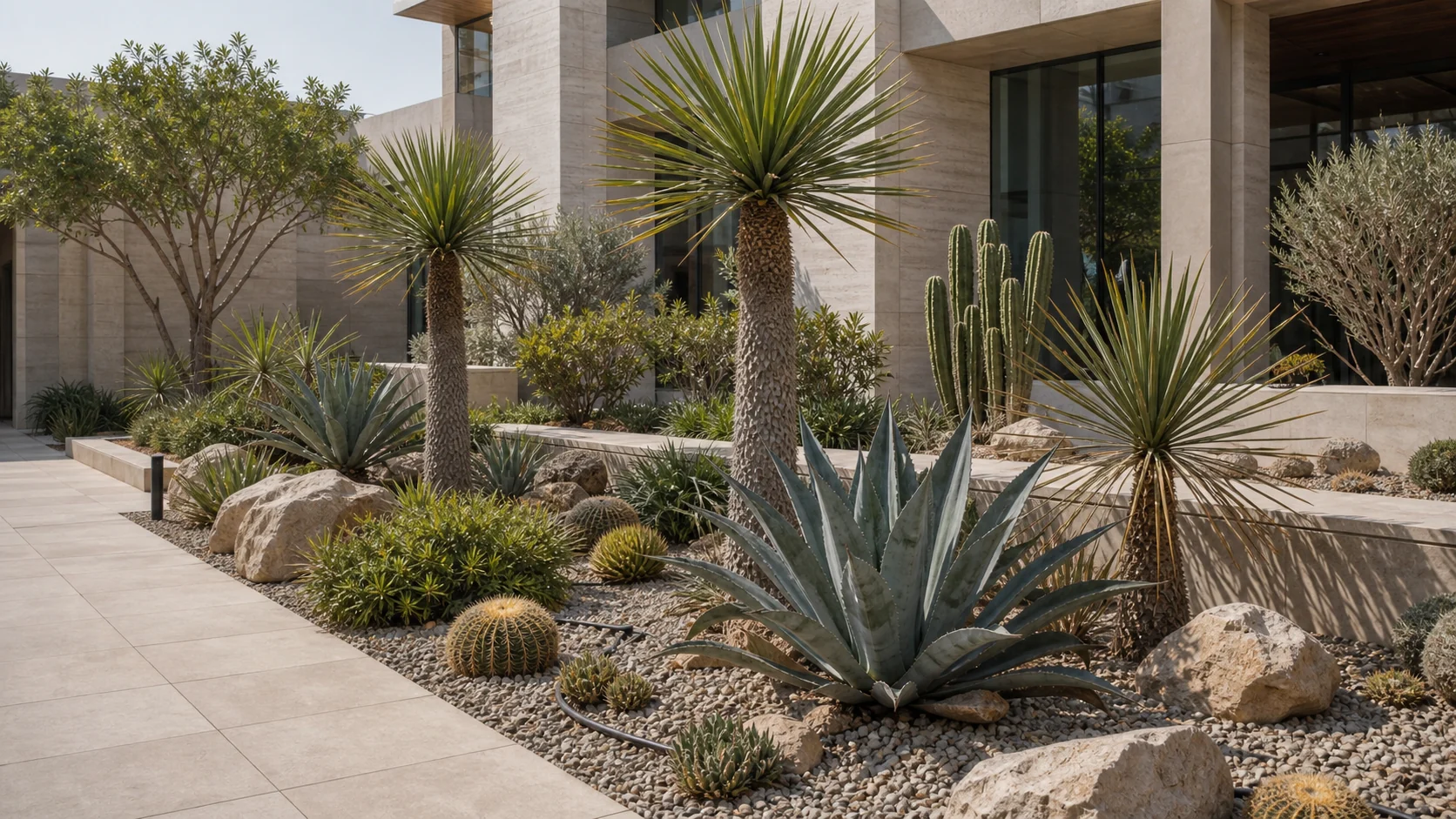
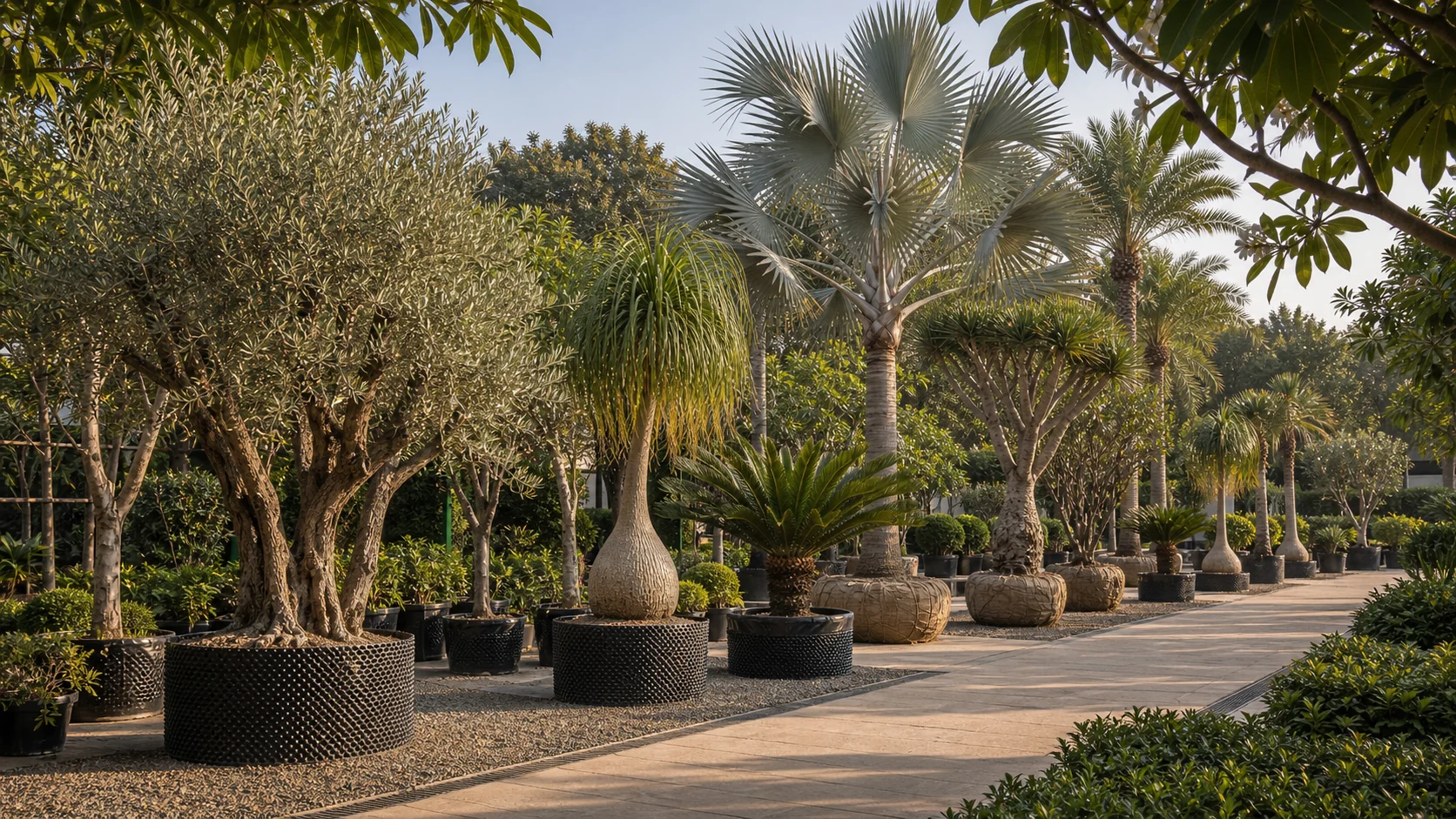
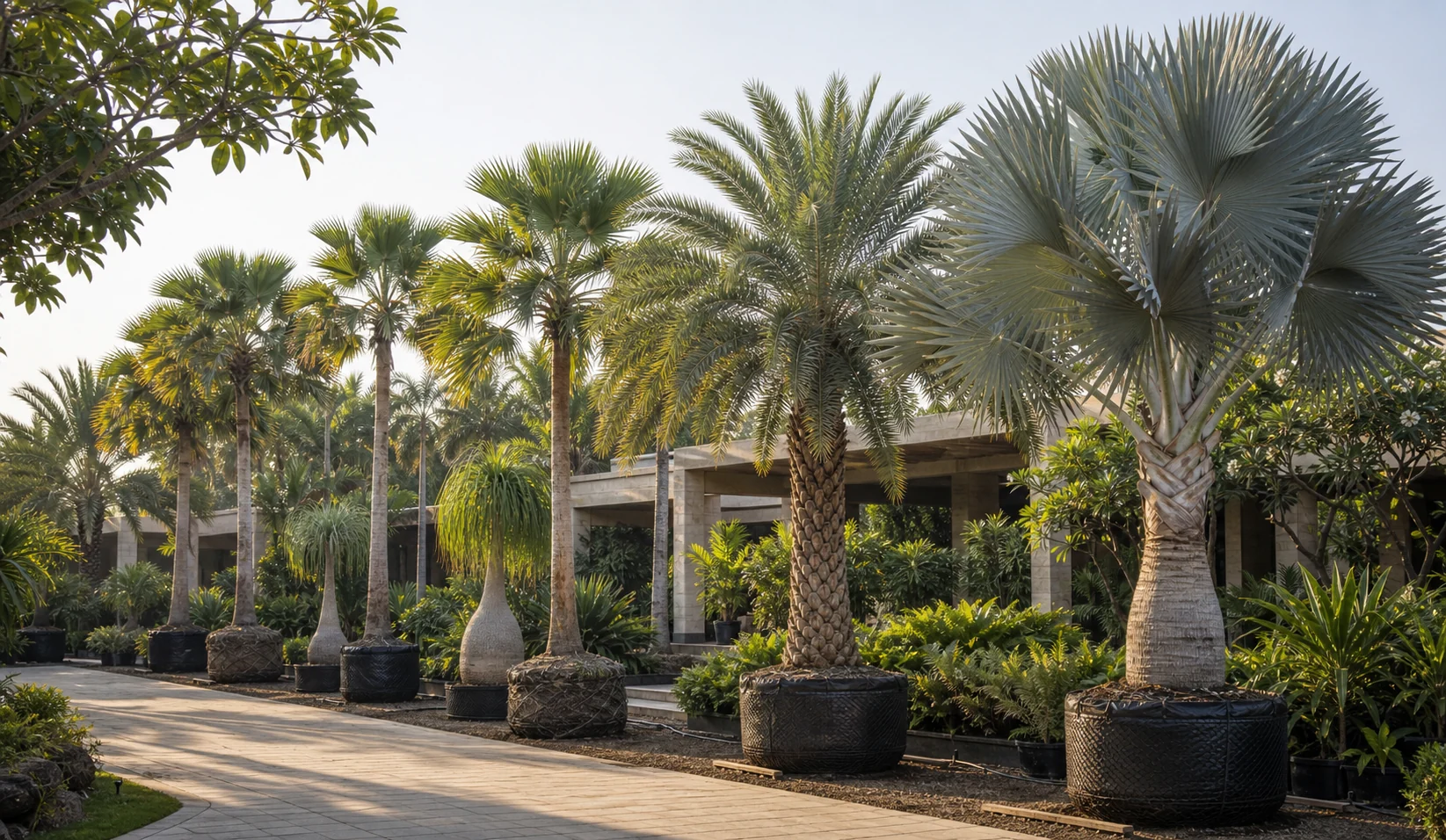
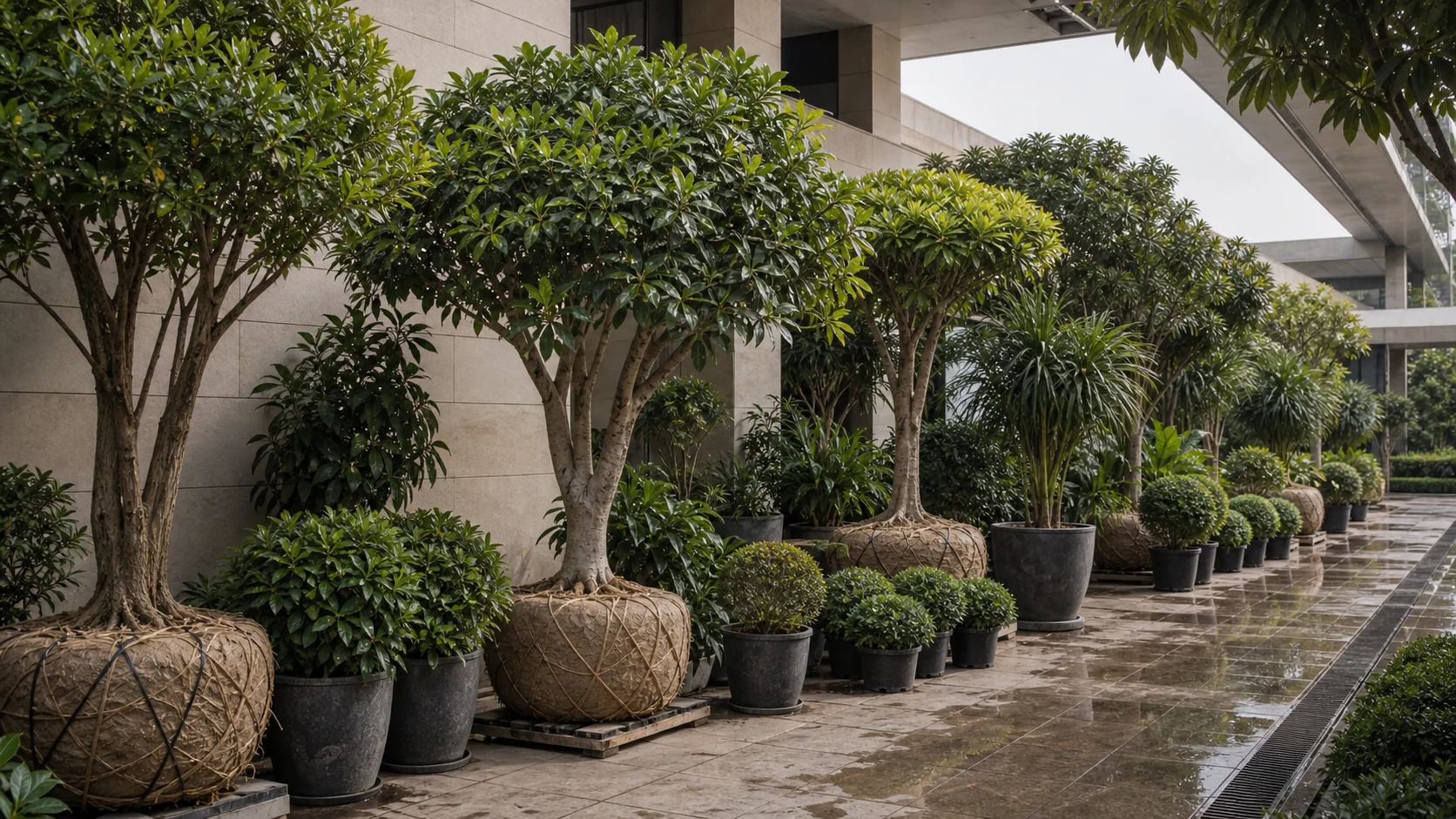
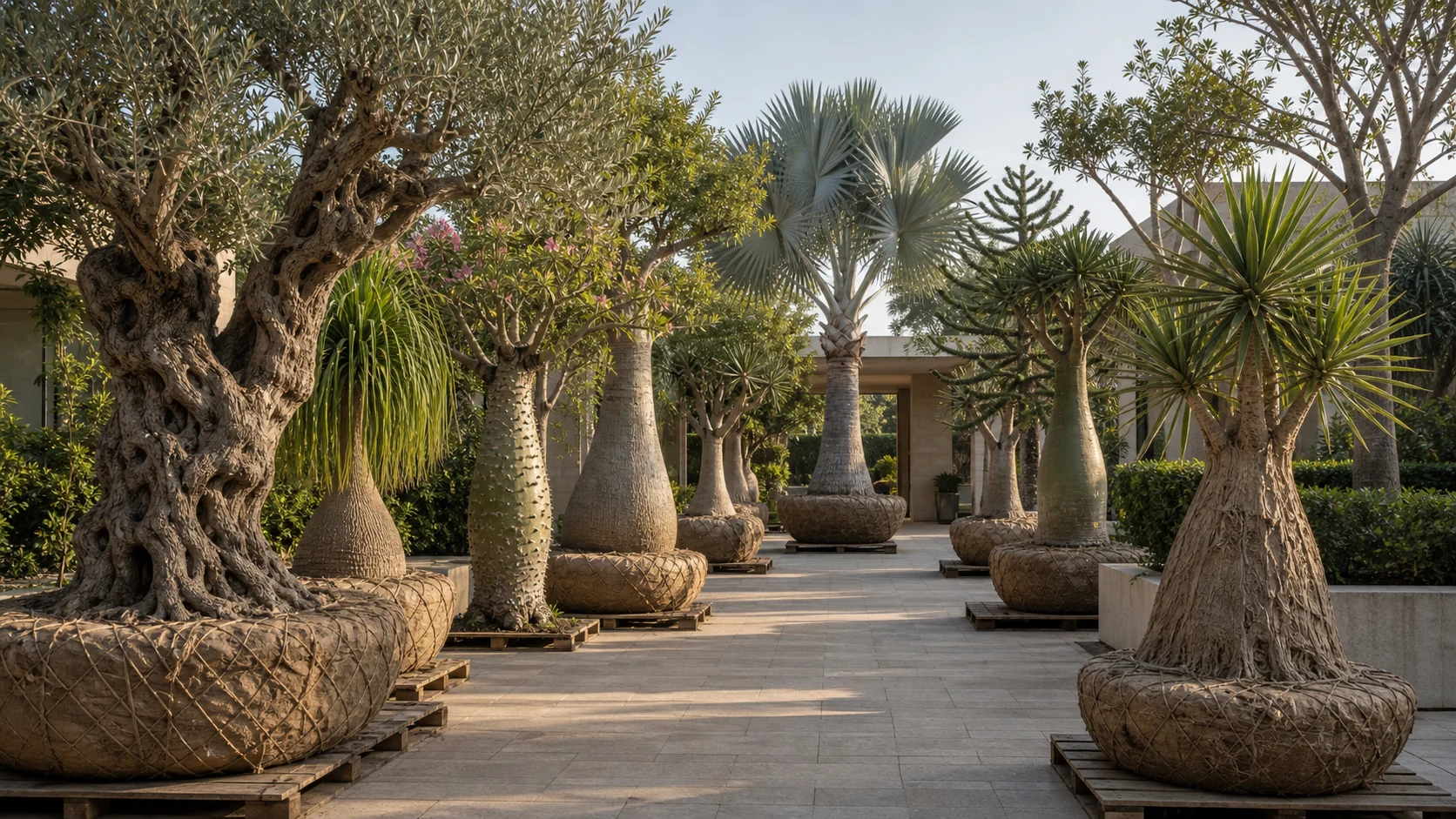
Visual context for placement, scale, handling, and landscape integration.
Section
Where it's used in premium projects
Specified where designers need a silver-blue fan accent without Bismarckia scale — Mediterranean rooftops, embassy courtyards, and xeric gravel entries in Delhi NCR or coastal Gujarat. It is a colour specimen, not a fast screen — BOQs should show fewer plants with higher unit care, not mass planting quantities.
Section
Climate & site suitability in India
Same hardy envelope as green Chamaerops — cold, drought, and salt outperform tropical imports. Blue wax fades in shade — full sun placement is non-negotiable for the design intent. Humid sites work with drainage; monsoon saucer pits still kill roots.
Section
Sourcing & acclimatisation
Cerifera is rarer and slower than green humilis — expect longer nursery lead and premium pricing for matched blue clumps. Verify true cerifera on photos, not juvenile green fans that blue up later. [Unverified: typical import origin for commercial cerifera lots.]
Section
Installation (pit, soil, drainage, bracing)
Identical drainage discipline to green Chamaerops — coarse free-draining media, no ponding. Spine setbacks from stone benches and pool edges. Container installs need weight and drainage audits on terraces — blue colour is worthless if the clump dies from waterlogging.
Section
Establishment & AMC
AMC is light — dead fan removal and spine-zone marking. Avoid over-irrigation on mature plants. Do not expect fast infill — designers should show clients a five-year spread model so blue clump size expectations stay honest.
Section
Cost drivers
Explore
Related
Related
Related links
Services, segments, cost, and proof.
- Softscape & horticulture
- Irrigation & water management
- Landscape maintenance (AMC)
- Hotel & resort landscaping
- Luxury resort & spa landscaping
- Mall & retail landscaping
- Corporate campus landscaping
- Projects
- Commercial landscaping cost guide
- Pricing drivers (imported trees)
- Import compliance workflow
- Request a site assessment
- How is cerifera different from green Chamaerops humilis?
- Silver-blue waxy fans, Atlas provenance, slower growth, and higher cost — same spines and clumping habit, different colour brief.
- Why does blue Mediterranean fan palm cost more?
- Rarity and very slow clump development — buyers pay for verified blue form at delivery, not assumed future colour.
- How cold-hardy is cerifera in north-India projects?
- Among the hardiest blue fan options — often specified where Brahea is too tall and Bismarckia is not cold-safe.
- Will shade preserve the silver-blue colour?
- No — shade dulls wax to greenish tones; full sun is required for the cerifera design intent.
- Are petiole spines still a hazard on the blue form?
- Yes — identical spine risk to green humilis; placement and AMC PPE rules do not change with colour.
- How should BOQs be compared?
- Match verified cerifera form, clump diameter, lead time, and container versus in-ground — not generic Chamaerops pricing.