
Gallery
Procurement context
Visual references supporting this guide with landscape scope and detailing context.
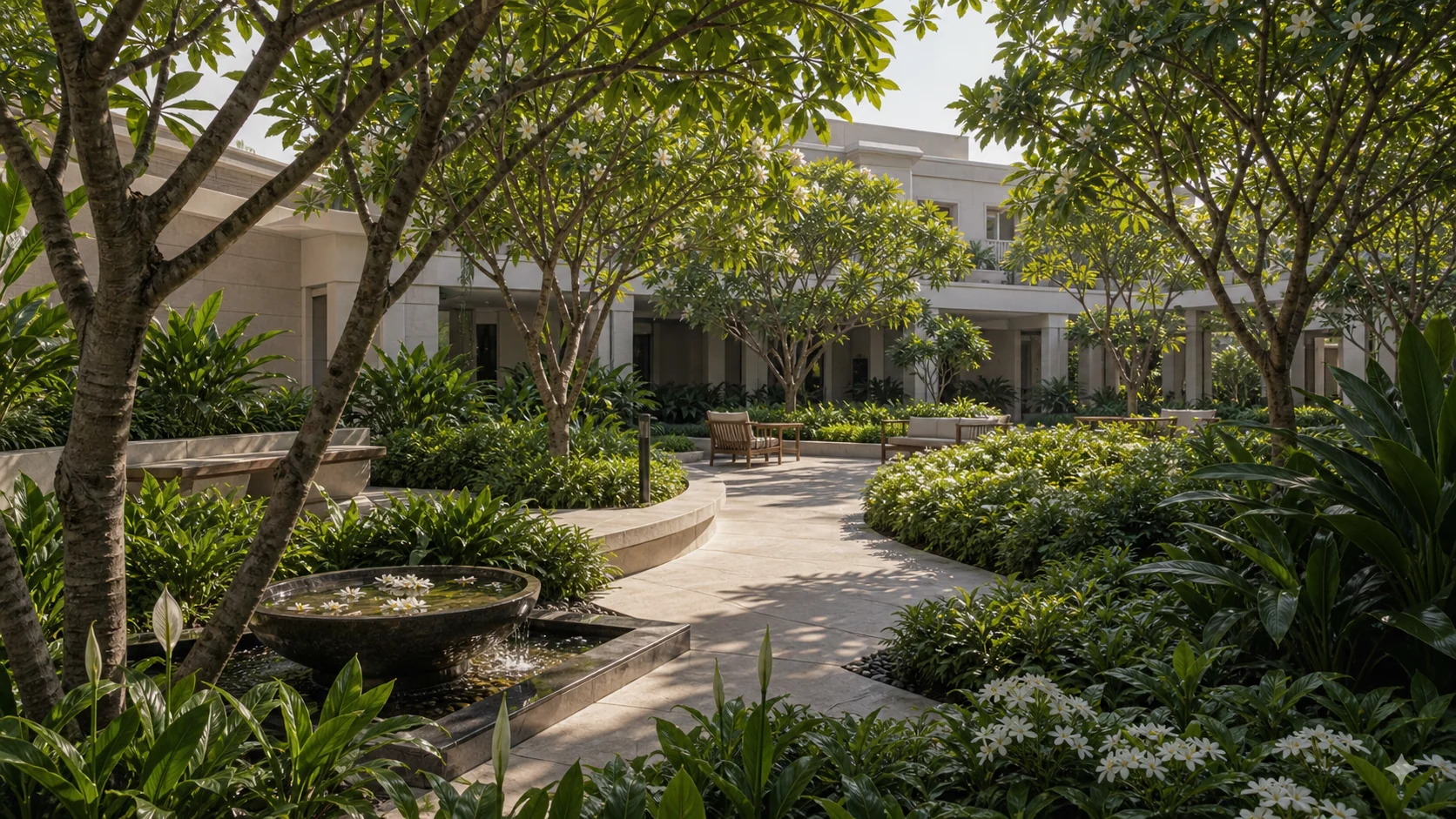
What scope outcomes should healing garden design deliver on hospital campuses?
Define garden scope targets as operational performance, not mood boards alone: safe and predictable circulation for patients, visitors, and staff; seating and shade without blocking emergency egress; planting that supports easier sanitation near clinical zones; and surfaces specified for slip resistance, drainage falls, and wheelchair transitions.
Typical scope spans patient-view courtyards, quiet garden paths, pediatric or oncology-adjacent sensory edges, staff break areas, and perimeter buffers where the master plan requires separation from traffic noise. Package names in tender documents should mirror BOQ structure: hardscape paving classes, planting by type and media depth, irrigation distribution, optional water features with filtration assumptions, outdoor lighting where night use is expected, and establishment care with replacement thresholds. Align package vocabulary with your landscape BOQ format guide so architects, PMC, and FM teams evaluate the same scope from mobilisation through closeout.
Which infection-control and clinical interfaces constrain healing garden layout?
Healing gardens fail procurement when planting ignores clinical adjacency. Setbacks around HVAC intakes, air-handling equipment, and fresh-air locations keep leaf litter and organic debris away from sensitive airflow zones. Groundcover and mulch systems should favour easier sanitation than materials that trap residue; low-pollen and low-odor priorities belong near dining vents, quiet garden zones, and intake-adjacent beds.
Around ambulance bays and service routes, planting sits outside vehicle splash lines while drainage and filtration control ponding and odor complaints. Sightlines, lighting placement, and signage zones support wayfinding at night without glare on helipad or emergency routes. Clinical advisors writing tender briefs can cross-check infection-aware language on the hospital landscaping segment page; softscape scope assumptions belong on the softscape service page when planting density and media depth are split by discipline.
How should patient circulation and sensory planting appear in tender BOQ?
Circulation BOQ should state minimum path widths (typically 1.5-1.8 m for two-way pedestrian flow), turning radii for wheelchairs and mobility aids, rest-point spacing with shade, edge protection at level changes, and surface classes with jointing, fall, and slip-resistance documentation. Sensory planting for dementia-support, pediatric, or oncology-adjacent zones needs named criteria: texture variation without thorn hazards, controlled height bands for sightlines, fragrance limits near intakes, and seasonal interest that maintenance can sustain without excessive pruning windows.
Procurement should require substitution approval workflows when species change during establishment, with equivalency notes for pollen load, mature spread, and irrigation demand. Where terrace or podium gardens sit above occupied clinical floors, waterproofing interfaces and planter drainage stacks belong in civil hold points before soil fill. Cross-check phasing assumptions with your project phases and FM handover guide when occupied wings cannot shut down.
How do drainage and irrigation get specified before healing garden handover?
Drainage scope should name slopes, inlet positions, channel continuity through paving and planter walls, outfall behavior under controlled wetting or early monsoon observation, and timing before hardscape and planting closeout. Ponding at patient paths and ambulance approaches is an operational risk FM teams inherit after ribbon-cutting; verify drainage at hold points rather than during the first monsoon after opening.
Irrigation commissioning should include pressure zone mapping, valve and controller checks, handover settings for programs and run times, coverage observation against design intent, and leak tests at tie-in points with civil and MEP. Document what was tested, adjusted, and captured in as-builts so maintenance teams operate without guessing. Model irrigation zone counts and controller tiers with the irrigation system cost tool when BOQ assumptions are still being validated; irrigation service scope lines can be packaged separately when architects split disciplines.
What phasing discipline keeps healing gardens usable during 24/7 hospital operations?
Hospital healing gardens must be delivered without disrupting medical activity. Phase works by wings, departments, and access corridors while keeping ambulance routes and service lanes usable at all times. Renovation programmes need protective segregation so dust and debris stay controlled near clinical zones; low-vibration equipment windows, defined working hours, and odour-controlled fertiliser programmes near intakes belong in method statements, not informal site notes.
Monsoon sequencing matters: drainage checks early, establishment watering windows before peak rain or footfall, and protected edges where contractor traffic crosses patient paths. Before final handover, a snagging plan and zone walkthrough checklist ties each installation area to FM maintenance ownership so the garden transitions from construction-ready to operation-ready. Cross-check acceptance grouping with your landscape QA checklist when hold-point evidence must map to payment milestones.
How should establishment care and AMC boundaries be written for hospital gardens?
Establishment care during the first growing season is heavier than steady-state AMC: irrigation tuning, replacement planting above agreed mortality thresholds, seasonal pruning, bed sanitation routines near intakes, and storm debris response after monsoon bursts. Contract language should state duration, replacement allowances, and reporting frequency; do not bundle establishment invisibly inside planting lump sums.
AMC scope should define routine visit cadence, response tiers for irrigation faults and drainage blockages, replacement boundaries, and escalation when occupied-site access blocks immediate rectification. Model steady-state OPEX with the landscape maintenance AMC calculator before contract approval; align SLA language with your AMC and SLA scope guide so tender comparisons reward comparable maintenance realism rather than headline per-acre rates.
What handover documentation should FM teams receive at turnover?
Handover should deliver as-built planting and irrigation records, controller program notes, valve charts, O&M guidance for pumps and filtration, drainage acceptance notes, and a maintenance program outline with responsibilities and cadence. Where water features are in scope, filtration and chemical storage assumptions are documented in the BOQ, not deferred to FM discovery after opening.
Each hold point should name its evidence: photos or logs, measurement sheets, commissioning notes, planting zone records, and signed acceptance logs per package. As-builts should capture installed reality for irrigation layouts, lighting termination points, and hardscape or planting zone boundaries, not redrawn design intent that never matched site conditions. Align documentation lines with your as-builts and O&M handover guide before AMC tender release.
What proof and evaluation criteria help compare healing garden bids?
Evaluation should reward comparable BOQ depth, named hold points, commissioning evidence, and maintenance realism, not mood imagery alone. Ask bidders how they phase around occupied clinical zones, how they document intake setbacks, and how establishment care transitions to AMC with clear replacement boundaries.
For healthcare context, compare bids against published hospital references on the portfolio hub, including CK Birla Hospital Gurugram as a verified public project reference only. If a bidder cannot show comparable institutional phasing or FM handover samples, treat that gap as bid risk rather than assuming capability from residential garden portfolios. Cross-check evaluation matrices with your RFP tender checklist and quotation comparison guide before shortlist lock.
What common procurement mistakes cause healing garden rework after opening?
Recurring gaps include: planting accepted without intake setback verification, drainage signed off only by visual walk before monsoon, irrigation commissioned without zone records, establishment care bundled invisibly inside planting lines, and AMC priced without zone breakdown or storm response tiers.
A second failure mode is treating healing gardens as decorative softscape while civil, MEP, and landscape interfaces stay undefined. Podium waterproofing failures, changed invert levels, and hidden utilities then force rework after soil fill. Treat unsupported closeout assurances as bid risk until backed by named hold points, evidence requirements, and signed acceptance logs per package.
What should procurement clarify before releasing a healing garden tender?
Before tender release, confirm zone priorities (patient courtyards, staff respite, perimeter buffers), HVAC and ambulance interface drawings, occupied-site working-hour constraints, target handover date, and closeout deliverables FM will audit. Draft BOQ structure from this framework, align hold points with your QA checklist and payment milestone guide, and run budget scenarios through the commercial cost guide or landscaping cost calculator when headline scope is still directional.
When levels, soil depth, drainage outfalls, podium waterproofing interfaces, specimen access, or occupied-site safety cannot be confirmed from drawings alone, request a site assessment through contact so healing garden scope, phasing, and AMC pricing reflect field realities before contract signature.