
Gallery
Procurement context
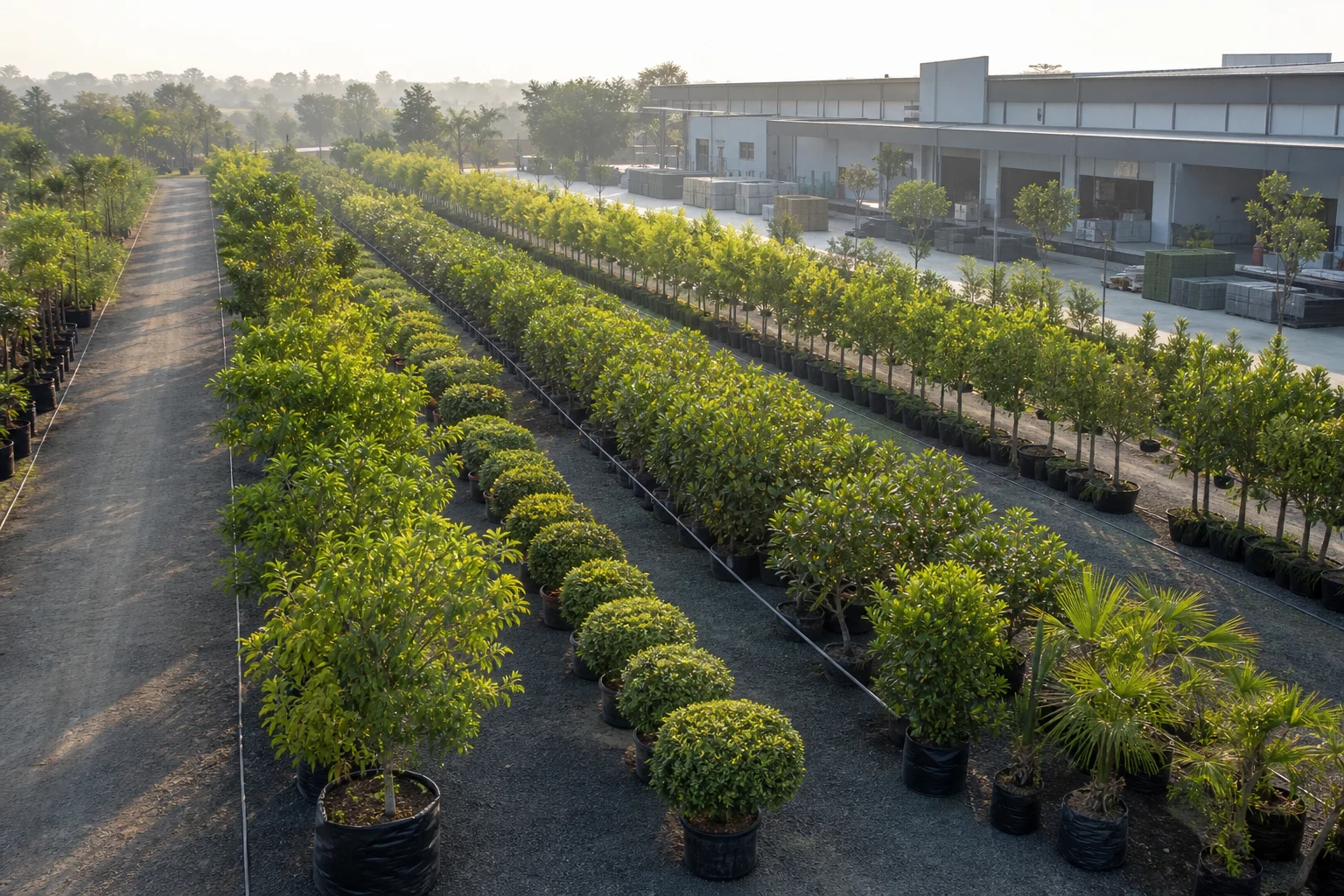
Visual references supporting this guide with landscape scope and detailing context.



How should procurement approach landscaping budget planning in India?
Start with a lifecycle view, not a single maintenance line. Annual planning should map what will be built or renewed in the capital year, what routine care costs in OPEX, and which seasonal events trigger escalation spend.
Procurement teams on hotels and campuses need a budget framework FM can operate: zone priorities, package boundaries, establishment overlap, and documentation that connects spend to installed assets. Without that structure, headline totals look controlled while punch lists and replacement planting absorb unbudgeted OPEX after opening.
What scope categories belong in the annual landscaping budget?
Split the plan into categories procurement can tender and audit: hardscape and civil renewal, softscape establishment and replanting cycles, irrigation controller and valve maintenance, outdoor lighting and planting interfaces where in scope, water features or pool-edge planting if applicable, and landscape maintenance AMC.
Within each category, note zone coverage (front arrival, podium, pool edge, internal courtyards, service yards) so budget assumptions match where failure is guest-visible or auditor-relevant. A campus with large turf blocks and a hotel with specimen arrival planting carry different recurring cost profiles even at similar gross area.
How do hotel and campus estates differ in budget assumptions?
Hotels budget for night-quiet maintenance windows, event load-in recovery, pool and arrival-zone presentation, and soft-opening snagging overlap with landscape commissioning. Corporate campuses often carry higher turf and hedge metreage, parking-island planting, and weekday access rules that shape visit frequency.
Institutional sites may add healing-garden or green-belt obligations with spray restrictions near air intakes or patient zones. Segment constraints should appear in the annual plan as cost drivers, not as footnotes. Review hotel landscaping scope, corporate campus landscaping scope, or your relevant segment page before locking zone priorities.
How should CAPEX and OPEX be separated in the annual plan?
CAPEX covers new works, major renewals, capital irrigation upgrades, hardscape replacement beyond AMC allowance, and establishment care tied to construction turnover. OPEX covers scheduled AMC visits, inclusive replacement thresholds, seasonal repairs, storm response within SLA tiers, emergency call-outs, and consumables such as nutrition or seasonal colour where contracted.
A common failure is folding establishment care into AMC after construction without a defined duration or replacement allowance. That under-prices the capital year and inflates OPEX disputes in the first monsoon. Document handover dates and establishment completion criteria before AMC pricing is finalised.
Which BOQ packages should drive capital budget line items?
Capital budgets should trace to BOQ packages with locked unit basis: softscape by square metre and specimen count, hardscape by paving area and running metre, irrigation by zone and valve set, outdoor lighting by circuit and fixture interface, water features by pump and filtration scope, and maintenance establishment as a defined overlap period.
Include interface lines procurement can verify: drainage observation, irrigation commissioning with controller records, electrical termination for lighting-adjacent planting, and handover documentation deliverables. Cross-check package structure with your landscape BOQ format guide and landscaping rate analysis framework before budget sign-off.
When comparing prior-year spend to forward estimates, normalise quantities against the same take-off assumptions. A budget built on mismatched unit basis will not survive tender comparison or variation control.
How do AMC scope and establishment care affect OPEX forecasting?
AMC pricing should reference accepted baseline assets (planting schedules, valve charts, zone logic), not drawings alone. Forecast OPEX using visit frequency by zone, resident versus scheduled crew model, inclusive replacement budget as a percentage or unit rate, storm response tiers defined in the SLA, and reporting cadence (monthly or seasonal) with photo evidence.
Model scenarios with the landscape maintenance AMC calculator and align assumptions to landscape maintenance SLA scope language before the operating budget is frozen. Where establishment care still runs in the first operating year, show overlap between installer obligations and AMC start date so replacement planting is not double-counted or left unfunded.
What seasonal checkpoints should the annual plan include?
Build a seasonal calendar FM can execute for India conditions: pre-monsoon irrigation audit and drainage clearance, monsoon ponding and fungal pressure observation, post-monsoon replanting and path repair, peak-summer irrigation tuning, and peak event or occupancy recovery windows on hospitality sites.
Each checkpoint should tie to a budget line or SLA trigger, not an informal email request. Procurement should connect seasonal work to acceptance evidence from commissioning and handover so repeat failures trace to scope gaps rather than unexplained OPEX spikes.
North India estates should align pre-monsoon work with a monsoon readiness checklist; southern or coastal sites may weight post-monsoon drainage and salt-wind planting stress differently in the same annual framework.
Which documentation keeps budget forecasts traceable?
Maintain accepted asset baseline records: as-built planting and irrigation layouts, controller program notes, valve charts, planting schedules, O&M guidance for pumps and filtration, handover records, and maintenance reporting templates that reference asset IDs or zone names used in the BOQ.
Monthly or seasonal reports should close punch items with photo evidence and note replacements against inclusive allowances. When documentation is incomplete at handover, budget the first operating year for baseline asset updates rather than assuming AMC can price accurately from memory.
Link documentation expectations to your landscape project phases, as-builts and O&M handover guide, and QA checklist so capital spend and operating spend reference the same vocabulary and SLA triggers.
What common budget planning mistakes should procurement avoid?
Watch for five recurring gaps: a single lump-sum garden line without zone breakdown, no establishment overlap between construction and AMC, AMC priced without seasonal storm tiers, capital renewals omitted from the rolling plan, and irrigation energy or STP water quality costs left outside landscape OPEX.
A second failure mode is treating the annual plan as finance-only while BOQ visit frequency stays undefined. Facilities teams inherit a budget that balances on paper but cannot be enforced shift by shift. Compare quotations and tender checklists before locking forward-year assumptions.
Hotels planning arrival or pool-zone upgrades should sanity-check capital scenarios with the hotel commercial landscape ROI calculator only as a planning band, not as a confirmed return figure.
What should procurement do next?
Draft the annual plan from this framework: CAPEX packages from BOQ structure, OPEX from AMC and seasonal checkpoints, and documentation requirements that FM can audit. Run capital and operating scenarios through the commercial cost guide, landscaping cost calculator, and relevant specialist tools for irrigation or AMC.
When zone priorities, drainage interfaces, or occupied-site access cannot be confirmed from drawings alone, request a site assessment through contact so the annual budget reflects field realities before board or tender release.