
Crape myrtle shrub
Crape myrtle shrub (Lagerstroemia indica)
Lagerstroemia indica in shrub form is the multi-stem flowering specimen with long summer bloom and exfoliating bark — distinct from the trained bonsai-style entry elsewhere in the library. Deciduous winter silhouette and mildew awareness matter on humid Indian coasts.
Spec
At a glance
- Botanical name
- Lagerstroemia indica
- Family
- Lythraceae
- Origin
- China / Korea — widely grown
- Mature height × spread
- Often 2–4 m multi-stem × 2–3 m
- Flower colour & season
- Pink, white, lavender crêpe flowers summer
- Foliage
- Deciduous green — autumn colour variable
- Evergreen / deciduous
- Deciduous — bare winter stems show bark
- Growth rate
- Moderate — blooms on new wood
- Light
- Full sun for flowering
- Water
- Moderate; drought-tolerant once established
- India climate suitability
- Strong in sun belts; mildew in humid shade
- Hardiness
- Heat OK; tolerates light frost on hills
- Typical supply size
- Multi-stem #15–#25 [Unverified]
- Pruning / maintenance
- Winter prune for flower; mildew monitoring; bark display winter
- Cautions
- Mildew in humidity; needs sun; deciduous winter planning
Gallery
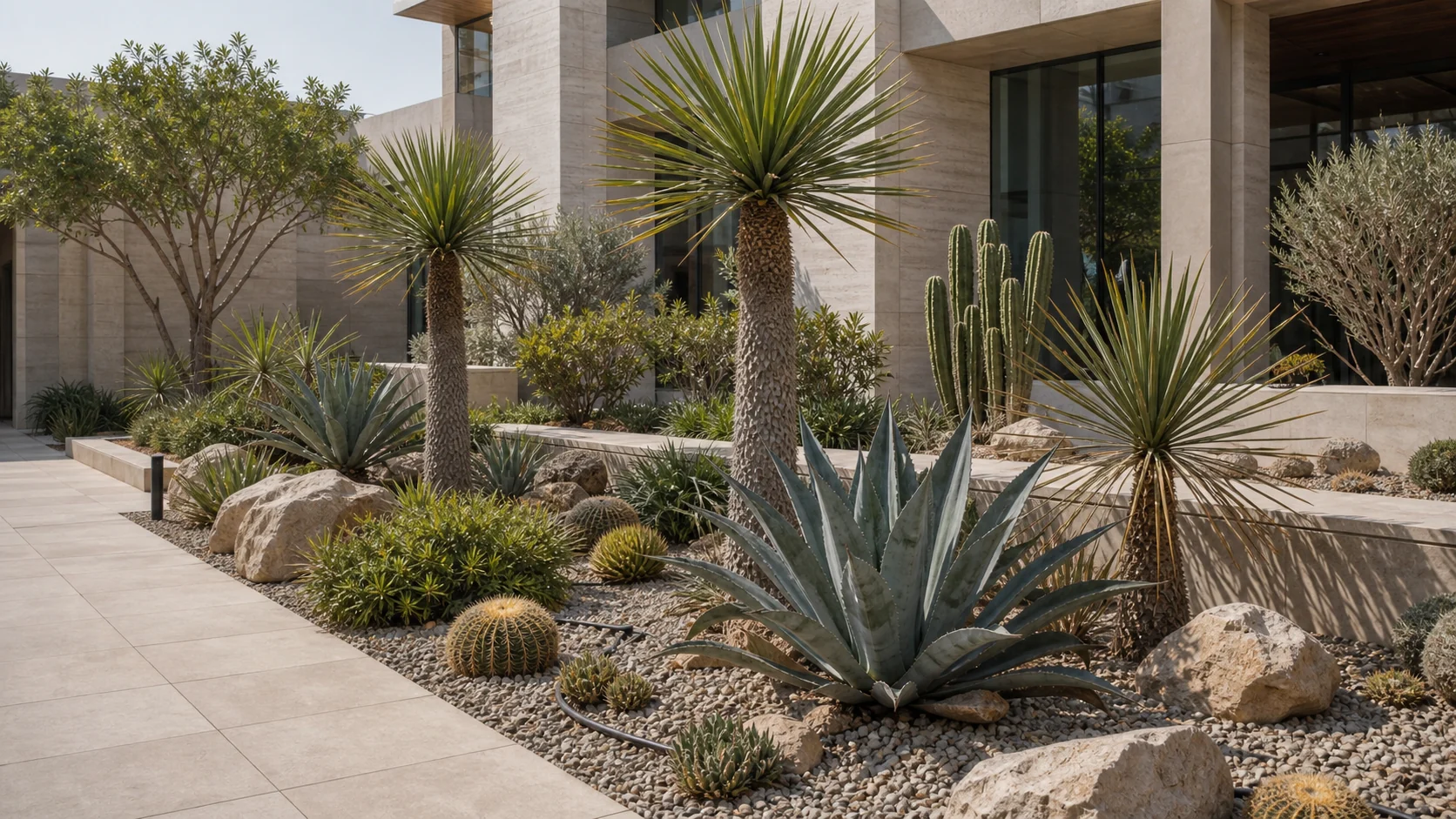
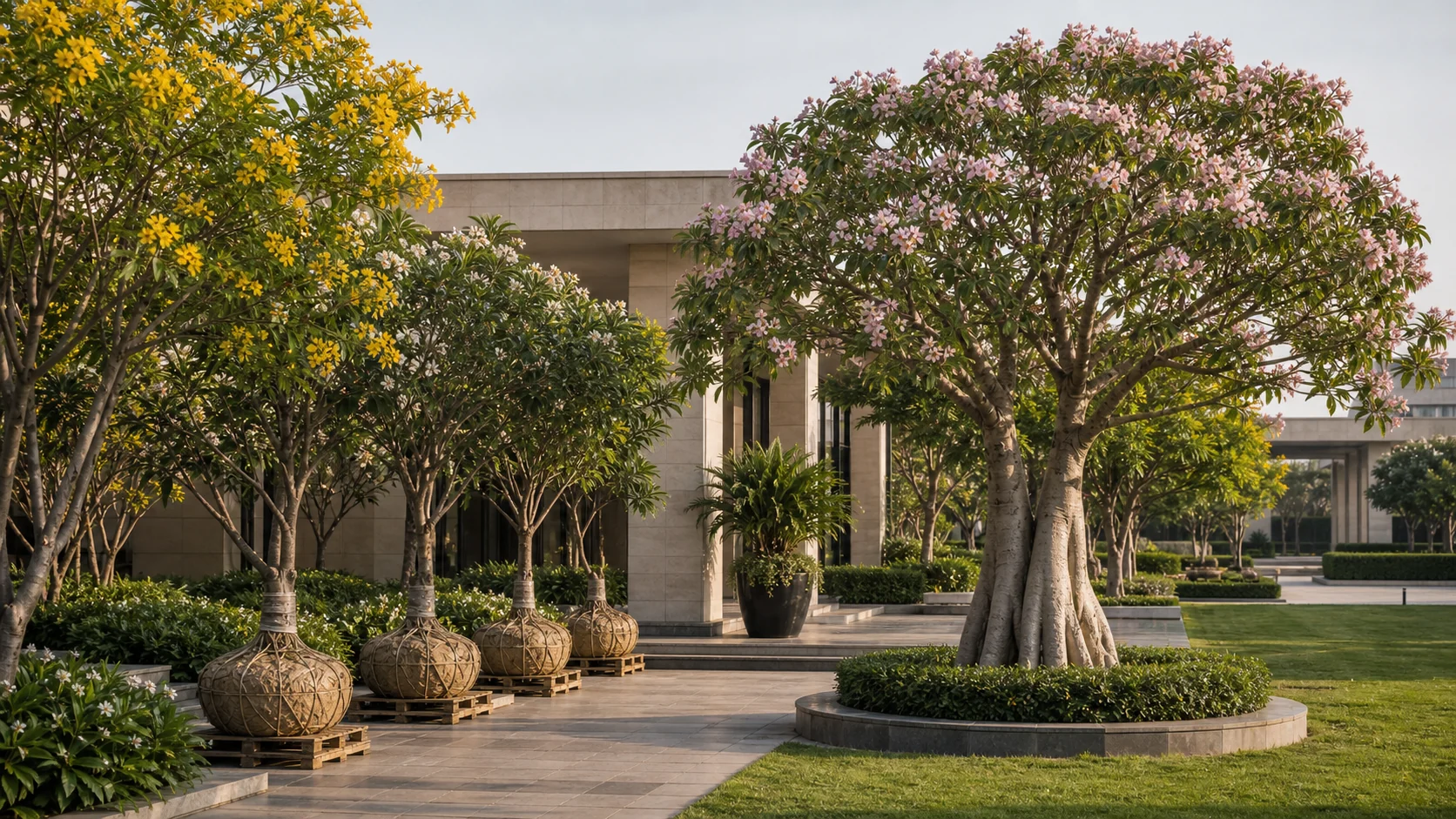
Specimen visual guide
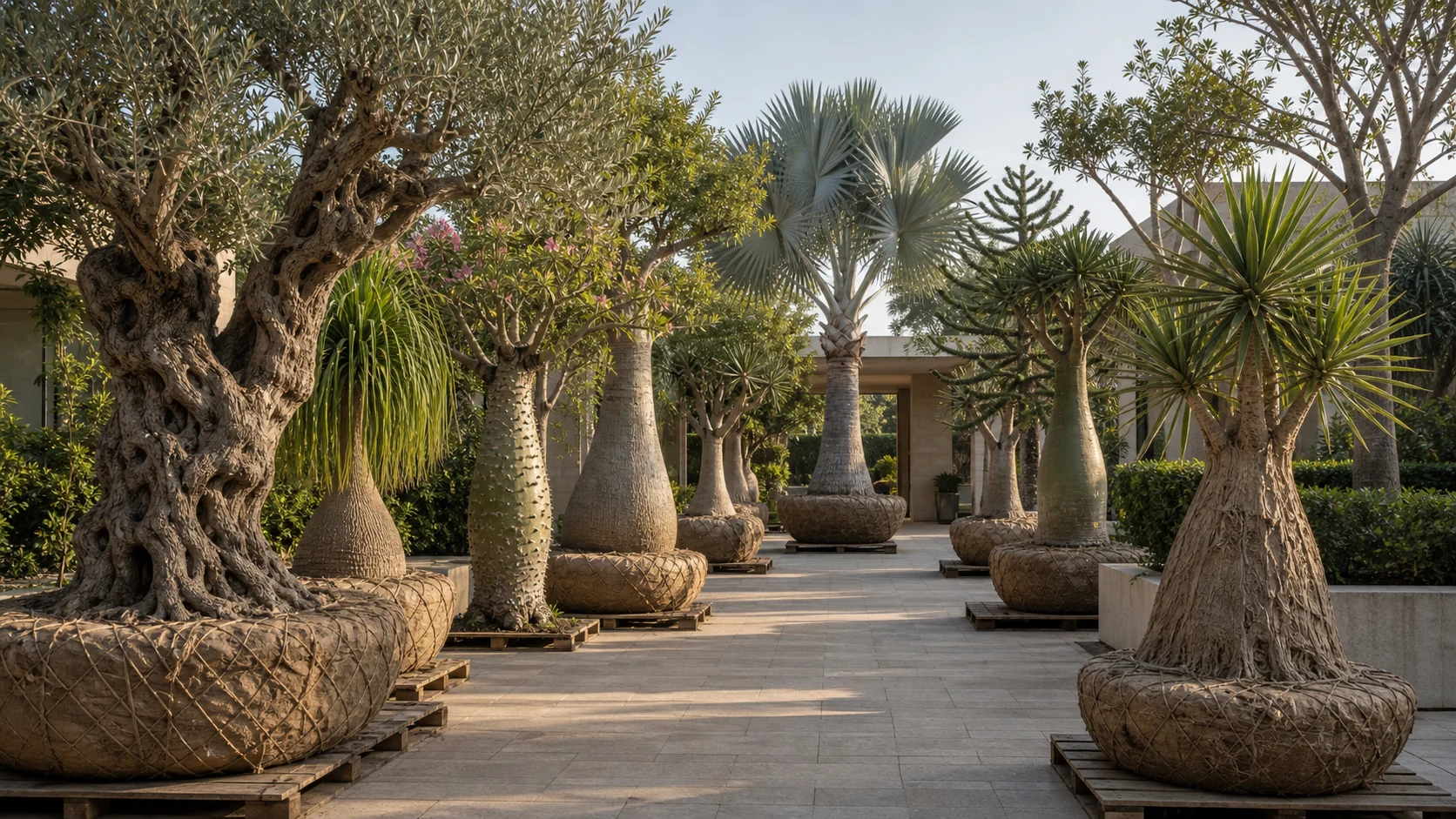
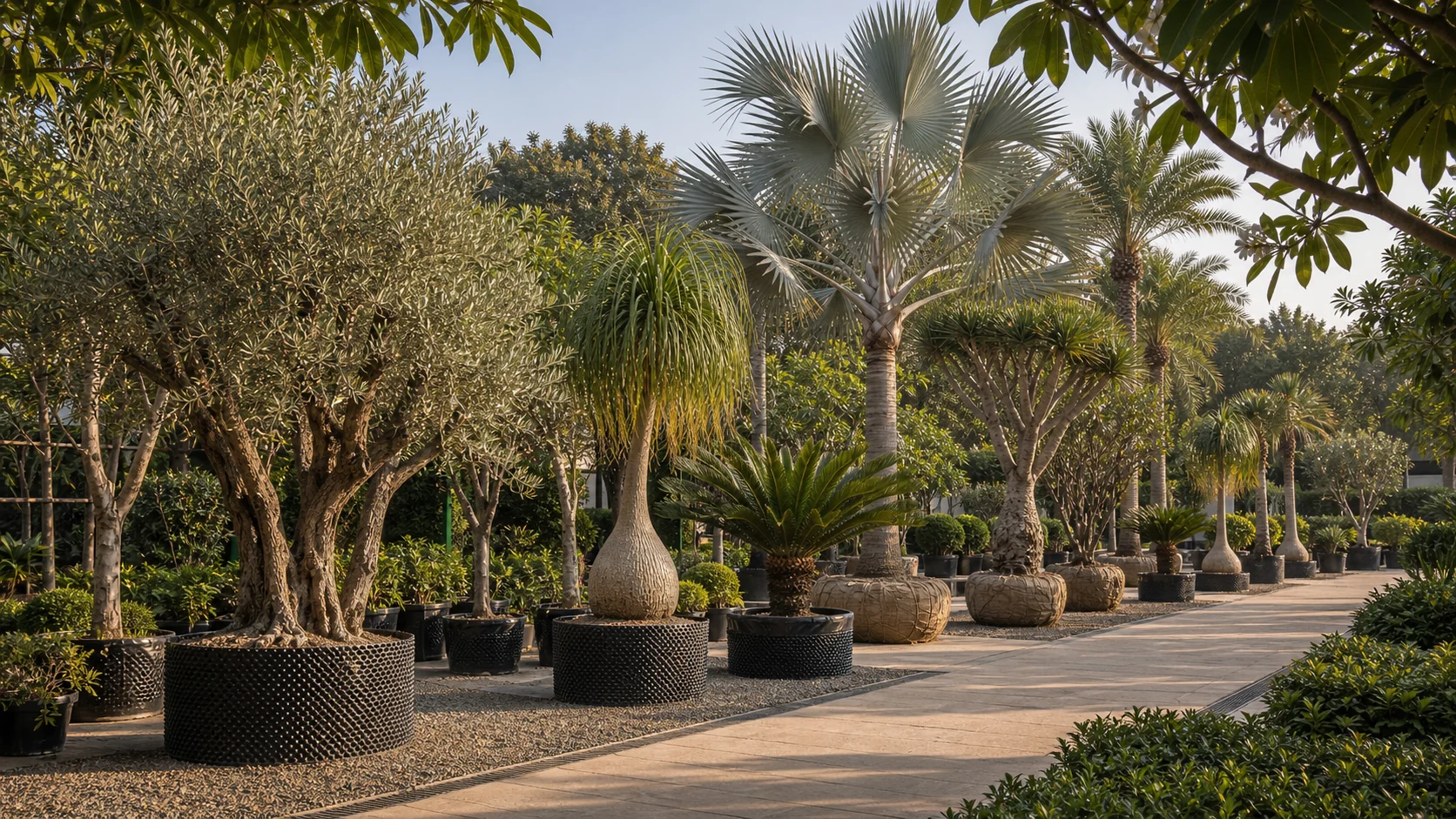
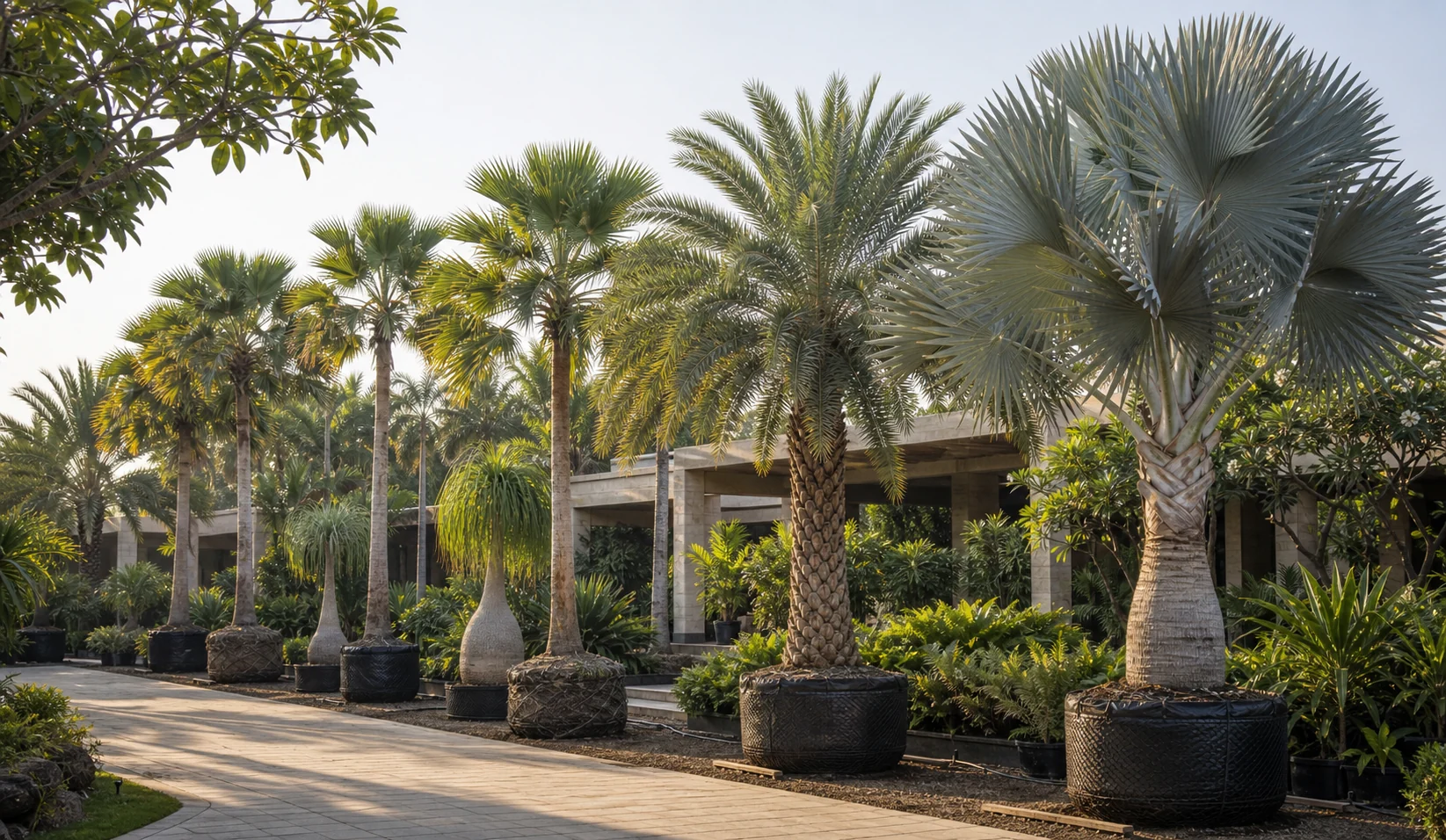
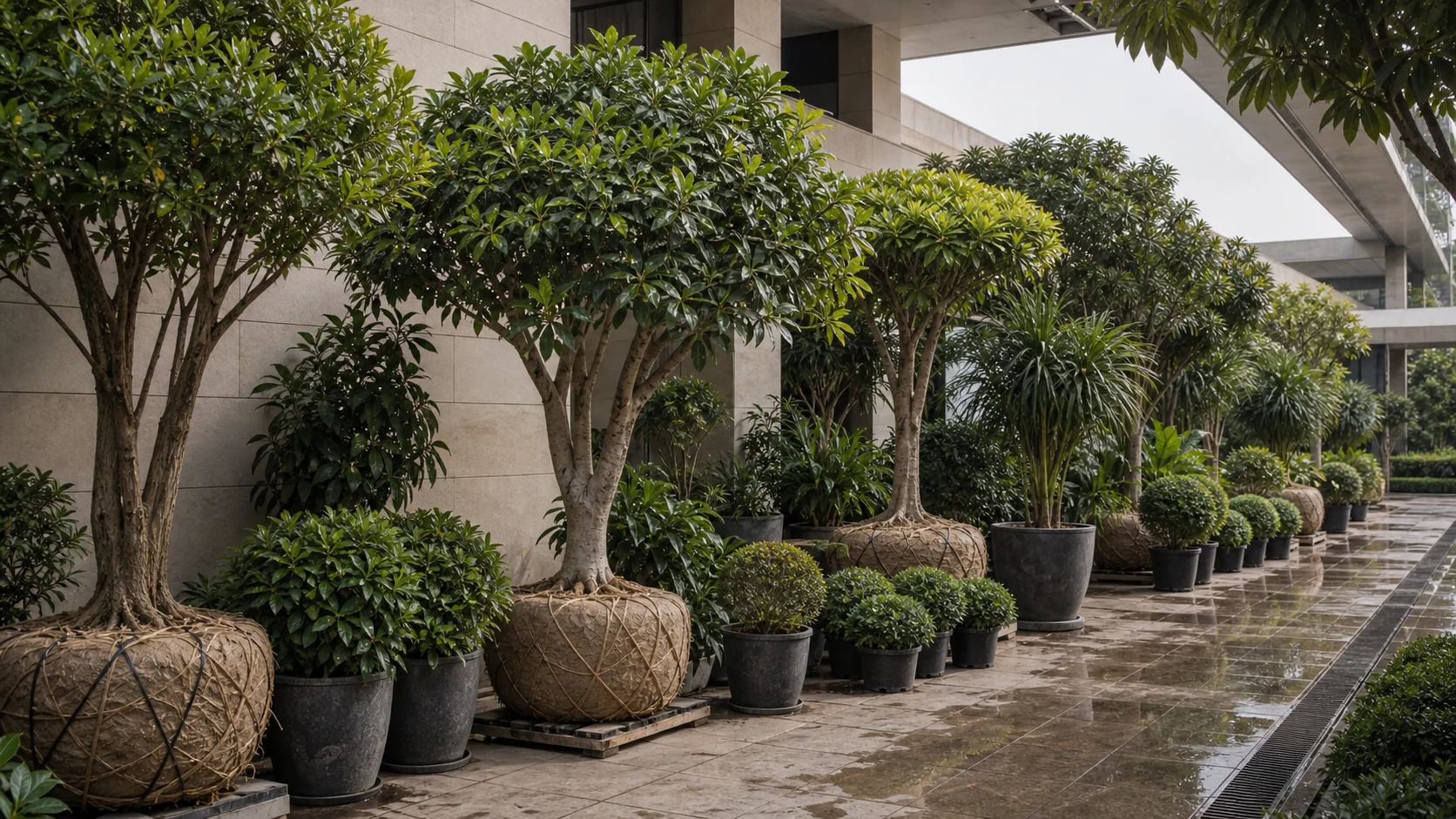
Visual context for placement, scale, handling, and landscape integration.
Section
Where it's used in premium projects
Shrub-form crape myrtle lines sunny villa drives and tech-campus courts where summer colour and winter bark texture rotate — multi-stem habit reads informal-modern. Cross-specify with bonsai form only when training intent differs on the same masterplan.
Section
Climate & site suitability in India
Sun prevents mildew dominance — humid shade under trees fails the flower brief. Deciduous winter exposes exfoliating bark — design lighting for off-season interest. Distinct keyword and form from bonsai-trained product pages.
Section
Sourcing & acclimatisation
Match flower colour across groups — mixed lavender and pink reads unintentional. [Unverified: India multi-stem heights.]
Section
Installation (planting, soil, drainage)
Sun beds only; space stems for airflow. Stake multi-stem groups first year on wind sites. Do not plant as understorey hedge expecting bloom.
Section
Establishment & AMC
Winter prune shapes next summer bloom — AMC schedules prune before spring flush. Mildew: airflow and targeted fungicide per label in humid weeks, not more nitrogen. Link maintenance docs to bonsai form only when crews handle both shapes.
Section
Cost drivers
Explore
Related
Related
Related links
Services, segments, cost, and proof.
- Softscape & horticulture
- Irrigation & water management
- Landscape maintenance (AMC)
- Hotel & resort landscaping
- Luxury resort & spa landscaping
- Mall & retail landscaping
- Corporate campus landscaping
- Projects
- Commercial landscaping cost guide
- Pricing drivers (imported trees)
- Import compliance workflow
- Request a site assessment
- How is the shrub form different from the bonsai form?
- Shrub form is multi-stem informal flowering structure; bonsai form is trained compact — see the dedicated bonsai page for that product line.
- When does crape myrtle bloom in India?
- Summer on new wood — winter prune timing shapes the next bloom wave.
- Why is mildew a concern?
- Humid shaded air coats leaves — full sun beds and airflow reduce impact; do not plant under dense canopy on coasts.
- What is exfoliating bark value?
- Winter deciduous display shows patchy bark — uplight stems in design for off-season interest.
- Does shrub crape myrtle need heavy water?
- Moderate — established plants tolerate dry summers; overwatering in shade increases mildew, not flowers.
- What import paperwork applies?
- Live imports need phytosanitary and quarantine inspection (informational, not legal advice).
- How should shrub-form BOQs be priced?
- Match stem count, colour cultivar, sun-bed prep, and winter prune AMC — distinct from bonsai training quotes.