
Crape myrtle (trained)
Crape myrtle — trained specimen (Lagerstroemia indica)
Trained Lagerstroemia indica is specified for smooth sinewy mottled exfoliating bark and a muscular sculpted trunk — plus long summer flower — as a courtyard bonsai or niwaki specimen where the trunk line and bark plates read at close range, distinct from the shrub form in mass planting.
Spec
At a glance
- Botanical name
- Lagerstroemia indica (trained form)
- Family
- Lythraceae
- Common names
- Crape myrtle, crepe myrtle (trained / bonsai)
- Origin
- China and Korea; widely cultivated
- Plant type
- Deciduous trained ornamental tree
- Mature height
- Often 2–4 m in trained courtyard scale
- Trunk / form
- Muscular sinewy trunk; smooth mottled exfoliating bark; niwaki/bonsai structure
- Crown spread
- Compact — trained for courtyard proportion
- Growth rate
- Moderate — structure is pruning-driven
- Light
- Full sun required for flower and bark character
- Water needs
- Moderate; dislikes waterlogged roots
- India climate suitability
- Warm temperate to tropical India — courtyards, formal pots, sunny terraces
- Cold/heat & salt/wind tolerance
- Heat-tolerant; powdery mildew in humid shade; frost-sensitive in north hills
- Typical supply size
- Pre-trained trunk specimens 1.5–3 m [Unverified]
- Lead time (sourcing)
- [Unverified] bonsai nursery hold for bark maturity
- Install considerations
- Protect exfoliating bark; pot or pit drainage; sun exposure non-negotiable
- Maintenance level
- High — skilled pruning, mildew watch, flower tidy
- Cautions
- Deciduous bare season; powdery mildew in humidity; trained form degrades without skilled AMC
Gallery
Specimen visual guide
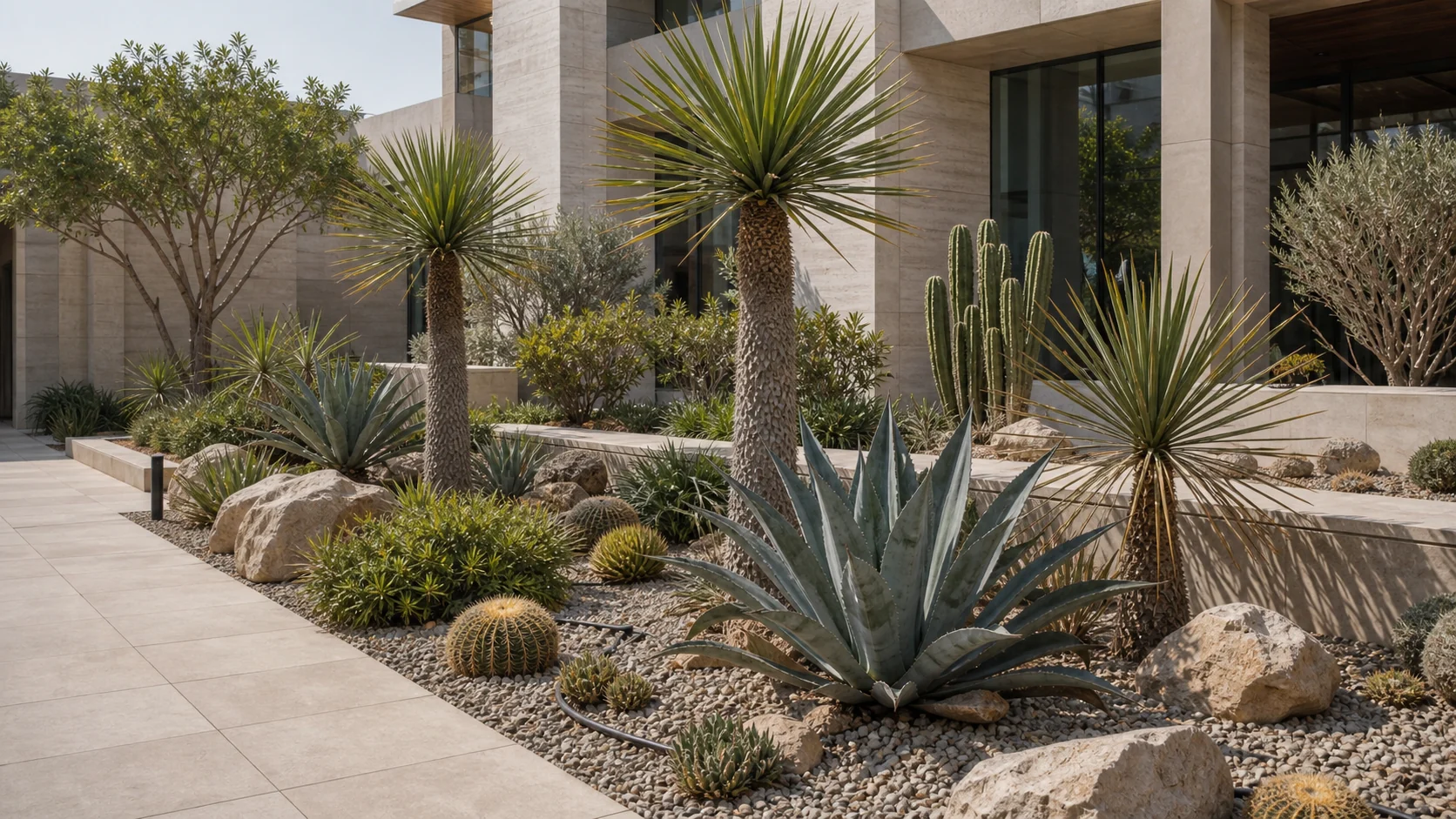
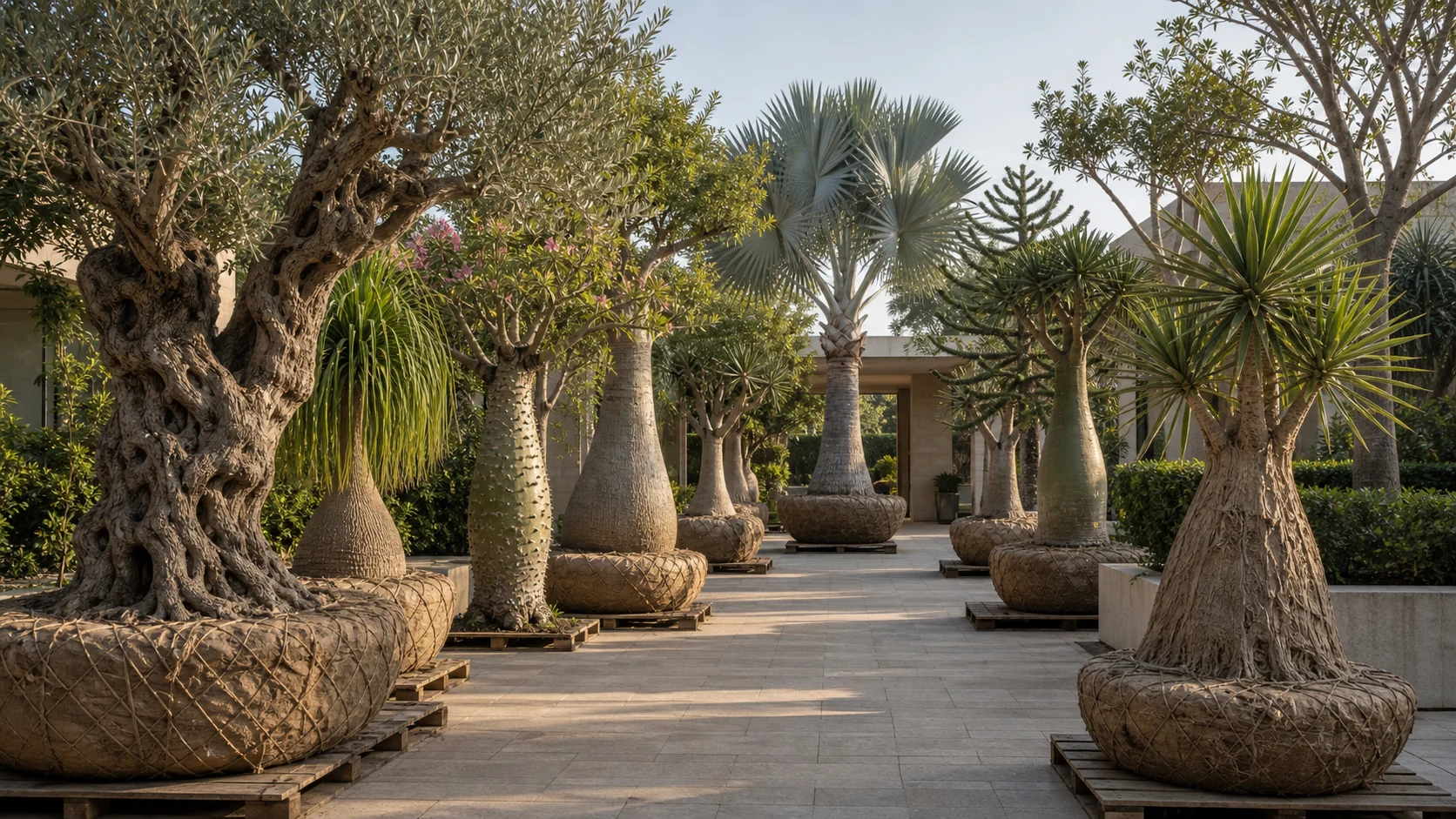
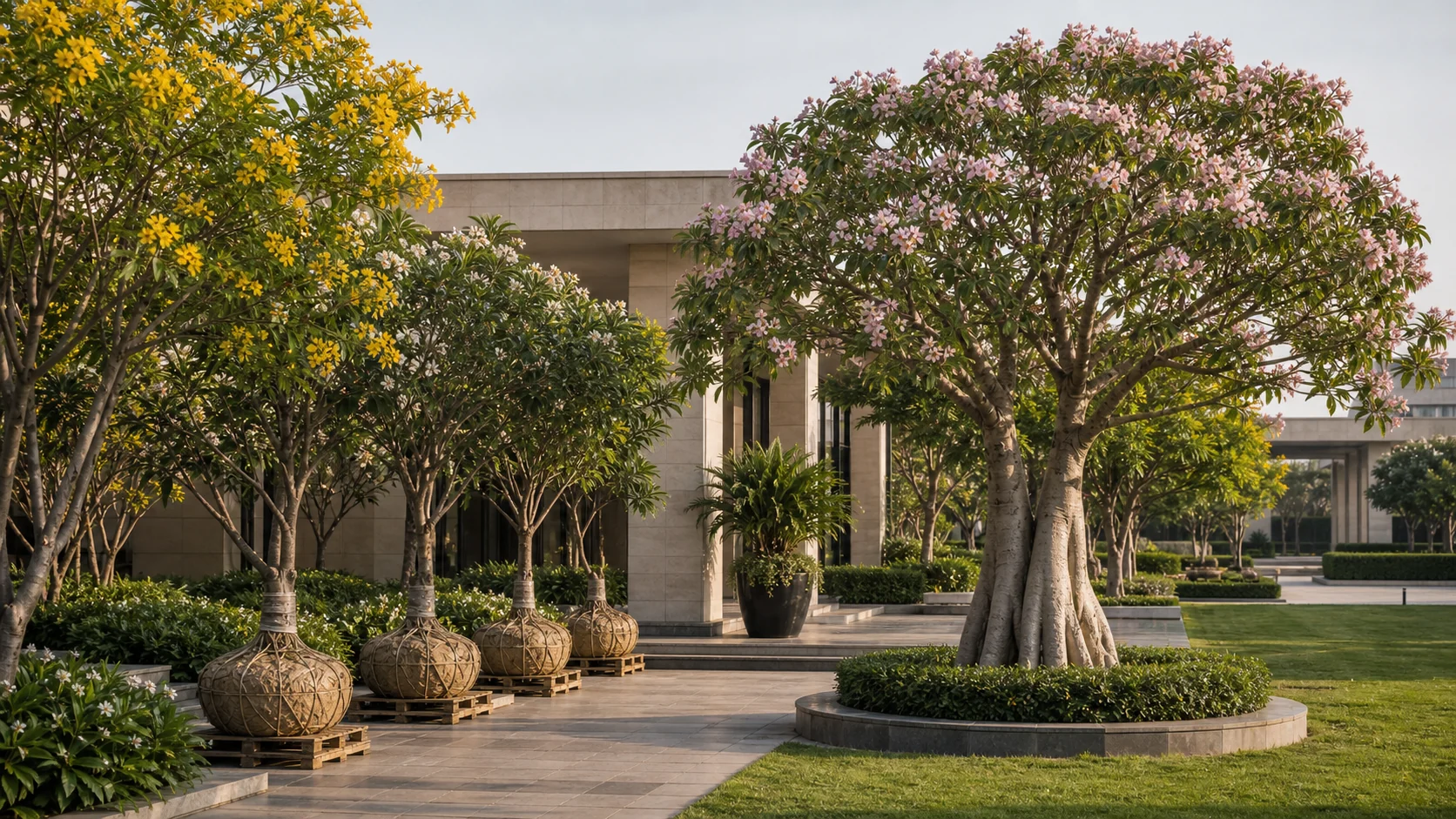
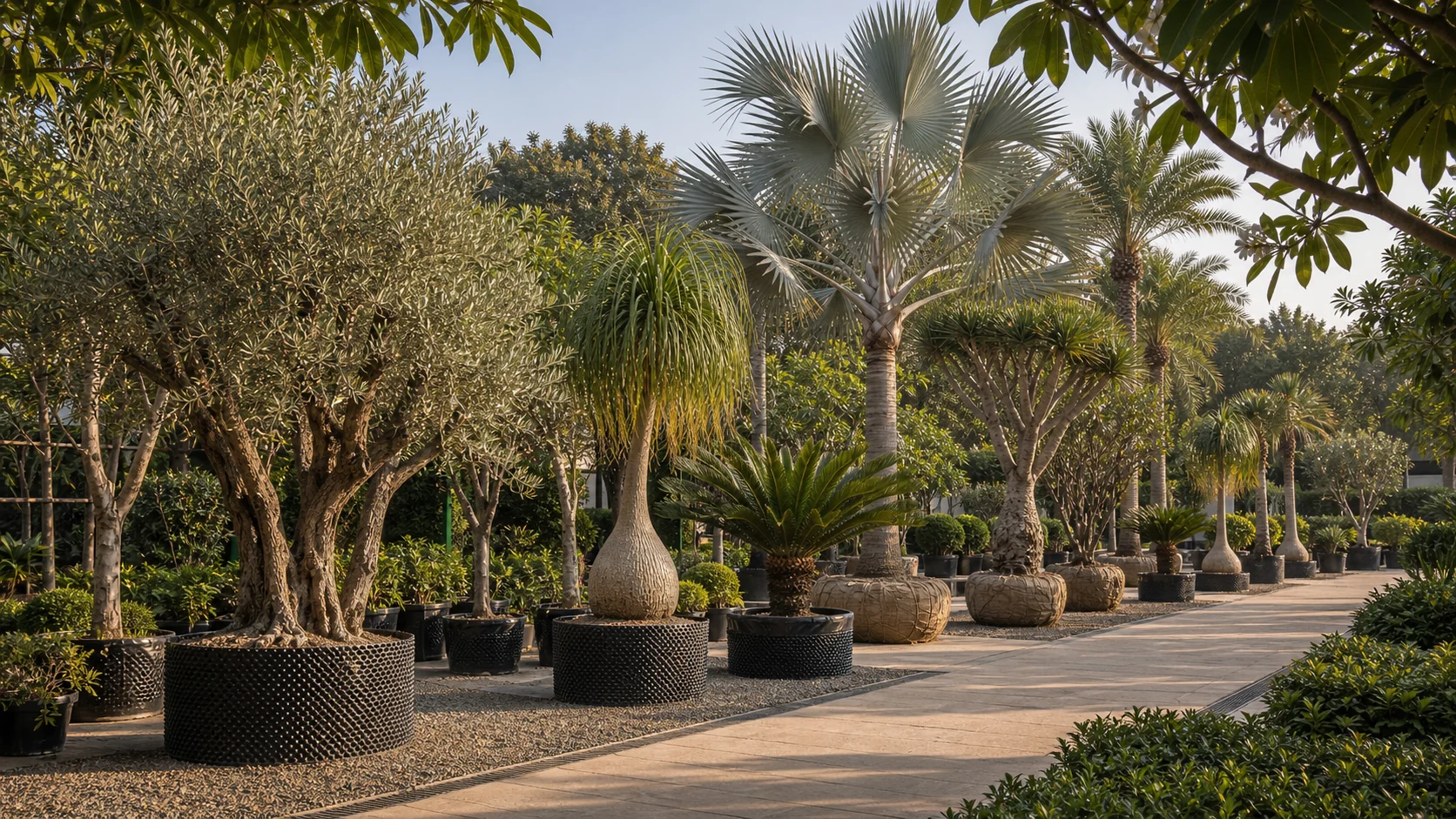
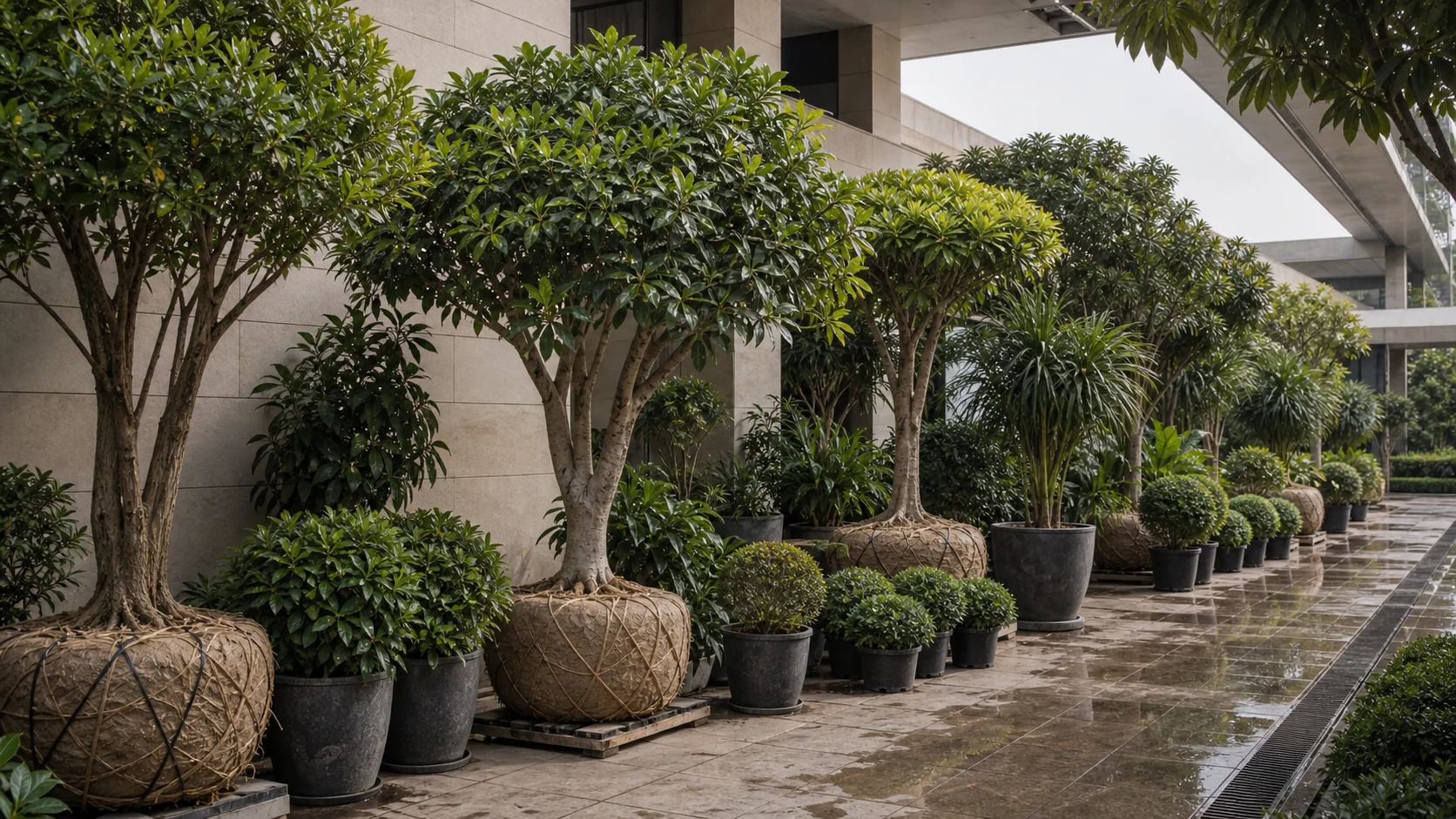
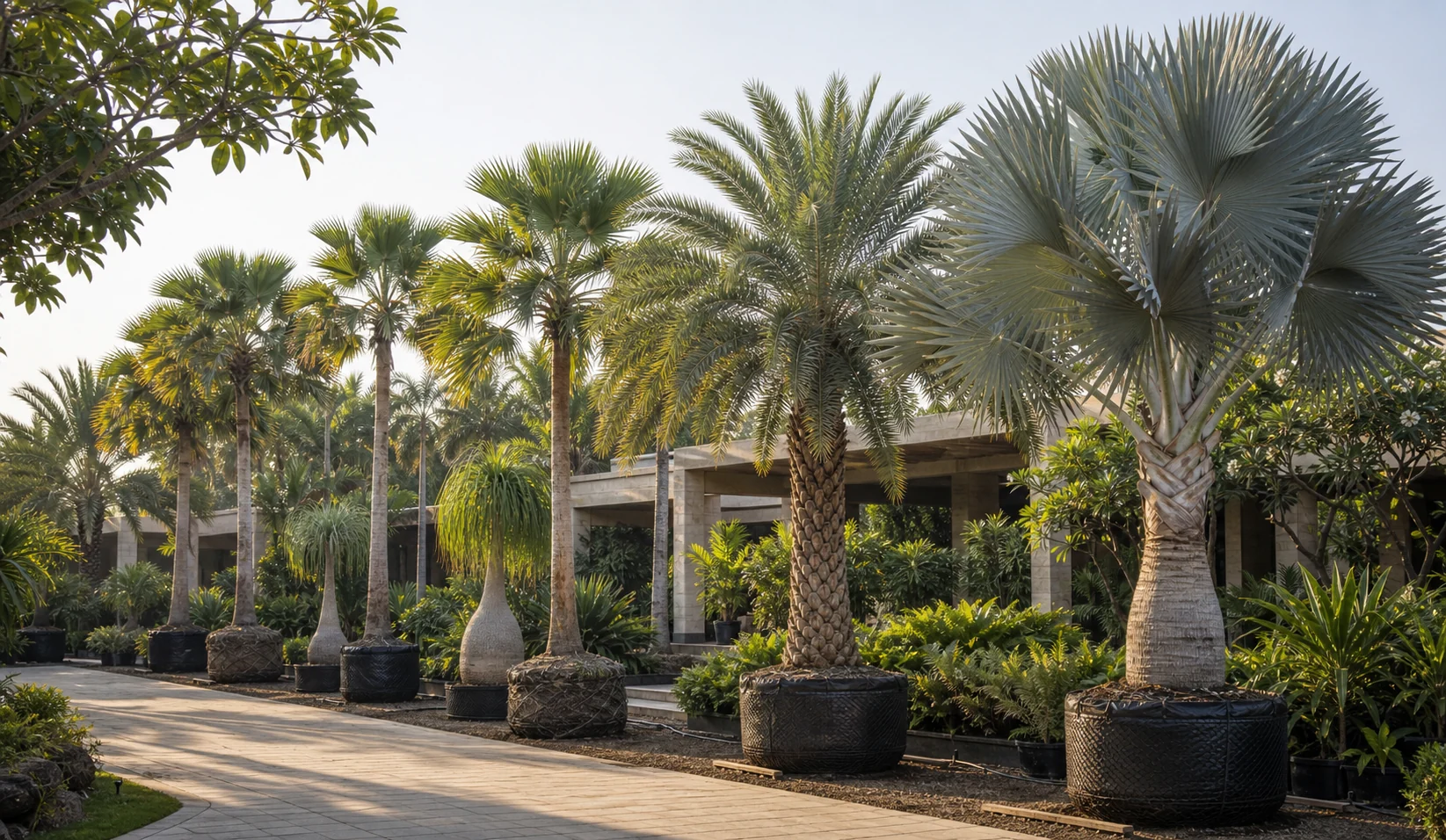
Visual context for placement, scale, handling, and landscape integration.
Section
Where it's used in premium projects
Trained crape myrtle anchors formal courtyards, hotel arrival pots, and niwaki terraces where muscular bark trunk and summer flower share the brief at pedestrian scale. The trunk is pruned architecture — sinewy movement and mottled plates — not wild forest form. Cross-link maintenance scope to shrub-form Lagerstroemia on the same campus only where both appear; trained specimens need different AMC.
Section
Climate & site suitability in India
Full sun courtyards in warm metros — Delhi walled gardens with winter protection, Bangalore sunny courts, Hyderabad formal entries. Powdery mildew rises in humid shade — do not tuck trained trunks under deep overhang without air movement. Deciduous winter bareness is part of the bark-show season — plan uplighting on trunk sculpture.
Section
Sourcing & acclimatisation
Buy bark maturity and trunk movement — young whips lack sinewy character. [Unverified: India bonsai nursery trained indica lines.] Document whether specimen is field-trained or container niwaki; transplant shock opens mildew entry on stressed bark.
Section
Installation (pit, soil, drainage, bracing)
Courtyard pits or large formal pots with drainage — waterlogging kills trained roots faster than drought stress. Pad slings away from exfoliating plates. Minimal staking — trunk movement is designed. Protect bark from construction rub against courtyard finishes.
Section
Establishment & AMC
AMC must name skilled structural prune cadence — generic hedge crews destroy niwaki value in one visit. Monitor powdery mildew on humid weeks; flower deadhead on formal sites. Winter deciduous phase showcases bark — schedule photography and guest messaging accordingly.
Section
Cost drivers
Explore
Related
Related
Related links
Services, segments, cost, and proof.
- Softscape & horticulture
- Irrigation & water management
- Landscape maintenance (AMC)
- Hotel & resort landscaping
- Luxury resort & spa landscaping
- Mall & retail landscaping
- Corporate campus landscaping
- Projects
- Commercial landscaping cost guide
- Pricing drivers (imported trees)
- Import compliance workflow
- Request a site assessment
- What makes the trained crape myrtle trunk special?
- Smooth sinewy movement with mottled exfoliating bark plates — pruned muscular structure intended for courtyard viewing distance.
- How does bonsai form differ from the shrub entry?
- Same species — trained form is single-trunk niwaki/bonsai with bark-led structure; shrub form is mass multi-stem colour planting — different AMC and BOQ.
- What maintenance does trained form require?
- Skilled structural prune cadence, mildew monitoring, sun management, and flower tidy — generic landscape crews often damage bark architecture.
- Does powdery mildew affect bark quality?
- Humid shaded sites trigger mildew on leaves and stress bark — full sun and air movement are specification items.
- Is deciduous bare season a problem at hotel entries?
- Winter leafless phase exposes bark sculpture — programme uplighting and messaging; it is feature season for trunk, not downtime.
- Are live Lagerstroemia imports quarantine-heavy?
- Container trained stock may be domestic — imports still need phytosanitary clearance when sourced offshore (informational, not legal advice).
- How should trained crape myrtle BOQs be compared?
- Match trunk movement photos, bark maturity, craftsman AMC hours, and pot/pit drainage — not shrub-form per-plant pricing.