
African baobab
African baobab (Adansonia digitata)
Adansonia digitata is specified when the brief is a single sculptural landmark — the massively swollen, water-storing trunk is the entire design statement. Baobabs are naturalised at historic sites such as Mandu and Kachchh, so Indian projects can reference authentic local presence while still planning for extreme slow growth, soft wood, and drainage-critical siting.
Spec
At a glance
- Botanical name
- Adansonia digitata
- Family
- Malvaceae (Baobabaceae)
- Common names
- African baobab, upside-down tree
- Origin
- Mainland Africa; naturalised in India (e.g. Mandu, Kachchh)
- Plant type
- Deciduous caudiciform landmark tree
- Mature height
- Often 15–25 m; extremely long-lived
- Trunk / form
- Massively swollen water-storing trunk; sparse upright branches; bare deciduous silhouette
- Crown spread
- Wide flat-topped crown when mature; long bare period when leafless
- Growth rate
- Extremely slow — decades to read as a monument
- Light
- Full sun; open sky for crown development
- Water needs
- Drought-adapted; rot if chronically wet or cold
- India climate suitability
- Dry tropical and semi-arid India (Gujarat, Rajasthan, Deccan); poor in waterlogged or cool humid coasts
- Cold/heat & salt/wind tolerance
- Heat- and drought-hardy; frost-sensitive; soft water-filled wood vulnerable to storm damage when young
- Typical supply size
- Large field specimens 3–8 m+ trunk height class [Unverified]
- Lead time (sourcing)
- [Unverified] multi-year hold for mature swollen-trunk grades
- Install considerations
- Soft trunk wood; engineered drainage mandatory; crane access; minimal root disturbance
- Maintenance level
- Low once established — mainly seasonal litter and structural inspection
- Cautions
- Caudex rot in wet/cold soils; very costly large transplants; long leafless period
Gallery
Specimen visual guide
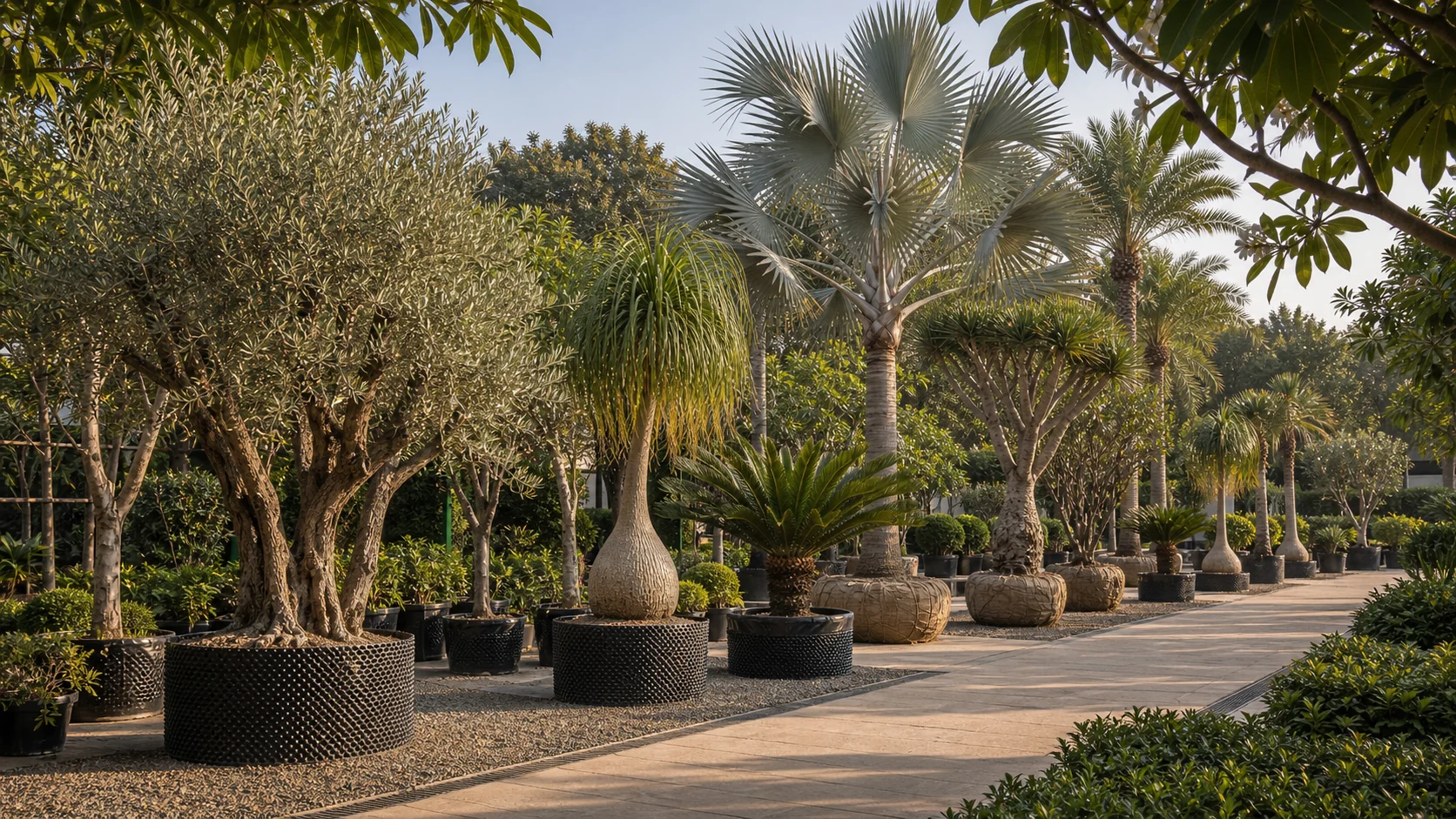
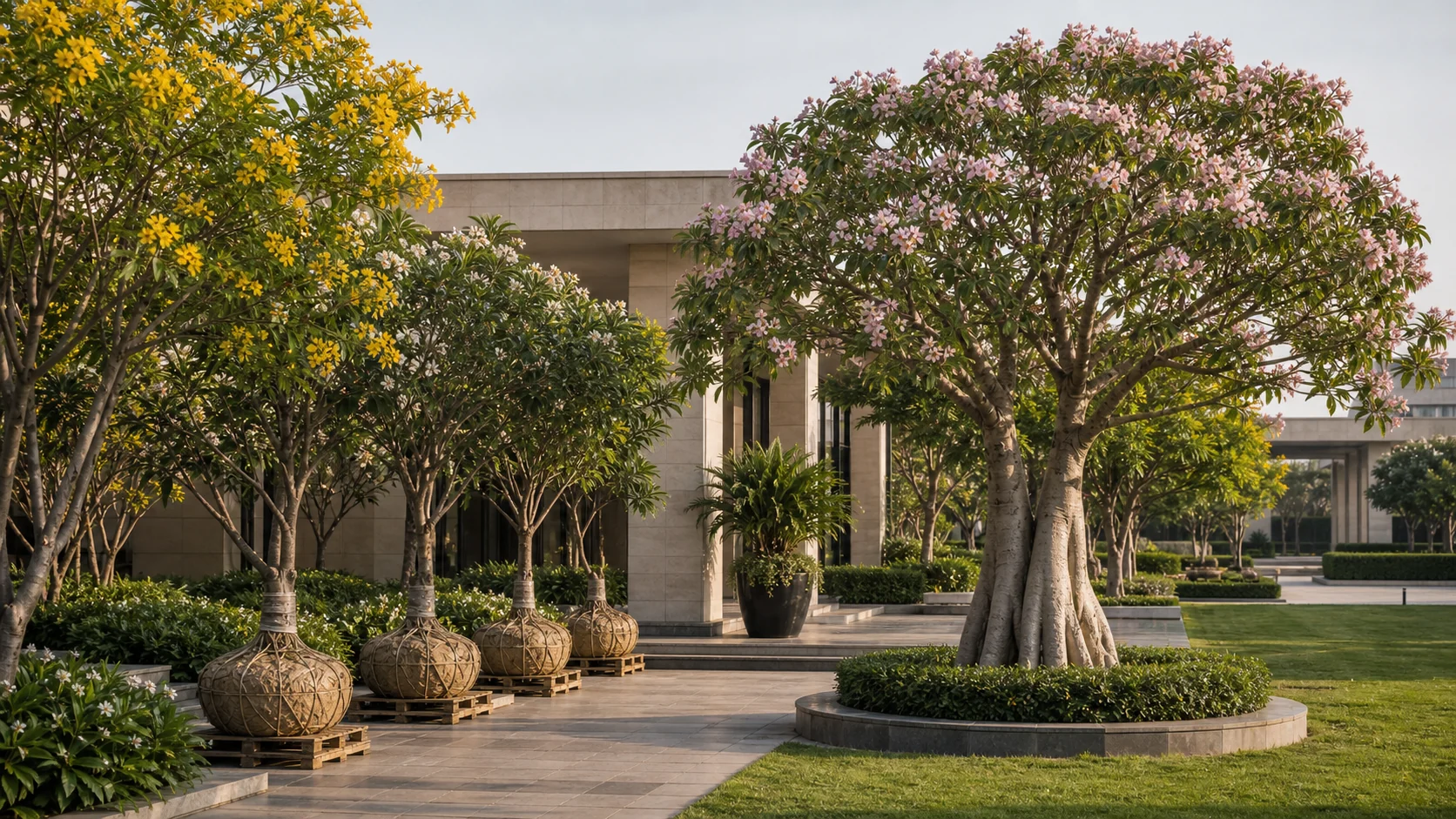
Visual context for placement, scale, handling, and landscape integration.
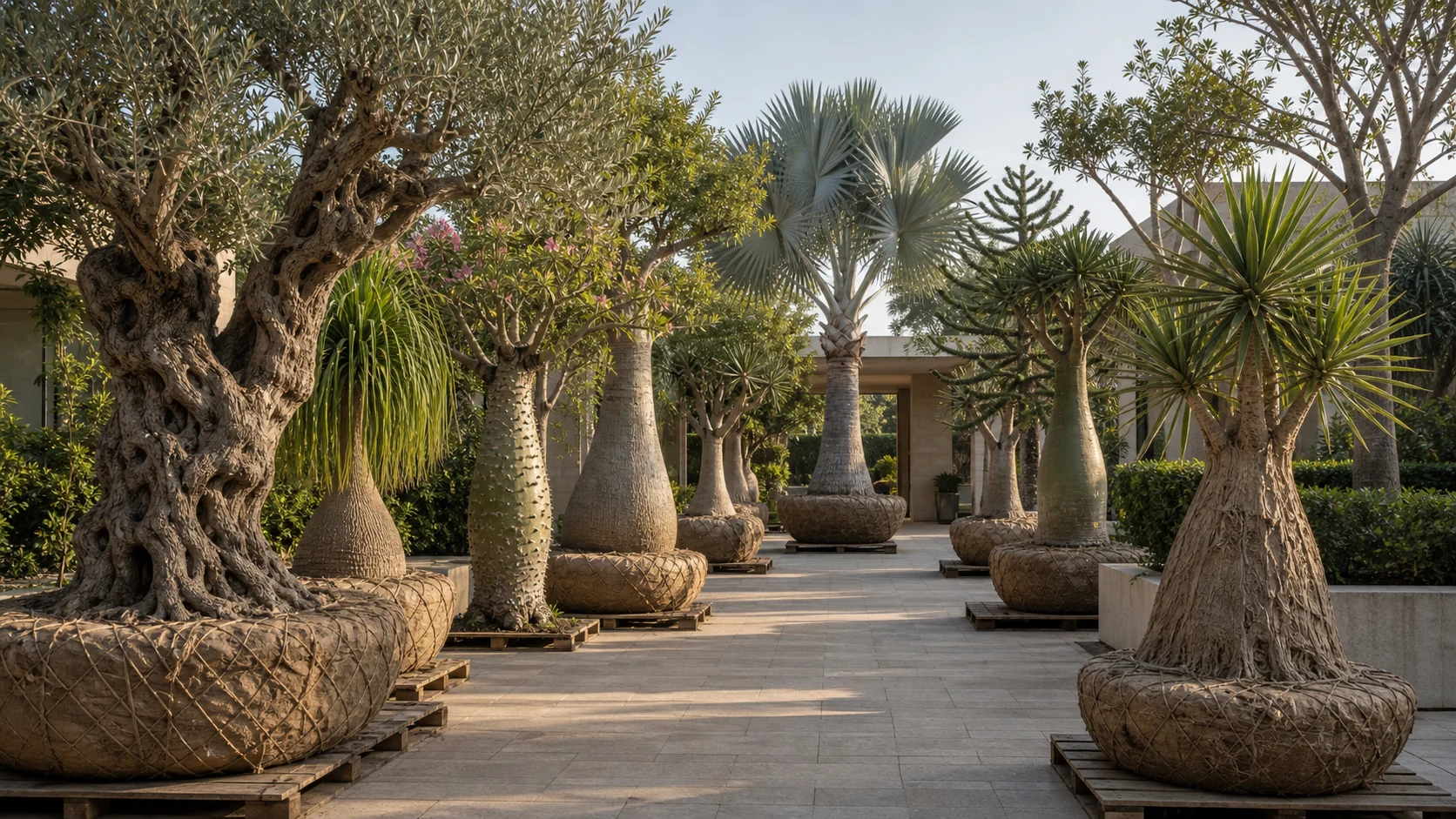
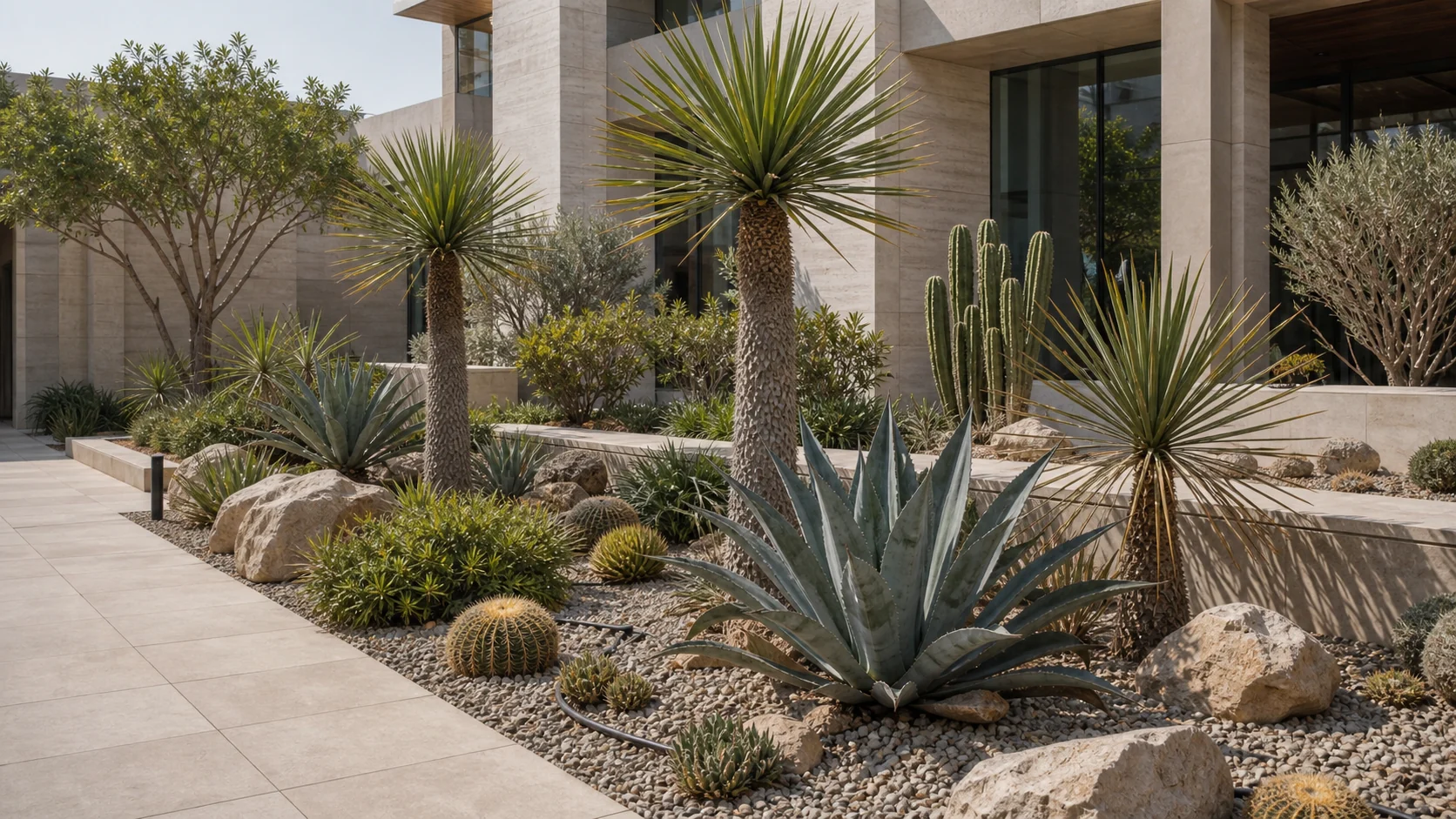
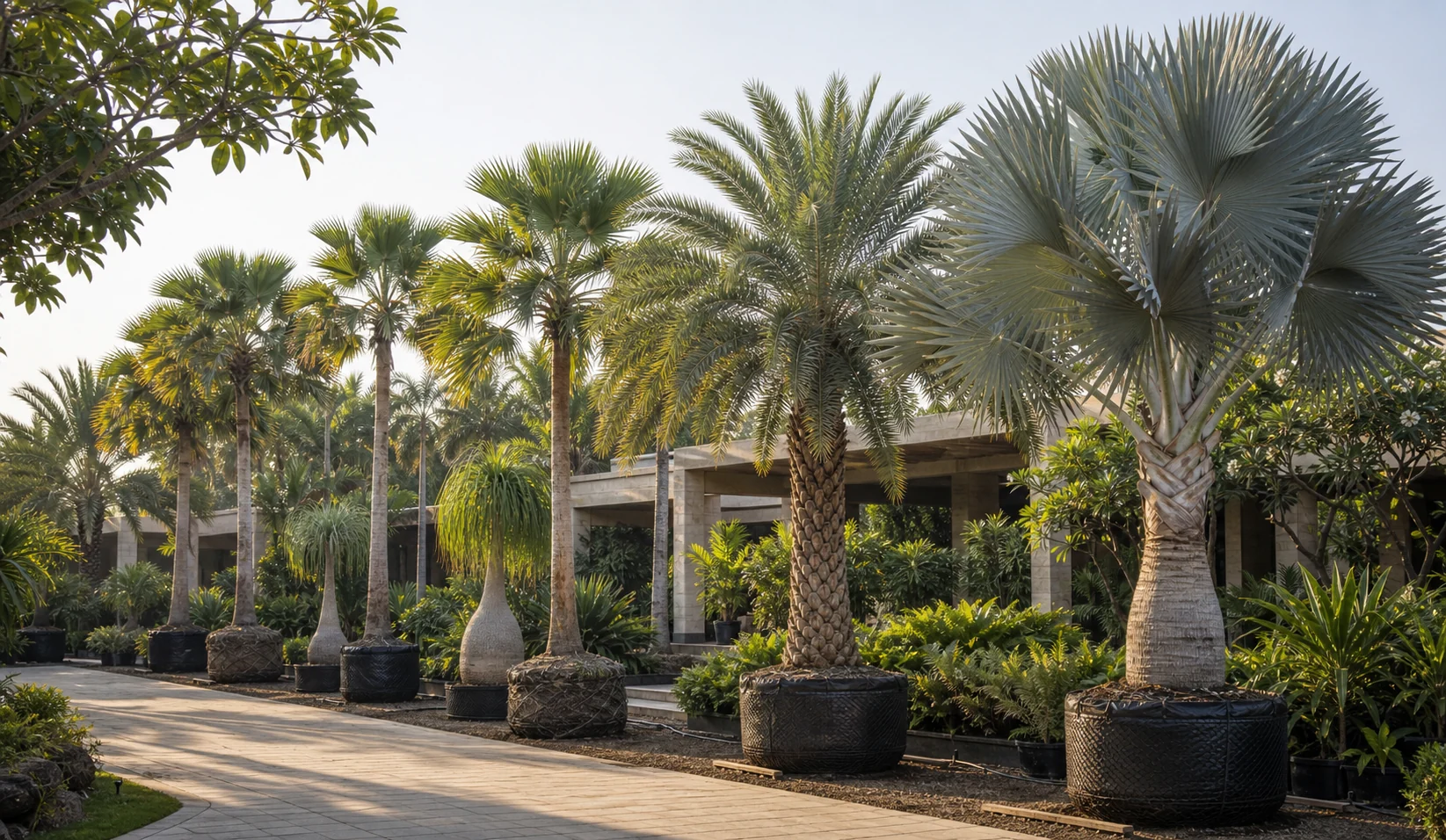
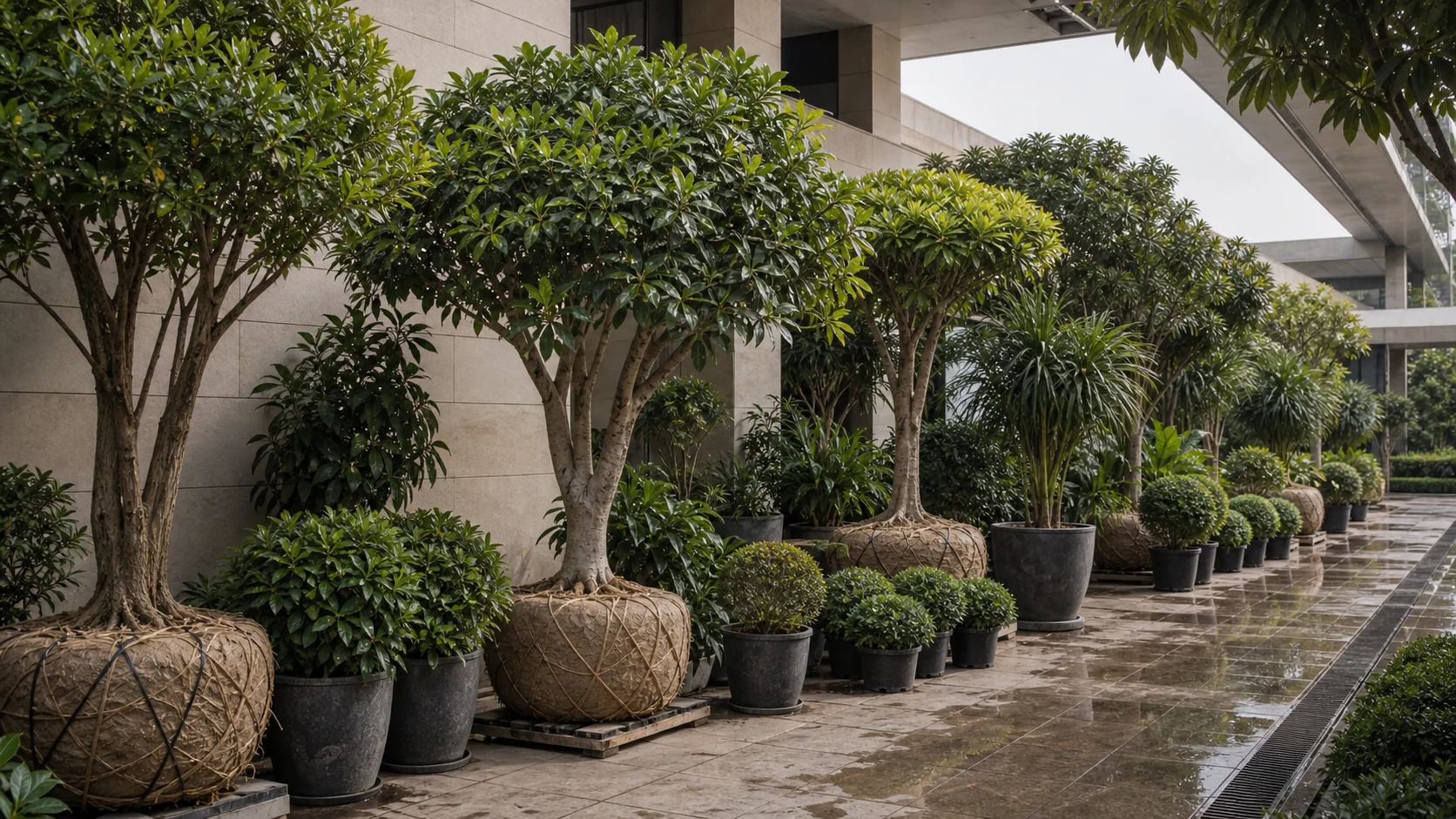
Section
Where it's used in premium projects
Landscape architects place African baobab where one trunk must carry the arrival — estate drives, resort masterplan nodes, institutional forecourts, and heritage-adjacent campuses that can justify a multi-decade silhouette. The swollen trunk reads from hundreds of metres; canopy is secondary. Procurement should BOQ trunk girth, bulbous profile, and provenance narrative — including whether the specimen references India-naturalised stock versus fresh import.
Section
Climate & site suitability in India
It succeeds on free-draining alkaline or sandy soils in Gujarat, Rajasthan, and other dry Deccan microclimates where monsoon water does not pond around the caudex. It fails on heavy clay, coastal waterlogging, and cool humid hills where caudex rot is common. Mandu and Kachchh plantings prove long-term survival is possible in India — but replicate their drainage geometry, not just the species name.
Section
Sourcing & acclimatisation
Large swollen specimens are scarce, slow, and expensive — buyers often wait years for the right trunk profile. Document nursery origin, field age estimate, and whether stock is India-held versus imported. [Unverified: typical domestic holding versus direct African/Madagascan nursery channels for digitata grades.] Hold under open sky so deciduous rhythm and trunk character are visible before crane day.
Section
Installation (pit, soil, drainage, bracing)
Treat the trunk as soft, water-storing tissue — rigging pads must not gouge bark; rootball handling is high-risk on large classes. Pits need engineered drainage layers, no irrigation overspray on the caudex collar, and overflow routes for monsoon storms. Bracing is usually minimal on mature baobabs but plan wind exposure on young transplants until roots anchor.
Section
Establishment & AMC
AMC focuses on dry-season discipline — over-irrigation after install is the primary failure mode. Expect a long bare deciduous window; guest messaging should frame it as seasonal character, not neglect. Inspect for caudex softening, fungal entry at wounds, and storm damage to young branches. Pruning is rare — protect trunk integrity over cosmetic crown shaping.
Section
Cost drivers
Explore
Related
Related
Related links
Services, segments, cost, and proof.
- Softscape & horticulture
- Irrigation & water management
- Landscape maintenance (AMC)
- Hotel & resort landscaping
- Luxury resort & spa landscaping
- Mall & retail landscaping
- Corporate campus landscaping
- Projects
- Commercial landscaping cost guide
- Pricing drivers (imported trees)
- Import compliance workflow
- Request a site assessment
- What makes the African baobab trunk special in landscape design?
- The trunk stores water in soft, massively swollen tissue — it is the sculptural object; branches and leaves are seasonal accents on a multi-decade landmark.
- Can large African baobabs be transplanted in India?
- Large specimens are moved with specialised rigs but remain high-risk and costly because wood is soft and water-filled — budget crane access, drainage engineering, and post-install dry discipline, not just tree cost.
- Are baobabs already growing in India?
- Yes — naturalised and historic plantings exist (e.g. Mandu, Kachchh), which helps provenance storytelling; still verify drainage and species ID on nursery submittals.
- How long is the tree bare each year?
- Deciduous leaf drop can leave a stark silhouette for months in dry-season climates — programme guest-facing photography and lighting for the leafless phase.
- What soil conditions cause caudex rot?
- Chronic moisture, heavy clay, and cool humid microclimates around the trunk collar — engineered drainage and restrained irrigation matter more than fertiliser.
- What quarantine steps apply to imported baobab stock?
- Live Adansonia material entering India follows phytosanitary and plant quarantine pathways — align nursery paperwork with your compliance checklist before shipment (informational, not legal advice).
- How should teams compare baobab quotations?
- Match trunk girth, bulb profile, provenance documentation, crane scope, drainage package, and post-install AMC — not headline per-tree figures alone.