
Silk floss tree (pink)
Silk floss tree / Pink floss (Ceiba speciosa)
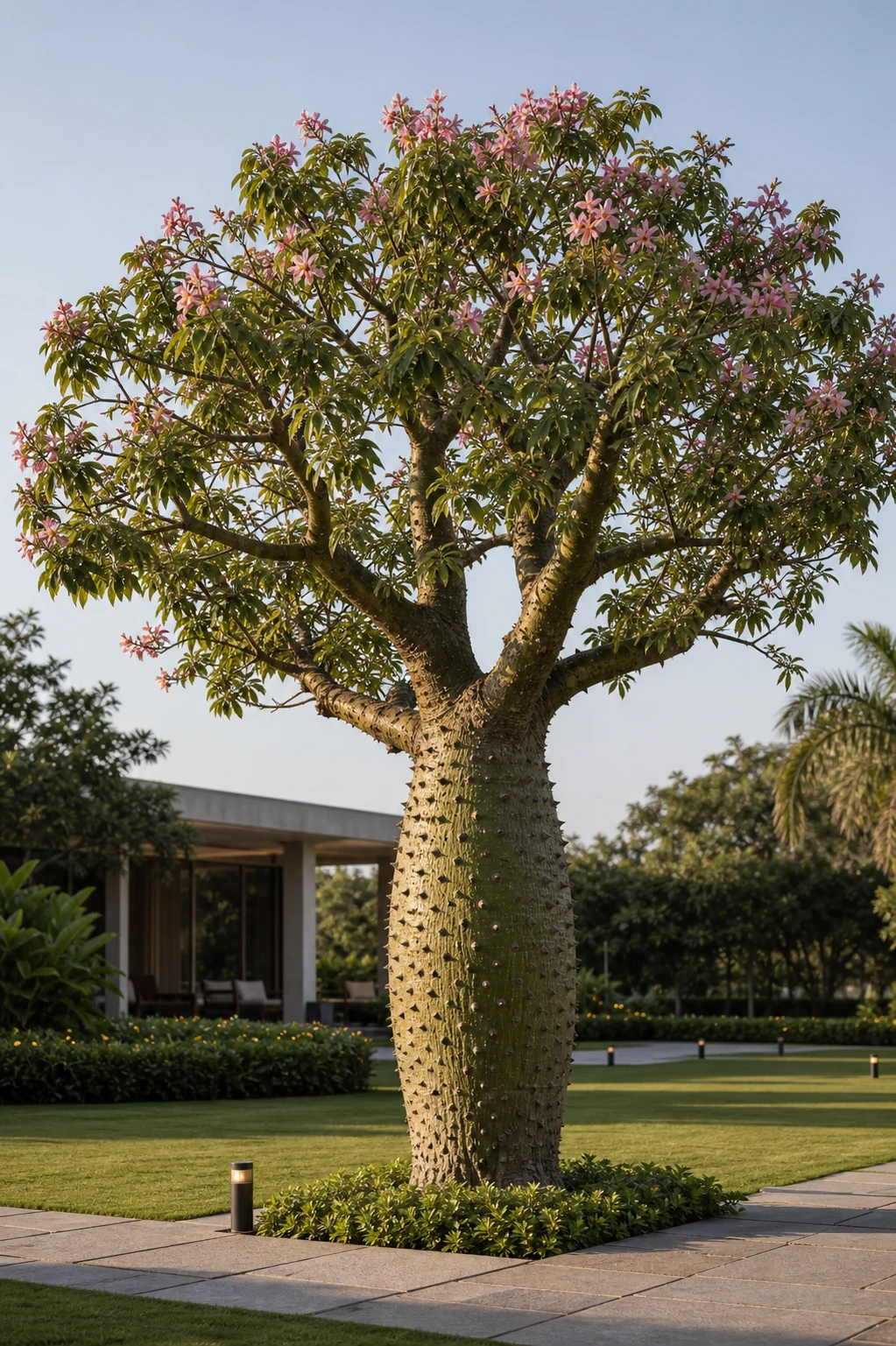
Ceiba speciosa (syn. Chorisia speciosa) pairs a green photosynthetic trunk studded with stout conical thorns and bulging water storage with spectacular pink orchid-like flowers — a dual trunk-and-flower statement for estate and resort avenues where vicious trunk armature demands setback planning from guest paths.
Spec
At a glance
- Botanical name
- Ceiba speciosa (syn. Chorisia speciosa)
- Family
- Malvaceae
- Common names
- Silk floss tree, pink floss silk tree, palo borracho
- Origin
- Subtropical South America (Argentina, Brazil, Paraguay)
- Plant type
- Deciduous flowering tree with thorny trunk
- Mature height
- Often 12–25 m
- Trunk / form
- Green photosynthetic trunk with stout conical thorns; swollen water-storing base
- Crown spread
- Wide when mature — plan overhead and thorn setbacks
- Growth rate
- Fast in warm irrigated sites
- Light
- Full sun for flowering
- Water needs
- Drought-tolerant at trunk; moderate for peak flower
- India climate suitability
- Warm dry to semi-humid India — estates, resort avenues, large pads
- Cold/heat & salt/wind tolerance
- Heat-hardy; frost-sensitive; thorny trunks hazardous in tight courts
- Typical supply size
- Container or field 3–8 m with visible thorn trunk [Unverified]
- Lead time (sourcing)
- [Unverified] pink-flowering Ceiba grades versus white Chorisia mix-ups
- Install considerations
- Thorn PPE; guest setbacks; floss-pod litter zones; crane on large specimens
- Maintenance level
- Moderate — pod litter, thorn path audits, structural prune
- Cautions
- Vicious trunk thorns — contact and eye injury risk; large size; floss-pod litter
Supply
Latest import activity
- Imported on
- 21 Jun 2026
- Source
- Tall Tree Nursery EU (sample)
- Availability
- On request
- Lot
- Chorisia speciosa — flowering trunk form
Gallery
Specimen visual guide
Visual context for placement, scale, handling, and landscape integration.
Section
Where it's used in premium projects
Pink silk floss tree anchors dramatic estate drives and resort avenues where both thorny green trunk sculpture and seasonal pink bloom matter. The trunk is photosynthetic — bark colour and thorn density are year-round design elements, not just flower-week props. Set back from walkways, valet lanes, and pool decks — thorns are structural, not decorative. Cross-check BOQ against white-flowering Chorisia insignis — suppliers conflate trade names.
Section
Climate & site suitability in India
Warm metros with room for spread — Hyderabad estates, Pune campus edges, and large Gujarat resort pads. Needs sun for pink flower performance. Thorn hazards intensify in tight courtyards — this is an estate-scale species. Monsoon drainage at swollen base still matters despite drought trunk marketing.
Section
Sourcing & acclimatisation
Verify pink flower clone and thorn trunk on nursery rows — white Chorisia insignis is the common swap. [Unverified: India nursery Ceiba speciosa pink clone verification.] Hold in full sun; shaded storage reduces flower bud set and thorn colour contrast.
Section
Installation (pit, soil, drainage, bracing)
Crew PPE mandatory — conical trunk thorns penetrate standard gloves. Plant centre must sit outside guest fall zones and maintenance paths. Large specimens need crane pads; protect green trunk skin from strap tears that invite decay. Floss-pod drop zones away from bare-foot programming.
Section
Establishment & AMC
AMC includes annual thorn-path audit as crown lowers on maturing trees, pod litter sweep after flowering, and structural prune for wind — wood is softer than it looks. Irrigation supports flower but caudex base still rots if ponded through monsoon.
Section
Cost drivers
Explore
Related
Related
Related links
Services, segments, cost, and proof.
- Softscape & horticulture
- Irrigation & water management
- Landscape maintenance (AMC)
- Hotel & resort landscaping
- Luxury resort & spa landscaping
- Mall & retail landscaping
- Corporate campus landscaping
- Projects
- Commercial landscaping cost guide
- Pricing drivers (imported trees)
- Import compliance workflow
- Request a site assessment
- Why are silk floss trunk thorns a design issue?
- Stout conical thorns cover the green photosynthetic trunk — contact and eye injury are real; setbacks from paths and pools are specification items, not suggestions.
- When does pink flowering occur in India?
- Typically late dry season into warm months after leaf drop — exact timing varies by clone and site; do not promise bloom week without local nursery history.
- How does pink Ceiba differ from white Chorisia insignis?
- Pink orchid-like flowers on Ceiba speciosa versus creamy-white/yellow on insignis with a more bottle-swollen trunk — verify clone on submittals to avoid swaps.
- Is the green trunk functional?
- Yes — photosynthetic bark contributes to drought survival alongside swollen water storage; thorns remain even when leaves drop.
- What litter follows flowering?
- Silk floss pods and fine fibre litter — programme sweep on guest paving and pool surrounds after flower season.
- What compliance applies to South American Ceiba imports?
- Live trees require phytosanitary documentation and Indian quarantine inspection — schedule around monsoon logistics (informational, not legal advice).
- How should pink floss tree quotes be compared?
- Match flower clone ID, thorn-trunk caliper, setback compliance, pod-litter AMC, and crane scope — not generic flowering tree pricing.