
Queensland bottle tree
Queensland bottle tree (Brachychiton rupestris)
Brachychiton rupestris develops a dramatically bottle-swollen water-storing trunk — semi-deciduous, very drought-hardy, and notable among caudiciform trees for transplanting well at large size. It is the instant bottle-trunk statement for dry Indian resort pads when designers want sculptural mass without baobab decades or soft-wood baobab risk.
Spec
At a glance
- Botanical name
- Brachychiton rupestris
- Family
- Malvaceae
- Common names
- Queensland bottle tree, narrow-leaved bottle tree
- Origin
- Queensland and New South Wales, Australia
- Plant type
- Semi-deciduous bottle-trunk tree
- Mature height
- Often 10–20 m; modest canopy relative to trunk
- Trunk / form
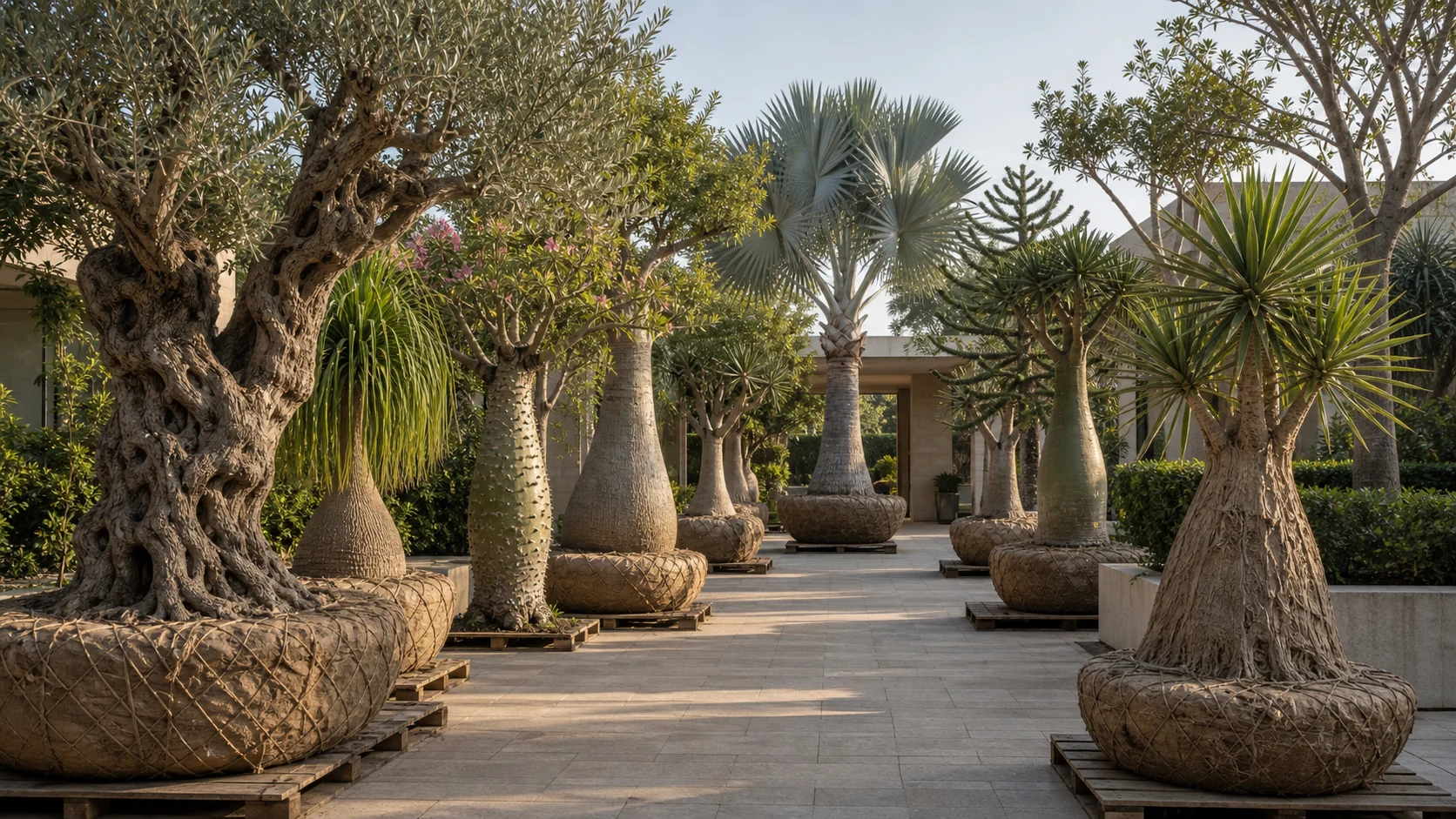
- Dramatically swollen bottle trunk storing water; small canopy above
- Crown spread
- Moderate — trunk dominates visual mass
- Growth rate
- Slow from seed; faster when bought at bottle size
- Light
- Full sun
- Water needs
- Very drought-hardy once established; drainage still required
- India climate suitability
- Dry tropical and semi-arid India with drainage; widely used in arid resort landscaping
- Cold/heat & salt/wind tolerance
- Heat- and drought-hardy; light frost tolerance; wind-stable bottle trunks when mature
- Typical supply size
- Field bottle specimens 2–6 m+ — popular instant feature class [Unverified]
- Lead time (sourcing)
- [Unverified] Australia or India-held bottle grades
- Install considerations
- Large transplants feasible — still protect bottle bark; drainage; pod litter zones
- Maintenance level
- Low to moderate — boat-shaped seed pods and irritant hairs
- Cautions
- Messy boat pods with irritant fibres inside; slow from seed; modest canopy vs trunk promise
Gallery
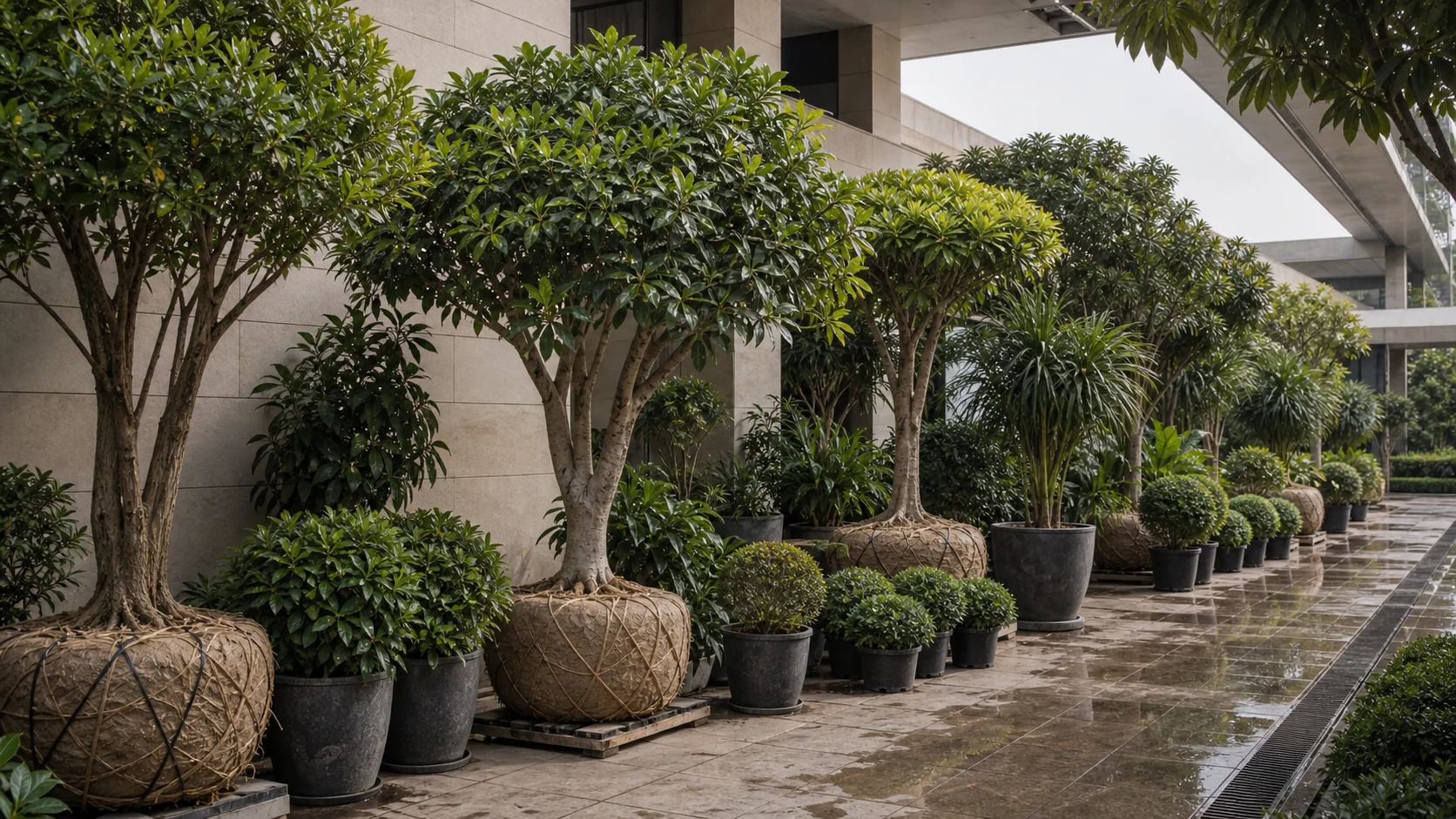
Specimen visual guide
Visual context for placement, scale, handling, and landscape integration.
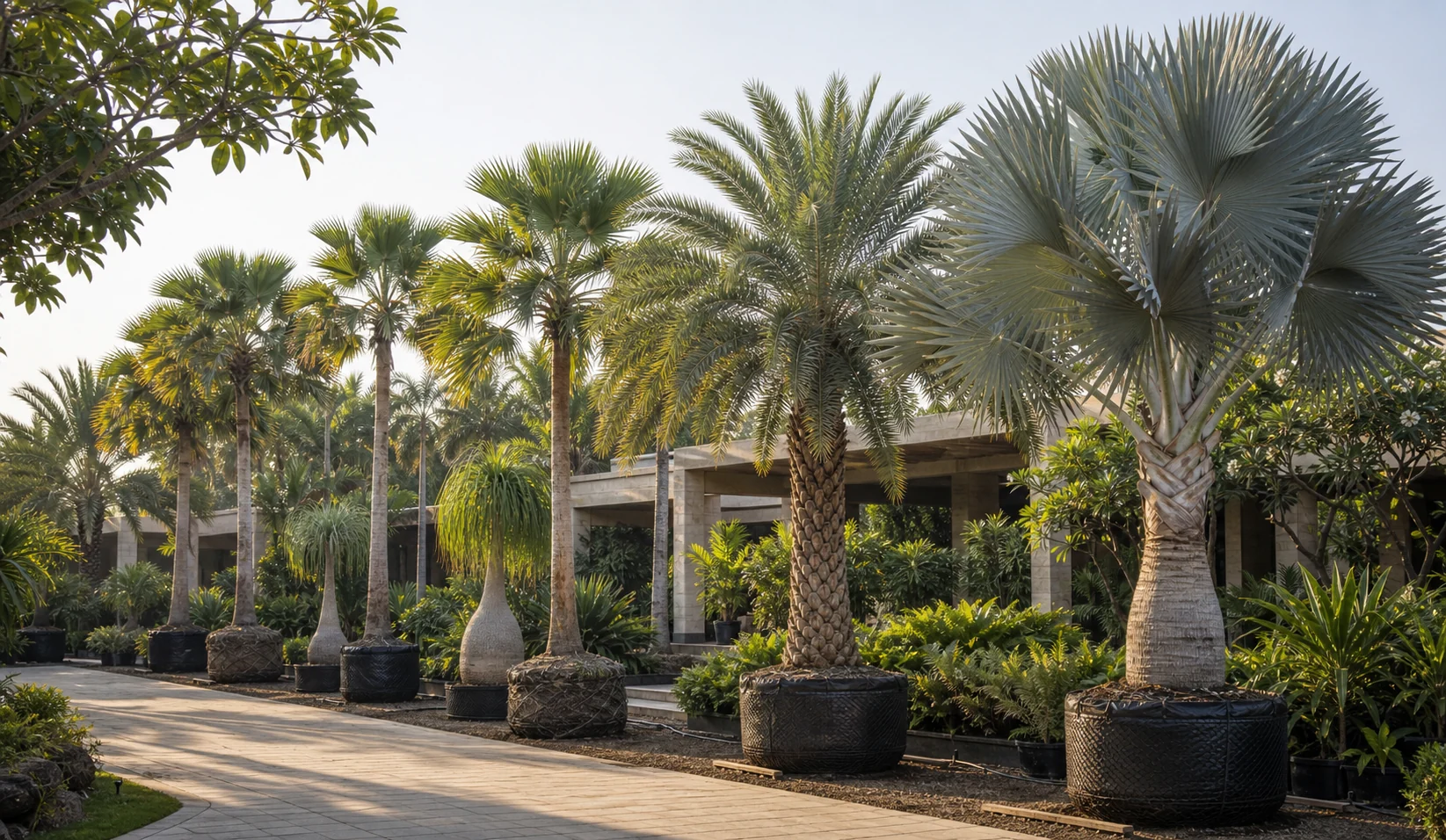
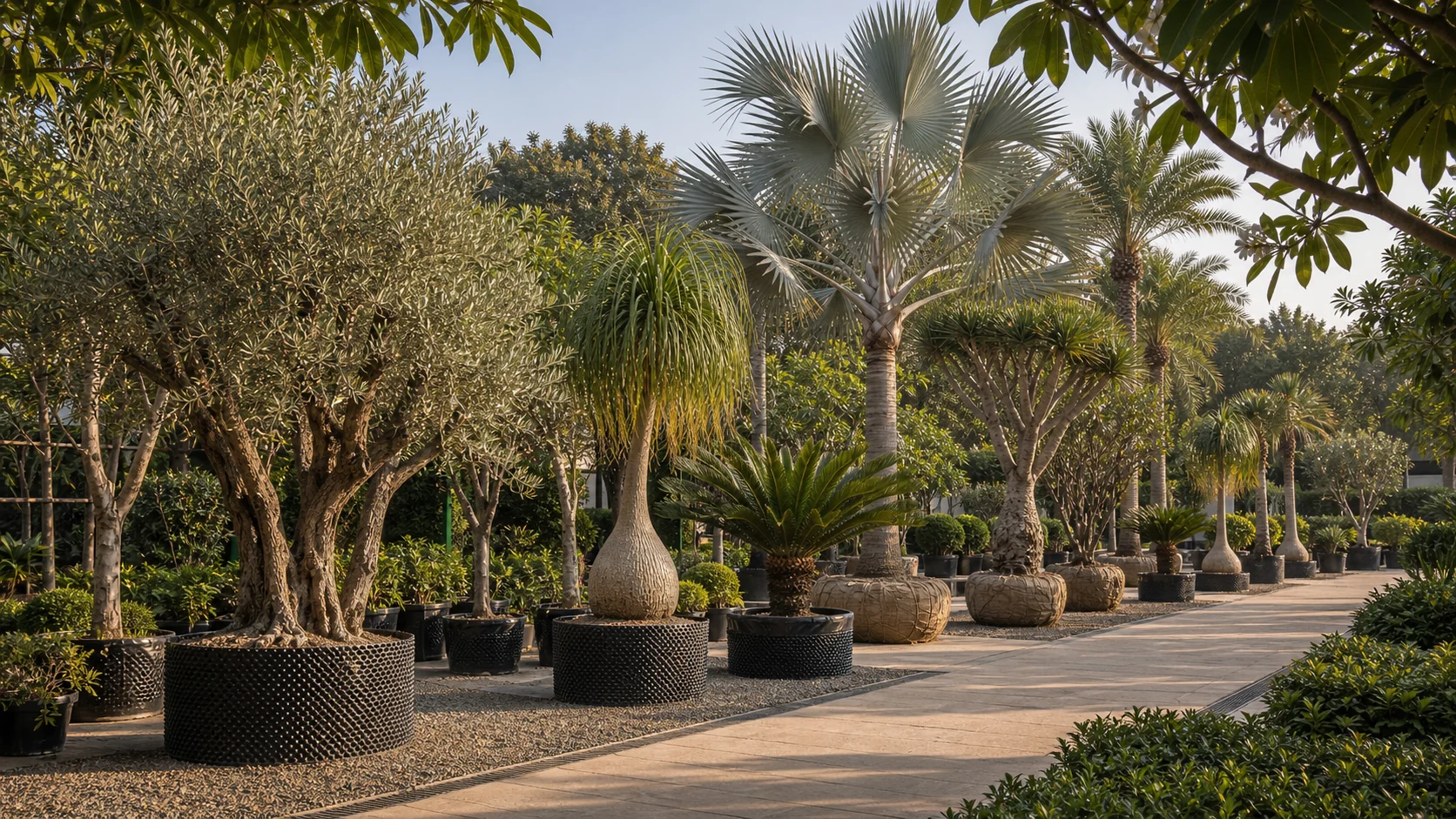
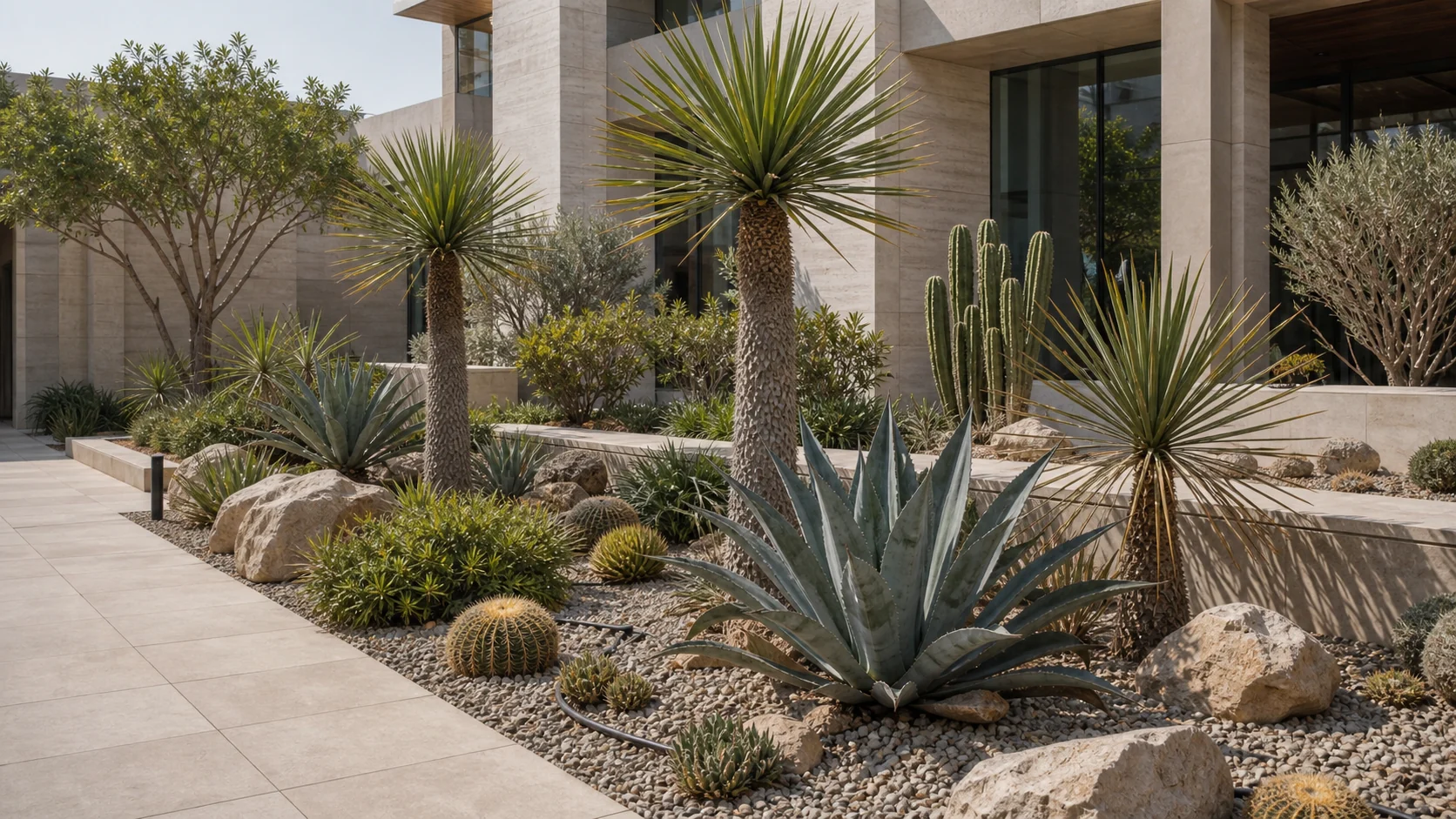
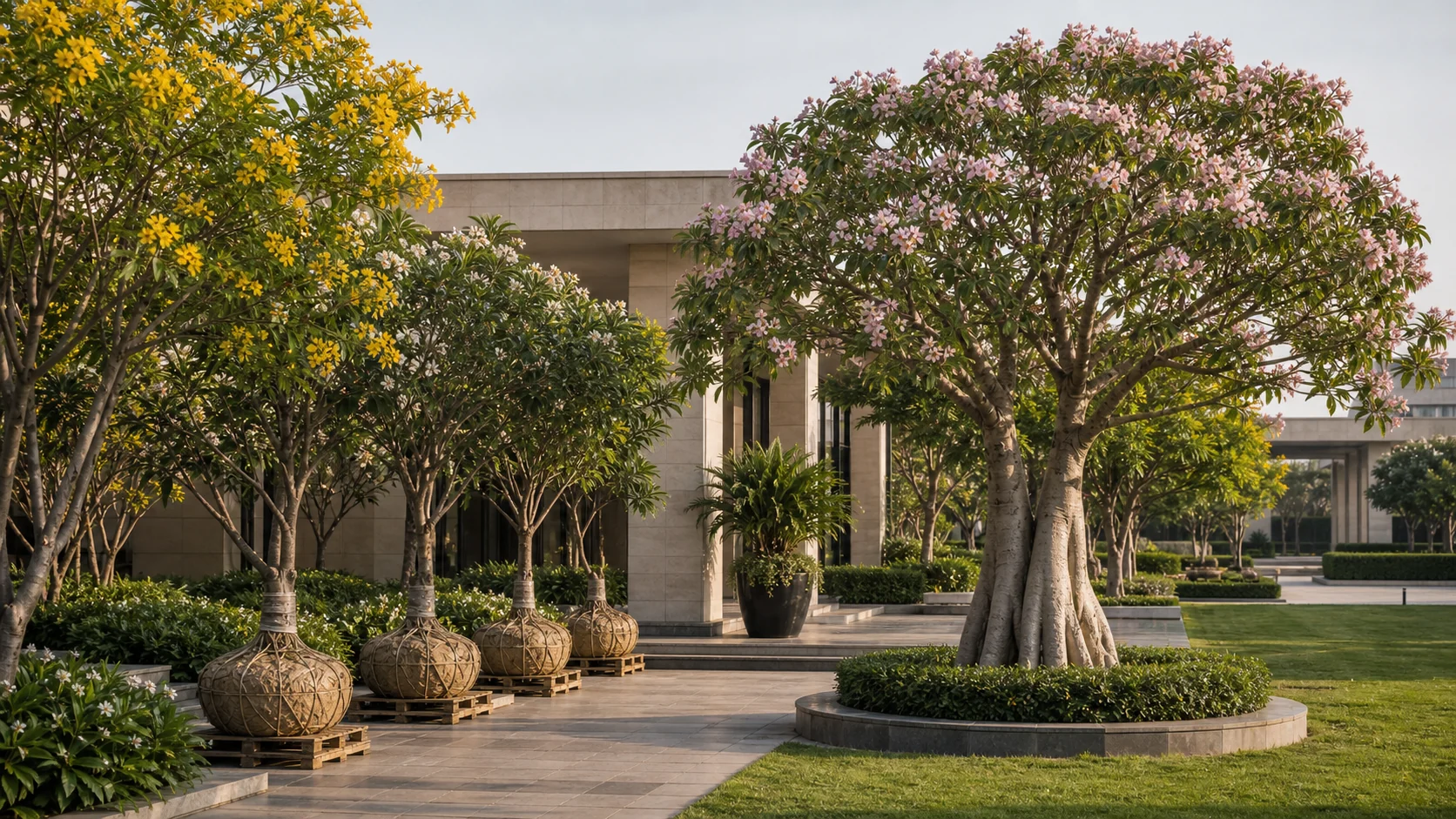
Section
Where it's used in premium projects
Queensland bottle tree is the drought-wise instant landmark — desert-lodge arrivals, golf-club xeriscape nodes, and resort pods where a swollen trunk must read on opening day. Unlike baobabs, large field bottles transplant with established industry practice in dry climates. The trunk is the hero; canopy is a modest cap — brief teams not to expect broad shade from the bottle alone.
Section
Climate & site suitability in India
It thrives on Rajasthan and Gujarat resort pads, sandy coastal belts with drainage, and any site where water-wise planting is mandatory. Semi-deciduous leaf drop is shorter than baobab bare seasons but still visible. Avoid waterlogged clay — bottle trunks rot like other caudiciforms if monsoon sits at the flare.
Section
Sourcing & acclimatisation
Buy bottle profile, not height alone — taper and girth sell the design. Large field-dug bottles are the usual instant-specimen route. [Unverified: India nursery holding for rupestris bottle classes.] Document seed-pod litter zones for OM manuals — boat pods contain irritant hairs.
Section
Installation (pit, soil, drainage, bracing)
Industry experience supports large bottle transplants — still engineer drainage and crane pads. Protect swollen bark from chain marks. Plan pod-drop zones away from pool decks and children's play — fibres inside mature pods irritate skin.
Section
Establishment & AMC
Establishment irrigation tapers quickly — overwatering defeats the drought narrative. AMC sweeps boat pods before guest peak season and inspects bottle flare after abnormal wet years. Minimal crown work — preserve bottle proportion.
Section
Cost drivers
Explore
Related
Related
Related links
Services, segments, cost, and proof.
- Softscape & horticulture
- Irrigation & water management
- Landscape maintenance (AMC)
- Hotel & resort landscaping
- Luxury resort & spa landscaping
- Mall & retail landscaping
- Corporate campus landscaping
- Projects
- Commercial landscaping cost guide
- Pricing drivers (imported trees)
- Import compliance workflow
- Request a site assessment
- How does the Queensland bottle trunk store water?
- The trunk swells into a bottle profile that holds moisture reserves — visual mass and drought survival are linked; still requires drainage at the base.
- Can large bottle trees be transplanted?
- Yes — rupestris has stronger transplant culture than baobabs at comparable visual impact; still budget crane, bark protection, and drainage engineering.
- How drought-tolerant is it once established?
- Very — suited to xeriscape resort pads; establishment is the only window where controlled irrigation matters.
- What are the seed pod cautions?
- Boat-shaped pods drop with irritant hairs inside — route planting away from bare-foot zones and programme pod sweep in AMC.
- Bottle tree versus African baobab on the same brief?
- Brachychiton gives faster instant bottle scale and easier large transplant; baobab gives genus authenticity and monumental scale — different BOQ stories.
- What import steps apply to Australian bottle tree stock?
- Phytosanitary certificates and Indian plant quarantine apply to live imports — factor inspection hold time in procurement (informational, not legal advice).
- How should bottle tree BOQs be compared?
- Match bottle girth photos, transplant method, pod-litter plan, drainage scope, and size class — not per-metre height alone.