
White floss silk tree
White floss silk tree (Ceiba insignis)
Ceiba insignis (syn. Chorisia insignis) mirrors the pink silk floss tree's thorny green trunk logic but adds a more bottle-swollen base and creamy-white to yellow flowers — the drier-site white-flowering counterpart for estates that want floss-silk drama without pink clone confusion on the masterplan.
Spec
At a glance
- Botanical name
- Ceiba insignis (syn. Chorisia insignis)
- Family
- Malvaceae
- Common names
- White floss silk tree, drunken tree (trade)
- Origin
- Drier subtropical South America (Argentina, Paraguay, Bolivia)
- Plant type
- Deciduous drought-tolerant flowering tree
- Mature height
- Often 10–20 m
- Trunk / form
- Bottle-swollen green thorny photosynthetic trunk; stout conical spines
- Crown spread
- Moderate to wide — thorn setback required
- Growth rate
- Moderate to fast in warm dry sites
- Light
- Full sun
- Water needs
- Very drought-tolerant — suited to xeric pads
- India climate suitability
- Dry tropical and semi-arid India with large pads — stronger drought logic than humid coast
- Cold/heat & salt/wind tolerance
- Heat- and drought-hardy; frost-sensitive; thorn contact hazard
- Typical supply size
- Bottle-thorn specimens 3–7 m [Unverified]
- Lead time (sourcing)
- [Unverified] white-flower clone verification versus pink Ceiba
- Install considerations
- Thorn setbacks; bottle-base drainage; distinguish from Ceiba speciosa on BOQ
- Maintenance level
- Moderate — pod litter, thorn audits, dry-season care
- Cautions
- Trunk thorns; large size; pod litter; supplier swap with pink Ceiba common
Gallery
Specimen visual guide
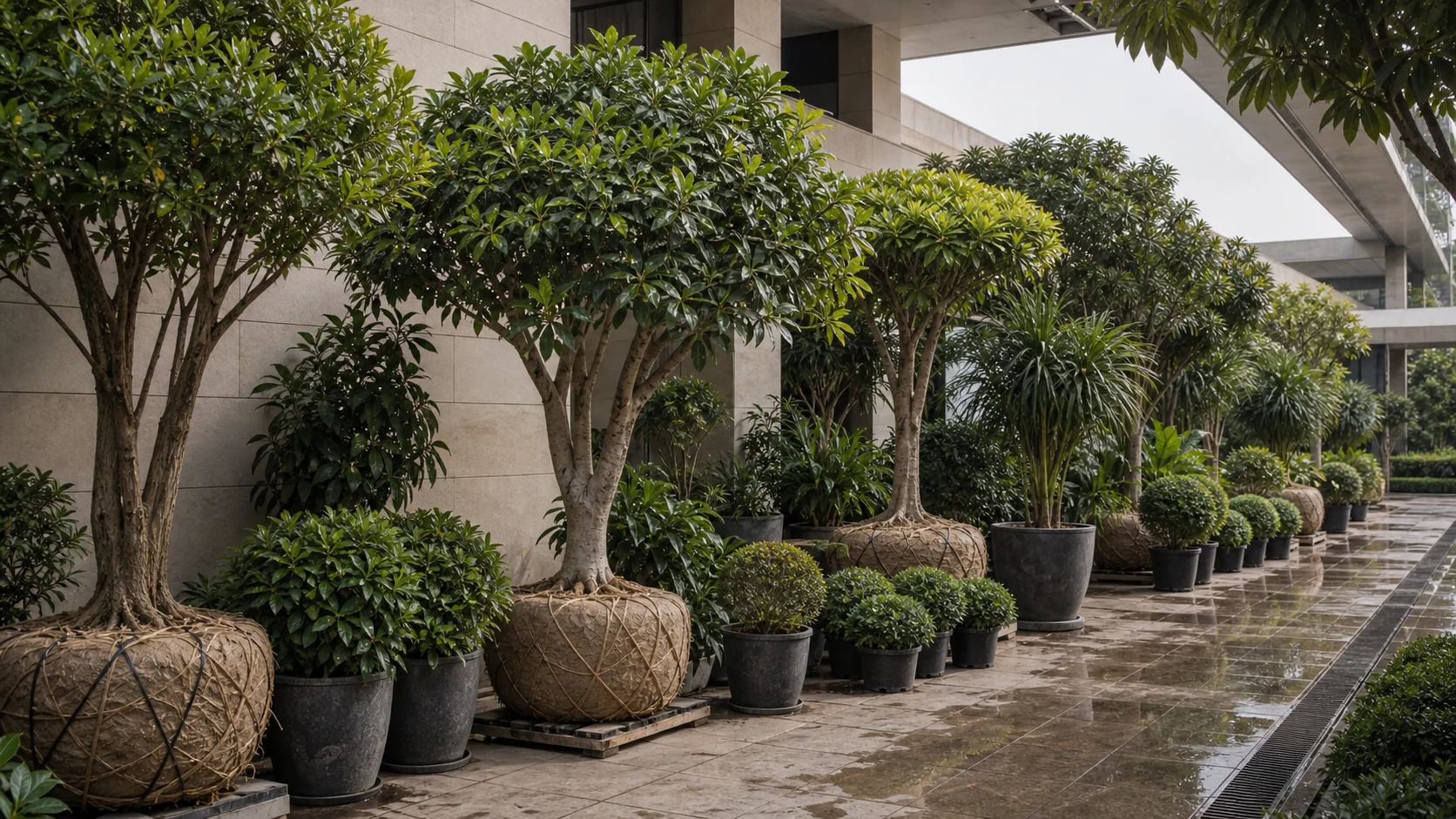
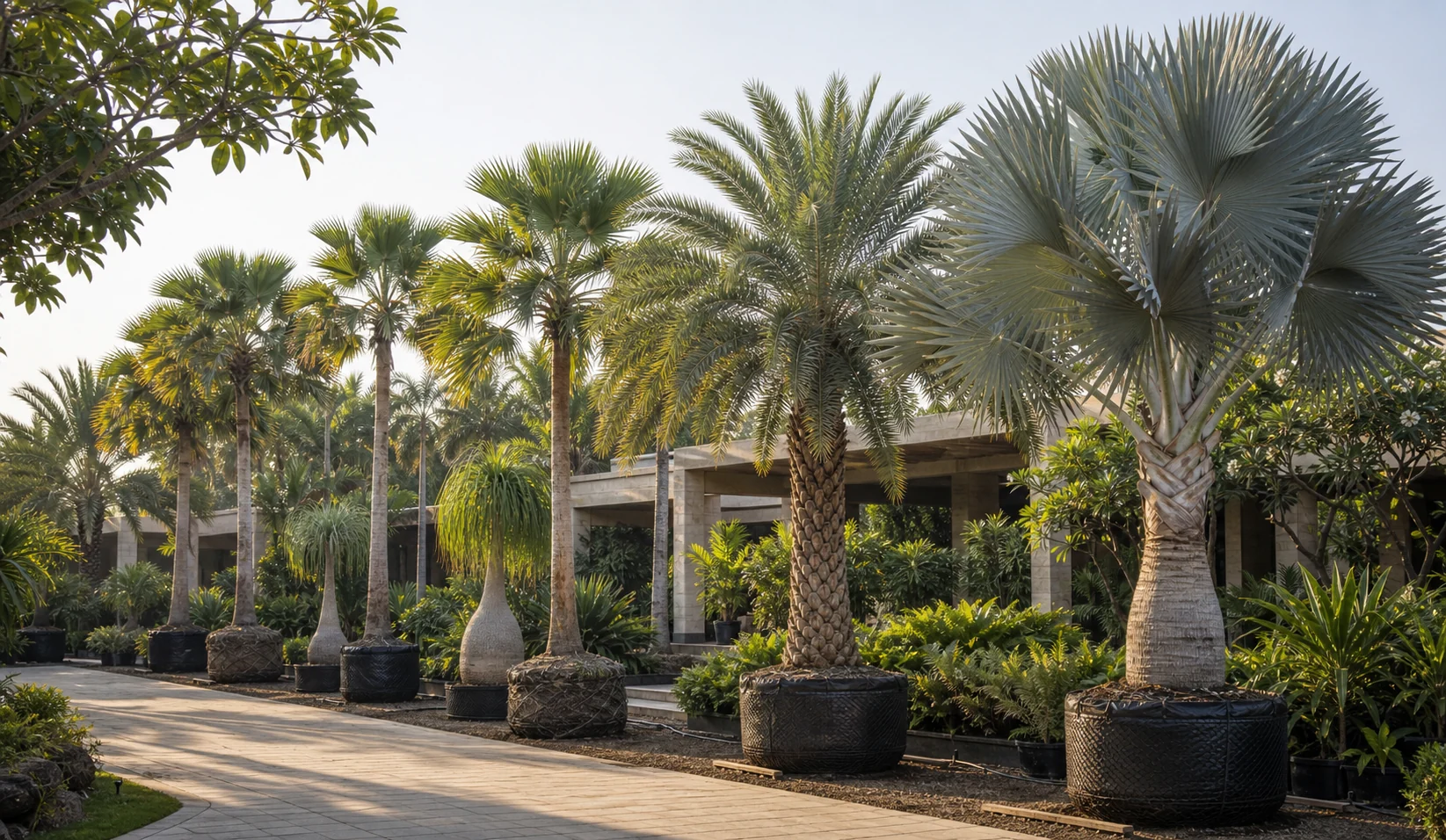
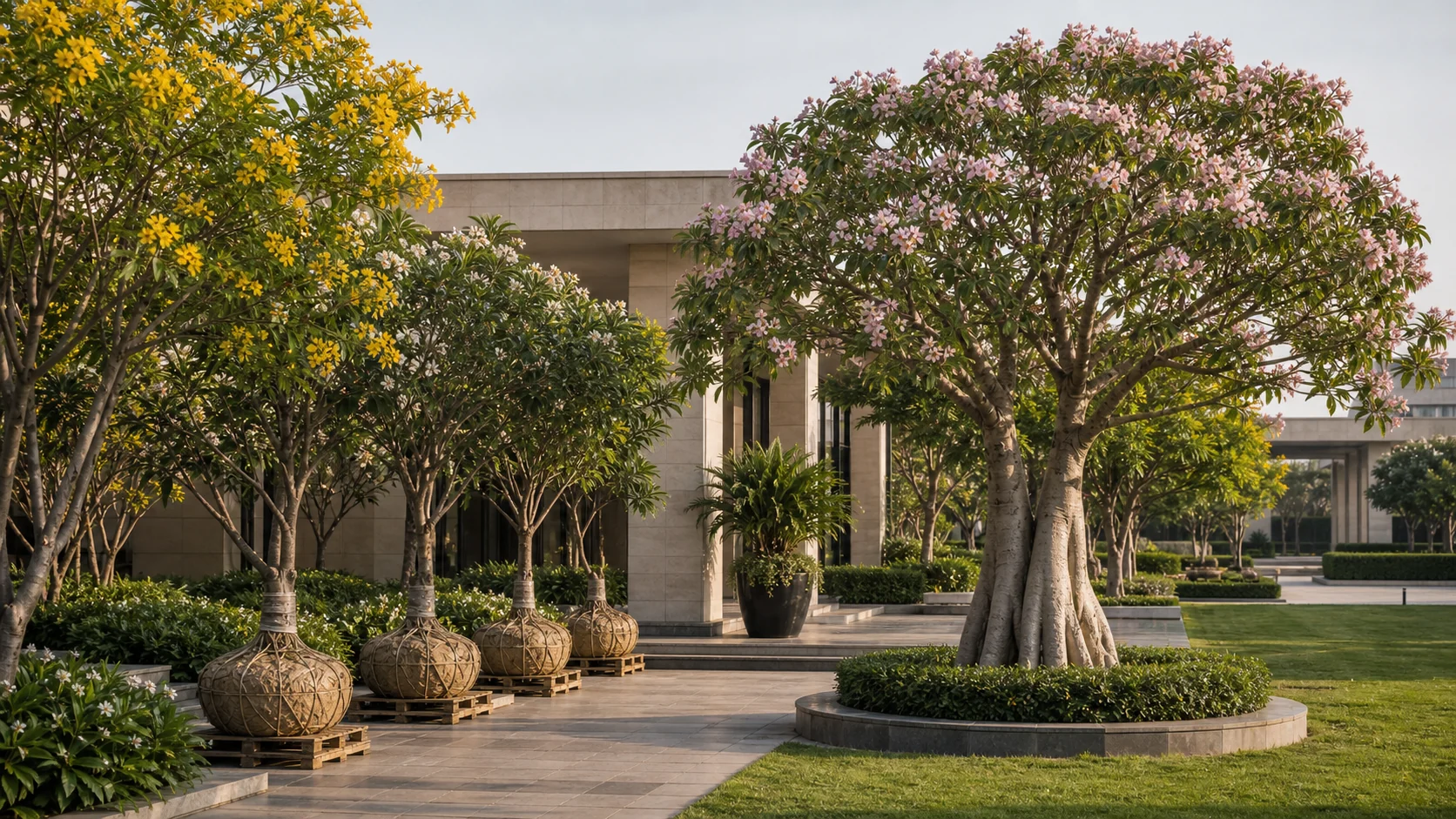
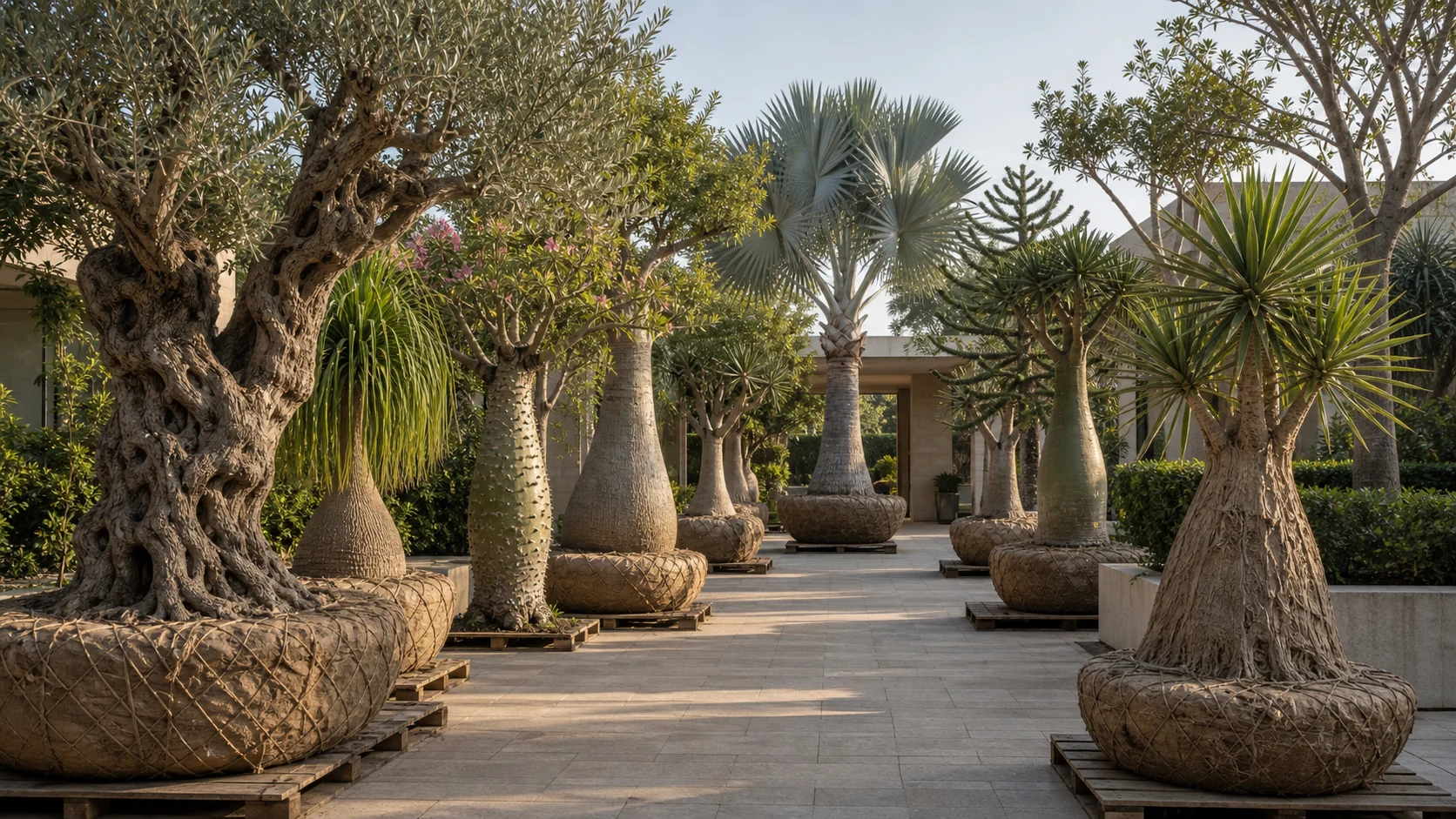
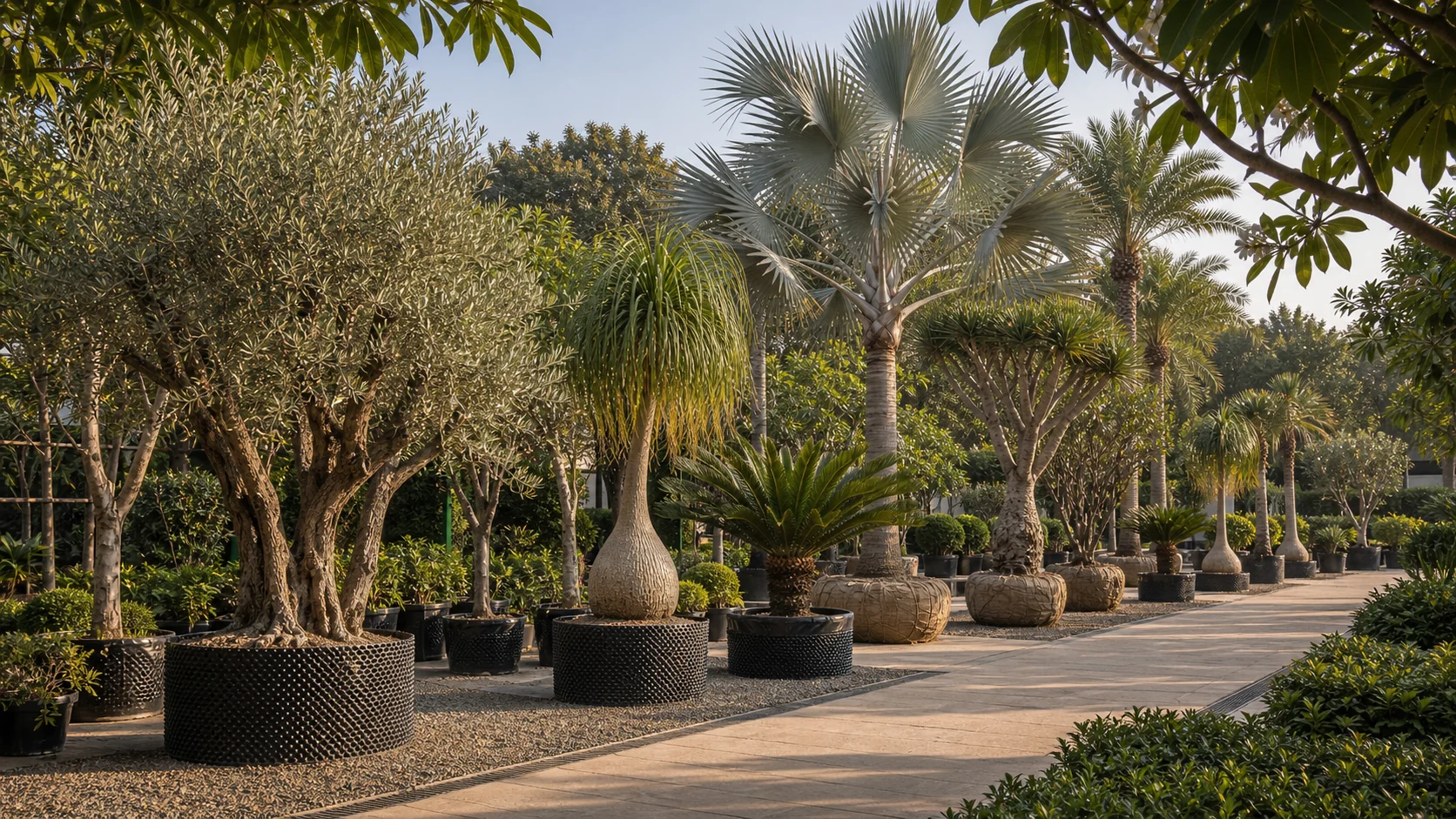
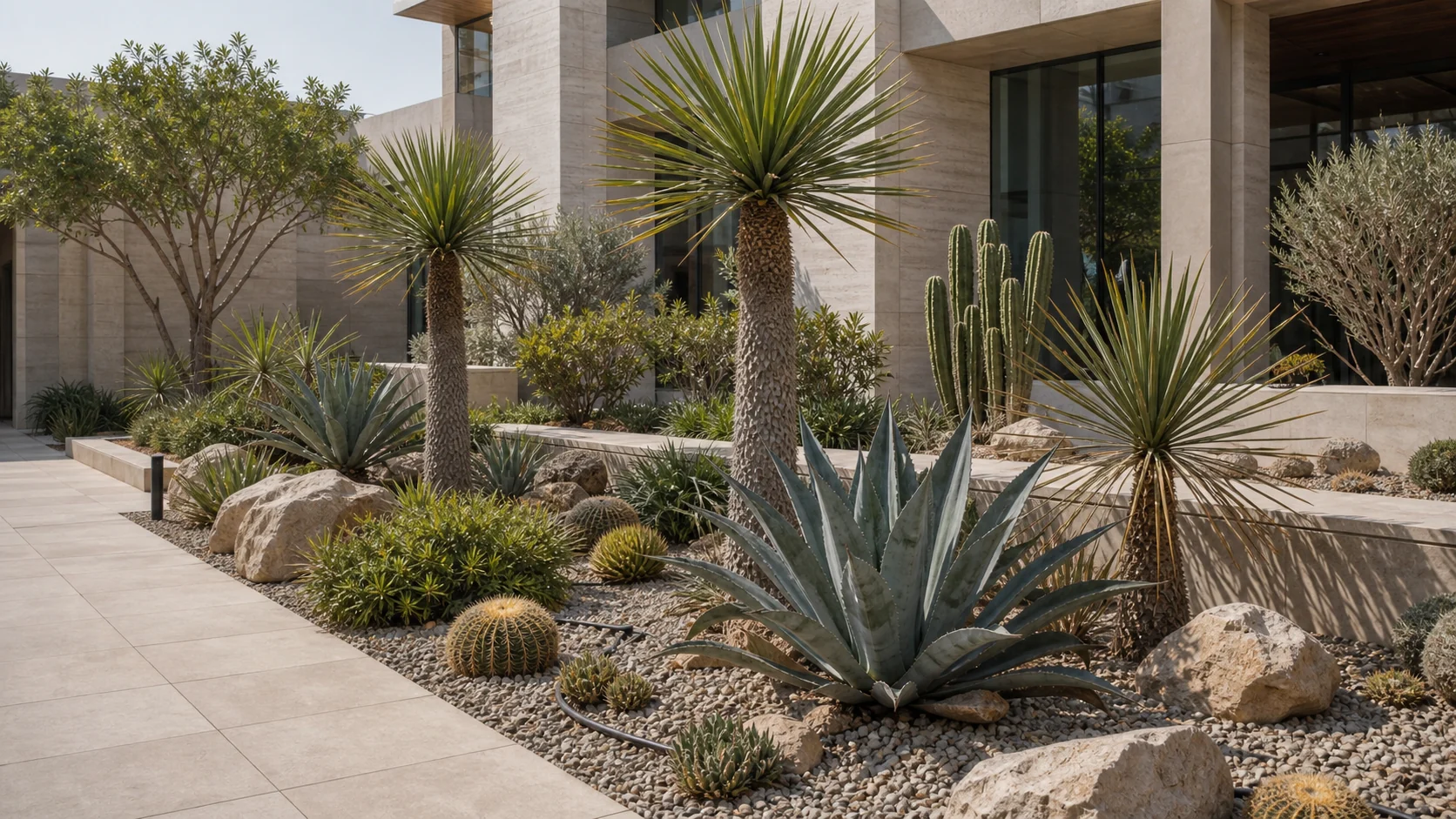
Visual context for placement, scale, handling, and landscape integration.
Section
Where it's used in premium projects
White floss silk tree suits dry-estate masterplans — arid resort entries, xeriscape boulevards, and collector avenues where bottle-swollen thorn trunks and white bloom pair with gravel and stone palettes. The bottle base reads more strongly than on pink Ceiba speciosa — lead submittals with trunk photos, not flower colour alone. Thorn setbacks remain mandatory.
Section
Climate & site suitability in India
Prioritise dry belts — Rajasthan, Gujarat, and well-drained Deccan pads — over humid coastal courts unless drainage is rebuilt. Drought trunk storage is the species strength; insignis tolerates drier establishment than many flowering avenues. Still frost-sensitive and thorn-hazardous in tight urban courts.
Section
Sourcing & acclimatisation
Insist on white/yellow flower clone and bottle-thorn trunk together — pink speciosa arrives mislabeled often. [Unverified: India-held insignis bottle grades.] Acclimatise dry — over-irrigation at nursery softens drought narrative and risks base rot before install.
Section
Installation (pit, soil, drainage, bracing)
Bottle flare drainage identically critical — thorny green base must not sit in monsoon saucer. PPE and path setbacks as for pink Ceiba. Crane large bottles with bark protection; thorn punctures are crew safety items on insurance forms.
Section
Establishment & AMC
Taper irrigation after root catch — insignis establishment failures often trace to kindness via sprinklers. AMC audits thorn intrusion into grown paths as bottle trunk widens. Pod litter sweep after white flower season; structural prune for brittle large limbs.
Section
Cost drivers
Explore
Related
Related
Related links
Services, segments, cost, and proof.
- Softscape & horticulture
- Irrigation & water management
- Landscape maintenance (AMC)
- Hotel & resort landscaping
- Luxury resort & spa landscaping
- Mall & retail landscaping
- Corporate campus landscaping
- Projects
- Commercial landscaping cost guide
- Pricing drivers (imported trees)
- Import compliance workflow
- Request a site assessment
- White versus pink floss tree — what changes on site?
- Insignis carries creamy-white/yellow flowers and a more bottle-swollen thorn trunk; speciosa is pink-flowered with a typically less bottle-heavy profile — verify both on nursery visit.
- Why emphasise the bottle trunk on insignis?
- The swollen thorny base is the drought-storage feature and visual anchor — white flowers are seasonal; bottle geometry is year-round.
- Is insignis more drought-tolerant than pink Ceiba?
- Trade sources position insignis for drier subtropical origin — still needs drainage at bottle base but tolerates leaner irrigation after establishment.
- Do trunk thorns persist when leafless?
- Yes — thorns are structural on the green trunk year-round; bare-season path audits still matter.
- How do we prevent supplier swap at delivery?
- BOQ botanical name, flower colour, and bottle-thorn photos signed at nursery — reject pink clones masquerading as insignis.
- What import quarantine timing applies?
- South American live trees follow standard phytosanitary and Indian plant quarantine — plan inspection before monsoon crane windows (informational, not legal advice).
- How should white floss BOQs be scoped?
- Include clone verification, thorn setback plan, bottle drainage detail, and pod AMC — distinct from pink Ceiba line items.