
Chinese fringe flower
Chinese fringe flower (Loropetalum chinense)
Loropetalum chinense brings burgundy evergreen foliage and pink fringe flowers to clipped hedges and specimen mounds — a designer favourite where purple tone replaces green shrub mass. Alkaline Indian soils cause chlorosis unless acidity and iron are managed; part shade helps extreme midday heat.
Spec
At a glance
- Botanical name
- Loropetalum chinense (rubrum cultivars)
- Family
- Hamamelidaceae
- Origin
- China / Japan
- Mature height × spread
- Often 1–2 m × 1–2 m in cultivation; larger without clip
- Flower colour & season
- Pink fringe flowers spring
- Foliage
- Burgundy-purple evergreen — cultivar dependent
- Evergreen / deciduous
- Evergreen
- Growth rate
- Moderate — clip-friendly
- Light
- Sun to part shade — part shade in extreme heat
- Water
- Moderate; even moisture reduces chlorosis stress
- India climate suitability
- Good with acidic soil prep; chlorosis on alkaline calcareous soils
- Hardiness
- Heat OK with shade buffer; protect from waterlogging
- Typical supply size
- Pot shrubs and hedge liners [Unverified]
- Pruning / maintenance
- Acidifying programme on alkaline sites; clip after spring bloom
- Cautions
- Needs slightly acidic soil; chlorosis on alkaline Indian soils; part shade in extreme heat
Gallery
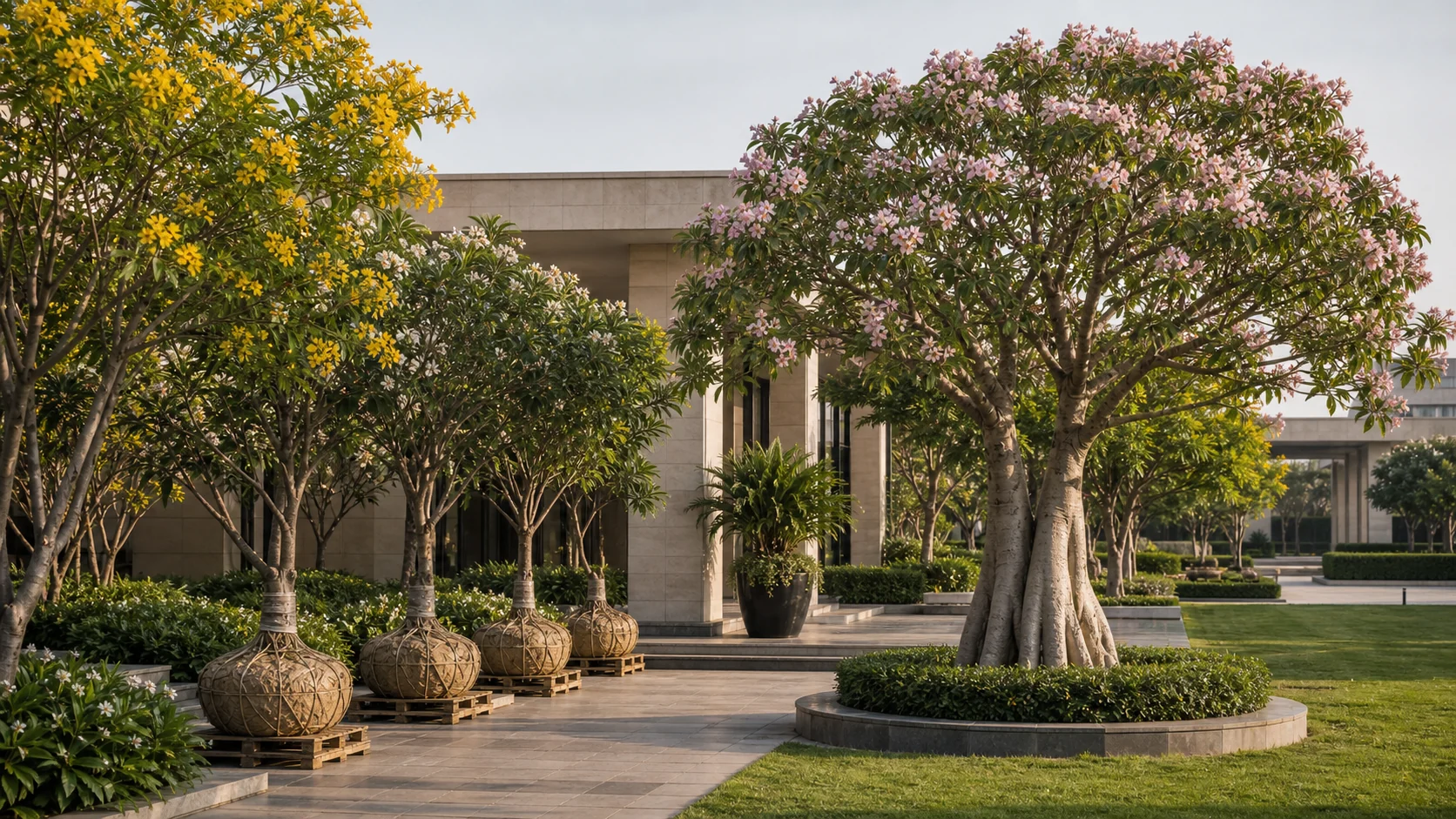
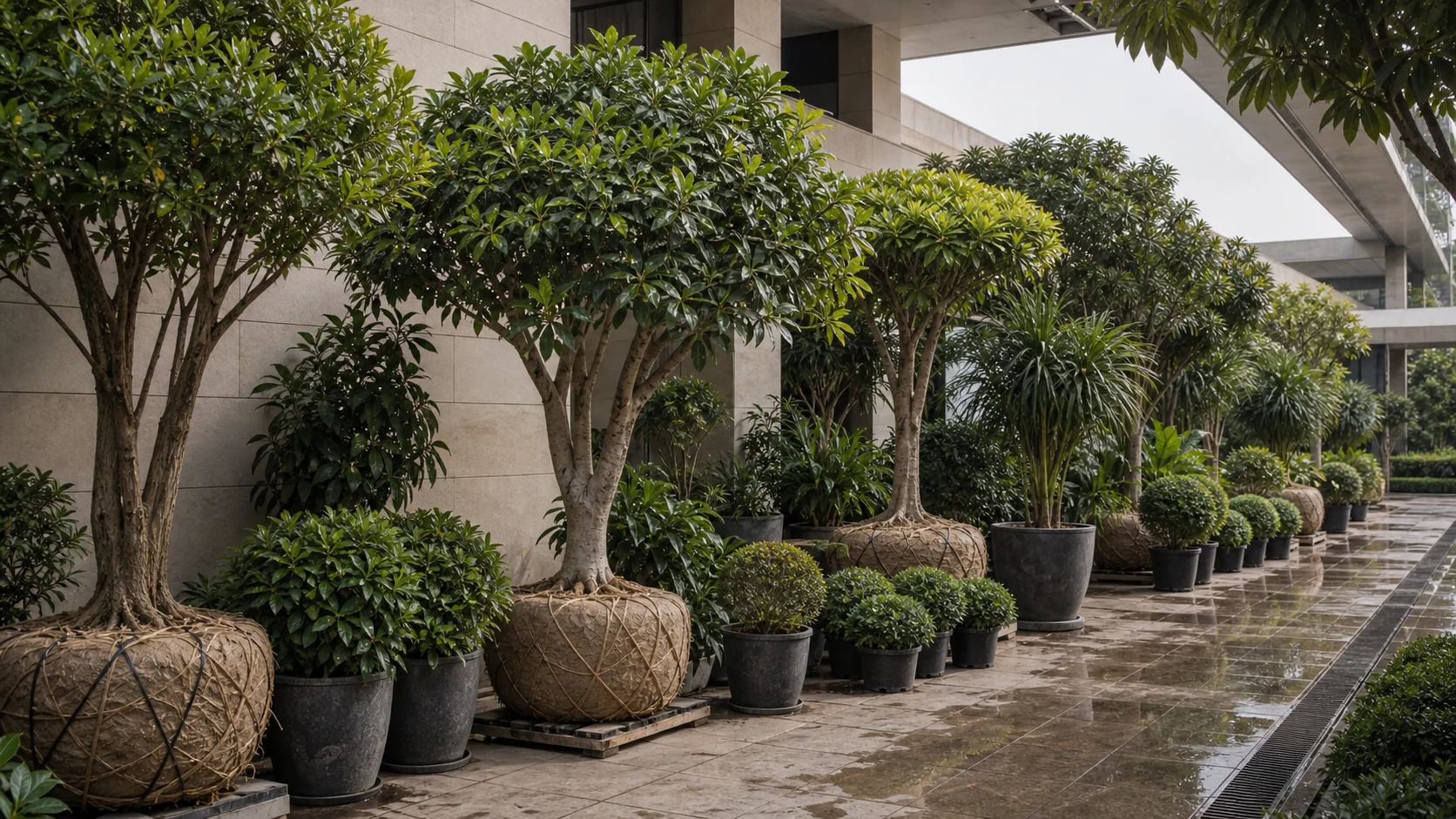
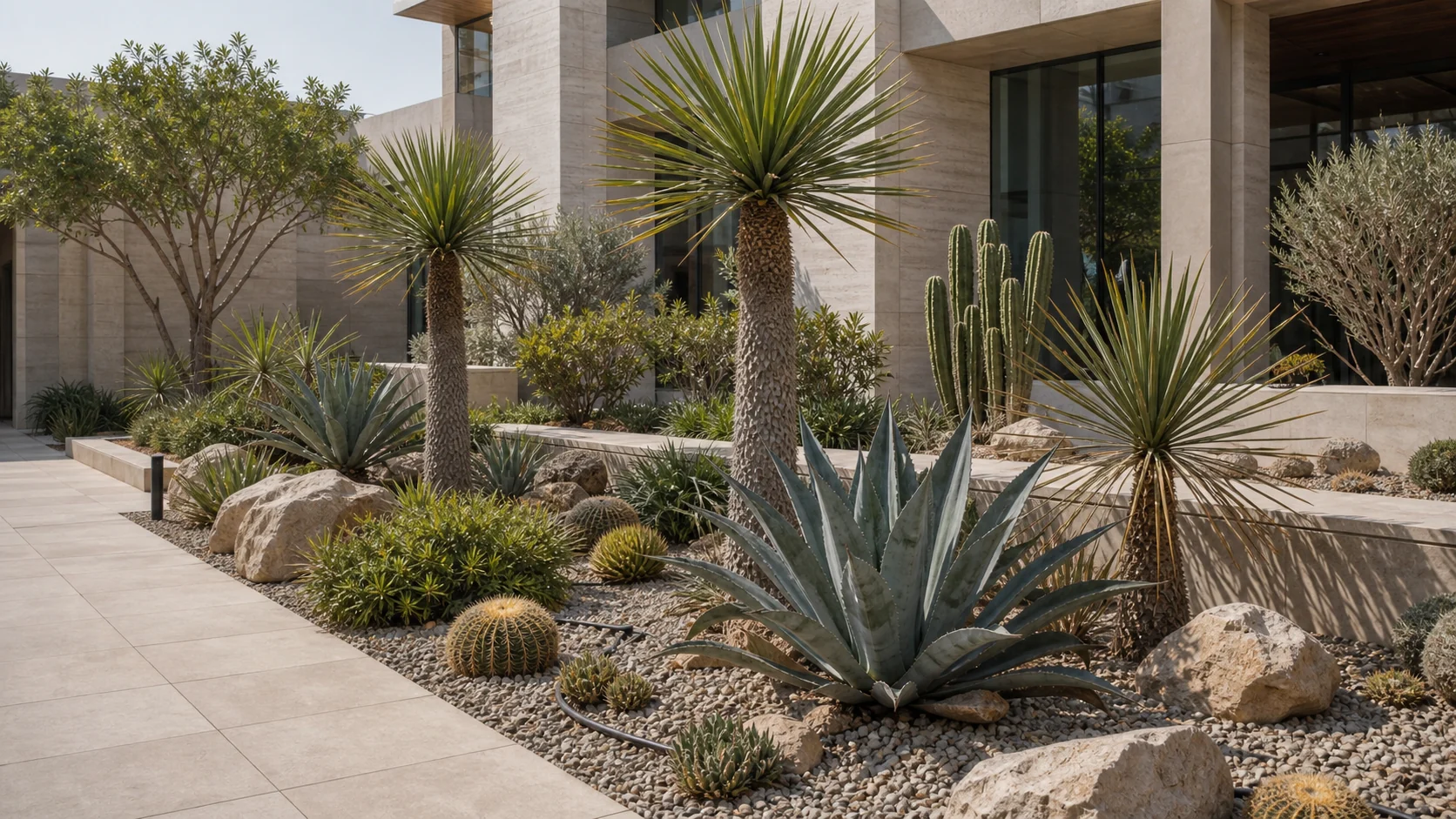
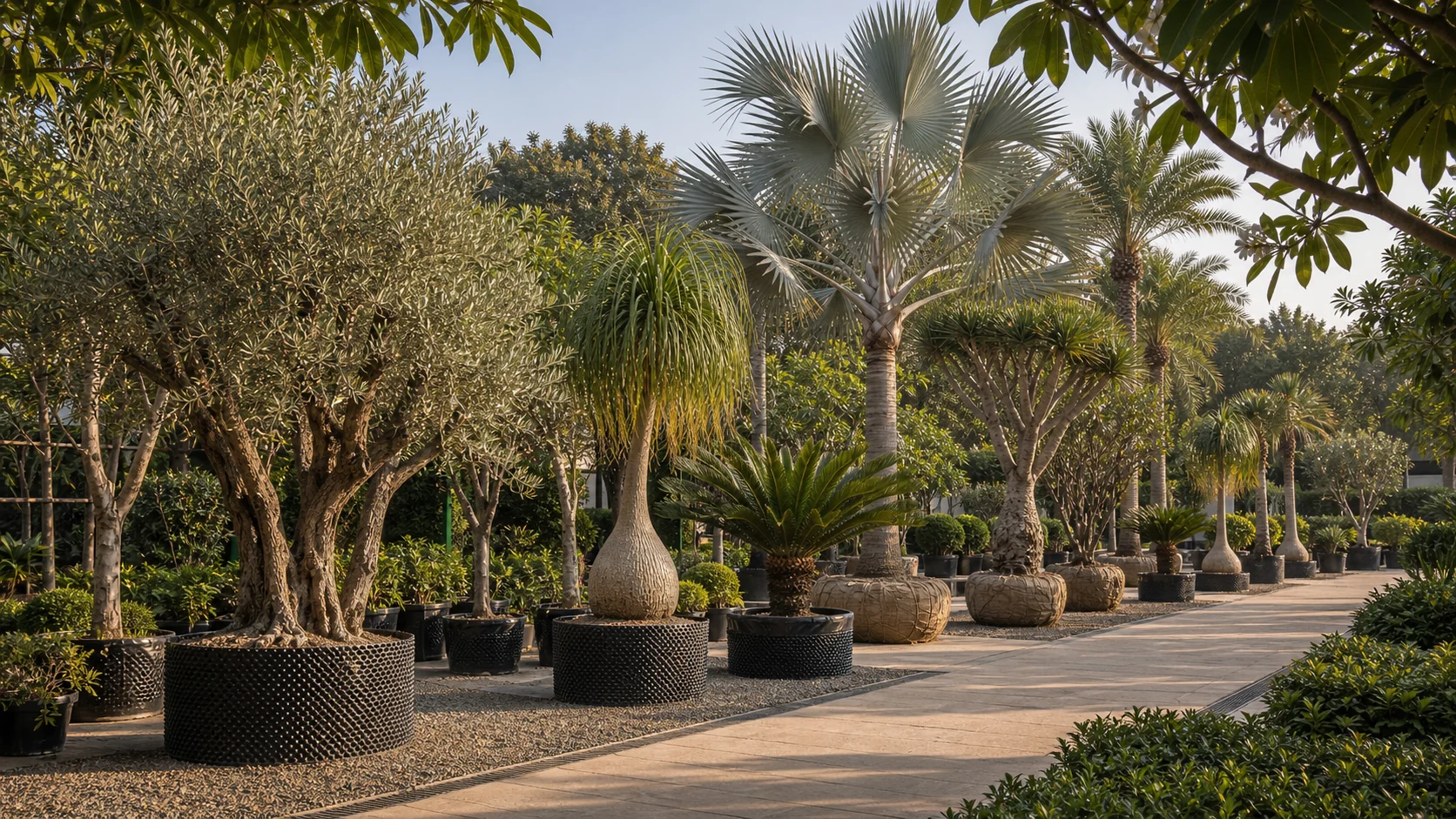
Specimen visual guide
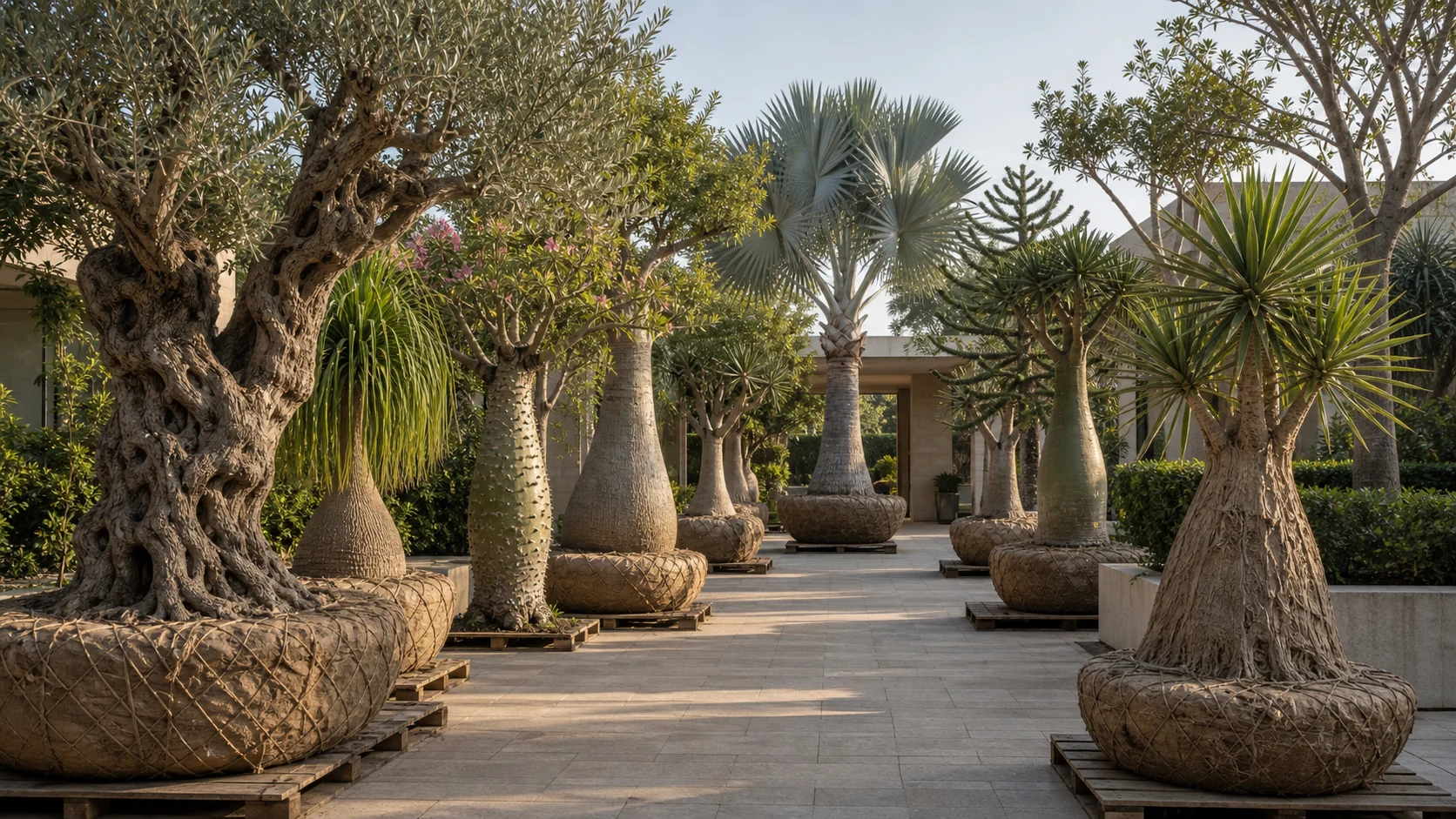
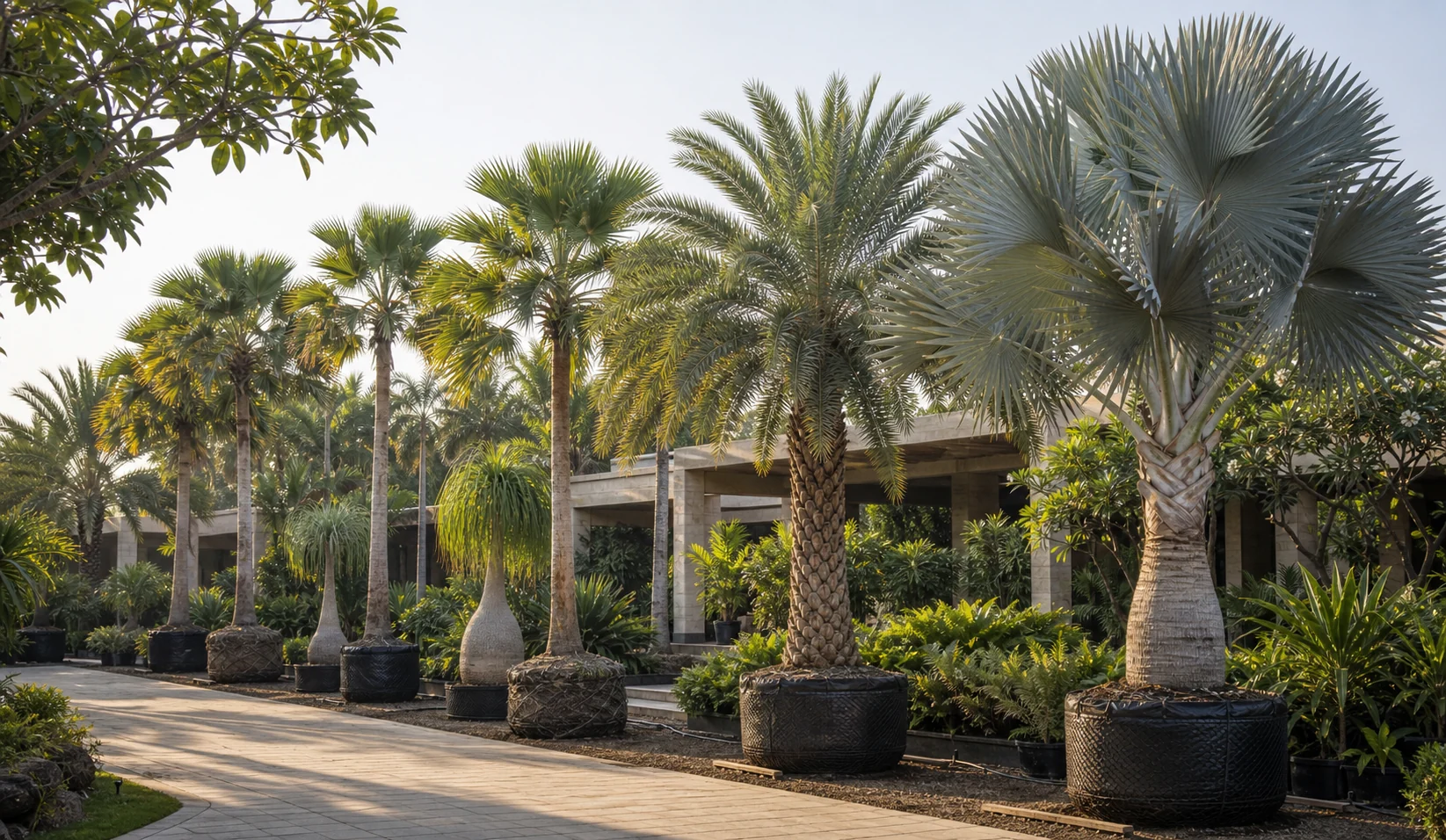
Visual context for placement, scale, handling, and landscape integration.
Section
Where it's used in premium projects
Loropetalum hedges replace green box on boutique hotel entries where burgundy reads on camera — mass in acidic beds or raised planters with controlled media. Specimen mounds pair with silver grasses for contrast.
Section
Climate & site suitability in India
Calcareous Delhi or Rajasthan soils need acid bed prep or chronic iron chlorosis — yellow leaves with green veins. Extreme lowland heat benefits from afternoon shade buffer. Humid monsoon OK with drainage, not wet feet.
Section
Sourcing & acclimatisation
Specify rubrum/burgundy cultivars — green forms exist and fail the brief. [Unverified: India hedge liner availability.]
Section
Installation (planting, soil, drainage)
Acidic planting media in raised beds on alkaline sites; chelated iron programme documented on AMC. Space for hedge clip access. Do not plant in pure site clay without amendment on calcareous soils.
Section
Establishment & AMC
Monitor chlorosis monthly first year — foliar iron per label while adjusting bed pH. Clip after spring fringe bloom if formal hedge. Part shade reduces summer scorch on exposed terraces.
Section
Cost drivers
Explore
Related
Related
Related links
Services, segments, cost, and proof.
- Softscape & horticulture
- Irrigation & water management
- Landscape maintenance (AMC)
- Hotel & resort landscaping
- Luxury resort & spa landscaping
- Mall & retail landscaping
- Corporate campus landscaping
- Projects
- Commercial landscaping cost guide
- Pricing drivers (imported trees)
- Import compliance workflow
- Request a site assessment
- What colour are loropetalum flowers?
- Pink fringe flowers in spring — burgundy foliage is the year-round design cue on rubrum cultivars.
- Why do leaves yellow on alkaline Indian soils?
- Iron chlorosis — acid bed prep and chelated iron programmes are mandatory on calcareous sites.
- Can loropetalum hedge in full sun?
- Yes in moderate heat; extreme lowland midday sun may need part shade buffer to avoid scorch on burgundy leaves.
- Is loropetalum good for clipping?
- Yes — clip after spring bloom on formal hedges; burgundy tone returns on new growth.
- How does loropetalum compare to purple-leaf plum?
- Different species and soil needs — loropetalum needs acid management on alkaline Indian soils; verify cultivar intent on BOQ.
- What import paperwork applies?
- Live imports need phytosanitary and quarantine inspection (informational, not legal advice).
- How should loropetalum hedge BOQs be priced?
- Match liner count, acidic media scope, iron AMC on alkaline sites, and clip calendar — not generic evergreen hedge rates.