
Loquat
Loquat (Eriobotrya japonica)
Eriobotrya japonica is the evergreen loquat with bold corrugated leaves, fragrant winter flowers, and edible yellow fruit — a subtropical shrub-tree for villa orchards and resort food-garden edges. Fruit drop and fireblight risk need honest placement away from pristine pool decks.
Spec
At a glance
- Botanical name
- Eriobotrya japonica
- Family
- Rosaceae
- Origin
- China — cultivated subtropical worldwide
- Mature height × spread
- Often 3–6 m × 3–5 m in India without heavy prune
- Flower colour & season
- Cream fragrant panicles autumn–winter
- Foliage
- Large glossy corrugated evergreen leaves
- Evergreen / deciduous
- Evergreen — may shed some leaves in stress
- Growth rate
- Moderate
- Light
- Full sun to partial shade — sun for fruit
- Water
- Moderate; tolerates short dry once established
- India climate suitability
- Adaptable subtropical — Pune, Bangalore, hills, irrigated plains
- Hardiness
- Heat OK; young plants need wind shelter
- Typical supply size
- Multi-stem shrubs and small trees #15–#25 [Unverified]
- Pruning / maintenance
- Thin fruit load; remove fireblight strikes; pool-deck fruit cleanup
- Cautions
- Fruit drop; fireblight risk; moderate size without prune
Gallery
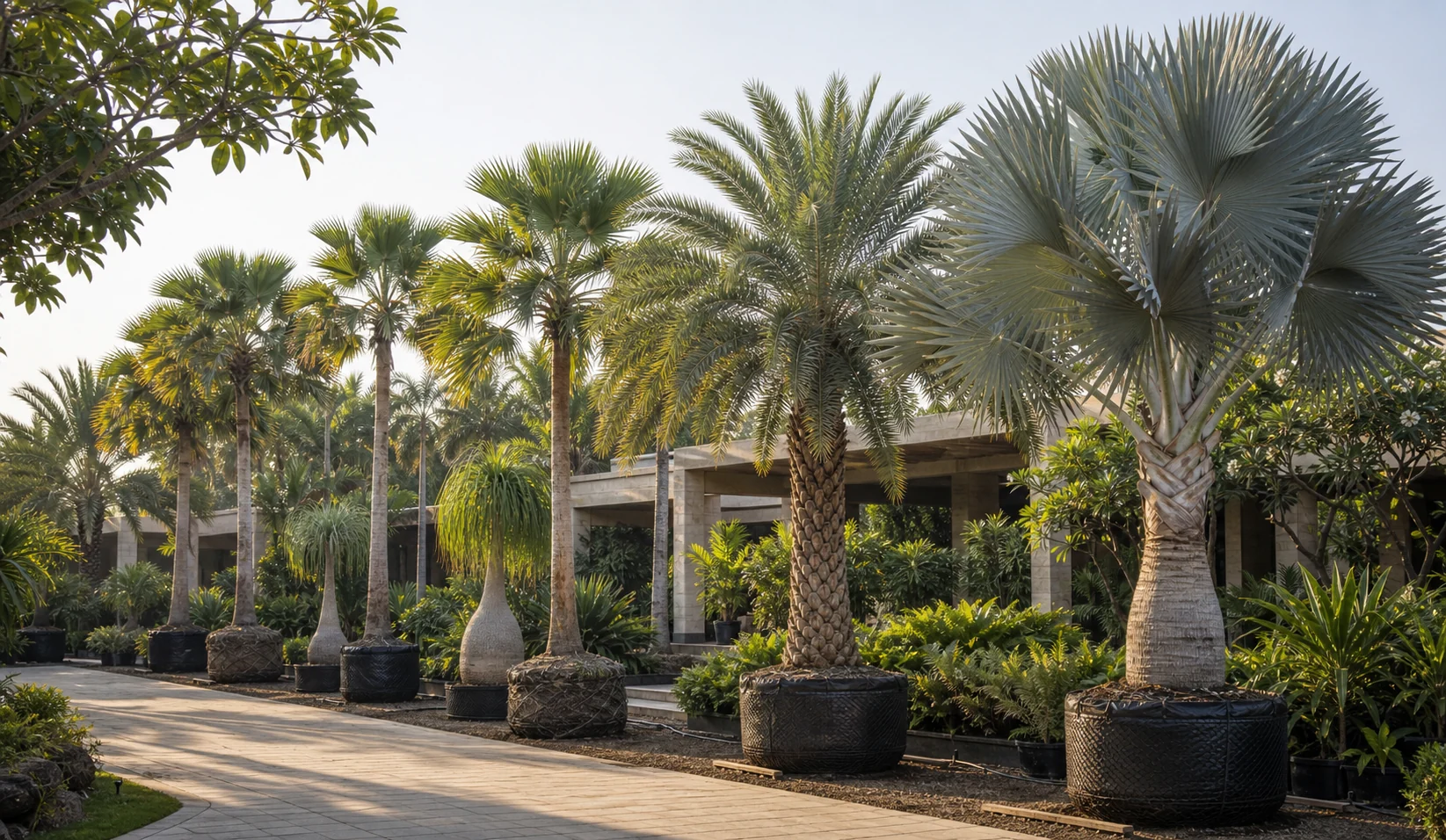
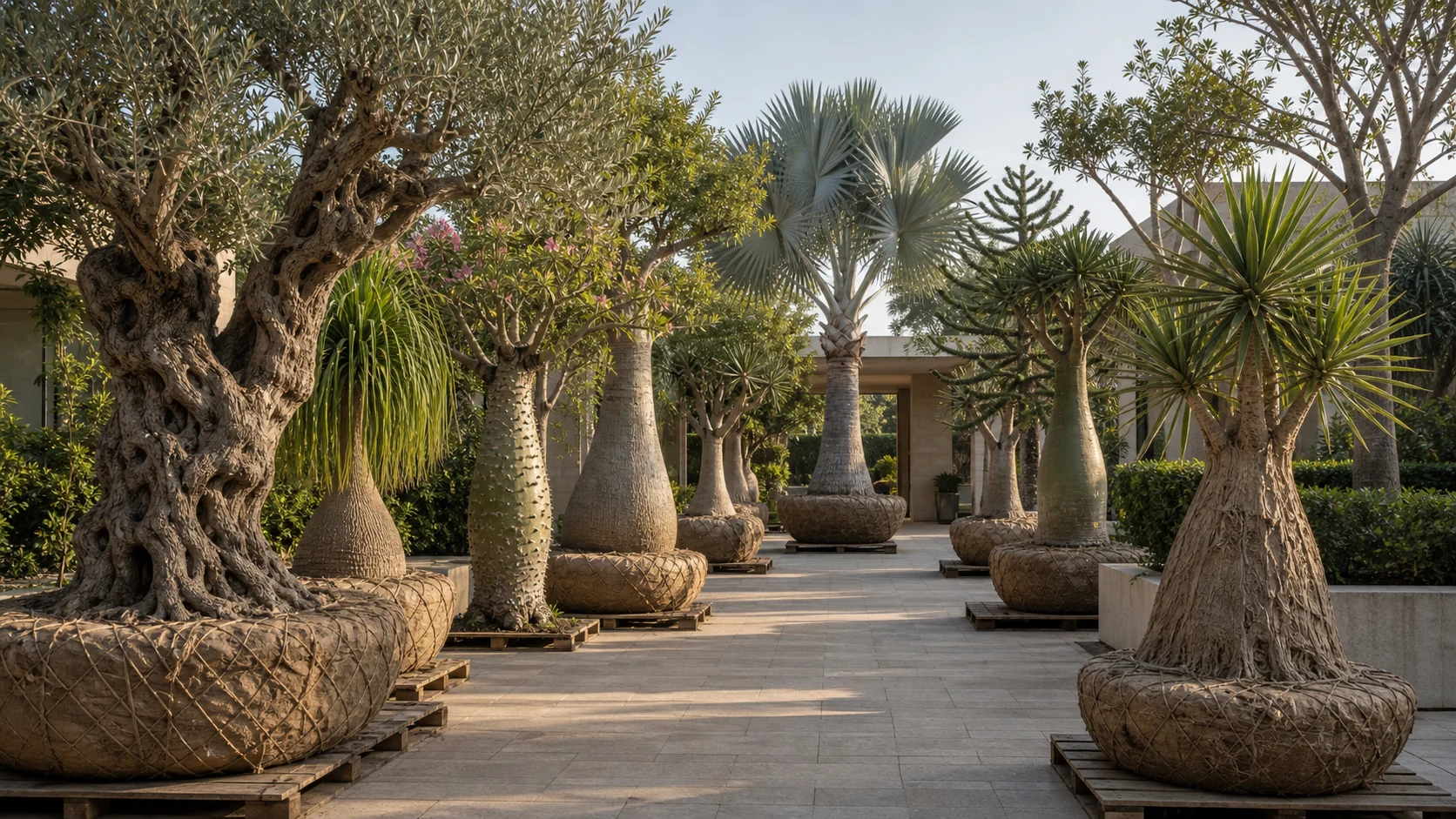
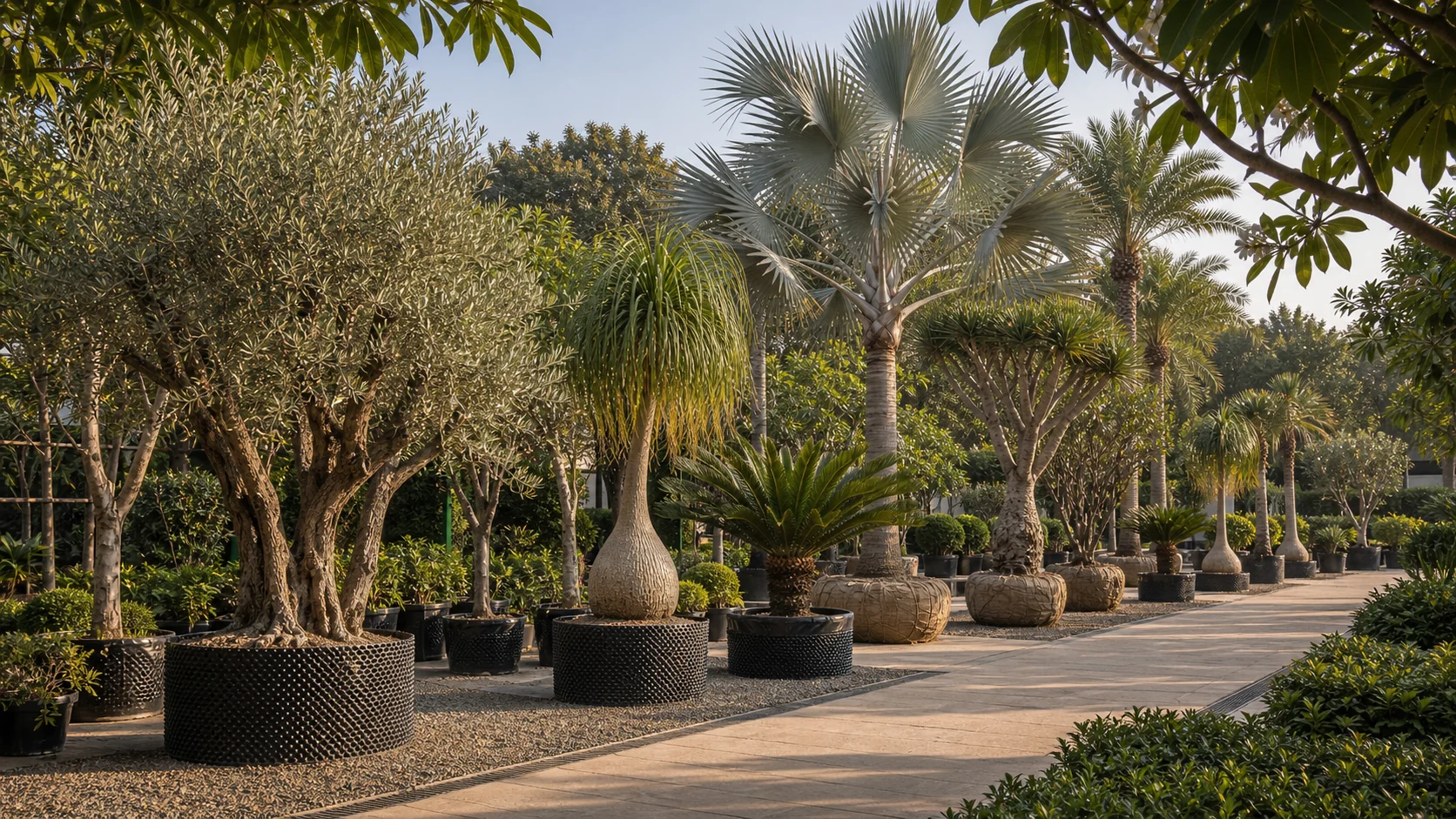
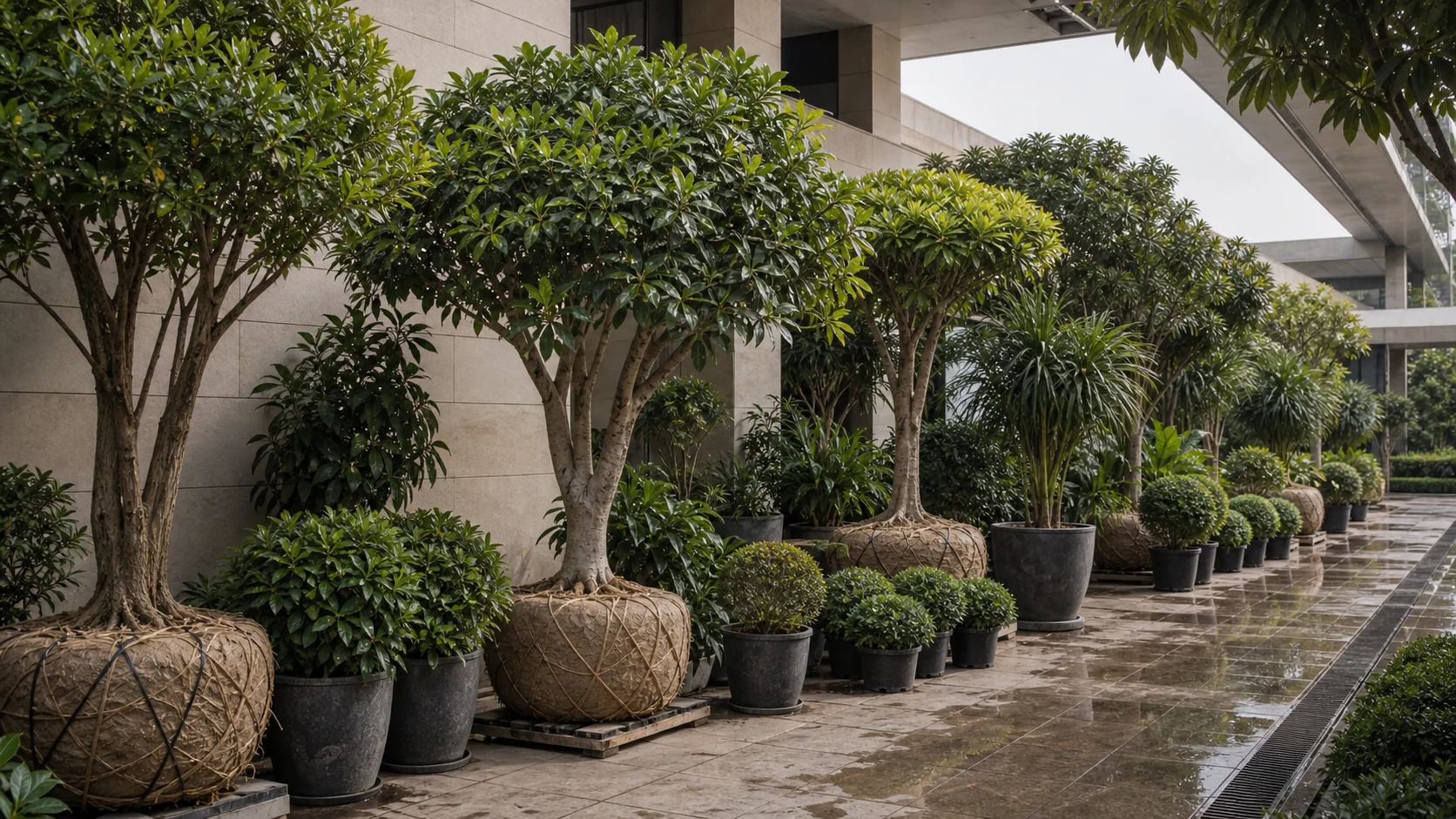
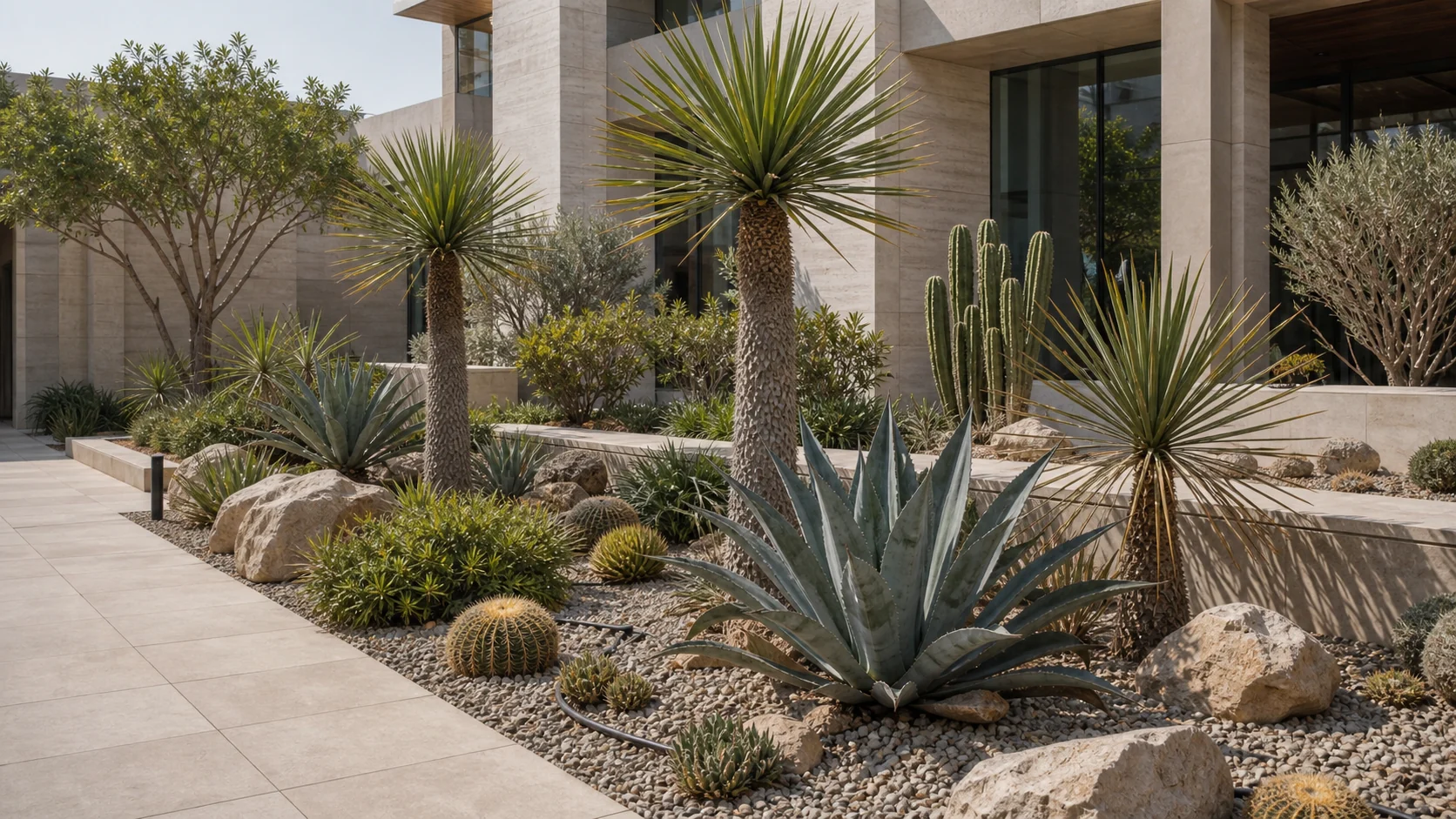
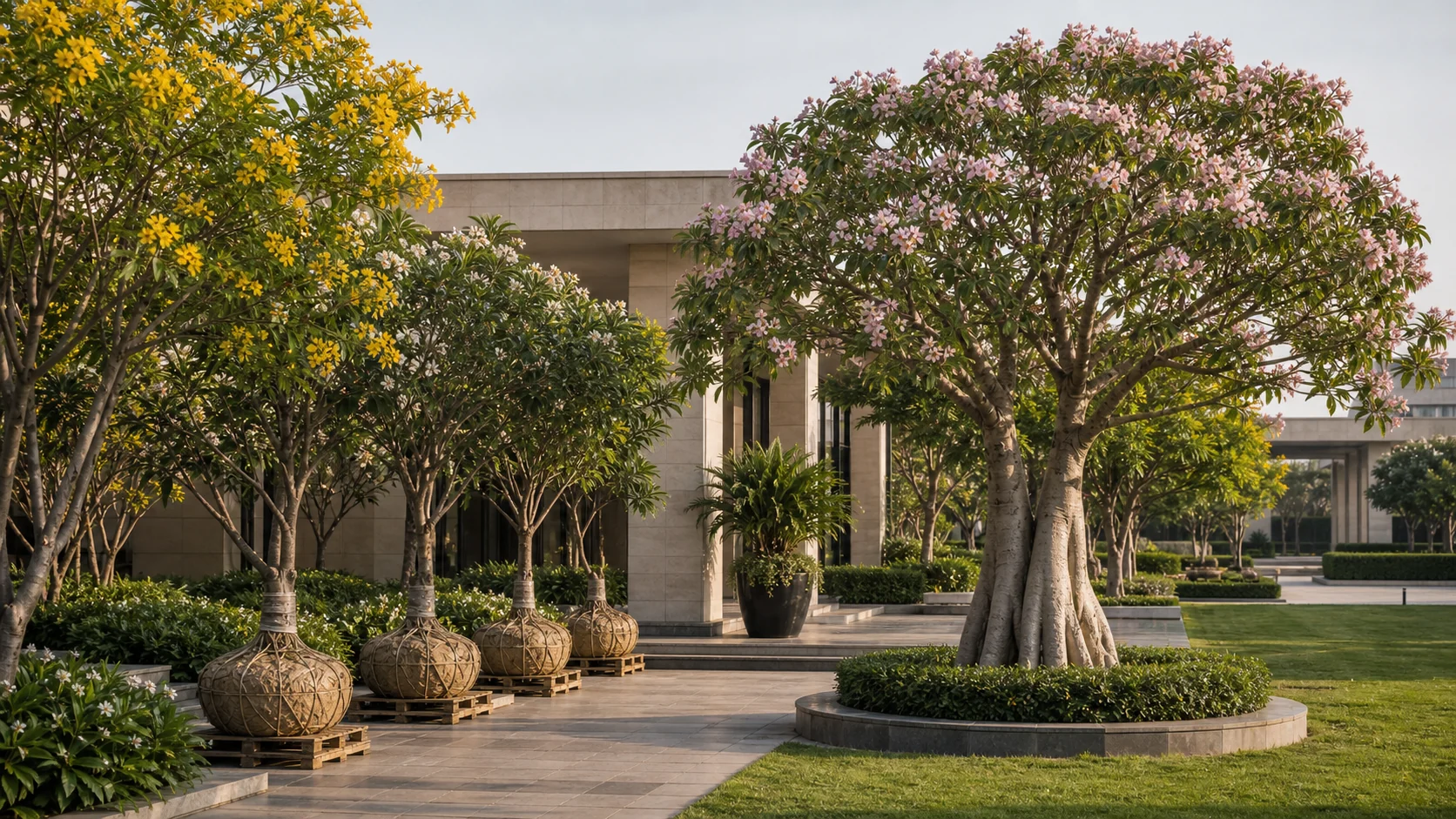
Specimen visual guide
Visual context for placement, scale, handling, and landscape integration.
Section
Where it's used in premium projects
Loquat masses in food-garden zones and villa orchards where edible story and bold foliage matter — not as a sterile pool focal unless fruit drop is managed. Fragrant flowering sells winter interest on hill terraces.
Section
Climate & site suitability in India
Subtropical belts with light frost possible on hills — fruit sets with sun. Humid monsoon increases fireblight — prune strikes early. Coastal salt moderate tolerance with rinse irrigation.
Section
Sourcing & acclimatisation
Specify fruiting vs ornamental selections if policy requires — grafted cultivars improve fruit. [Unverified: India nursery sizes.]
Section
Installation (planting, soil, drainage)
Deep pits for root volume; stake multi-stem forms first year. Set back from pools if fruit drop is unacceptable — or budget cleanup AMC.
Section
Establishment & AMC
Thin heavy fruit clusters for limb safety on young plants. Scout fireblight after humid spells — remove strikes below infection. Light feed after harvest, not spring nitrogen overload.
Section
Cost drivers
Explore
Related
Related
Related links
Services, segments, cost, and proof.
- Softscape & horticulture
- Irrigation & water management
- Landscape maintenance (AMC)
- Hotel & resort landscaping
- Luxury resort & spa landscaping
- Mall & retail landscaping
- Corporate campus landscaping
- Projects
- Commercial landscaping cost guide
- Pricing drivers (imported trees)
- Import compliance workflow
- Request a site assessment
- Does loquat fruit in India?
- Yes on sun-grown established plants — timing varies by climate; fruit drop near pools needs cleanup planning.
- What is distinctive about loquat foliage?
- Large glossy corrugated evergreen leaves — bold texture even when fruit is not present.
- What is fireblight risk on loquat?
- Bacterial dieback of young shoots in humid periods — prune strikes early and sterilize tools between cuts.
- Can loquat shade a small courtyard?
- Moderate size without prune — plan crown reduction AMC or specify as shrub form with training.
- When do loquat flowers appear?
- Often autumn into winter with fragrance — one of the winter-interest selling points on subtropical sites.
- What import paperwork applies?
- Live imports need phytosanitary and quarantine inspection (informational, not legal advice).
- How should loquat BOQs be compared?
- Match size class, fruiting intent, pool setback or cleanup AMC, and fireblight monitoring scope.