
Illawarra flame tree
Illawarra flame tree (Brachychiton acerifolius)
Brachychiton acerifolius is the Illawarra flame tree — brilliant red bell flowers on bare branches above glossy lobed leaves — a semi-deciduous Australian spectacle when bloom synchronises, with honest erratic or biennial flowering in Indian climates.
Spec
At a glance
- Botanical name
- Brachychiton acerifolius
- Family
- Malvaceae (Sterculiaceae)
- Common names
- Illawarra flame tree, flame kurrajong
- Origin
- Eastern Australia (Illawarra region)
- Plant type
- Semi-deciduous flowering tree
- Mature height
- Often 10–20 m
- Trunk / form
- Stout trunk; glossy lobed leaves; bare-branch flowering display
- Crown spread
- Broad semi-deciduous crown; red bell flowers on leafless branches
- Growth rate
- Moderate — large for instant avenue impact
- Light
- Full sun for best flowering
- Water needs
- Moderate; drought-tolerant when established
- India climate suitability
- Warm subtropical and tropical India; frost-sensitive north
- Cold/heat & salt/wind tolerance
- Heat-tolerant; brittle wood; wind exposure review
- Typical supply size
- Trunk caliper avenue classes [Unverified]
- Lead time (sourcing)
- [Unverified] Australian or India-held flame tree stock
- Install considerations
- Bracing tall specimens; pit drainage; brittle branch awareness
- Maintenance level
- Moderate — flowering litter; structural prune for clearance
- Cautions
- Flowering can be erratic/biennial; brittle branches; large spread
Gallery
Specimen visual guide
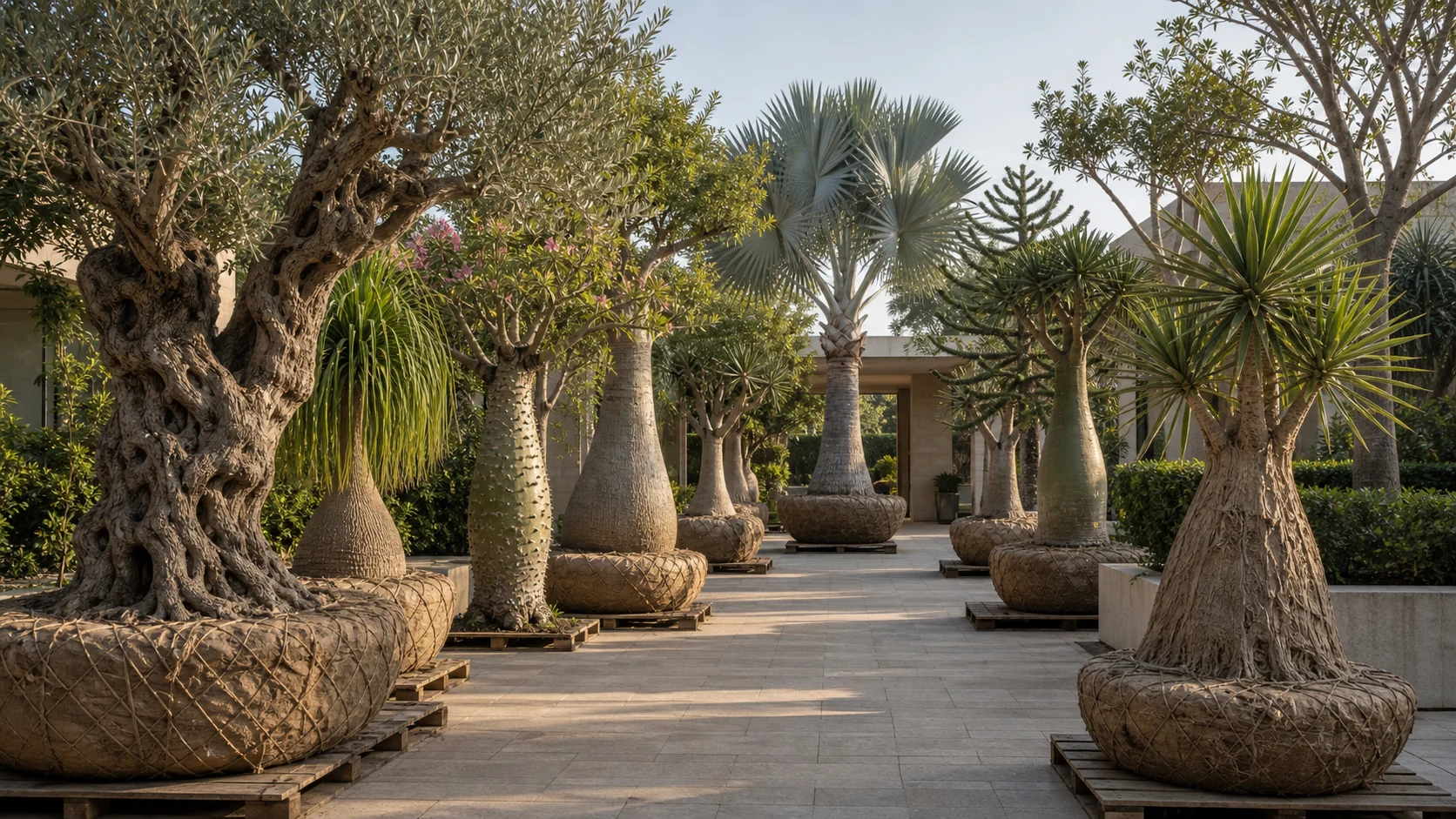
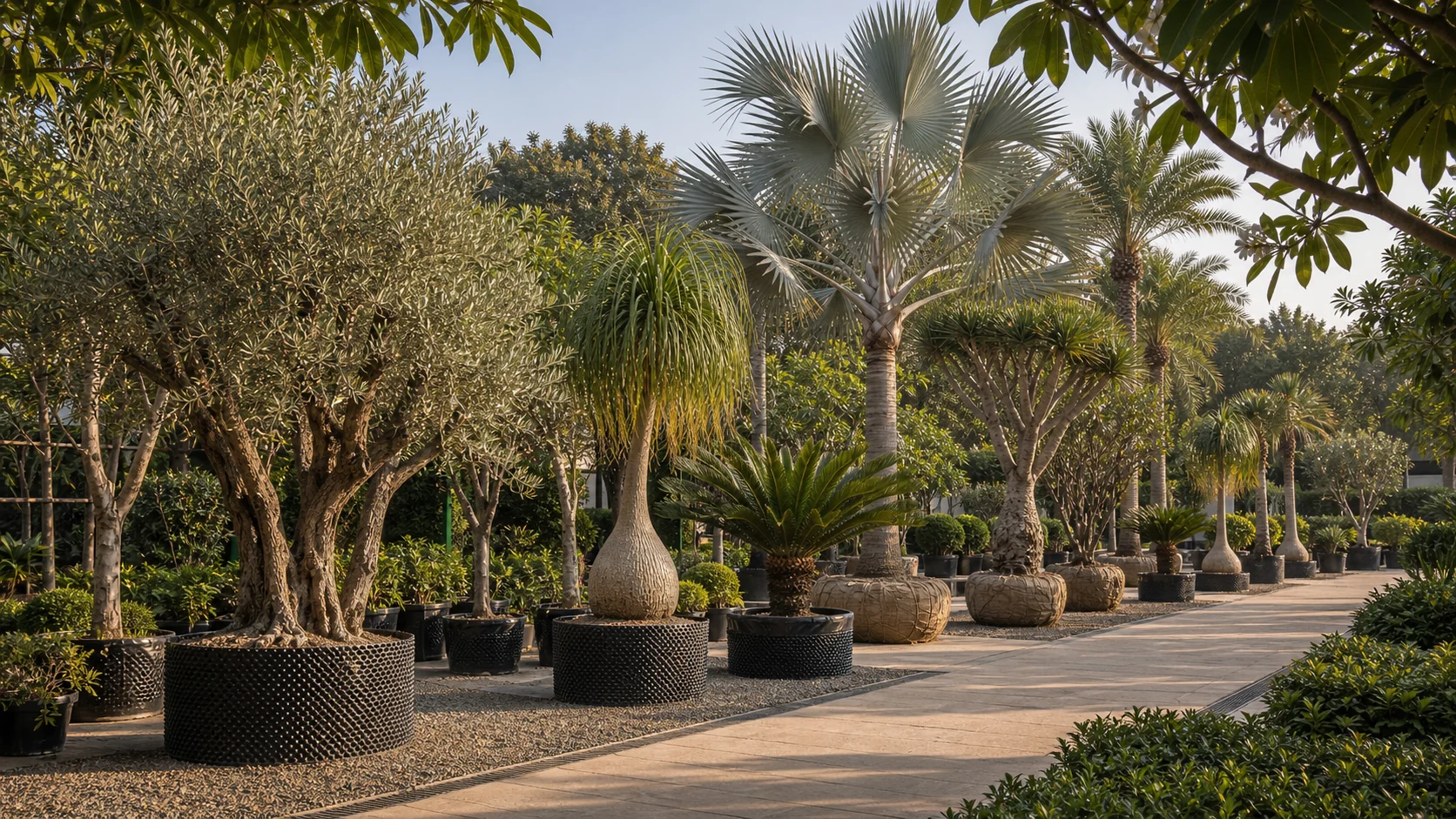
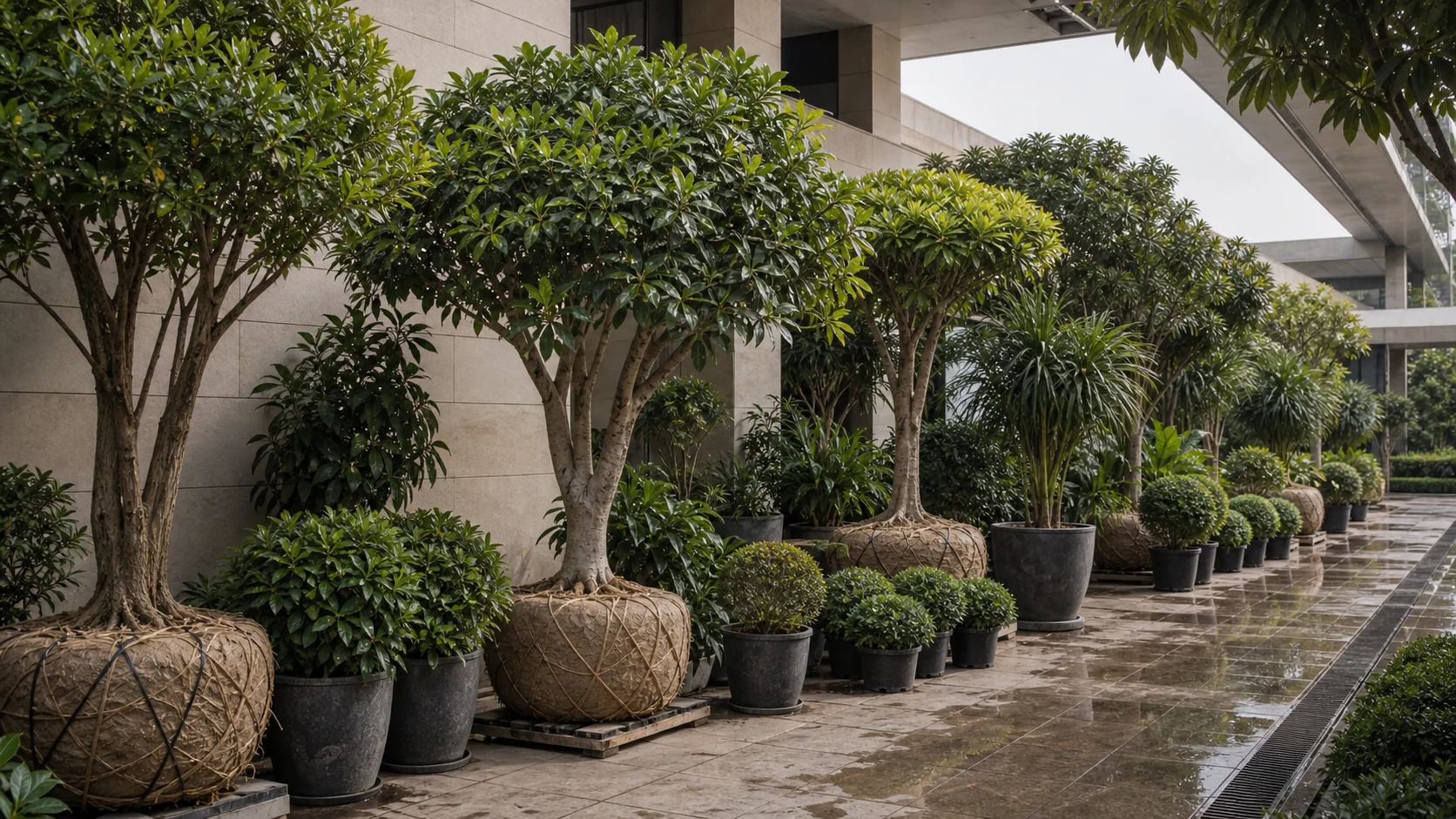
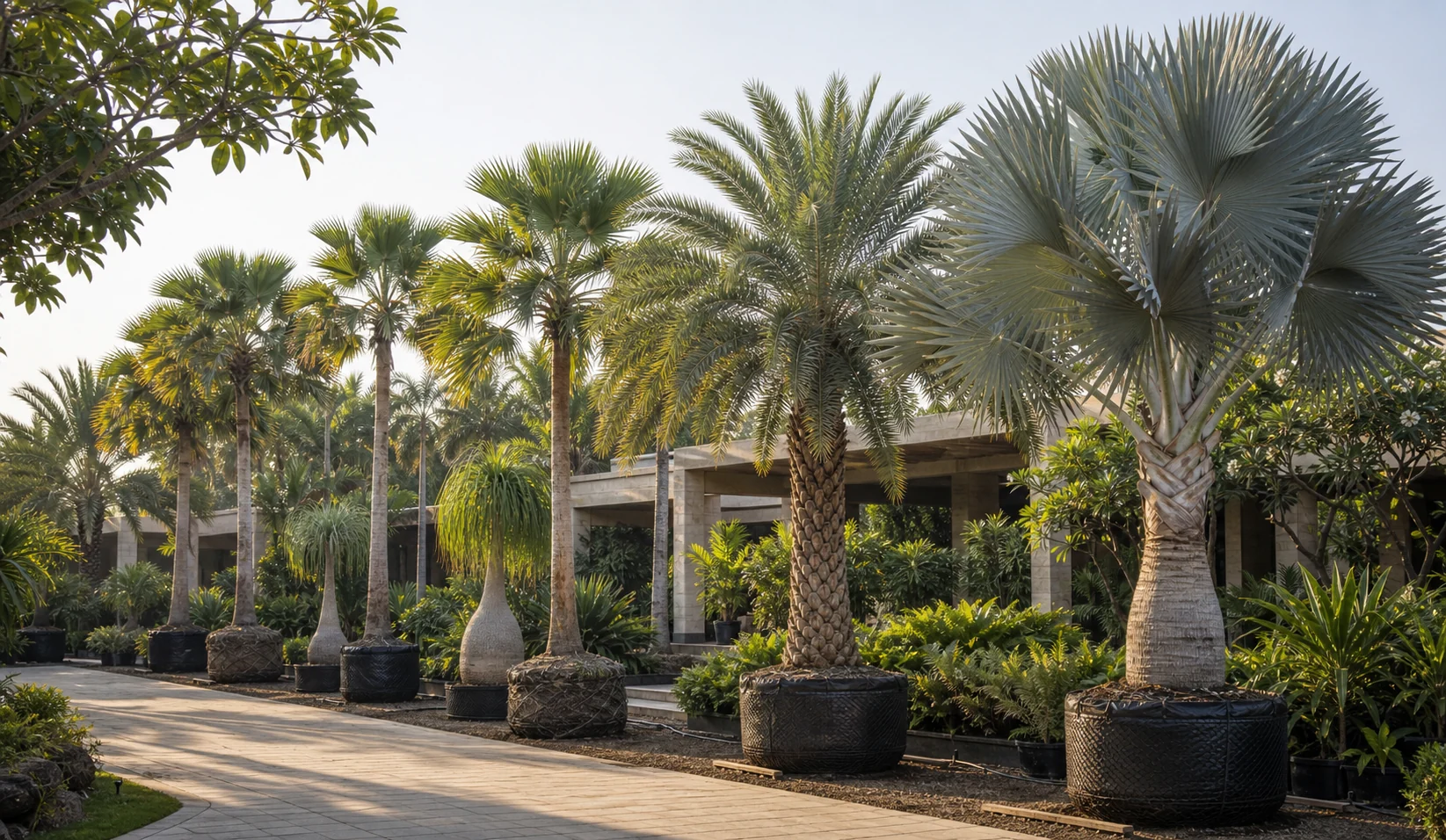
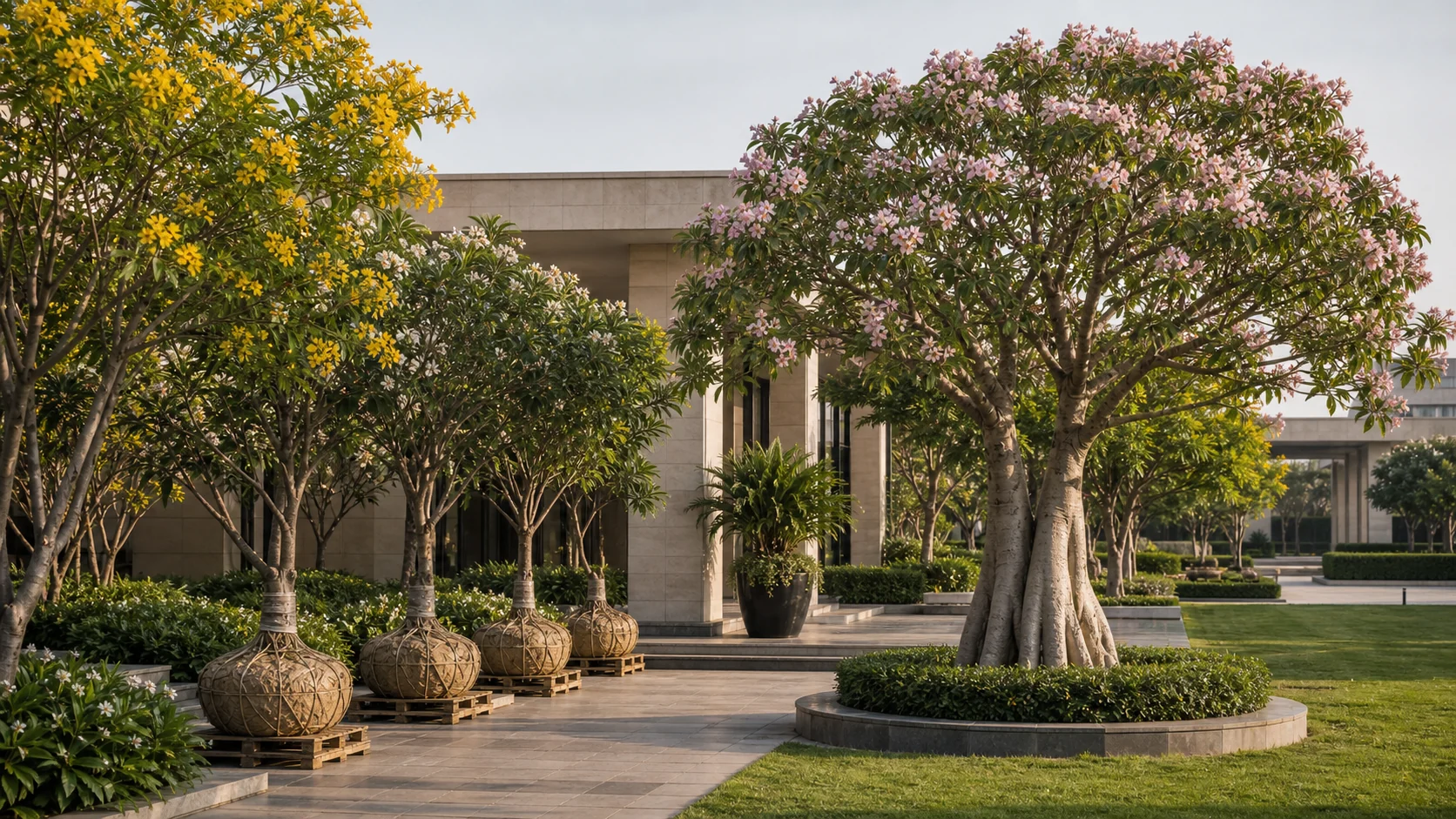
Visual context for placement, scale, handling, and landscape integration.
Section
Where it's used in premium projects
Illawarra flame tree anchors dramatic red-flowering avenues and feature specimens — resort drives and estate entries where bare-branch red bells must photograph as the design payoff, not background green.
Section
Climate & site suitability in India
Warm India climates suit growth; flowering reliability varies year to year — disclose erratic bloom to owners. Frost in North India damages young plants. Brittle wood needs wind review on exposed ridges.
Section
Sourcing & acclimatisation
Specify trunk caliper and past flowering history if known — [Unverified: typical India acerifolius vs Australian import]. Distinguish from *B. discolor* pink and *B. populneus* cream bottle-trunk shade tree.
Section
Installation (pit, soil, drainage, bracing)
Large pits with drainage; bracing on tall transplants until roots anchor. Plan bare-branch season photography — irrigation should not force perpetual foliage at expense of flowering rhythm.
Section
Establishment & AMC
AMC manages deciduous leaf drop and flowering litter on paving — do not over-fertilise into foliage-only years. Structural prune for clearance without stripping flowering wood. Compare to *B. rupestris* bottle tree only when trunk form, not flower colour, is the brief.
Section
Cost drivers
Explore
Related
Related
Related links
Services, segments, cost, and proof.
- Softscape & horticulture
- Irrigation & water management
- Landscape maintenance (AMC)
- Hotel & resort landscaping
- Luxury resort & spa landscaping
- Mall & retail landscaping
- Corporate campus landscaping
- Projects
- Commercial landscaping cost guide
- Pricing drivers (imported trees)
- Import compliance workflow
- Request a site assessment
- What is the Illawarra flame tree flower display?
- Brilliant red bell flowers on bare branches above glossy lobed leaves — the signature semi-deciduous spectacle.
- Is flowering reliable every year in India?
- Often erratic or biennial — honest programmes should not guarantee annual red display without local provenance data.
- How does acerifolius differ from discolor?
- Acerifolius is red on bare branches; discolor is pink bells with felty leaf undersides — match BOQ to colour intent.
- How large can flame trees grow?
- Often multi-storey spread — programme setbacks, paving root zones, and crane access for mature avenue classes.
- Are branches brittle?
- Yes — wind exposure and post-storm inspection matter on exposed sites.
- What import steps apply to Brachychiton flame trees?
- Australian flowering tree consignments need species-accurate phytosanitary paperwork and Indian quarantine inspection per shipment (informational, not legal advice).
- How should flame tree BOQs compare to populneus kurrajong?
- Acerifolius sells red flowering drama; populneus sells drought bottle-trunk shade with modest cream bells — different design intent.