
Golden shower
Golden shower (Cassia fistula)
Cassia fistula — Amaltas — is the native Indian icon of pendulous golden-yellow flower chains on a fast, drought-hardy deciduous tree, specified for golden avenues and heritage features where bloom timing and chain form are the entire brief.
Spec
At a glance
- Botanical name
- Cassia fistula
- Family
- Fabaceae (Caesalpiniaceae)
- Common names
- Golden shower, Amaltas, Indian laburnum
- Origin
- India and South-east Asia (native)
- Plant type
- Deciduous flowering avenue tree
- Mature height
- Often 10–15 m; fast in warm sites
- Trunk / form
- Straight trunk; compound leaves; long cylindrical seed pods
- Crown spread
- Wide crown; pendulous golden flower chains
- Growth rate
- Fast in favourable warm sites
- Light
- Full sun
- Water needs
- Drought-hardy when established
- India climate suitability
- Native across warm India — classic avenue species
- Cold/heat & salt/wind tolerance
- Heat-hardy; brittle wood; long seed pods
- Typical supply size
- Avenue caliper classes [Unverified]
- Lead time (sourcing)
- [Unverified] native nursery Amaltas stock
- Install considerations
- Avenue alignment; bracing; pod litter planning
- Maintenance level
- Moderate — golden chain litter; pod cleanup; brittle branch checks
- Cautions
- Deciduous; brittle branches; long cylindrical seed pods on paving
Gallery
Specimen visual guide
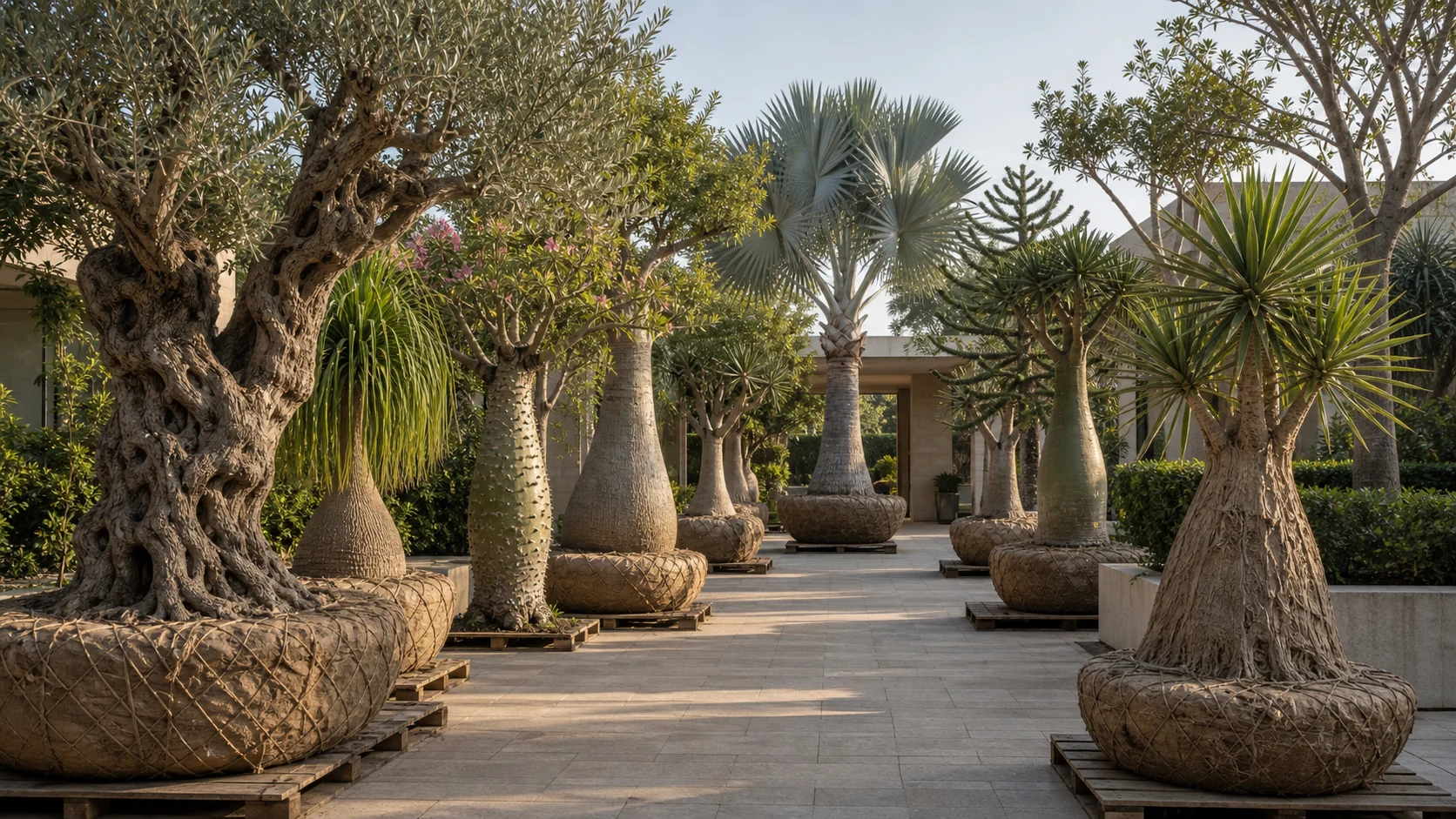
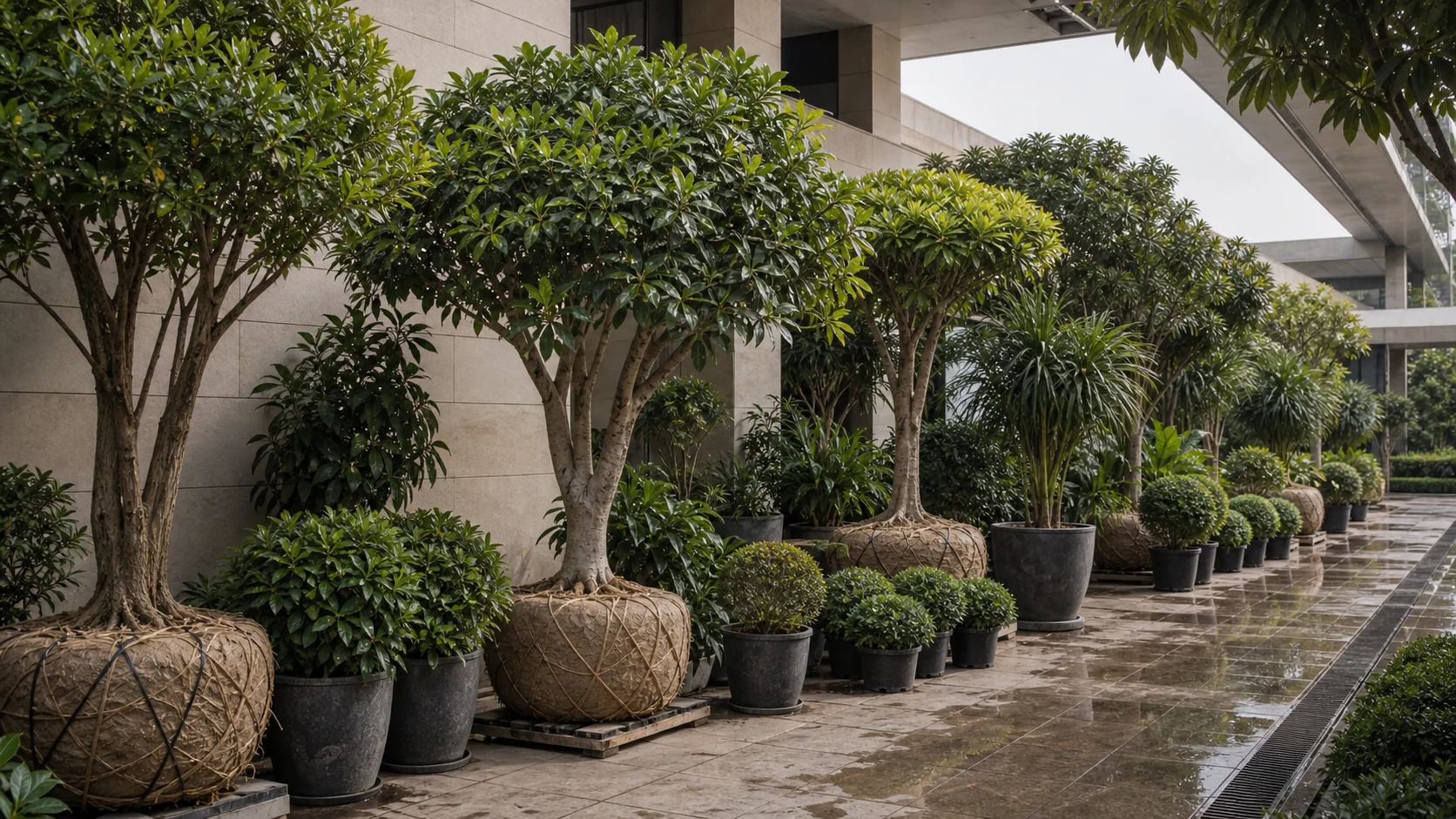
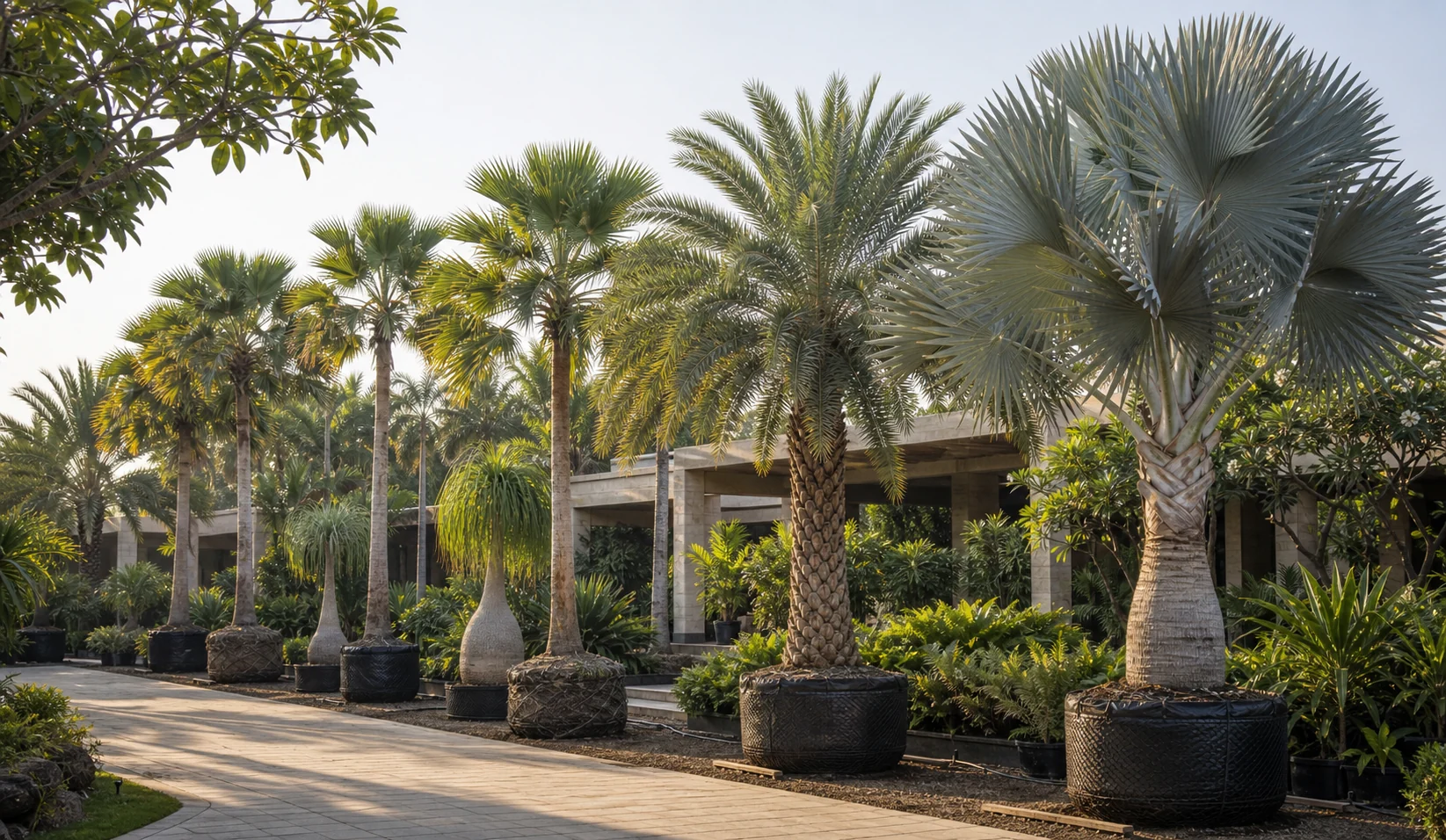
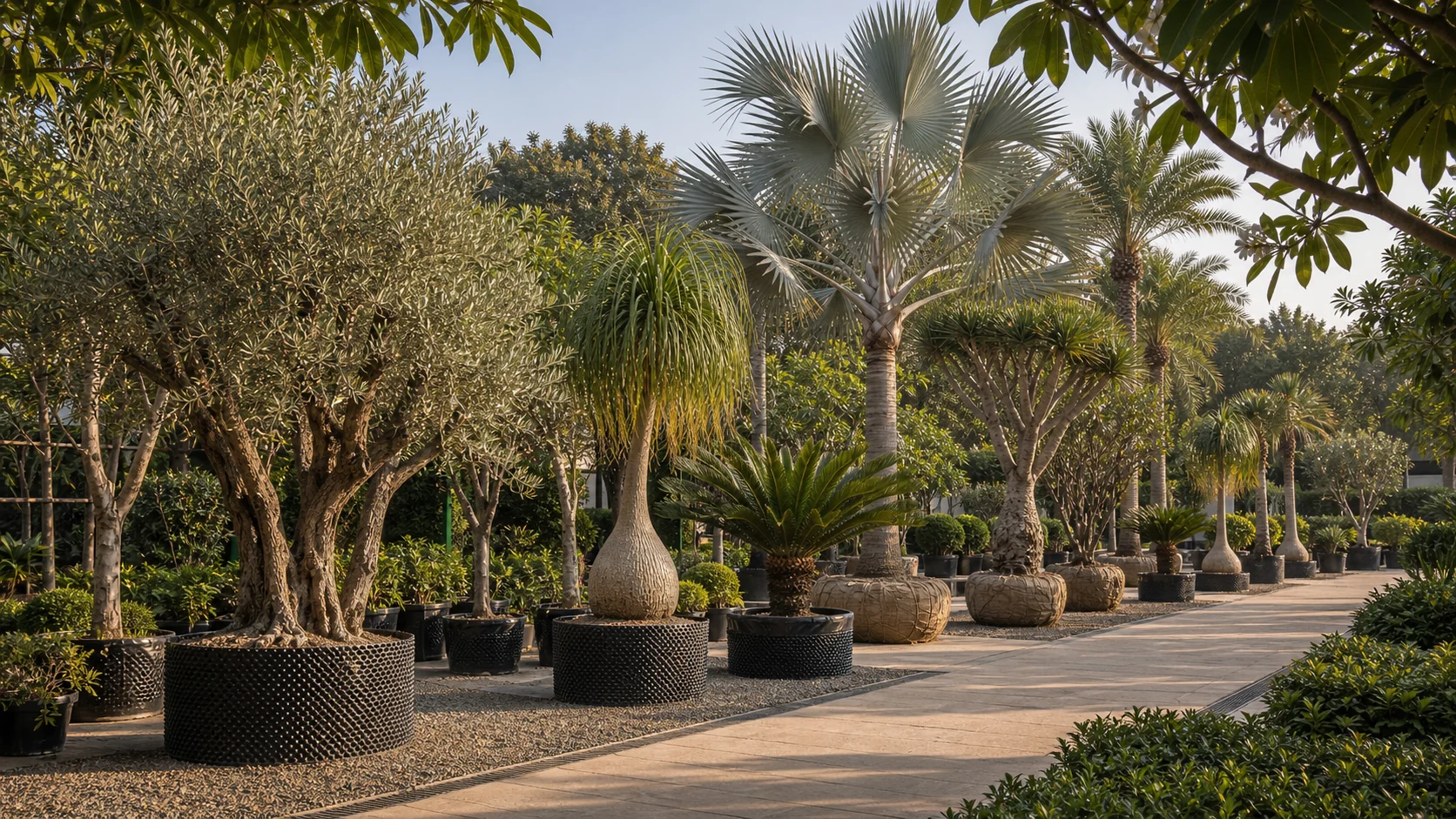
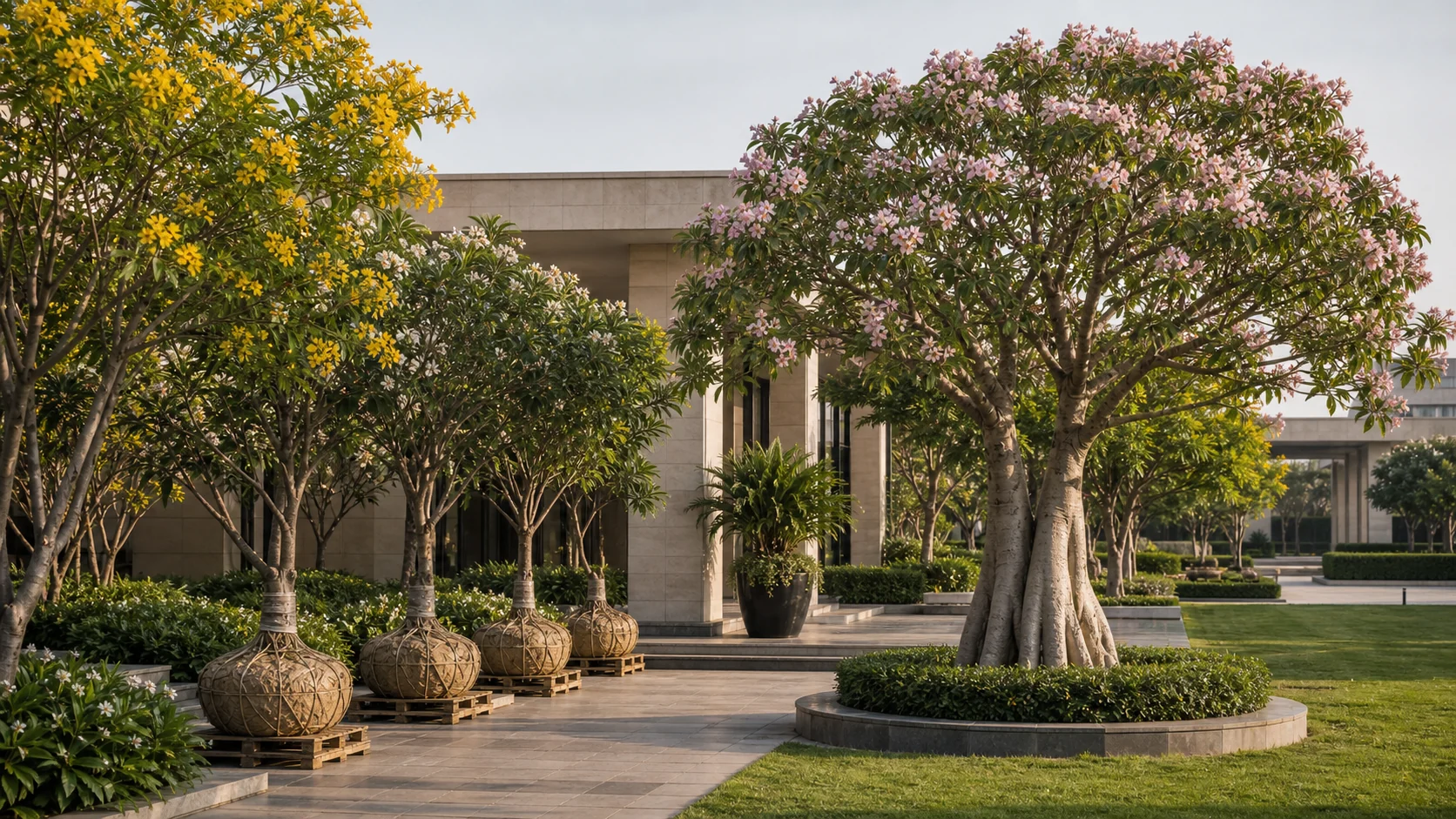
Visual context for placement, scale, handling, and landscape integration.
Section
Where it's used in premium projects
Amaltas anchors golden-flowering avenues, institutional drives, and native heritage masterplans — pendulous chains must read in BOQ as flowering architecture, not generic yellow tree fill.
Section
Climate & site suitability in India
Native warm India timing — flowering season drives photography and event programming. Brittle wood needs wind review; long pods stain and litter paving if ignored in AMC.
Section
Sourcing & acclimatisation
Specify avenue uniformity and trunk caliper — pink/white forms may exist elsewhere but this entry is golden *C. fistula* specimen class. [Unverified: typical large-caliber native nursery lead times.]
Section
Installation (pit, soil, drainage, bracing)
Avenue pits aligned for chain display sightlines; bracing on tall fast-grown transplants. Plan pod litter zones on light stone — AMC scope must include chain drop weeks.
Section
Establishment & AMC
AMC schedules golden chain litter separately from everyday green waste; structural prune for clearance without removing flowering wood. Do not confuse with yellow African tulip or golden gulmohar — different forms and invasiveness profiles.
Section
Cost drivers
Explore
Related
Related
Related links
Services, segments, cost, and proof.
- Softscape & horticulture
- Irrigation & water management
- Landscape maintenance (AMC)
- Hotel & resort landscaping
- Luxury resort & spa landscaping
- Mall & retail landscaping
- Corporate campus landscaping
- Projects
- Commercial landscaping cost guide
- Pricing drivers (imported trees)
- Import compliance workflow
- Request a site assessment
- What is the Amaltas flower display?
- Pendulous chains of golden-yellow flowers — the native avenue icon, not cup-shaped tulip flowers or gulmohar umbrellas.
- When does Cassia fistula flower in India?
- Peak chains typically align with warm-season flowering windows — confirm local nursery phenology for your latitude; programme events around bloom, not arbitrary opening dates.
- Why is native heritage noted?
- Amaltas is culturally familiar across India — specimen grade still needs engineering and AMC like any large avenue tree.
- How fast does golden shower grow?
- Fast in warm sites — plan brittleness and spread at maturity, not only quick height.
- What maintenance do long pods require?
- Cylindrical pods litter paving — schedule cleanup and guest path clearance in pod-drop seasons.
- What compliance applies to native Cassia specimens?
- Domestic nursery movement still needs healthy-stock documentation for institutional procurement — import rules differ from native production (informational, not legal advice).
- How should Amaltas BOQs compare to yellow Palash?
- Cassia sells pendulous golden chains; Butea lutea sells rare yellow bare-branch Palash — different form and provenance premium.