
Yellow Palash
Yellow flame of the forest (Butea monosperma var. lutea)
Butea monosperma var. lutea is the rare yellow Palash — brilliant yellow bloom on bare branches on a native Indian drought-hardy tree with cultural weight, specified when heritage colour must be yellow, not the common orange flame.
Spec
At a glance
- Botanical name
- Butea monosperma var. lutea
- Family
- Fabaceae (Papilionaceae)
- Common names
- Yellow Palash, yellow flame of the forest, Dhak (yellow form)
- Origin
- India (native; rare yellow form)
- Plant type
- Deciduous flowering heritage tree
- Mature height
- Often 8–12 m
- Trunk / form
- Rough grey bark; gnarled character with age
- Crown spread
- Wide crown; yellow flowers on bare branches
- Growth rate
- Slow to moderate
- Light
- Full sun
- Water needs
- Drought-hardy; low once established
- India climate suitability
- Native dry and seasonal India — widespread cultural familiarity
- Cold/heat & salt/wind tolerance
- Heat and drought hardy; deciduous winter leaflessness
- Typical supply size
- Rare yellow-form specimen classes [Unverified]
- Lead time (sourcing)
- [Unverified] careful sourcing of true lutea form
- Install considerations
- Native tree pit; flowering season litter plan
- Maintenance level
- Low-moderate — cultural sensitivity in messaging
- Cautions
- Yellow form rare — verify true lutea; deciduous; slow-ish
Gallery
Specimen visual guide
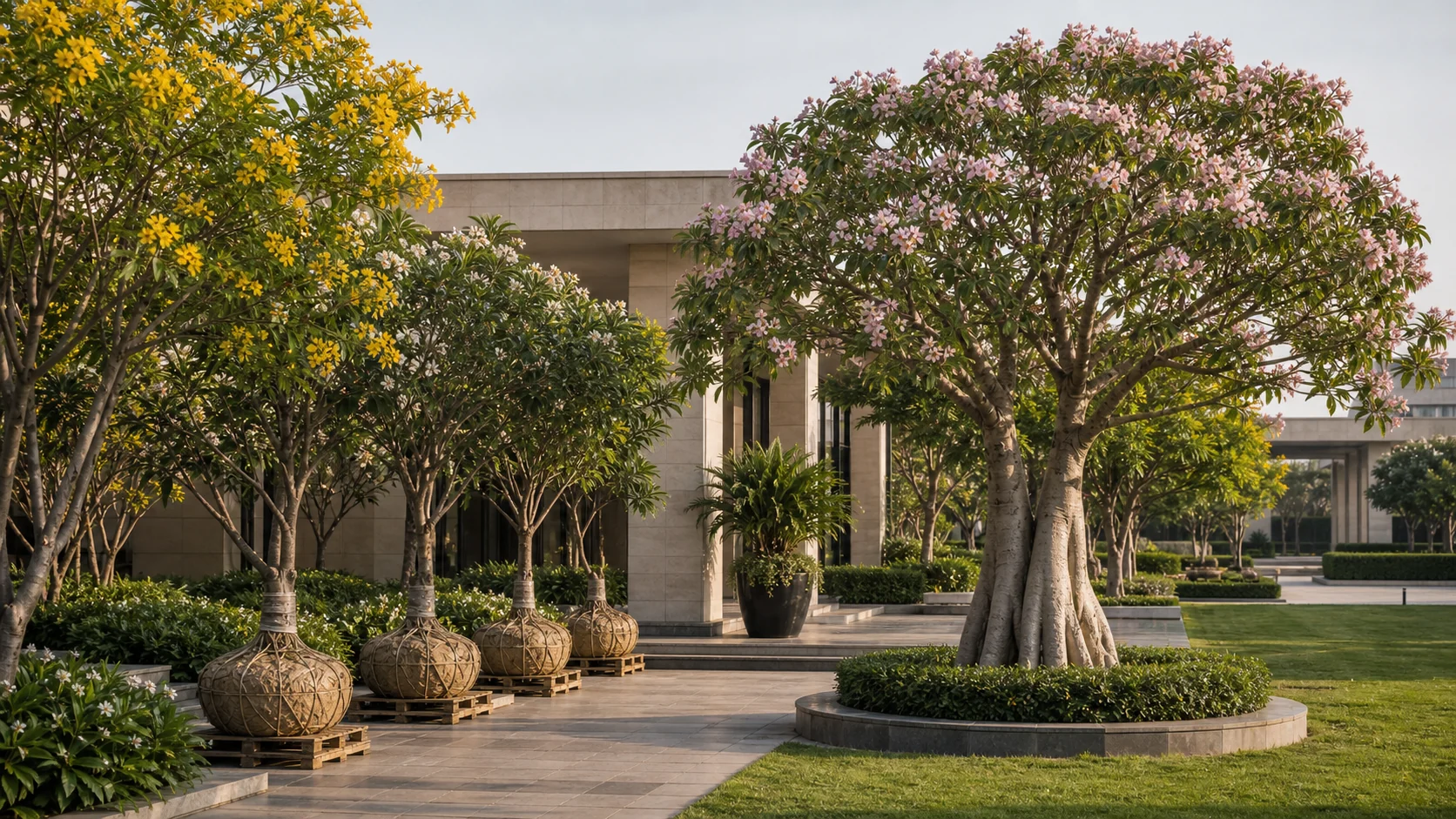
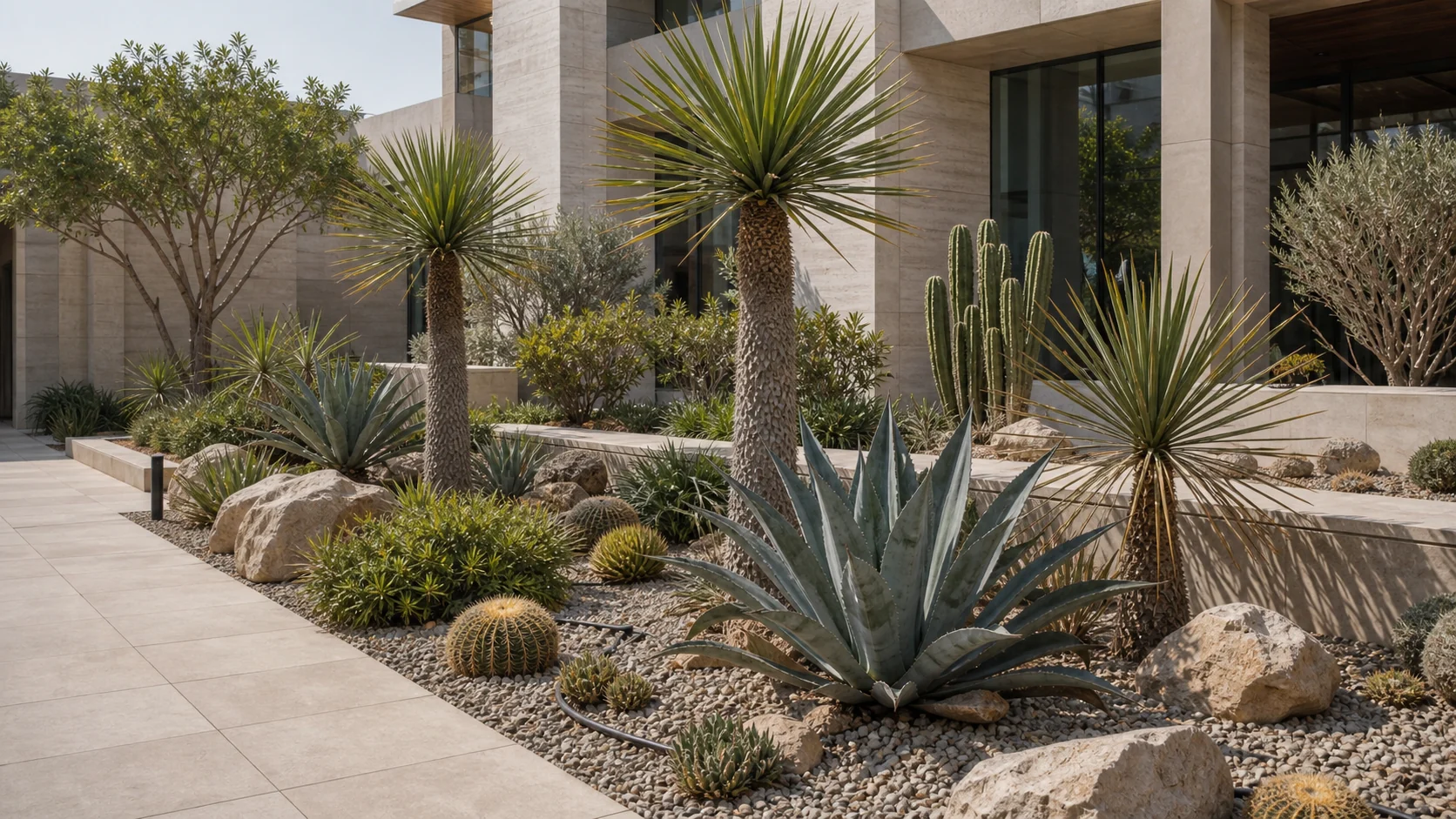
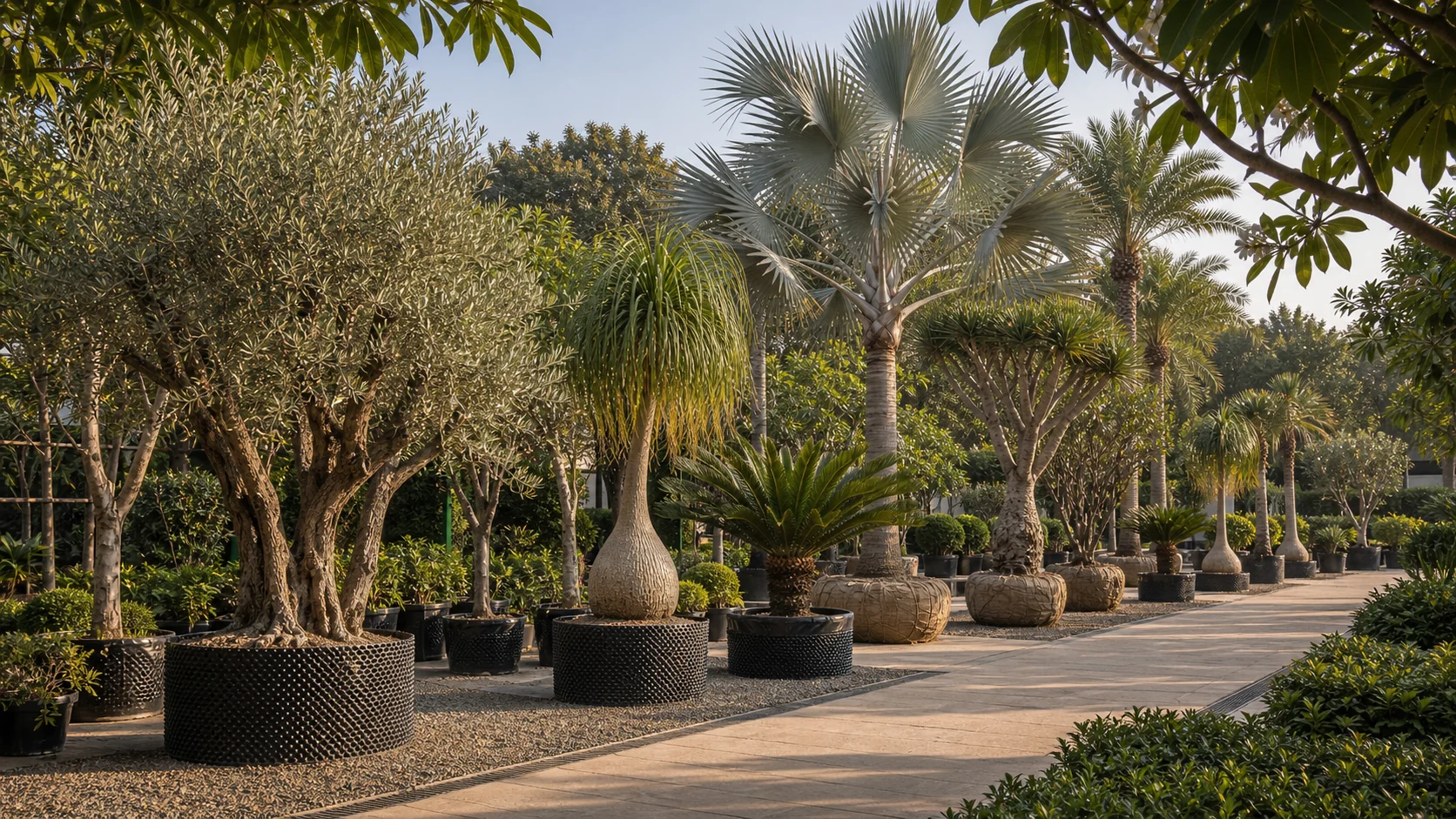
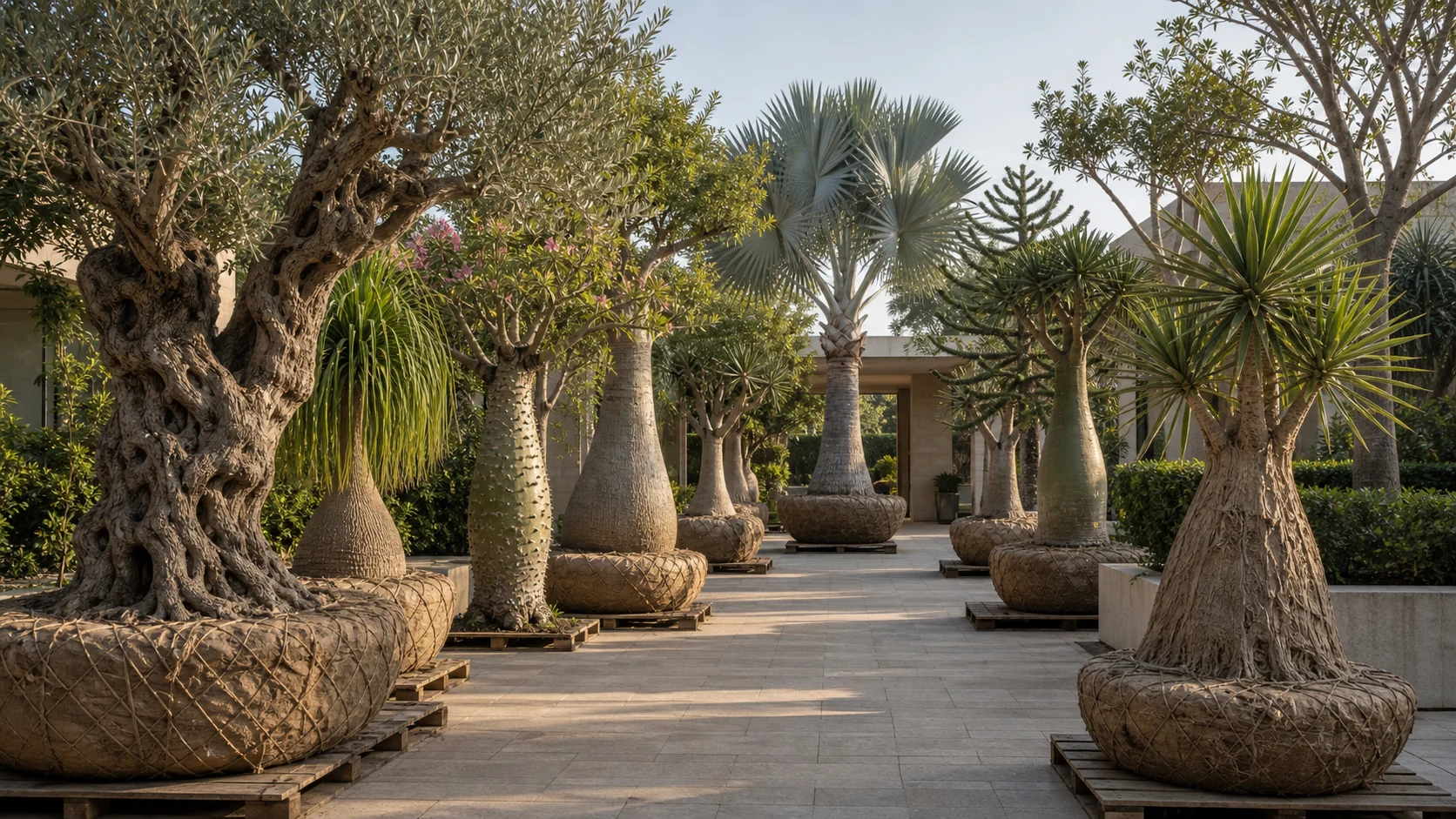
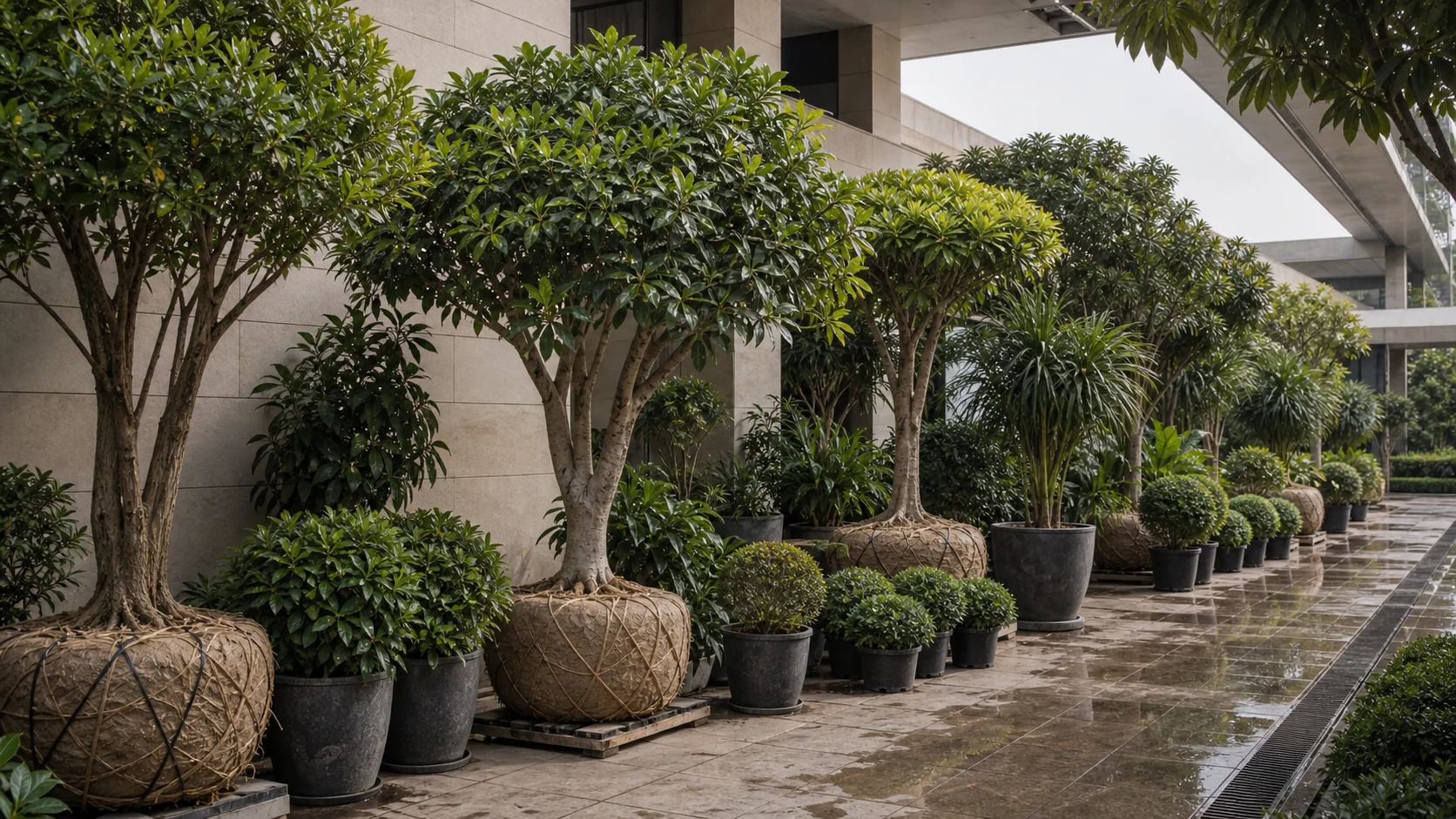
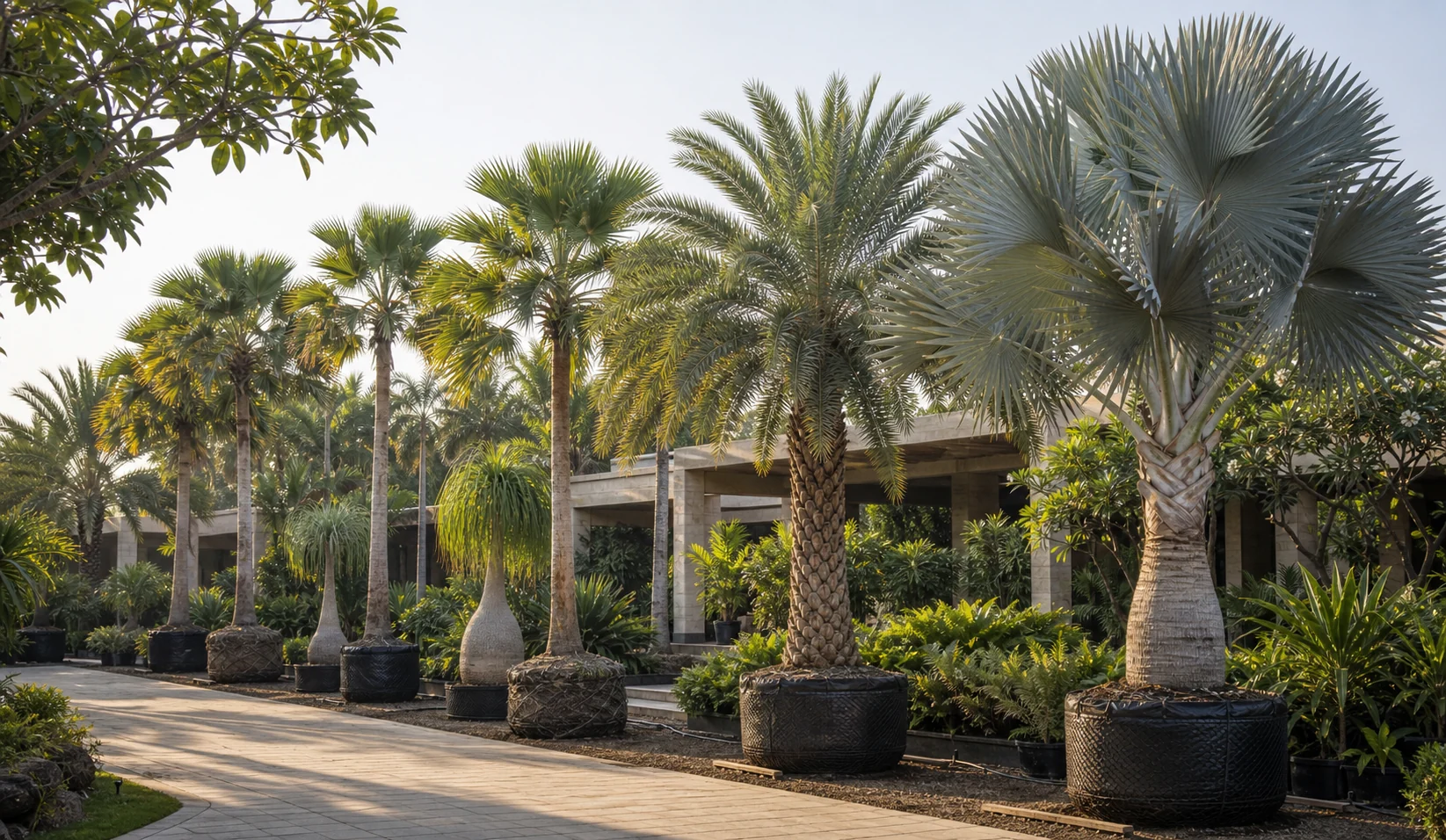
Visual context for placement, scale, handling, and landscape integration.
Section
Where it's used in premium projects
Yellow Palash is native heritage spectacle — institutional campuses, cultural landscapes, and estate features where rare yellow bloom on bare branches carries meaning beyond generic yellow flowering imports.
Section
Climate & site suitability in India
Native dry-season flowering rhythm suits much of India — verify true yellow form, not orange mislabel. Deciduous bare-branch display needs guest messaging in winter.
Section
Sourcing & acclimatisation
Rare yellow form requires provenance discipline — [Unverified: typical certified lutea nursery sources in India]. Document var. lutea on tags versus common orange Palash.
Section
Installation (pit, soil, drainage, bracing)
Standard large-tree pits with drainage; native species still need establishment irrigation. Plan paving tolerance for petal drop during peak yellow bloom.
Section
Establishment & AMC
AMC respects deciduous rhythm — do not over-irrigate into perpetual foliage at expense of flowering. Heritage messaging should note native status versus imported yellow trees like *Lophanthera*.
Section
Cost drivers
Explore
Related
Related
Related links
Services, segments, cost, and proof.
- Softscape & horticulture
- Irrigation & water management
- Landscape maintenance (AMC)
- Hotel & resort landscaping
- Luxury resort & spa landscaping
- Mall & retail landscaping
- Corporate campus landscaping
- Projects
- Commercial landscaping cost guide
- Pricing drivers (imported trees)
- Import compliance workflow
- Request a site assessment
- How is yellow Palash different from orange Palash?
- Same species complex but var. lutea is the rare yellow form — verify nursery tags, not flower colour assumptions on generic butea stock.
- Why is native heritage significant?
- Palash is culturally rooted in Indian landscapes — yellow form adds rarity to familiar sacred/contextual storytelling.
- When does yellow bloom appear?
- Typically on bare branches in dry-season flowering rhythm — programme photography windows, not evergreen colour.
- How drought-hardy is Butea?
- Native dry-season adaptation — establishment irrigation still required, then dry-wise AMC.
- How does yellow Palash compare to golden Amaltas?
- Palash is native Butea yellow on bare branches; Cassia fistula is pendulous golden chains — different genus, form, and cultural story.
- What sourcing proof is needed for lutea?
- Nursery documentation of var. lutea — orange-flowering stock mislabelled yellow fails design intent (informational provenance check, not legal advice).
- How should yellow Palash BOQs be priced?
- Rarity premium, caliper, provenance verification, and flowering litter scope — not standard orange Palash rates.