
Lacebark tree
Lacebark tree (Brachychiton discolor)
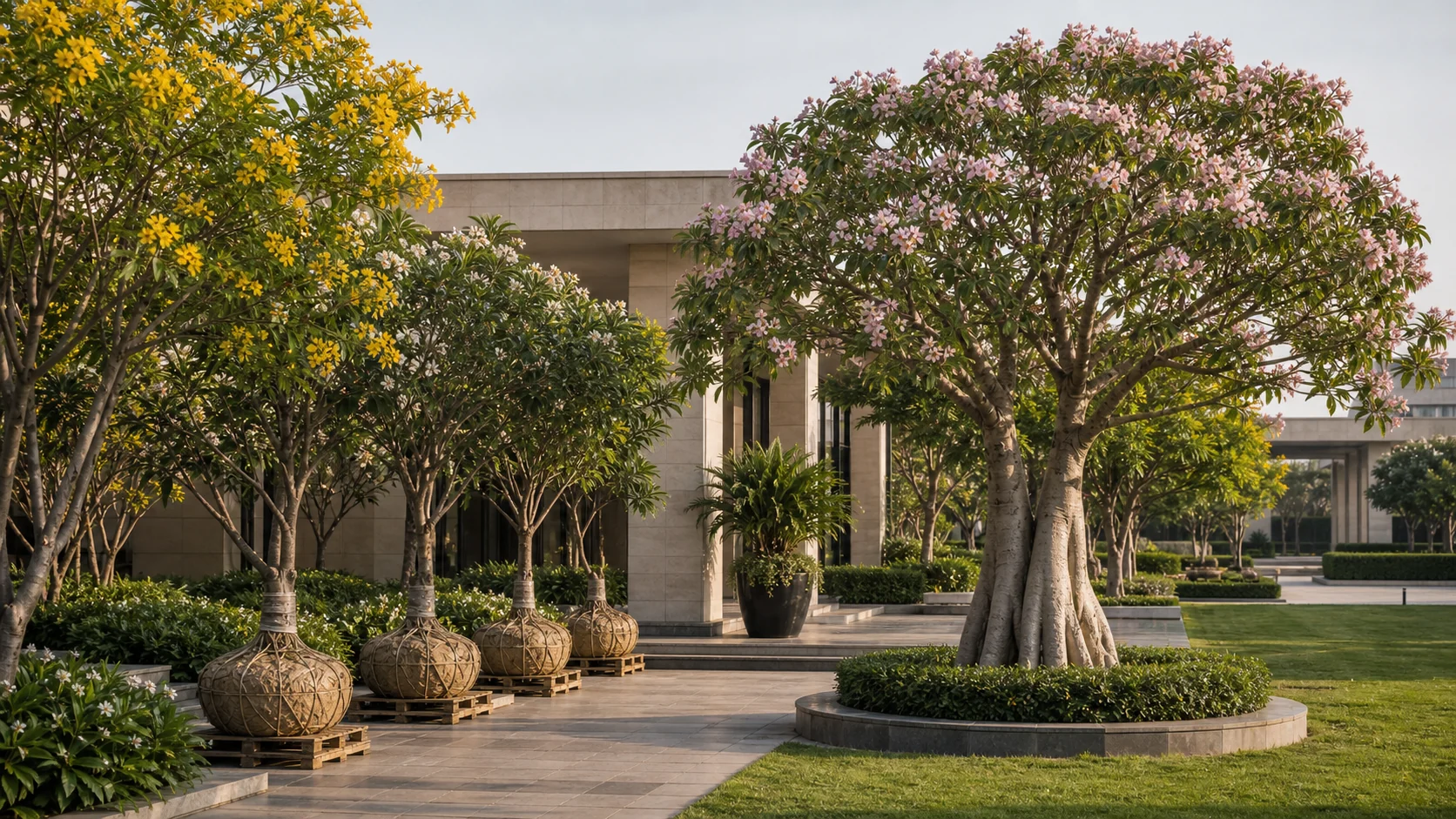
Brachychiton discolor — Queensland lacebark — carries pink bell flowers, felty leaf undersides, and a stout characterful trunk on a semi-deciduous frame, chosen when the brief wants pink flowering drama distinct from Illawarra red and kurrajong cream shade.
Spec
At a glance
- Botanical name
- Brachychiton discolor
- Family
- Malvaceae (Sterculiaceae)
- Common names
- Lacebark, Queensland lacebark, pink kurrajong
- Origin
- Eastern Australia (Queensland)
- Plant type
- Semi-deciduous flowering tree
- Mature height
- Often 10–18 m
- Trunk / form
- Stout trunk; felty undersides on lobed leaves
- Crown spread
- Broad crown; pink bell flowers in deciduous flowering period
- Growth rate
- Moderate
- Light
- Full sun
- Water needs
- Moderate; established drought tolerance
- India climate suitability
- Warm subtropical India; review frost north
- Cold/heat & salt/wind tolerance
- Heat-tolerant; large deciduous litter periods
- Typical supply size
- Feature trunk caliper classes [Unverified]
- Lead time (sourcing)
- [Unverified] Australian pink Brachychiton channels
- Install considerations
- Feature pit; bracing; flowering litter planning
- Maintenance level
- Moderate — pink bell litter; formative prune
- Cautions
- Deciduous flowering period; large size; distinguish from red acerifolius
Gallery
Specimen visual guide
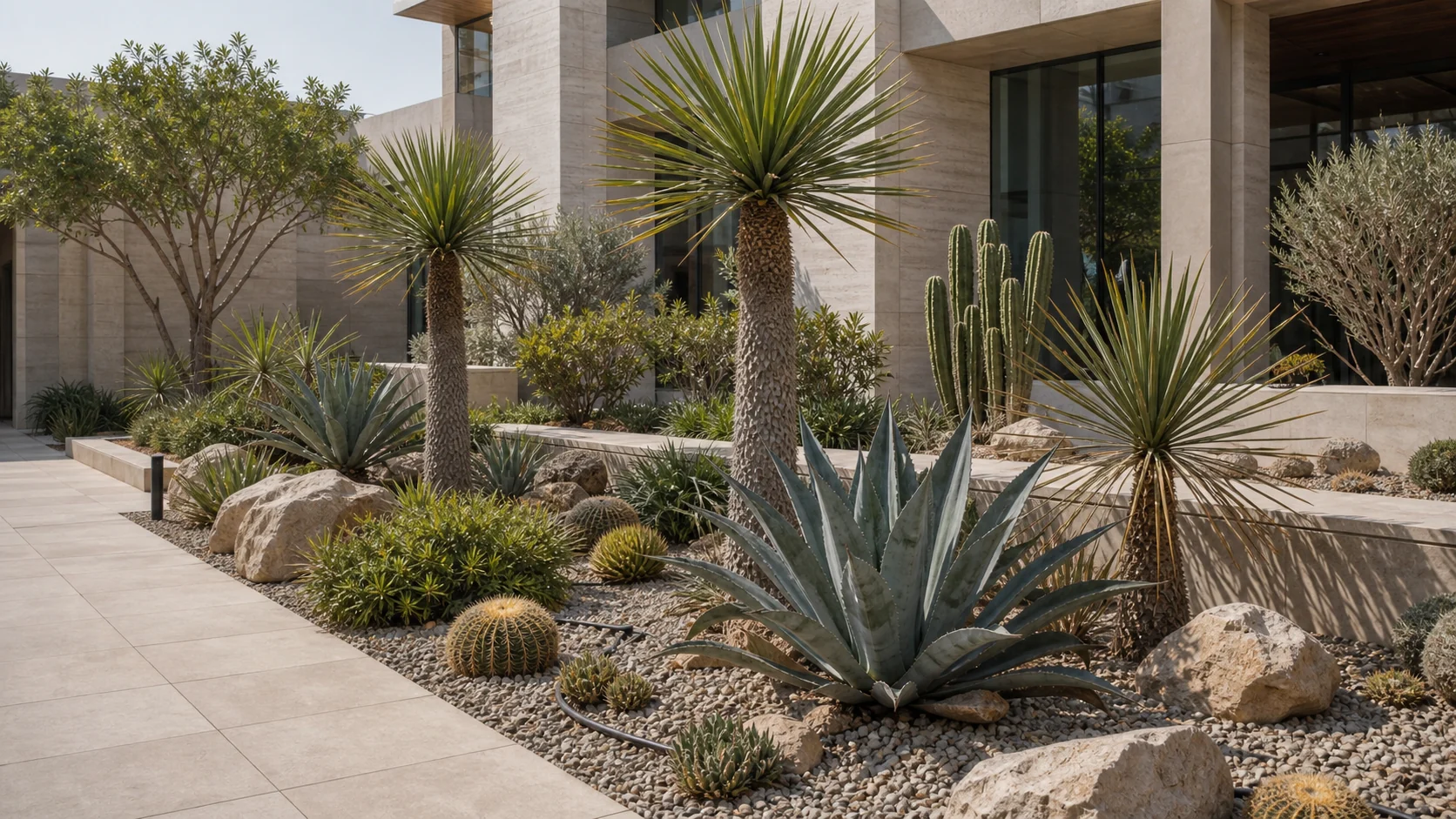
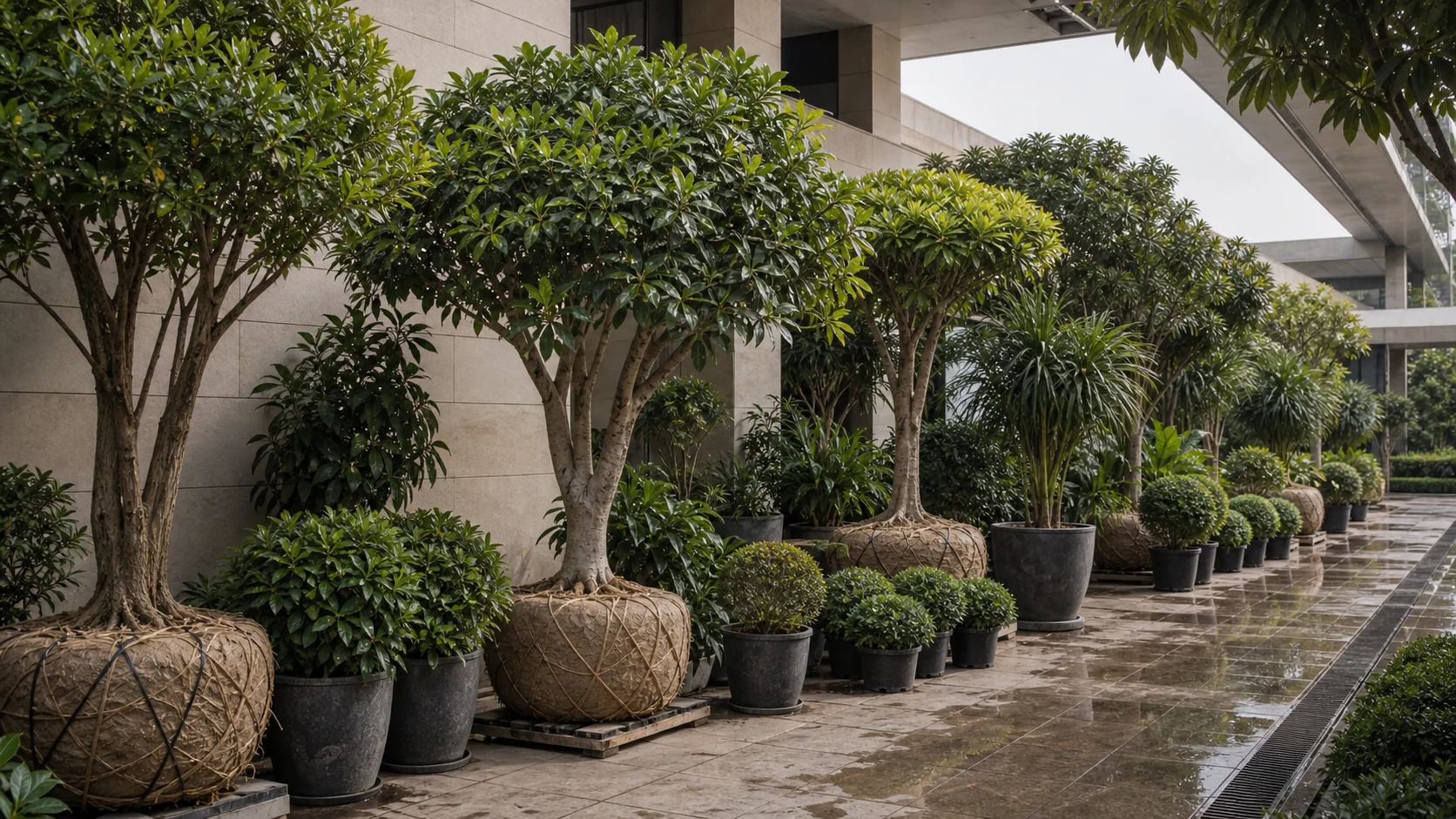
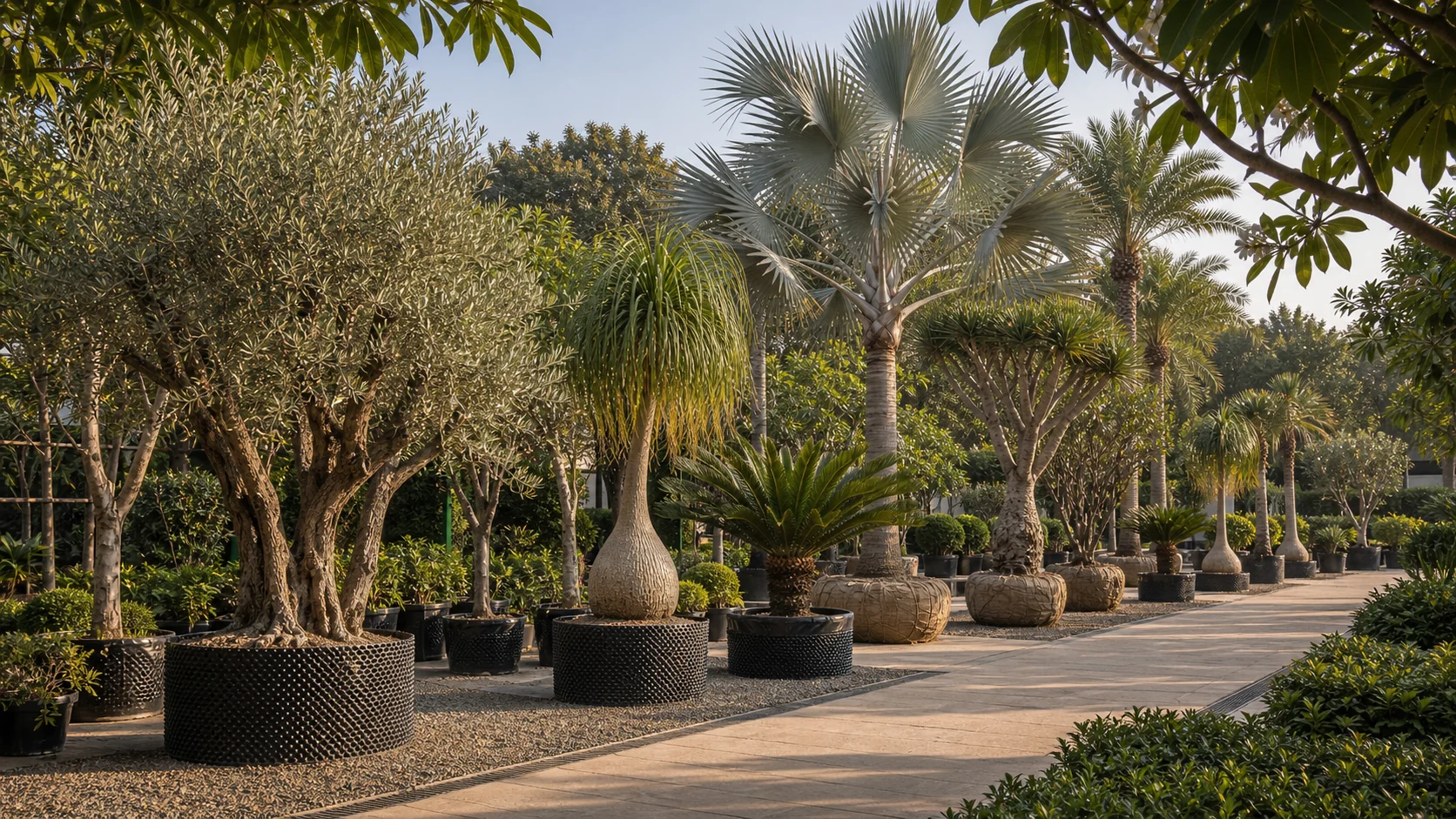
Visual context for placement, scale, handling, and landscape integration.
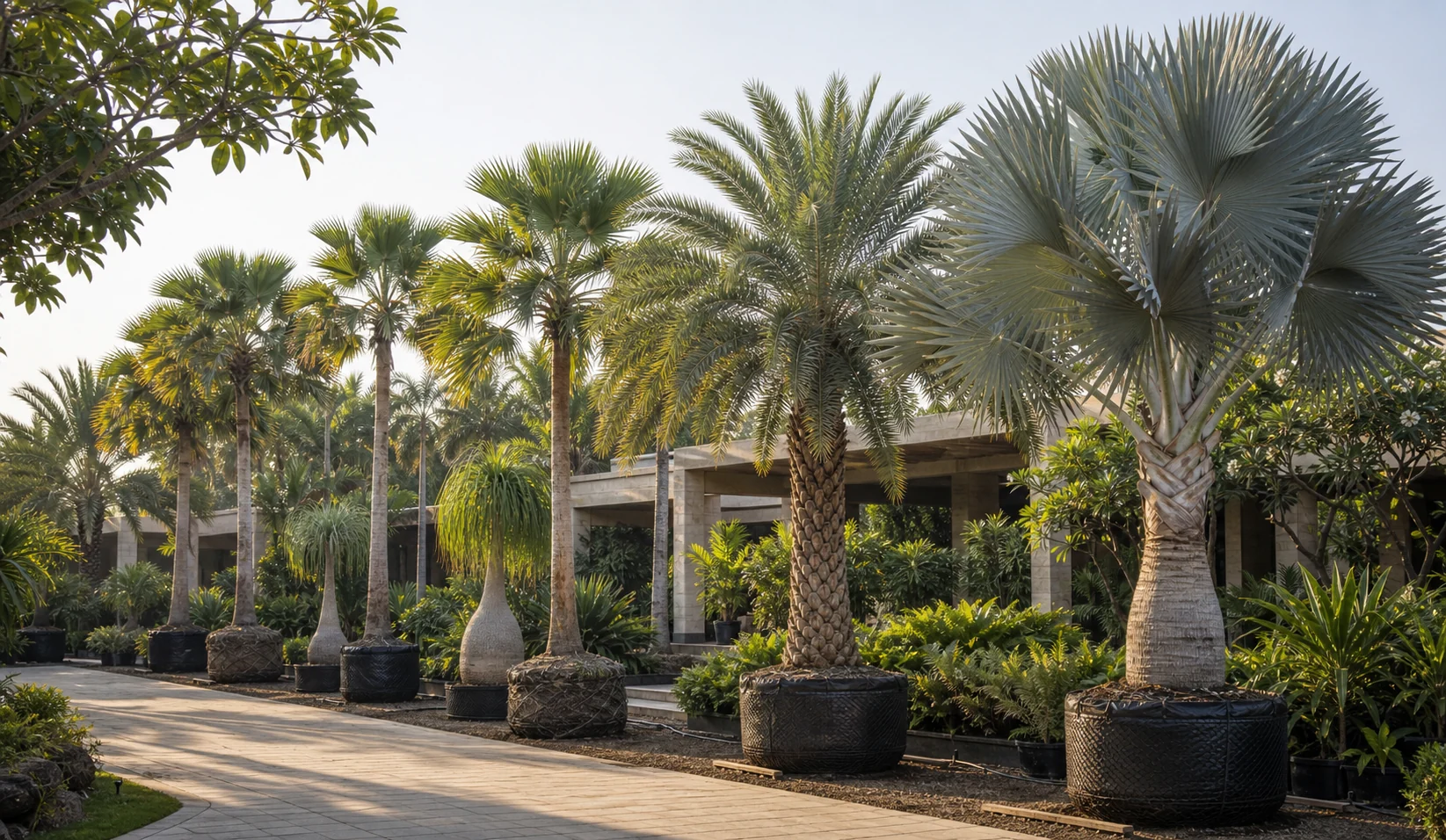
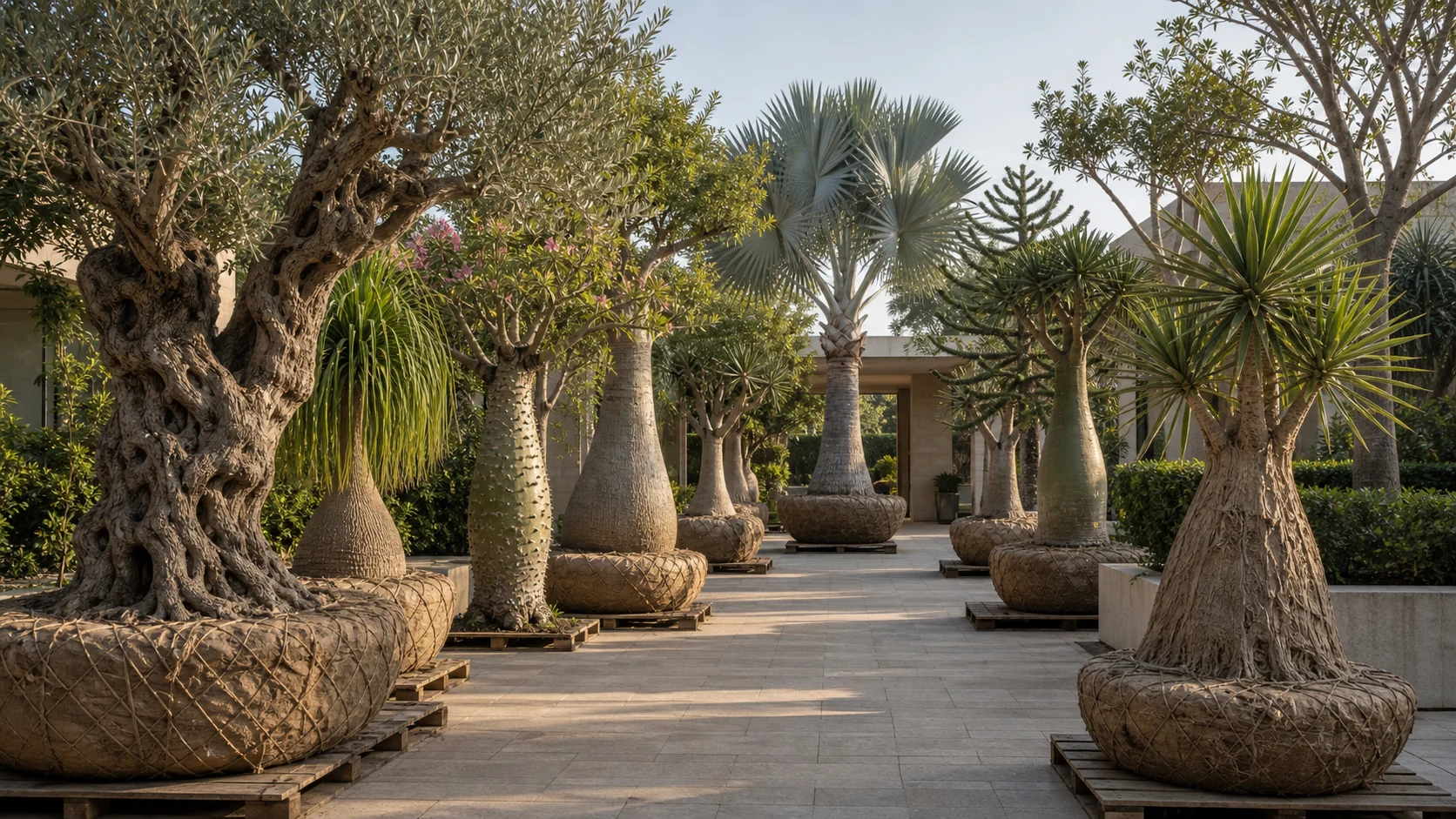
Section
Where it's used in premium projects
Lacebark is the pink-flowering Brachychiton feature — clubhouses, estate entries, and collector avenues where felty leaf undersides and stout trunk add character beyond bloom week alone.
Section
Climate & site suitability in India
Warm Indian climates suit growth; programme deciduous flowering window for guest messaging. Frost-sensitive young plants in North India need protection.
Section
Sourcing & acclimatisation
Photograph pink flower colour and felty leaf undersides — avoid acerifolius red mislabels. [Unverified: India-held vs Australian discolor stock.]
Section
Installation (pit, soil, drainage, bracing)
Stout trunk specimens need wide pits and drainage; bracing on tall transplants. Plan pink bell litter on light paving during flowering — not a maintenance surprise.
Section
Establishment & AMC
AMC coordinates deciduous leaf drop and flowering cleanup separately from everyday green waste. Do not compare bloom reliability to cassia amaltas — different genus and rhythm.
Section
Cost drivers
Explore
Related
Related
Related links
Services, segments, cost, and proof.
- Softscape & horticulture
- Irrigation & water management
- Landscape maintenance (AMC)
- Hotel & resort landscaping
- Luxury resort & spa landscaping
- Mall & retail landscaping
- Corporate campus landscaping
- Projects
- Commercial landscaping cost guide
- Pricing drivers (imported trees)
- Import compliance workflow
- Request a site assessment
- What colour are lacebark flowers?
- Pink bell flowers during the deciduous flowering period — distinct from acerifolius red and populneus cream.
- What are felty leaf undersides?
- Undersides of lobed leaves are softly hairy — a secondary ID character beyond pink bloom.
- How does discolor compare to Illawarra flame tree?
- Discolor is pink with felty leaves; acerifolius is red bare-branch display — do not swap BOQ by genus alone.
- How large does lacebark grow?
- Large feature scale — programme spread and root zone near paving early.
- Is the trunk a selling feature?
- Yes — stout characterful trunk complements pink flowering; specify caliper photos on BOQ.
- What quarantine applies to discolor imports?
- Brachychiton flowering trees need accurate species on phytosanitary certificates — discolor vs acerifolius mix-ups delay clearance (informational, not legal advice).
- How should discolor BOQs differ from populneus?
- Discolor sells pink flowering; populneus sells drought bottle-trunk shade with modest cream flowers — different landscape roles.