
Alluaudia procera
Alluaudia procera (Alluaudia procera)
Alluaudia procera is the classic tall erect spiny succulent columns of the Didiereaceae — small round leaves on vertical stems to several metres — chosen when the brief wants a cactus-garden skyscraper, not the bushier Madagascar ocotillo silhouette.
Spec
At a glance
- Botanical name
- Alluaudia procera
- Family
- Didiereaceae
- Common names
- Alluaudia procera, Madagascar alluaudia
- Origin
- South-west Madagascar
- Plant type
- Columnar spiny succulent tree
- Mature height
- Often 4–8 m+ in ideal dry conditions; slow
- Trunk / form
- Tall erect spiny succulent columns; small round drought-deciduous leaves
- Crown spread
- Vertical columns — minimal shade
- Growth rate
- Slow vertical — buy height for instant impact
- Light
- Full sun
- Water needs
- Very low; stem rot if wet/cold
- India climate suitability
- Arid and dry-tropical India with engineered drainage; poor in humid coast defaults
- Cold/heat & salt/wind tolerance
- Heat-hardy; wet+cold lethal; spines require placement discipline
- Typical supply size
- Column height classes 2–6 m [Unverified]
- Lead time (sourcing)
- [Unverified] collector nursery hold for tall columns
- Install considerations
- Crane on tall columns; mound planting; spine-safe rigging
- Maintenance level
- Low — dry AMC; inspect column bases after monsoon
- Cautions
- Spines; rot in wet/cold; verify columnar habit vs *A. madagascariensis*
Gallery
Specimen visual guide
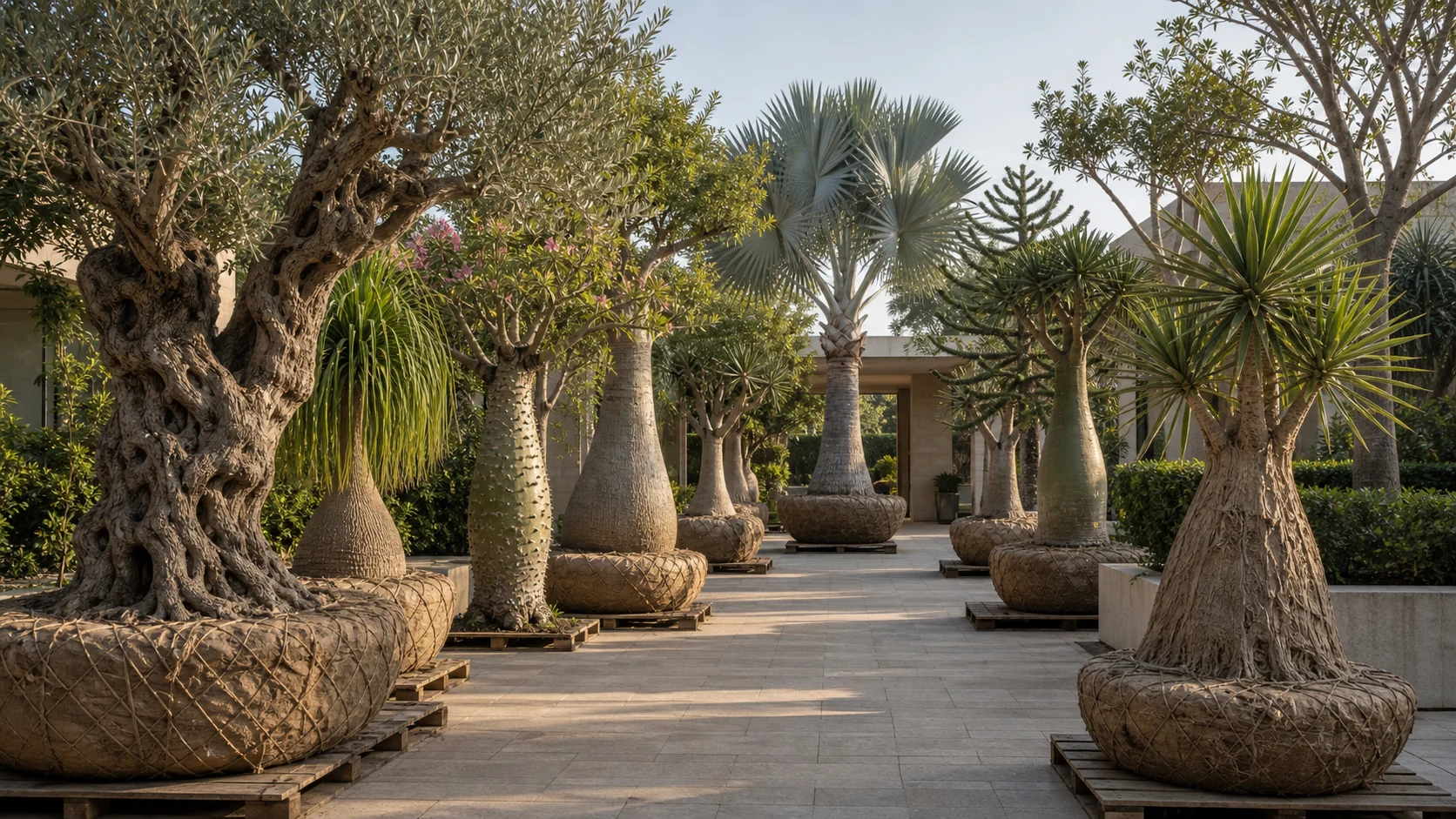
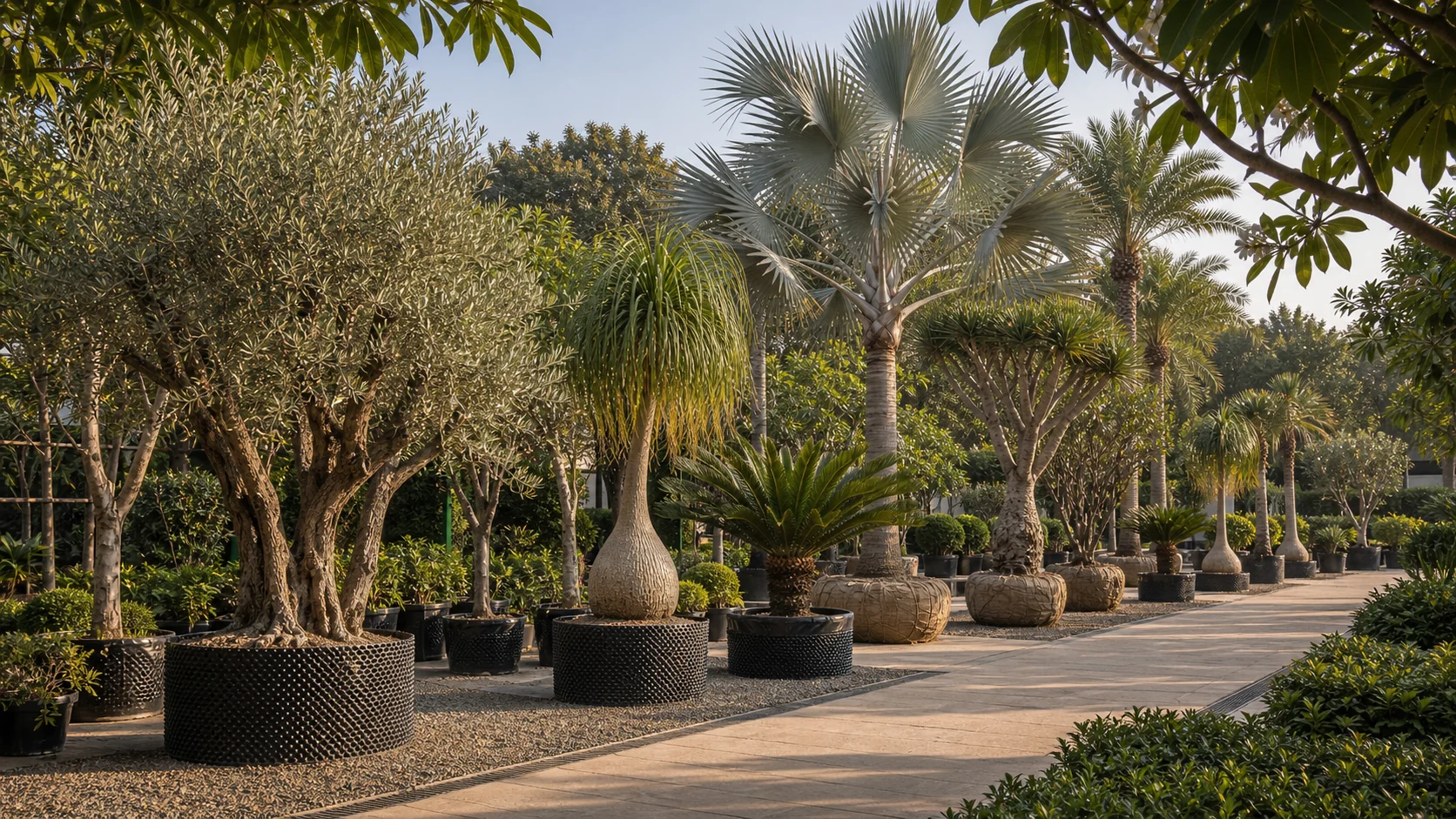
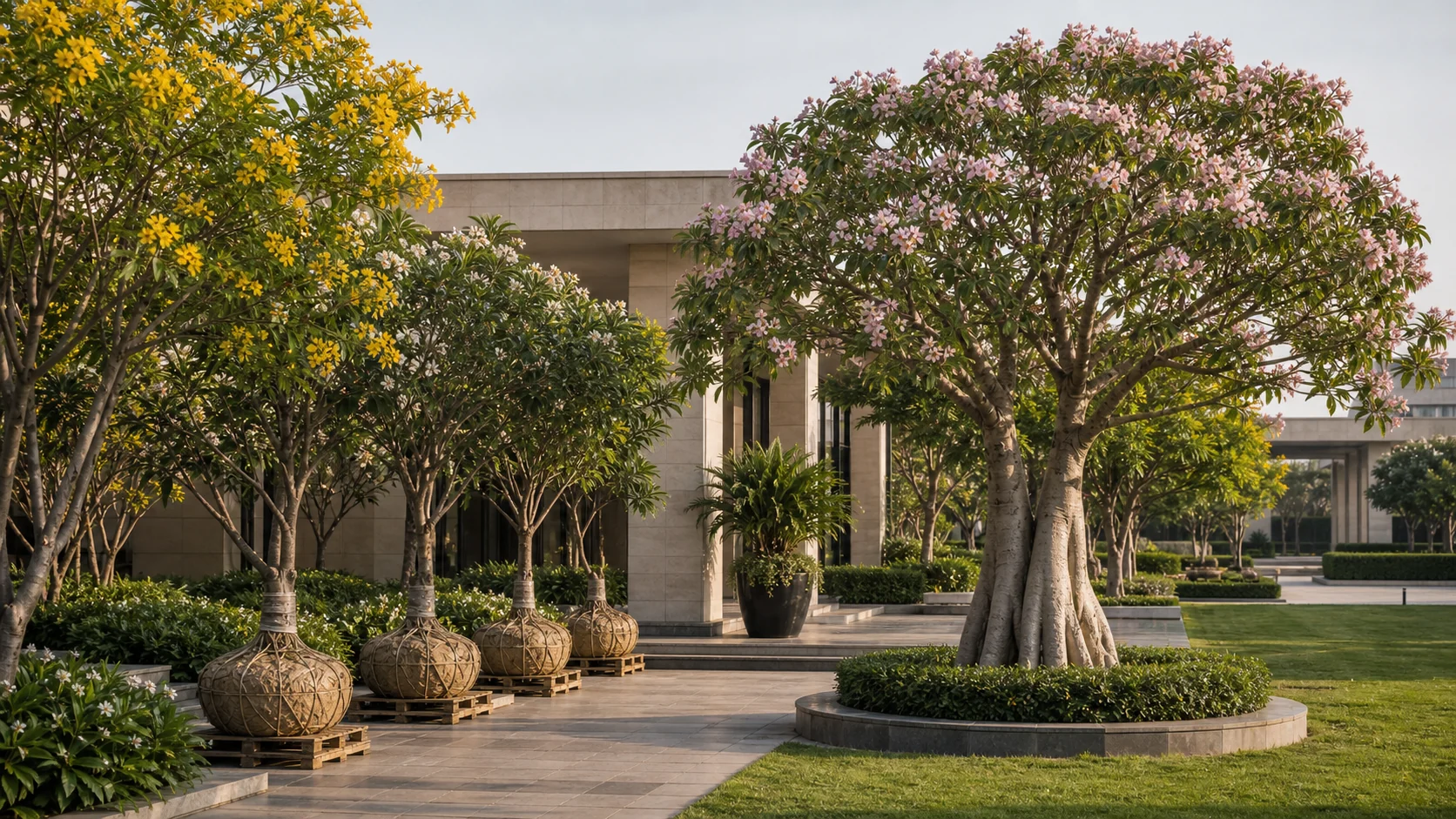
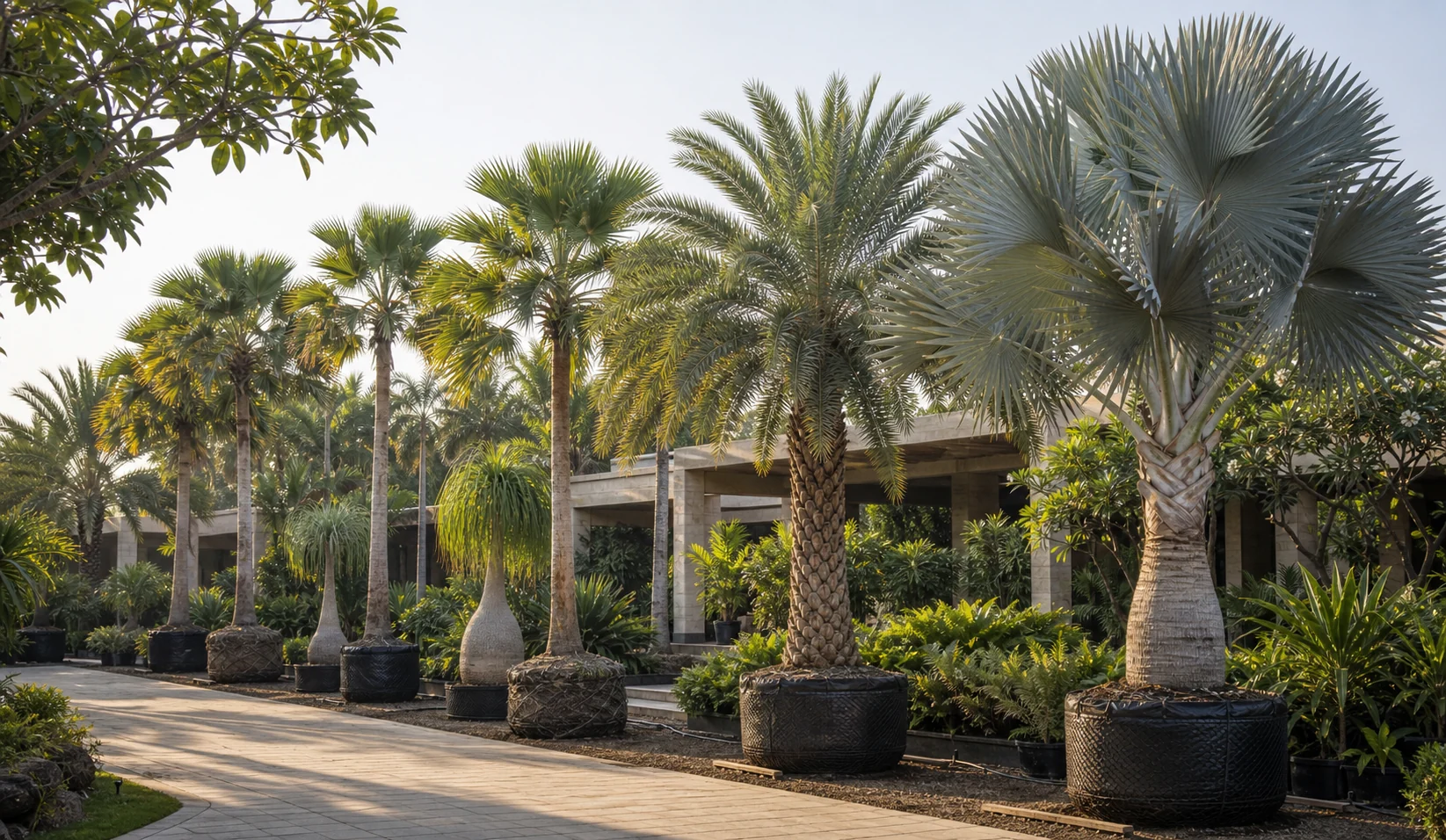
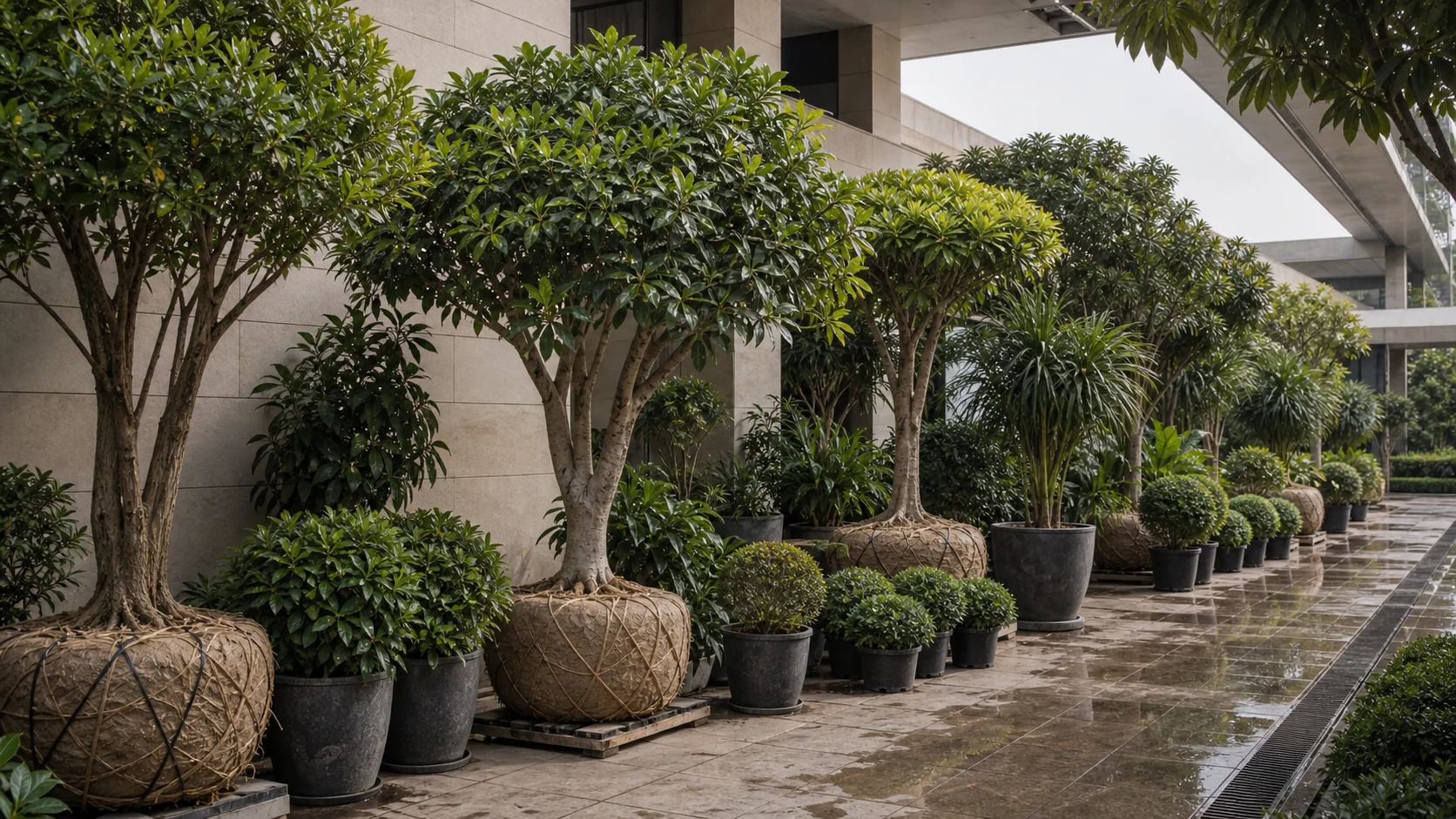
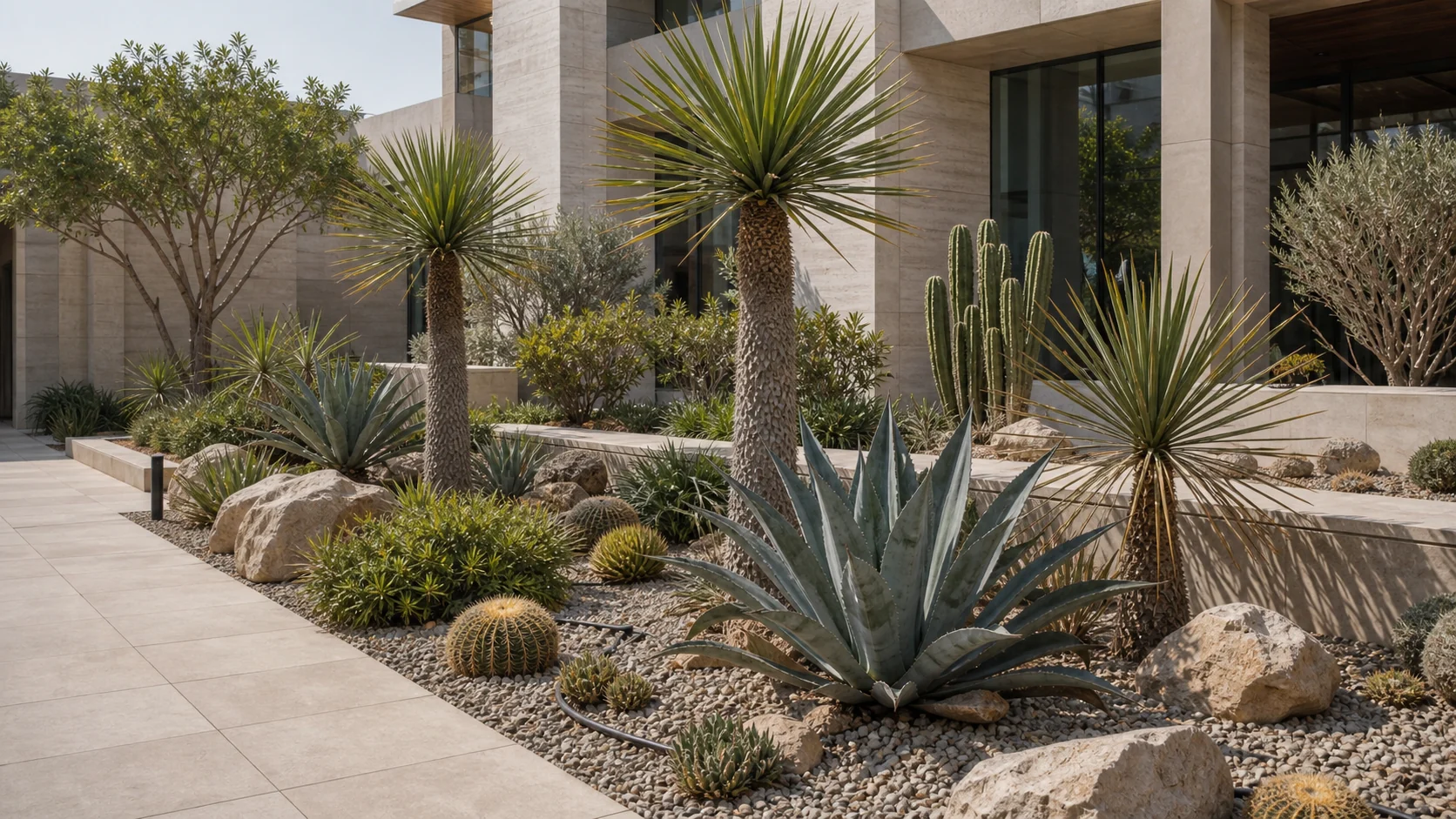
Visual context for placement, scale, handling, and landscape integration.
Section
Where it's used in premium projects
Procera anchors modern xeric plazas and cactus-garden skylines where vertical spiny columns must read from distance — hotel dry gardens, estate xeriscape axes, and collector features. BOQ should specify column count, uniformity, and height band, not generic succulent supply.
Section
Climate & site suitability in India
Excellent drainage is non-negotiable in Indian monsoon regions — columns hold water in stem tissue and rot from the base up. Works on Rajasthan/Gujarat palettes; struggle in unmodified coastal clay without raised engineering.
Section
Sourcing & acclimatisation
Tall uniform columns are rarer than shrubby madagascariensis — photograph stem alignment before purchase. [Unverified: India-held vs Madagascar direct for procera columns.] Acclimatise in open sun; shaded holding produces weak column spacing.
Section
Installation (pit, soil, drainage, bracing)
Tall columns need crane plans and spine-safe slings — never hoist by soft growing tips. Plant on gravel mounds with overflow drains; cap establishment irrigation early. Protect columns from guest contact at terrace edges.
Section
Establishment & AMC
Overwatering kills procera faster than drought — AMC scripts must ban sympathy irrigation after month three unless soil probes read dry deep. Watch for basal translucence post-monsoon. Contrast with *A. madagascariensis*: procera sells height and column rhythm, not angular shrub mass.
Section
Cost drivers
Explore
Related
Related
Related links
Services, segments, cost, and proof.
- Softscape & horticulture
- Irrigation & water management
- Landscape maintenance (AMC)
- Hotel & resort landscaping
- Luxury resort & spa landscaping
- Mall & retail landscaping
- Corporate campus landscaping
- Projects
- Commercial landscaping cost guide
- Pricing drivers (imported trees)
- Import compliance workflow
- Request a site assessment
- What defines Alluaudia procera in design terms?
- Tall erect spiny succulent columns with small round leaves — the Didiereaceae skyline form, several metres in ideal dry sites.
- How is procera different from madagascariensis?
- Procera is columnar and vertical; madagascariensis is more angular and shrubby — do not swap BOQ lines without habit photos.
- Where should spiny columns be placed on site?
- Set back from guest paths and pool edges — spines are stiff; lighting should highlight columns without inviting contact.
- Can procera survive Indian monsoon seasons?
- Only with mound drainage and dry establishment discipline — wet pits are the common kill, not heat.
- Does procera need bracing?
- Tall freshly planted columns may need temporary support until roots anchor — engineer wind exposure on terraces.
- What quarantine steps apply to procera imports?
- Columnar succulent shipments require species-accurate phytosanitary paperwork and quarantine inspection — mismatched labels delay clearance (informational, not legal advice).
- How should procera quotations be compared?
- Match column height, stem count, spine condition, crane line items, and gritty mound scope — not per-stem generic shrub pricing.