
Tree aloe
Tree aloe (Aloidendron barberae)
Aloidendron barberae — still sold as *Aloe bainesii* — is Africa's largest tree aloe: a smooth tapering trunk with branching candelabra rosettes and pink winter flowers, specified when the brief needs a true tree-aloe monument, not a ground rosette.
Spec
At a glance
- Botanical name
- Aloidendron barberae (syn. Aloe bainesii)
- Family
- Asphodelaceae
- Common names
- Tree aloe, Aloe bainesii, Aloidendron barberae
- Origin
- South Africa and Mozambique
- Plant type
- Tree aloe (succulent)
- Mature height
- Often 10–15 m+ in habitat; specimen classes vary
- Trunk / form
- Smooth tapering trunk; branching candelabra of fleshy rosettes
- Crown spread
- Wide branching rosette canopy; winter pink inflorescences
- Growth rate
- Moderate for a tree aloe — still buy size for impact
- Light
- Full sun
- Water needs
- Low; caudex and roots rot without drainage
- India climate suitability
- Dry tropical India with excellent drainage; risky in humid waterlogged coasts
- Cold/heat & salt/wind tolerance
- Heat-hardy; protect young from cold/heavy rain; brittle branches in wind
- Typical supply size
- Trunk height classes 2–6 m+ [Unverified]
- Lead time (sourcing)
- [Unverified] South African or India-held tree-aloe stock
- Install considerations
- Protect brittle forks in rigging; engineered drainage; minimal root disturbance
- Maintenance level
- Moderate — structural inspection of branches; dry-season AMC
- Cautions
- Drainage-critical rot; brittle branches; protect young from cold/heavy rain
Gallery
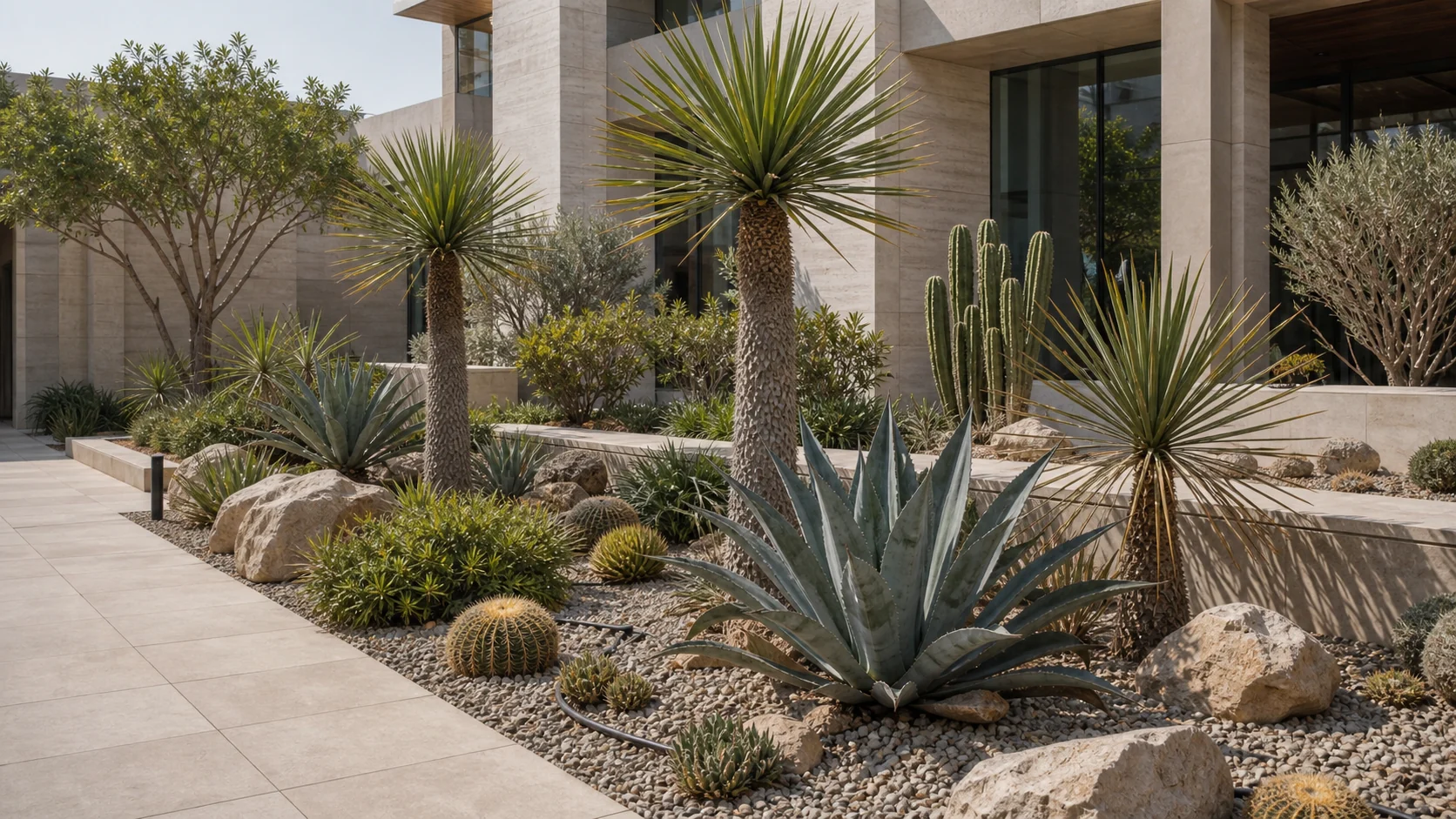
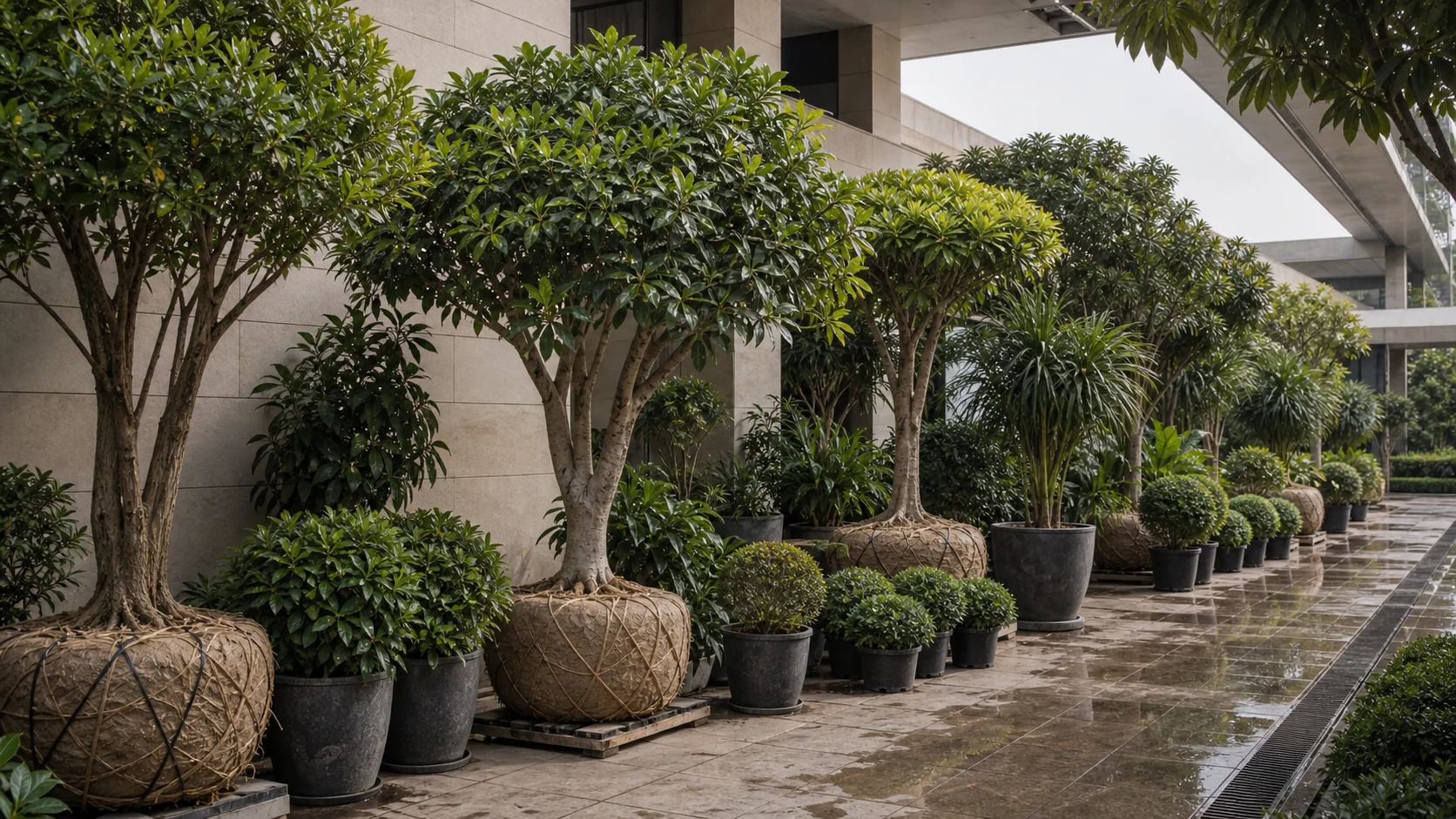
Specimen visual guide
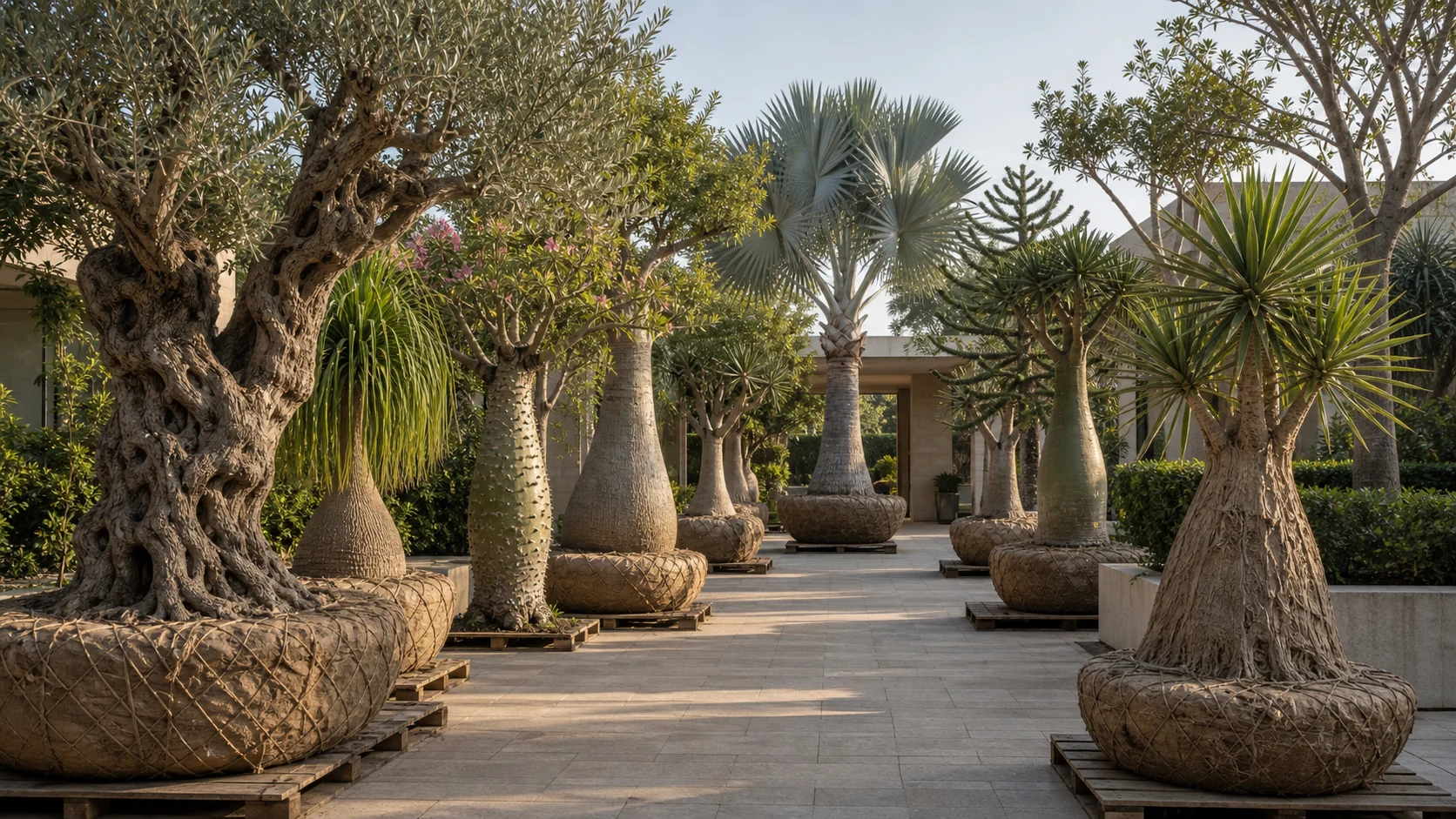
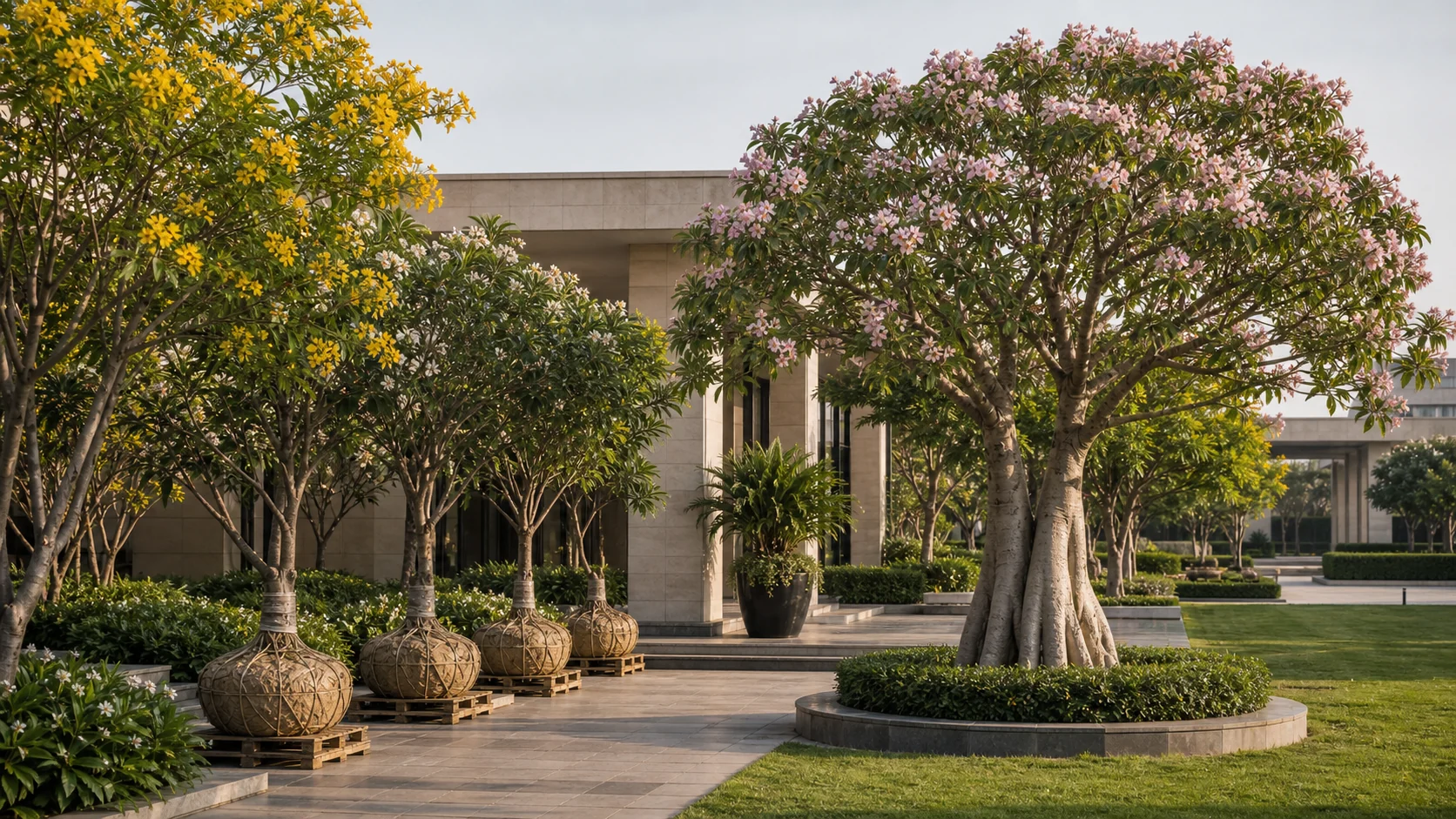
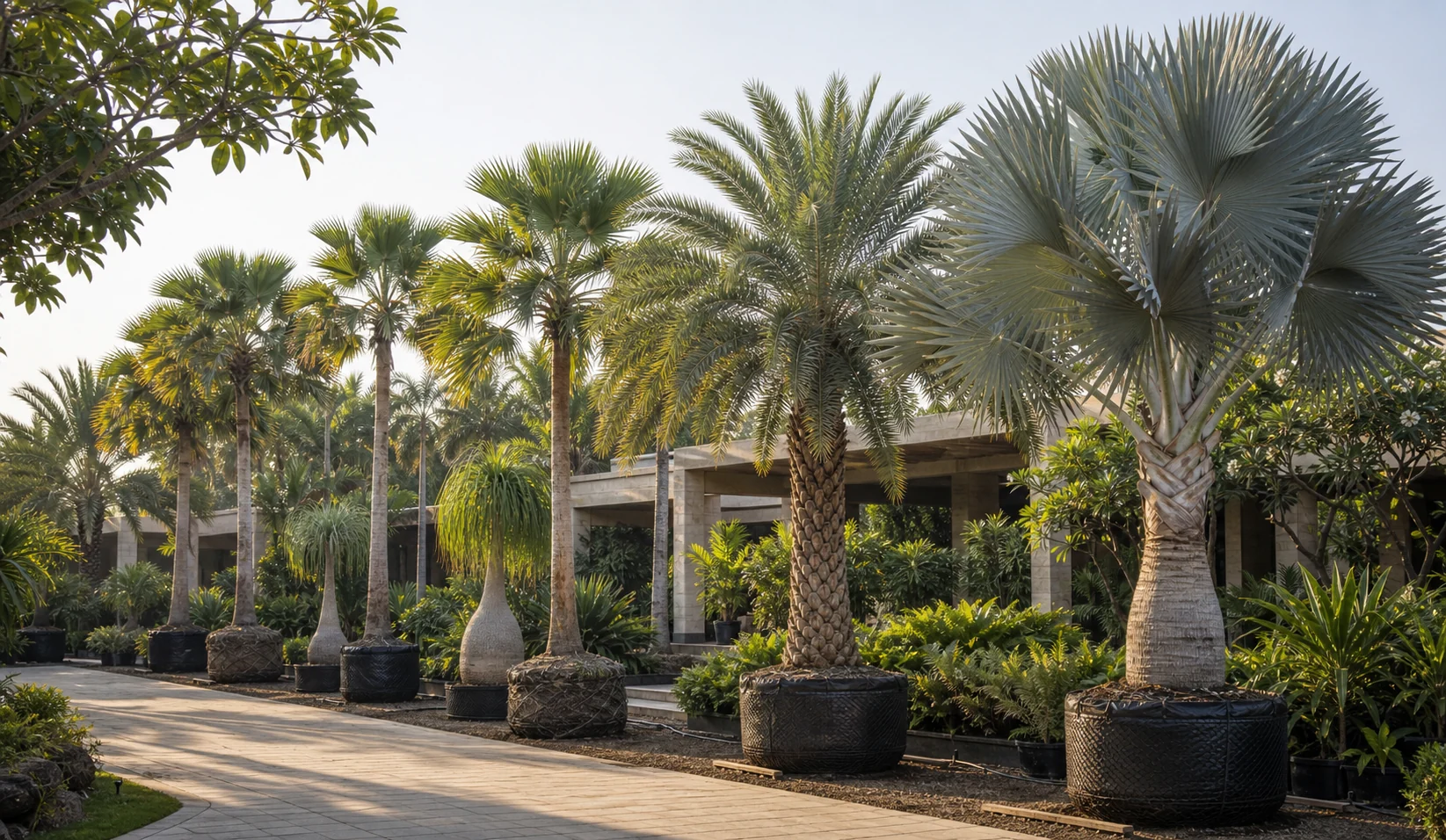
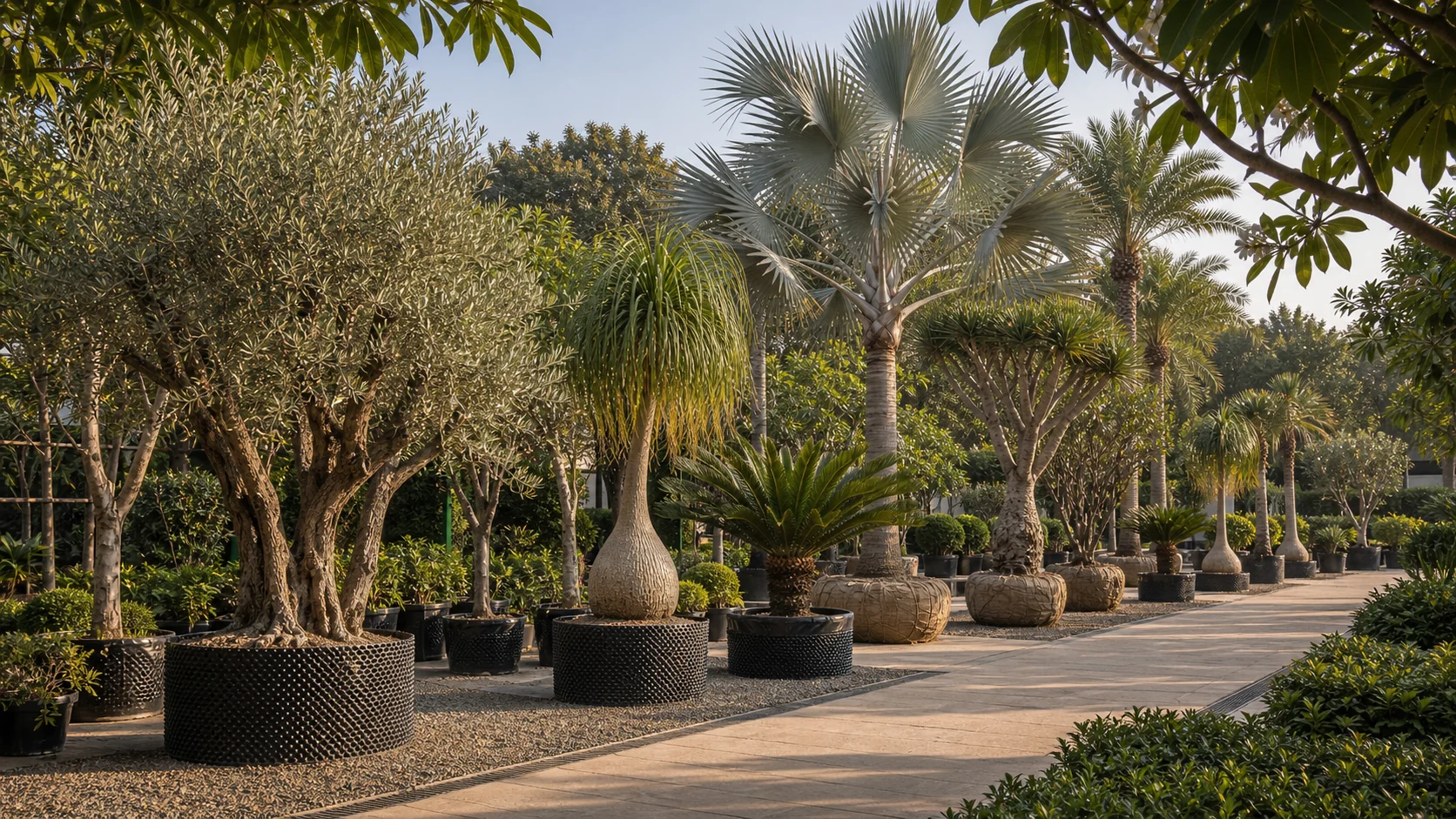
Visual context for placement, scale, handling, and landscape integration.
Section
Where it's used in premium projects
Tree aloe is the branching candelabra statement in succulent gardens, estate drives, and resort xeric masterplans — smooth trunk plus rosette clouds read as living sculpture. Specify fork architecture and trunk taper in BOQ photos, not generic aloe supply.
Section
Climate & site suitability in India
Monsoon drainage separates success from failure — heavy clay and coastal waterlogging rot the caudex. Dry Deccan, Gujarat, and Rajasthan microclimates work when pits are engineered; do not assume Bangalore humidity tolerance without soil rebuild.
Section
Sourcing & acclimatisation
Confirm synonym labelling on nursery tags (*Aloidendron barberae* vs legacy *Aloe bainesii*). [Unverified: typical India holding vs South African field specimens.] Hold open-sky so branch angles are visible before crane day.
Section
Installation (pit, soil, drainage, bracing)
Rigging must support forks without snapping succulent branches — pad slings on trunk, not rosette tips. Plant on raised gritty mixes with monsoon overflow; avoid lawn irrigation overspray on the trunk collar.
Section
Establishment & AMC
Overwatering after transplant is the top killer for tree aloes in India — AMC must dry down once roots anchor, especially where automatic irrigation also serves turf. Inspect fork cracks after storms; protect young plants from cold snaps with heavy rain.
Section
Cost drivers
Explore
Related
Related
Related links
Services, segments, cost, and proof.
- Softscape & horticulture
- Irrigation & water management
- Landscape maintenance (AMC)
- Hotel & resort landscaping
- Luxury resort & spa landscaping
- Mall & retail landscaping
- Corporate campus landscaping
- Projects
- Commercial landscaping cost guide
- Pricing drivers (imported trees)
- Import compliance workflow
- Request a site assessment
- Why is tree aloe listed under Aloe bainesii?
- The trade name persists, but the accepted tree species is *Aloidendron barberae* — verify labels on import paperwork and nursery tags.
- How large can Aloidendron barberae grow?
- It is Africa's largest aloe — multi-metre trunks with wide branching crowns in ideal dry conditions; buy mature height because growth is not instant.
- What monsoon risk should Indian projects plan for?
- Caudex and root rot in waterlogged soils — engineered drainage matters more than species name on the drawing.
- Are branches fragile in storms?
- Yes — succulent forks can snap; plan wind exposure and post-storm structural inspection on exposed terraces.
- When does it flower?
- Pink winter inflorescences on mature rosettes — flowering is a secondary bonus to trunk and fork architecture.
- What documentation is needed for tree-aloe imports?
- Asphodelaceae succulent trees need accurate botanical names on phytosanitary certificates for Indian quarantine — *barberae* vs generic aloe labels cause delays (informational, not legal advice).
- How does barberae compare to quiver tree on the same site?
- Barberae is smoother-trunked and more adaptable than *Aloidendron dichotomum* quiver tree — dichotomum demands drier, stricter drainage in humid India.