
Hercules aloe
Hercules aloe (Aloidendron 'Hercules')
Aloidendron 'Hercules' is the deliberate hybrid between *barberae* and *dichotomum* — faster, stouter, and more adaptable than quiver tree while keeping tree-aloe monumentality when designers want size without Namib-strict microclimate risk.
Spec
At a glance
- Botanical name
- Aloidendron 'Hercules' (hybrid)
- Family
- Asphodelaceae
- Common names
- Hercules aloe, tree aloe hybrid
- Origin
- Horticultural hybrid (barberae × dichotomum parentage)
- Plant type
- Tree aloe (hybrid succulent)
- Mature height
- Often 8–12 m in favourable dry sites; faster than dichotomum
- Trunk / form
- Stout trunk; large branching rosettes — hybrid vigour
- Crown spread
- Broad tree-aloe crown; architectural rosette mass
- Growth rate
- Faster than quiver tree — still specimen-priced at size
- Light
- Full sun
- Water needs
- Low; drainage still mandatory
- India climate suitability
- Dry tropical India with drainage; more forgiving than dichotomum but not wetland
- Cold/heat & salt/wind tolerance
- Protect young from cold/heavy rain; brittle forks in wind
- Typical supply size
- Stout trunk classes 2–5 m [Unverified]
- Lead time (sourcing)
- [Unverified] hybrid tree-aloe nursery hold
- Install considerations
- Brittle fork rigging; gritty mound; protect young stems
- Maintenance level
- Moderate dry AMC; storm fork inspection
- Cautions
- Drainage still critical; brittle branches; not a wetland plant
Gallery
Specimen visual guide
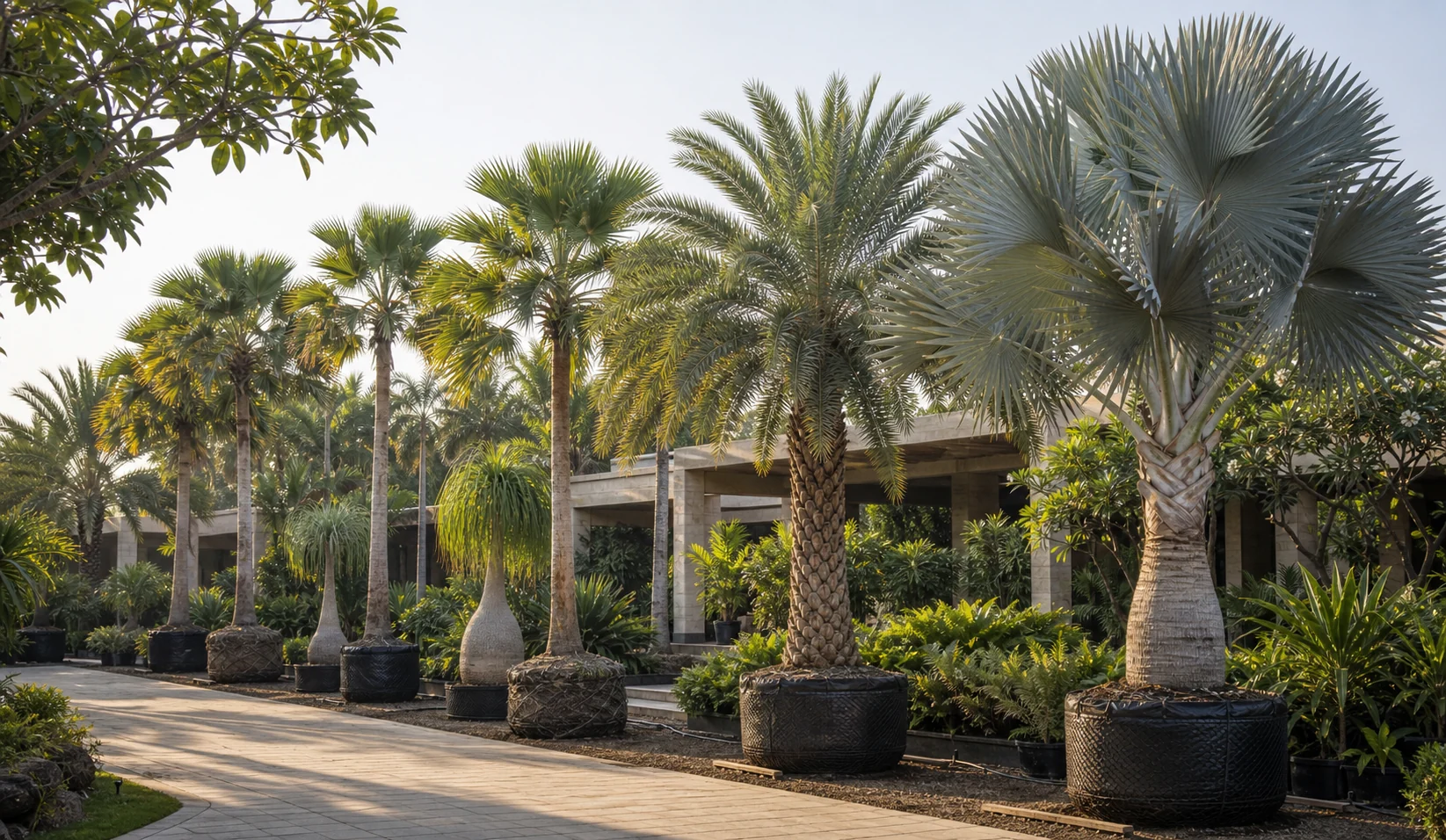
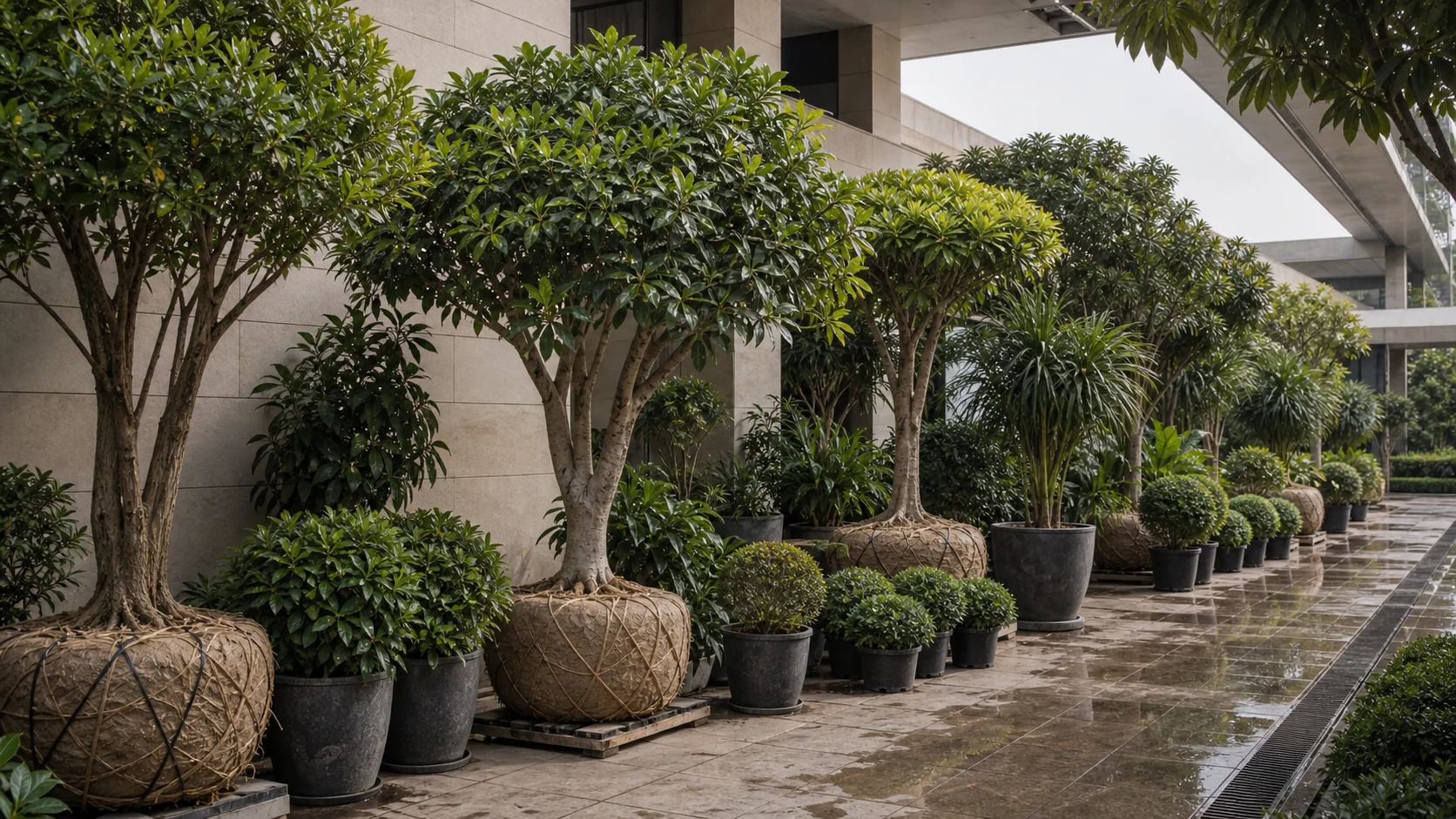
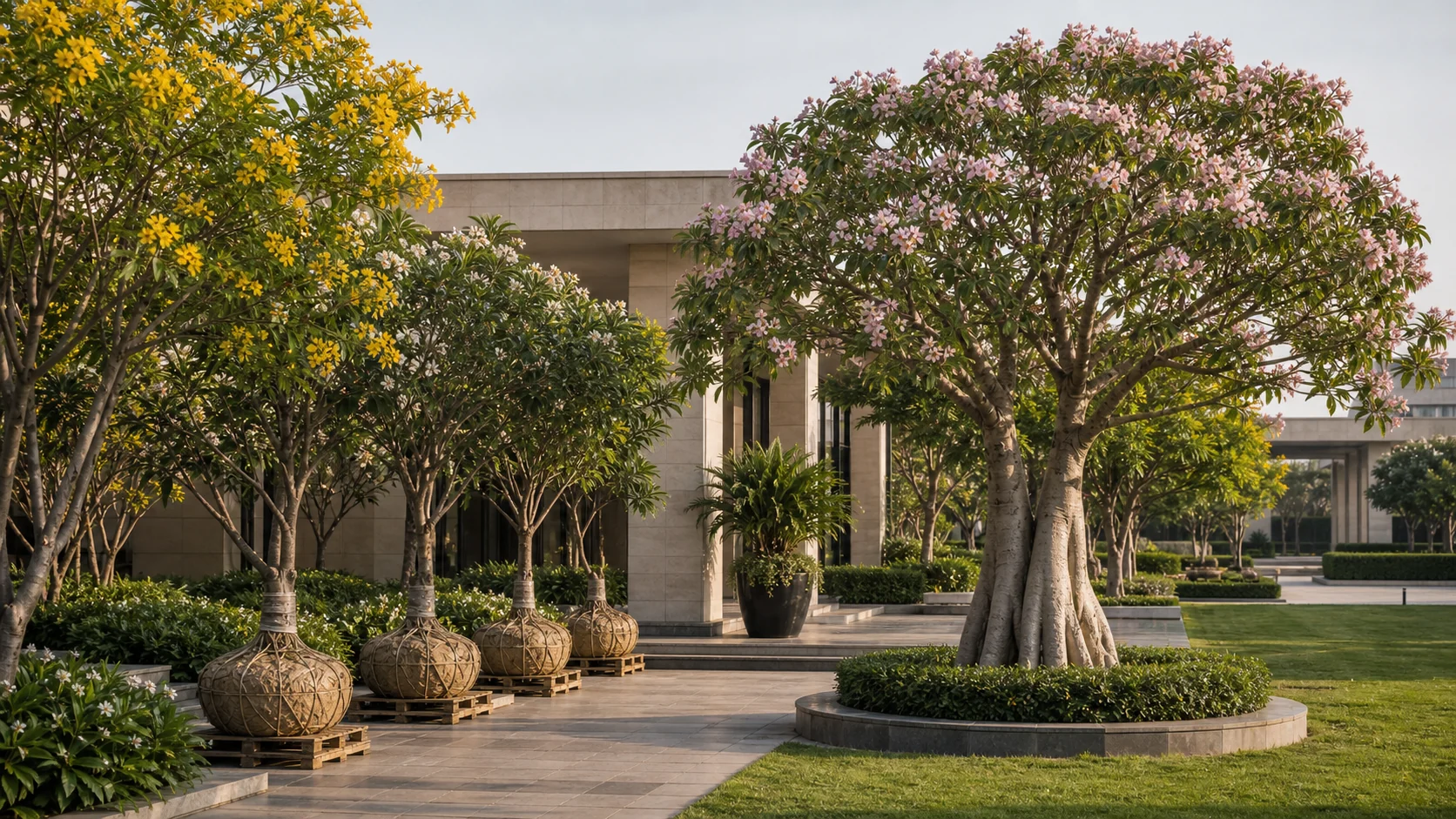
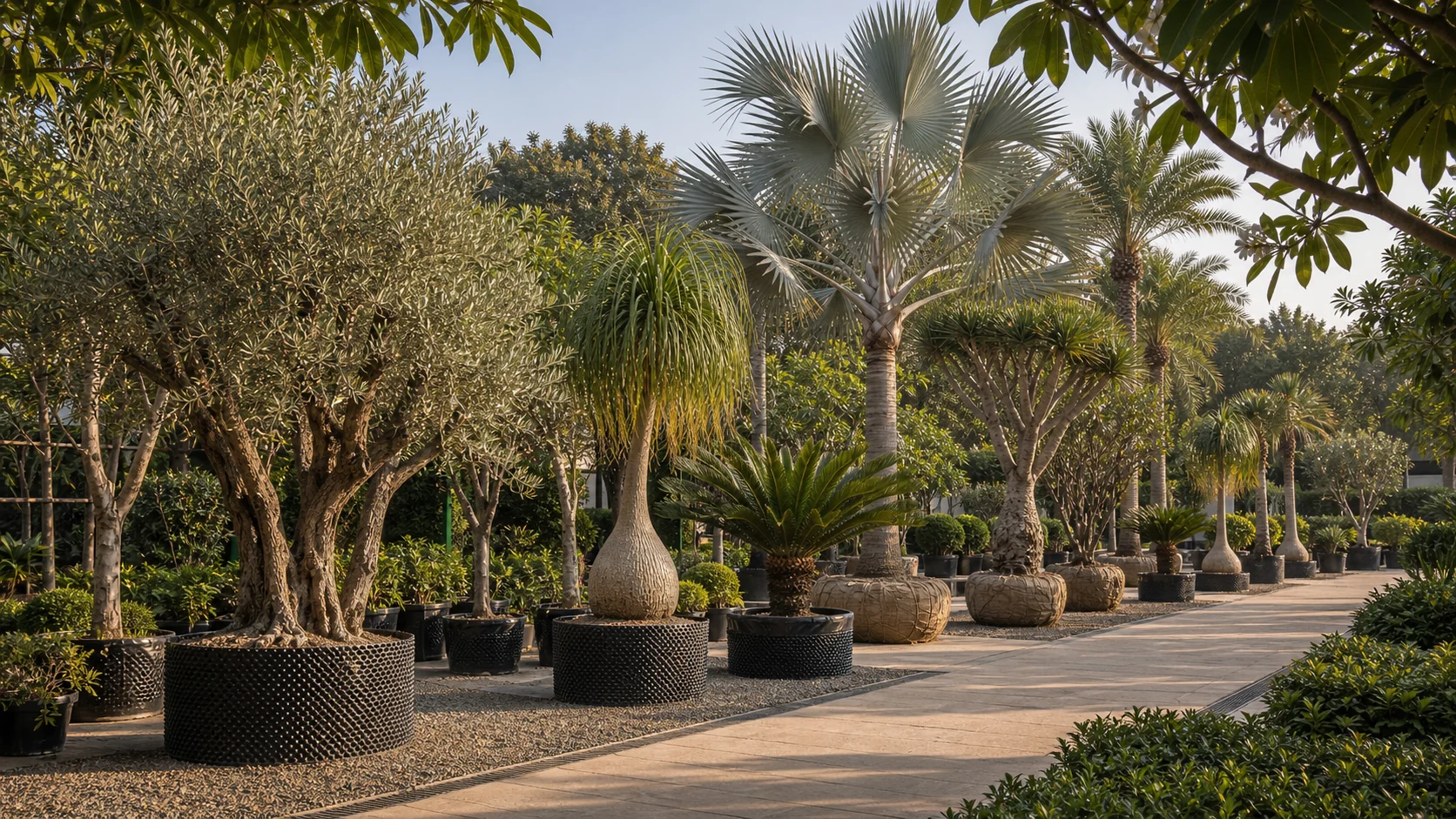
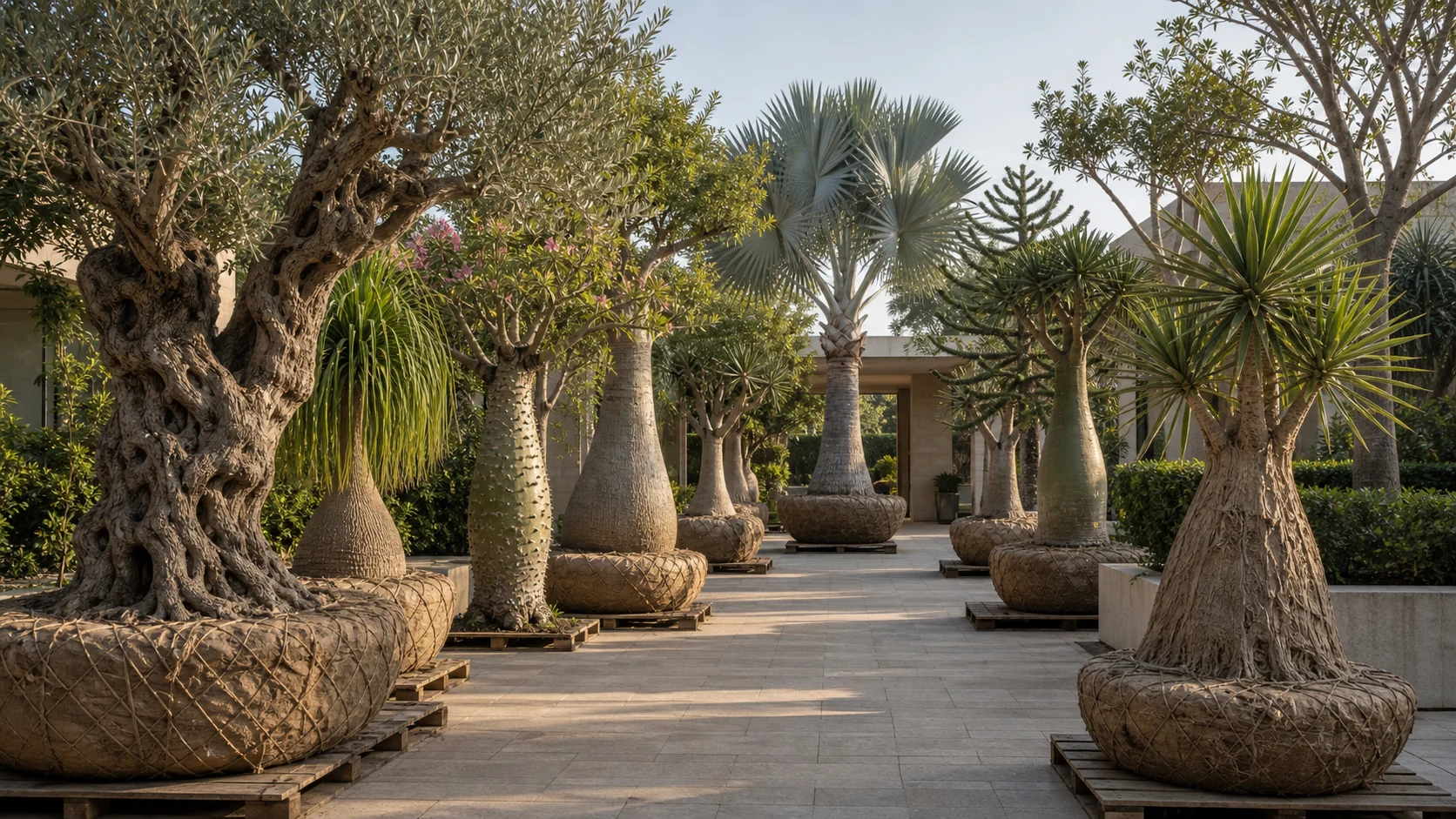
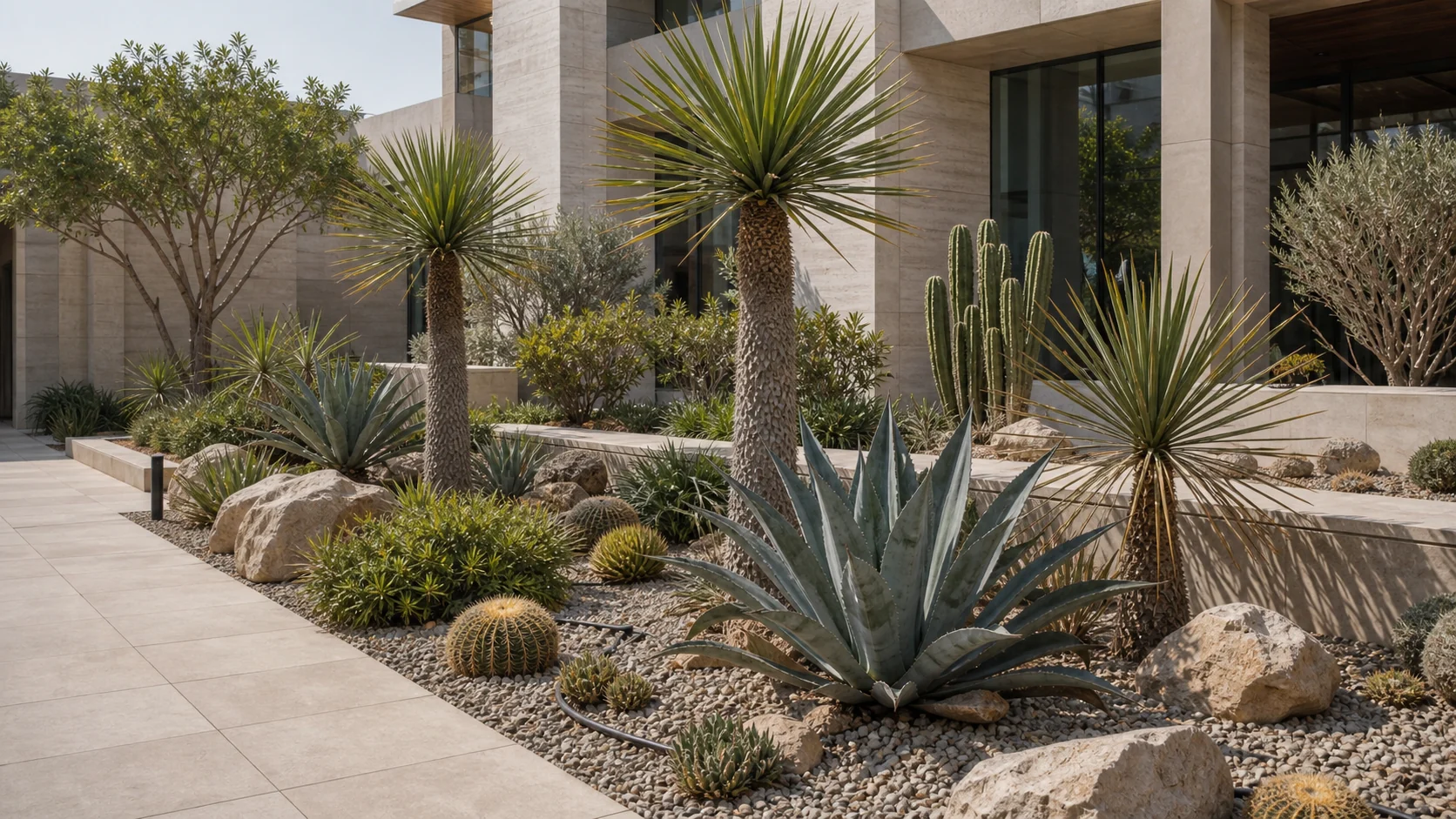
Visual context for placement, scale, handling, and landscape integration.
Section
Where it's used in premium projects
Hercules is chosen when the brief wants tree-aloe scale faster than quiver tree — resort xeric entries, estate succulent courts, and collector features that need stout trunks without waiting decades for *dichotomum* forks. Hybrid vigour is the selling point in BOQ narrative.
Section
Climate & site suitability in India
More adaptable than pure dichotomum but still a succulent tree — monsoon clay without mounds fails. Programme drainage in humid cities even if Hercules is marketed as easier than kokerboom.
Section
Sourcing & acclimatisation
Verify hybrid origin on nursery certificates — not mislabelled *barberae* seedlings. [Unverified: India hybrid production vs imported stout specimens.] Photograph trunk stoutness and fork spacing.
Section
Installation (pit, soil, drainage, bracing)
Hybrid weight still demands spine-aware rigging on forks — pad trunks, avoid rosette crush. Mound plant with coarse drainage; cap irrigation after establishment sooner than teams expect for 'trees.'
Section
Establishment & AMC
Overwatering remains the primary establishment failure — hybrid vigour does not mean wetland tolerance. AMC should dry irrigation schedules post-monsoon. Compare maintenance to quiver tree only when owners accept dichotomum's stricter humidity limits.
Section
Cost drivers
Explore
Related
Related
Related links
Services, segments, cost, and proof.
- Softscape & horticulture
- Irrigation & water management
- Landscape maintenance (AMC)
- Hotel & resort landscaping
- Luxury resort & spa landscaping
- Mall & retail landscaping
- Corporate campus landscaping
- Projects
- Commercial landscaping cost guide
- Pricing drivers (imported trees)
- Import compliance workflow
- Request a site assessment
- Why specify Hercules instead of quiver tree?
- Hybrid vigour delivers faster, stouter tree-aloe mass with more adaptability than *Aloidendron dichotomum* — trade-off is still succulent drainage discipline, not lawn culture.
- What are the parent species?
- *Aloidendron barberae* × *Aloidendron dichotomum* heritage — confirm hybrid tags, not generic large aloe.
- Is drainage still mandatory in India?
- Yes — Hercules is more forgiving than dichotomum but rots in waterlogged monsoon pits like any tree aloe.
- How fast does Hercules grow?
- Noticeably faster than quiver tree, but large stout specimens are still bought for instant impact — do not under-specify crane access.
- Are branches still brittle?
- Succulent forks can snap in wind — engineer exposure and inspect after storms.
- What paperwork should hybrid aloes carry?
- Nursery certificates should state hybrid/clonal origin for import and quarantine review — generic *Aloe* labels are insufficient (informational, not legal advice).
- How should Hercules BOQs compare to barberae?
- Match trunk stoutness, hybrid documentation, fork photos, and drainage package — barberae is smoother native tree form, Hercules is deliberate hybrid scale.