
Quiver tree
Quiver tree (Aloidendron dichotomum)
Aloidendron dichotomum — the kokerboom quiver tree — dichotomously forks into a silver-gold desert silhouette so drought-adapted that humid Indian monsoons kill it without perfect drainage and dry heat; specify only when the brief accepts that honesty.
Spec
At a glance
- Botanical name
- Aloidendron dichotomum (syn. Aloe dichotoma)
- Family
- Asphodelaceae
- Common names
- Quiver tree, kokerboom, Aloe dichotoma
- Origin
- Namibia and South Africa (Namib Desert)
- Plant type
- Tree aloe (desert succulent)
- Mature height
- Often 6–9 m; very slow
- Trunk / form
- Dichotomously forking branches; golden flaky bark; dense rosettes
- Crown spread
- Forking open desert crown — iconic silhouette
- Growth rate
- Very slow — decades to mature fork architecture
- Light
- Full sun; desert exposure
- Water needs
- Extremely low; rot in humidity/monsoon wet soils
- India climate suitability
- Only hot-dry India with engineered drainage; fails in humid monsoon coasts
- Cold/heat & salt/wind tolerance
- Desert heat-hardy; combined wet+cold lethal; full sun mandatory
- Typical supply size
- Forked specimen classes 2–5 m [Unverified]
- Lead time (sourcing)
- [Unverified] Namibia/South Africa desert-aloe channels
- Install considerations
- Perfect drainage mound; protect golden bark in rigging; no wet pits
- Maintenance level
- Low dry AMC — never sympathy-water in monsoon
- Cautions
- Very slow; rots in humid/monsoon India without perfect drainage; full sun
Gallery
Specimen visual guide
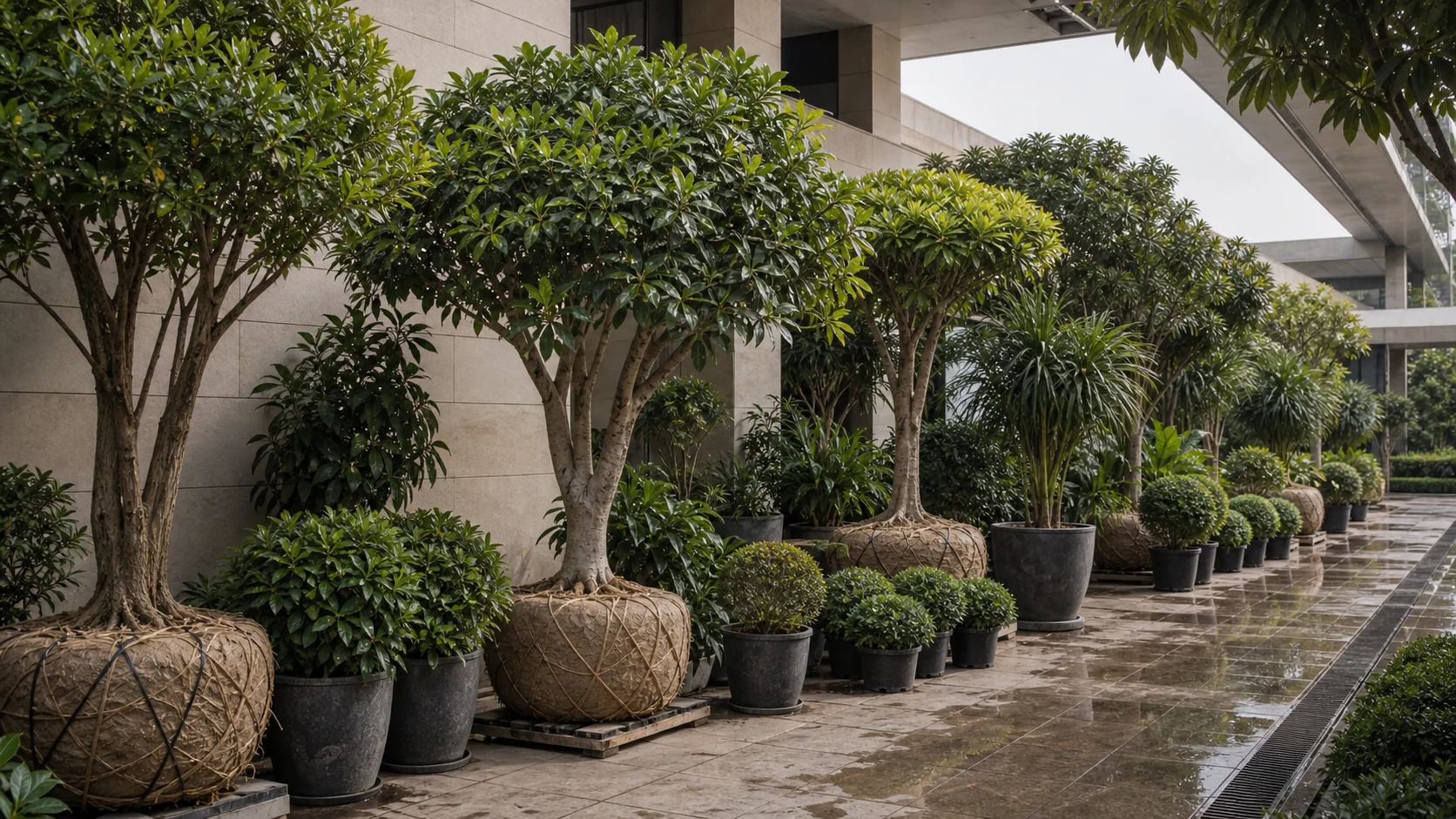
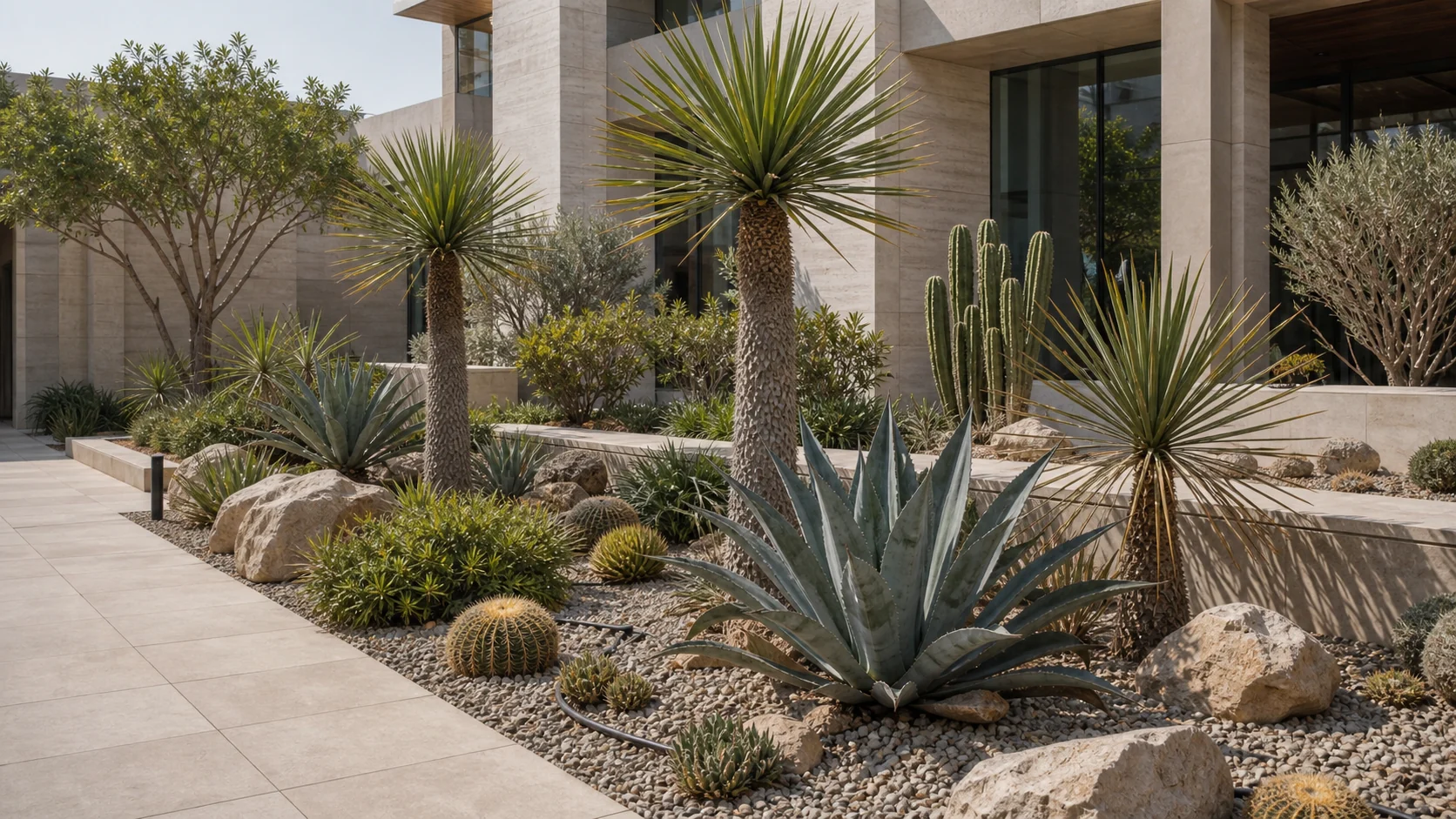
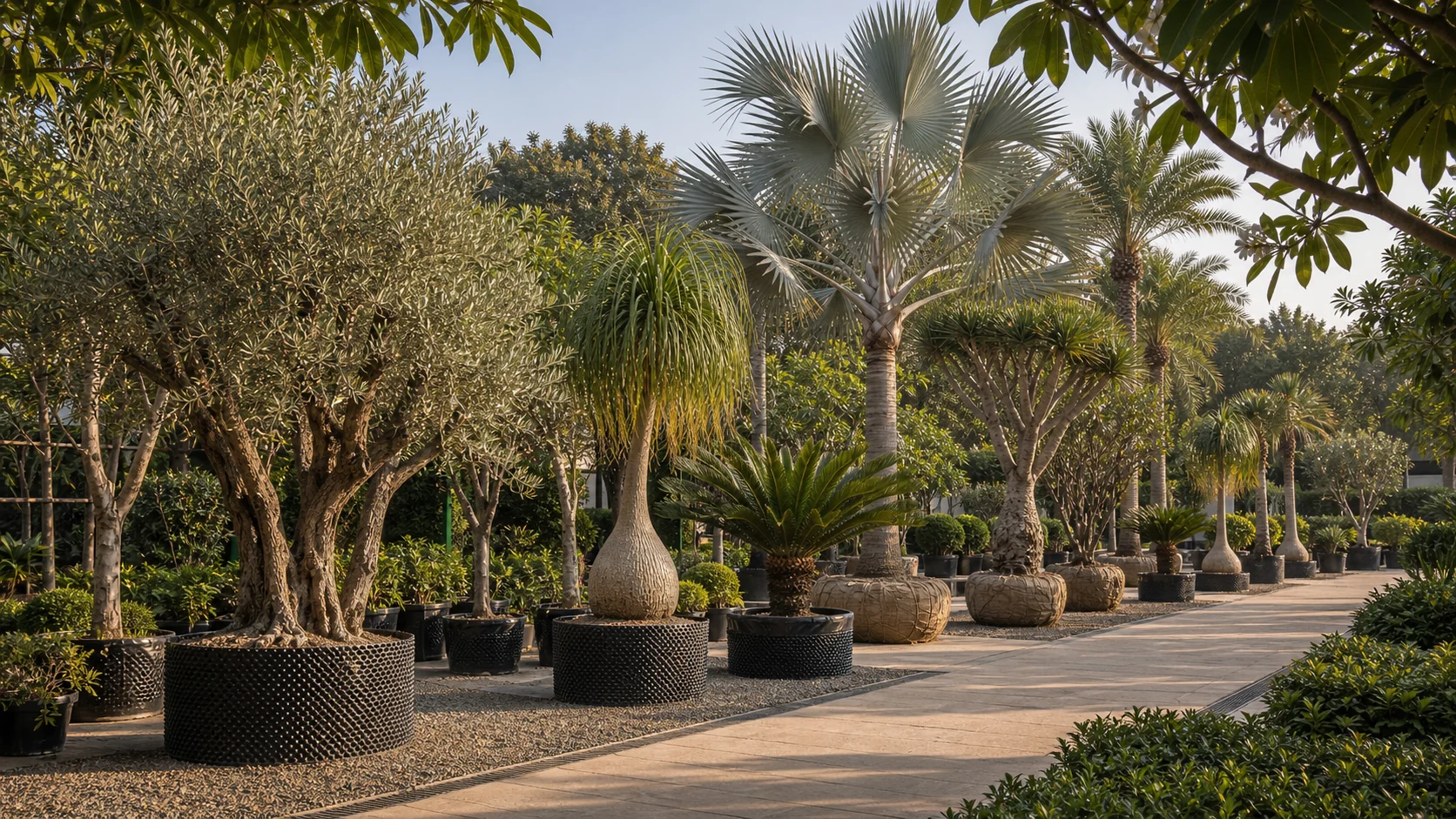
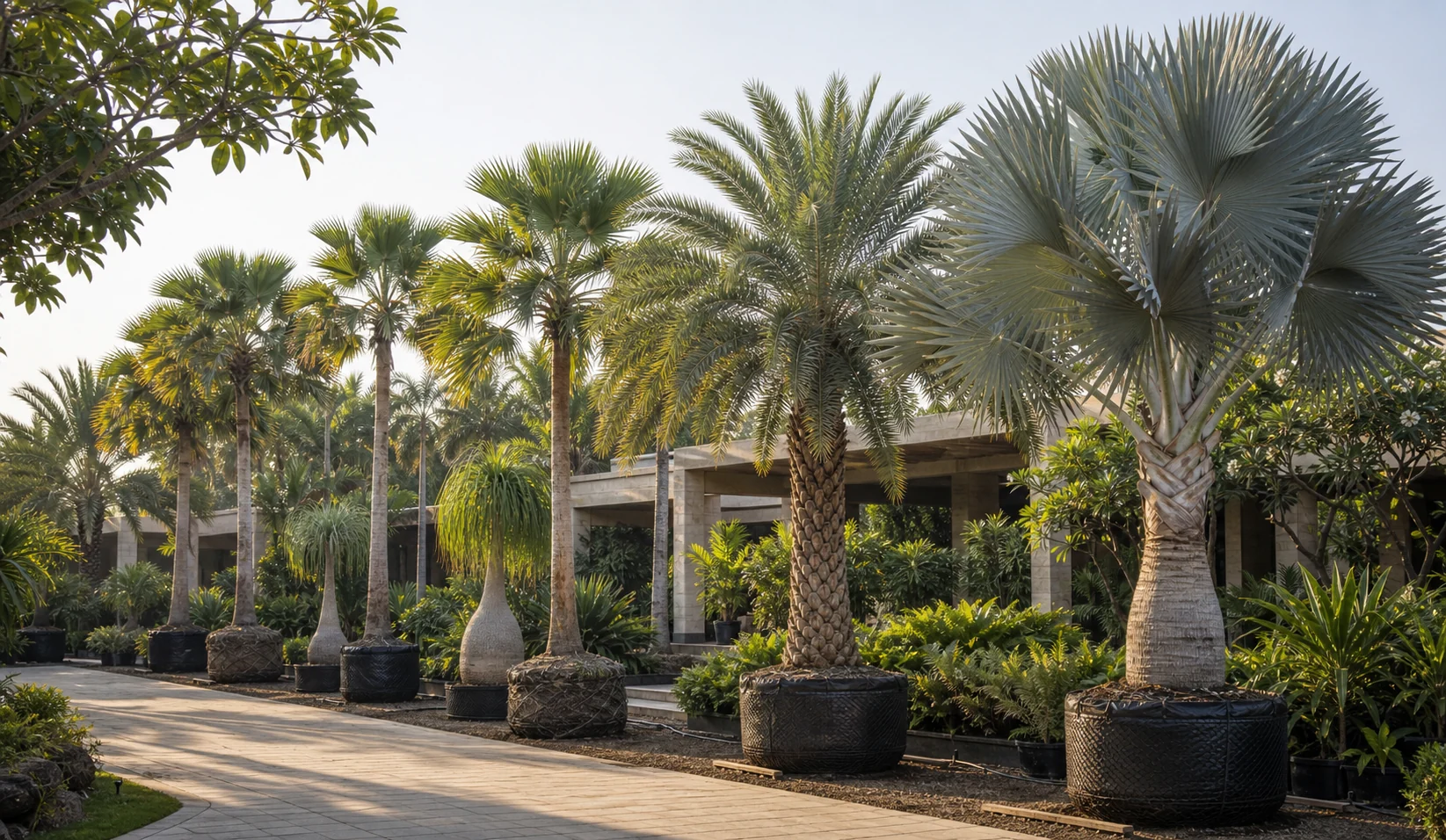
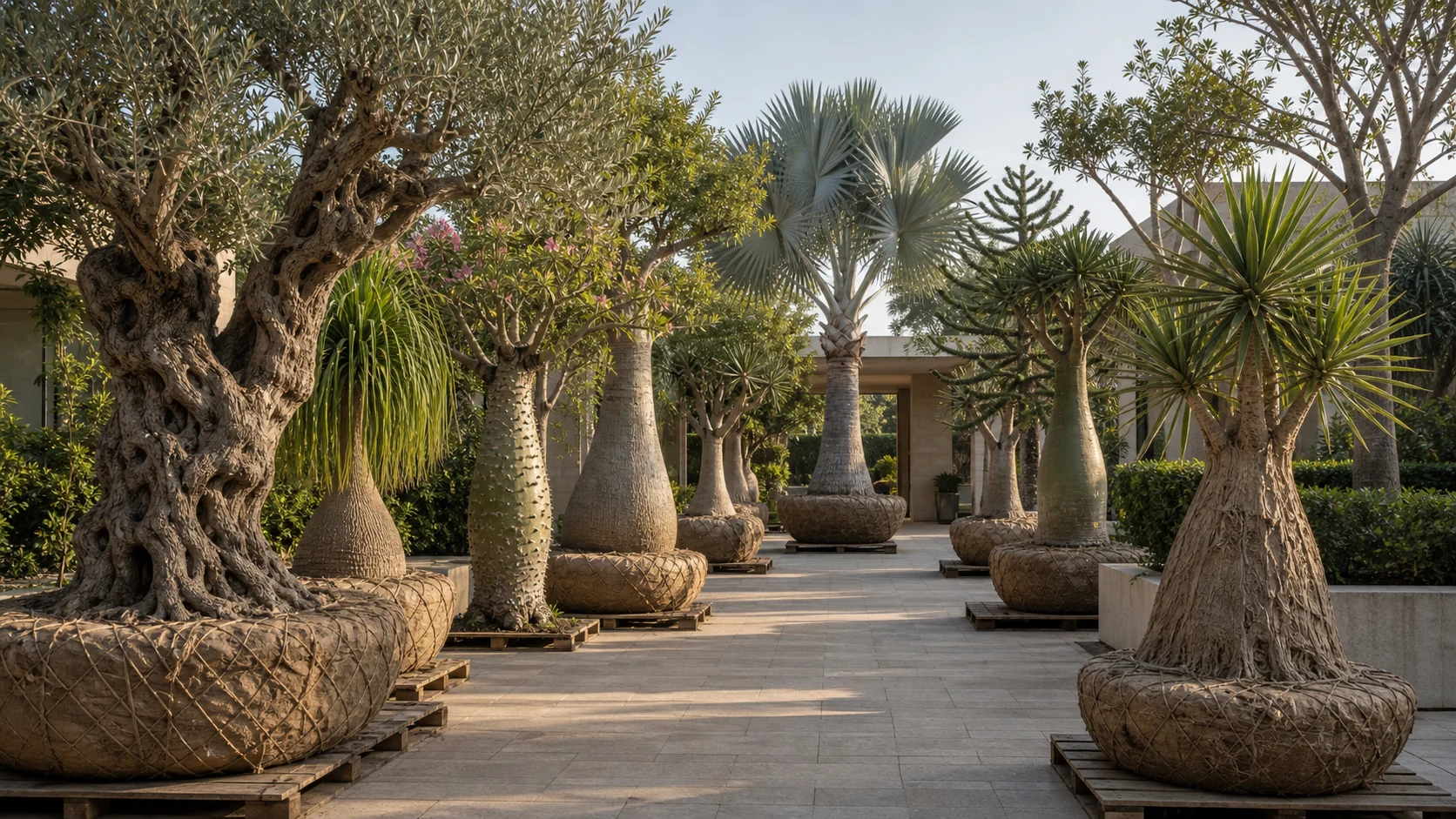
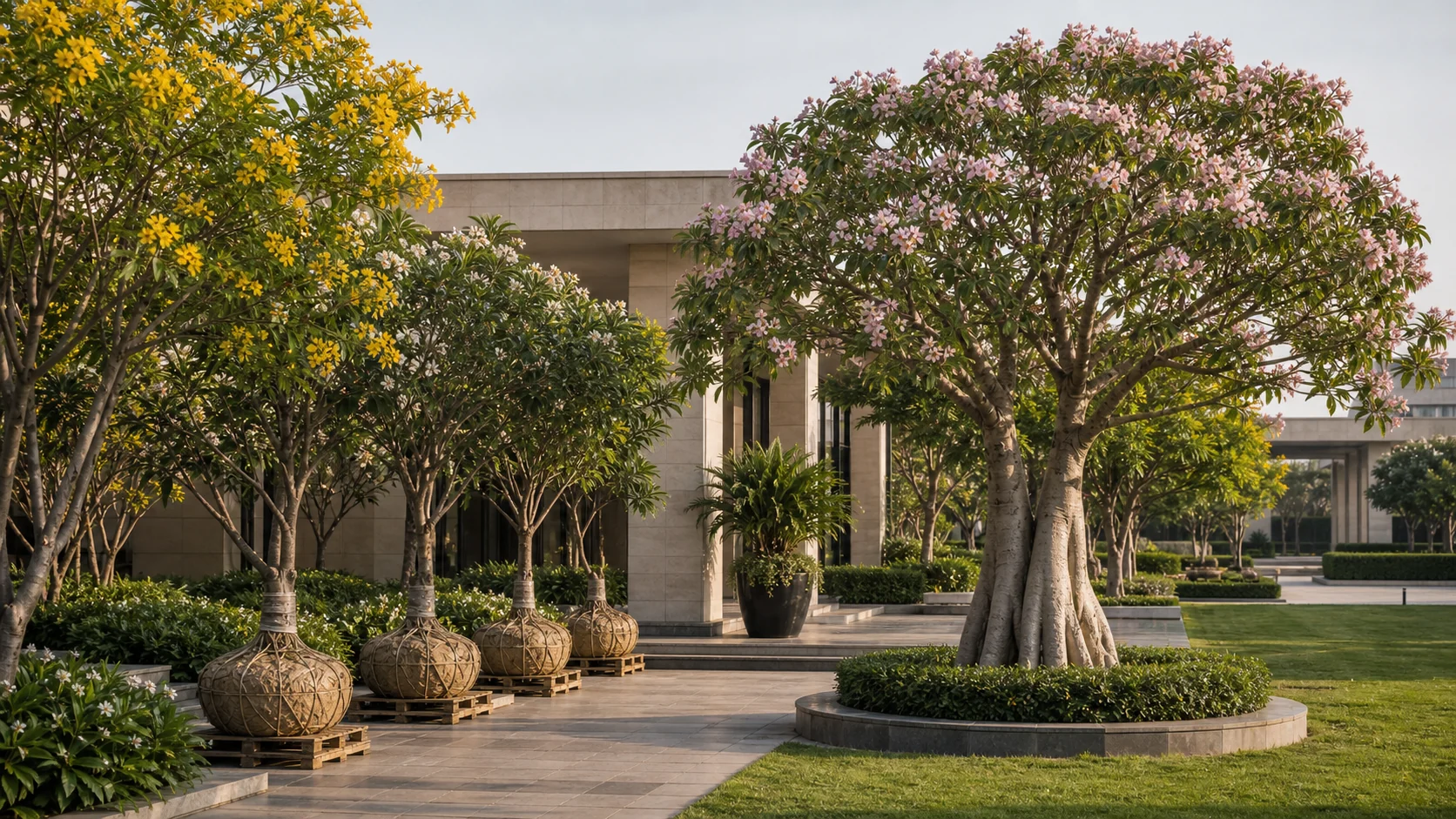
Visual context for placement, scale, handling, and landscape integration.
Section
Where it's used in premium projects
Quiver tree is the iconic Namib forking sculptural — specified for collector desert gardens and estate xeric art where the silver-gold fork reads as geology, not foliage volume. Not a forgiving hotel filler; the fork is the product.
Section
Climate & site suitability in India
Survival under Indian monsoon is only realistic on hot-dry sites with gravel mounds and zero perched water — Chennai humidity and clay pits are honest failures, not bad luck. Golden bark and dichotomous forks need full sun; shade holding weakens desert structure.
Section
Sourcing & acclimatisation
Extremely slow growth means buy fork character upfront. [Unverified: typical quiver-tree import vs India-held desert-aloe stock.] Document *Aloidendron dichotomum* on paperwork — not generic aloe.
Section
Installation (pit, soil, drainage, bracing)
Treat bark as fragile sculpture — rigging scars persist. Install only on engineered xeric mounds with monsoon overflow; forbid lawn irrigation overlap. No organic-heavy wet mixes.
Section
Establishment & AMC
Overwatering is the number-one killer — AMC must keep quiver trees drier than teams expect, especially post-monsoon when irrigation schedules restart for turf. Any basal softness is emergency dry-down. Growth speed is glacial — programme owner expectations accordingly.
Section
Cost drivers
Explore
Related
Related
Related links
Services, segments, cost, and proof.
- Softscape & horticulture
- Irrigation & water management
- Landscape maintenance (AMC)
- Hotel & resort landscaping
- Luxury resort & spa landscaping
- Mall & retail landscaping
- Corporate campus landscaping
- Projects
- Commercial landscaping cost guide
- Pricing drivers (imported trees)
- Import compliance workflow
- Request a site assessment
- What is the quiver tree's signature form?
- Dichotomously forking stems with golden flaky bark and dense rosettes — the Namib kokerboom silhouette, not a single trunk palm.
- Can quiver trees survive Indian monsoon climates?
- Only on hot-dry microclimates with perfect drainage — humid coastal defaults without soil rebuild are high-risk and should be disclosed to owners.
- Why is growth so slow?
- Desert adaptation prioritises survival over speed — buy forked maturity because annual increment is minimal.
- What synonym appears on nursery tags?
- *Aloe dichotomum* persists in trade, but *Aloidendron dichotomum* is the accepted name — align BOQ and import docs.
- How does dichotomum differ from Hercules aloe?
- Hercules is a faster hybrid for size; dichotomum is stricter desert honesty with golden forks — do not substitute without drainage review.
- What import checks apply to Namib desert aloes?
- Desert-aloe consignments need species-accurate phytosanitary certificates and quarantine inspection — forked specimens are high-value and high-scrutiny (informational, not legal advice).
- What should BOQ photos document?
- Fork symmetry, bark condition, trunk caliper, and mound drainage scope — not rosette greenness alone.