
Madagascar ocotillo
Madagascar ocotillo (Alluaudia madagascariensis)
Alluaudia madagascariensis is the spiny, drought-deciduous Didiereaceae silhouette from Madagascar's spiny forest — not a true ocotillo (*Fouquieria*), but a sculptural xerophyte for cactus courts and dry-tropical beds where vertical spines and small seasonal leaves carry the design.
Spec
At a glance
- Botanical name
- Alluaudia madagascariensis
- Family
- Didiereaceae
- Common names
- Madagascar ocotillo, Alluaudia
- Origin
- South-west Madagascar (spiny forest)
- Plant type
- Spiny succulent tree/shrub
- Mature height
- Often 3–6 m in cultivation; slow
- Trunk / form
- Cylindrical spiny succulent stems; small drought-deciduous leaves
- Crown spread
- Open, angular spiny architecture — not a leafy shade crown
- Growth rate
- Slow — years to read as a tall feature
- Light
- Full sun; open sky
- Water needs
- Very low; rot if chronically wet — drainage-critical
- India climate suitability
- Hot dry India and controlled atriums; fails in waterlogged monsoon clay
- Cold/heat & salt/wind tolerance
- Heat-hardy; cold and wet together cause collapse; spines — setback from paths
- Typical supply size
- Multi-stem height classes 1.5–4 m [Unverified]
- Lead time (sourcing)
- [Unverified] Madagascar or India-held collector stock
- Install considerations
- Gritty raised bed or mound; protect spines in rigging; no organic-heavy wet pits
- Maintenance level
- Low — seasonal leaf drop; spine checks near guest paths
- Cautions
- Sharp spines; rots if wet/cold; rare — verify ID vs *A. procera* columns
Gallery
Specimen visual guide
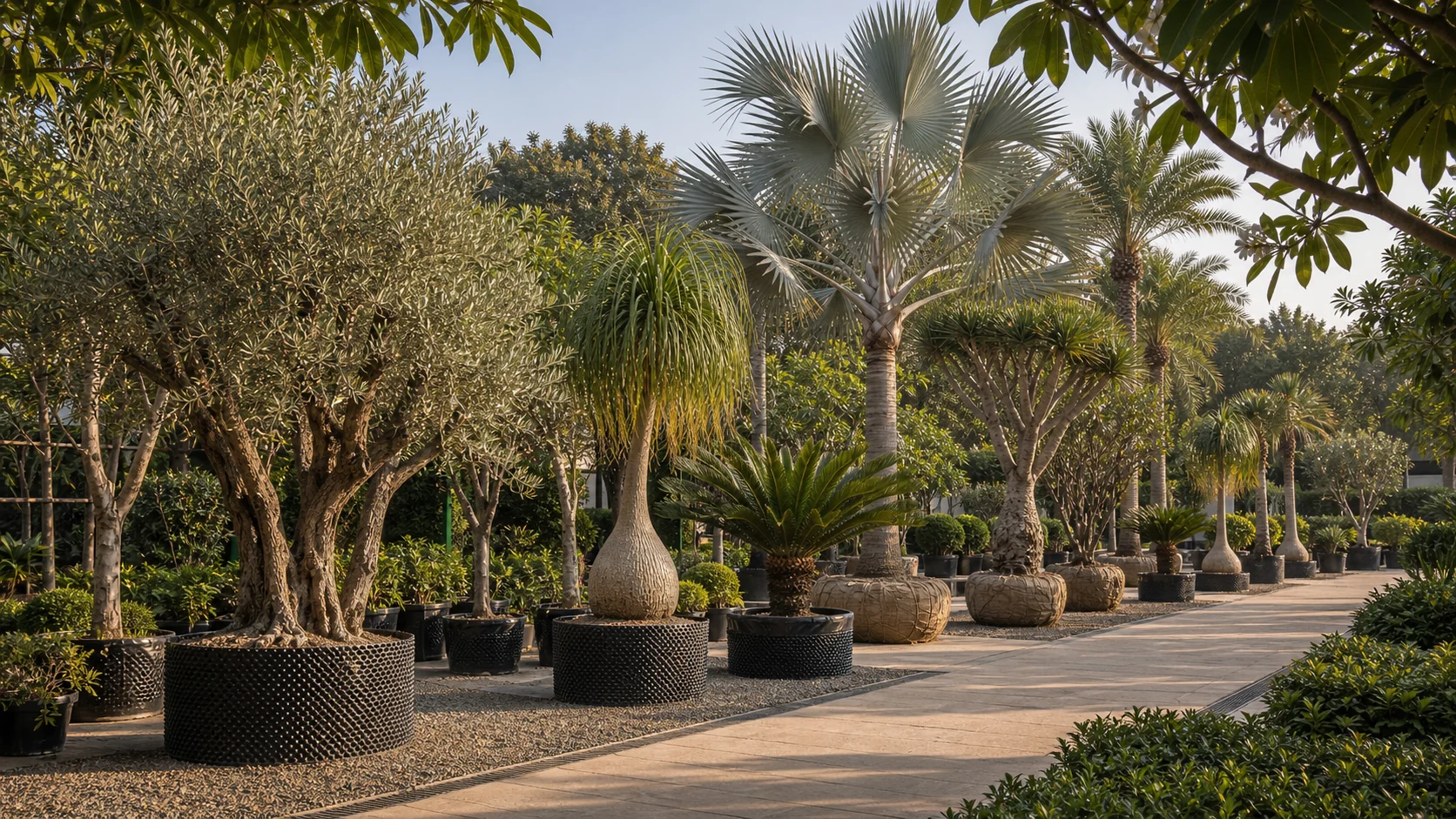
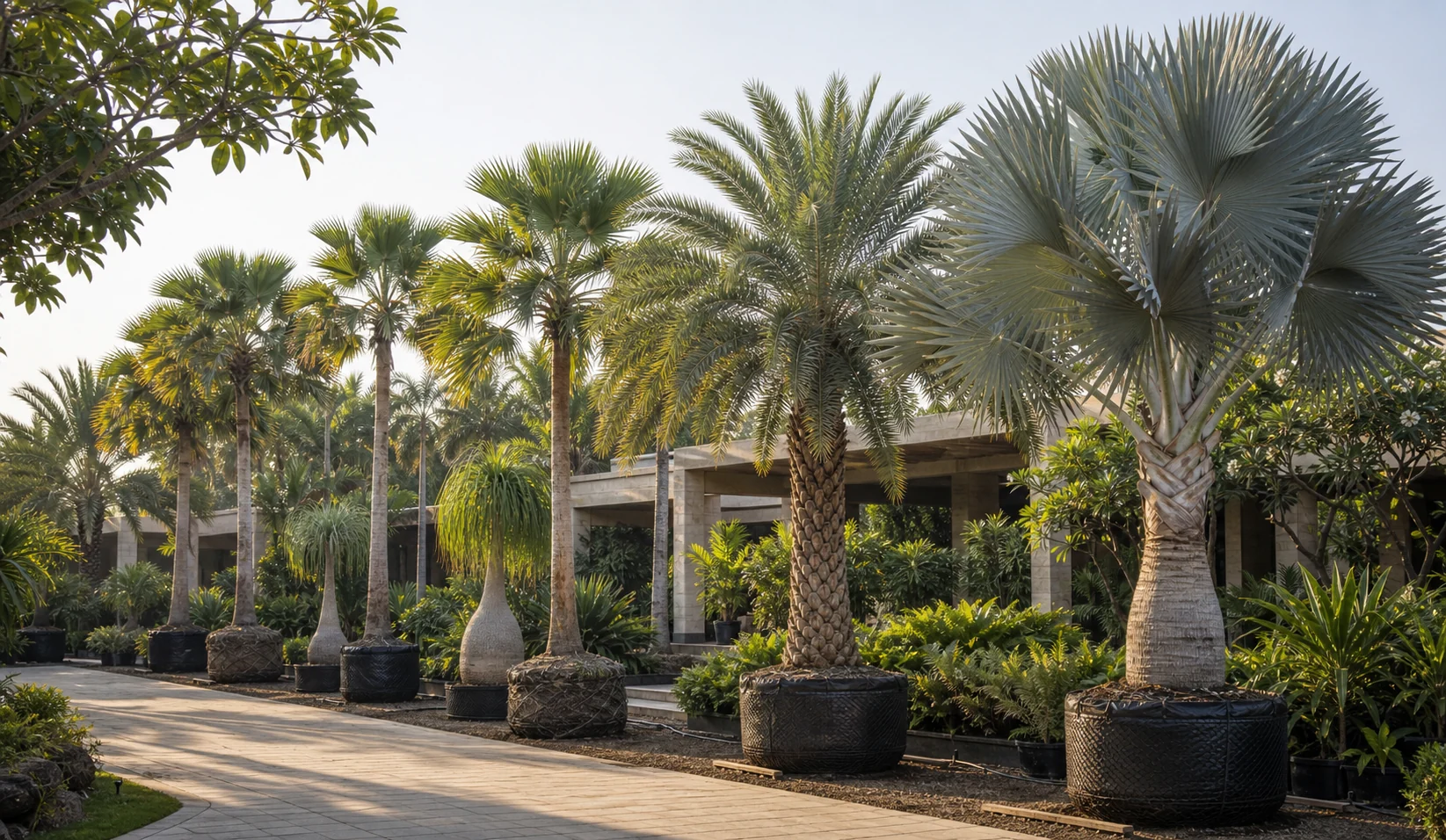
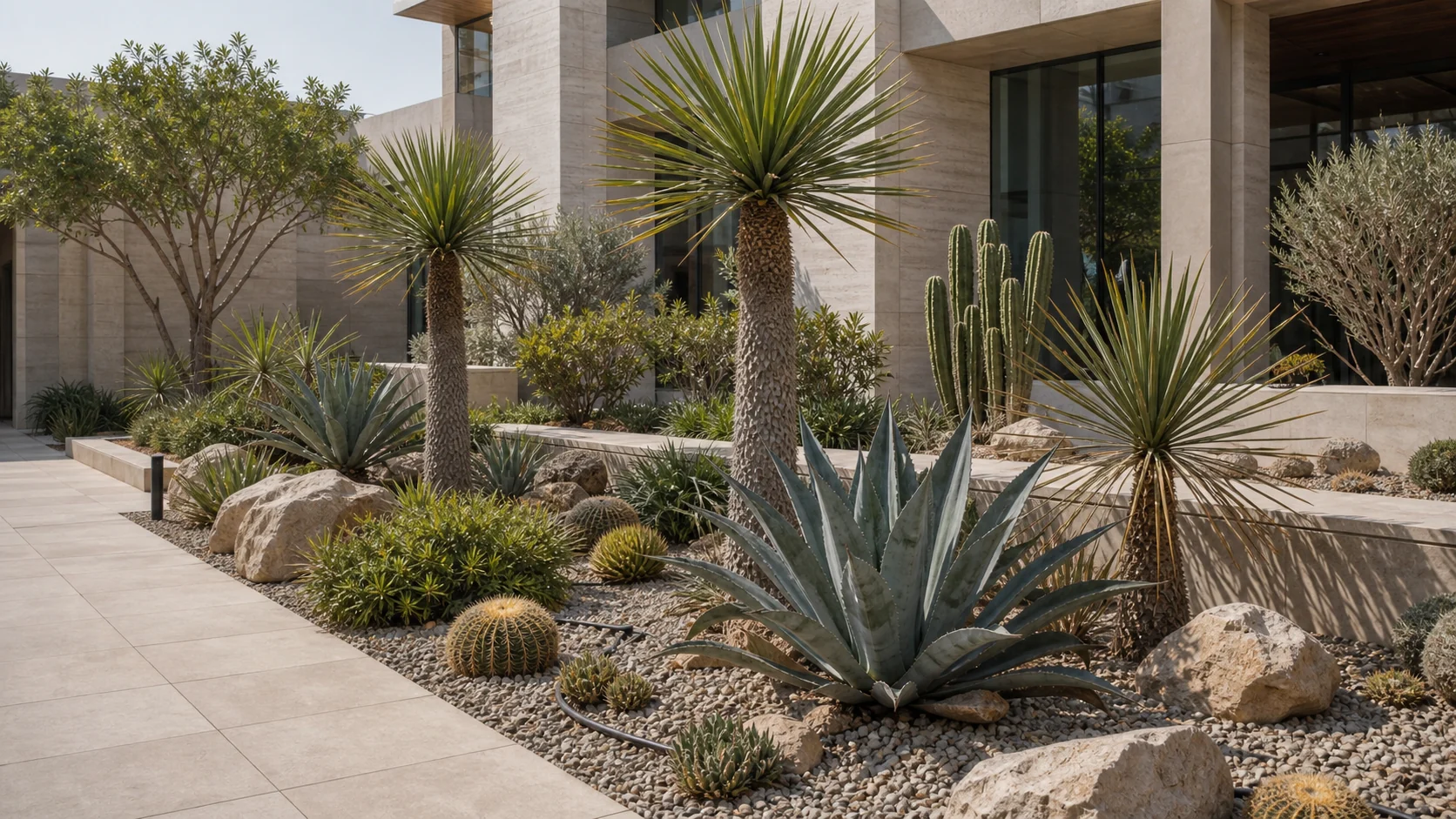
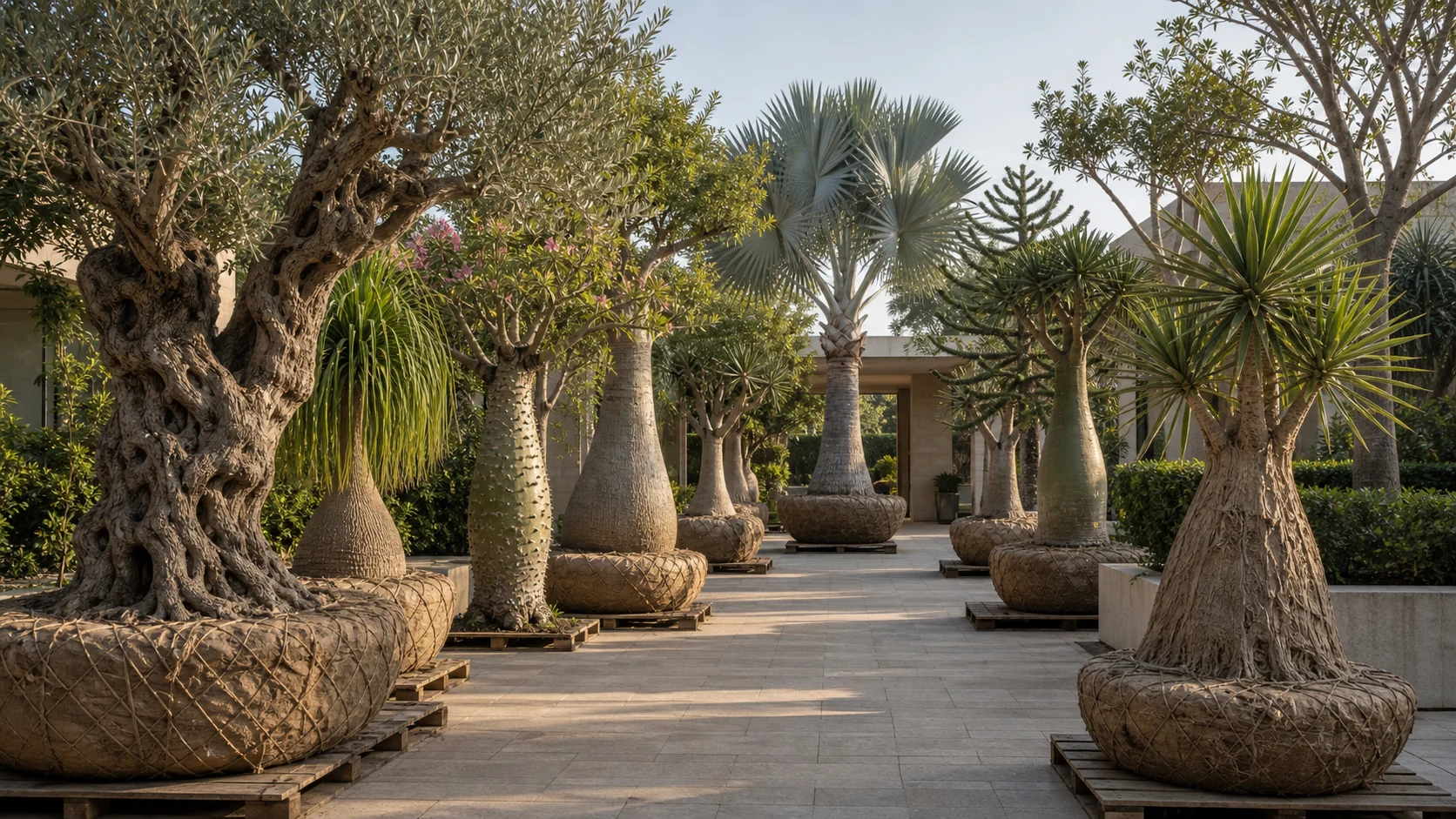
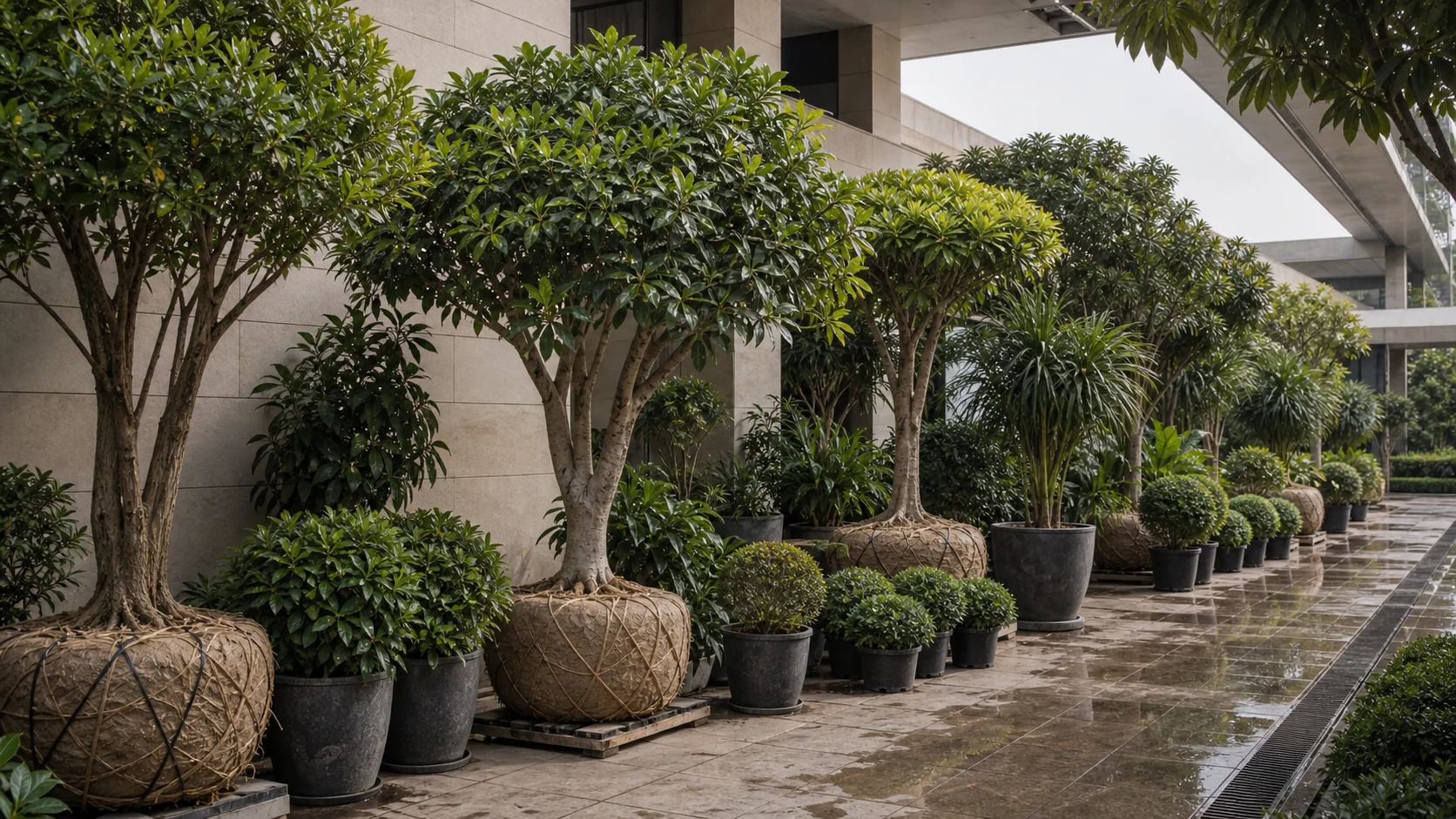
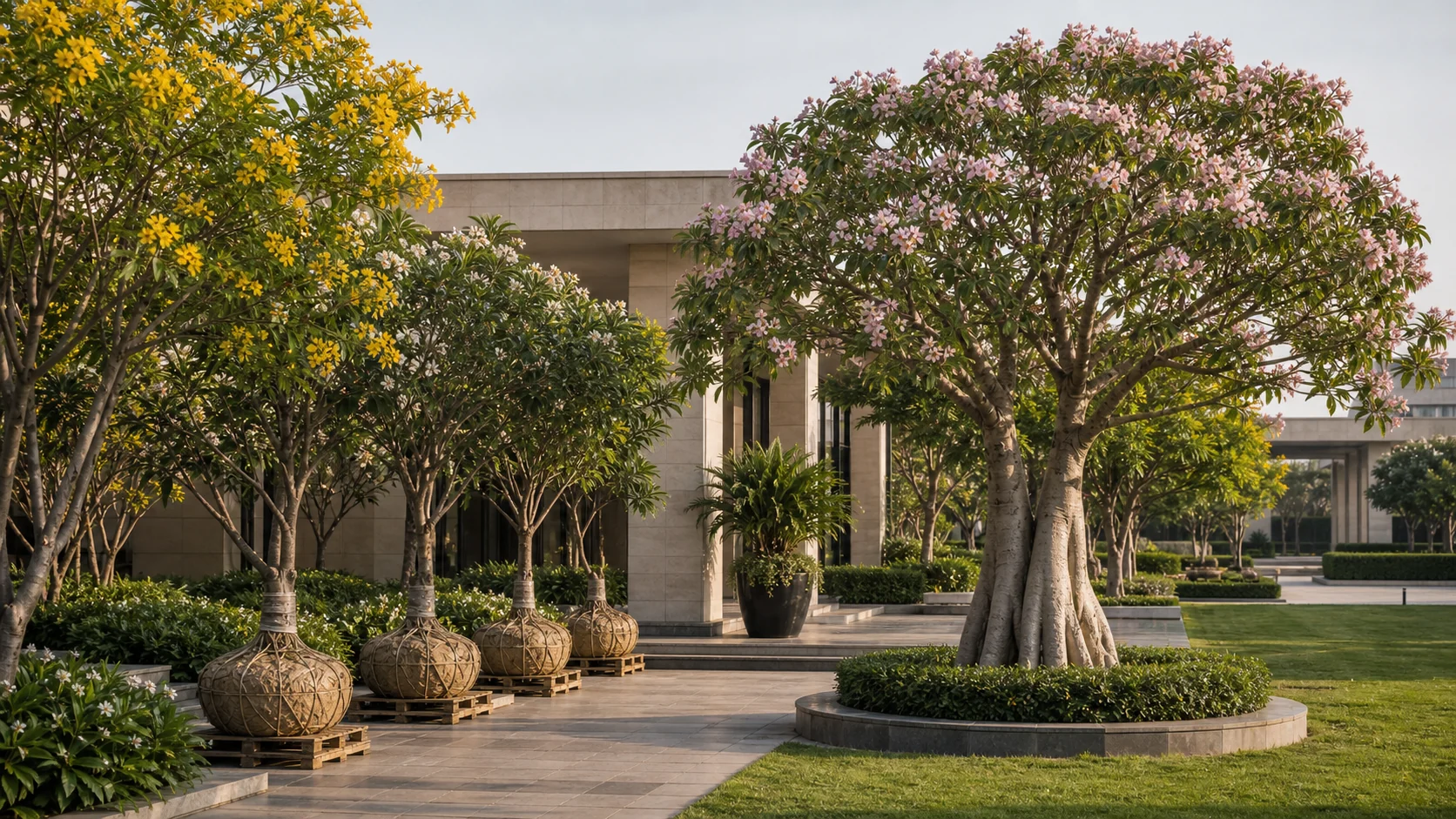
Visual context for placement, scale, handling, and landscape integration.
Section
Where it's used in premium projects
Landscape architects specify Madagascar ocotillo for spiny architectural accents in cactus and succulent gardens, resort xeric courts, and modern dry-tropical beds — the selling point is the angular spiny stem system with drought-deciduous leaf flicker, not shade. Pair with gravel palettes and spine setback plans at guest edges.
Section
Climate & site suitability in India
Drainage is the headline: it tolerates Rajasthan and Gujarat heat but collapses in humid monsoon basins without engineered mounds. It is not *Fouquieria splendens* — do not assume Sonoran ocotillo behaviour. Coastal Chennai-style humidity needs covered display or exceptional grit drainage.
Section
Sourcing & acclimatisation
Collector-grade Alluaudia is scarce — document stem count, spine health, and nursery origin. [Unverified: typical India holding vs direct Madagascar channels for madagascariensis.] Hold in full sun so drought-deciduous rhythm is visible before install.
Section
Installation (pit, soil, drainage, bracing)
Install on raised berms with coarse drainage — pit bottoms must not hold monsoon water. Rigging uses spine-aware strapping; organic-rich wet mixes are a common failure. Integrate drip only for establishment, then dry down.
Section
Establishment & AMC
AMC must treat overwatering as the primary killer — irrigation teams often kill succulents with sympathy watering in year one. Allow drought-deciduous leaf loss without increasing water. Inspect for basal stem softening after monsoon. Compare quotations to *Alluaudia procera* only on habit: madagascariensis reads more angular and shrubby, procera as tall columns.
Section
Cost drivers
Explore
Related
Related
Related links
Services, segments, cost, and proof.
- Softscape & horticulture
- Irrigation & water management
- Landscape maintenance (AMC)
- Hotel & resort landscaping
- Luxury resort & spa landscaping
- Mall & retail landscaping
- Corporate campus landscaping
- Projects
- Commercial landscaping cost guide
- Pricing drivers (imported trees)
- Import compliance workflow
- Request a site assessment
- Is Madagascar ocotillo the same as desert ocotillo?
- No — it is *Alluaudia madagascariensis* (Didiereaceae from Madagascar), not *Fouquieria* true ocotillo; spiny succulent stems look similar in photos but ecology and sourcing differ.
- Why do the small leaves disappear seasonally?
- Drought-deciduous habit drops leaves in dry stress — the spiny stem architecture remains the design feature; do not overwater to force evergreen foliage.
- What drainage is mandatory in Indian monsoon climates?
- Raised gritty mounds with no perched water — stem rot at the collar is the usual failure when pits sit wet through monsoon weeks.
- How does it compare to Alluaudia procera on the same BOQ?
- Madagascariensis is more angular and multi-stem shrubby; procera is the tall erect column form — match photos to habit, not just genus name.
- Are spines a guest-safety issue?
- Yes — plan setbacks, lighting, and maintenance PPE; spines are stiff and persistent year-round unlike deciduous thorns on woody trees.
- What import paperwork applies to Madagascar succulent stock?
- Live Alluaudia consignments need phytosanitary certificates and Indian plant-quarantine inspection per shipment class — align species labels on docs with physical ID before customs (informational, not legal advice).
- How should teams price Madagascar ocotillo?
- Compare stem height, spine health, rarity, raised-bed engineering, and dry AMC — not generic shrub rates.