
Mexican tree yucca
Mexican tree yucca (Yucca filifera)
This entry is authored as *Yucca filifera* — Izote, the Mexican tree yucca with filamentous leaf margins on stiff glaucous leaves — a drought- and cold-tolerant sculptural trunk yucca for xeric estates (slug remains yucca-mexico for URL continuity).
Spec
At a glance
- Botanical name
- Yucca filifera
- Family
- Asparagaceae (Agavaceae)
- Common names
- Izote, Mexican tree yucca, filamentous yucca
- Origin
- North-central Mexico
- Plant type
- Tree yucca
- Mature height
- Often 5–8 m+; branching with age
- Trunk / form
- Thick branching trunk; rosettes with filamentous leaf margins
- Crown spread
- Stiff glaucous rosettes; curly filaments on leaf edges
- Growth rate
- Slow to moderate — buy trunk character
- Light
- Full sun
- Water needs
- Very low; drainage essential
- India climate suitability
- Hot dry India with mounds; spines/filaments need placement setback
- Cold/heat & salt/wind tolerance
- Notable drought and cold tolerance for a tree yucca; wet roots lethal
- Typical supply size
- Trunk and branch architecture classes [Unverified]
- Lead time (sourcing)
- [Unverified] Mexico/India tree-yucca nursery stock
- Install considerations
- Spine and filament setback; gravel mound; rig branched trunks
- Maintenance level
- Low dry AMC; filaments and leaf tips near paths
- Cautions
- Stiff leaves and filaments — placement; drainage; confirm filifera ID on tags
Gallery
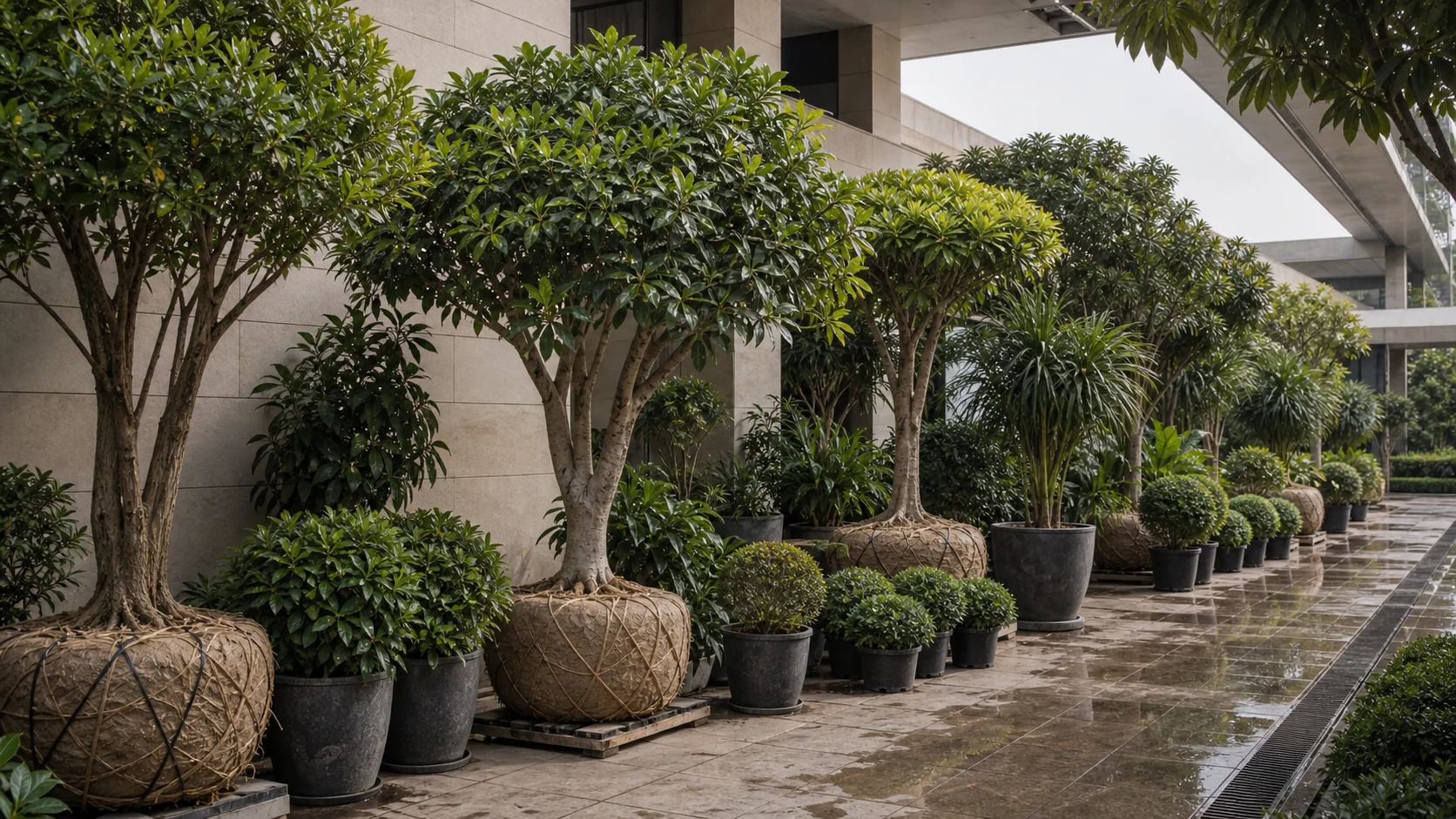
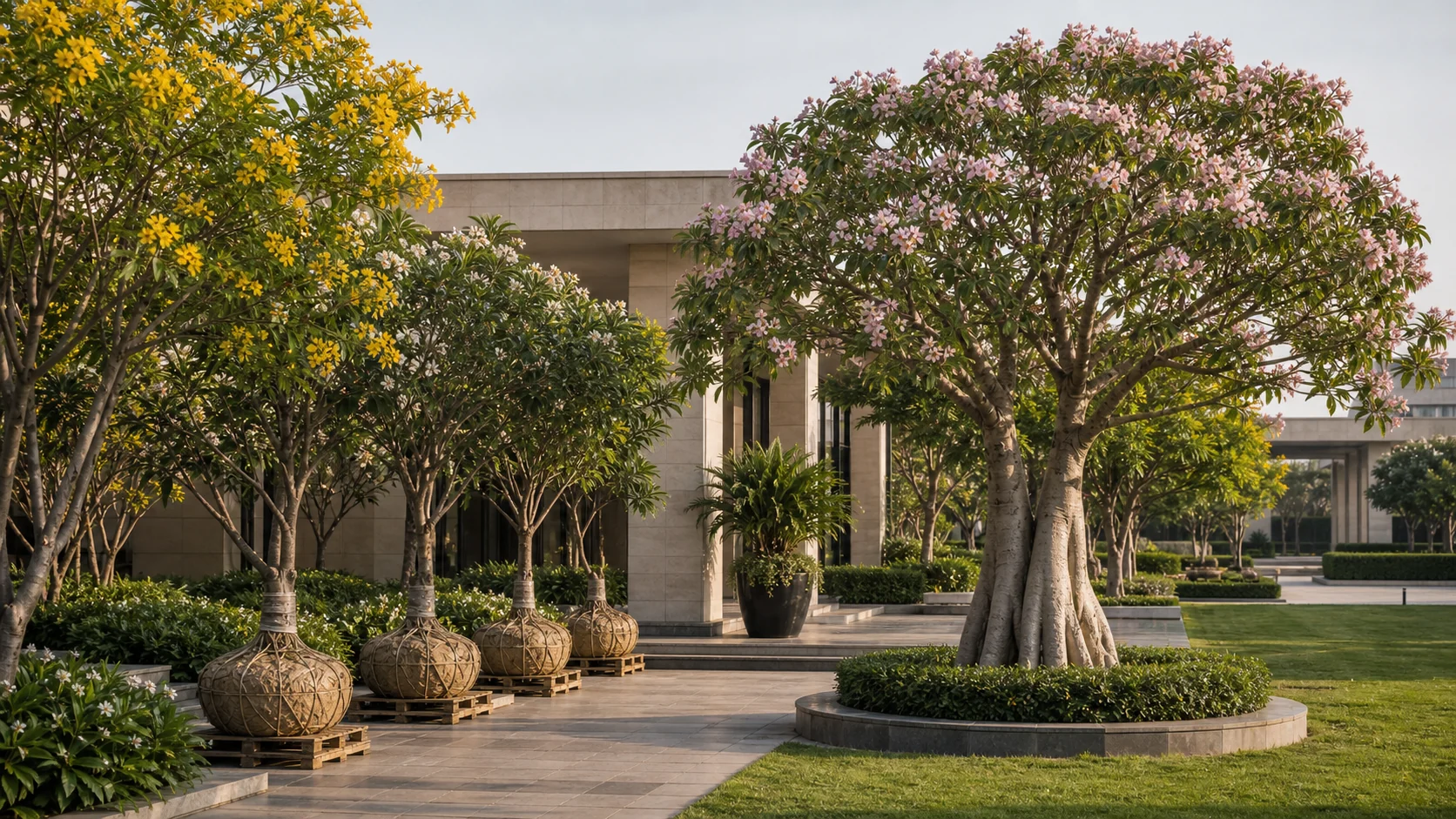
Specimen visual guide
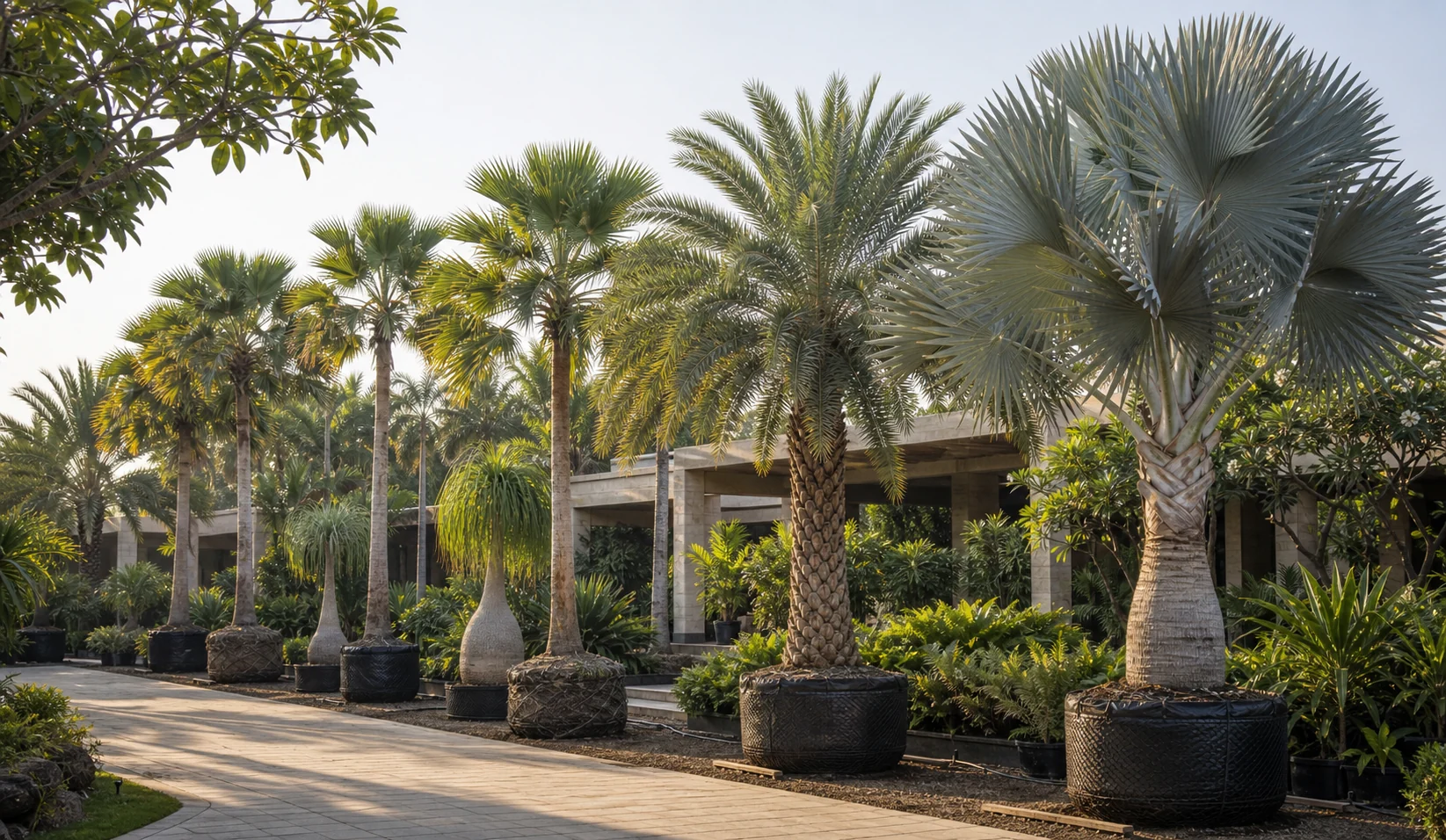
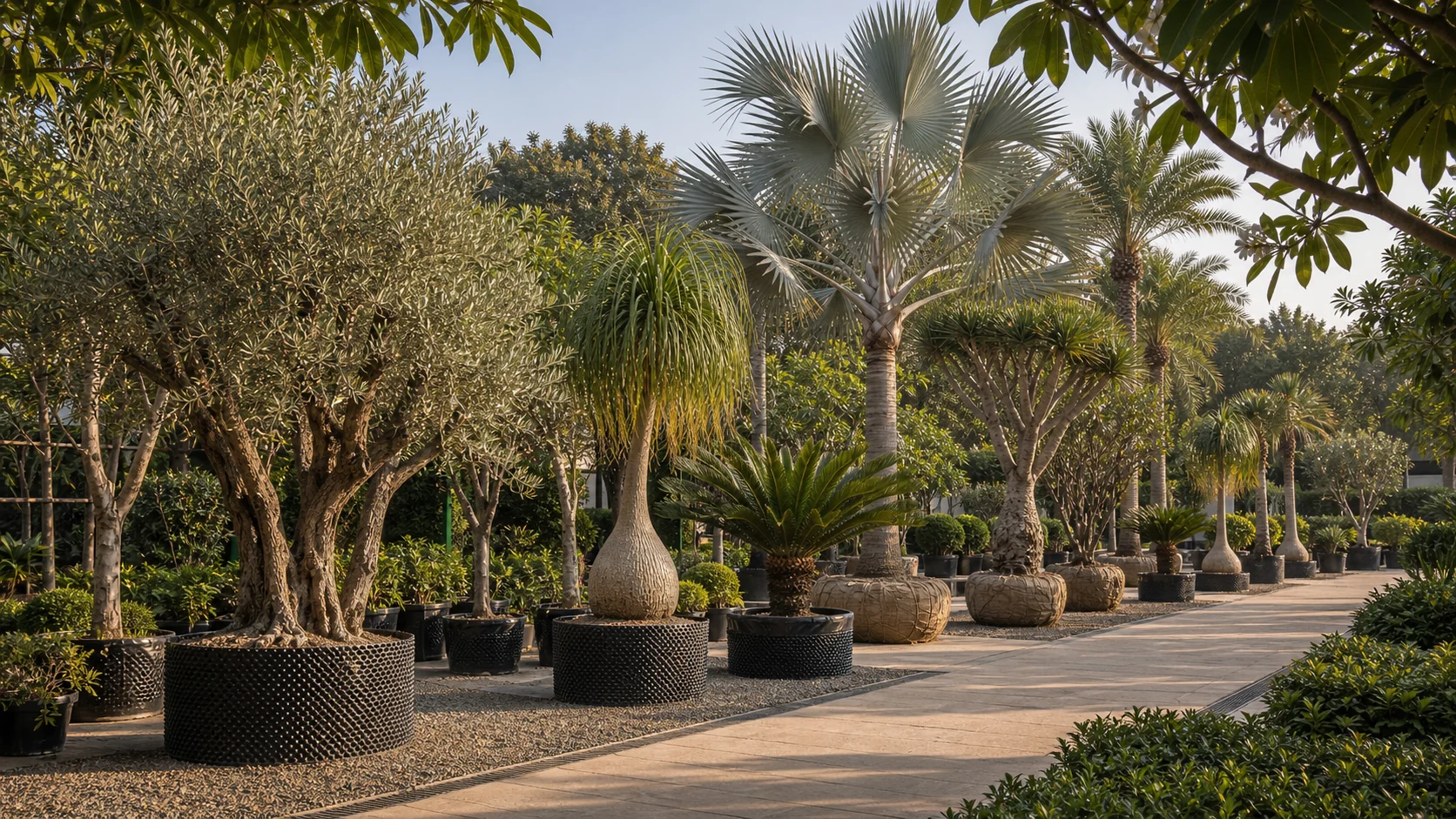
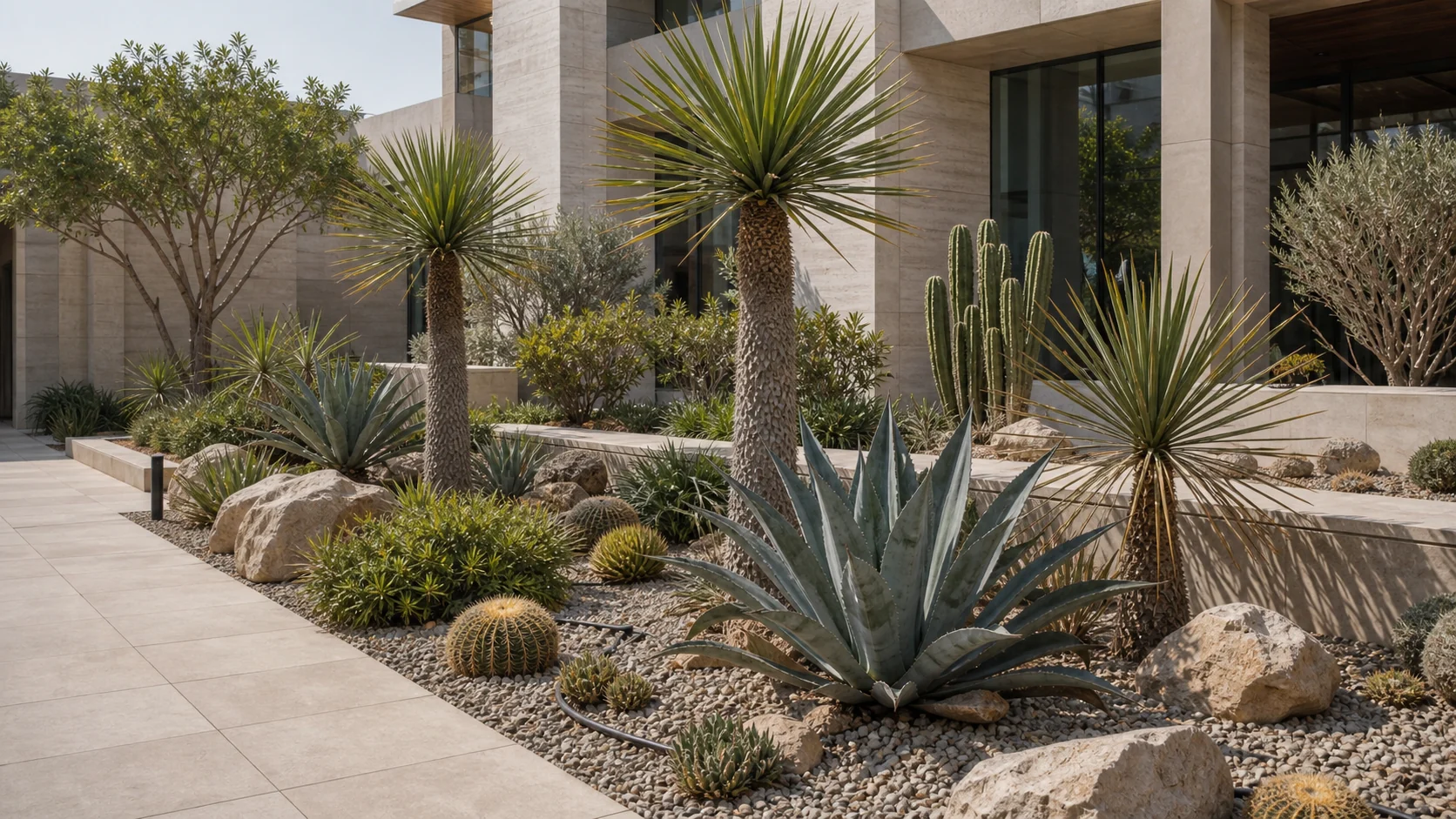
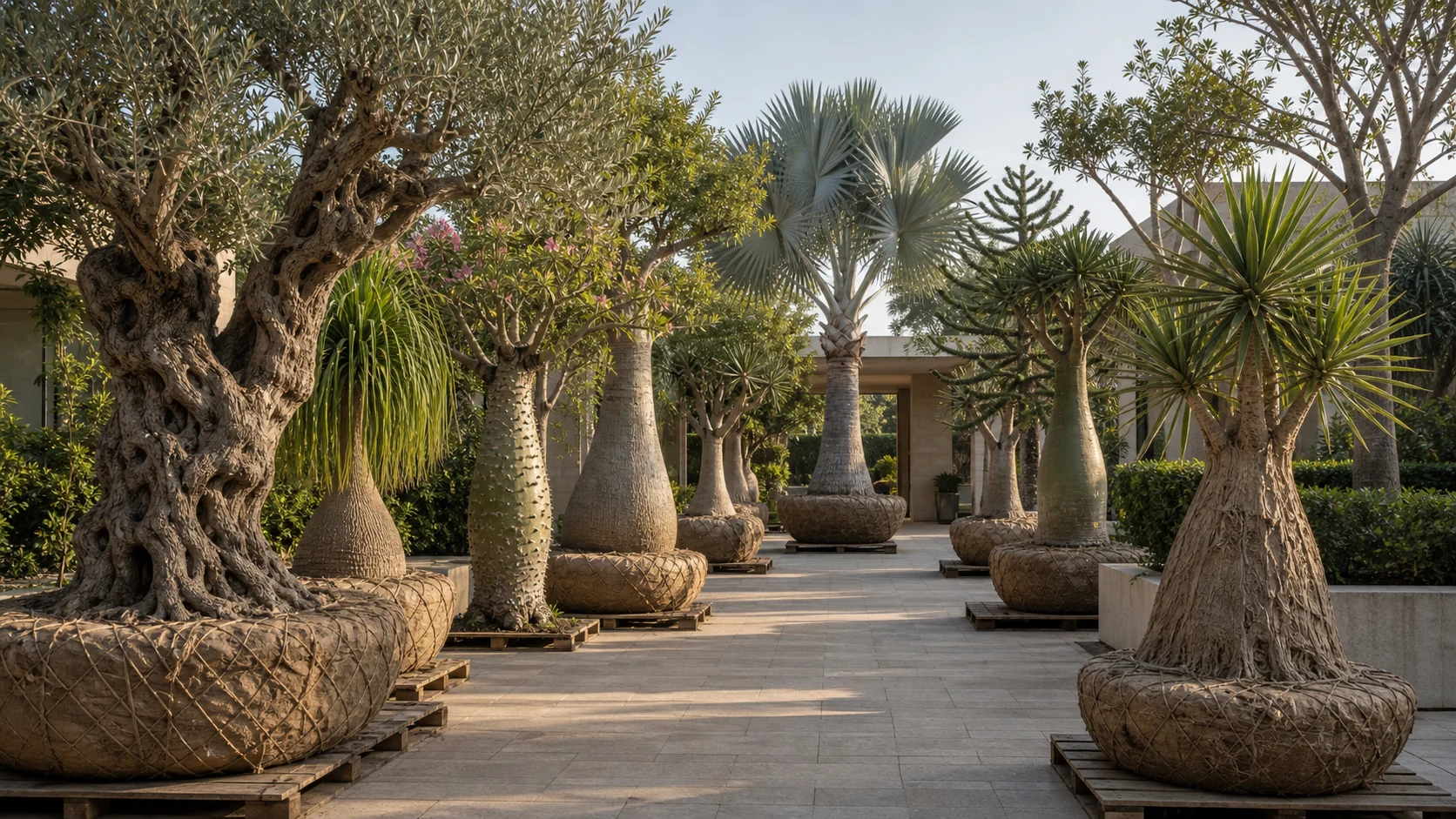
Visual context for placement, scale, handling, and landscape integration.
Section
Where it's used in premium projects
Yucca filifera is the Mexican tree yucca for sculptural dry gardens and estate xeric entries where filament-edged rosettes and branched trunks read as permanent architecture — distinct from spineless gigantea and blue sphere rostrata.
Section
Climate & site suitability in India
Drought- and cold-tolerant relative to tropical yuccas — still demands monsoon mounds in India because wet roots rot filifera as surely as tropical palms. Filamentous leaf edges need setback from guest paths.
Section
Sourcing & acclimatisation
Confirm *Y. filifera* on nursery tags — not mislabelled faxoniana or elephantipes. [Unverified: typical India filifera vs other Mexican tree yucca imports.] Photograph filament margins and trunk branching.
Section
Installation (pit, soil, drainage, bracing)
Branched trunks need padded rigging; plant on gravel mounds with overflow. Do not install as spineless walkway yucca — filaments and stiff tips persist.
Section
Establishment & AMC
Overwatering is the primary establishment killer — dry AMC post-monsoon despite cold-hardy marketing. Compare to *Y. rostrata* only when designers want blue sphere, not branched filament tree form.
Section
Cost drivers
Explore
Related
Related
Related links
Services, segments, cost, and proof.
- Softscape & horticulture
- Irrigation & water management
- Landscape maintenance (AMC)
- Hotel & resort landscaping
- Luxury resort & spa landscaping
- Mall & retail landscaping
- Corporate campus landscaping
- Projects
- Commercial landscaping cost guide
- Pricing drivers (imported trees)
- Import compliance workflow
- Request a site assessment
- Why is this page Yucca filifera?
- Parent decision: author as Izote *Yucca filifera* (filamentous leaf margins) while keeping slug yucca-mexico for URL continuity — verify filifera on nursery tags at purchase.
- What are filamentous leaf margins?
- Curly thread-like filaments edging stiff glaucous leaves — the filifera signature versus smooth spineless gigantea.
- How cold- and drought-tolerant is filifera?
- Among the hardier tree yuccas — still needs drainage in Indian monsoon; wet soil kills regardless of desert heritage.
- How does filifera differ from beaked yucca?
- Filifera is branched tree form with filaments; rostrata is blue spherical head on slender trunk — different sculptural intent.
- Is it safe near walkways?
- Stiff tips and filaments need setback — not spineless like *Y. gigantea* near dense guest flow.
- What import docs should filifera carry?
- Agave-family yucca paperwork should state species — filifera vs elephantipes label errors affect quarantine review (informational, not legal advice).
- What should yucca-mexico BOQs document?
- Trunk branching, filament close-ups, provenance, mound drainage, and dry AMC — not generic Mexican yucca placeholder specs.