
Spineless yucca
Spineless yucca (Yucca gigantea)
Yucca gigantea — still sold as *Y. elephantipes* — is the spineless multi-trunk yucca with soft tips and swollen base, faster and more adaptable for atriums and courtyards where beaked yucca's spines are unacceptable near guests.
Spec
At a glance
- Botanical name
- Yucca gigantea (syn. Yucca elephantipes)
- Family
- Asparagaceae (Agavaceae)
- Common names
- Spineless yucca, giant yucca, soft-tipped yucca
- Origin
- Central America
- Plant type
- Multi-trunk tree yucca
- Mature height
- Often 6–10 m+; multi-stem candelabra
- Trunk / form
- Multiple soft-tipped trunks; swollen base on mature plants
- Crown spread
- Rosettes of soft-tipped sword leaves — candelabra form
- Growth rate
- Fast for a yucca — still buy height for entries
- Light
- Bright light to full sun
- Water needs
- Low-moderate; rots if overwatered
- India climate suitability
- Atriums, courtyards, warm dry outdoor beds; cold-protect young
- Cold/heat & salt/wind tolerance
- Adaptable; young frost-sensitive; soft tips safer near paths than rostrata
- Typical supply size
- Multi-trunk height classes 2–6 m [Unverified]
- Lead time (sourcing)
- [Unverified] Central America/India nursery yucca stock
- Install considerations
- Multi-trunk rigging; drainage; walkway-safe soft tips
- Maintenance level
- Moderate — remove spent rosettes; control irrigation
- Cautions
- Overwatering rots; cold-protect young; gets large — plan vertical clearance
Gallery
Specimen visual guide
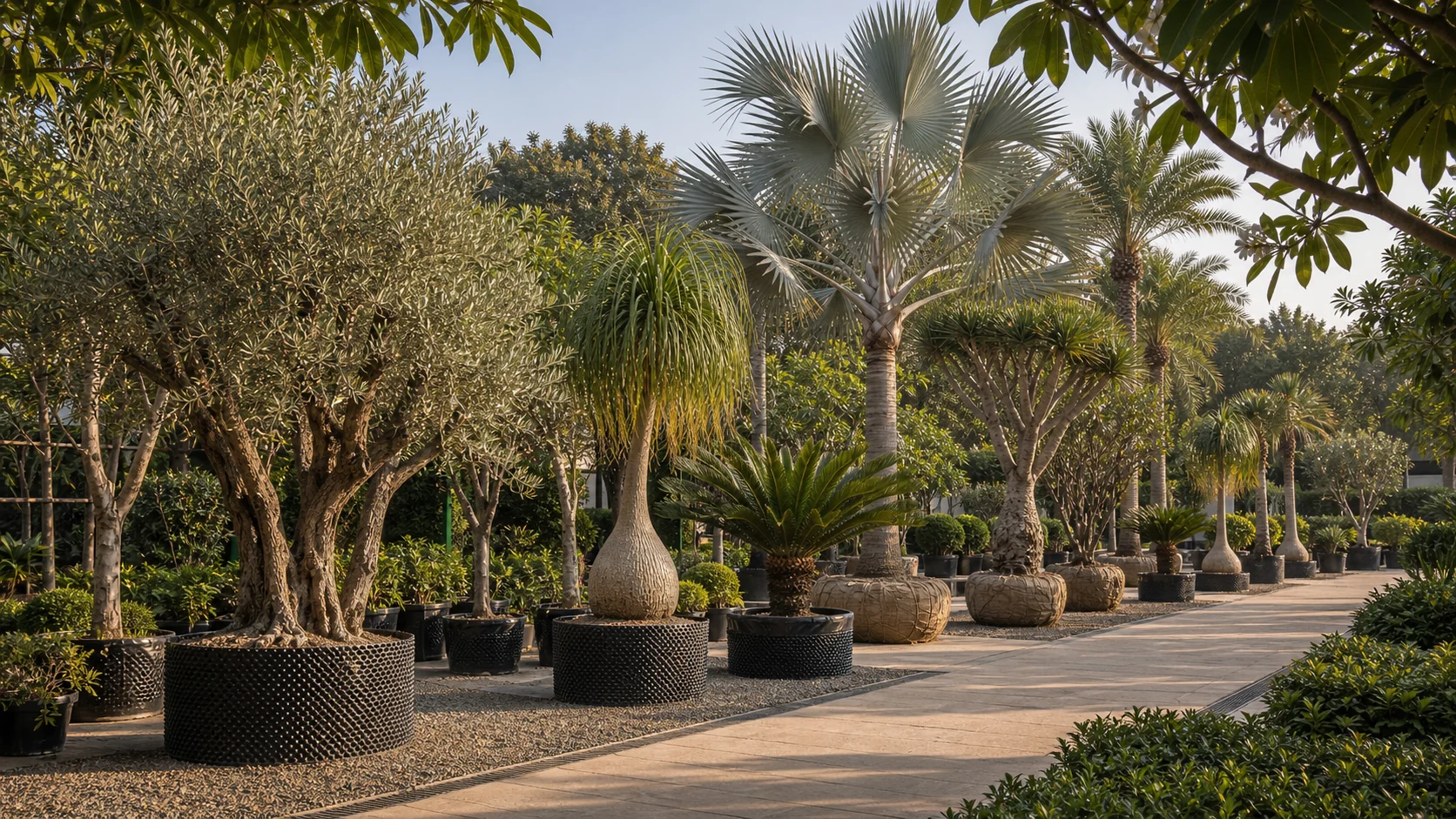
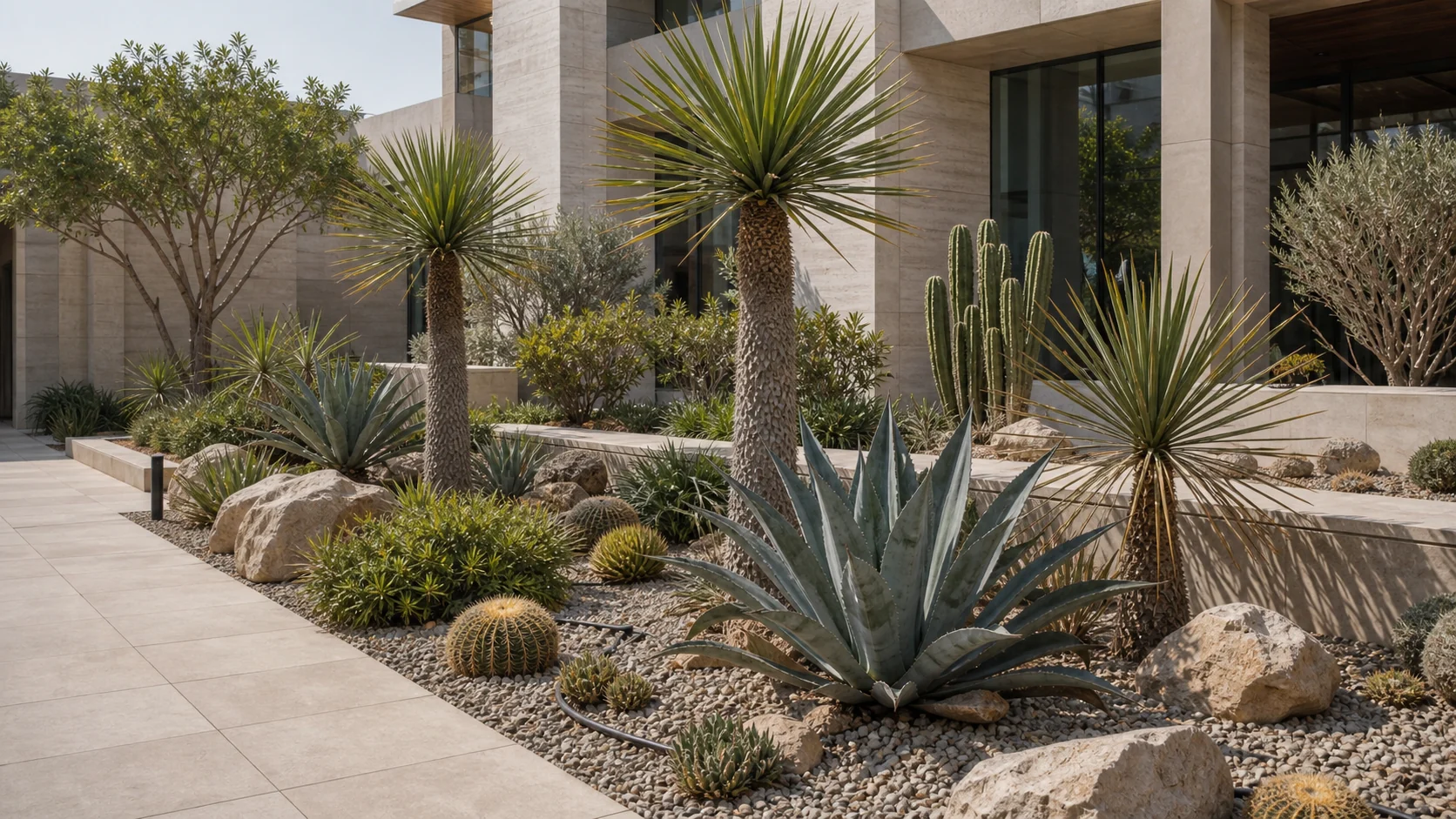
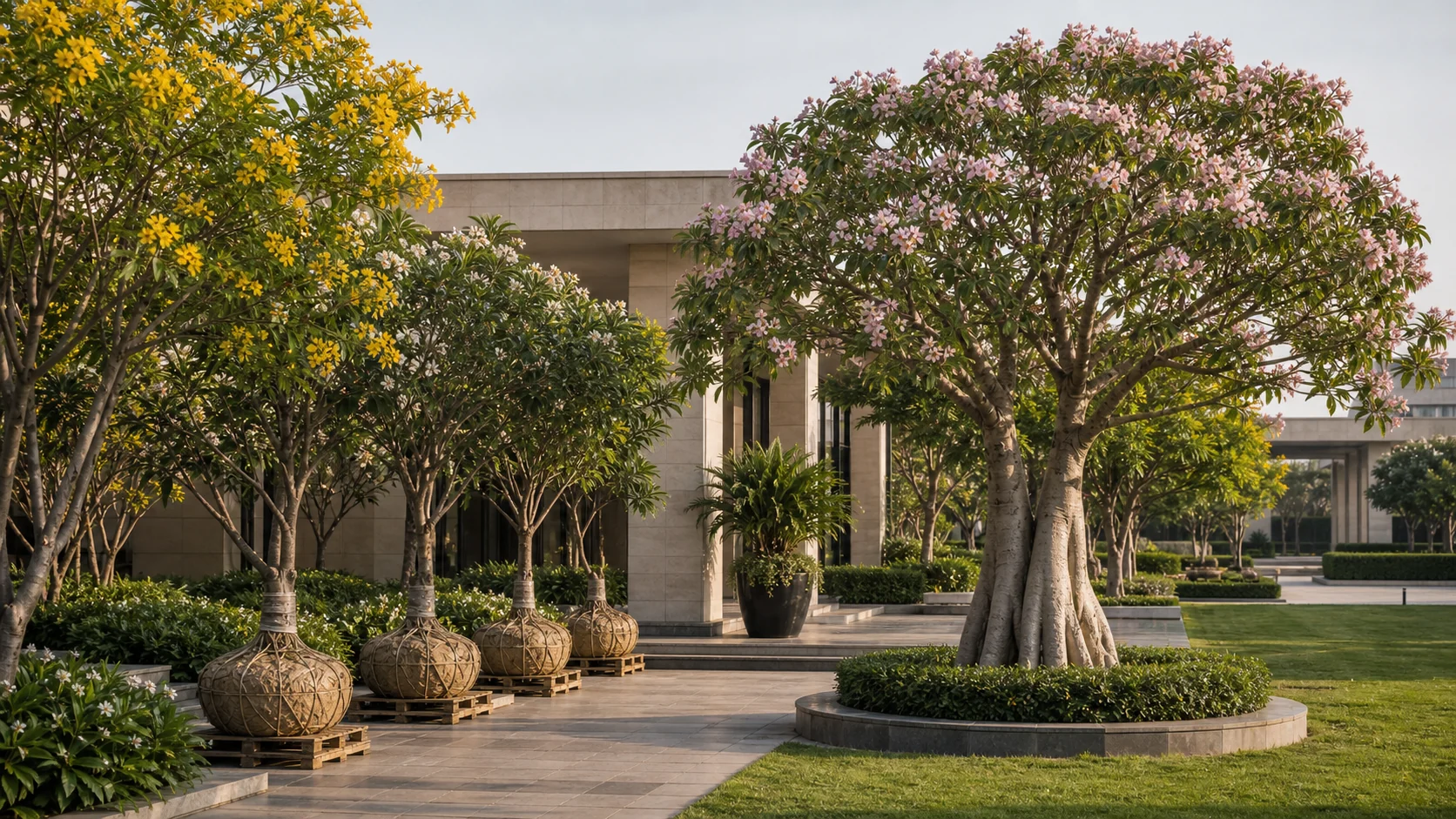
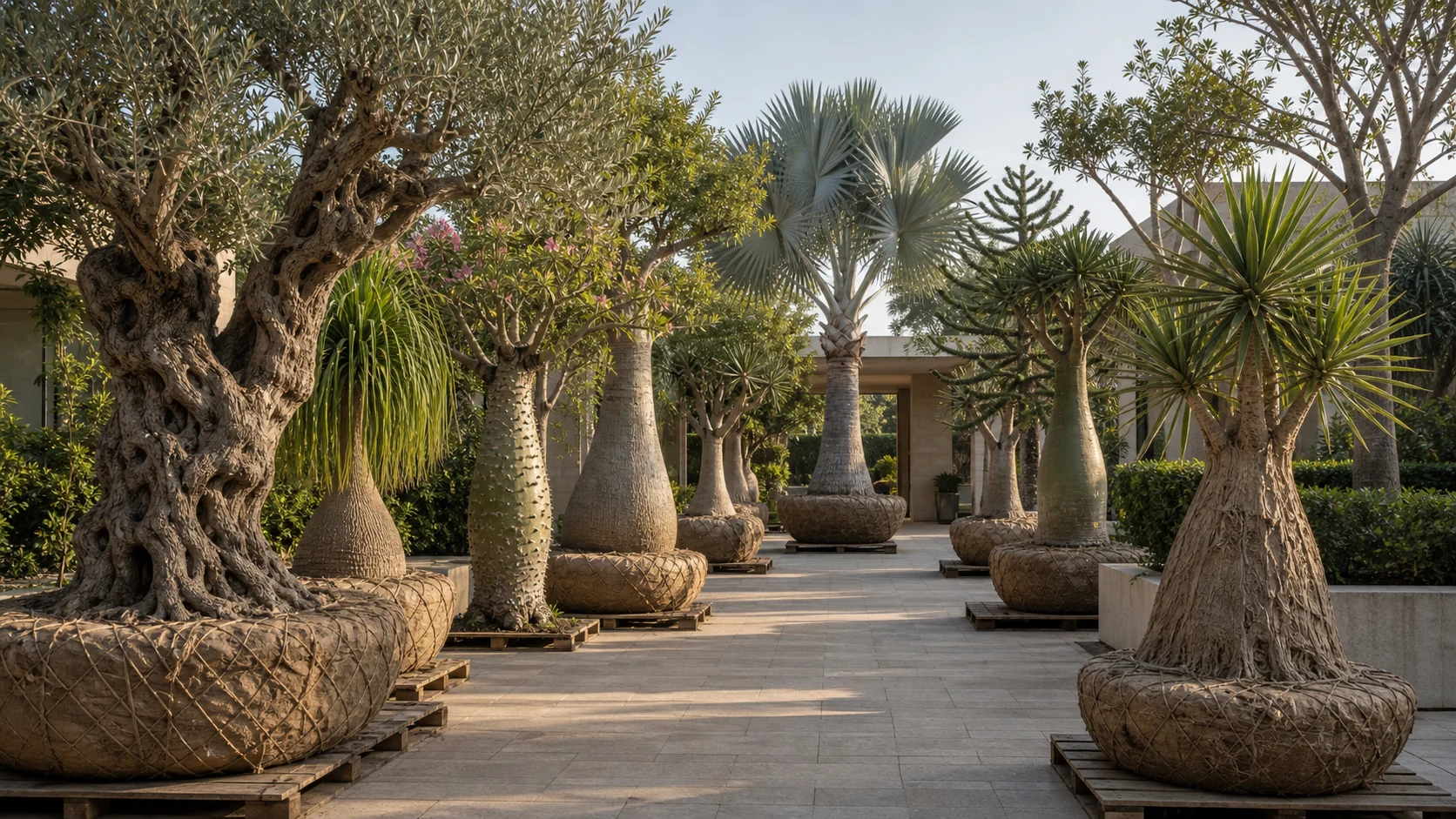
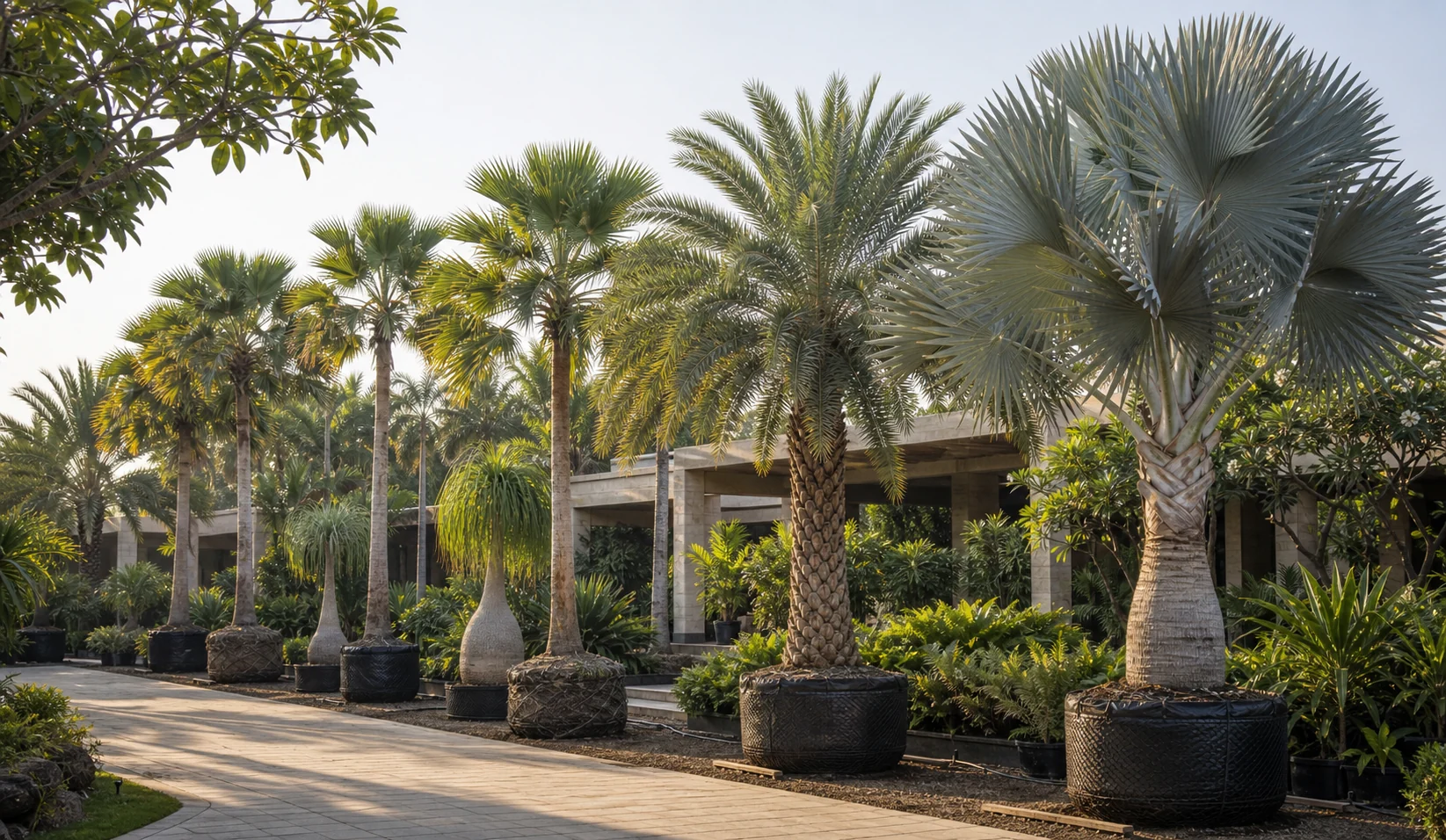
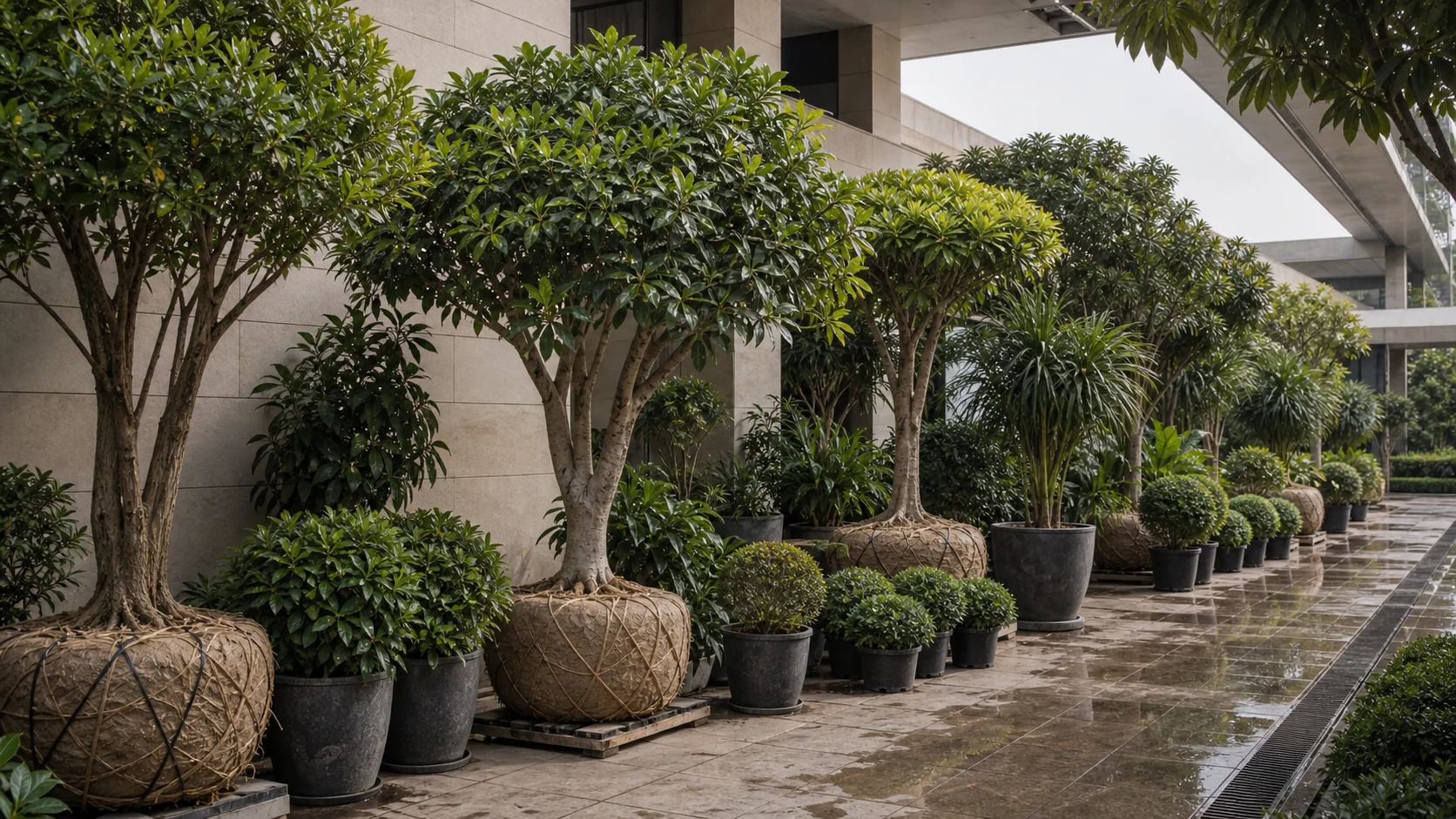
Visual context for placement, scale, handling, and landscape integration.
Section
Where it's used in premium projects
Spineless yucca is the easy architectural yucca — atrium candelabras, courtyard multi-stems, and hotel entries needing vertical structure without spiny rostrata tips near guest flow.
Section
Climate & site suitability in India
More adaptable than desert strict yuccas but still rots in monsoon clay — outdoor beds need mounds. Atrium culture succeeds with light, not water. Programme mature height — gigantea gets large.
Section
Sourcing & acclimatisation
Specify multi-trunk count and soft-tip health — distinguish from *Y. rostrata* blue sphere. [Unverified: India tissue-culture vs imported multi-stem specimens.]
Section
Installation (pit, soil, drainage, bracing)
Rig multi-stems without snapping soft tips — walkway-safe but still heavy. Drainage in outdoor pits; atrium pots need light intensity. Plan ceiling clearance in double-height lobbies.
Section
Establishment & AMC
Overwatering is the number-one killer — AMC must not treat spineless yucca like a feather palm on drip. Young outdoor plants need frost protection in North India. Prune spent rosettes for tidy candelabra.
Section
Cost drivers
Explore
Related
Related
Related links
Services, segments, cost, and proof.
- Softscape & horticulture
- Irrigation & water management
- Landscape maintenance (AMC)
- Hotel & resort landscaping
- Luxury resort & spa landscaping
- Mall & retail landscaping
- Corporate campus landscaping
- Projects
- Commercial landscaping cost guide
- Pricing drivers (imported trees)
- Import compliance workflow
- Request a site assessment
- Why is it called spineless yucca?
- Soft leaf tips unlike spiny desert yuccas — safer near walkways, though trunks still need space at maturity.
- Is Yucca elephantipes the same species?
- *Yucca gigantea* is the accepted name; elephantipes persists in trade labels and BOQ lines.
- Indoor or outdoor in India?
- Both — atriums need bright light; outdoor needs drainage mounds and dry post-monsoon AMC.
- How large can spineless yucca get?
- Multi-metre candelabras — programme ceiling and facade clearance early, not after install.
- How does it compare to beaked yucca?
- Gigantea is faster, softer-tipped, and more adaptable; rostrata is the blue spiky sphere-on-trunk desert jewel — different design intent.
- What import paperwork applies to Yucca gigantea?
- Agave-family yucca consignments need species labels on phytosanitary certificates for quarantine — gigantea vs rostrata swaps matter (informational, not legal advice).
- What kills spineless yucca in year one?
- Sympathy overwatering — especially when automatic irrigation also serves nearby turf or palms.