
Long John tree
Long John / Ant tree (Triplaris surinamensis)
Triplaris surinamensis — Long John — is a tall slender fast tree with showy pink-red papery winged flowers and fruit on female plants, myrmecophyte hollow stems hosting ants in habitat, specified with dioecy and biology notes for Indian tropical features.
Spec
At a glance
- Botanical name
- Triplaris surinamensis
- Family
- Polygonaceae
- Common names
- Long John, ant tree, triplaris
- Origin
- South America (Amazon basin)
- Plant type
- Fast dioecious flowering tree
- Mature height
- Often 15–25 m; fast vertical
- Trunk / form
- Tall slender trunk; hollow stems (myrmecophyte in habitat)
- Crown spread
- Female plants: pink-red papery winged flowers/fruit; males less showy
- Growth rate
- Fast; brittle
- Light
- Full sun; tropical
- Water needs
- Moderate tropical moisture
- India climate suitability
- Humid tropical India; warm moist sites
- Cold/heat & salt/wind tolerance
- Brittle wood; specify female plants for display; ant biology note
- Typical supply size
- Slender tall caliper classes [Unverified]
- Lead time (sourcing)
- [Unverified] tropical dioecious stock — female tagged
- Install considerations
- Brittle wood bracing; confirm female for flower display
- Maintenance level
- Moderate — papery flower litter; storm branch checks
- Cautions
- Myrmecophyte ant hosting in habitat; fast/brittle; specify female for showy display
Gallery
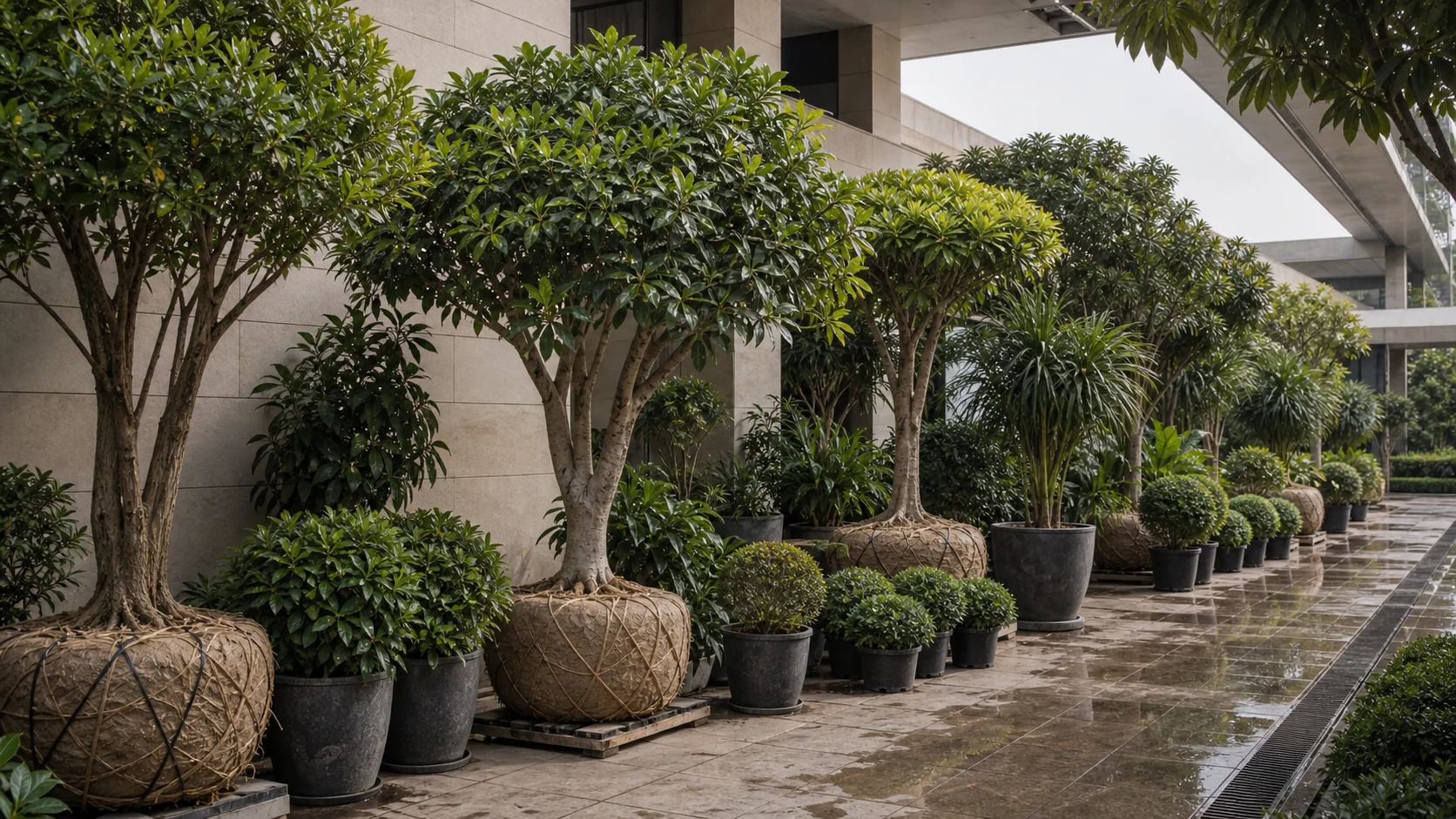
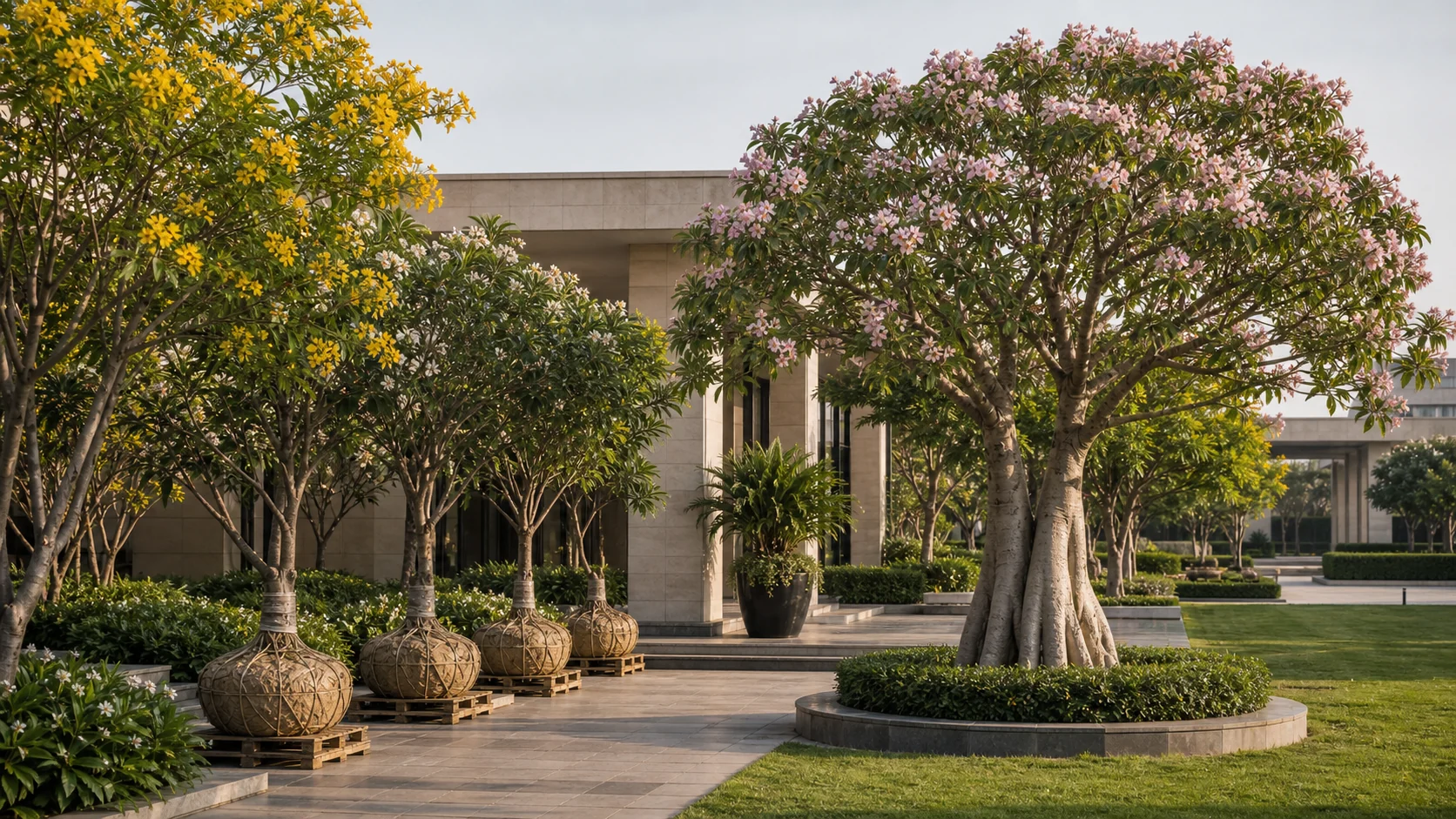
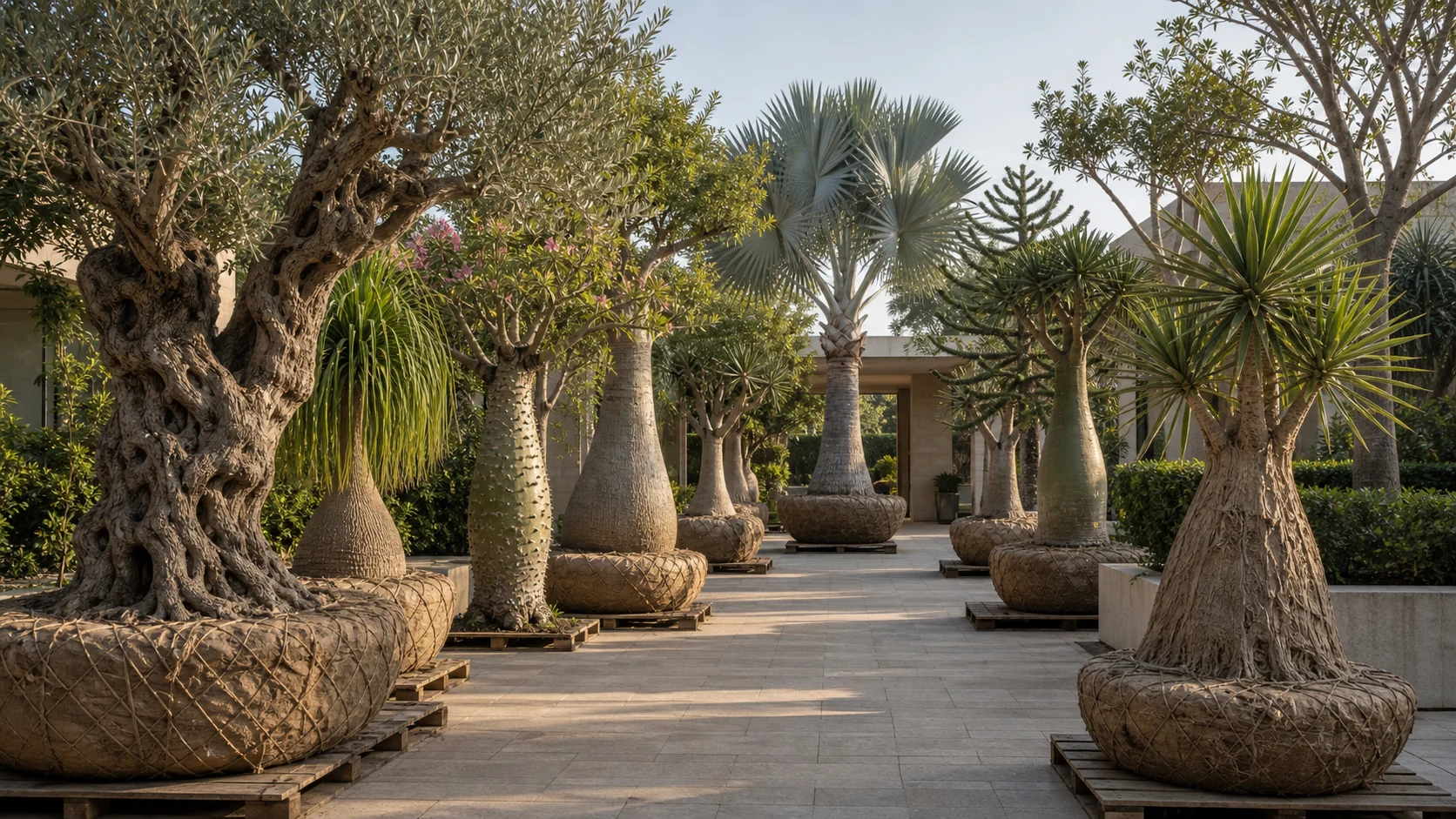
Specimen visual guide
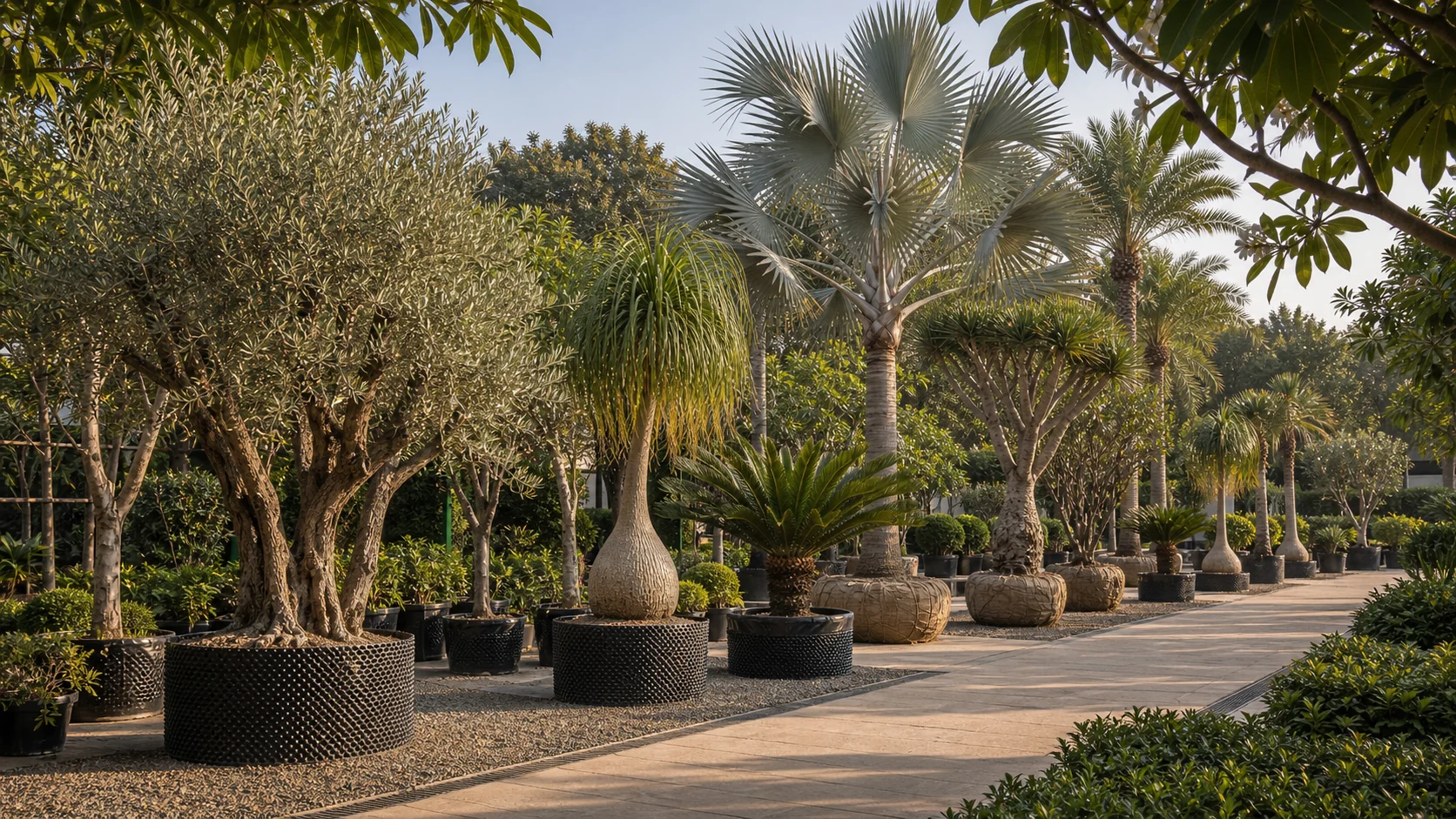
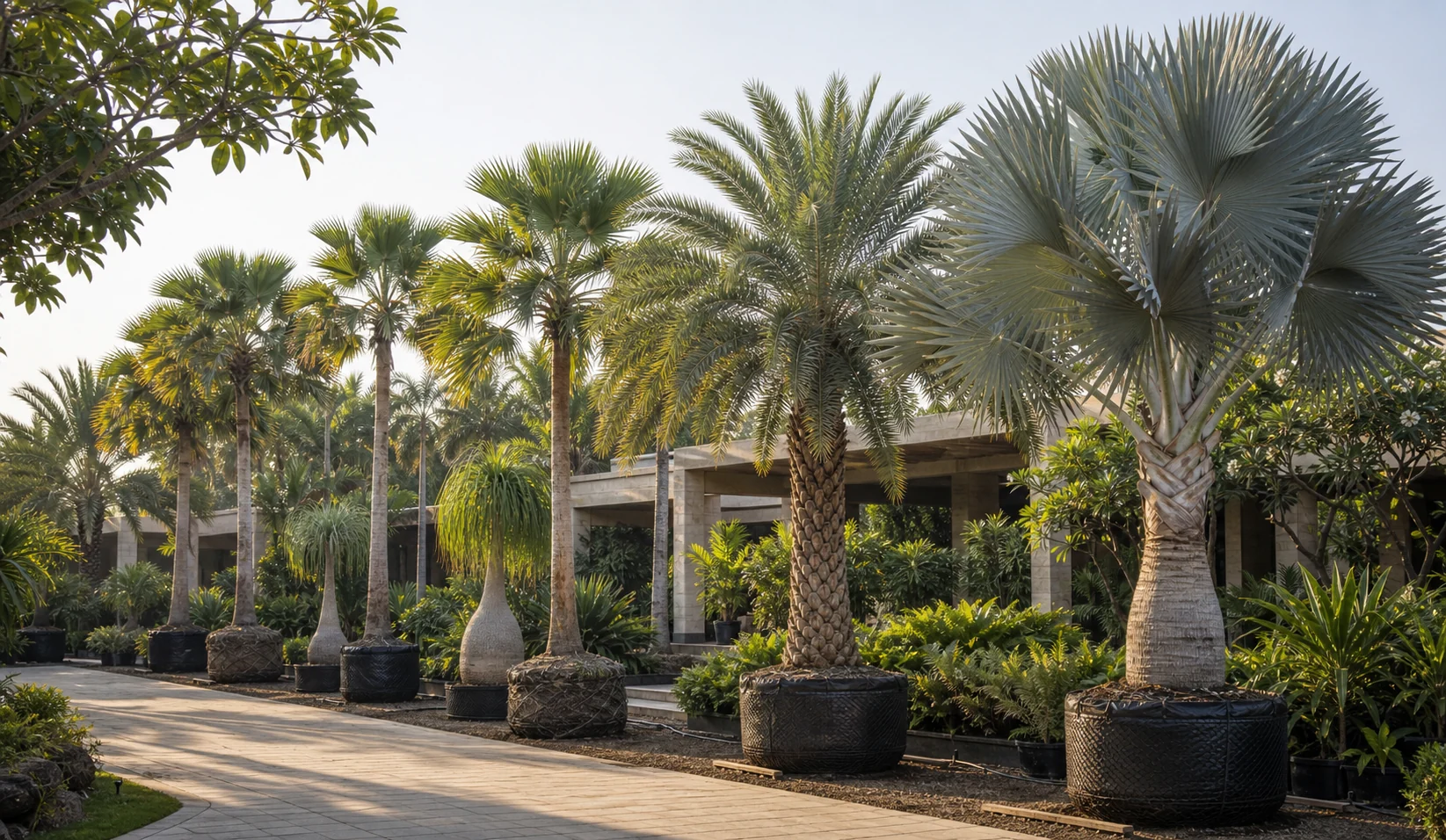
Visual context for placement, scale, handling, and landscape integration.
Section
Where it's used in premium projects
Long John is a fast vertical pink-red flowering feature — tropical resort entries and avenues needing papery winged colour, with BOQ requiring female plants and honest ant-tree biology context, not generic pink flowering filler.
Section
Climate & site suitability in India
Humid tropical India suits fast growth — brittle wood needs storm programmes. Dioecy means male plants will not deliver the papery display — specify female tagged stock on BOQ.
Section
Sourcing & acclimatisation
Confirm female plants for showy papery flowers — [Unverified: typical India Triplaris dioecious tagging reliability.] Note myrmecophyte hollow stems hosted ants in native habitat; Indian landscape ants may differ — biology is context, not horror marketing.
Section
Installation (pit, soil, drainage, bracing)
Tall slender transplants need bracing; brittle wood inspection after storms. Plan papery flower/fruit litter on light paving — distinctive debris, not generic leaf drop.
Section
Establishment & AMC
AMC includes storm brittlewood removal and flower litter weeks. Educate facilities that ant associations are ecological curiosity from hollow stems — not a reason for guest panic if non-habitat ants appear.
Section
Cost drivers
Explore
Related
Related
Related links
Services, segments, cost, and proof.
- Softscape & horticulture
- Irrigation & water management
- Landscape maintenance (AMC)
- Hotel & resort landscaping
- Luxury resort & spa landscaping
- Mall & retail landscaping
- Corporate campus landscaping
- Projects
- Commercial landscaping cost guide
- Pricing drivers (imported trees)
- Import compliance workflow
- Request a site assessment
- Why specify female Triplaris plants?
- Dioecious species — female plants carry the showy pink-red papery winged flowers and fruit; males are not the display sex.
- What is the ant-tree biology?
- Myrmecophyte hollow stems hosted stinging ants in native habitat — an ecological note; Indian sites may differ but hollow stem biology remains interesting context.
- What do papery flowers look like?
- Pink-red papery winged flowers and fruit on female plants — vertical fast tree silhouette, not broad umbrella gulmohar.
- How fast does Long John grow?
- Fast and brittle — programme storm inspection and vertical clearance, not only quick colour.
- Where in India is it suitable?
- Warm humid tropical sites — not dry desert or cold North India defaults.
- What import compliance applies to Triplaris?
- Polygonaceae tropical trees need species paperwork and may need sexed plant declarations on nursery docs for display guarantees (informational, not legal advice).
- How should Triplaris compare to Brachychiton pink trees?
- Triplaris is fast slender papery wings on dioecious females; Brachychiton discolor is stout Australian pink bells — different form, climate, and BOQ.