
Yellow African tulip
Yellow African tulip tree (Spathodea campanulata 'Aurea')
Spathodea campanulata 'Aurea' is the yellow African tulip tree — big tulip-shaped yellow flowers on a fast near-evergreen tree, specified with honest note that the species is highly invasive in many tropics and brittle at large scale.
Spec
At a glance
- Botanical name
- Spathodea campanulata 'Aurea'
- Family
- Bignoniaceae
- Common names
- Yellow African tulip tree, Spathodea Aurea
- Origin
- Tropical Africa (cultivar Aurea)
- Plant type
- Near-evergreen flowering tree
- Mature height
- Often 15–25 m; fast
- Trunk / form
- Tall straight trunk; brittle wood
- Crown spread
- Large near-evergreen crown; cup-shaped yellow flowers
- Growth rate
- Fast
- Light
- Full sun
- Water needs
- Moderate; tropical
- India climate suitability
- Humid tropical India — invasiveness risk in wet tropics
- Cold/heat & salt/wind tolerance
- Brittle; large spread; invasive potential
- Typical supply size
- Fast tall caliper classes [Unverified]
- Lead time (sourcing)
- [Unverified] tropical nursery Spathodea stock
- Install considerations
- Brittle wood bracing; invasiveness disclosure; flower litter
- Maintenance level
- Moderate-high — litter; monitor spread in sensitive sites
- Cautions
- Species highly invasive in tropics — honest note; brittle wood; large size; yellow vs orange cultivar verification
Gallery
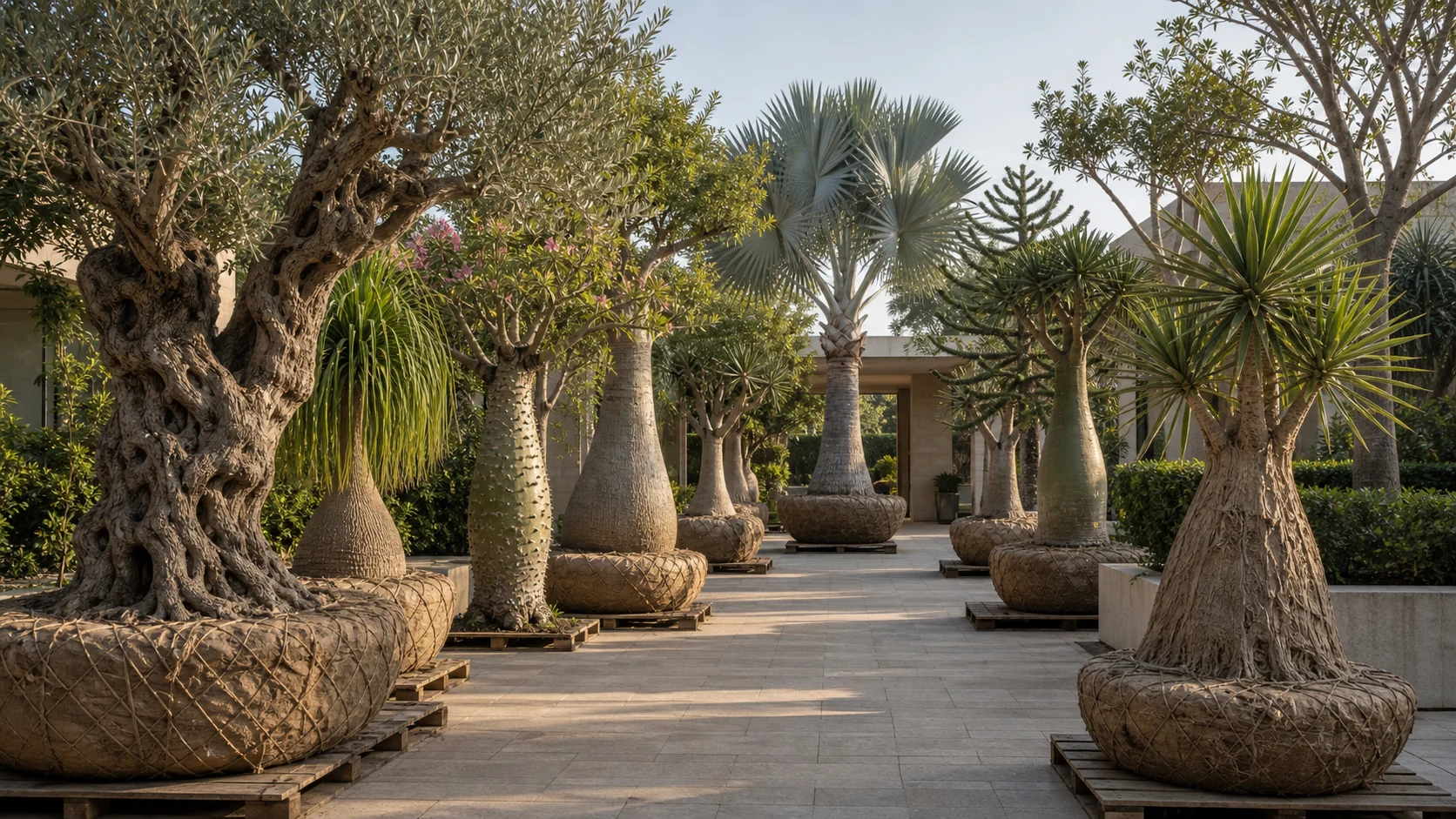
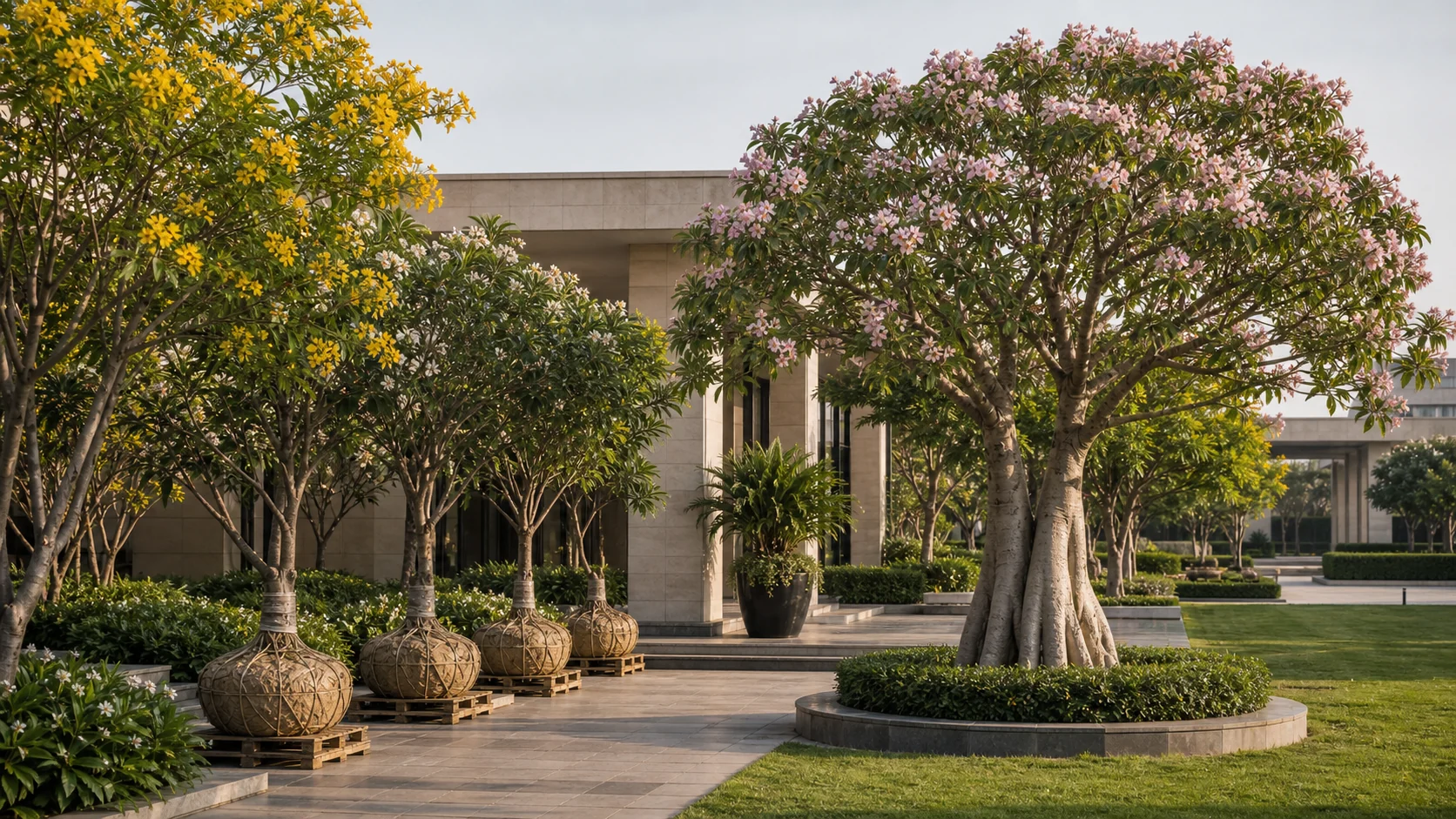
Specimen visual guide
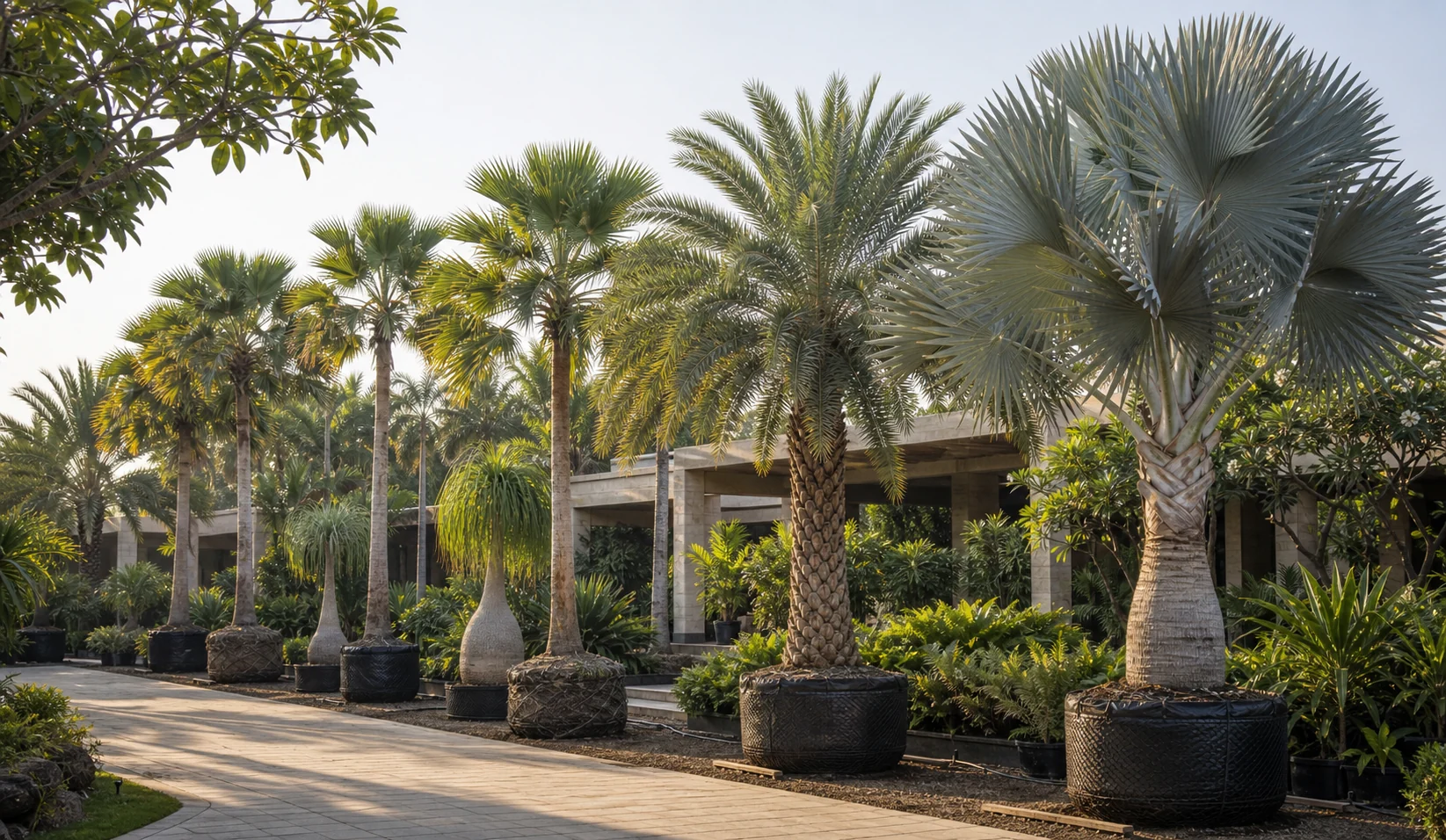
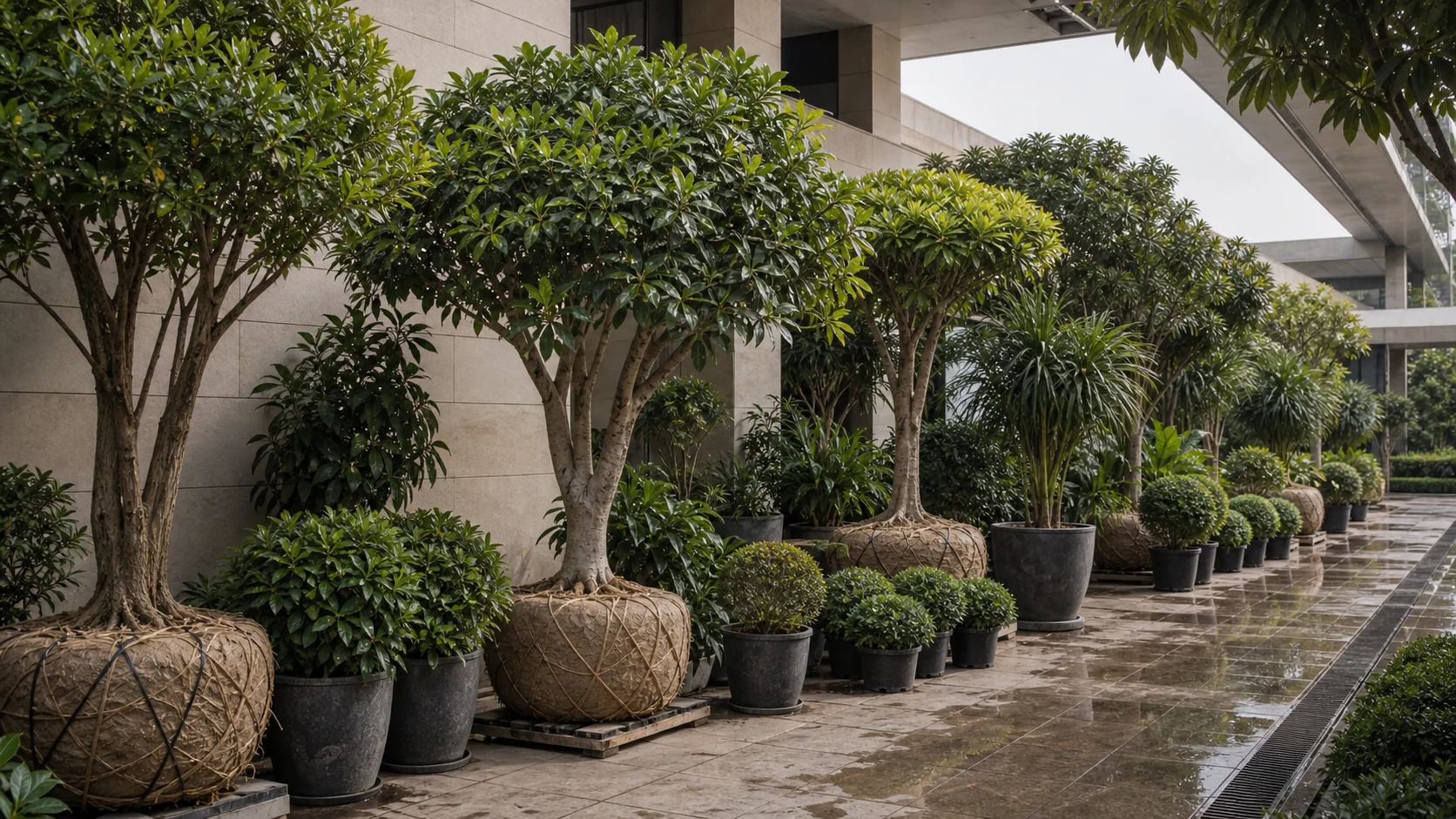
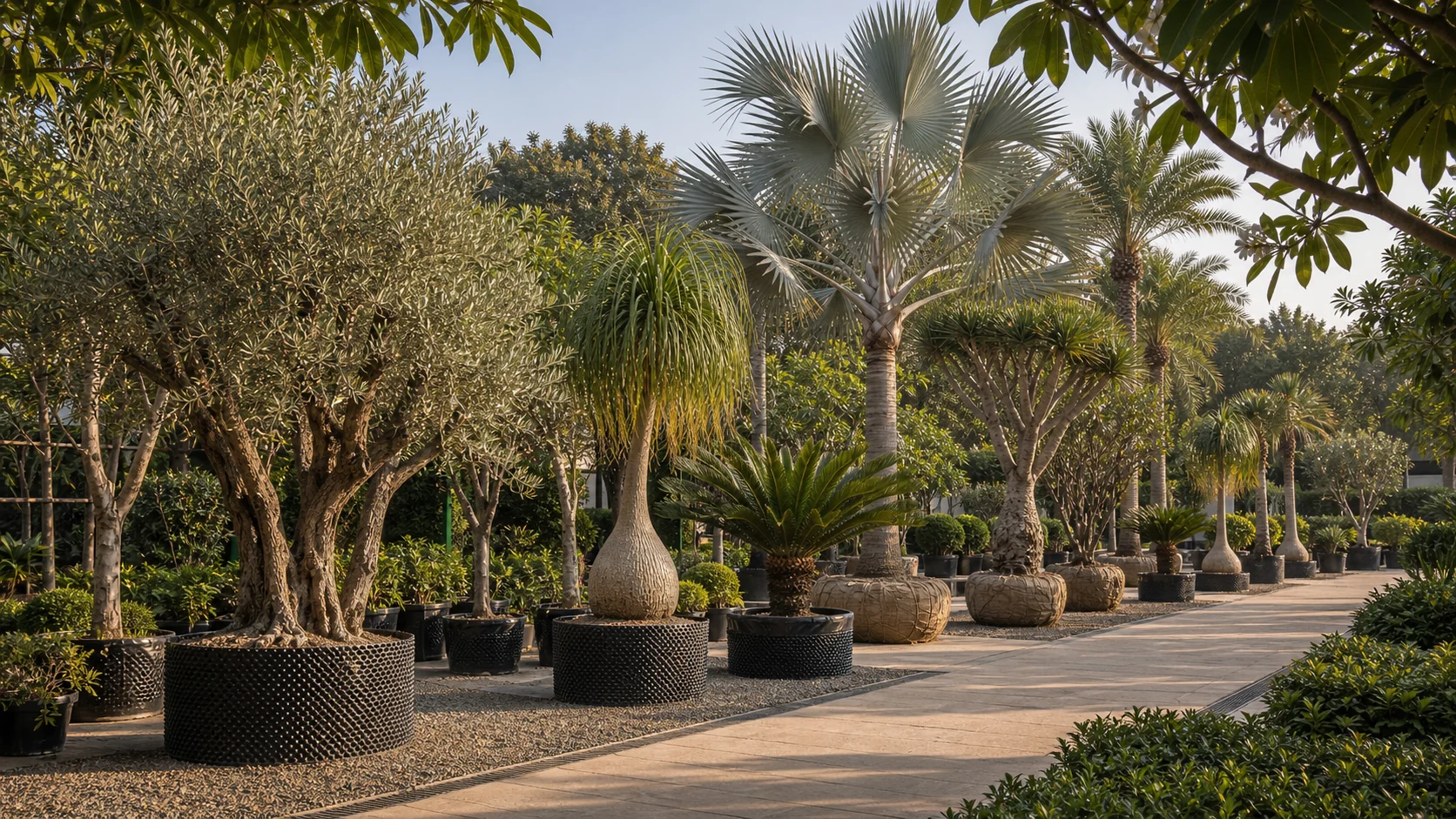
Visual context for placement, scale, handling, and landscape integration.
Section
Where it's used in premium projects
Yellow African tulip is showy fast tropical colour — wide resorts and avenues wanting cup-shaped yellow flowers, only where owners accept invasiveness disclosure and brittle large-tree maintenance in India's wet tropics.
Section
Climate & site suitability in India
Humid tropical coasts suit growth — also suit invasive spread risk. Honest note: *Spathodea campanulata* is highly invasive in many tropical regions; avoid sensitive ecological buffers and confirm local planting policy before BOQ lock.
Section
Sourcing & acclimatisation
Verify 'Aurea' yellow versus orange common tulip tree on tags. [Unverified: typical India yellow cultivar supply.] Document invasiveness briefing in owner sign-off.
Section
Installation (pit, soil, drainage, bracing)
Large fast tree engineering — bracing, wide pits, brittle wood storm plan. Cup-shaped flowers and seed litter on pools — AMC must include bloom-season cleanup.
Section
Establishment & AMC
AMC monitors unwanted seedling spread in adjacent planted areas on sensitive sites. Brittle branch inspection after storms. Do not market as native yellow Amaltas — entirely different family and invasiveness profile.
Section
Cost drivers
Explore
Related
Related
Related links
Services, segments, cost, and proof.
- Softscape & horticulture
- Irrigation & water management
- Landscape maintenance (AMC)
- Hotel & resort landscaping
- Luxury resort & spa landscaping
- Mall & retail landscaping
- Corporate campus landscaping
- Projects
- Commercial landscaping cost guide
- Pricing drivers (imported trees)
- Import compliance workflow
- Request a site assessment
- Is Spathodea campanulata invasive?
- The species is highly invasive in many tropical regions — confirm local policy and avoid ecological buffer plantings; honest disclosure belongs in owner sign-off.
- How is yellow Aurea different from orange African tulip?
- Same species complex but 'Aurea' is yellow cup flowers — verify cultivar on nursery tags, not flower colour guesswork.
- How fast does African tulip grow?
- Fast tall tree — programme brittleness, spread, and storm inspection, not only quick colour.
- What flower form should designers expect?
- Large tulip-shaped yellow cups — not pendulous Amaltas chains or gulmohar umbrellas.
- Can it be used near native forest edges?
- Generally avoid on invasion-sensitive sites — showy resort avenues are the typical context, not conservation buffers.
- What import compliance applies to Spathodea?
- Bignoniaceae tropical trees need cultivar-accurate paperwork for Indian quarantine — invasive species may face additional local planting scrutiny (informational, not legal advice).
- How should yellow African tulip BOQs compare to golden gulmohar?
- Spathodea is fast near-evergreen cup flowers with invasiveness caution; golden gulmohar is deciduous umbrella legume — different maintenance and risk profile.