
Pink muhly
Pink muhly (Muhlenbergia capillaris)
Muhlenbergia capillaris is the pink-purple haze grass every premium landscape references for autumn Instagram moments — fine foliage with airy inflorescences that catch back-light. In India it needs full sun, sharp drainage, and honest mass scale; single clumps disappoint, and annual cut-back keeps the cloud uniform.
Spec
At a glance
- Botanical name
- Muhlenbergia capillaris
- Family
- Poaceae
- Type
- Ornamental grass
- Origin
- North America (native prairies)
- Mature height & spread
- Foliage 45–60 cm; inflorescences to 90 cm in bloom
- Plume / flower
- Pink-purple airy panicles autumn
- Foliage colour
- Fine green thread-like leaves
- Evergreen / deciduous / annual
- Semi-evergreen — cut back annually
- Growth rate
- Moderate — reaches best bloom second season
- Light
- Full sun essential for pink cloud
- Water
- Low to moderate once established
- India climate suitability
- Best in dry-winter cities with sun; weaker pink in humid deep shade
- Hardiness
- Heat OK; protect from waterlogged monsoon pits
- Invasiveness / containment
- Clumping — low spread; not invasive
- Typical supply
- Plugs and #1 pots for mass; specimen pots for trials [Unverified]
- Annual maintenance
- Annual cut-back to 10–15 cm in late winter before new growth
- Cautions
- Needs sun + drainage; under-massing looks thin; pink fails in shade
Gallery
Specimen visual guide
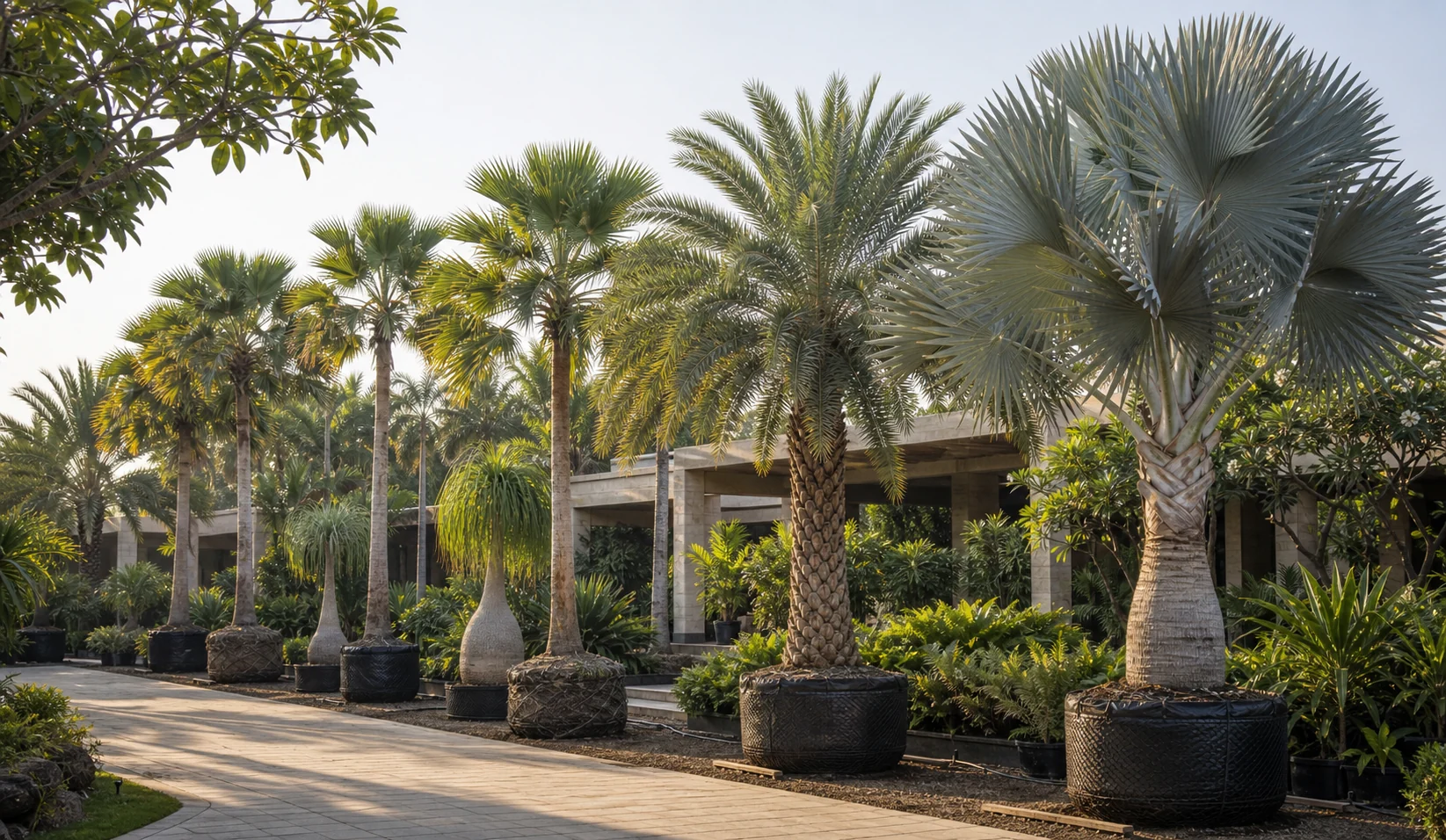
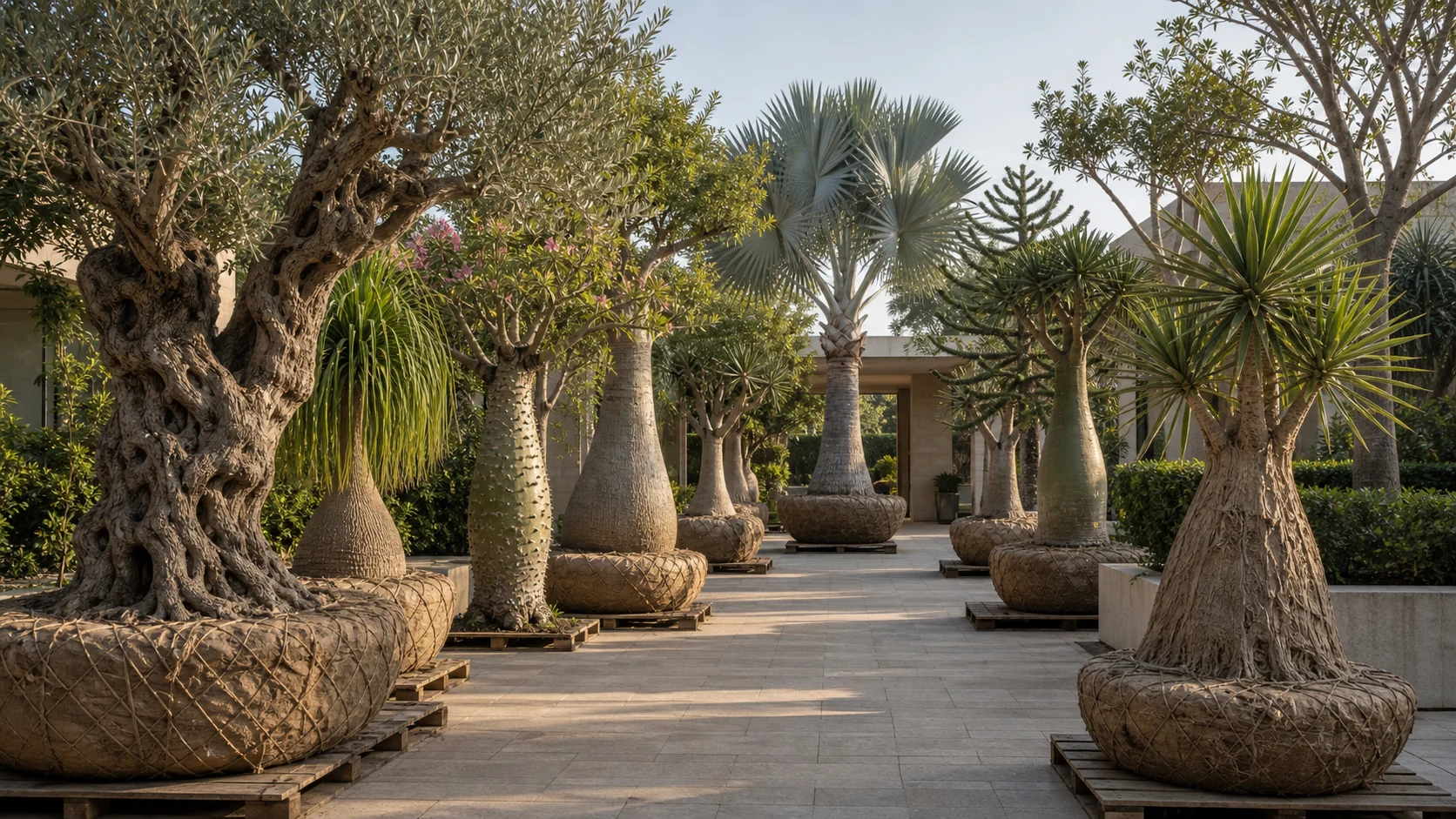
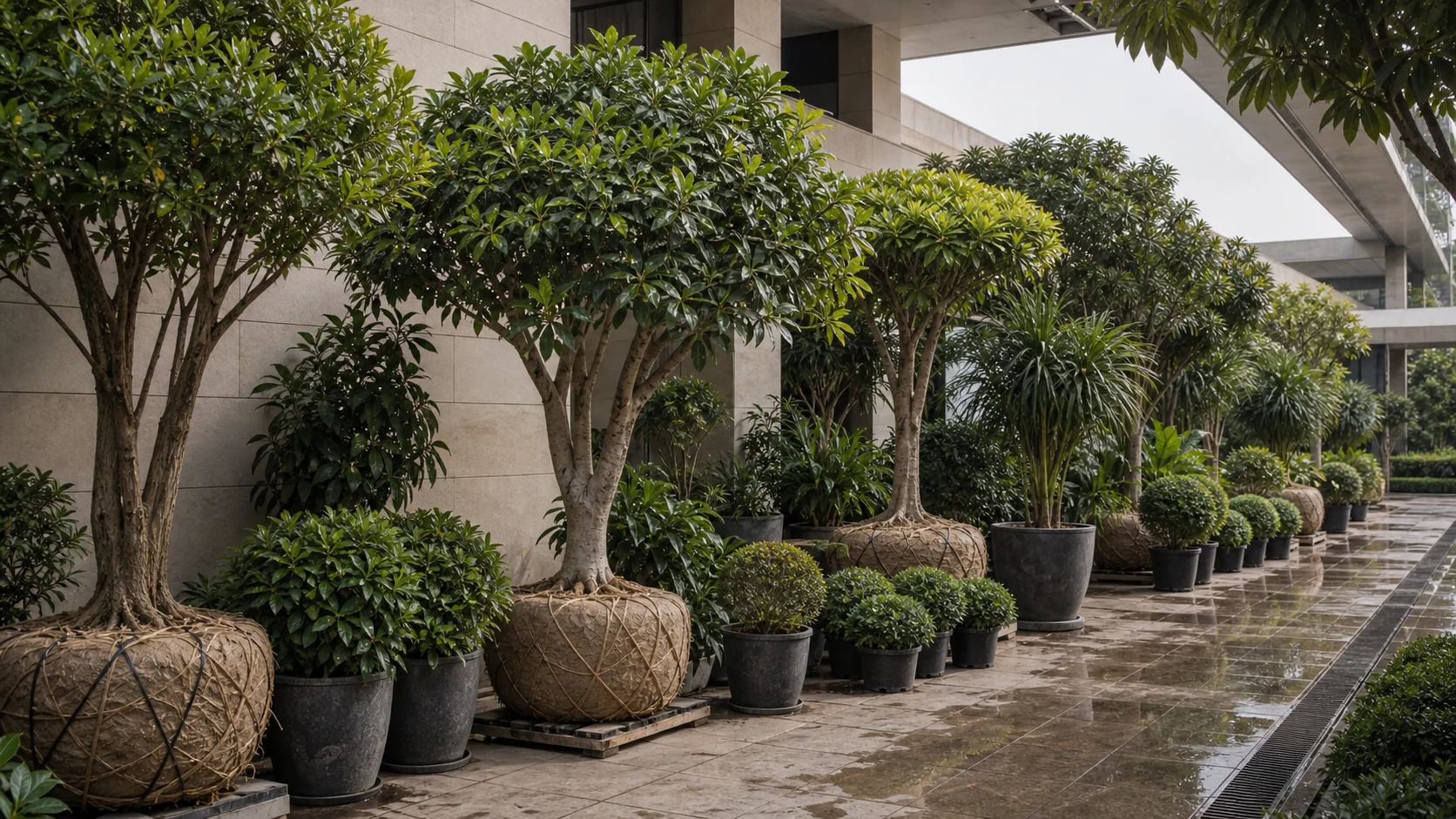
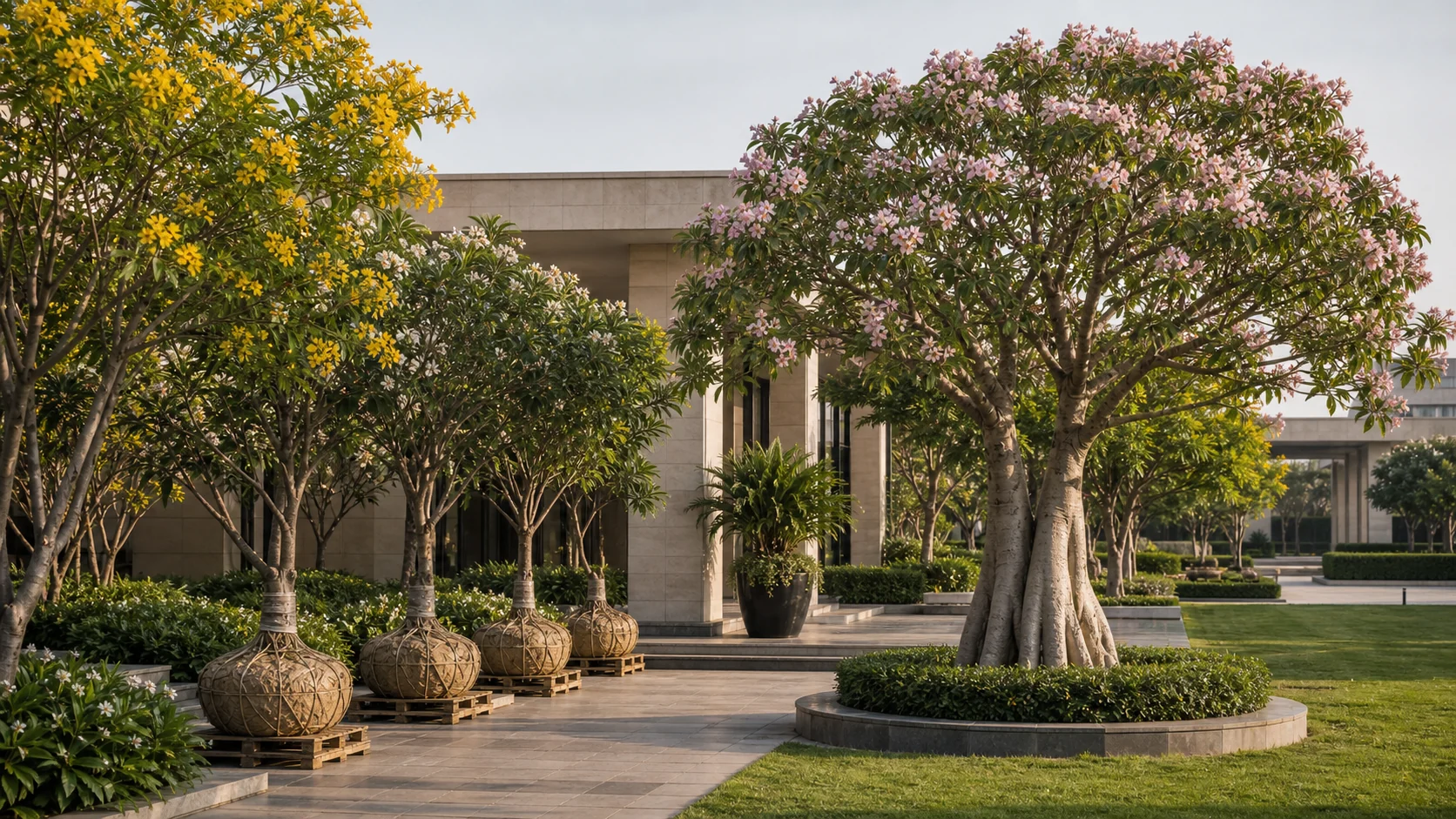
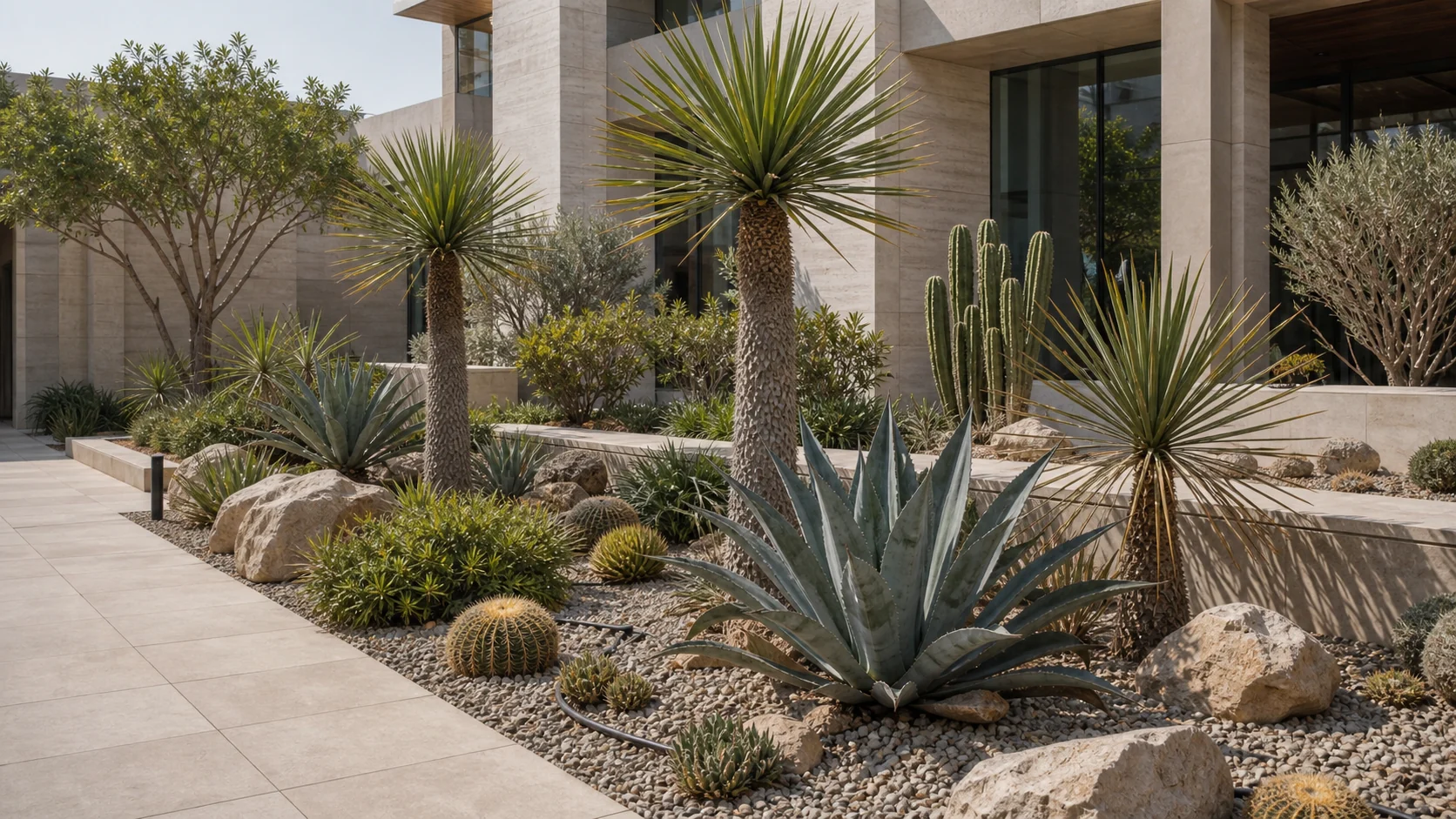
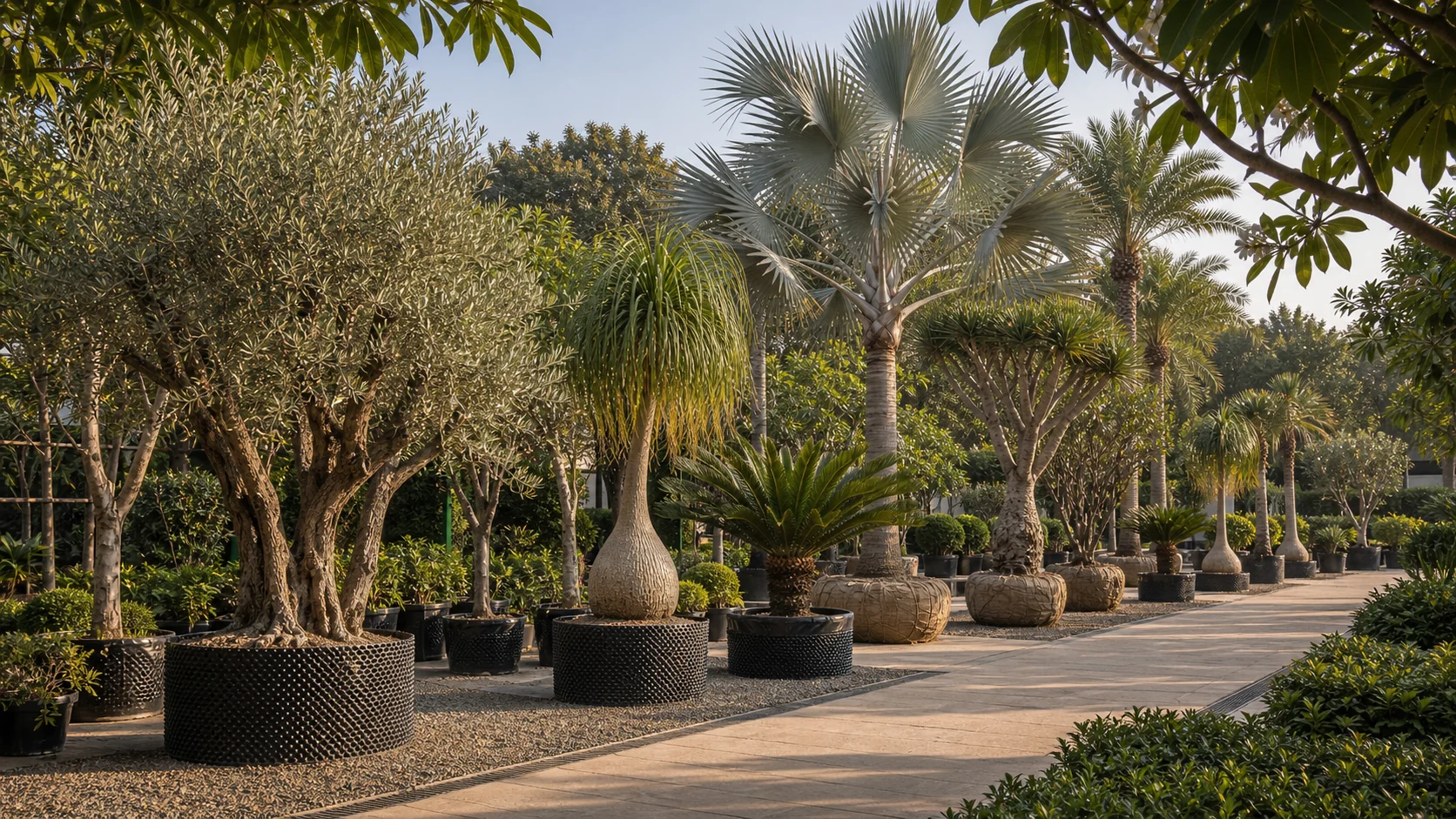
Visual context for placement, scale, handling, and landscape integration.
Section
Where it's used in premium projects
Pink muhly drifts frame winery lawns, tech-campus plazas, and resort arrival meadows where autumn events need a colour field — design in hundreds of square metres, not three pots. Pair with low groundcover for edge crispness.
Section
Climate & site suitability in India
Sun and seasonal dry-down intensify pink; constant overhead shade yields green mounds without haze. Bangalore and Pune succeed with gritty beds; clay flats need mounding. Hill frost may delay bloom — plan exposure.
Section
Sourcing & acclimatisation
Order plug trays with bloom timing aligned to your opening event — [Unverified: India plug availability vs imported liners for capillaris.] Reject pots with weed grass contamination in fine foliage.
Section
Installation (planting, containment, drainage)
Mass on 30–40 cm centres in full sun berms; integrate drip for establishment then pull back. Never plant in tree root dry zones without supplemental water first season.
Section
Establishment & AMC
Mandatory late-winter cut-back — crews that skip this get uneven mounds and weak pink. Year-two bloom is the design payoff; manage client expectations in year one. Scout for fungal spots in humid monsoon — thin dense mats if needed.
Section
Cost drivers
Explore
Related
Related
Related links
Services, segments, cost, and proof.
- Softscape & horticulture
- Irrigation & water management
- Landscape maintenance (AMC)
- Hotel & resort landscaping
- Luxury resort & spa landscaping
- Mall & retail landscaping
- Corporate campus landscaping
- Projects
- Commercial landscaping cost guide
- Pricing drivers (imported trees)
- Import compliance workflow
- Request a site assessment
- When does pink muhly turn pink in India?
- Typically autumn on second-season sun-grown mass plantings — first year may be lighter while clumps establish.
- How much area is needed for the pink cloud effect?
- Design in drifts of many square metres — sparse clumps read thin; photography needs mass and back-light.
- Why is annual cut-back required?
- Late-winter shear to 10–15 cm renews fine foliage and uniform inflorescence height — skipping produces patchy mounds.
- Can pink muhly grow in partial shade?
- It lives but pink haze fails — specify only for open sun beds, not under tree canopies.
- Is muhly invasive in India?
- Clumping habit with low invasion risk — unlike giant reed or seeding pampas, it is a contained perennial mass.
- What import steps apply to muhly plugs?
- Imported plug trays need phytosanitary certificates and quarantine inspection per shipment (informational, not legal advice).
- How should pink muhly massing be quoted?
- Price plug count per square metre, gritty bed prep, establishment drip, and annual cut-back AMC — not per-clump shrub rates.