
Giant reed
Giant reed (Arundo donax)
Arundo donax is the bamboo-like giant reed landscape teams specify when a vertical screen must read tall in year one — cane architecture, fast biomass, and a clear xeric-to-riparian mood. In India it is a containment plant first: rhizomes spread aggressively unless the BOQ engineers root barriers or specifies the less-vigorous variegated 'Versicolor'.
Spec
At a glance
- Botanical name
- Arundo donax
- Family
- Poaceae
- Type
- Ornamental grass (giant reed)
- Origin
- Mediterranean / subtropical — widely naturalised
- Mature height & spread
- Often 3–6 m tall × 1–2 m spread per clump; spreads wider by rhizome
- Plume / flower
- Silvery-purple panicles late summer — not the primary design cue
- Foliage colour
- Broad blue-green canes; 'Versicolor' striped cream-green
- Evergreen / deciduous / annual
- Semi-evergreen — dies back in cold; resprouts from rhizomes
- Growth rate
- Very fast once established
- Light
- Full sun to light shade
- Water
- High water demand for lush canes — ironic pairing with drought aesthetics
- India climate suitability
- Lowland heat OK with irrigation; fails aesthetic in unirrigated Rajasthan defaults
- Hardiness
- Frost-tender tips; rhizomes persist in warm soils
- Invasiveness / containment
- Highly invasive rhizomes — root barrier, lined beds, or pots mandatory; prefer 'Versicolor' where less spread is documented
- Typical supply
- Division clumps, rhizome sections, large pots [Unverified]
- Annual maintenance
- Annual cane cut-back to 30–45 cm in late winter; rhizome patrol at bed edges
- Cautions
- Invasive spread; water-hungry; canes flop without support on windy terraces
Gallery
Specimen visual guide
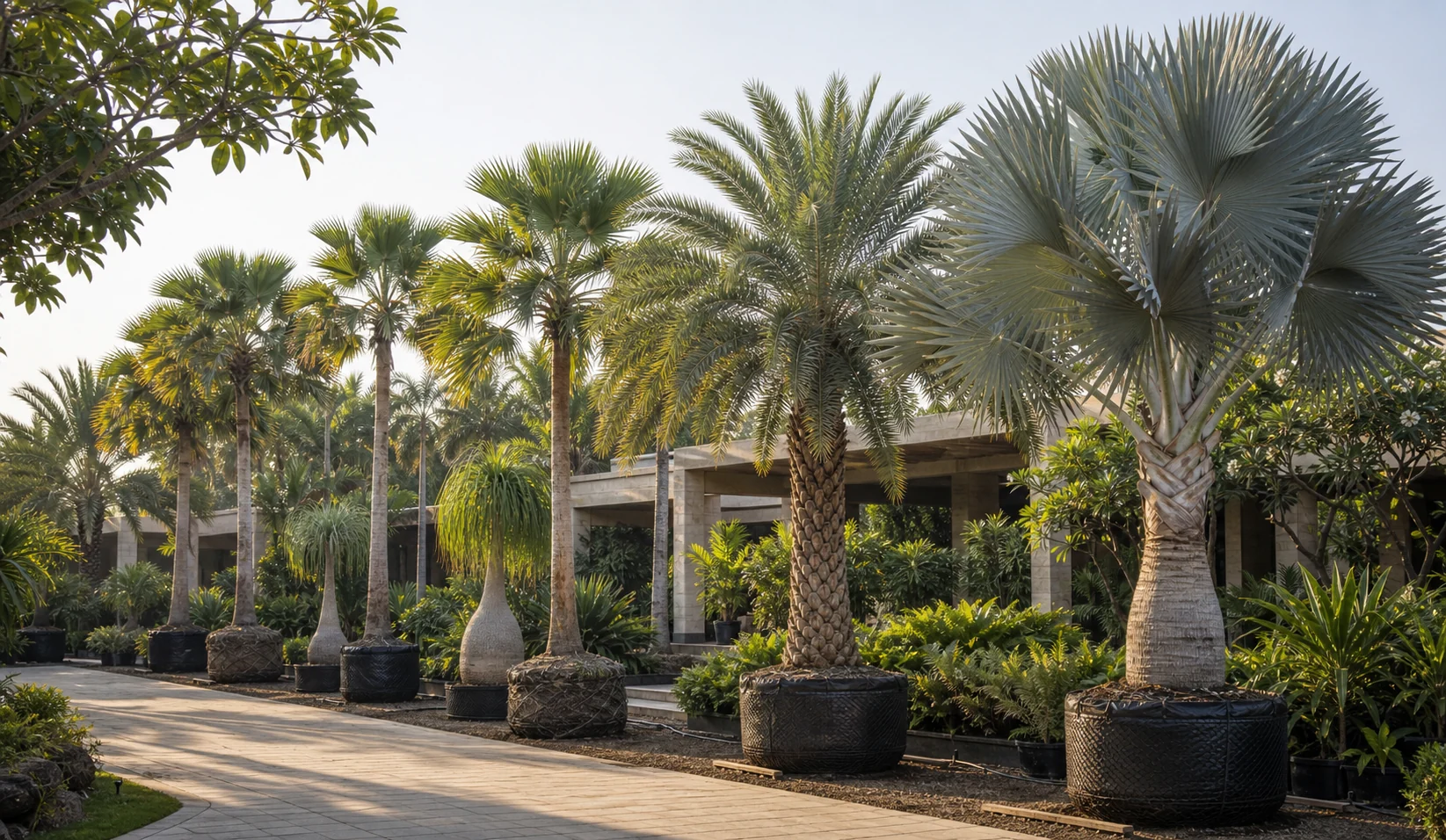
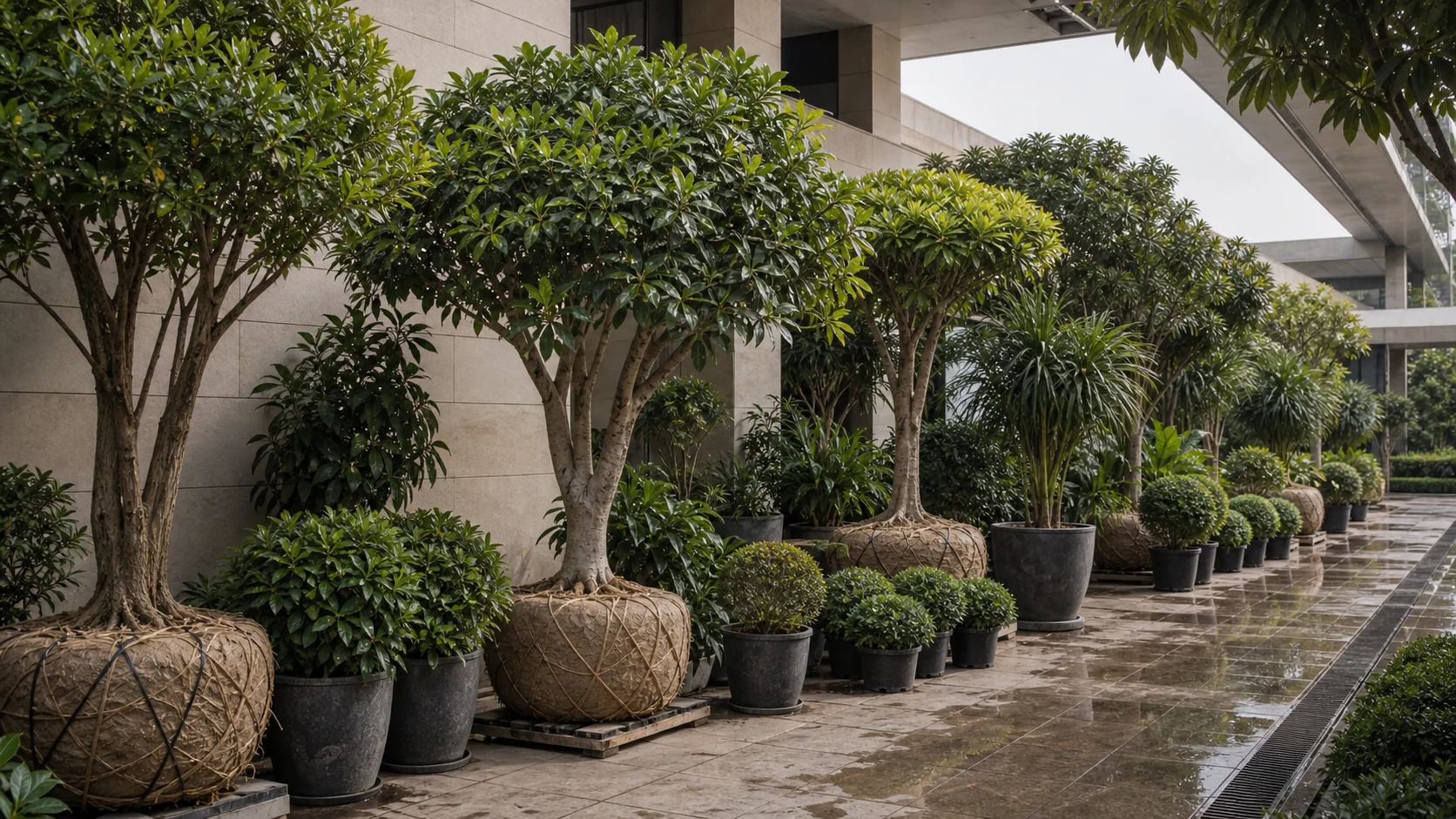
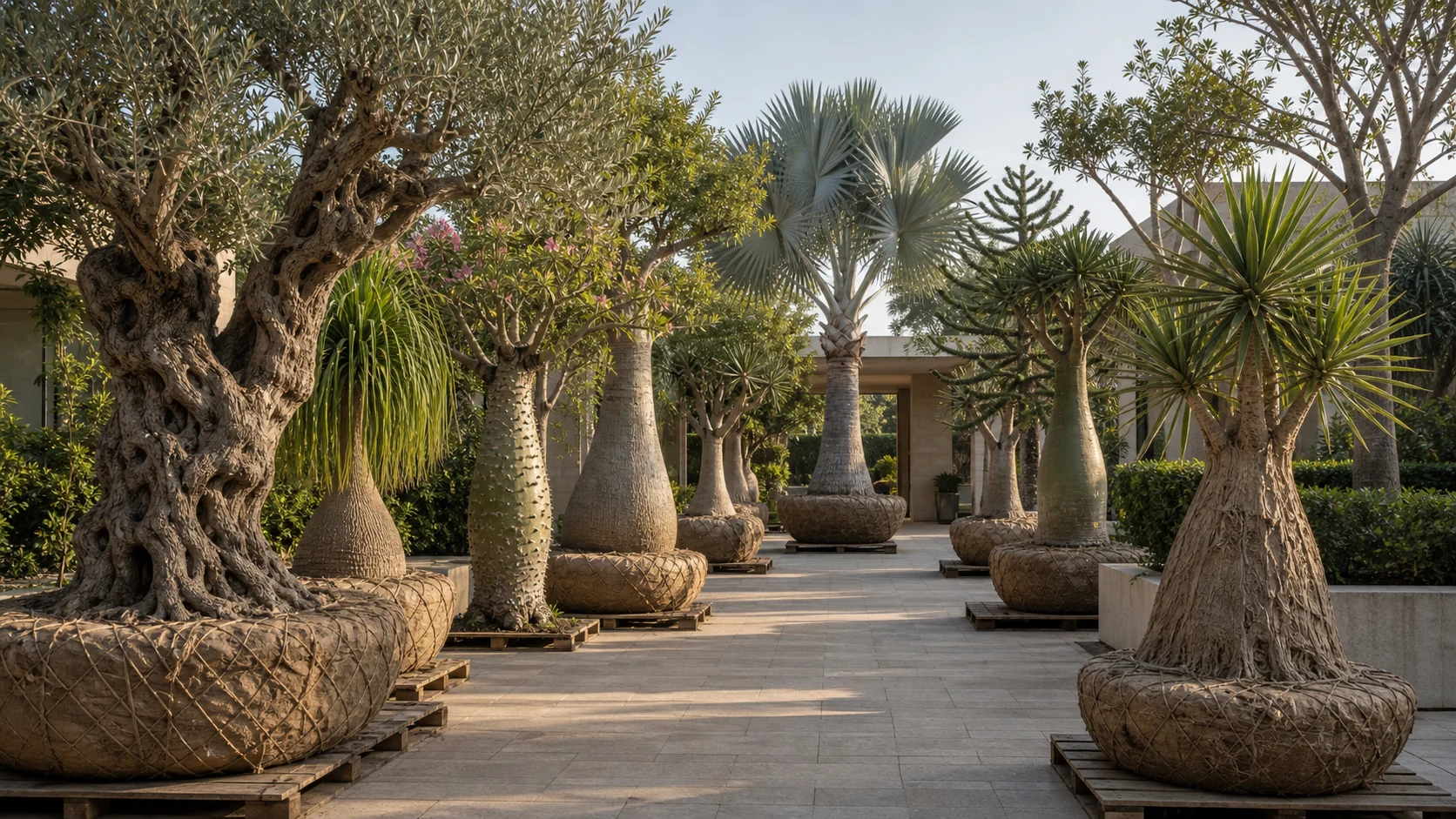
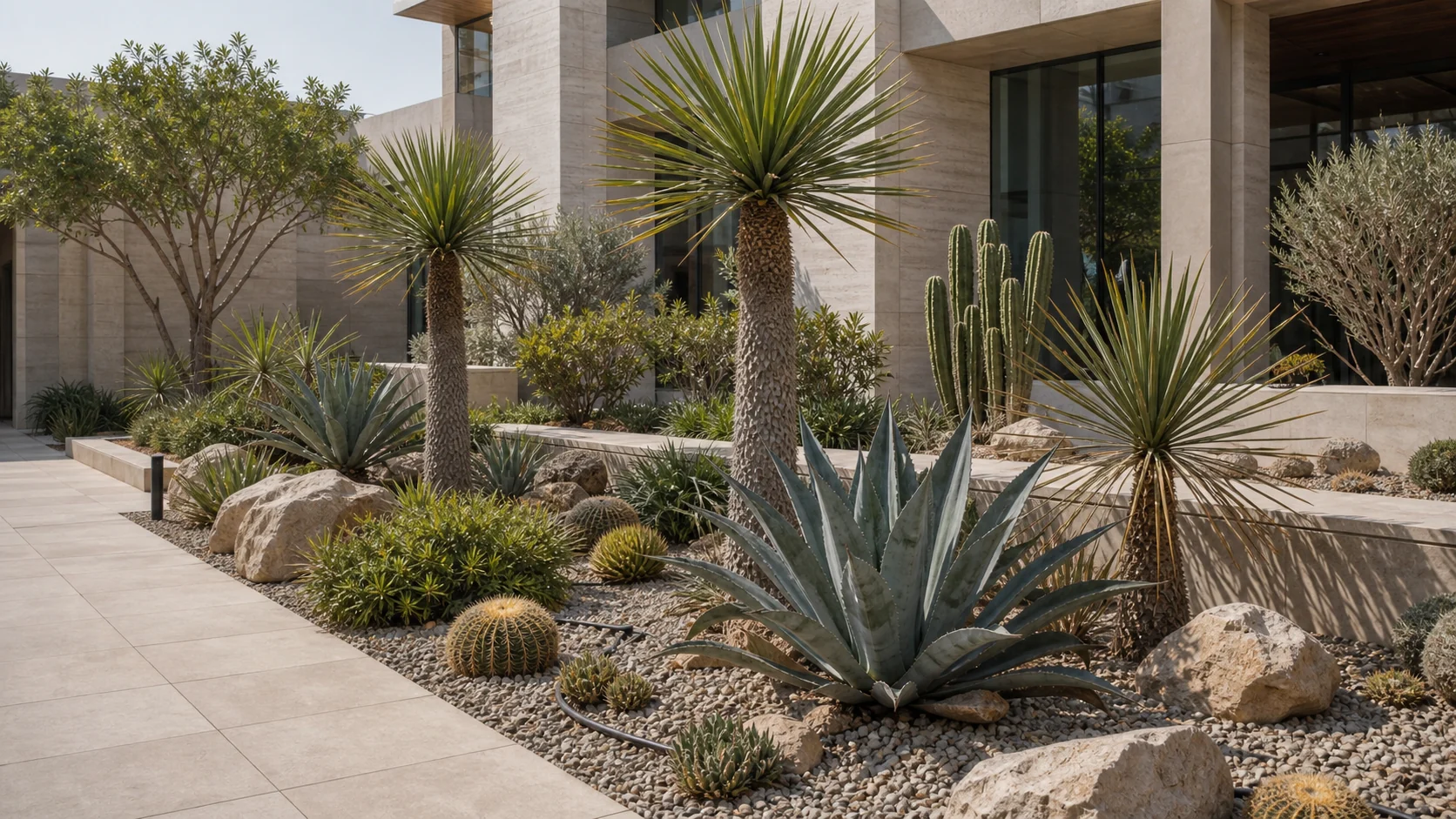
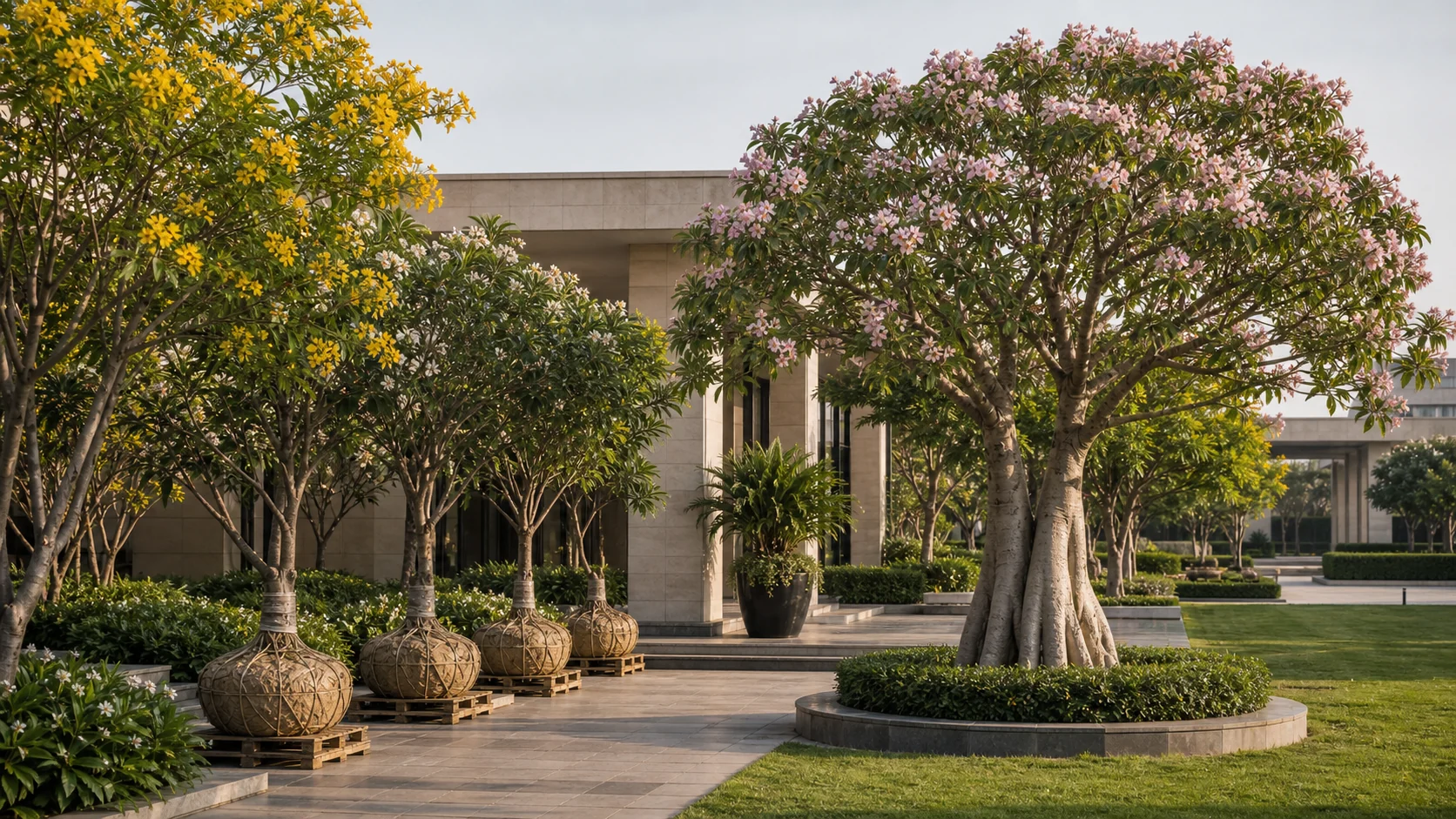
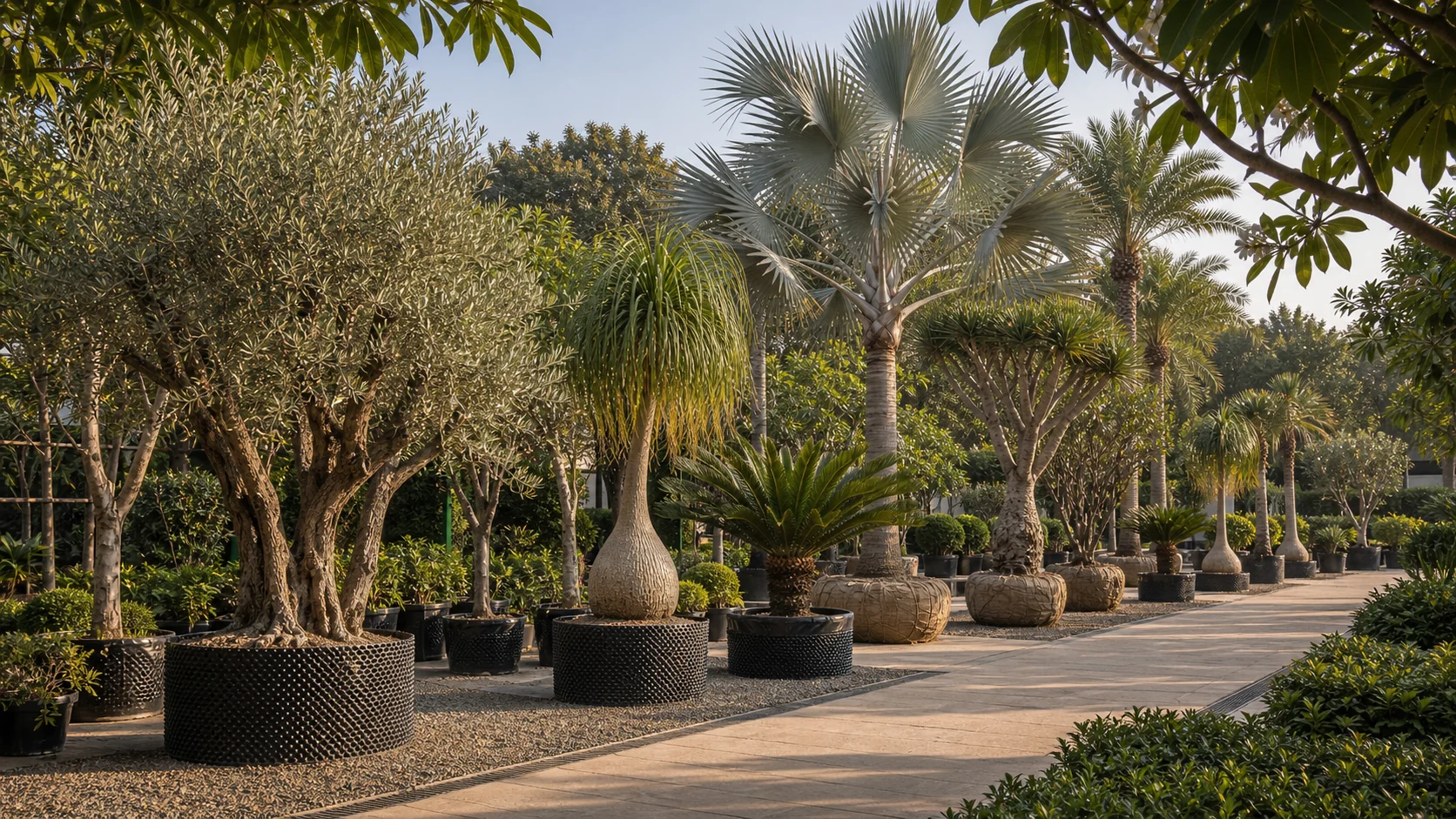
Visual context for placement, scale, handling, and landscape integration.
Section
Where it's used in premium projects
Giant reed screens resort service edges, masks rooftop plant rooms on irrigated terraces, and lines reflection pools where the brief wants movement without a timber fence. Designers pair it with gravel and steel edging so the cane rhythm reads deliberate — not accidental ditch vegetation.
Section
Climate & site suitability in India
Thrives in irrigated North India and coastal resort belts with reliable water; in dry states it only works where drip budgets are honest. Wind tears tall canes — plan guy wires or accept a lower cut-back height. Do not plant adjacent to wild waterways where rhizomes can escape the site.
Section
Sourcing & acclimatisation
Specify green vs 'Versicolor' on the PO — spread behaviour differs in nursery practice. [Unverified: India nursery division size vs imported rhizome stock.] Hold in full sun; shaded holding produces weak floppy canes.
Section
Installation (planting, containment, drainage)
Install inside HDPE root barriers or fully lined beds with overflow drains — treat like running bamboo, not a polite perennial. Mound crowns slightly; never bury rhizomes in waterlogged monsoon clay. Document barrier depth on landscape drawings for future civil works.
Section
Establishment & AMC
Year-one AMC must include cane tie-up after monsoon and a hard late-winter cut-back to refresh upright growth. Scout bed perimeters quarterly for rhizome escape — one season of neglect colonises adjacent lawn. Irrigation teams should not equate reed with true drought succulents.
Section
Cost drivers
Explore
Related
Related
Related links
Services, segments, cost, and proof.
- Softscape & horticulture
- Irrigation & water management
- Landscape maintenance (AMC)
- Hotel & resort landscaping
- Luxury resort & spa landscaping
- Mall & retail landscaping
- Corporate campus landscaping
- Projects
- Commercial landscaping cost guide
- Pricing drivers (imported trees)
- Import compliance workflow
- Request a site assessment
- How invasive is giant reed in Indian landscapes?
- Rhizomes spread aggressively without root barriers or lined beds — engineer containment like running bamboo; variegated 'Versicolor' is often less aggressive but is not a licence to skip barriers.
- Should we specify green Arundo or Versicolor?
- Green is the bold vertical default; Versicolor adds cream striping and is commonly specified where designers want slightly reduced vigour — still not containment-free.
- Does giant reed work without irrigation in Rajasthan?
- It reads as thin and floppy without reliable water — pair with honest drip budgets or choose a true xeric screen instead.
- What maintenance rhythm keeps canes upright?
- Late-winter cut-back to 30–45 cm, monsoon stake checks, and perimeter rhizome patrol — not cosmetic hedge trimming.
- Can giant reed screen a rooftop plant room?
- Yes on irrigated terraces with wind tie-in and barriered beds — specify cane height class and containment scope on the BOQ.
- What import paperwork applies to Arundo divisions?
- Live grass consignments need phytosanitary certificates and Indian plant-quarantine inspection per shipment — label species on docs (informational, not legal advice).
- How should teams compare giant reed quotations?
- Match barrier depth, clump size, Versicolor vs green, irrigation scope, and cut-back AMC — not generic shrub supply rates.