
Pampas grass
Pampas grass (Cortaderia selloana)
Cortaderia selloana is the silver feather-plume grass for dramatic estate entries and resort photo backdrops — when the brief wants scale and movement at dusk. Leaf margins are razor-sharp, and seeding cultivars are invasive; BOQs should name sterile or female selections and set back from guest paths.
Spec
At a glance
- Botanical name
- Cortaderia selloana
- Family
- Poaceae
- Type
- Ornamental grass
- Origin
- South America (Pampas region)
- Mature height & spread
- Foliage mound 1.5–2 m; plumes to 3–4 m on mature plants
- Plume / flower
- Huge silver-white feather panicles autumn–winter
- Foliage colour
- Arching grey-green leaves — sharp edges
- Evergreen / deciduous / annual
- Evergreen in frost-free India; browns in hill frost
- Growth rate
- Moderate clump expansion — large over years
- Light
- Full sun for best plumes
- Water
- Moderate; tolerates dry once established
- India climate suitability
- Best in dry-summer belts and irrigated terraces; plumes weaker in humid shade
- Hardiness
- Heat OK; protect from salt spray on exposed marine decks
- Invasiveness / containment
- Seedy/invasive — specify sterile or female selections; avoid seeding males near open ground
- Typical supply
- Large pot clumps #15–#25 [Unverified]
- Annual maintenance
- Comb out old foliage annually; burn or cut plume stalks when spent
- Cautions
- Sharp leaf edges — safety setback; large footprint; invasive seed risk
Gallery
Specimen visual guide
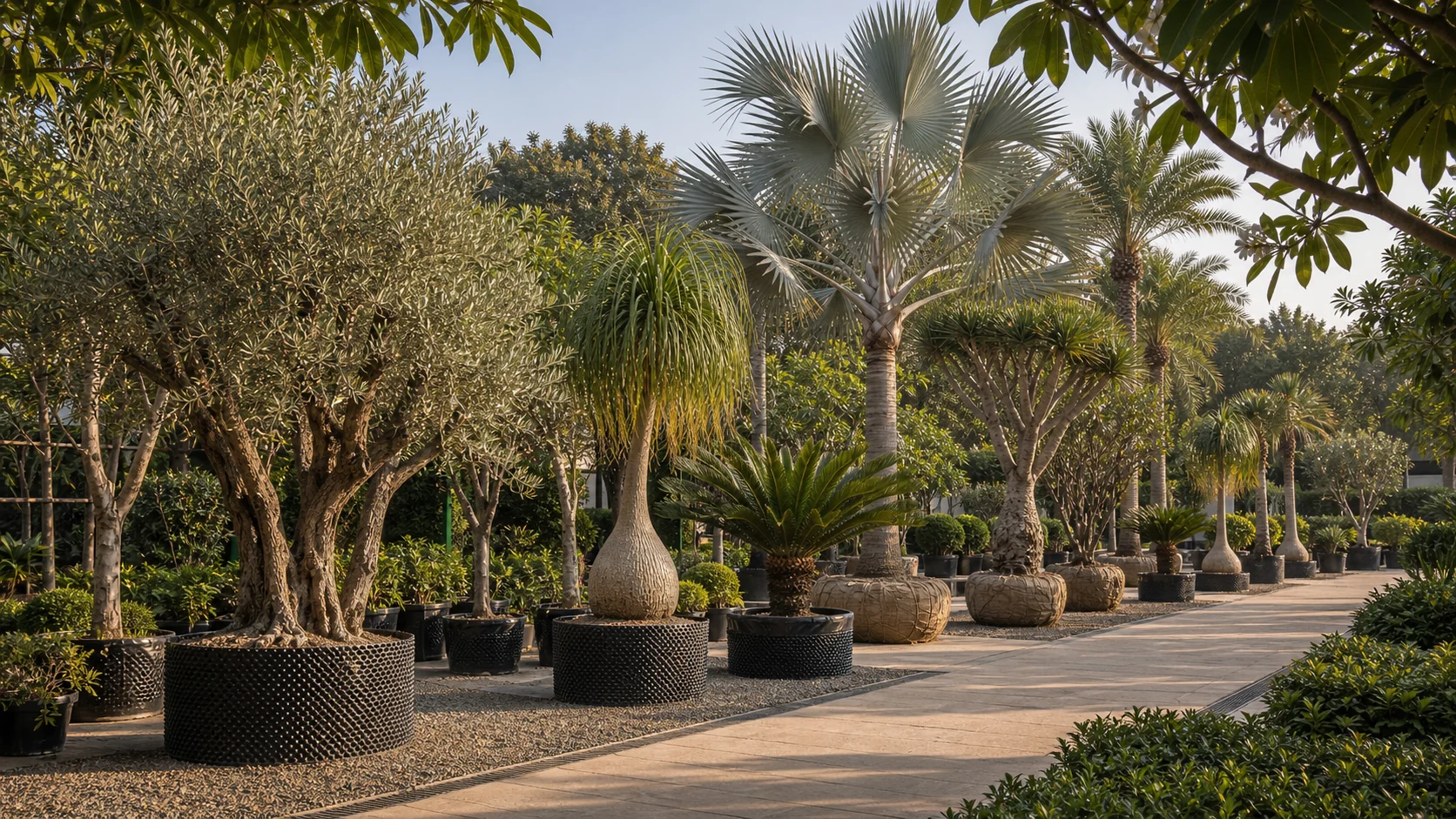
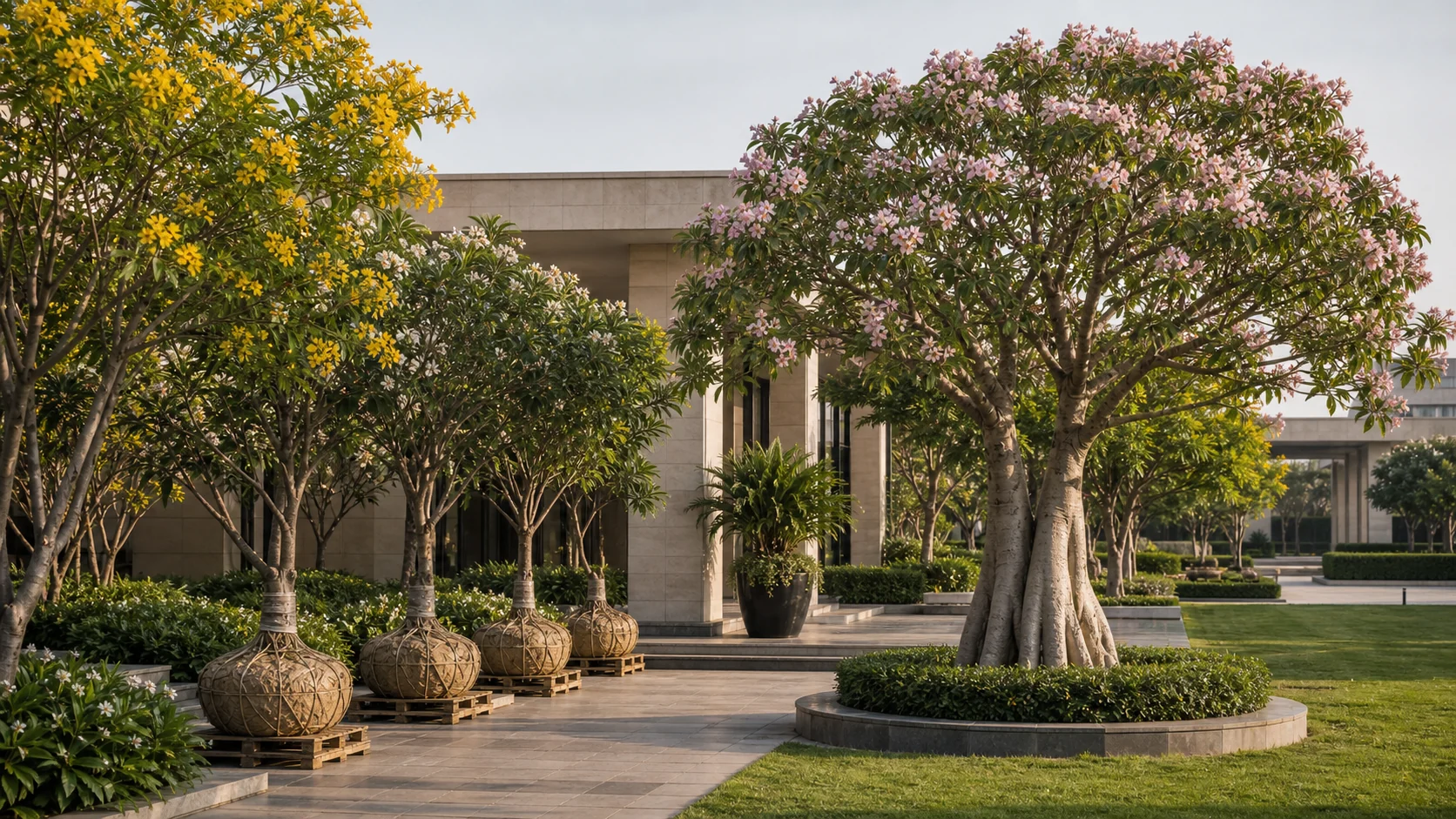
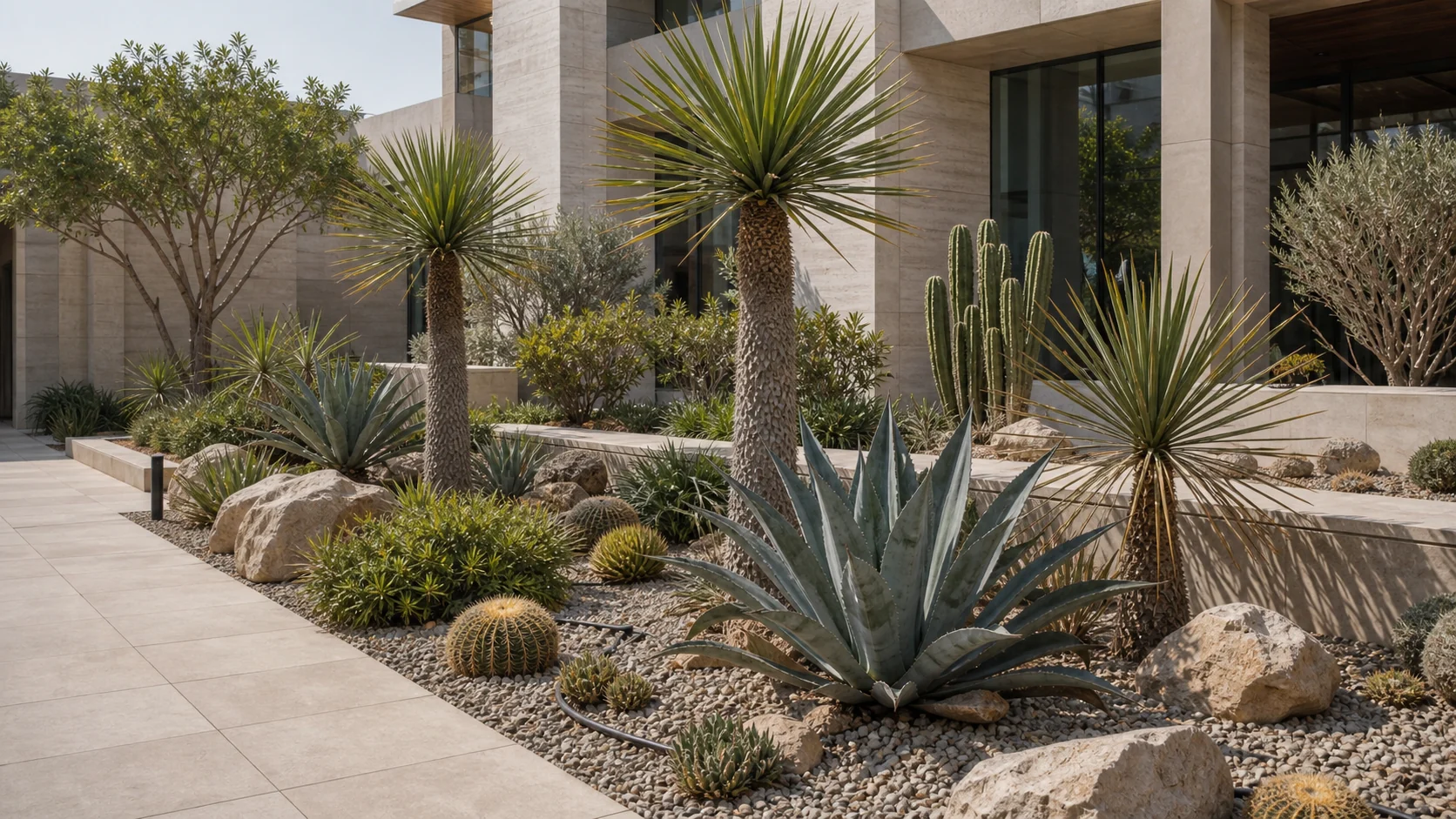
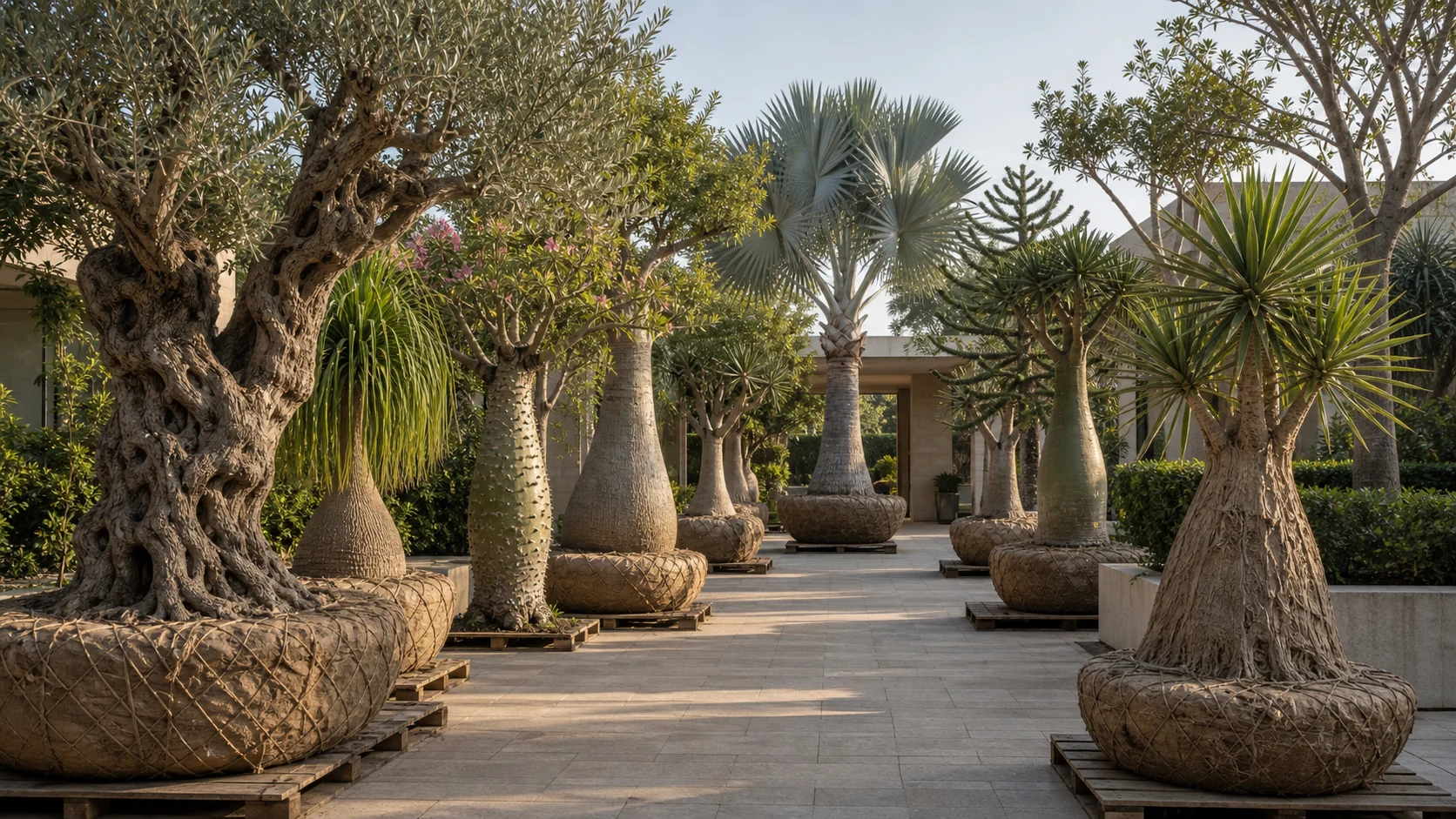
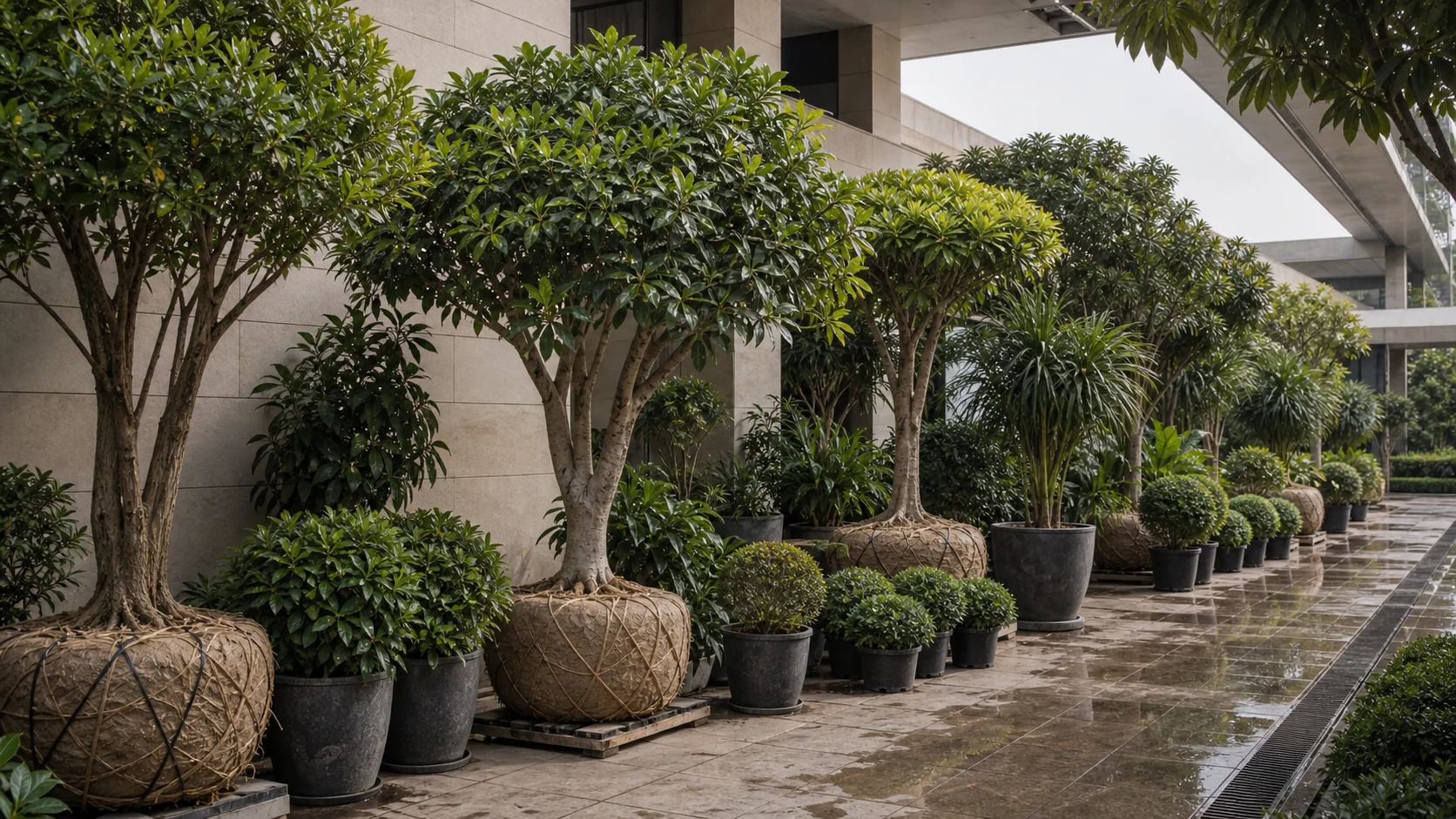
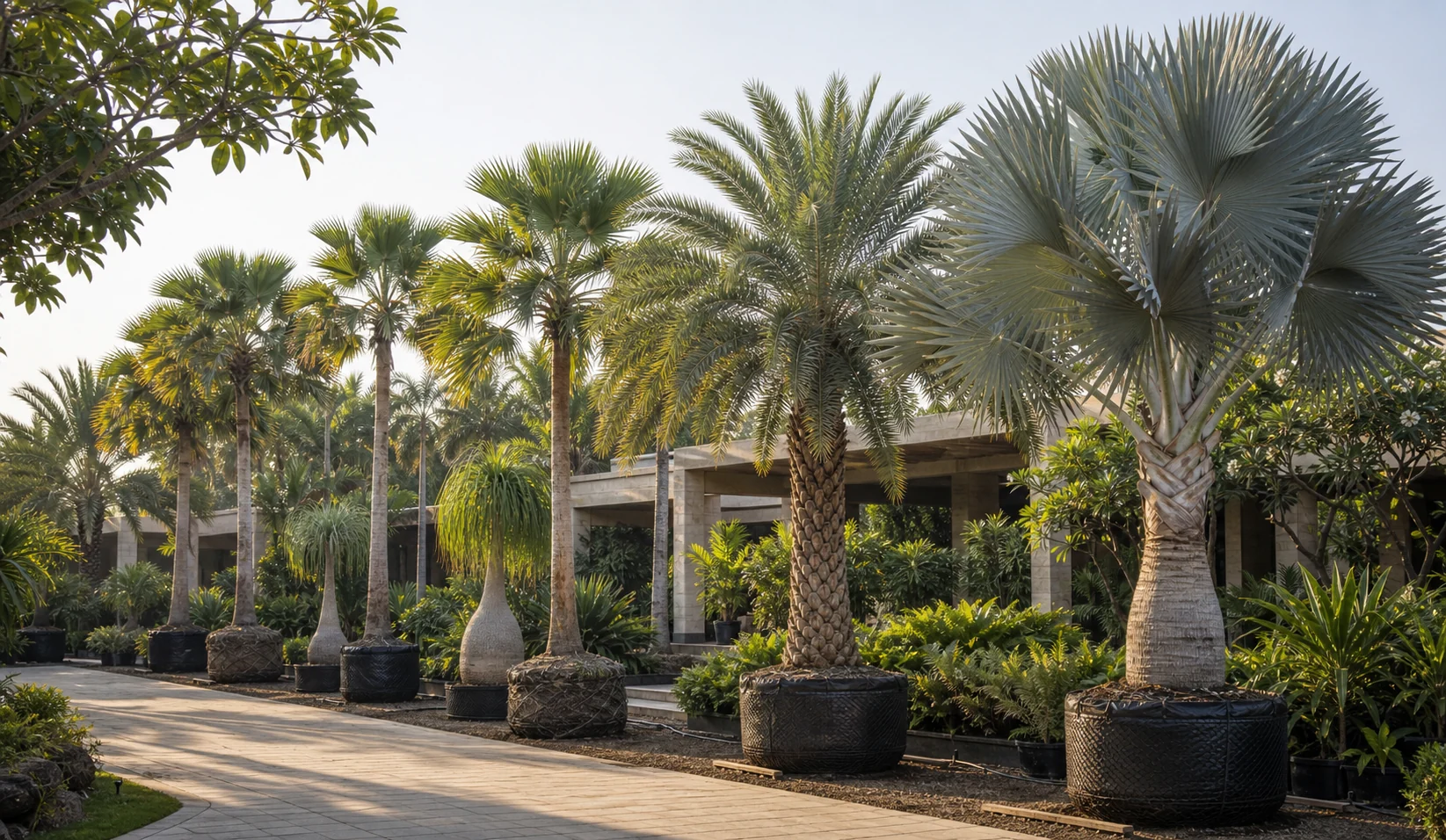
Visual context for placement, scale, handling, and landscape integration.
Section
Where it's used in premium projects
Pampas anchors wedding lawns, vineyard-style resort drives, and sculpture gardens where a single silver plume catches low sun. Use as a focal trio, not a hedge — spread and leaf hazard make massing along paths a liability.
Section
Climate & site suitability in India
Plumes develop best with sun and seasonal dry-down; constant humid shade produces leafy mounds without feathers. Coastal Chennai needs wind-sheltered placement — plumes shred in cyclonic gusts. Hill stations can brown foliage — plan winter comb-out.
Section
Sourcing & acclimatisation
Name the cultivar on purchase orders — 'Pumila', sterile selections, or documented female lines. [Unverified: India-held vs imported clump sizes for selloana.] Reject pots with seeding male plumes adjacent to conservation buffers.
Section
Installation (planting, containment, drainage)
Set back minimum 1.5 m from guest paths and pool edges — leaf edges cut skin. Plant in drained berms; do not crowd irrigation emitters against the crown. If site policy bans seeding grasses, document sterile cultivar on compliance submittals.
Section
Establishment & AMC
AMC includes annual comb-through of dead leaves, late-winter cut-back of tired foliage mounds, and removal of spent plume stalks before monsoon wind. Scout for volunteer seedlings downwind in year two — invasive risk is a maintenance line item, not only a planting note.
Section
Cost drivers
Explore
Related
Related
Related links
Services, segments, cost, and proof.
- Softscape & horticulture
- Irrigation & water management
- Landscape maintenance (AMC)
- Hotel & resort landscaping
- Luxury resort & spa landscaping
- Mall & retail landscaping
- Corporate campus landscaping
- Projects
- Commercial landscaping cost guide
- Pricing drivers (imported trees)
- Import compliance workflow
- Request a site assessment
- When do pampas plumes show in India?
- Typically autumn into winter on mature sun-grown clumps — immature or shaded plants may stay leafy without feathers for seasons.
- Why are leaf edges a safety issue?
- Cortaderia leaves are razor-sharp — place off paths, train maintenance crews in PPE, and never use as edging along pool decks.
- How do we reduce invasiveness risk?
- Specify sterile or female selections, remove spent plumes before seed shed, and avoid planting seeding males near open ground or waterways.
- Can pampas live on an irrigated terrace?
- Yes with drainage and wind shelter — engineer pot weight and comb-out AMC; plumes shred in unsheltered high-rise gusts.
- Is pampas a good hedge substitute?
- No — spread, sharp leaves, and plume litter make it a focal specimen, not a guest-facing hedge.
- What quarantine applies to pampas imports?
- Grass clump imports need phytosanitary paperwork and quarantine inspection — cultivar name should match labels (informational, not legal advice).
- How should pampas BOQs be compared?
- Match clump diameter, sterile cultivar documentation, setback compliance, and plume cleanup AMC — not generic grass plugs.