
Ruby grass
Ruby grass (Melinis nerviglumis)
Melinis nerviglumis is the low ruby-pink fluffy plume grass for edging and mass drifts where designers want jewel-tone movement at knee height — blue-green foliage with cloud-like inflorescences. Treat it as a short-lived tender clump in many Indian climates: drainage, sun, and planned replanting keep the effect honest.
Spec
At a glance
- Botanical name
- Melinis nerviglumis
- Family
- Poaceae
- Type
- Ornamental grass
- Origin
- Tropical and subtropical Africa
- Mature height & spread
- 30–50 cm tall × 40–60 cm spread
- Plume / flower
- Pink-ruby fluffy panicles summer–autumn
- Foliage colour
- Blue-green fine leaves
- Evergreen / deciduous / annual
- Evergreen in frost-free lowlands; may die back in hills
- Growth rate
- Fast first season; clumps decline after 2–3 years without division
- Light
- Full sun for strongest ruby colour
- Water
- Low to moderate; sensitive to wet crowns
- India climate suitability
- Best in dry-winter belts; tender in hill frost; needs drainage in humid monsoon
- Hardiness
- Heat OK; cold and wet together kill clumps
- Invasiveness / containment
- Low clump — not running; reseeding minor with deadheading
- Typical supply
- Plugs and #1–#3 pots [Unverified]
- Annual maintenance
- Annual cut-back in late winter; divide or replant tired centres
- Cautions
- Short-lived/tender; drainage mandatory; ruby colour fades in shade
Gallery
Specimen visual guide
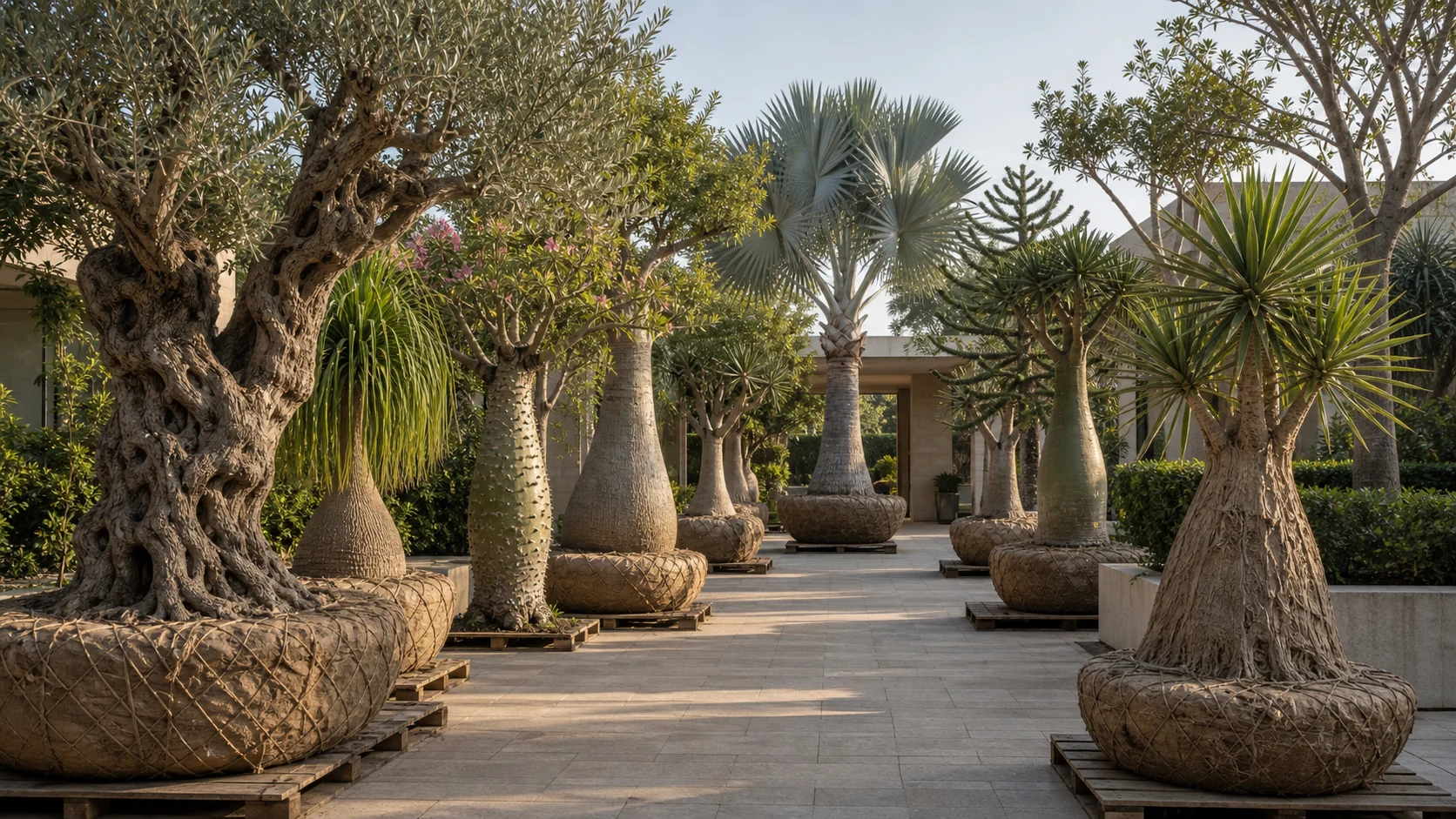
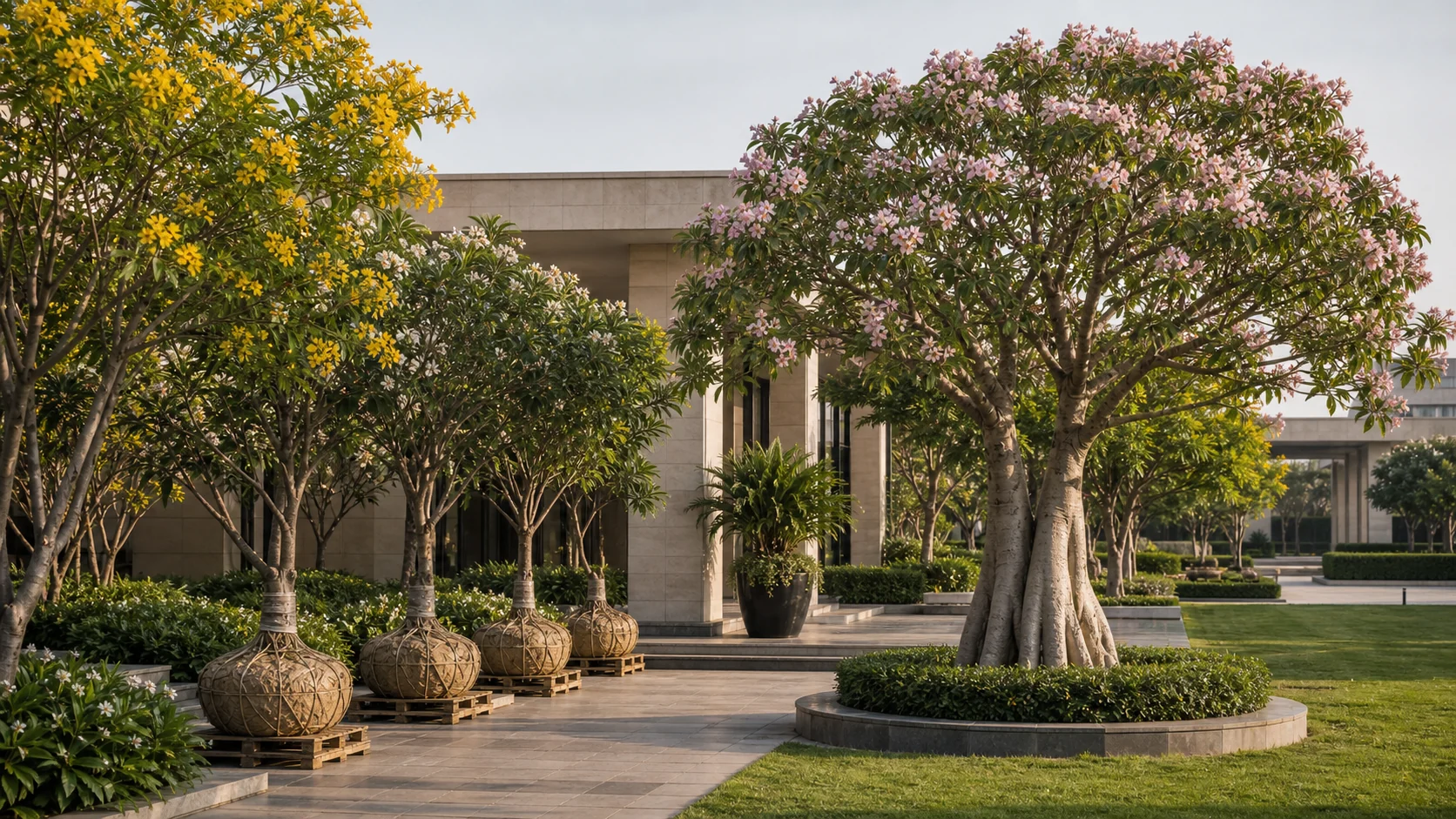
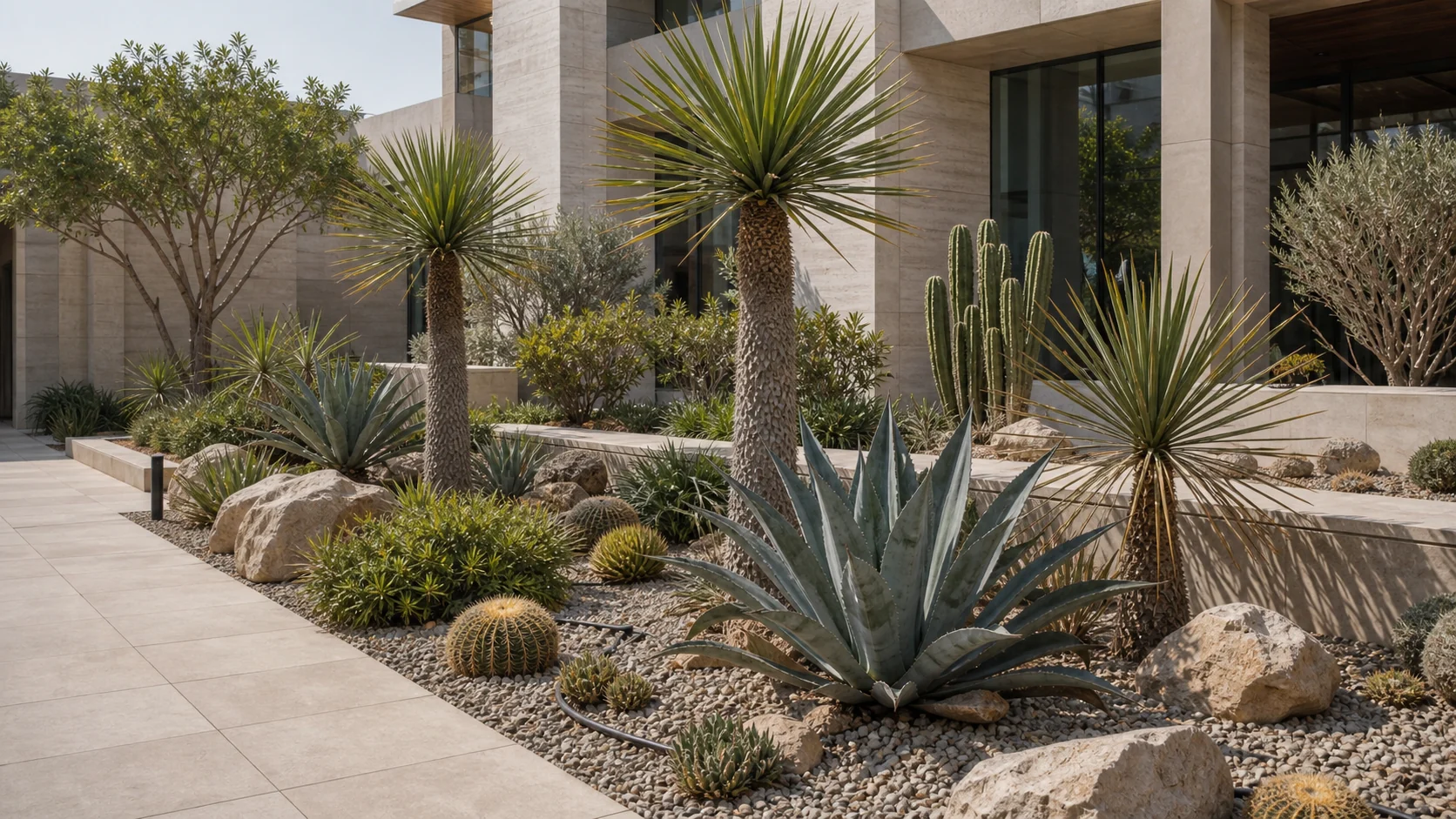
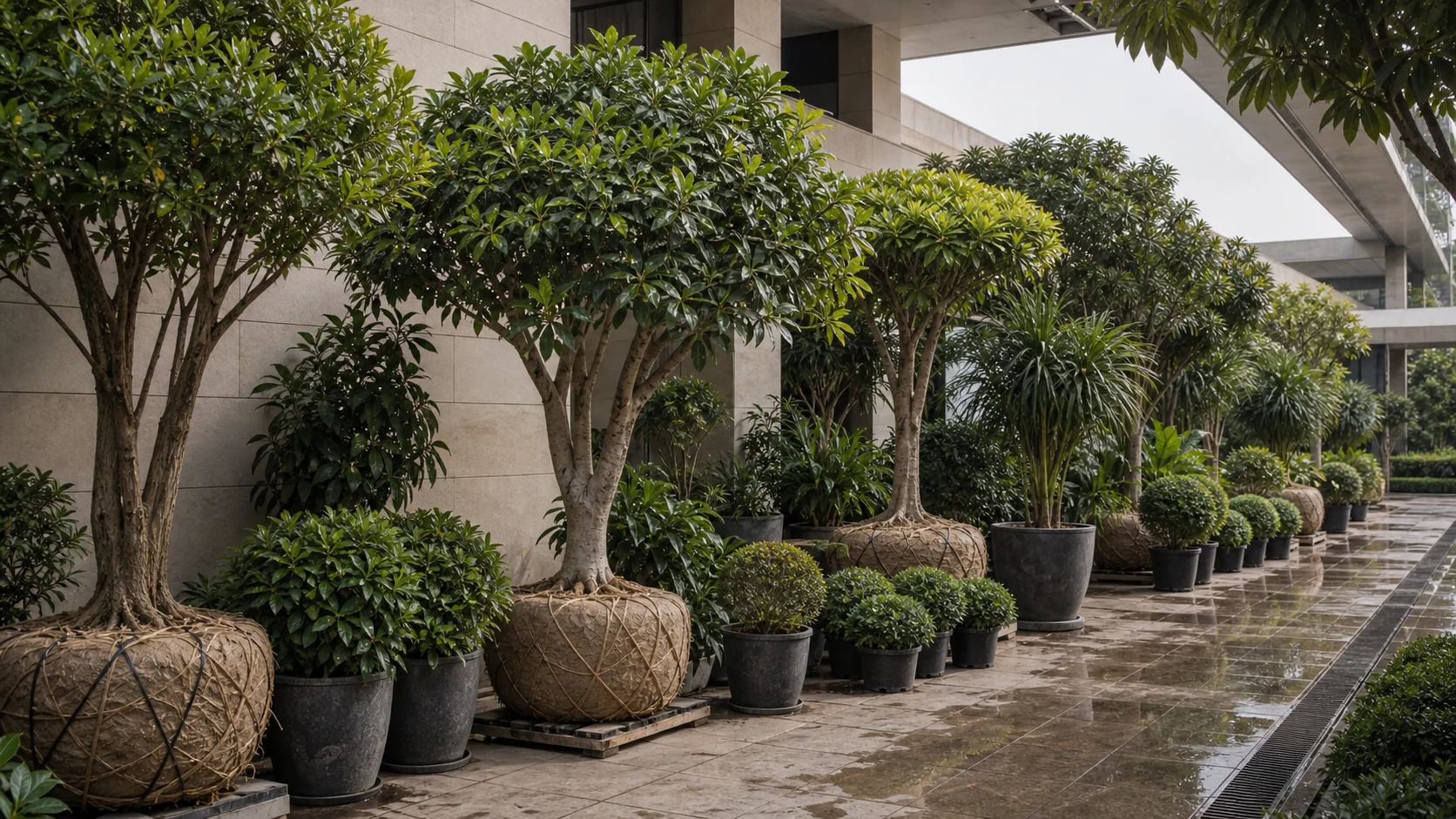
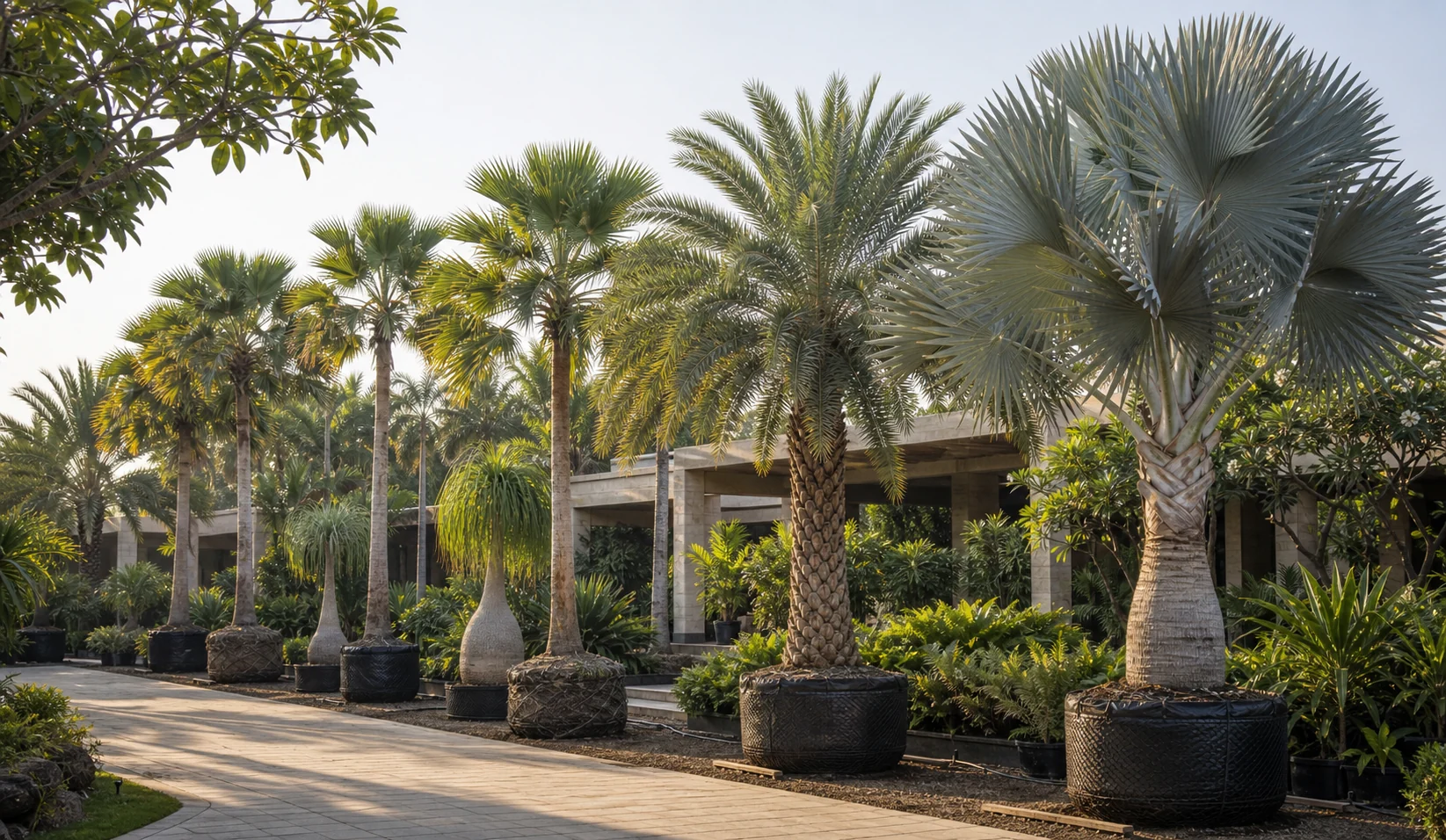
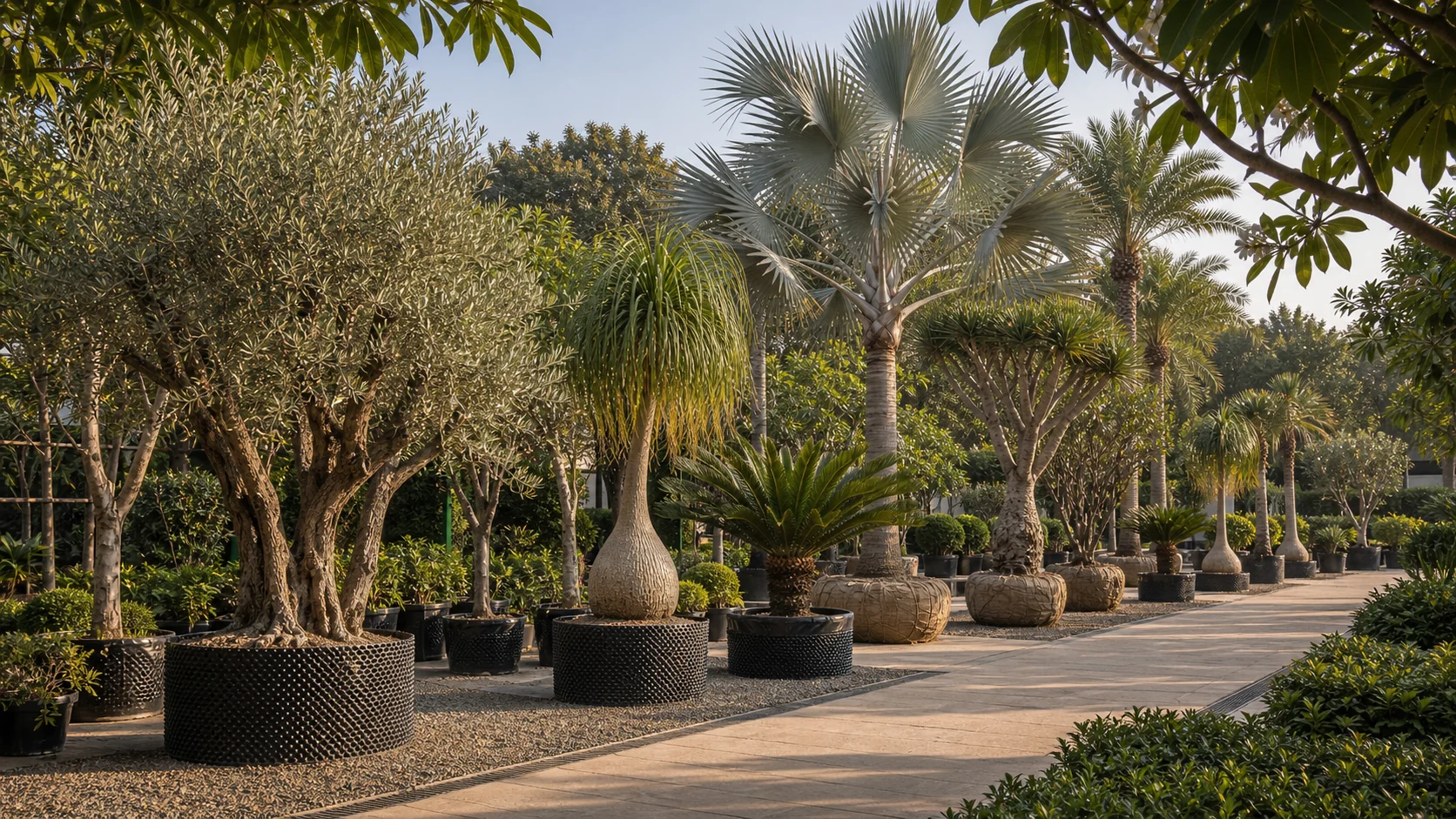
Visual context for placement, scale, handling, and landscape integration.
Section
Where it's used in premium projects
Ruby grass masses at rooftop bars, vineyard rows, and resort path edges where pink plumes catch sunset — work in odd-number drifts (5/7/9) not single soldiers. Pair with silver foliage for contrast; avoid tree root competition without irrigation.
Section
Climate & site suitability in India
Full sun builds ruby tone; shade turns plants green and floppy. Monsoon crown rot is the common kill — gritty raised beds fix most failures. Hill frost browns clumps — budget replanting or protect with fleece in Ooty-style sites.
Section
Sourcing & acclimatisation
Order plug trays for massing or larger pots for instant edge — confirm species, not generic pink grass mixes. [Unverified: India plug production lead times.]
Section
Installation (planting, containment, drainage)
Mass on 25–35 cm centres in gritty loam; crown slightly proud on terraces. Integrate drip for establishment only, then reduce. Do not plant in lawn irrigation zones that stay wet overnight.
Section
Establishment & AMC
Late-winter cut-back to 8–10 cm refreshes foliage before ruby plumes return. Replace hollow centres rather than fighting decline — AMC should flag tired clumps in year three. Light grooming removes spent plumes without shearing into crown.
Section
Cost drivers
Explore
Related
Related
Related links
Services, segments, cost, and proof.
- Softscape & horticulture
- Irrigation & water management
- Landscape maintenance (AMC)
- Hotel & resort landscaping
- Luxury resort & spa landscaping
- Mall & retail landscaping
- Corporate campus landscaping
- Projects
- Commercial landscaping cost guide
- Pricing drivers (imported trees)
- Import compliance workflow
- Request a site assessment
- What makes ruby grass distinctive?
- Low blue-green clumps with fluffy pink-ruby panicles in sun — a knee-height jewel grass for massing, not screening.
- How long do Melinis clumps last in India?
- Often 2–3 seasons of peak effect before centres thin — plan division or replanting in AMC, especially in humid sites.
- Can ruby grass edge a resort path?
- Yes in sun with drainage — mass in drifts and cut back annually; avoid wet lawn irrigation at crowns.
- Why did plumes turn greenish?
- Shade or excess nitrogen — move to full sun and reduce feed to restore ruby tone.
- Is ruby grass invasive?
- Clumping with minor reseeding — deadhead if policy requires; not a rhizome runner like giant reed.
- What compliance applies to ruby grass plugs?
- Domestic plug trays are standard nursery stock; imported lots still need phytosanitary documentation (informational, not legal advice).
- How should massing BOQs be priced?
- Price plug count, gritty bed prep, annual cut-back, and year-three replant allowance — not single-specimen tree rates.