
Juniper topiary
Juniper topiary (Juniperus spp.)
Juniperus topiary brings needled cloud and pom-pom niwaki drama to contemporary courtyards — blue-green texture where broadleaf balls would look tame. Humid Indian heat invites root rot and mites unless plants sit in full sun with sharp drainage; we do not specify juniper for default coastal monsoon beds.
Spec
At a glance
- Species
- Juniperus chinensis / squamata (trained)
- Family
- Cupressaceae
- Origin
- East Asia, cultivars globally
- Available trained forms
- Cloud (dai-san), pom-pom tiers, spiral, upright cone
- Foliage
- Needled evergreen — blue-green cultivars common
- Size range available
- 60 cm clouds to 2 m+ tiers [Unverified]
- Growth rate
- Slow to moderate — buy established tiers
- Clipping frequency / AMC
- Selective tier clip 4–6×/year; avoid deep bare-wood cuts
- Light
- Full sun — shade weakens density and invites disease
- Water
- Low once established — overwatering kills in humidity
- India climate suitability
- Fair in dry sunny sites; poor in hot-humid waterlogged soils
- Indoor / outdoor
- Outdoor — not interior subjects
- Drainage
- Critical — sand-grit mixes, raised beds
- Cautions
- Dislikes humid heat and wet feet — root rot, mites
Gallery
Specimen visual guide
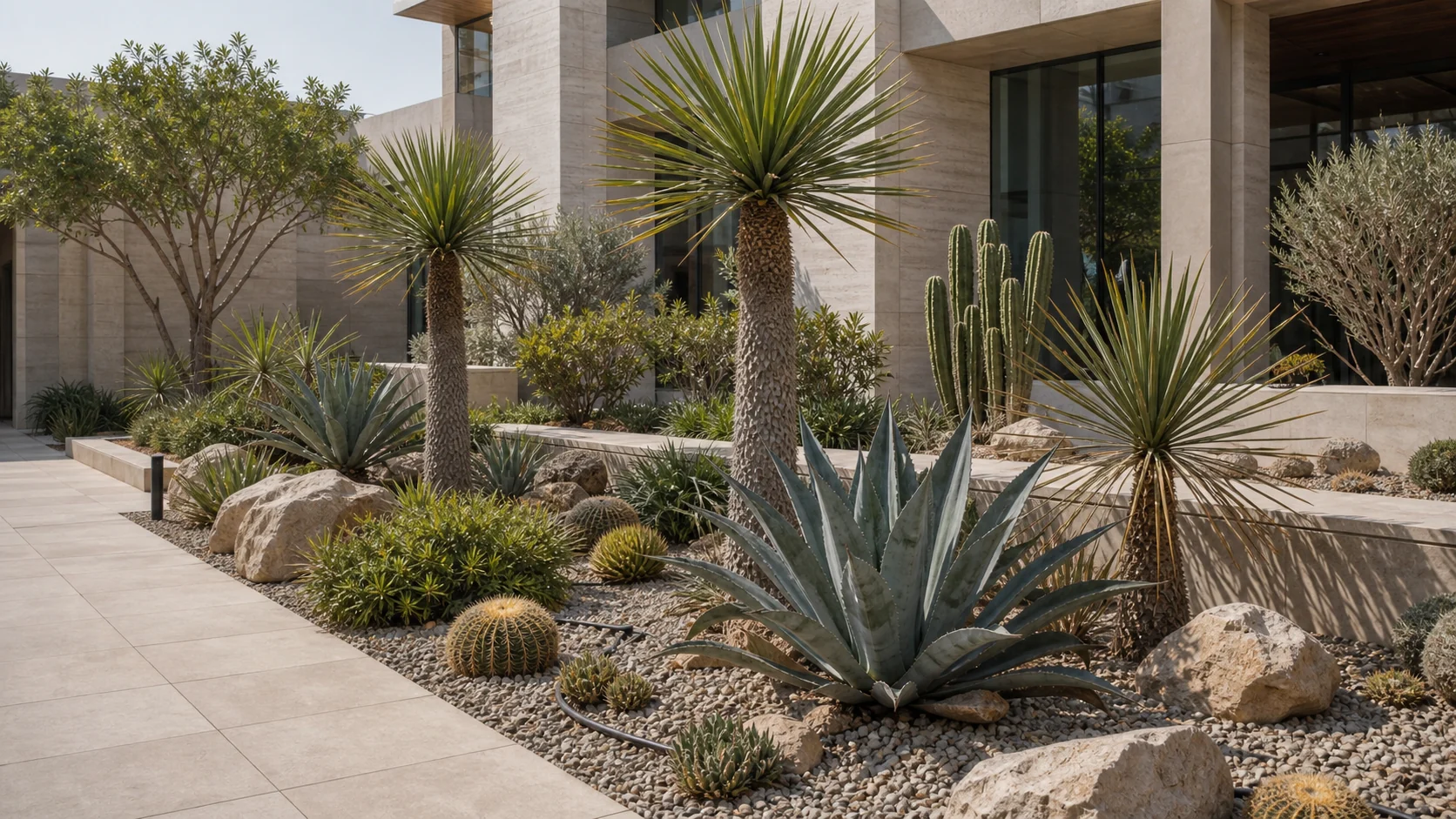
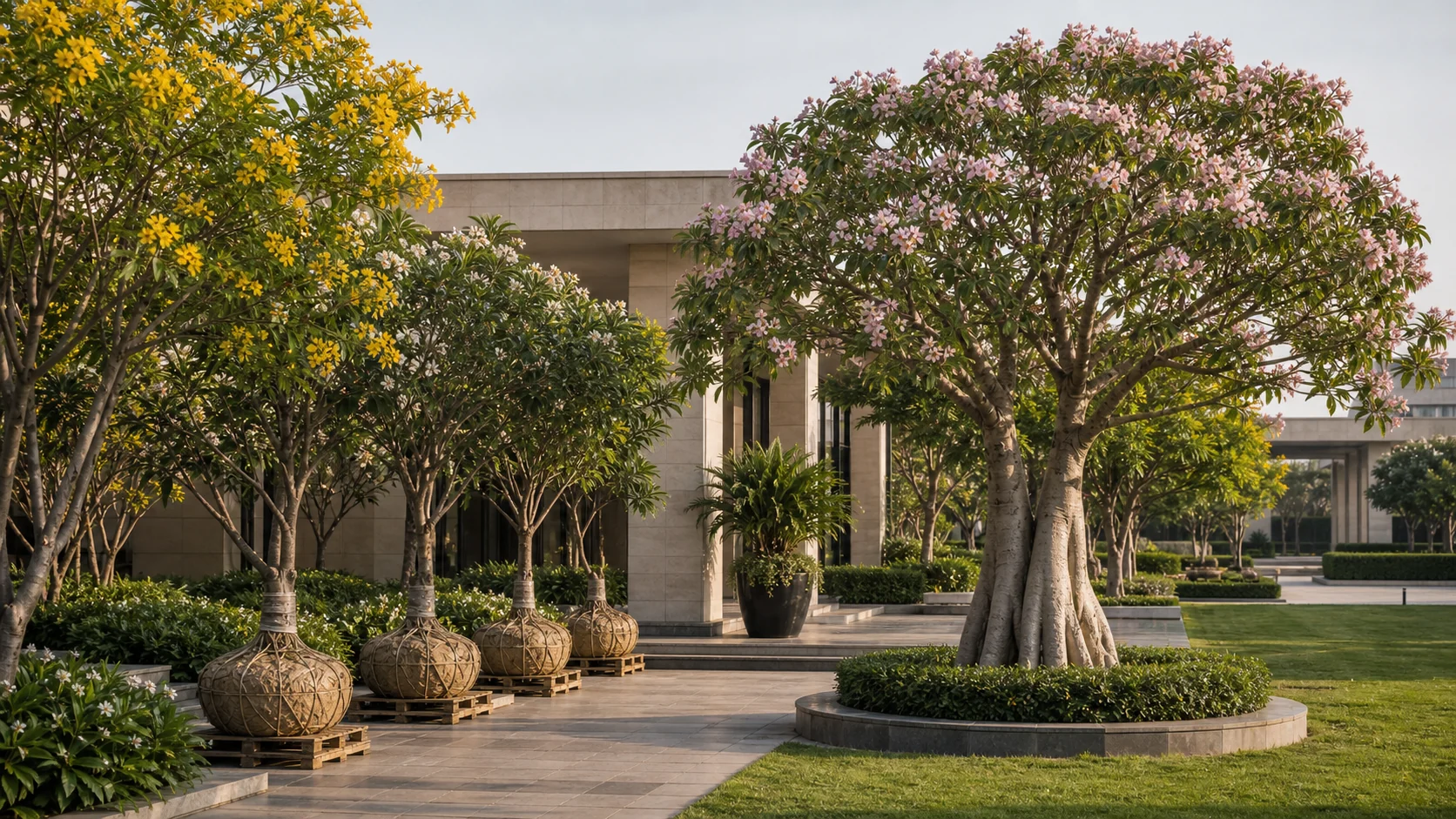
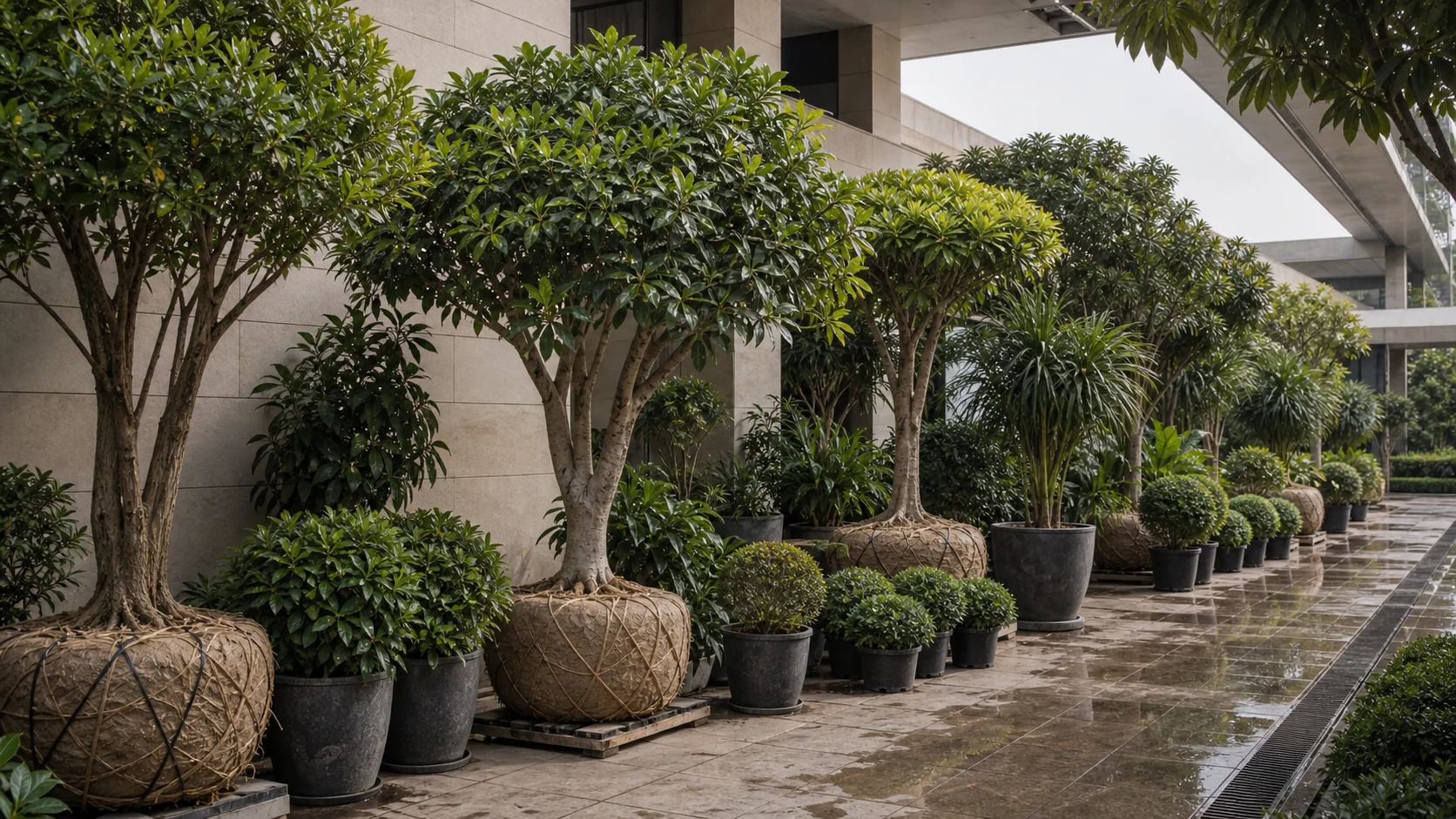
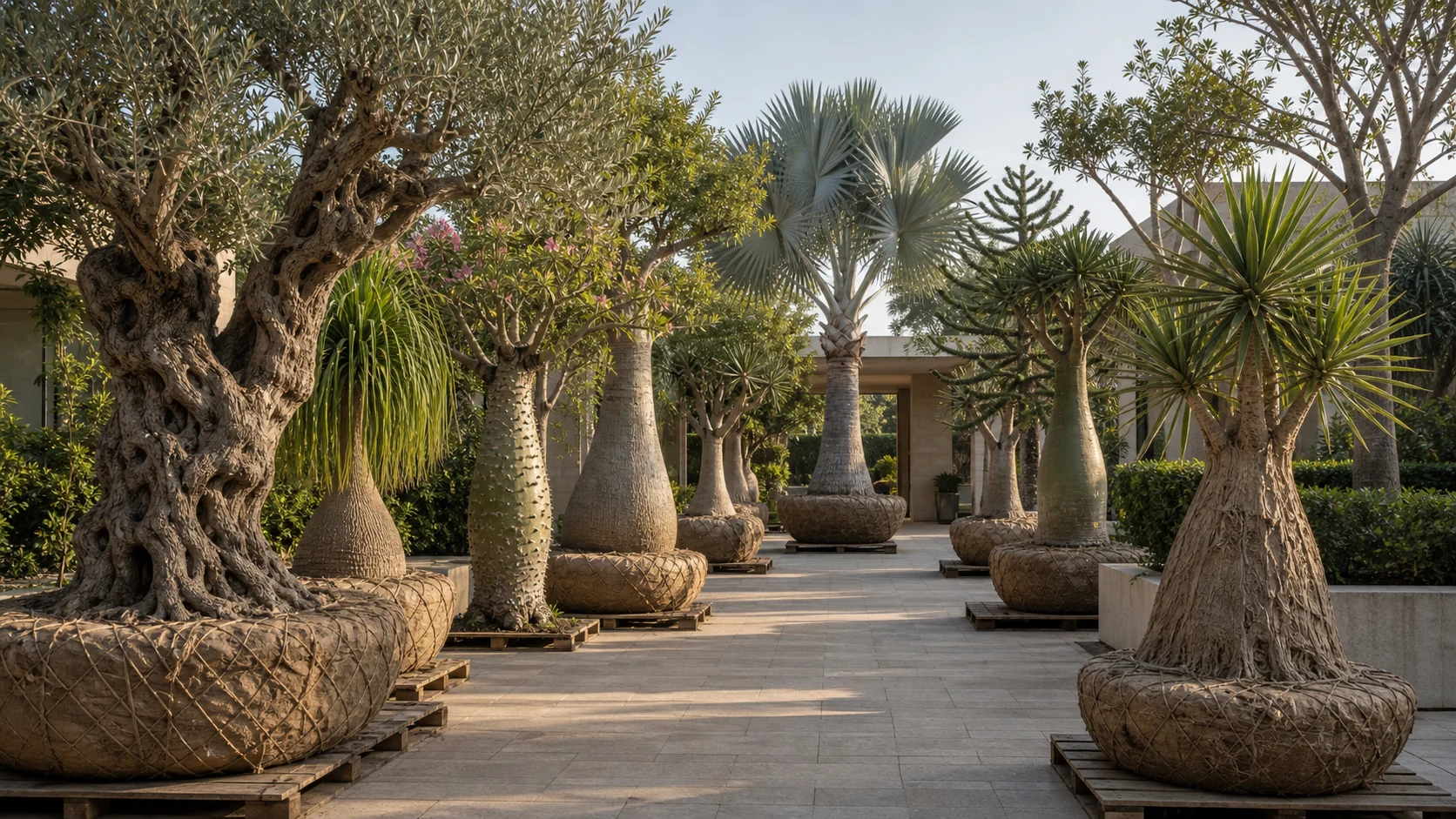
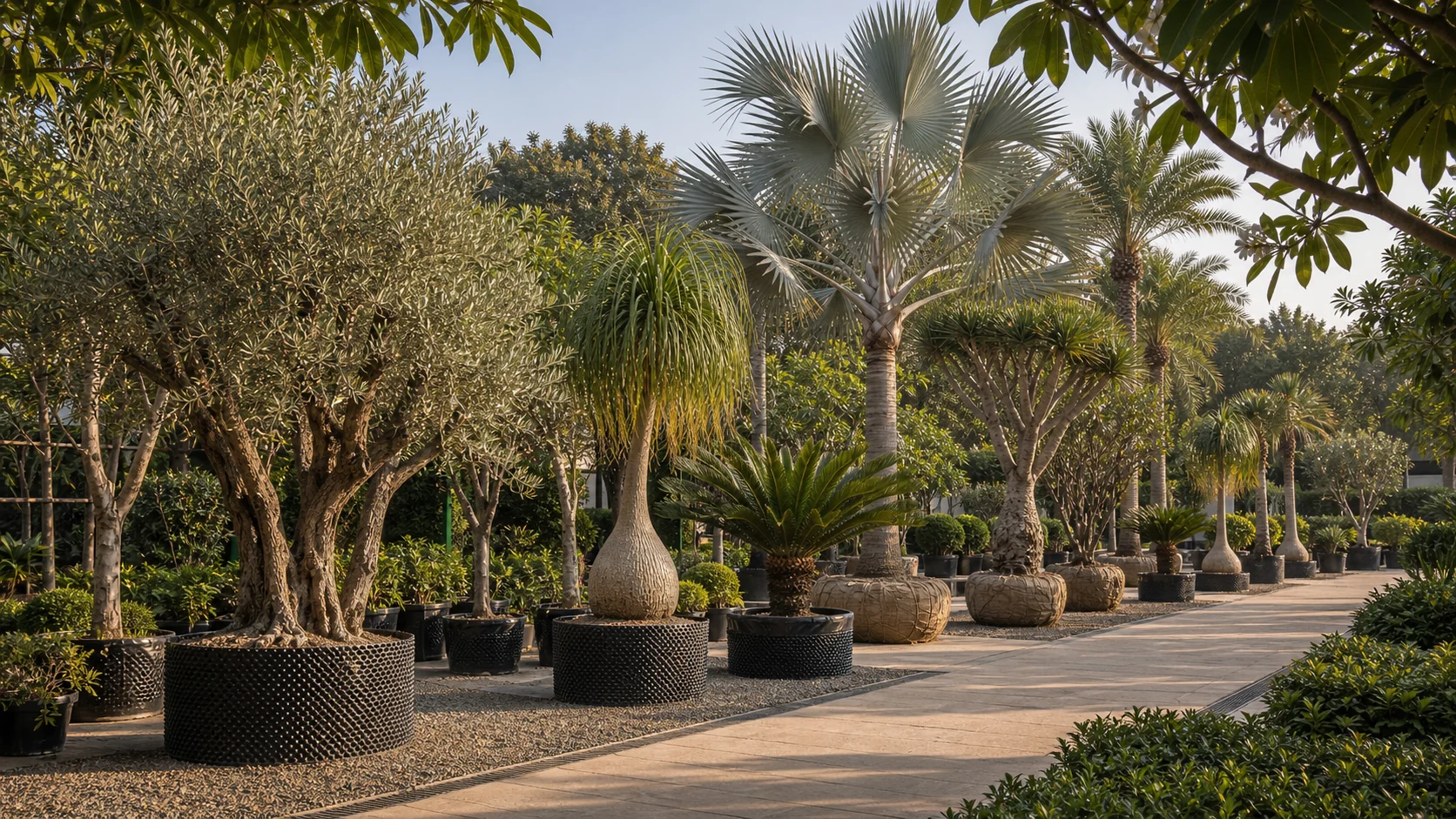
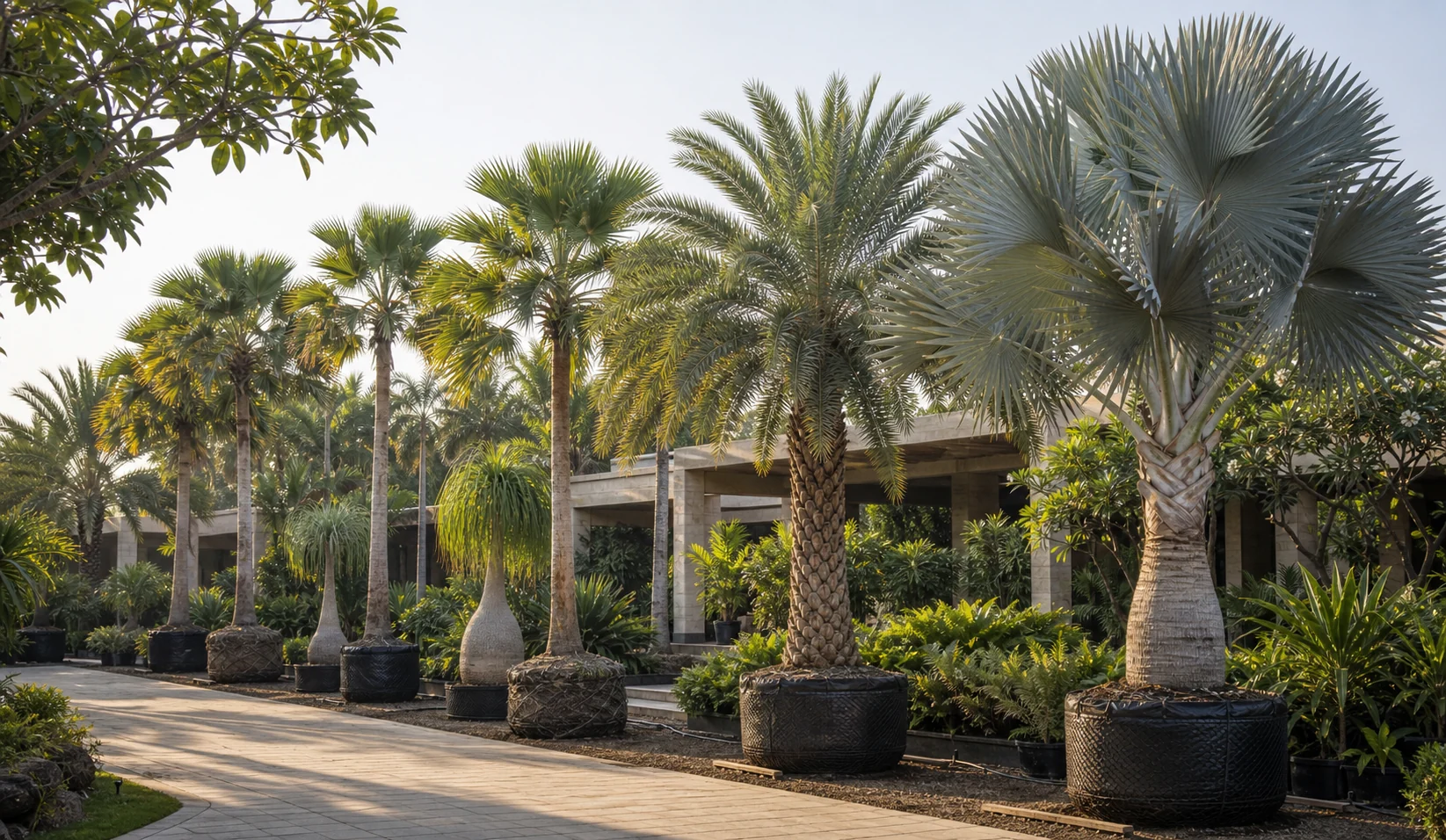
Visual context for placement, scale, handling, and landscape integration.
Section
Where it's used in premium projects
Juniper clouds accent Japanese-modern spa entries and rock gardens on dry terraces — pair with gravel and open sky. Pom-poms repeat along steps when drainage is engineered, not in lawn clay.
Section
Climate & site suitability in India
Humid Kolkata-style beds without grit rot roots within two monsoons — specify only with raised sand beds and sun. Mites bronze foliage — oil programmes per label. Hill stations with cold wet winters also stress — prefer lowland dry courts.
Section
Sourcing & acclimatisation
Buy pre-tiered clouds — rebuilding bare juniper wood is slow. [Unverified: India nursery cloud stock vs imports.] Inspect for brown interior dieback.
Section
Installation (containers, anchoring, drainage)
Raised gritty beds or rock-garden pockets; never plant in bottomless clay. No overhead irrigation hitting foliage nightly. Wire tiers with soft ties; pad branches during monsoon wind.
Section
Establishment & AMC (clipping rhythm)
Under-water rather than over-water in humid months — probe soil before irrigation sympathy. Clip clouds after dry weather to reduce entry points. Replace if interior browning exceeds 30% — recovery is slow.
Section
Cost drivers
Explore
Related
Related
Related links
Services, segments, cost, and proof.
- Softscape & horticulture
- Irrigation & water management
- Landscape maintenance (AMC)
- Hotel & resort landscaping
- Luxury resort & spa landscaping
- Mall & retail landscaping
- Corporate campus landscaping
- Projects
- Commercial landscaping cost guide
- Pricing drivers (imported trees)
- Import compliance workflow
- Request a site assessment
- What are cloud and pom-pom juniper forms?
- Niwaki-style tiered clouds or pom-poms on bare stems — buy pre-trained structure; deep cuts into bare wood recover slowly.
- Does juniper topiary suit humid Indian cities?
- Only with full sun, sharp drainage, and restrained irrigation — default hot-humid clay beds cause root rot.
- How often should juniper clouds be clipped?
- Several selective trims per year to hold tiers — not one annual hedge shear.
- Why do juniper tips turn bronze?
- Often spider mites or stress — improve sun and drainage before repeated nitrogen feeds.
- Can juniper replace ficus on a coastal BOQ?
- Usually no on humid coasts — ficus or podocarpus hold better; juniper fits dry sunny microclimates.
- What import paperwork applies?
- Conifer topiary imports need phytosanitary and quarantine inspection (informational, not legal advice).
- How should juniper cloud BOQs be priced?
- Match tier count, grit bed scope, sun exposure guarantee, and selective clip AMC.