
Golden barrel
Golden barrel cactus (Echinocactus grusonii)
Echinocactus grusonii is the golden barrel — a spherical golden-spined cactus endangered in the wild, specified only with ethical nursery-propagated stock and monsoon drainage discipline in Indian cactus gardens.
Spec
At a glance
- Botanical name
- Echinocactus grusonii
- Family
- Cactaceae
- Common names
- Golden barrel cactus, mother-in-law's cushion
- Origin
- Central Mexico (endangered in the wild)
- Plant type
- Globose cactus
- Mature height
- Often 0.5–1 m diameter sphere; slow
- Trunk / form
- Spherical golden-ribbed barrel; dense golden spines
- Crown spread
- Globose form — apex centric
- Growth rate
- Slow — large spheres are aged stock
- Light
- Full sun
- Water needs
- Minimal; fatal rot in monsoon wet soil
- India climate suitability
- Hot dry beds and cactus gardens with mounds; not humid clay
- Cold/heat & salt/wind tolerance
- Heat-hardy; rot when wet+cold; spines — placement setback
- Typical supply size
- Diameter classes 30–80 cm+ [Unverified]
- Lead time (sourcing)
- [Unverified] ethical nursery-propagated stock only
- Install considerations
- Sphere rigging; gravel mound; never turf irrigation
- Maintenance level
- Minimal dry AMC; ethical sourcing records
- Cautions
- Endangered in wild — ethical nursery-propagated stock with documentation only; rots in wet/cold; spines; monsoon drainage mandatory
Gallery
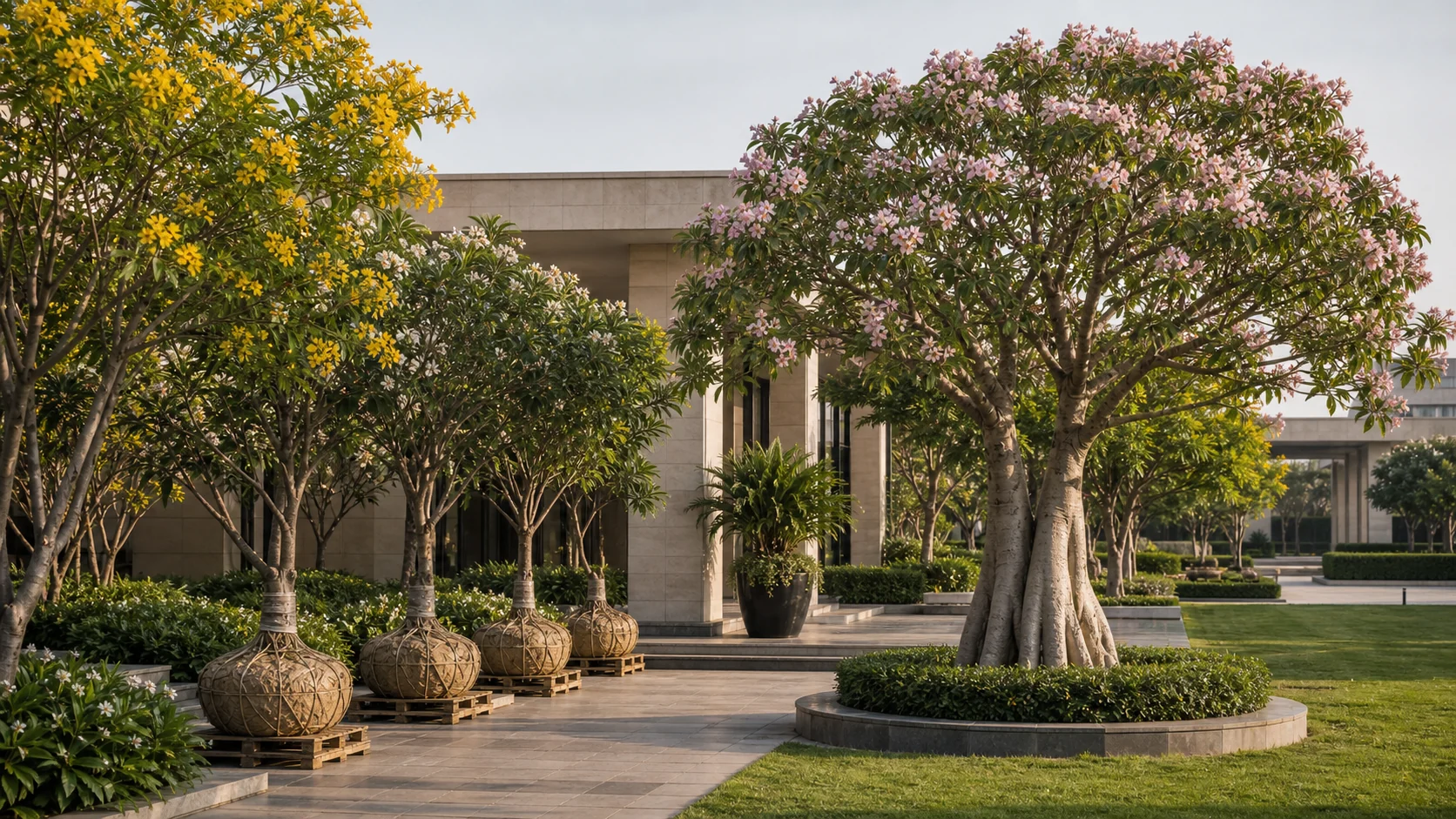
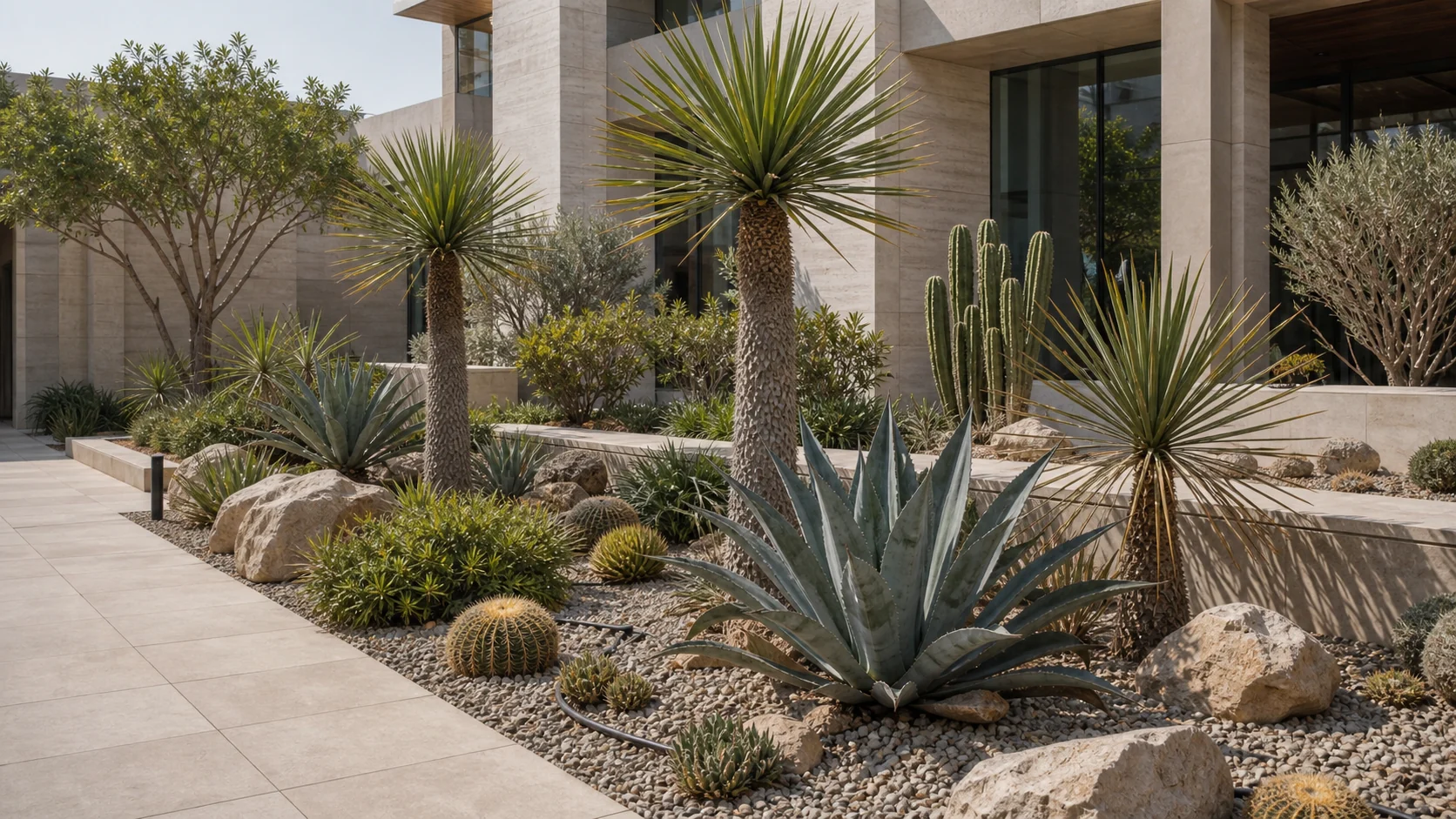
Specimen visual guide
Visual context for placement, scale, handling, and landscape integration.
Section
Where it's used in premium projects
Golden barrel masses in cactus gardens, resort xeric plazas, and collector grids — the golden globe is the product, best in repetition with sphere size grades, not mixed as generic cactus filler.
Section
Climate & site suitability in India
Monsoon drainage is mandatory — spheres rot from base ribs in perched water. Endangered wild status means ethical nursery propagation must be documented — refuse wild-dug stock narratives.
Section
Sourcing & acclimatisation
Specify nursery-propagated origin — [Unverified: typical India ethical nursery chain for grusonii]. CITES and conservation scrutiny may apply to certain consignments — align paperwork early.
Section
Installation (pit, soil, drainage, bracing)
Set spheres on gravel with drainage void under rib contact; rig with spine-safe baskets. Mass planting needs uniform diameter grades for design rhythm.
Section
Establishment & AMC
Overwatering is the number-one killer — AMC must keep barrels drier than adjacent shrubs. Ethical sourcing documentation stays in project files. Wild harvest must not appear in submittals.
Section
Cost drivers
Explore
Related
Related
Related links
Services, segments, cost, and proof.
- Softscape & horticulture
- Irrigation & water management
- Landscape maintenance (AMC)
- Hotel & resort landscaping
- Luxury resort & spa landscaping
- Mall & retail landscaping
- Corporate campus landscaping
- Projects
- Commercial landscaping cost guide
- Pricing drivers (imported trees)
- Import compliance workflow
- Request a site assessment
- Why is golden barrel endangered?
- Wild *Echinocactus grusonii* populations are depleted — projects should use nursery-propagated spheres with documented ethical origin, not wild-dug stock.
- What is the golden globe form?
- Spherical ribbed barrel with dense golden spines — massed or solo accent in cactus gardens.
- What monsoon risk matters in India?
- Base rib rot in wet soil — gravel mounds and dry AMC outweigh species heat tolerance.
- How slow is growth?
- Slow — large golden spheres are aged nursery stock, not quick landscape fill.
- Are spines a placement issue?
- Yes — setback from guest paths and pools; golden spines are stiff and persistent.
- What import compliance applies to grusonii?
- Endangered-species scrutiny may attach to certain cactus consignments — nursery propagation certificates and CITES awareness should be confirmed with brokers (informational, not legal advice).
- How should barrel BOQs compare?
- Diameter, spine health, ethical propagation docs, and mound scope — not per-cactus generic succulent pricing.