
Dwarf flamboyant
Dwarf flamboyant (Delonix pumila)
Delonix pumila is the rare dwarf flamboyant with a swollen caudex base and red flowers on a compact Madagascar shrub — bonsai-like presence without a full gulmohar tree. Keep it distinct from Delonix regia specimens elsewhere in the library: pumila is dry-deciduous, slow, and drainage-critical.
Spec
At a glance
- Botanical name
- Delonix pumila
- Family
- Fabaceae
- Origin
- Madagascar
- Mature height × spread
- Often 1–2 m above caudex; caudex 30–80 cm+ over years
- Flower colour & season
- Red orchid-like flowers on short branches — seasonal
- Foliage
- Fine bipinnate leaves — dry-deciduous
- Evergreen / deciduous
- Dry-deciduous — leafless in drought stress
- Growth rate
- Slow — caudex accumulates over years
- Light
- Full sun
- Water
- Low to moderate; rot if wet in dormancy
- India climate suitability
- Best in dry-tropical and arid belts with drainage; weak in humid wet clay
- Hardiness
- Heat-hardy; protect caudex from waterlogging
- Typical supply size
- Rare caudex specimens in pots [Unverified]
- Pruning / maintenance
- Minimal water in leafless phase; careful rewartering at leaf break
- Cautions
- Rare; dry-deciduous; do not confuse with Delonix regia tree forms
Gallery
Specimen visual guide
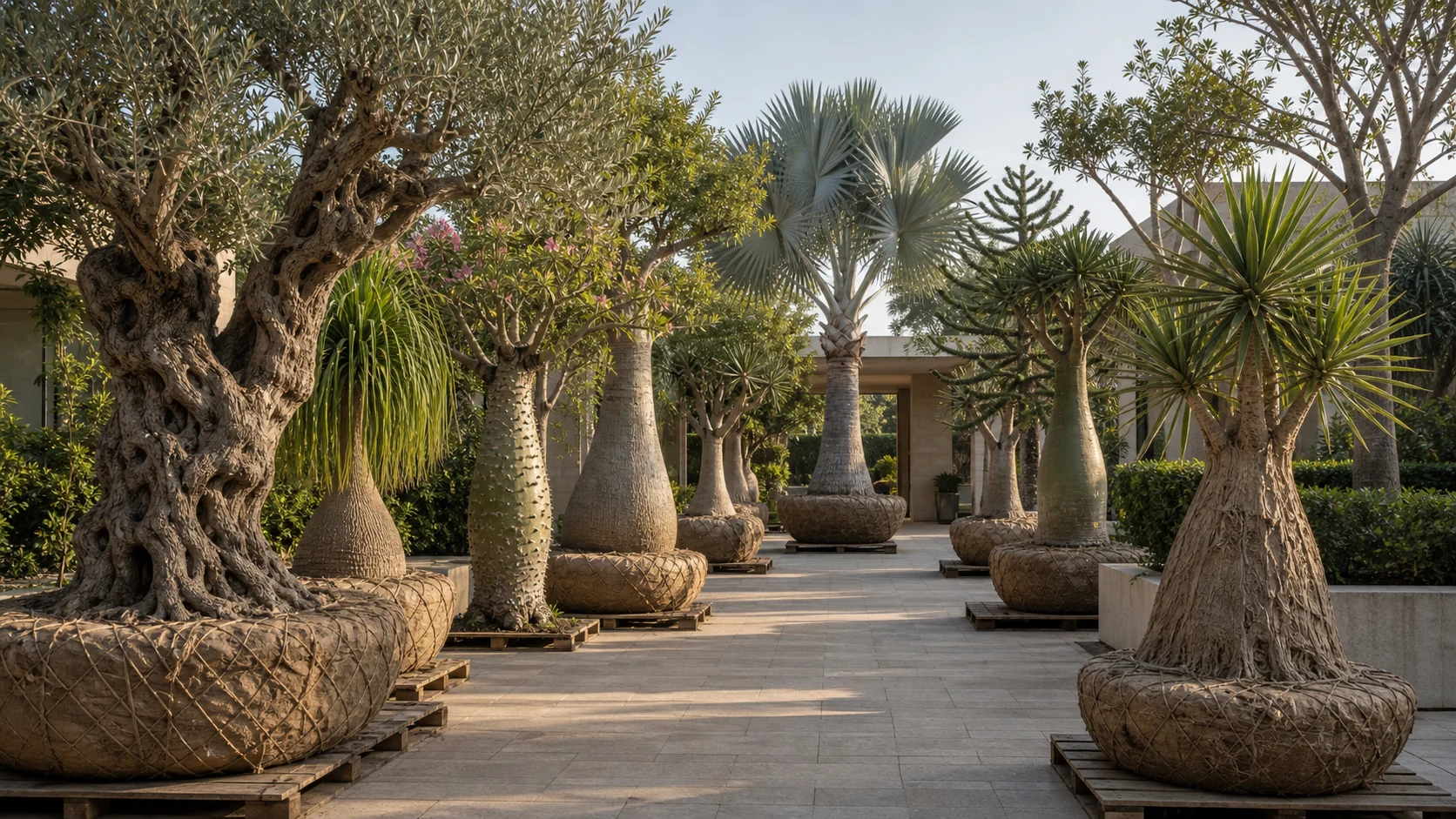
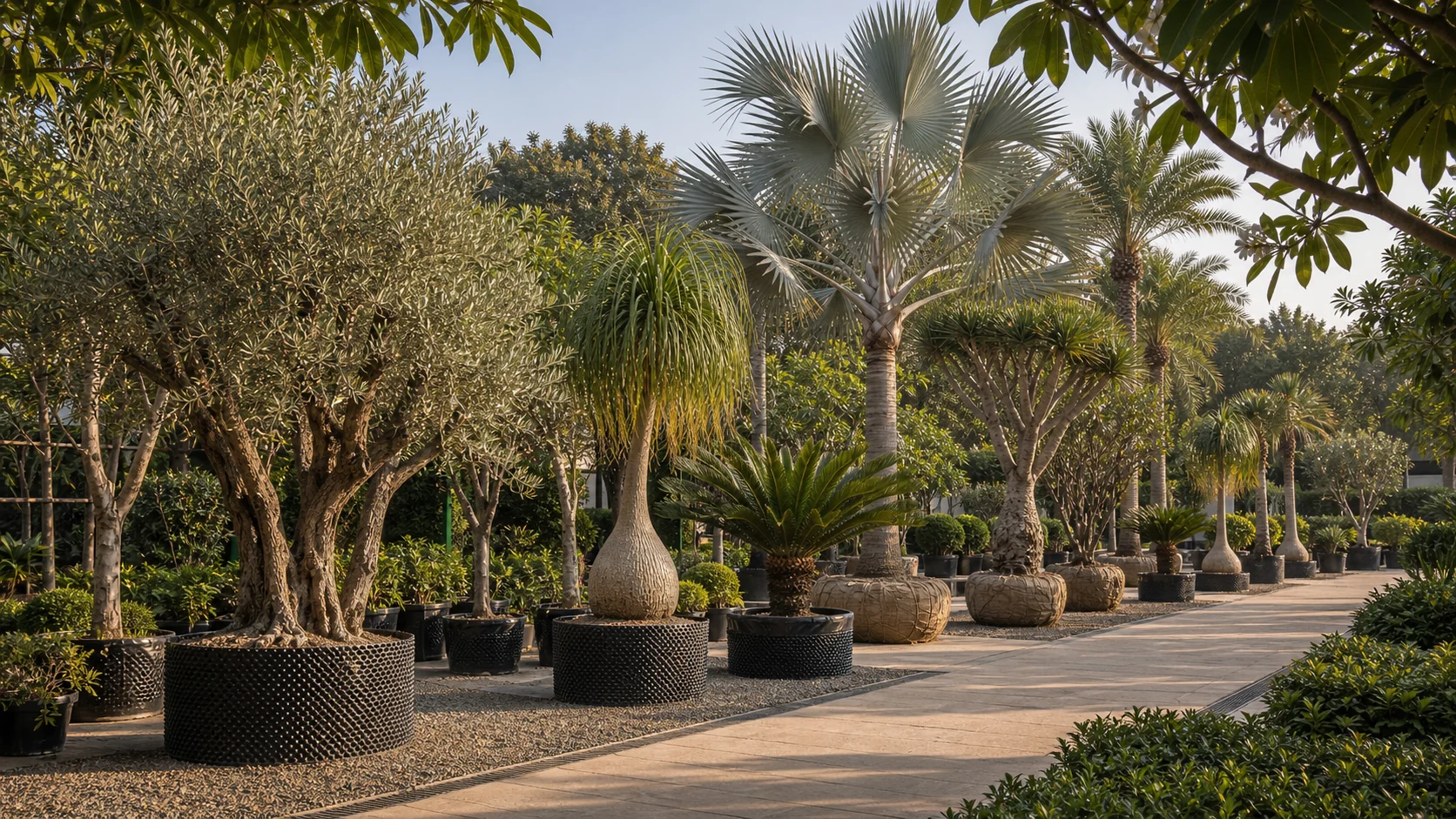
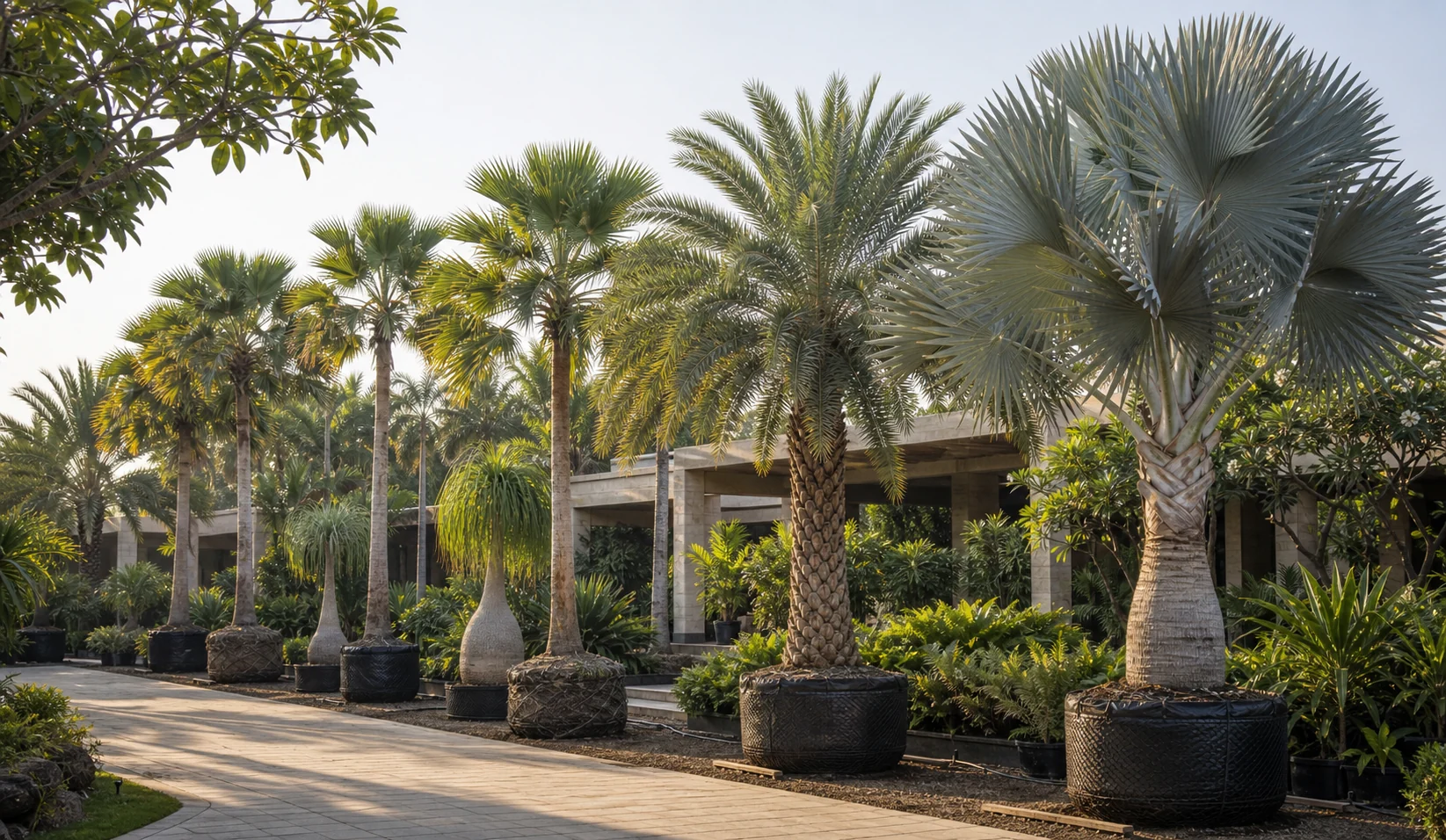
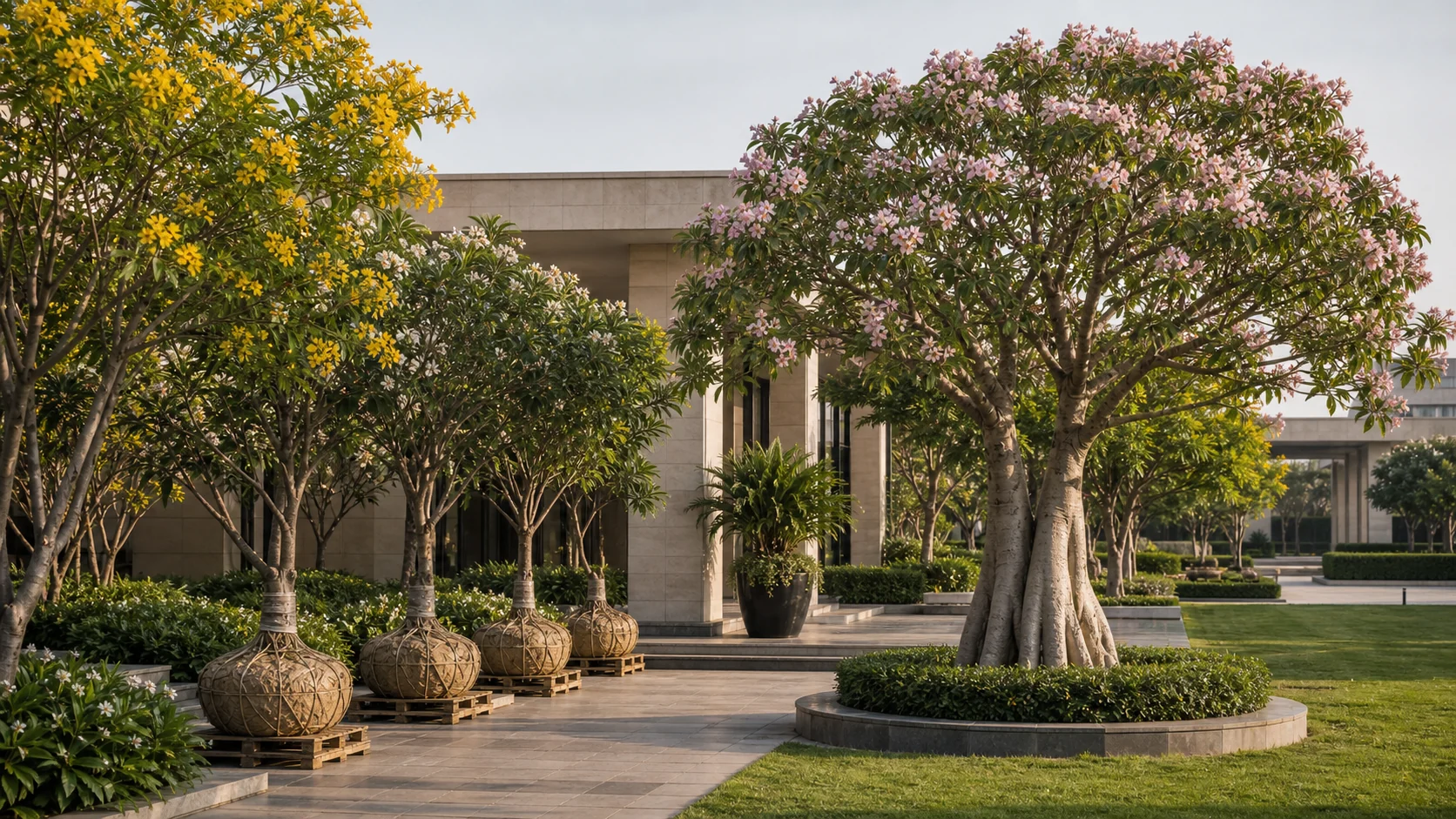
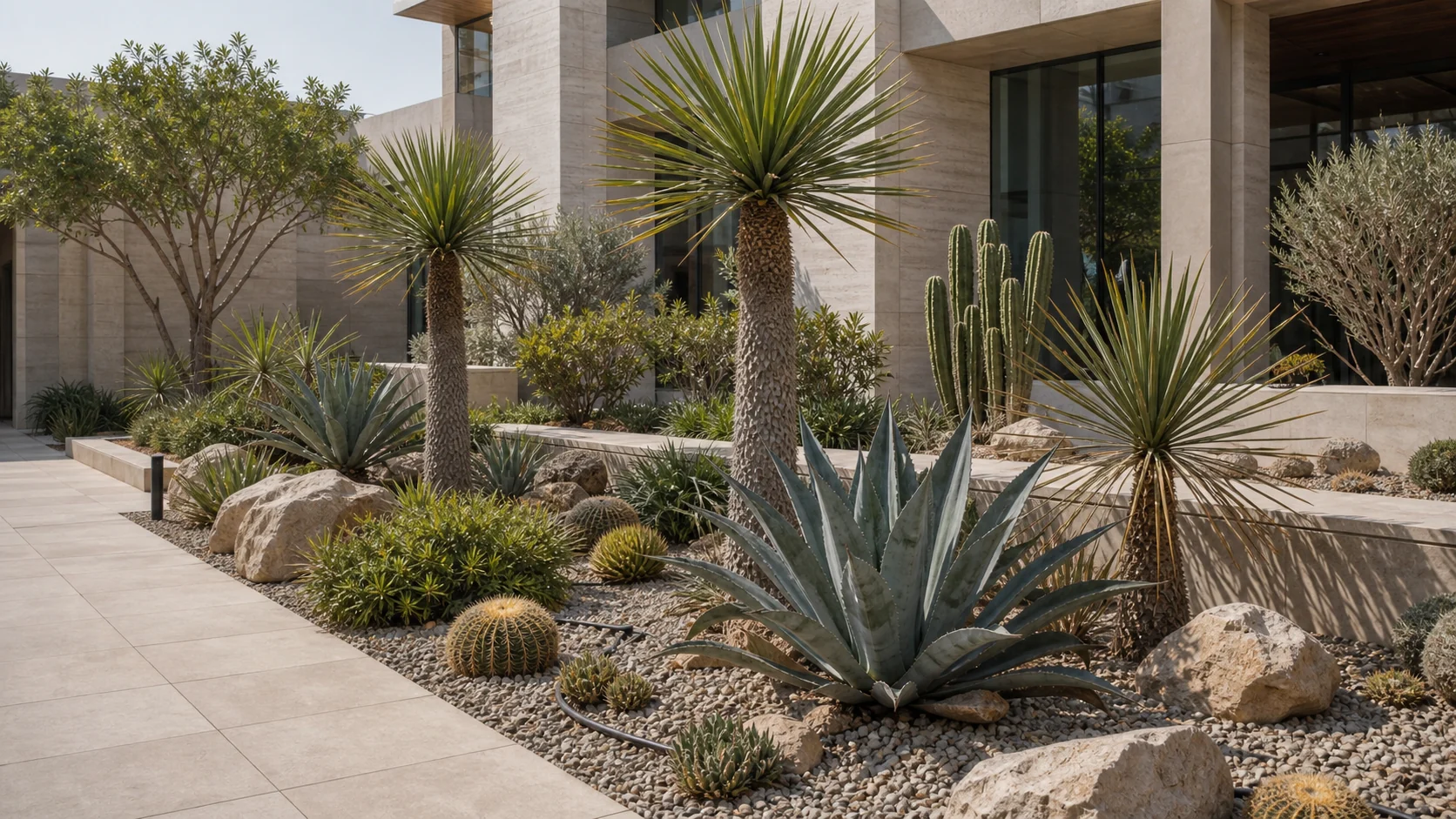
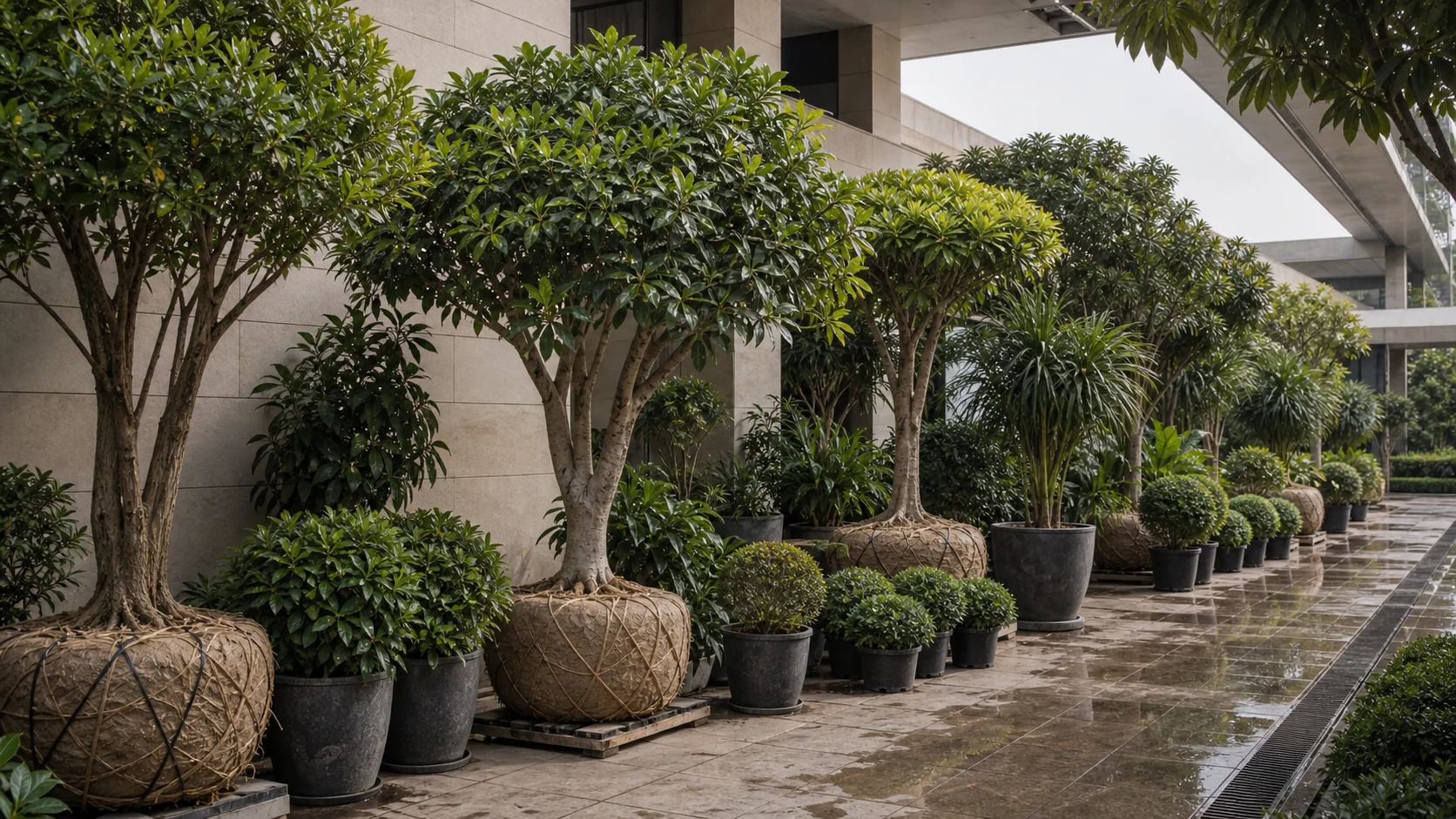
Visual context for placement, scale, handling, and landscape integration.
Section
Where it's used in premium projects
Pumila anchors collector courtyards, bonsai plinths, and desert-garden vignettes where a red-flower caudex must read without a 12 m flamboyant canopy — specify rarity and caudex diameter on BOQ.
Section
Climate & site suitability in India
Rajasthan and Gujarat dry gardens succeed; humid monsoon clay rots caudex unless mounded. Leafless phases are normal — do not overwater to force evergreen habit. Distinct from golden or standard regia tree psychology.
Section
Sourcing & acclimatisation
Verify species ID — pumila caudex, not seedling regia. [Unverified: India collector availability.] Document caudex girth at purchase.
Section
Installation (planting, soil, drainage)
Raised gritty mound; caudex partly exposed for display; never bury caudex in wet clay. Pot culture common on terraces with overflow drains.
Section
Establishment & AMC
AMC respects dormancy — irrigate when leaves return, not on bare caudex weeks. Light feed after flowering, not heavy nitrogen on caudex. Compare BOQ only to other Delonix pumila, not regia trees.
Section
Cost drivers
Explore
Related
Related
Related links
Services, segments, cost, and proof.
- Softscape & horticulture
- Irrigation & water management
- Landscape maintenance (AMC)
- Hotel & resort landscaping
- Luxury resort & spa landscaping
- Mall & retail landscaping
- Corporate campus landscaping
- Projects
- Commercial landscaping cost guide
- Pricing drivers (imported trees)
- Import compliance workflow
- Request a site assessment
- How is Delonix pumila different from gulmohar tree forms?
- Pumila is a dwarf caudex shrub with seasonal red flowers — not the large spreading Delonix regia tree used for shade avenues.
- What is the caudex base for?
- Water storage and bonsai-like character — display often partly exposes caudex above soil for design impact.
- Why is pumila leafless sometimes?
- Dry-deciduous habit — normal in drought stress; do not overwater bare caudex phases to force leaves.
- Is pumila common in Indian nurseries?
- Rare collector stock — verify species ID and caudex size; not interchangeable with common flamboyant seedlings.
- Can pumila live on an irrigated terrace?
- Yes in pots with sharp drainage — avoid saucers and monsoon waterlogging on caudex.
- What import paperwork applies to rare Delonix?
- Madagascar-origin stock may need phytosanitary and CITES review depending on source — verify before purchase (informational, not legal advice).
- How should pumila BOQs be priced?
- Match caudex girth, provenance rarity, mound/pot engineering, and dry-phase AMC — not regia tree planting rates.