
Desert spoon
Desert spoon (Dasylirion wheeleri)
Dasylirion wheeleri — desert spoon or sotol — is the blue-grey rosette of toothed leaves with a spoon-shaped leaf base, tall flower spike, and exceptional drought- and cold-tolerance for hardy xeric accents distinct from *D. longissimum*'s smooth green sphere.
Spec
At a glance
- Botanical name
- Dasylirion wheeleri
- Family
- Asparagaceae (Ruscaceae)
- Common names
- Desert spoon, sotol, blue sotol
- Origin
- South-west US and northern Mexico
- Plant type
- Trunked rosette succulent
- Mature height
- Often 1.5–3 m trunk; tall inflorescence additional
- Trunk / form
- Short trunk; blue-grey toothed rosette with spoon-based leaves
- Crown spread
- Spiky blue-grey rosette; dramatic flower spike
- Growth rate
- Slow — hardy character over speed
- Light
- Full sun
- Water needs
- Very low; excellent drainage
- India climate suitability
- Hot dry and cool-dry winters; drainage still mandatory in monsoon
- Cold/heat & salt/wind tolerance
- Notable cold tolerance for a succulent; toothed margins — placement discipline
- Typical supply size
- Rosette diameter classes [Unverified]
- Lead time (sourcing)
- [Unverified] US/Mexico sotol nursery channels
- Install considerations
- Toothed leaf setback; gravel mound; spike clearance
- Maintenance level
- Low dry AMC; guest path setback from toothed margins
- Cautions
- Toothed leaf margins; drainage; slow; do not confuse with longissimum sphere
Gallery
Specimen visual guide
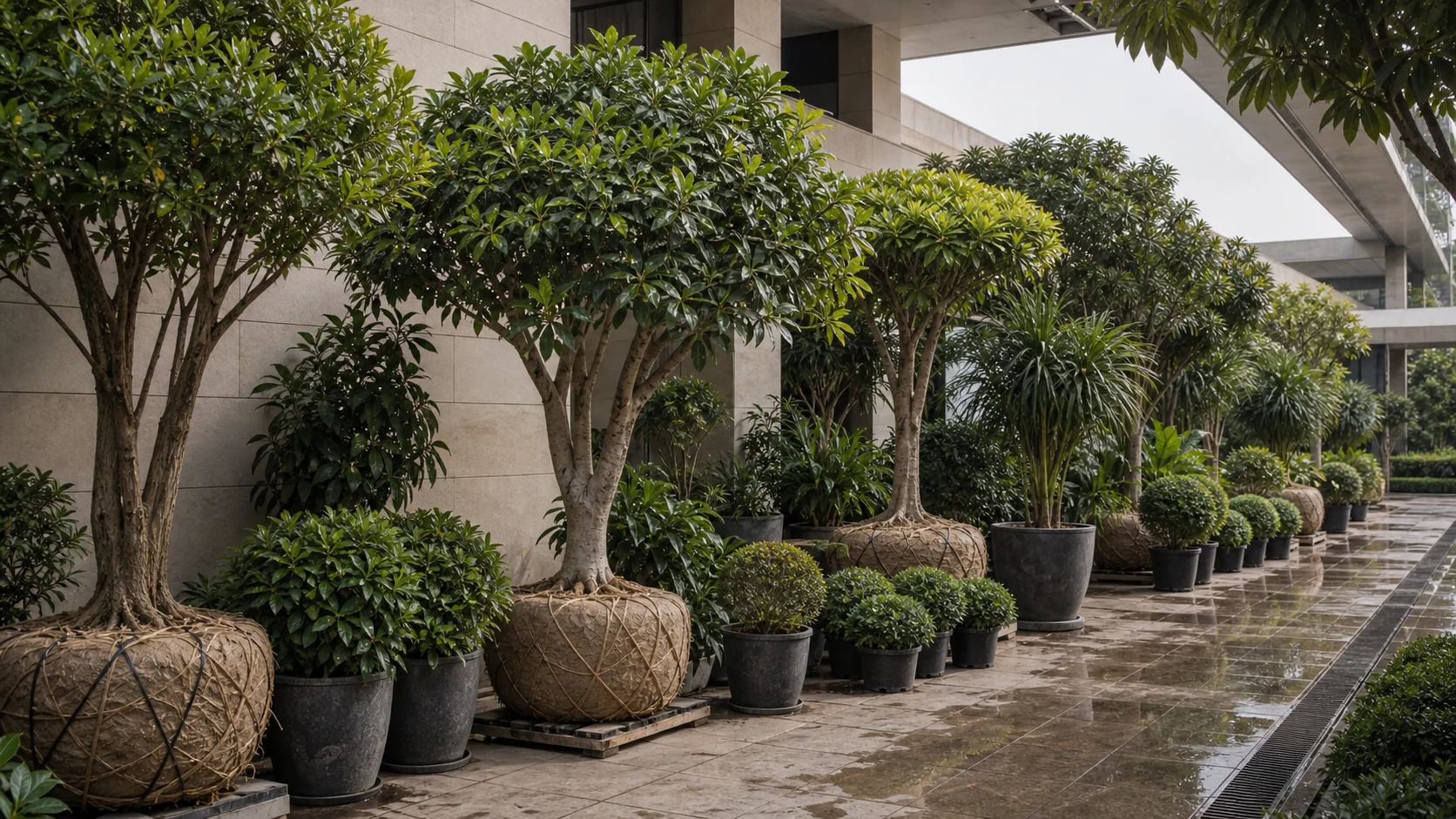
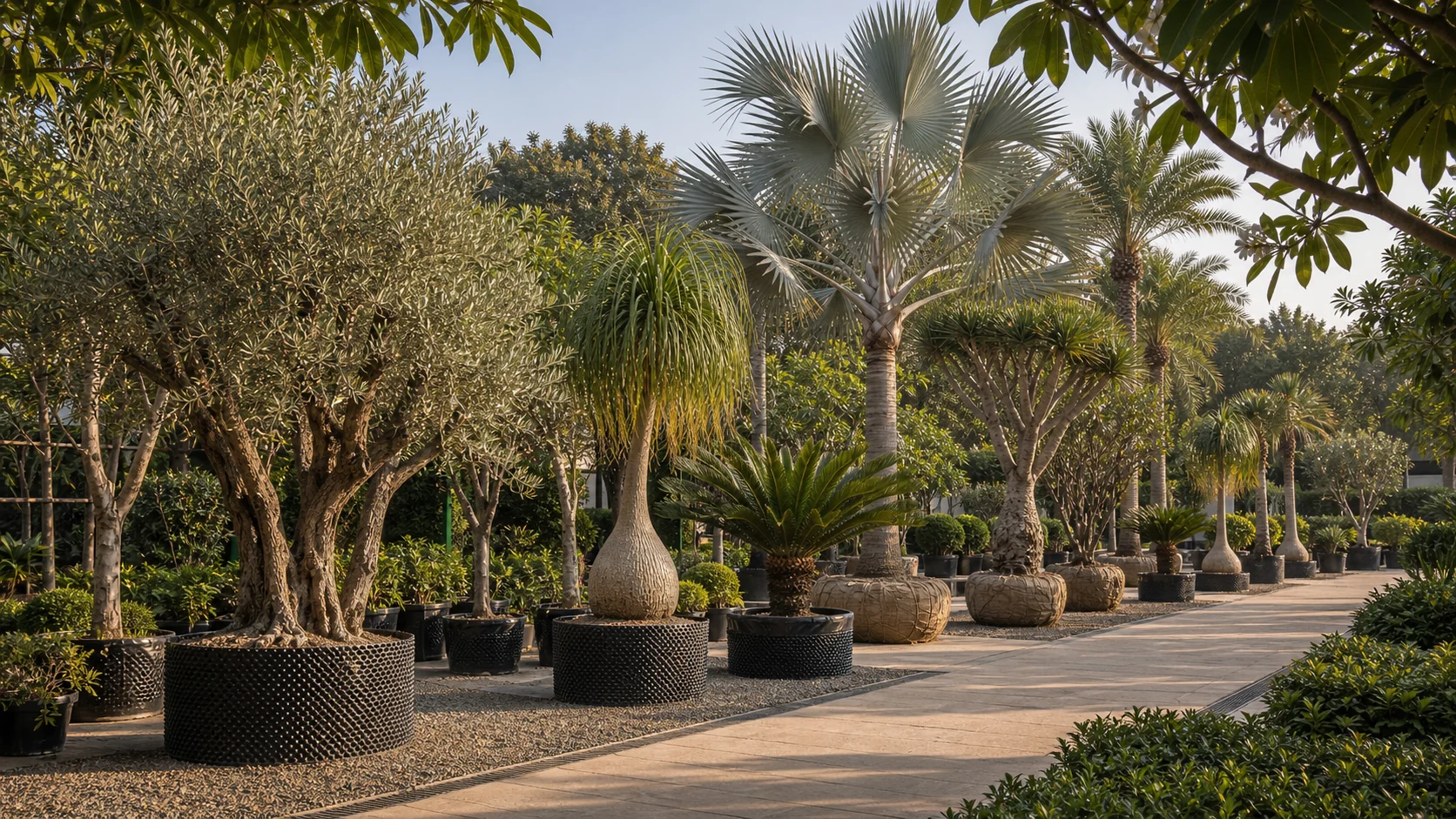
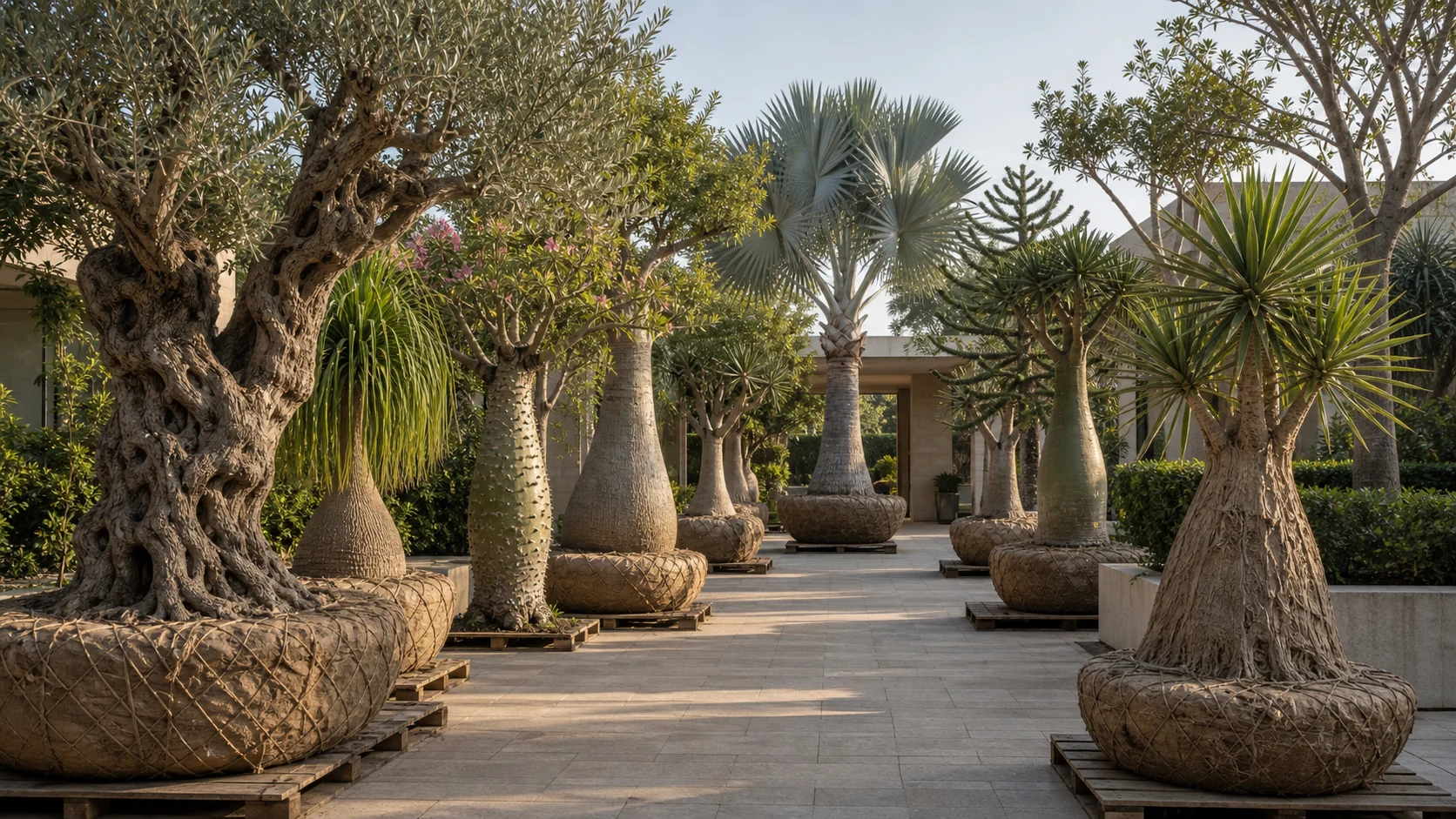
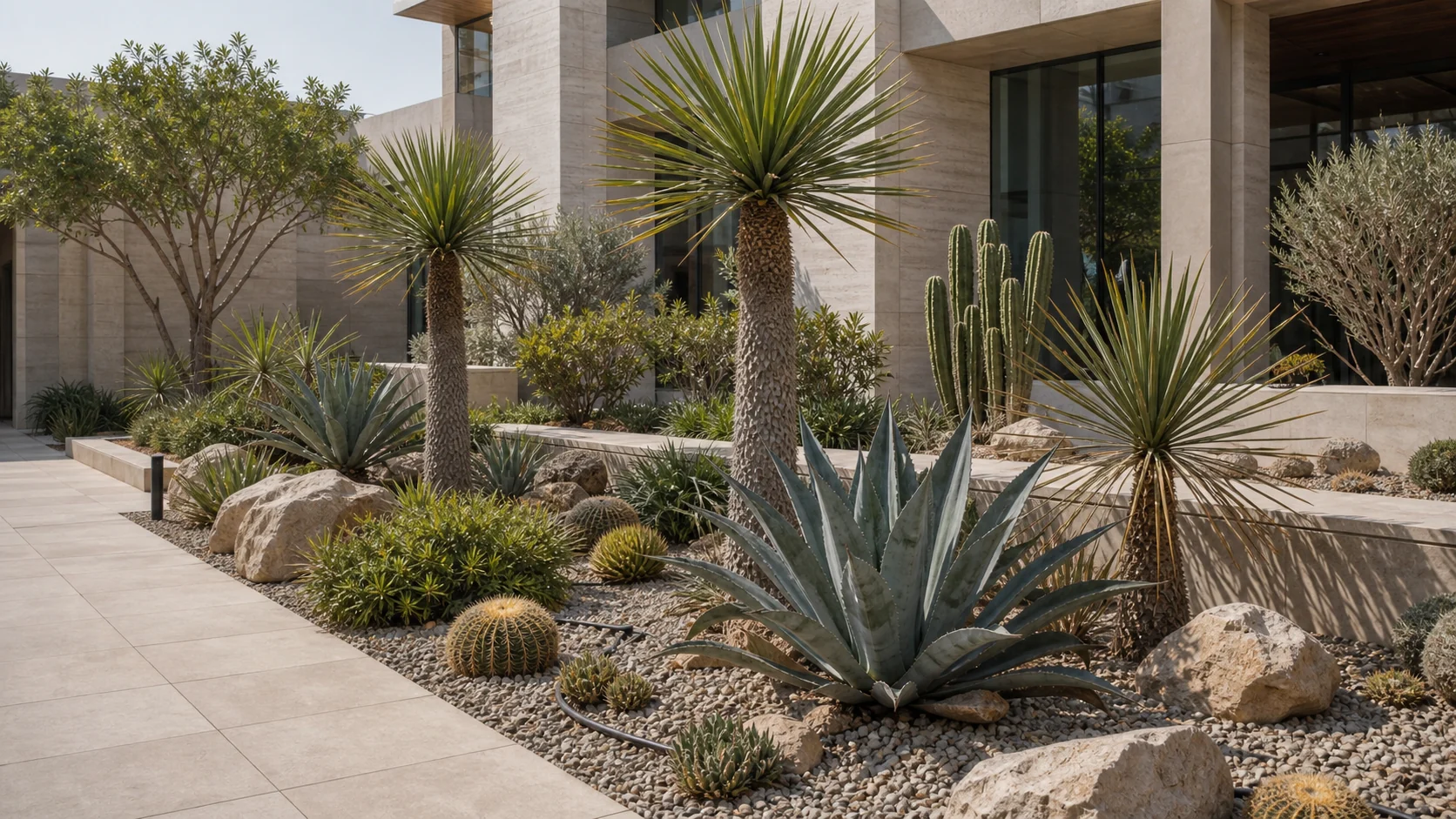
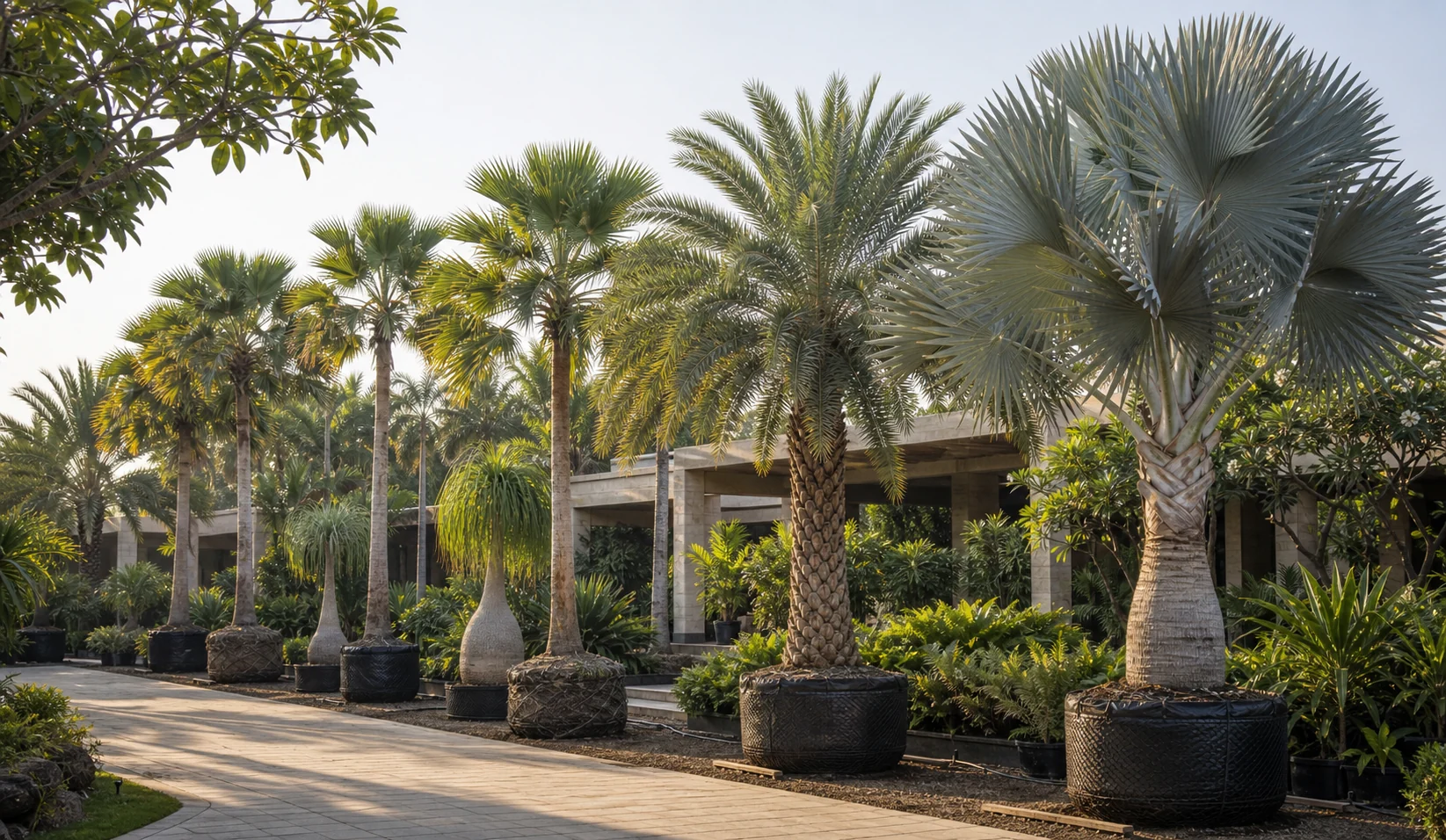
Visual context for placement, scale, handling, and landscape integration.

Section
Where it's used in premium projects
Wheeleri is the blue spiky sotol rosette for hardy xeric beds — estate dry gardens, resort gravel courts, and Southwest-inspired palettes needing cold-hardier dasylirion character than smooth longissimum spheres.
Section
Climate & site suitability in India
Cold and drought hardiness is the selling point versus longissimum — still demand monsoon mounds in India because wet roots kill sotol too. Toothed margins need setback from pool edges and guest paths.
Section
Sourcing & acclimatisation
Blue toothed spoon-base leaves distinguish wheeleri — reject smooth longissimum mislabels. [Unverified: India-held sotol vs direct US nursery import.]
Section
Installation (pit, soil, drainage, bracing)
Plant on gravel with overflow; plan tall flower spike crane clearance in bloom years. Rigging avoids crushing toothed leaf bases — spoon scars persist.
Section
Establishment & AMC
Overwatering kills sotol in establishment — AMC uses dry rotation despite cold-hardy marketing. Inspect toothed tips near guest routes after events.
Section
Cost drivers
Explore
Related
Related
Related links
Services, segments, cost, and proof.
- Softscape & horticulture
- Irrigation & water management
- Landscape maintenance (AMC)
- Hotel & resort landscaping
- Luxury resort & spa landscaping
- Mall & retail landscaping
- Corporate campus landscaping
- Projects
- Commercial landscaping cost guide
- Pricing drivers (imported trees)
- Import compliance workflow
- Request a site assessment
- What are the toothed spoon-based leaves?
- Blue-grey sotol leaves with marginal teeth and a spoon-shaped base — the tactile difference from smooth *D. longissimum* quills.
- Is wheeleri more cold-hardy than longissimum?
- Generally yes — sotol is chosen for cooler dry winters, but Indian monsoon wet still demands drainage mounds.
- Where should sotol be placed?
- Set back from guest contact — toothed margins are sharper than smooth dasylirion spheres.
- How tall is the flower spike?
- Can tower above rosette — programme vertical clearance and seasonal litter, not permanent crown width.
- Can sotol survive Indian monsoon?
- With mound drainage and dry AMC — wet pits remain the common failure, not heat.
- What quarantine applies to sotol imports?
- Dasylirion shipments need species labels on phytosanitary docs — wheeleri/longissimum swaps delay clearance (informational, not legal advice).
- How should wheeleri BOQs differ from longissimum?
- Match blue toothed rosette photos, cold-hardiness narrative, and mound scope — not interchangeable grass-tree pricing.